
Major sporting events Learning Outcome 3 Understand the


- Slides: 10
Major sporting events Learning Outcome 3: Understand the importance of hosting major sporting events
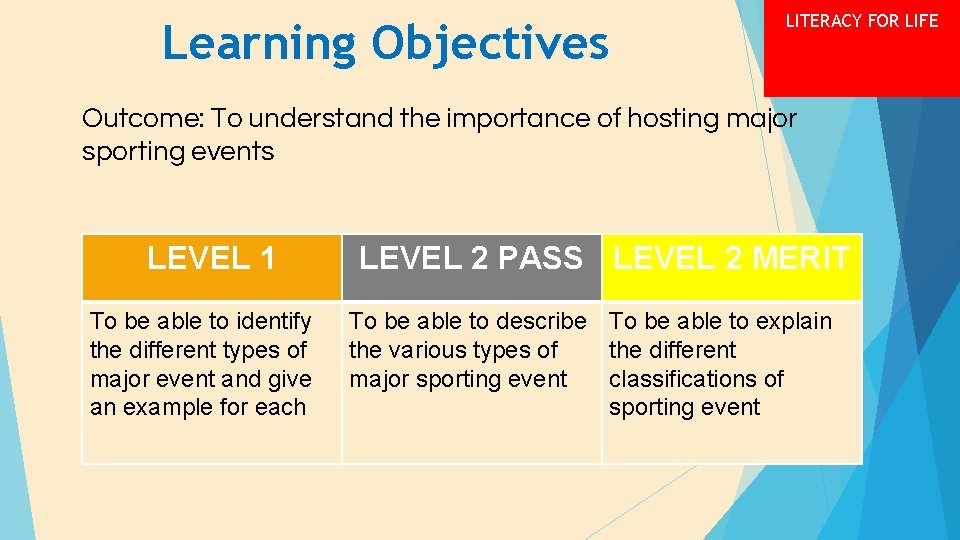
Learning Objectives LITERACY FOR LIFE Outcome: To understand the importance of hosting major sporting events LEVEL 1 To be able to identify the different types of major event and give an example for each LEVEL 2 PASS LEVEL 2 MERIT To be able to describe To be able to explain the various types of the different major sporting event classifications of sporting event
What is the difference between a ‘regular’ and a ‘one-off’ sporting event? ▶
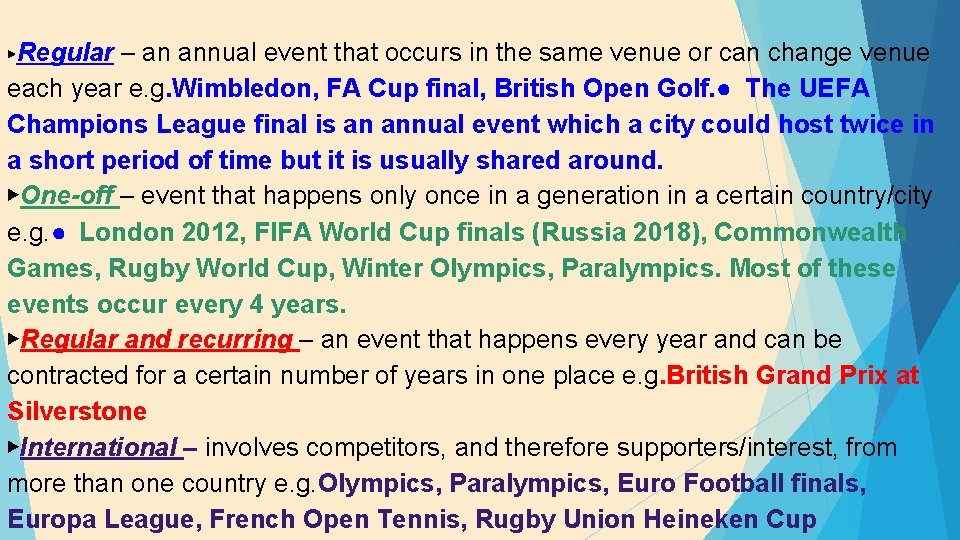
▶Regular – an annual event that occurs in the same venue or can change venue each year e. g. Wimbledon, FA Cup final, British Open Golf. ● The UEFA Champions League final is an annual event which a city could host twice in a short period of time but it is usually shared around. ▶One-off – event that happens only once in a generation in a certain country/city e. g. ● London 2012, FIFA World Cup finals (Russia 2018), Commonwealth Games, Rugby World Cup, Winter Olympics, Paralympics. Most of these events occur every 4 years. ▶Regular and recurring – an event that happens every year and can be contracted for a certain number of years in one place e. g. British Grand Prix at Silverstone ▶International – involves competitors, and therefore supporters/interest, from more than one country e. g. Olympics, Paralympics, Euro Football finals, Europa League, French Open Tennis, Rugby Union Heineken Cup
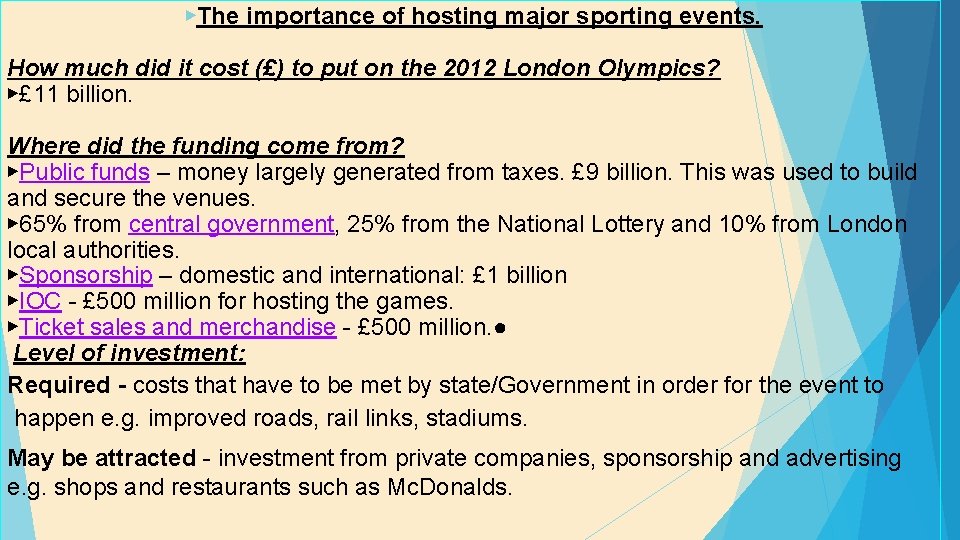
▶The importance of hosting major sporting events. How much did it cost (£) to put on the 2012 London Olympics? ▶£ 11 billion. Where did the funding come from? ▶Public funds – money largely generated from taxes. £ 9 billion. This was used to build and secure the venues. ▶ 65% from central government, 25% from the National Lottery and 10% from London local authorities. ▶Sponsorship – domestic and international: £ 1 billion ▶IOC - £ 500 million for hosting the games. ▶Ticket sales and merchandise - £ 500 million. ● Level of investment: Required - costs that have to be met by state/Government in order for the event to happen e. g. improved roads, rail links, stadiums. May be attracted - investment from private companies, sponsorship and advertising e. g. shops and restaurants such as Mc. Donalds.
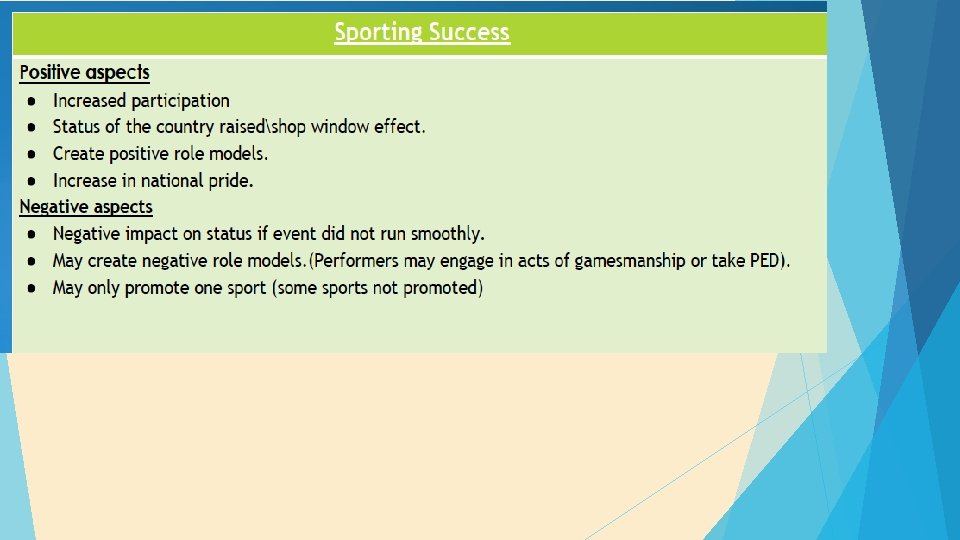
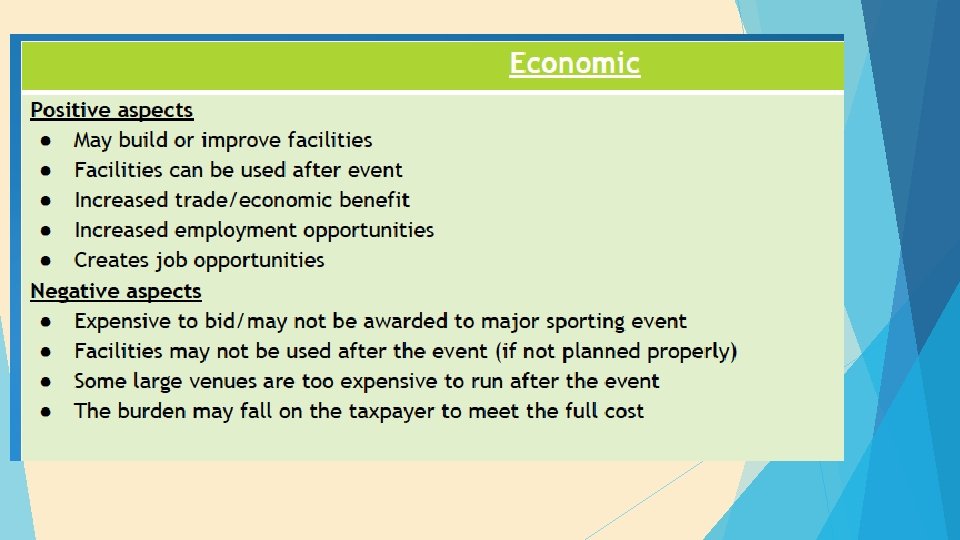
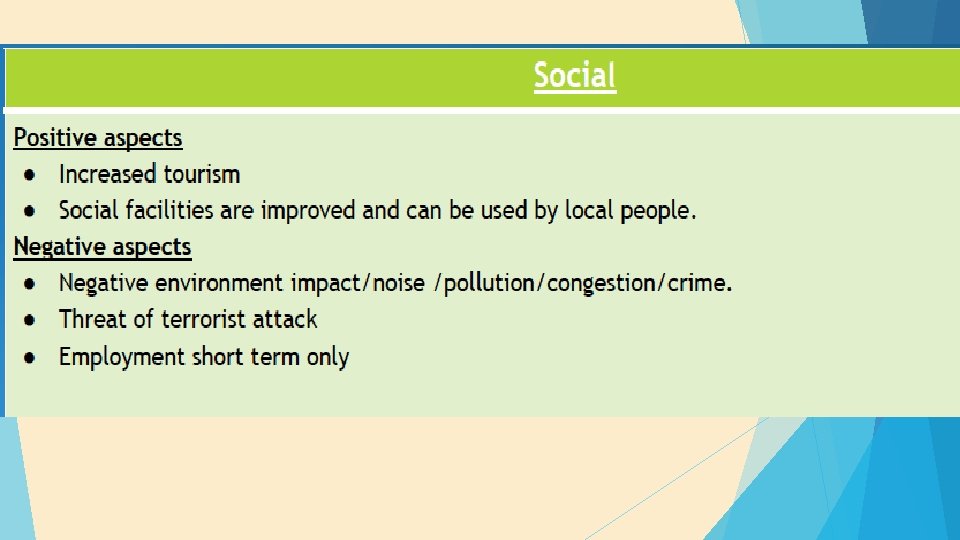
The importance of hosting major sporting events. ▶ What does the word ‘legacy’ mean? A gift of property or anything handed down from the past. The legacy of hosting a major sporting event can be divided into three areas: ▶Sporting ▶Social. ▶Economic.
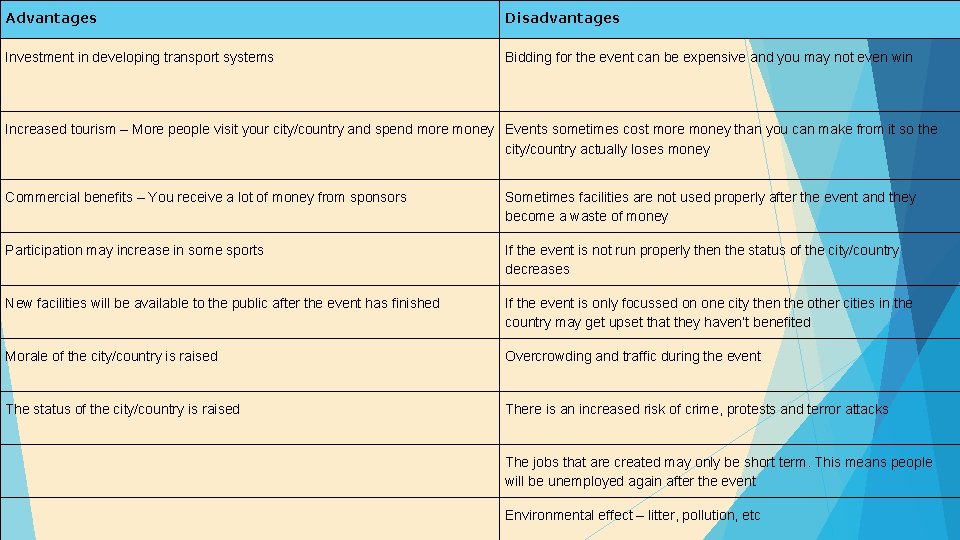
Advantages Disadvantages Investment in developing transport systems Bidding for the event can be expensive and you may not even win Increased tourism – More people visit your city/country and spend more money Events sometimes cost more money than you can make from it so the city/country actually loses money Commercial benefits – You receive a lot of money from sponsors Sometimes facilities are not used properly after the event and they become a waste of money Participation may increase in some sports If the event is not run properly then the status of the city/country decreases New facilities will be available to the public after the event has finished If the event is only focussed on one city then the other cities in the country may get upset that they haven’t benefited Morale of the city/country is raised Overcrowding and traffic during the event The status of the city/country is raised There is an increased risk of crime, protests and terror attacks The jobs that are created may only be short term. This means people will be unemployed again after the event Environmental effect – litter, pollution, etc