
Major Orders of Insects Coleoptera Sheath winged 2
- Slides: 21
Major Orders of Insects
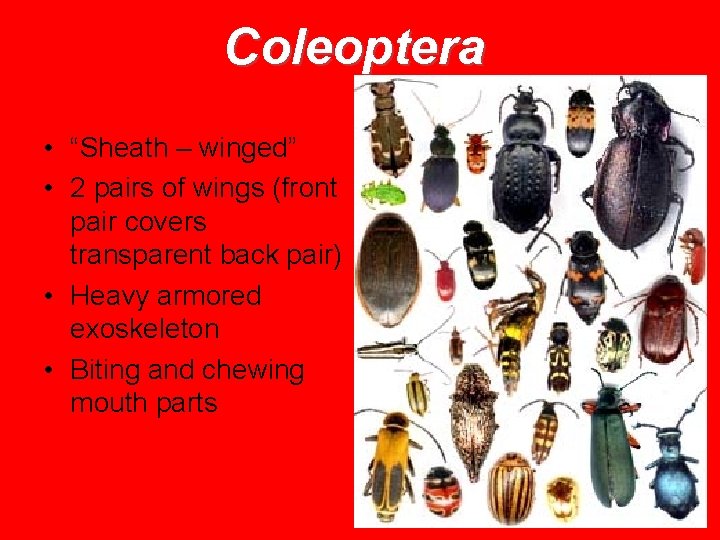
Coleoptera • “Sheath – winged” • 2 pairs of wings (front pair covers transparent back pair) • Heavy armored exoskeleton • Biting and chewing mouth parts
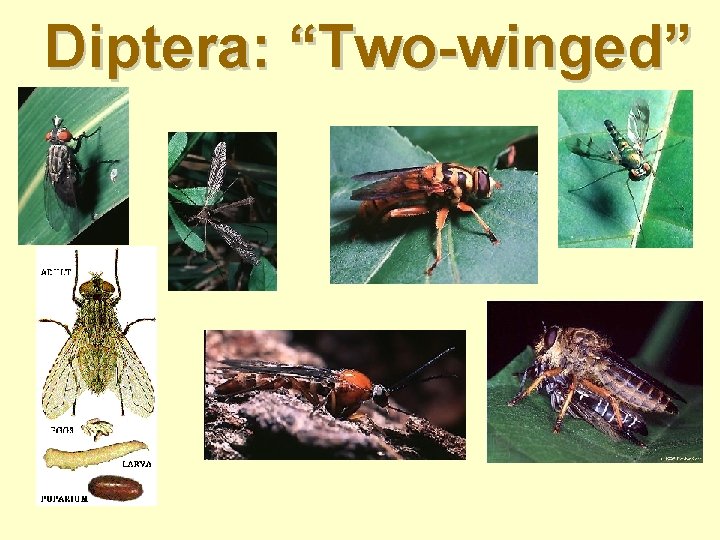
Diptera: “Two-winged”
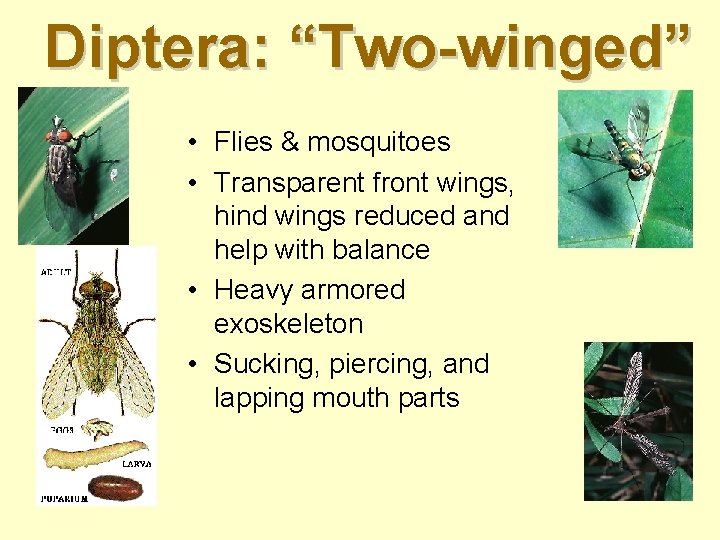
Diptera: “Two-winged” • Flies & mosquitoes • Transparent front wings, hind wings reduced and help with balance • Heavy armored exoskeleton • Sucking, piercing, and lapping mouth parts
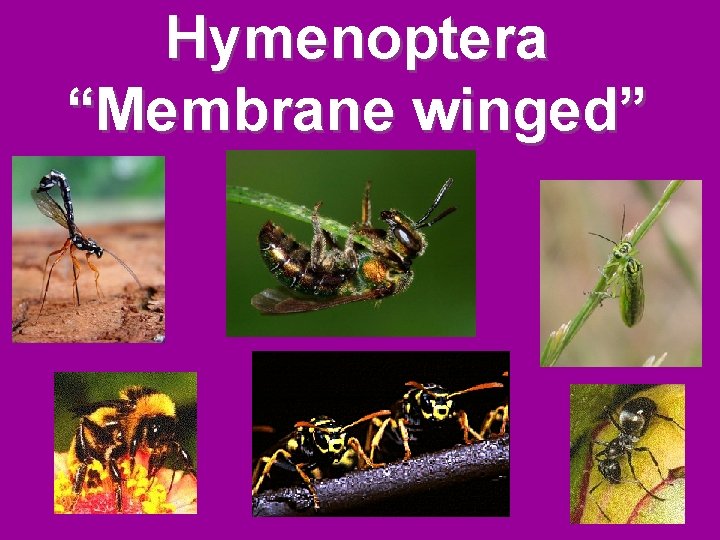
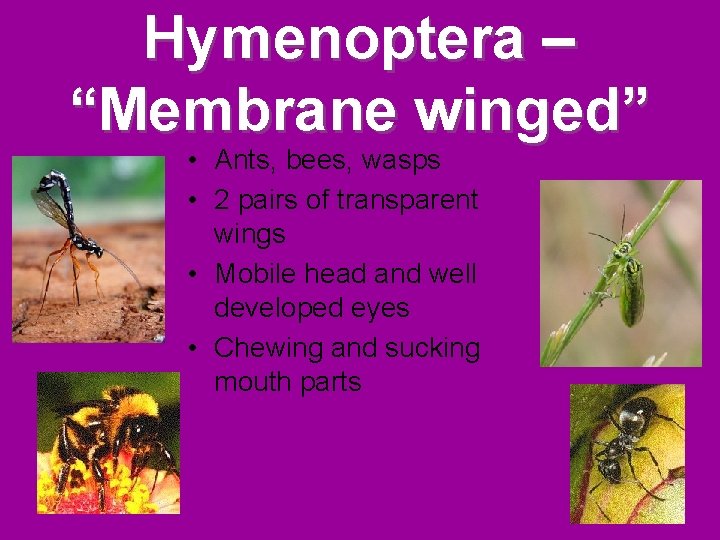
Hymenoptera “Membrane winged”
Hymenoptera – “Membrane winged” • Ants, bees, wasps • 2 pairs of transparent wings • Mobile head and well developed eyes • Chewing and sucking mouth parts
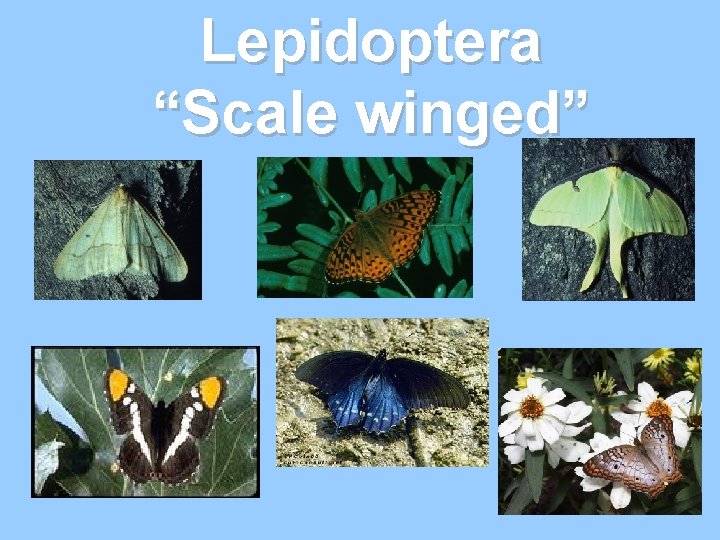
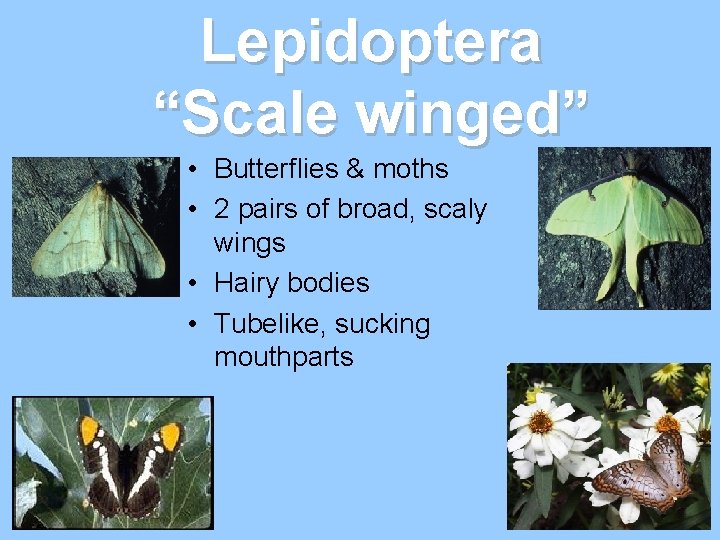
Lepidoptera “Scale winged”
Lepidoptera “Scale winged” • Butterflies & moths • 2 pairs of broad, scaly wings • Hairy bodies • Tubelike, sucking mouthparts
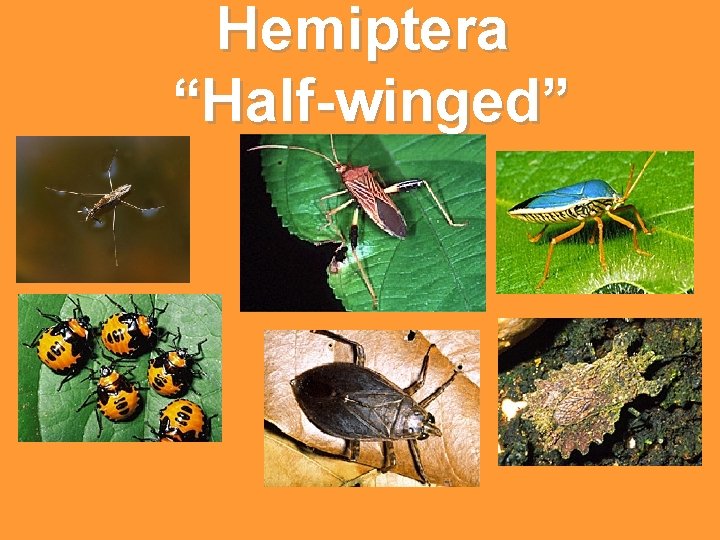
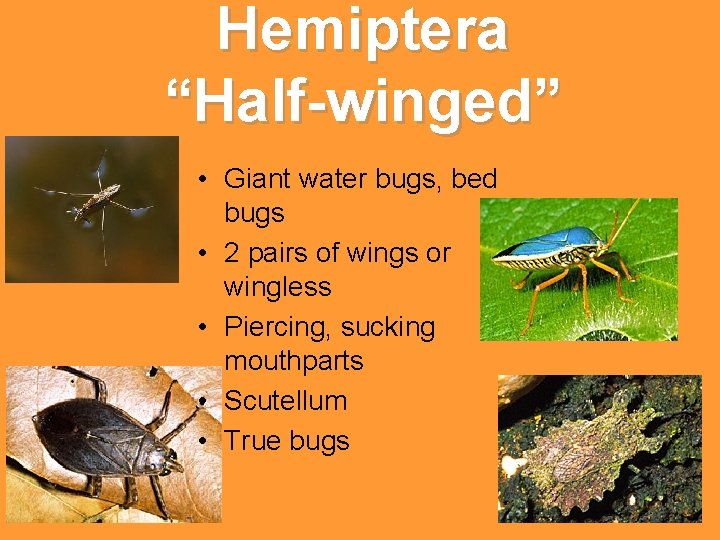
Hemiptera “Half-winged”
Hemiptera “Half-winged” • Giant water bugs, bed bugs • 2 pairs of wings or wingless • Piercing, sucking mouthparts • Scutellum • True bugs
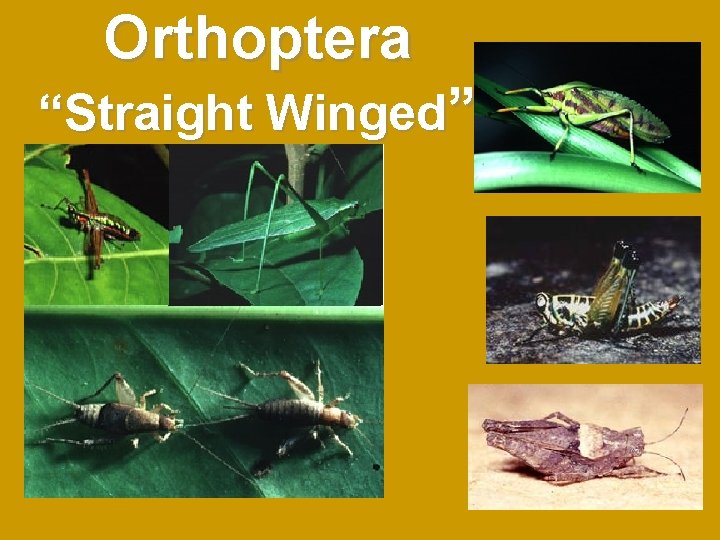
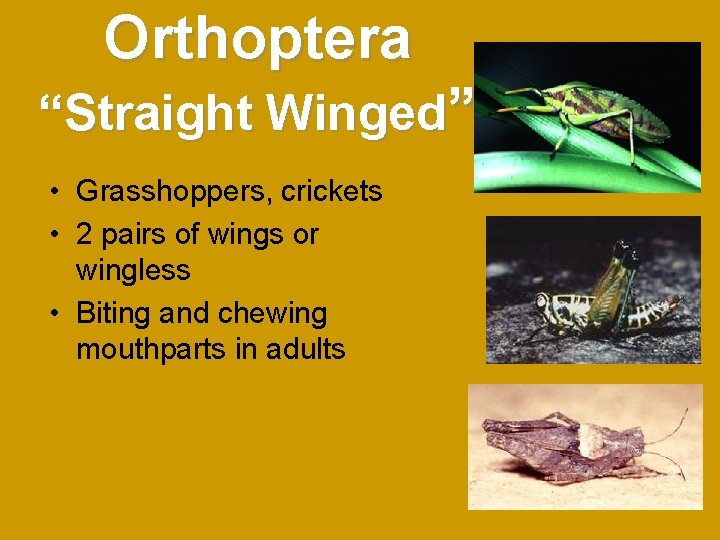
Orthoptera “Straight Winged”
Orthoptera “Straight Winged” • Grasshoppers, crickets • 2 pairs of wings or wingless • Biting and chewing mouthparts in adults
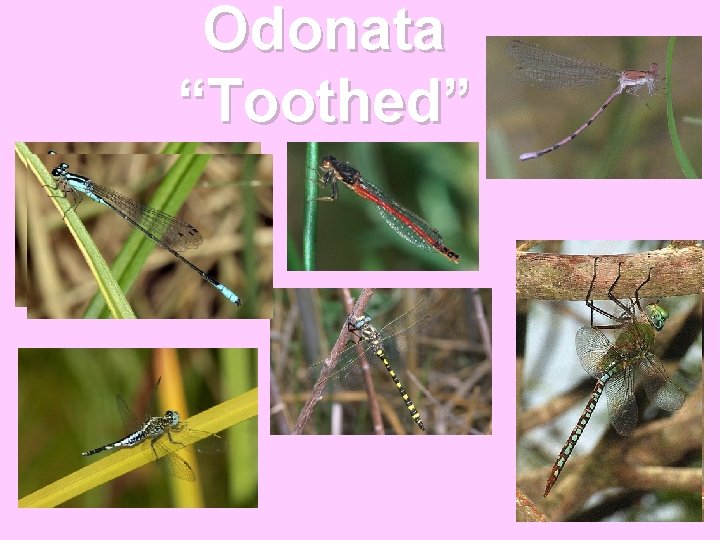
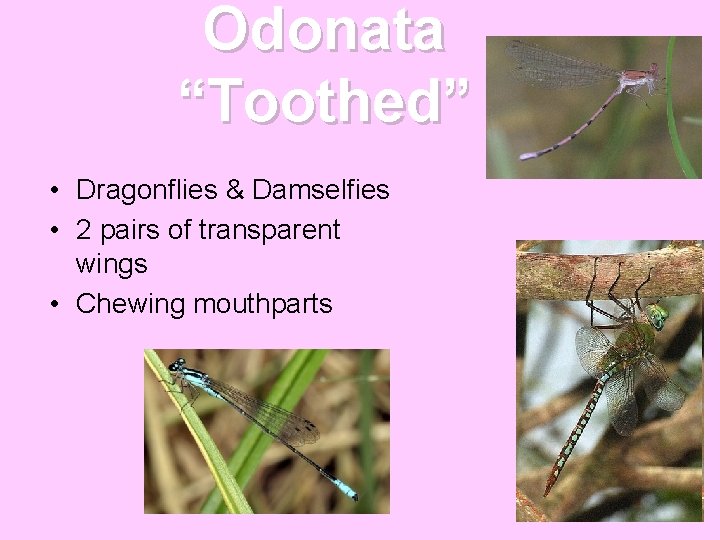
Odonata “Toothed”
Odonata “Toothed” • Dragonflies & Damselfies • 2 pairs of transparent wings • Chewing mouthparts
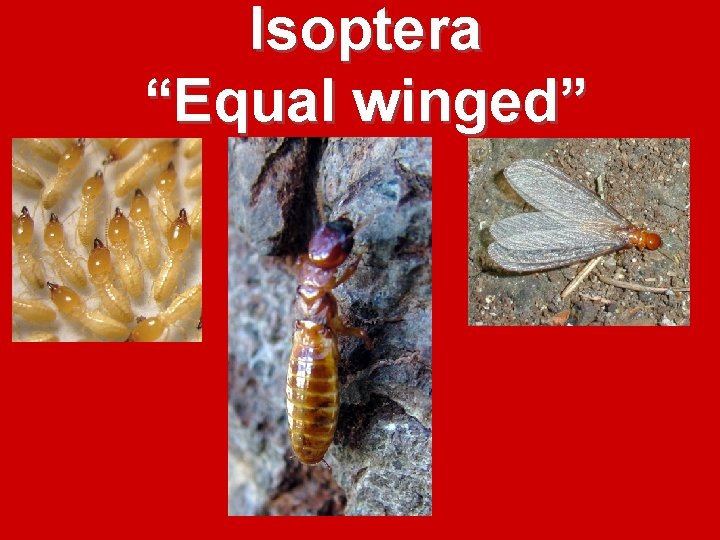
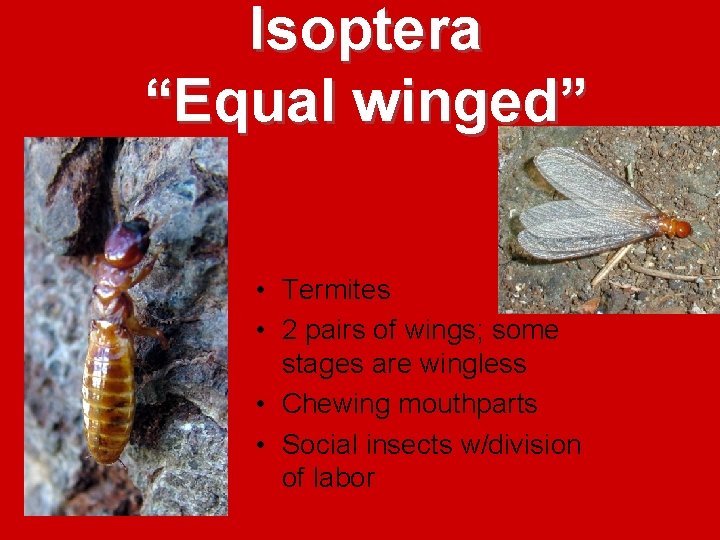
Isoptera “Equal winged”
Isoptera “Equal winged” • Termites • 2 pairs of wings; some stages are wingless • Chewing mouthparts • Social insects w/division of labor
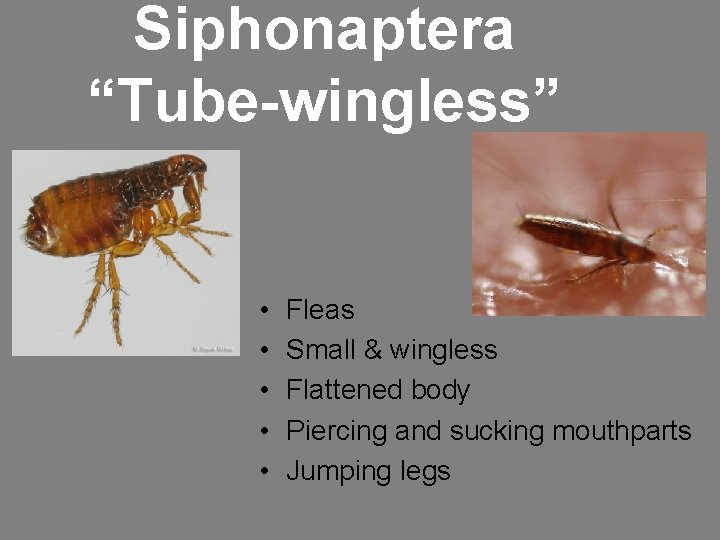
Siphonaptera “Tube-wingless” • • • Fleas Small & wingless Flattened body Piercing and sucking mouthparts Jumping legs
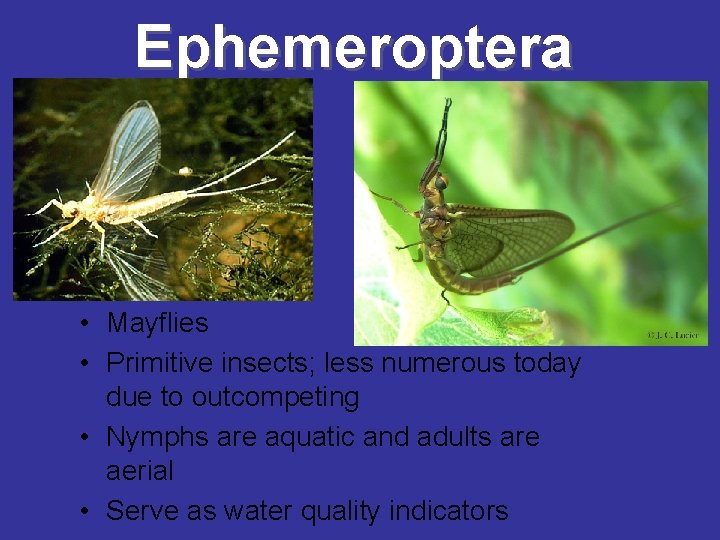
Ephemeroptera • Mayflies • Primitive insects; less numerous today due to outcompeting • Nymphs are aquatic and adults are aerial • Serve as water quality indicators
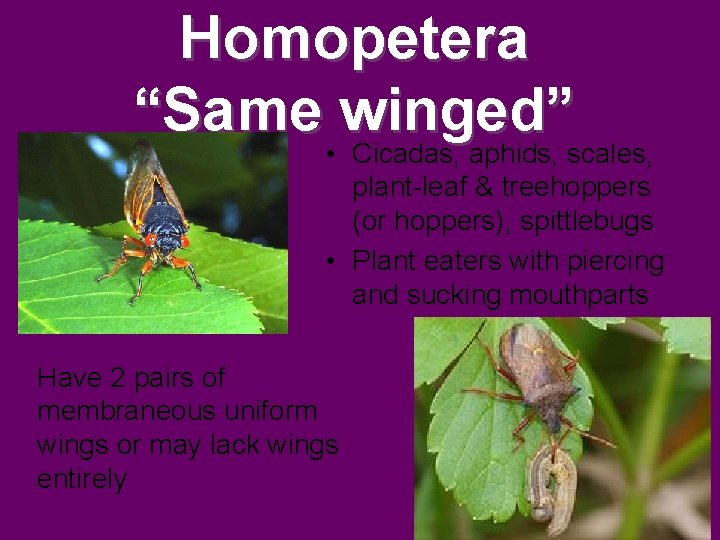
Homopetera “Same winged” • Cicadas, aphids, scales, plant-leaf & treehoppers (or hoppers), spittlebugs • Plant eaters with piercing and sucking mouthparts Have 2 pairs of membraneous uniform wings or may lack wings entirely
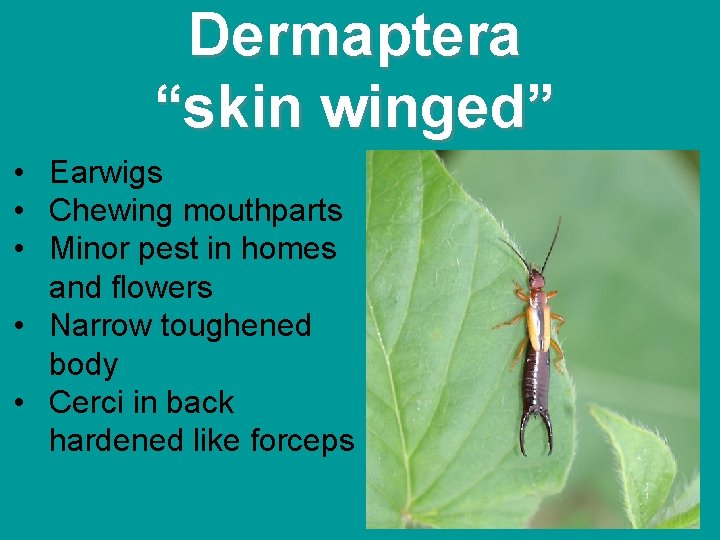
Dermaptera “skin winged” • Earwigs • Chewing mouthparts • Minor pest in homes and flowers • Narrow toughened body • Cerci in back hardened like forceps
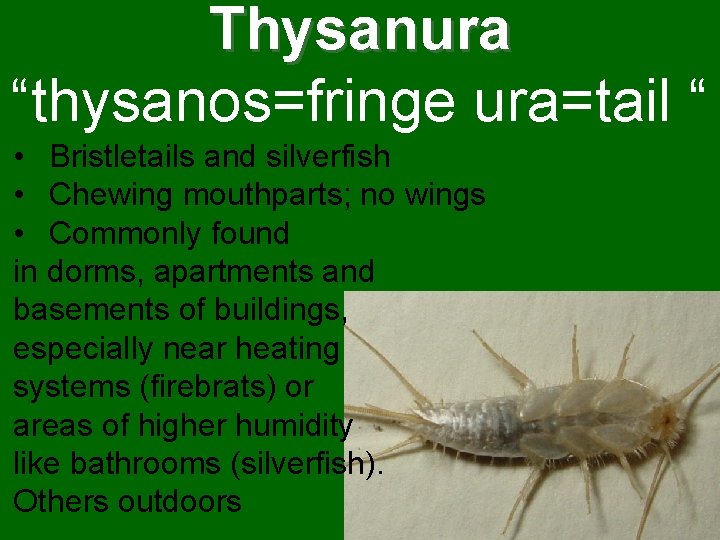
Thysanura “thysanos=fringe ura=tail “ • Bristletails and silverfish • Chewing mouthparts; no wings • Commonly found in dorms, apartments and basements of buildings, especially near heating systems (firebrats) or areas of higher humidity like bathrooms (silverfish). Others outdoors