
Major nutritional types of microorganisms Nutritional Type Carbon
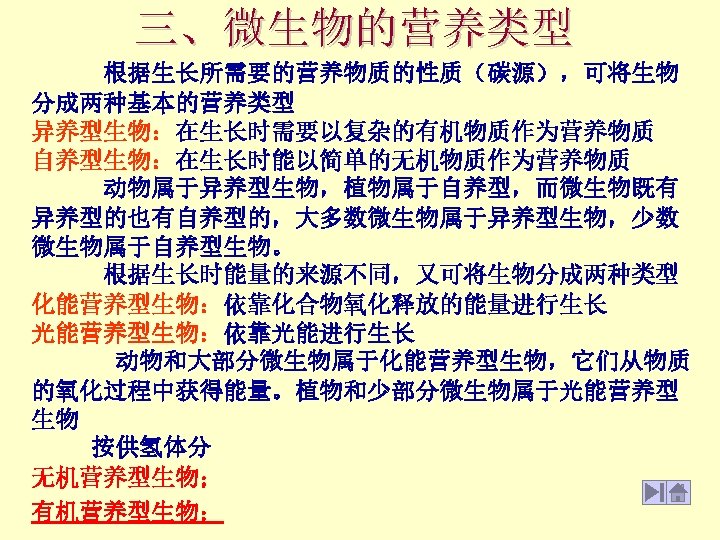
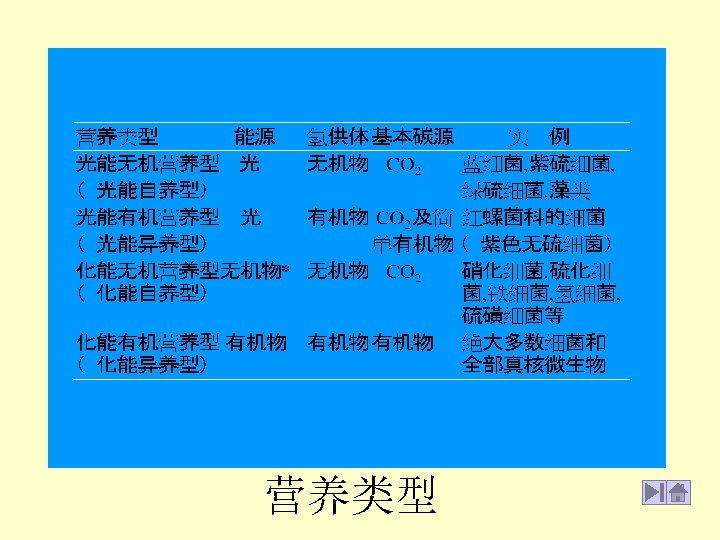
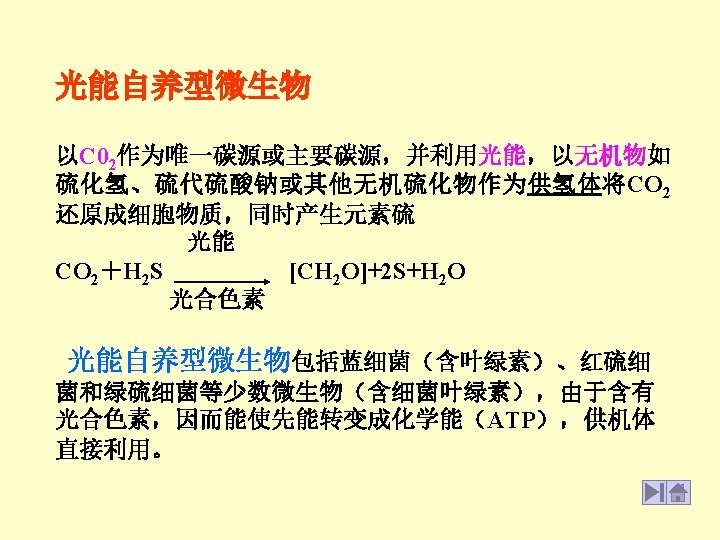
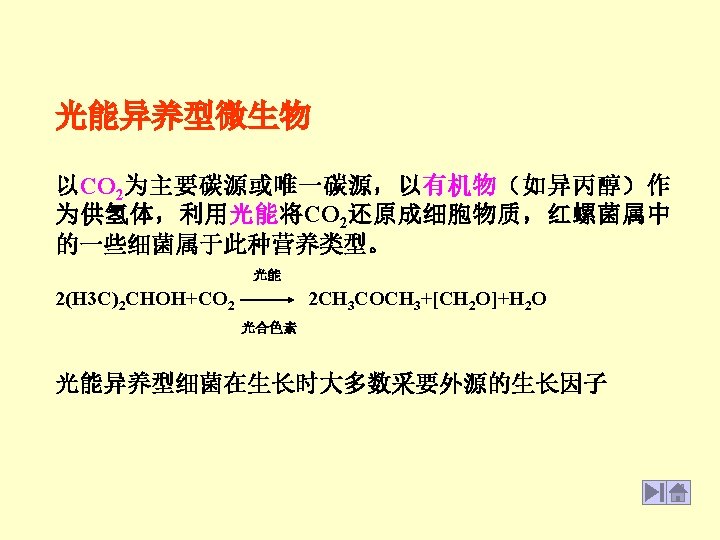
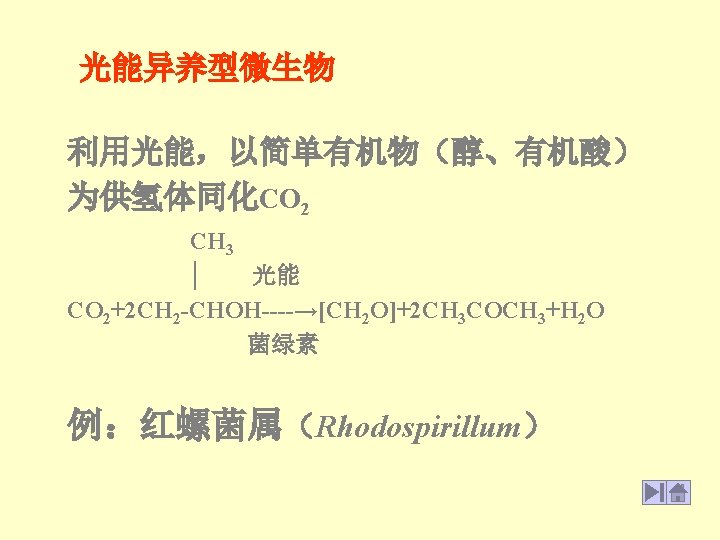
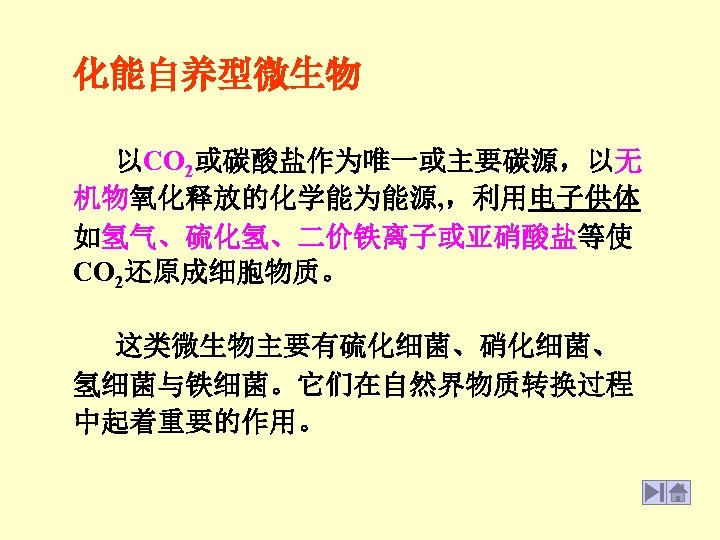
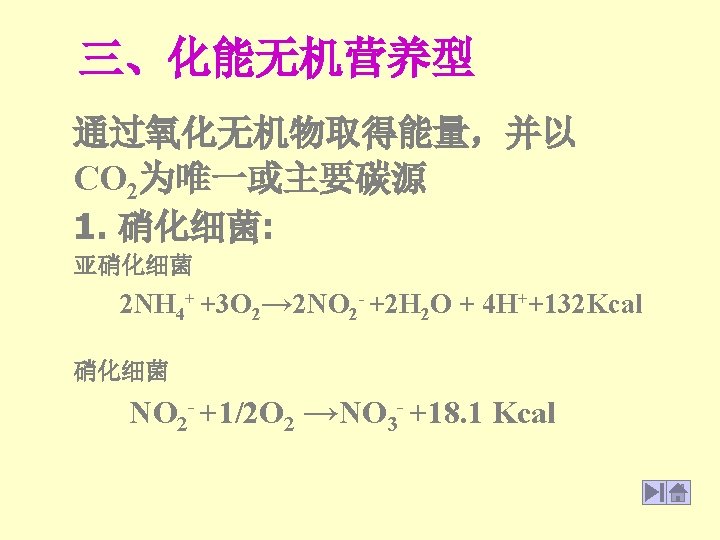
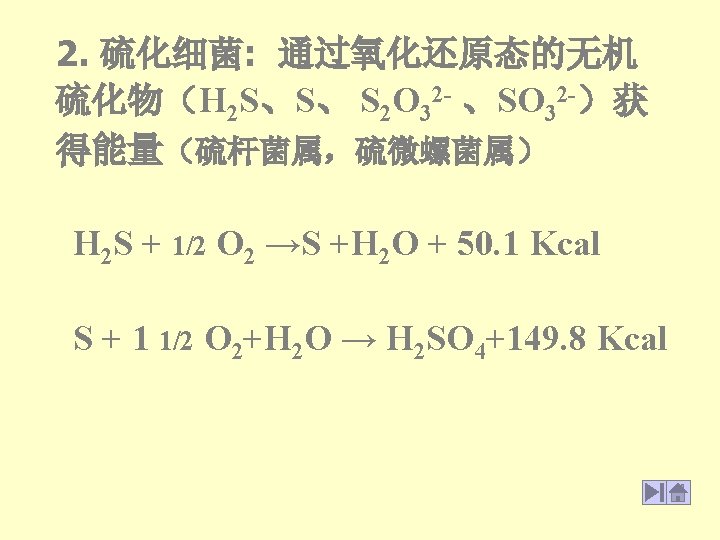

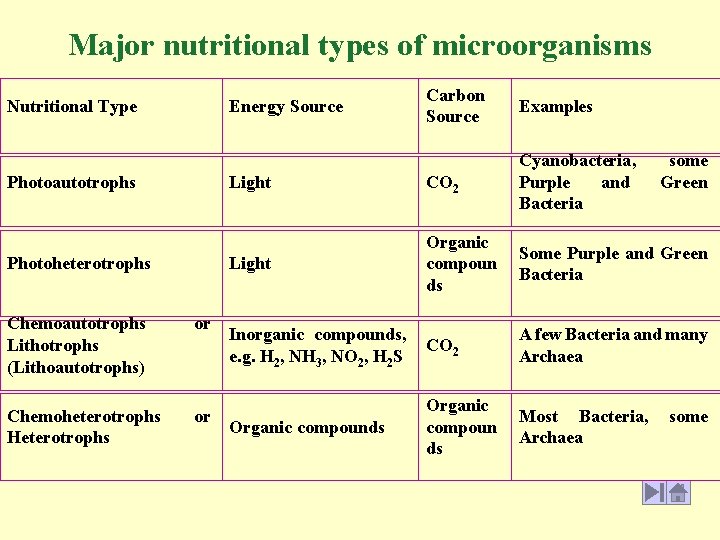
Major nutritional types of microorganisms Nutritional Type Carbon Source Examples Light CO 2 Cyanobacteria, Purple and Bacteria Light Organic compoun ds Some Purple and Green Bacteria Inorganic compounds, e. g. H 2, NH 3, NO 2, H 2 S CO 2 A few Bacteria and many Archaea Organic compounds Organic compoun ds Most Bacteria, Archaea Energy Source Photoautotrophs Photoheterotrophs Chemoautotrophs Lithotrophs (Lithoautotrophs) or Chemoheterotrophs Heterotrophs or some Green some
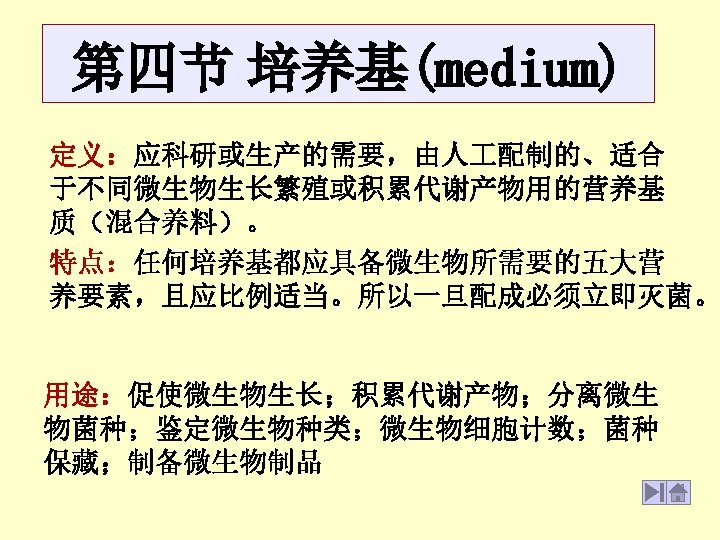
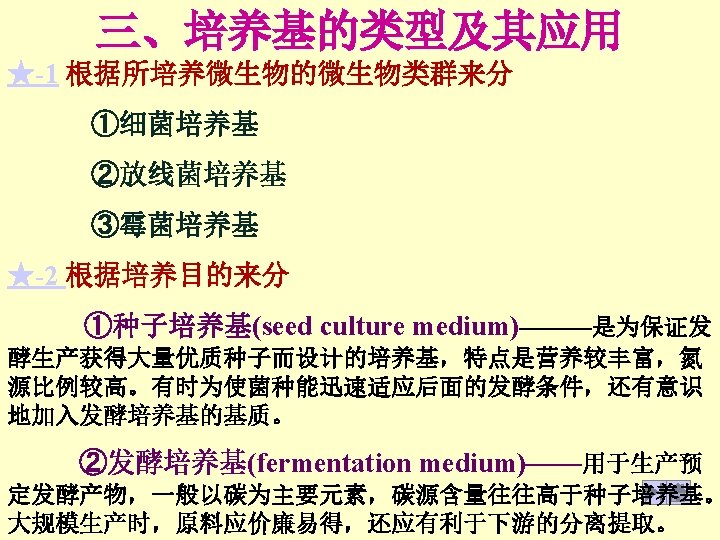
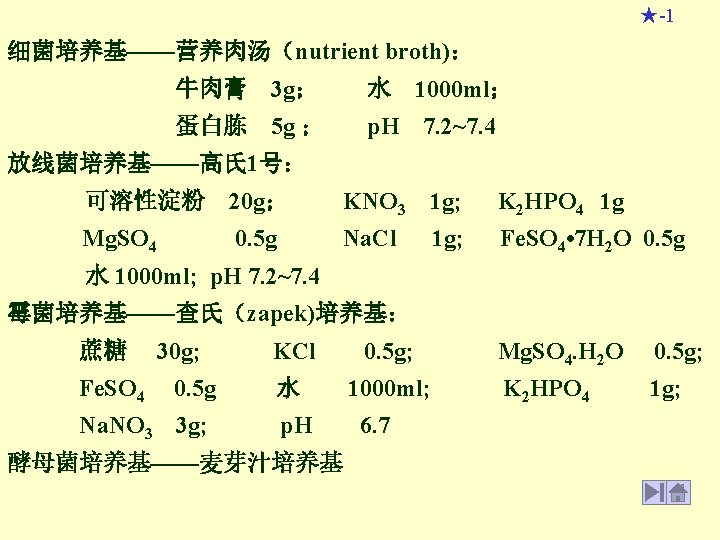
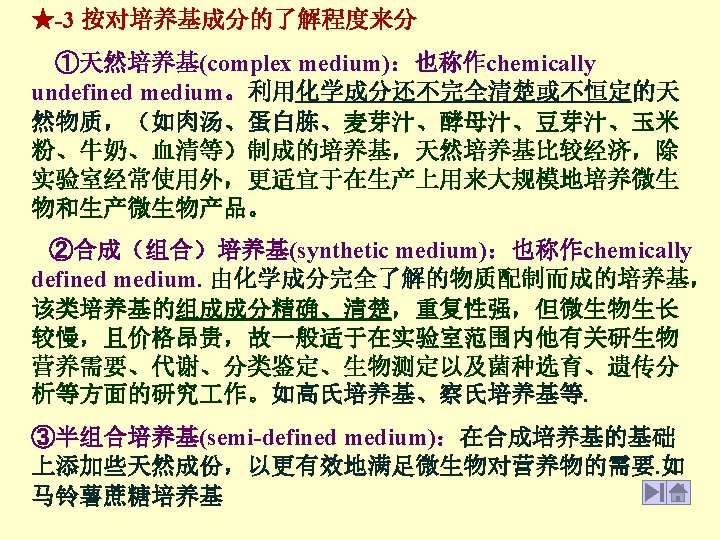
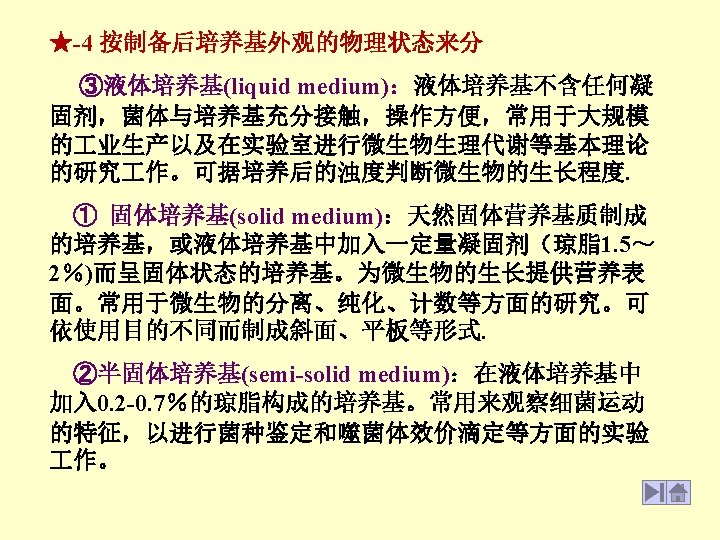
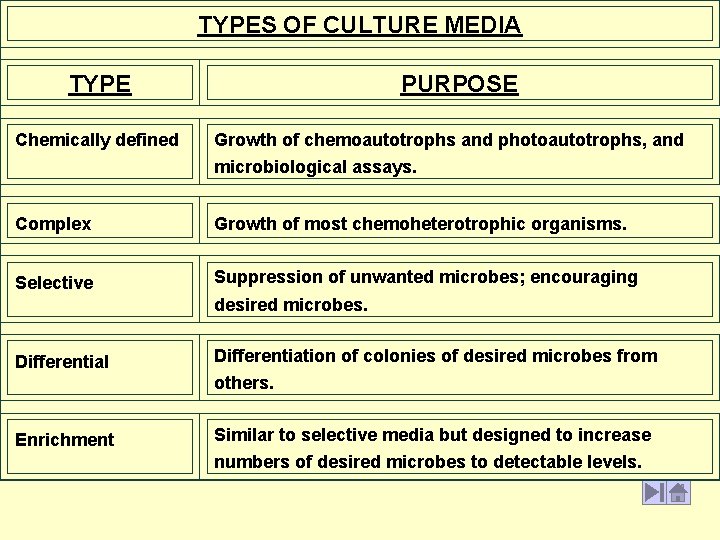
TYPES OF CULTURE MEDIA TYPE Chemically defined PURPOSE Growth of chemoautotrophs and photoautotrophs, and microbiological assays. Complex Growth of most chemoheterotrophic organisms. Selective Suppression of unwanted microbes; encouraging desired microbes. Differential Differentiation of colonies of desired microbes from others. Enrichment Similar to selective media but designed to increase numbers of desired microbes to detectable levels.
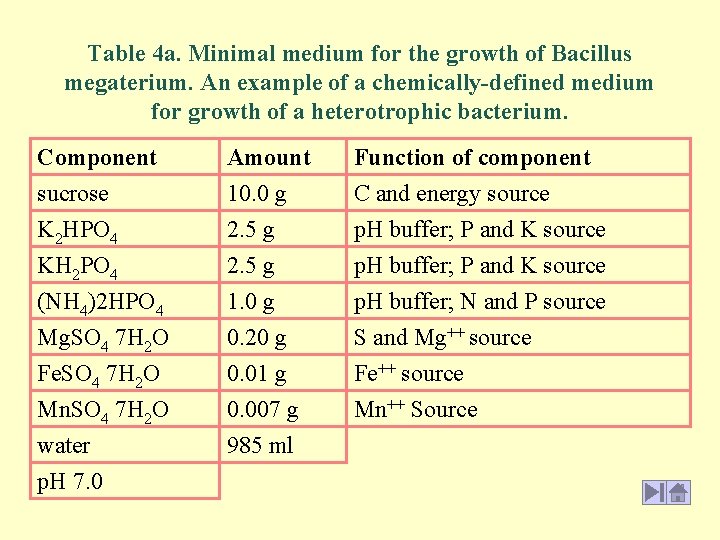
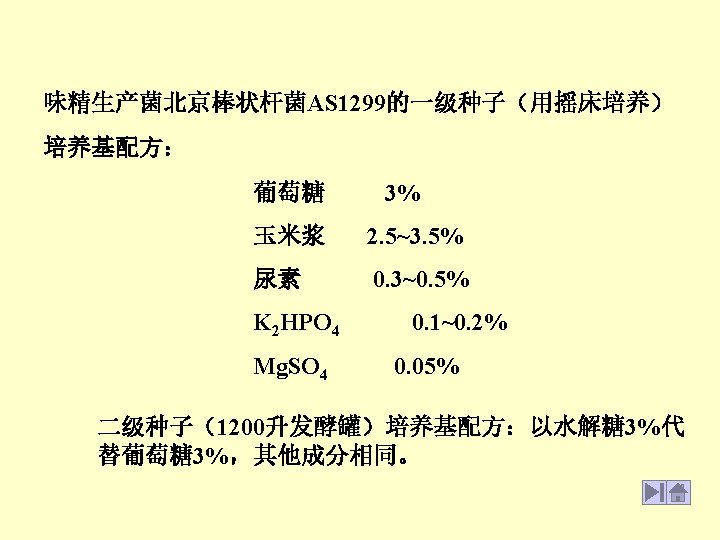
Table 4 a. Minimal medium for the growth of Bacillus megaterium. An example of a chemically-defined medium for growth of a heterotrophic bacterium. Component sucrose K 2 HPO 4 KH 2 PO 4 Amount 10. 0 g 2. 5 g Function of component C and energy source p. H buffer; P and K source (NH 4)2 HPO 4 Mg. SO 4 7 H 2 O Fe. SO 4 7 H 2 O Mn. SO 4 7 H 2 O water p. H 7. 0 1. 0 g 0. 20 g 0. 01 g 0. 007 g 985 ml p. H buffer; N and P source S and Mg++ source Fe++ source Mn++ Source
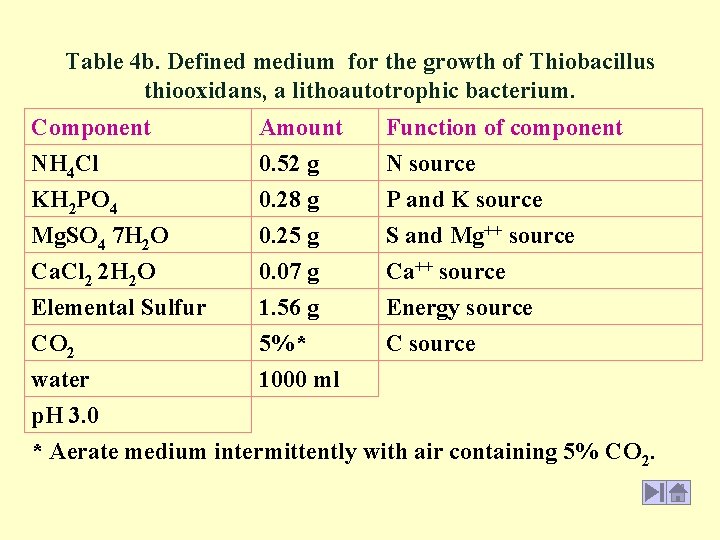
Table 4 b. Defined medium for the growth of Thiobacillus thiooxidans, a lithoautotrophic bacterium. Component Amount Function of component NH 4 Cl KH 2 PO 4 Mg. SO 4 7 H 2 O Ca. Cl 2 2 H 2 O 0. 52 g 0. 28 g 0. 25 g 0. 07 g N source P and K source S and Mg++ source Ca++ source Elemental Sulfur CO 2 water p. H 3. 0 1. 56 g 5%* 1000 ml Energy source C source * Aerate medium intermittently with air containing 5% CO 2.
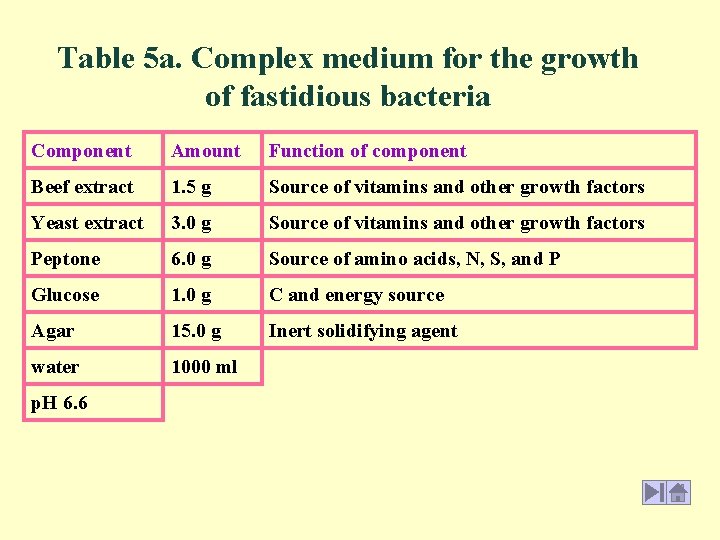
Table 5 a. Complex medium for the growth of fastidious bacteria Component Amount Function of component Beef extract 1. 5 g Source of vitamins and other growth factors Yeast extract 3. 0 g Source of vitamins and other growth factors Peptone 6. 0 g Source of amino acids, N, S, and P Glucose 1. 0 g C and energy source Agar 15. 0 g Inert solidifying agent water 1000 ml p. H 6. 6
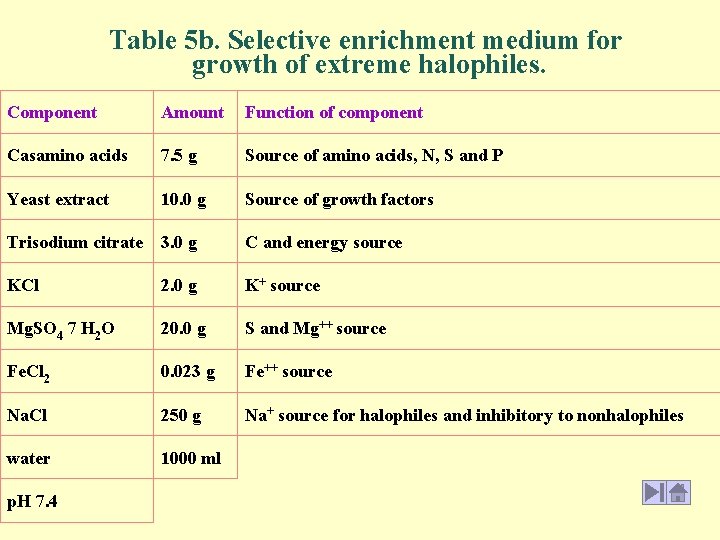
Table 5 b. Selective enrichment medium for growth of extreme halophiles. Component Amount Function of component Casamino acids 7. 5 g Source of amino acids, N, S and P Yeast extract 10. 0 g Source of growth factors Trisodium citrate 3. 0 g C and energy source KCl 2. 0 g K+ source Mg. SO 4 7 H 2 O 20. 0 g S and Mg++ source Fe. Cl 2 0. 023 g Fe++ source Na. Cl 250 g Na+ source for halophiles and inhibitory to nonhalophiles water 1000 ml p. H 7. 4
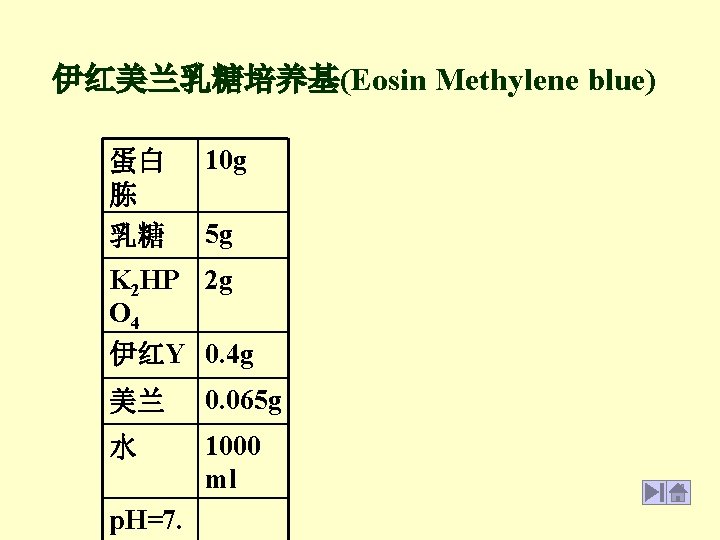
伊红美兰乳糖培养基(Eosin Methylene blue) 蛋白 胨 乳糖 10 g 5 g K 2 HP 2 g O 4 伊红Y 0. 4 g 美兰 0. 065 g 水 1000 ml p. H=7.
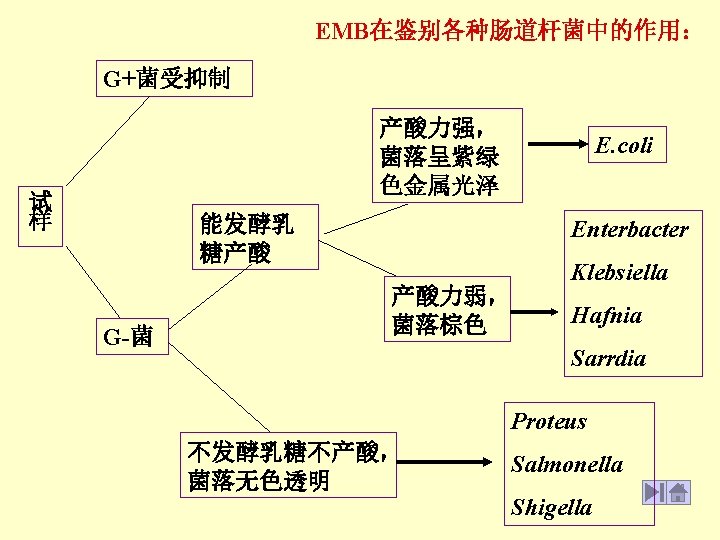
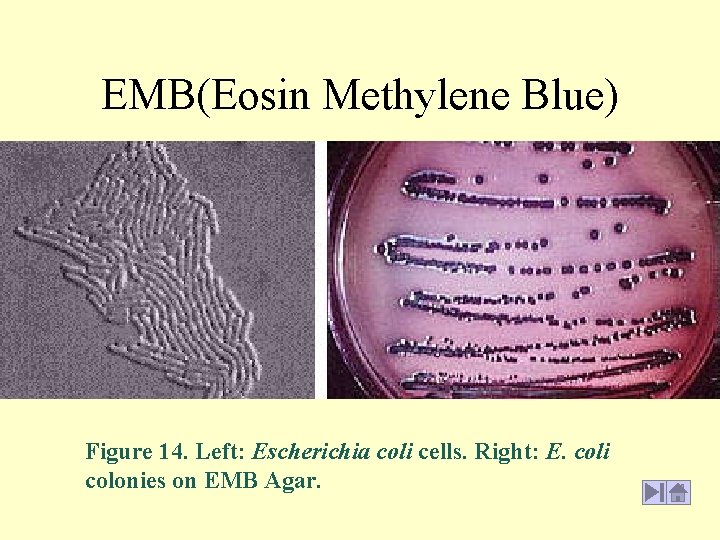
EMB(Eosin Methylene Blue) Figure 14. Left: Escherichia coli cells. Right: E. coli colonies on EMB Agar.
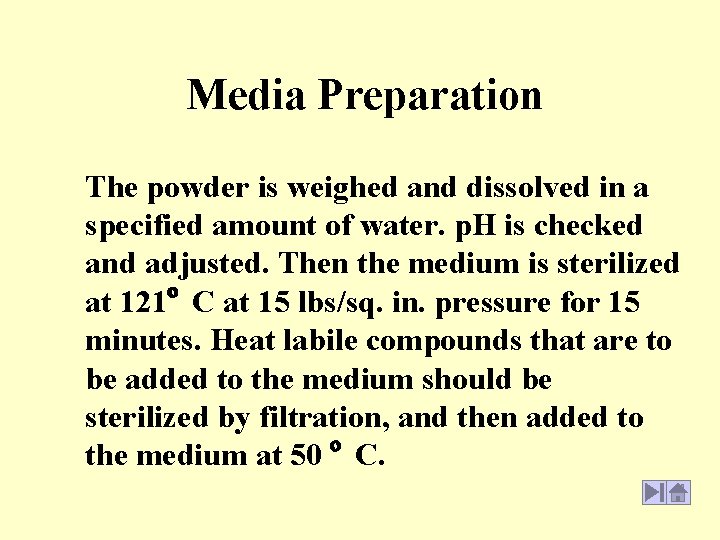
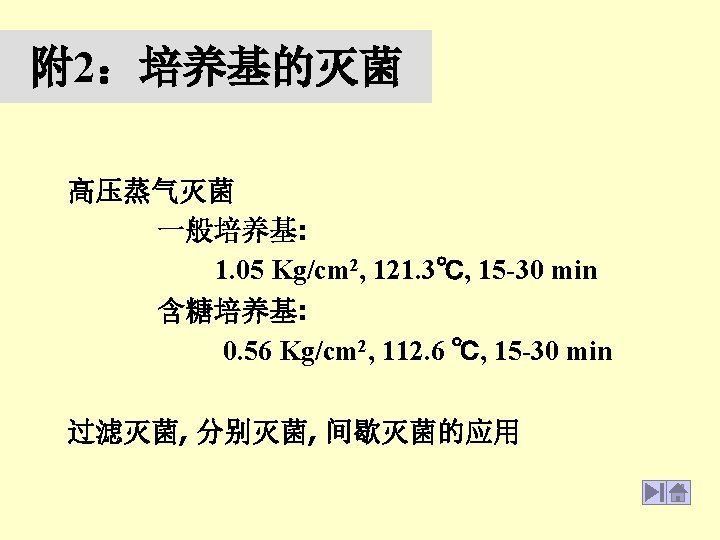
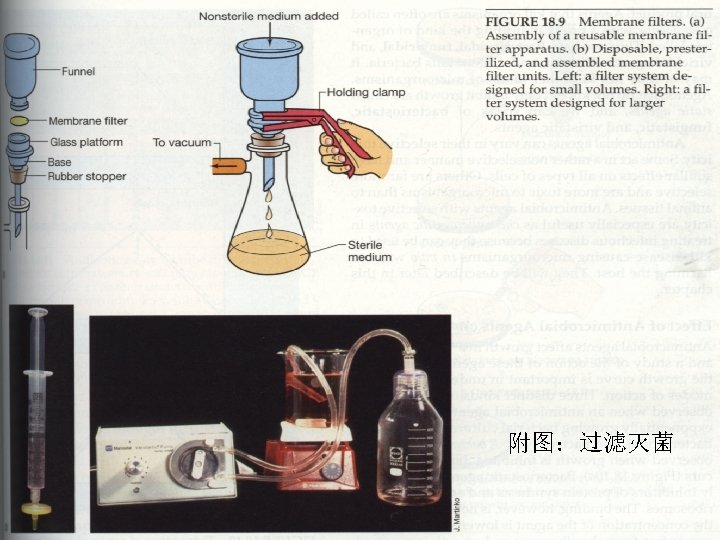
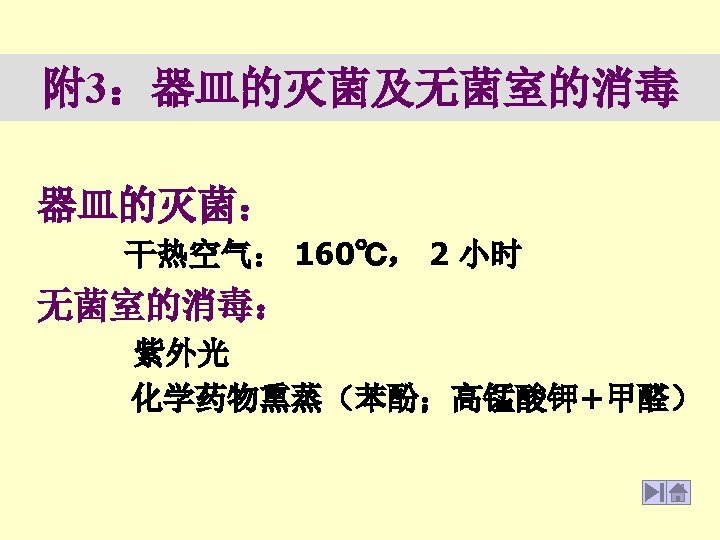
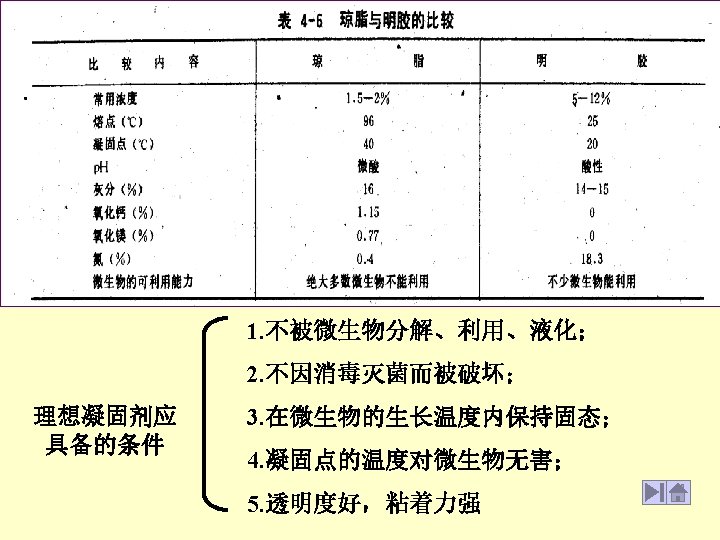
Media Preparation The powder is weighed and dissolved in a specified amount of water. p. H is checked and adjusted. Then the medium is sterilized at 121º C at 15 lbs/sq. in. pressure for 15 minutes. Heat labile compounds that are to be added to the medium should be sterilized by filtration, and then added to the medium at 50 º C.
- Slides: 45