
Major Muscles of the Body Michael Gilmore High
Major Muscles of the Body Michael Gilmore High School Anatomy March 9 th 2010
Lesson Objectives In this lesson, students will learn that…. 1. There are several types of cells on the body. 2. Know and understand the different types of muscle tissue and their function. 3. The main muscle groups of with the knowledge of the primary and secondary functions of each muscle. 4. The kinesiology of the muscle and joints the muscles move. 5. The major muscle groups of the body. 6. The attachments (origins and insertions) of the muscles and muscle groups. In this lesson, students will learn how to…. 1. Compare and contrast epithelial tissue, connective tissue, muscle tissue, and nervous tissue. 2. Compare and contrast white and red muscle fibers. 3. Differentiate the difference between primary and secondary muscles. 4. The difference between open chain and close chain joint motions from the muscles.

Power Point Presentation This Power Point Presentation will reinvestigate the four types of body tissue. We will examine the major muscle groups on in the body, what the names of the individual muscles are, and where they are located in the body.
The Human Body - Unleashing the Full Power of The Muscle Video �http: //www. youtube. com/ v=Q 9 w. RTIZIByk (video) Host neurcirujo

“The last three or four reps is what makes the muscle grow. This area of pain divides the champion from someone else who is not a champion. That's what most people lack, having the guts to go on and just say they'll go through the pain no matter what happens. ” Arnold Schwarzenegger
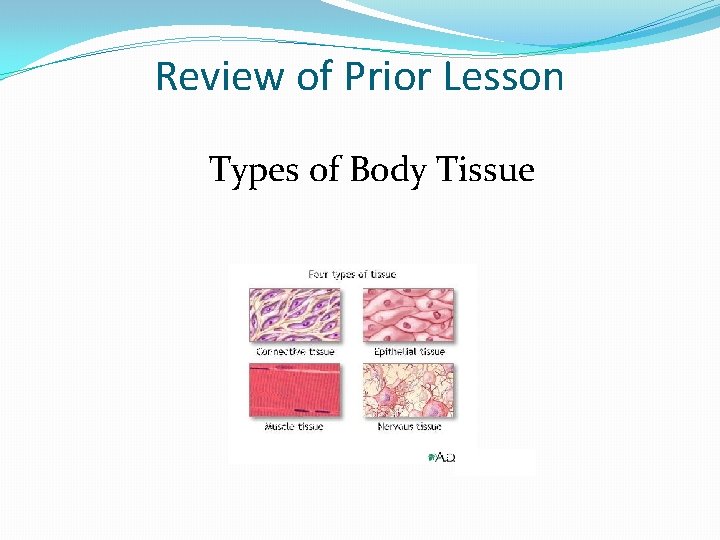
Review of Prior Lesson Types of Body Tissue
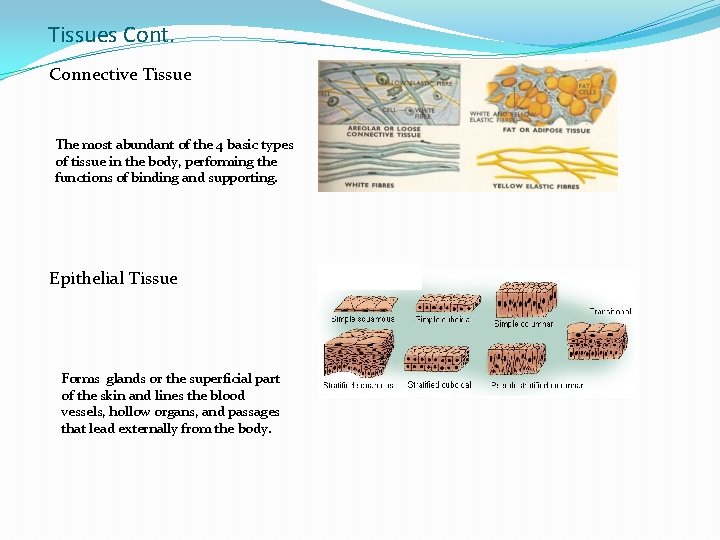
Tissues Cont. Connective Tissue The most abundant of the 4 basic types of tissue in the body, performing the functions of binding and supporting. Epithelial Tissue Forms glands or the superficial part of the skin and lines the blood vessels, hollow organs, and passages that lead externally from the body.
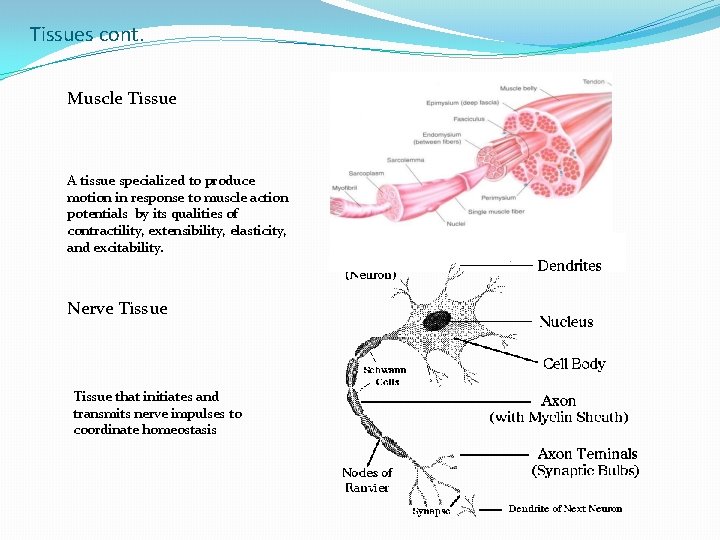
Tissues cont. Muscle Tissue A tissue specialized to produce motion in response to muscle action potentials by its qualities of contractility, extensibility, elasticity, and excitability. Nerve Tissue that initiates and transmits nerve impulses to coordinate homeostasis
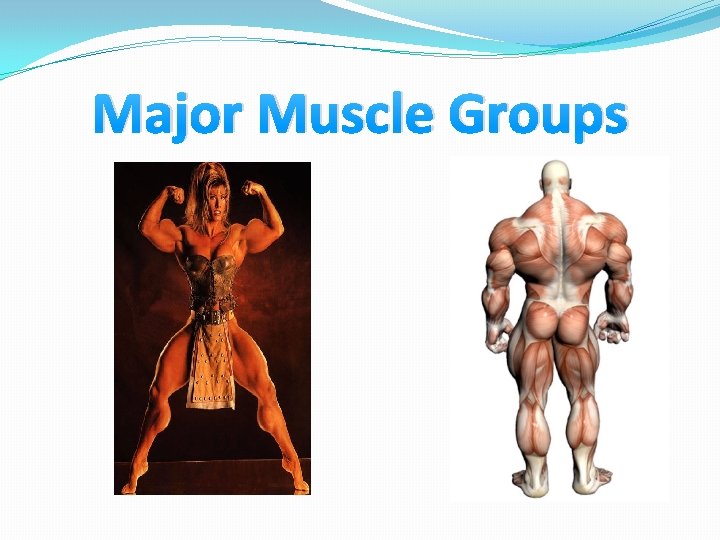
Major Muscle Groups
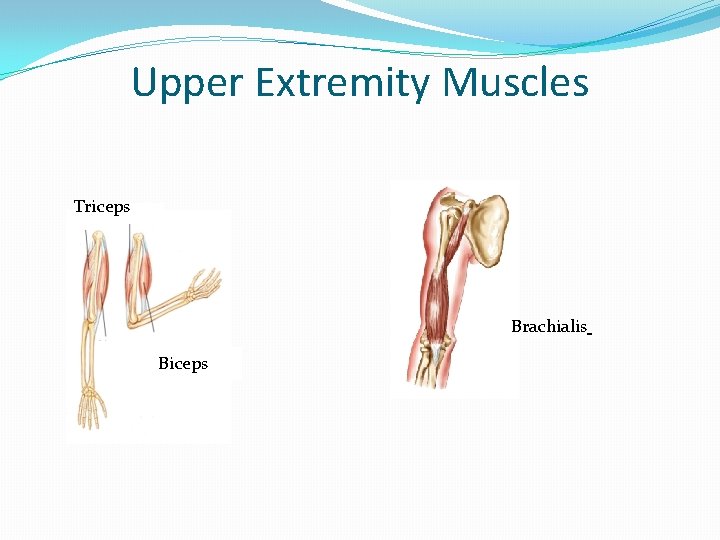
Upper Extremity Muscles Triceps Brachialis Biceps
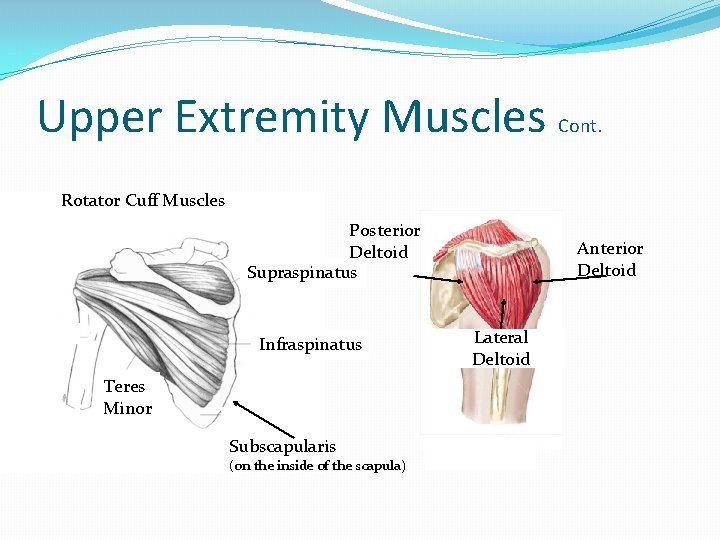
Upper Extremity Muscles Cont. Rotator Cuff Muscles Posterior Deltoid Supraspinatus Infraspinatus Teres Minor Subscapularis (on the inside of the scapula) Anterior Deltoid Lateral Deltoid
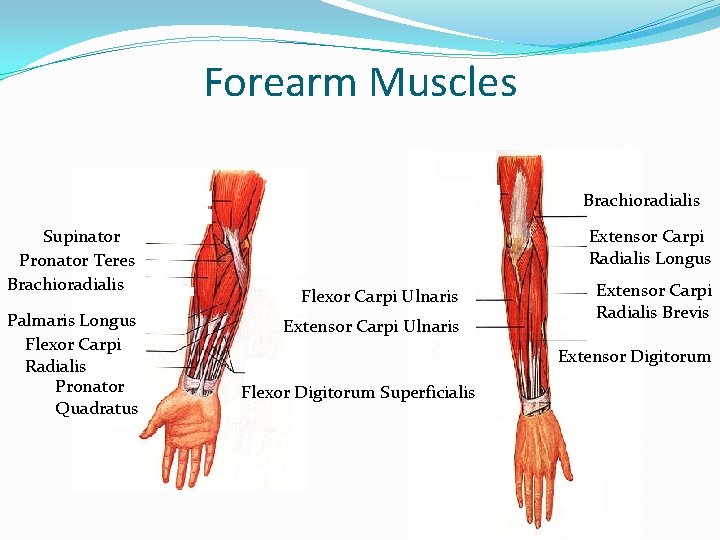
Forearm Muscles Brachioradialis Supinator Pronator Teres Brachioradialis Palmaris Longus Flexor Carpi Radialis Pronator Quadratus Extensor Carpi Radialis Longus Flexor Carpi Ulnaris Extensor Carpi Radialis Brevis Extensor Digitorum Flexor Digitorum Superficialis
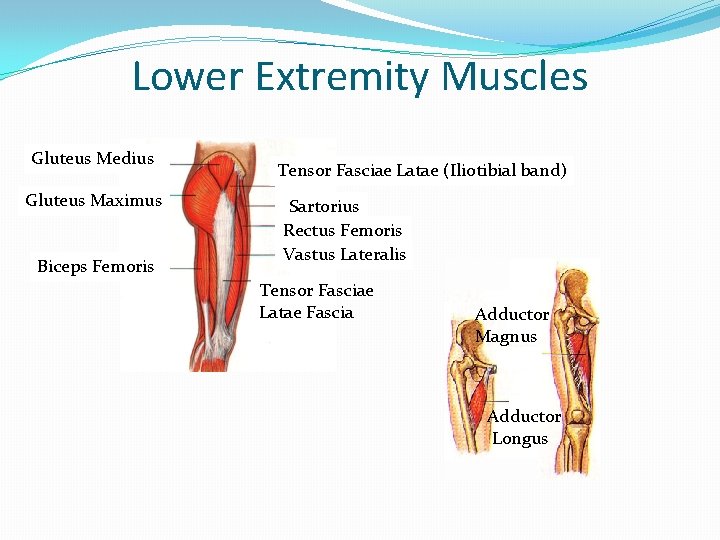
Lower Extremity Muscles Gluteus Medius Gluteus Maximus Biceps Femoris Tensor Fasciae Latae (Iliotibial band) Sartorius Rectus Femoris Vastus Lateralis Tens Fasciae Tensor Latae Fascia Adductor Magnus Adductor Longus
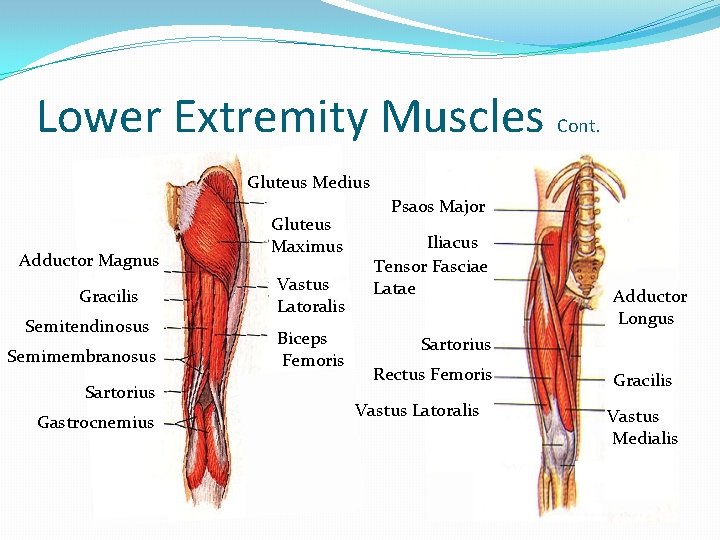
Lower Extremity Muscles Cont. Gluteus Medius Adductor Magnus Gracilis Semitendinosus Semimembranosus Sartorius Gastrocnemius Gluteus Maximus Vastus Latoralis Biceps Femoris Psaos Major Iliacus Tensor Fasciae Latae Adductor Longus Sartorius Rectus Femoris Vastus Latoralis Gracilis Vastus Medialis
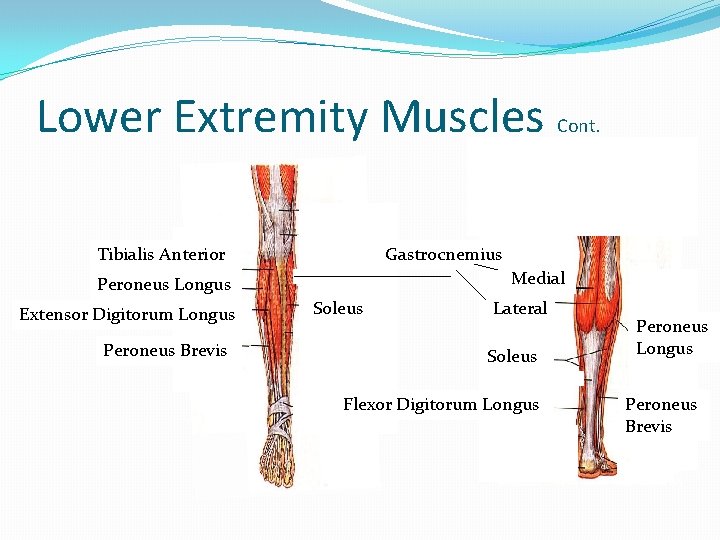
Lower Extremity Muscles Tibialis Anterior Gastrocnemius Medial Peroneus Longus Extensor Digitorum Longus Peroneus Brevis Cont. Soleus Lateral Soleus Flexor Digitorum Longus Peroneus Brevis
- Slides: 15