
Major Minor Sources of Biomedical Waste UNITII Waste
Major & Minor Sources of Biomedical Waste (UNIT-II)
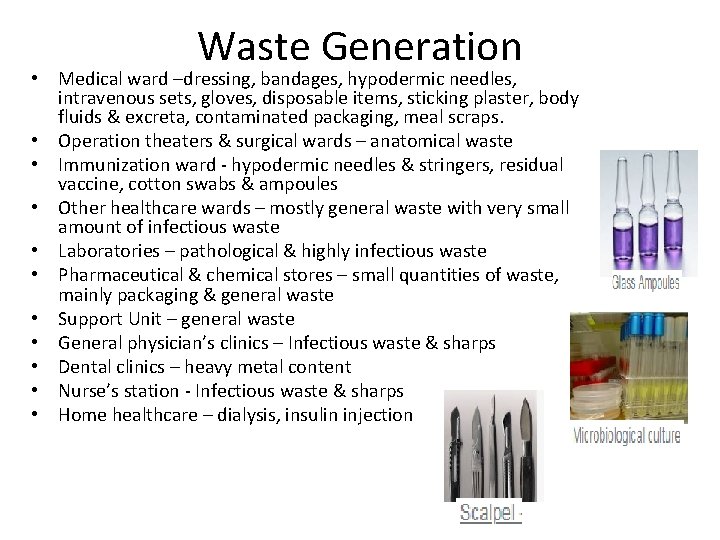
Waste Generation • Medical ward –dressing, bandages, hypodermic needles, intravenous sets, gloves, disposable items, sticking plaster, body fluids & excreta, contaminated packaging, meal scraps. • Operation theaters & surgical wards – anatomical waste • Immunization ward - hypodermic needles & stringers, residual vaccine, cotton swabs & ampoules • Other healthcare wards – mostly general waste with very small amount of infectious waste • Laboratories – pathological & highly infectious waste • Pharmaceutical & chemical stores – small quantities of waste, mainly packaging & general waste • Support Unit – general waste • General physician’s clinics – Infectious waste & sharps • Dental clinics – heavy metal content • Nurse’s station - Infectious waste & sharps • Home healthcare – dialysis, insulin injection
Factors influence the quality & quantity of waste • Types of hospital & its specialties • Whether proper waste management plan is implemented or not • Ratio of disposable/reusable items
• • Major sources Healthcare teaching institute & hospitals General hospitals District hospitals Other healthcare establishments – – – – – Emergency medical care services Obstetric & maternity clinics Healthcare center & dispensaries Outpatient clinics Transfusion center Camp Blood bank & service Research center & lab Autopsy center Animal research & testing.
Minor sources • Small healthcare establishment (physician’s office, dental clinics, acupuncturists) • Specialized Healthcare institute with low waste generation (Psychiatric hospital, disabled person institute, convalescent nursing home) • Intravenous or subcutaneous intervention activities other than healthcare (cosmetic, tattoo parlors, Illicit drug users) • Ambulance service • Home treatments • Funeral services
- Slides: 5