
Major Incidents The Approach at the Scene Zo


- Slides: 27
Major Incidents: The Approach at the Scene Zoë Hayman Senior Lecturer, Department of Paramedics MIMMS Course Director & Instructor, HMIMMS Instructor MSc – Medical and Healthcare Simulation 1
What is a Major Incident? • • • An incident where the number, severity, or type of live casualties, or by its location, requires extraordinary resources An incident that presents a serious threat to the health of the community An incident that disrupts the health service • ( Major Incident Medical Management & Support Course, ALSG, 2014 2
NHS Major Incident Definition • “Any occurrence that presents serious threat to the health of the community, disruption to the service or causes (or is likely to cause) such numbers or types of casualties as to require special arrangements to be implemented by hospitals, ambulance trusts or primary care organisations” 3
Major Incident – Four Stages • • The initial response The consolidation phase The recovery phase Restoration of normality 4
The Structured Response - CSCATTT • • Command control Safety Communication Assessment Triage Treatment Transport 5
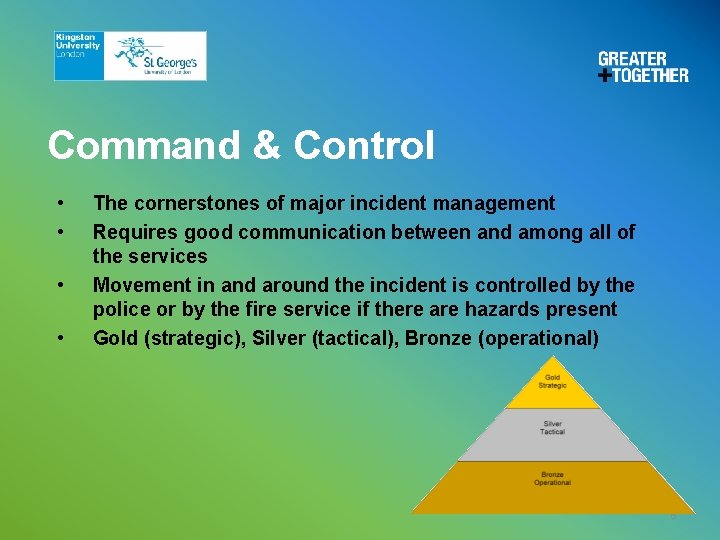
Command & Control • • The cornerstones of major incident management Requires good communication between and among all of the services Movement in and around the incident is controlled by the police or by the fire service if there are hazards present Gold (strategic), Silver (tactical), Bronze (operational) 6
Safety 1 -2 -3 • • • Self Scene Survivors 8
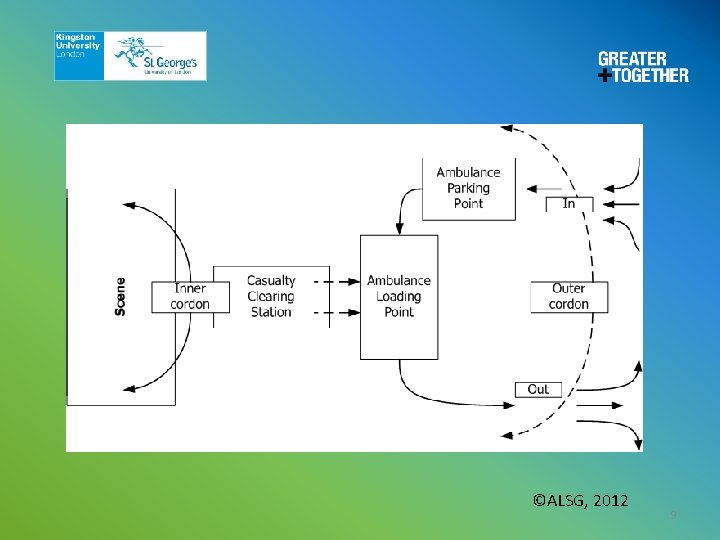
©ALSG, 2012 9
Communication • There are often issues with communications • Poor communication is the most common failing in a major incident 10
Methods of Communication • Mobile phone • Landline – most useful in hospitals. Messages should be passed through ambulance control where they can be recorded • Runners • Radio 11
Combined Emergency Service Response • • Save life Prevent escalation of the incident Relieve suffering Protect the environment Protect property Rapidly restore normality Facilitate enquiries 12
Ambulance Service at the Scene • First Crew • • Command: acting ambulance commander Safety: 1 -2 -3 Communication: ‘METHANE’ Assessment • • Do not attempt treatment or rescue of casualties Driver to stay with the vehicle (until instructed by a senior ambulance officer) 13
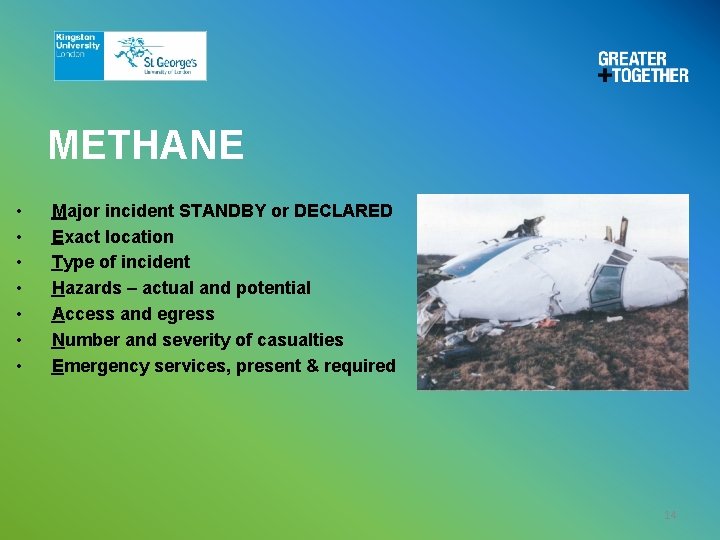
METHANE • • Major incident STANDBY or DECLARED Exact location Type of incident Hazards – actual and potential Access and egress Number and severity of casualties Emergency services, present & required 14
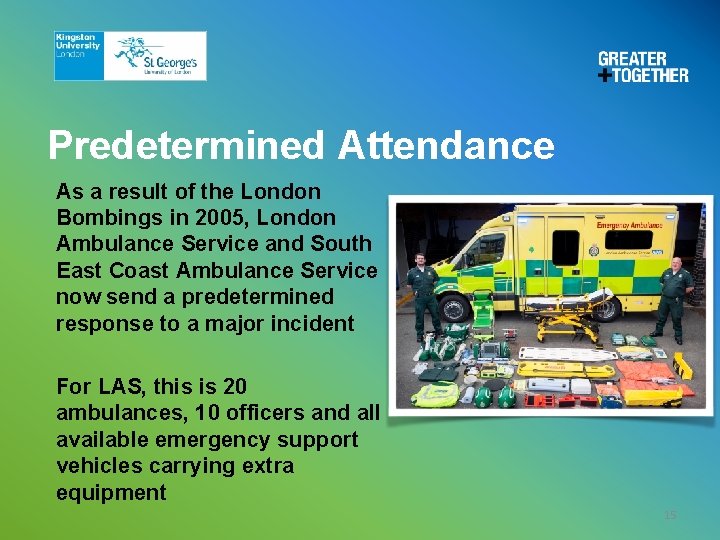
Predetermined Attendance As a result of the London Bombings in 2005, London Ambulance Service and South East Coast Ambulance Service now send a predetermined response to a major incident For LAS, this is 20 ambulances, 10 officers and all available emergency support vehicles carrying extra equipment 15
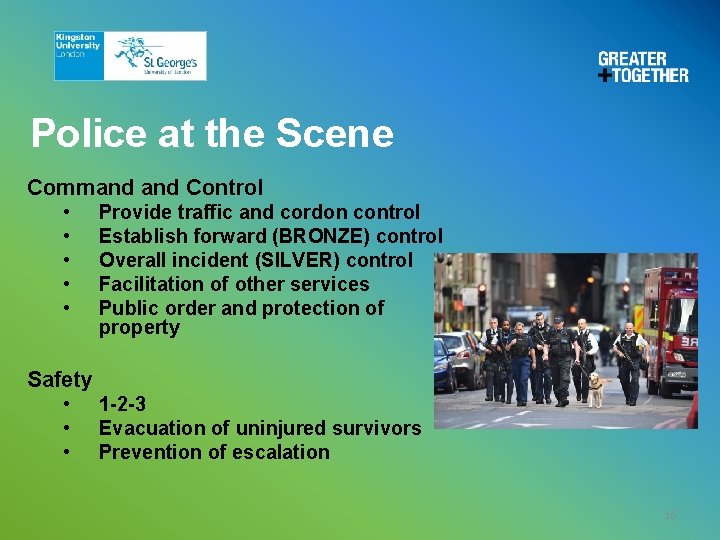
Police at the Scene Command Control • • • Provide traffic and cordon control Establish forward (BRONZE) control Overall incident (SILVER) control Facilitation of other services Public order and protection of property Safety • • • 1 -2 -3 Evacuation of uninjured survivors Prevention of escalation 16
Police at the Scene Communications • • Liaison with other emergency services Activation of support services Media relations Maintain record of uninjured survivors Assessment • • Assess for hazards Assess for further police resources Assess need to involve other emergency services Identify the dead 17
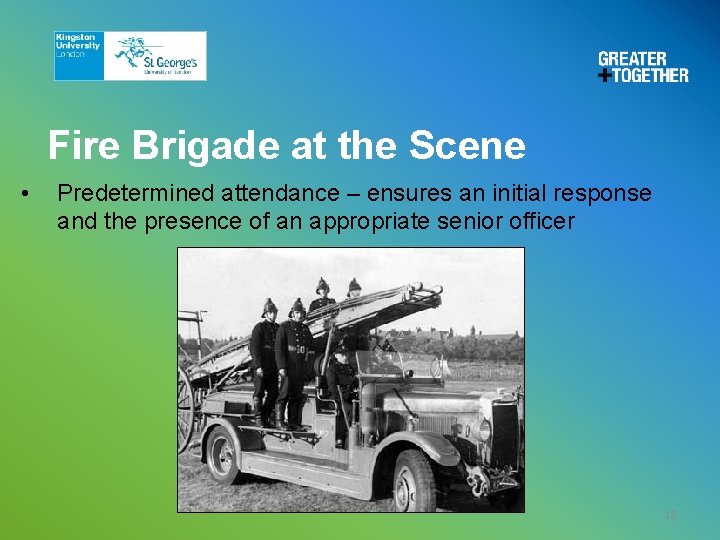
Fire Brigade at the Scene • Predetermined attendance – ensures an initial response and the presence of an appropriate senior officer 18
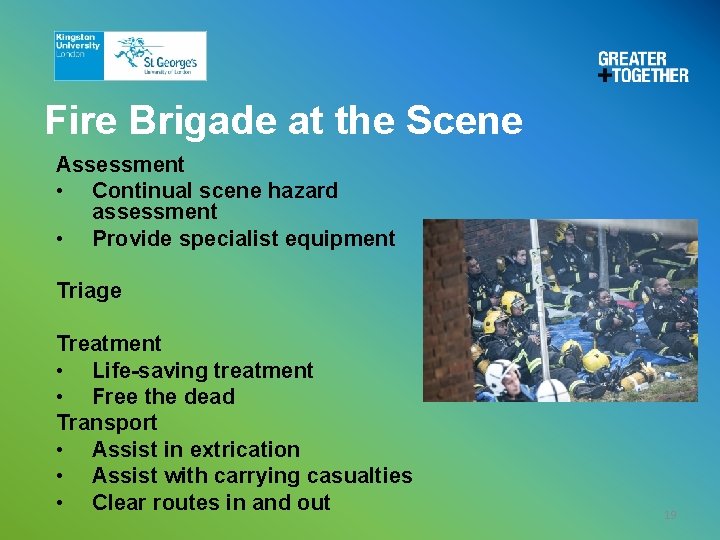
Fire Brigade at the Scene Assessment • Continual scene hazard assessment • Provide specialist equipment Triage Treatment • Life-saving treatment • Free the dead Transport • Assist in extrication • Assist with carrying casualties • Clear routes in and out 19
Triage • Triage Sieve (quickly assigns priorities) • • • At the scene Dynamic Triage Sort (refines the priorities) • • • More detailed At the Casualty Clearing Station Dynamic – patient’s status may change 20
Treatment • Aims • • • To allow the maximum number of casualties to reach the hospital safely “do the most for the most” Most treatment at the site of a major incident will be directed towards the support of ABC’s Levels of Treatment • • Life-saving first aid Advanced life support Specialist Packaging for transport 21
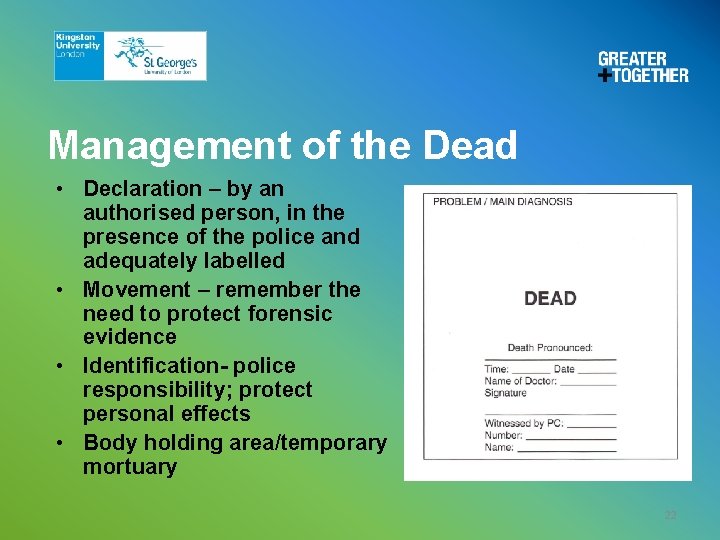
Management of the Dead • Declaration – by an authorised person, in the presence of the police and adequately labelled • Movement – remember the need to protect forensic evidence • Identification- police responsibility; protect personal effects • Body holding area/temporary mortuary 22
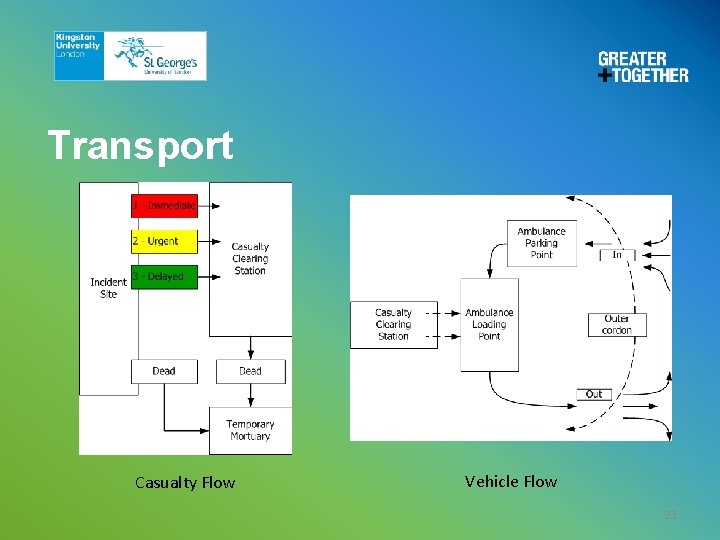
Transport Casualty Flow Vehicle Flow 23
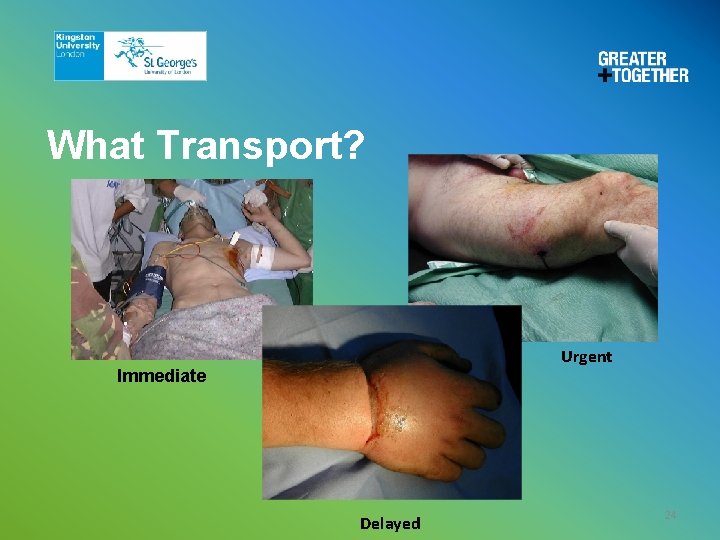
What Transport? Urgent Immediate Delayed 24
What can go wrong? • • Communications Shortage of medical supplies Failure to deal with survivors Delays with some emergency services arriving on scene • Media ‘If you fail to plan, you are planning to fail’ (Benjamin Franklin) 25
Any Questions? 26
Summary • • Command control Safety Communication Assessment Triage Treatment Transport 27