
Major Histocompatibility Complex MHC Dr Eman Albataineh Associate
Major Histocompatibility Complex (MHC) Dr. Eman Albataineh, Associate Prof. Immunology College of Medicine, Mutah university
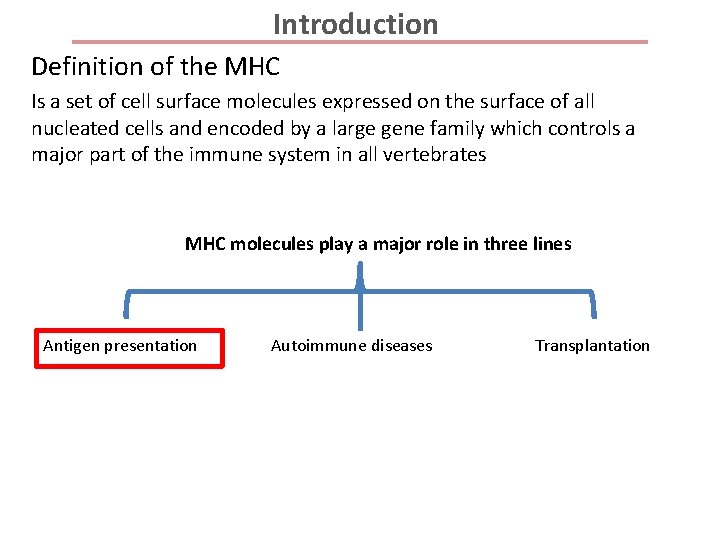
Introduction Definition of the MHC Is a set of cell surface molecules expressed on the surface of all nucleated cells and encoded by a large gene family which controls a major part of the immune system in all vertebrates MHC molecules play a major role in three lines Antigen presentation Autoimmune diseases Transplantation
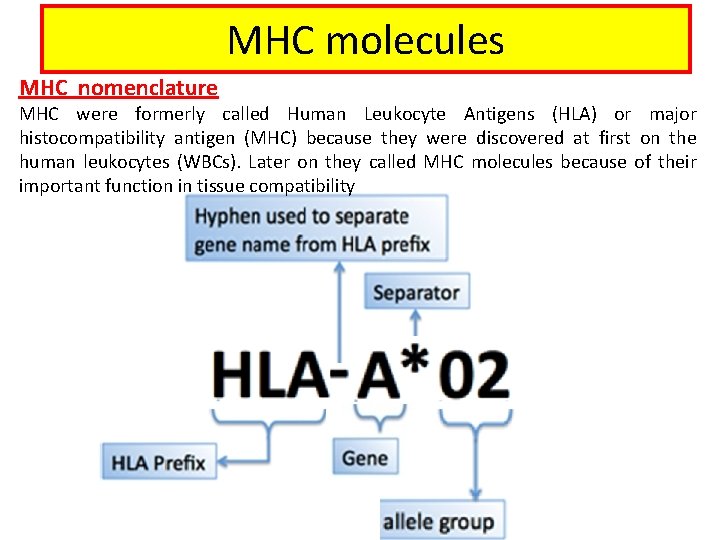
MHC molecules MHC nomenclature MHC were formerly called Human Leukocyte Antigens (HLA) or major histocompatibility antigen (MHC) because they were discovered at first on the human leukocytes (WBCs). Later on they called MHC molecules because of their important function in tissue compatibility
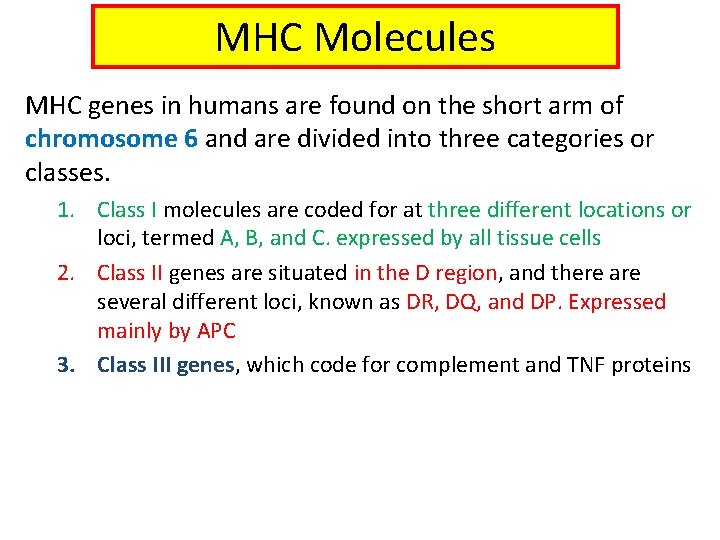
MHC Molecules MHC genes in humans are found on the short arm of chromosome 6 and are divided into three categories or classes. 1. Class I molecules are coded for at three different locations or loci, termed A, B, and C. expressed by all tissue cells 2. Class II genes are situated in the D region, and there are several different loci, known as DR, DQ, and DP. Expressed mainly by APC 3. Class III genes, which code for complement and TNF proteins
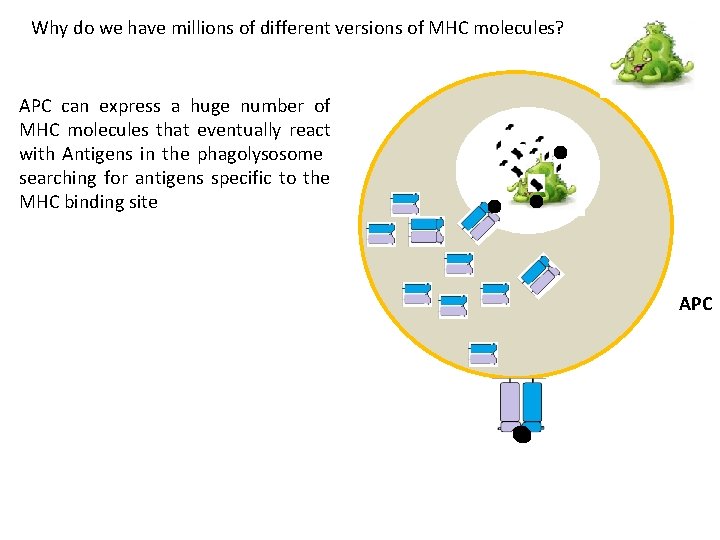
Why do we have millions of different versions of MHC molecules? APC can express a huge number of MHC molecules that eventually react with Antigens in the phagolysosome searching for antigens specific to the MHC binding site APC

MHC genes (alleles) Inheritance of MHC genes ü Multiple allele are present at each of MHC gene MH C- I C- MH C MH MH I - II C- -I I C MH Chr. 6 MH C-I I III I
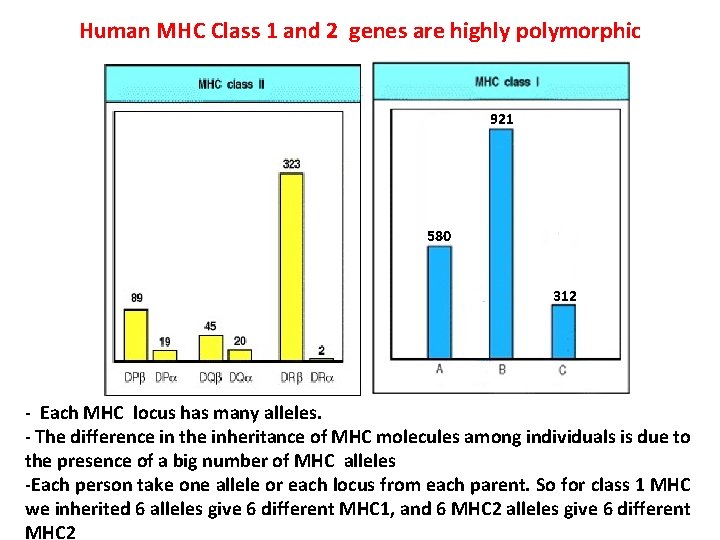
Human MHC Class 1 and 2 genes are highly polymorphic 921 580 312 - Each MHC locus has many alleles. - The difference in the inheritance of MHC molecules among individuals is due to the presence of a big number of MHC alleles -Each person take one allele or each locus from each parent. So for class 1 MHC we inherited 6 alleles give 6 different MHC 1, and 6 MHC 2 alleles give 6 different MHC 2
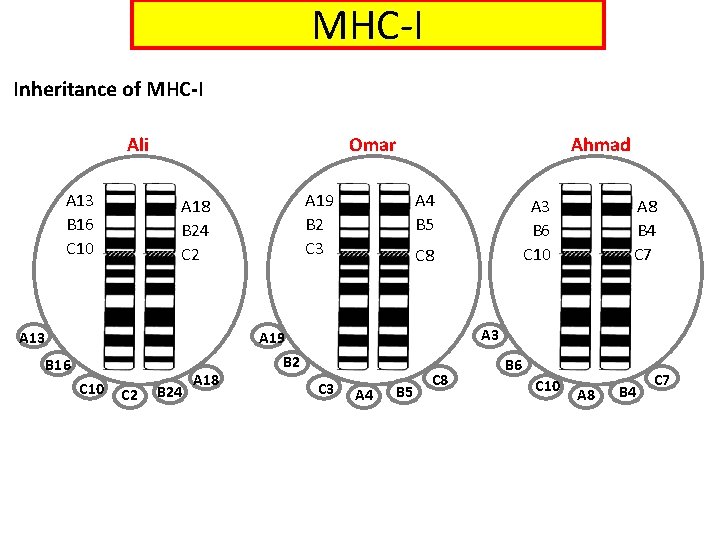
MHC-I Inheritance of MHC-I Ali A 13 B 16 C 10 Omar A 13 B 16 C 10 A 19 B 2 C 3 A 18 B 24 C 2 B 24 A 18 Ahmad A 4 B 5 A 3 B 6 C 10 C 8 A 8 B 4 C 7 A 3 A 19 B 2 C 3 A 4 B 5 C 8 B 6 C 10 A 8 B 4 C 7
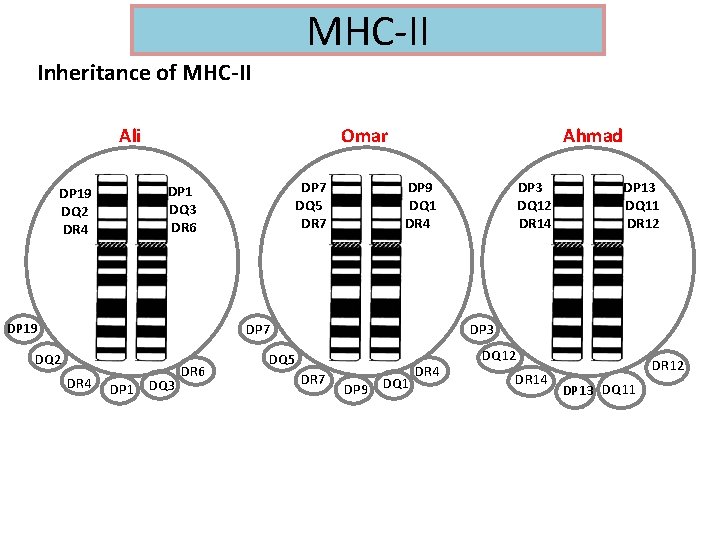
MHC-II Inheritance of MHC-II Ali DP 19 DQ 2 DR 4 Omar DP 7 DQ 5 DR 7 DP 1 DQ 3 DR 6 Ahmad DP 9 DQ 1 DR 4 DP 7 DP 19 DQ 2 DR 4 DP 1 DQ 3 DR 6 DP 3 DQ 12 DR 14 DP 13 DQ 11 DR 12 DP 3 DQ 5 DR 7 DP 9 DQ 1 DR 4 DQ 12 DR 14 DR 12 DP 13 DQ 11

MHC-II MHC-I vs. MHC- II MHC class I Peptide binding groove Cell Membrane Peptide MHC class II
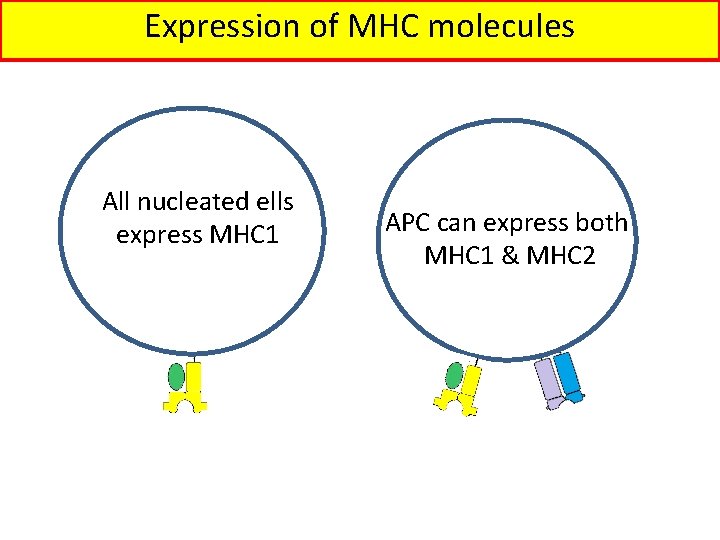
Expression of MHC molecules All nucleated ells express MHC 1 APC can express both MHC 1 & MHC 2
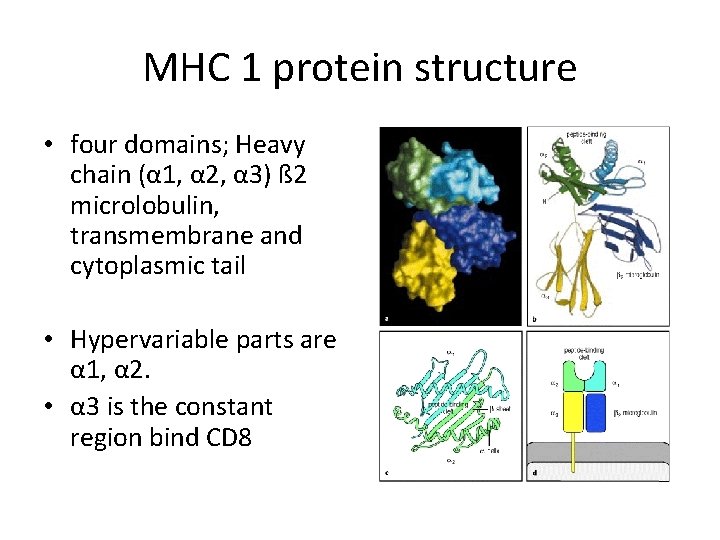
MHC 1 protein structure • four domains; Heavy chain (α 1, α 2, α 3) ß 2 microlobulin, transmembrane and cytoplasmic tail • Hypervariable parts are α 1, α 2. • α 3 is the constant region bind CD 8
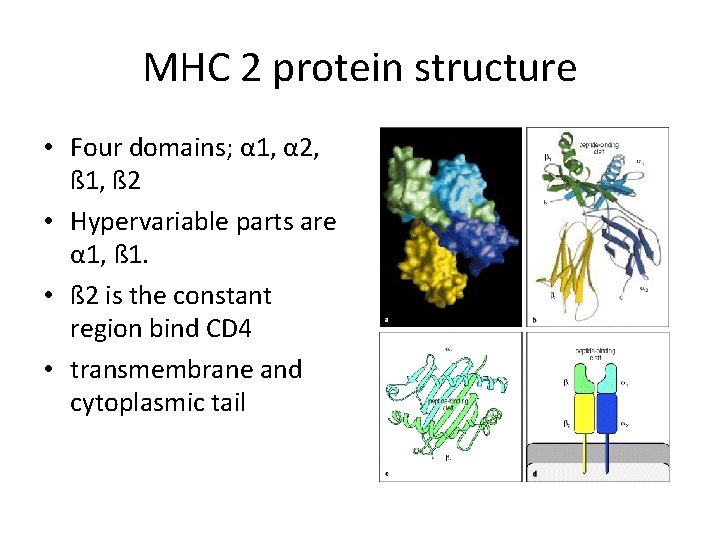
MHC 2 protein structure • Four domains; α 1, α 2, ß 1, ß 2 • Hypervariable parts are α 1, ß 1. • ß 2 is the constant region bind CD 4 • transmembrane and cytoplasmic tail
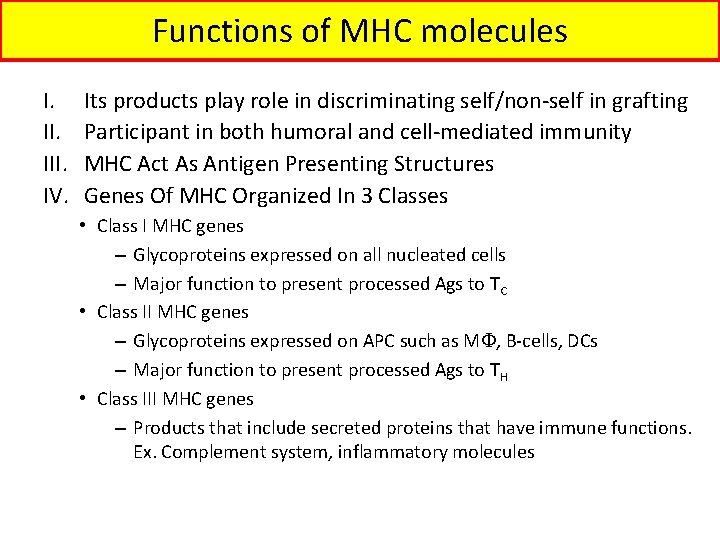
Functions of MHC molecules I. III. IV. Its products play role in discriminating self/non-self in grafting Participant in both humoral and cell-mediated immunity MHC Act As Antigen Presenting Structures Genes Of MHC Organized In 3 Classes • Class I MHC genes – Glycoproteins expressed on all nucleated cells – Major function to present processed Ags to TC • Class II MHC genes – Glycoproteins expressed on APC such as M , B-cells, DCs – Major function to present processed Ags to TH • Class III MHC genes – Products that include secreted proteins that have immune functions. Ex. Complement system, inflammatory molecules
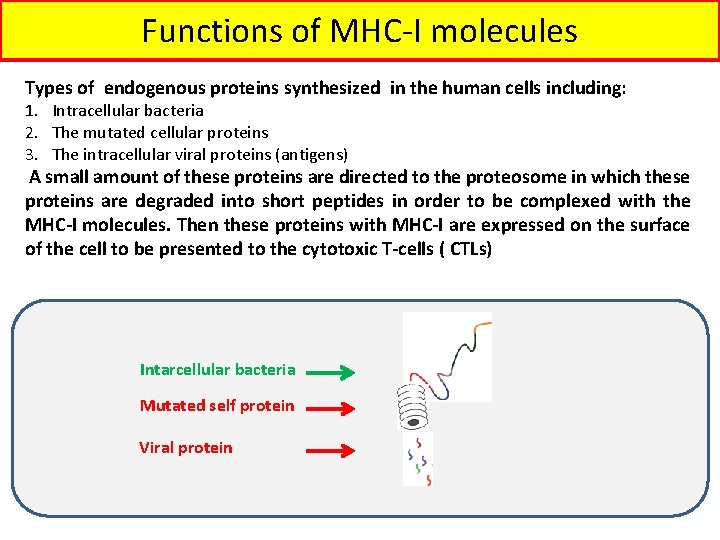
Functions of MHC-I molecules Types of endogenous proteins synthesized in the human cells including: 1. Intracellular bacteria 2. The mutated cellular proteins 3. The intracellular viral proteins (antigens) A small amount of these proteins are directed to the proteosome in which these proteins are degraded into short peptides in order to be complexed with the MHC-I molecules. Then these proteins with MHC-I are expressed on the surface of the cell to be presented to the cytotoxic T-cells ( CTLs) Intarcellular bacteria Mutated self protein Viral protein

The generation of T cell receptor ligand (Ag presentation) by MHC 1 • Peptides that bind to MHC class I molecules are endogenous peptides that lysed in proteasome and actively transported to the endoplasmic reticulum • Newly synthesized MHC class I molecules are retained in the endoplasmic reticulum until they bind peptide
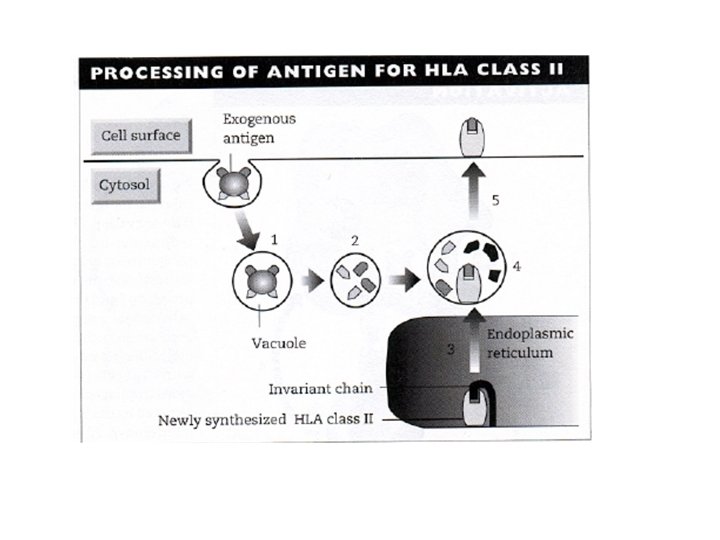
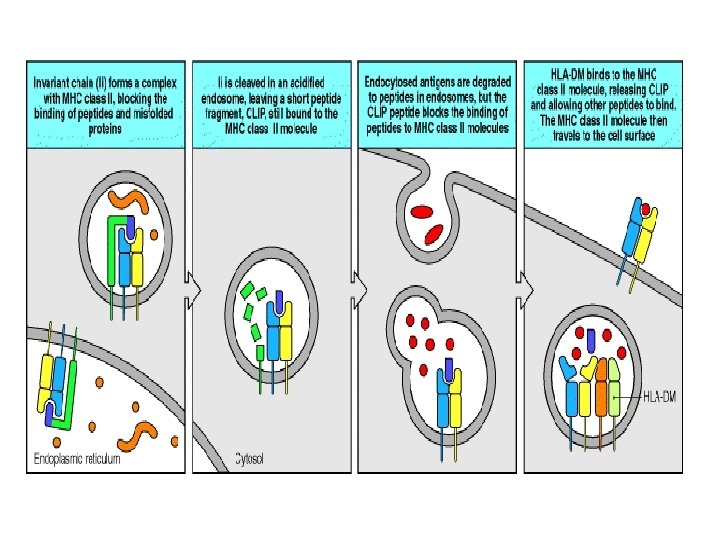
The generation of T cell receptor ligand (Ag presentation) by MHC 2 • Peptides that bind to MHC class 2 molecules are exogenous peptides that lysed in endosome (vesicle) by enzymes called cathepsins. • Newly synthesized MHC class 2 molecules moved from the endoplasmic reticulum to endosome • MHC 2 in ER can not bind endogenous AG because of the Li variant that block the binding site, while moving to endosome part this variant will be partly lysed and leave CLIP fragment. • when high affinity peptides try to bind MHC 2, HLA-DM peptide usually bind MHC 2 and catalyze CLIP fragment then binding occur and the complex move to the cell surface
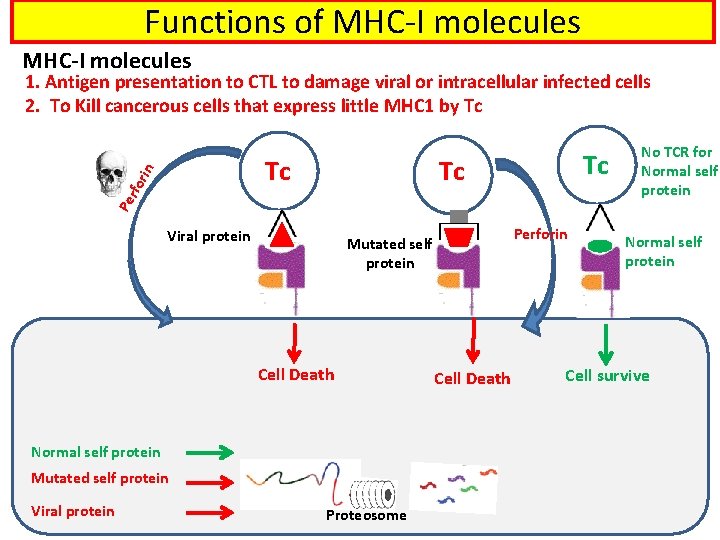
Functions of MHC-I molecules 1. Antigen presentation to CTL to damage viral or intracellular infected cells 2. To Kill cancerous cells that express little MHC 1 by Tc Tc Tc Pe rfo rin Tc Viral protein Cell Death Normal self protein Mutated self protein Viral protein Perforin Mutated self protein Proteosome Cell Death No TCR for Normal self protein Cell survive
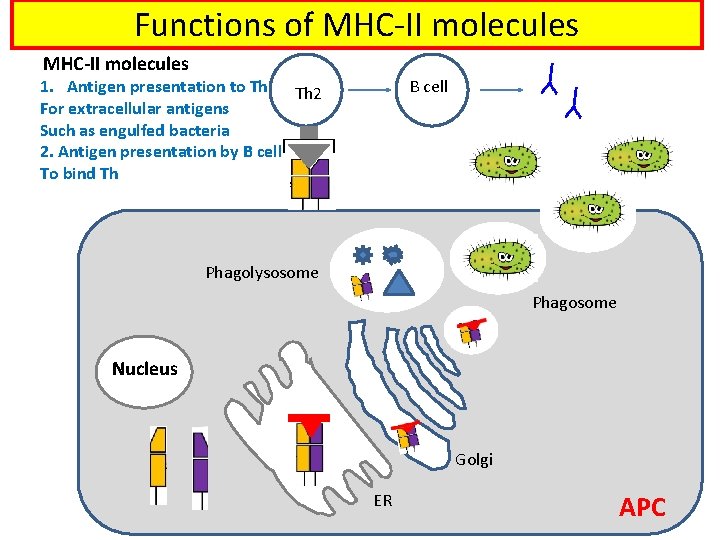
Functions of MHC-II molecules 1. Antigen presentation to Th: Th 2 For extracellular antigens Such as engulfed bacteria 2. Antigen presentation by B cell To bind Th B cell cvcv cv Phagolysosome Phagosome Nucleus Golgi ER APC
Biological Importance of MHC molecules play a major role in three lines Antigen presentation Autoimmune diseases Transplantation
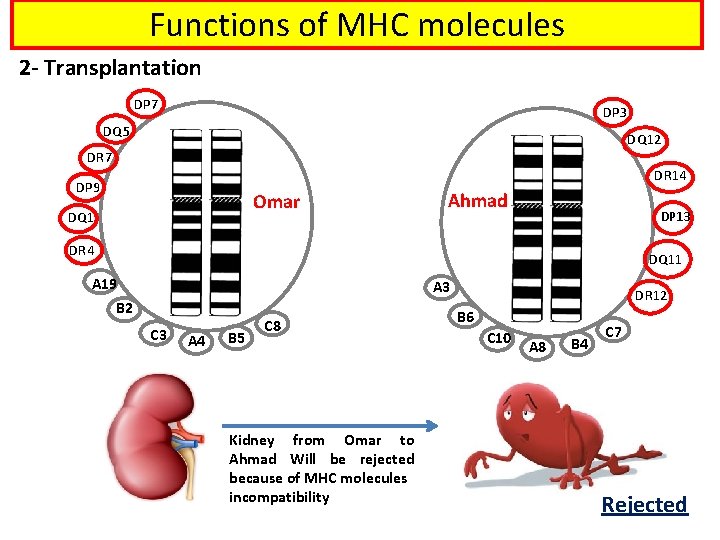
Functions of MHC molecules 2 - Transplantation DP 7 DP 3 DQ 5 DQ 12 DR 7 DR 14 DP 9 Omar DQ 1 Ahmad DP 13 DR 4 DQ 11 A 19 B 2 A 3 C 3 A 4 B 5 C 8 Kidney from Omar to Ahmad Will be rejected because of MHC molecules incompatibility DR 12 B 6 C 10 A 8 B 4 C 7 Rejected
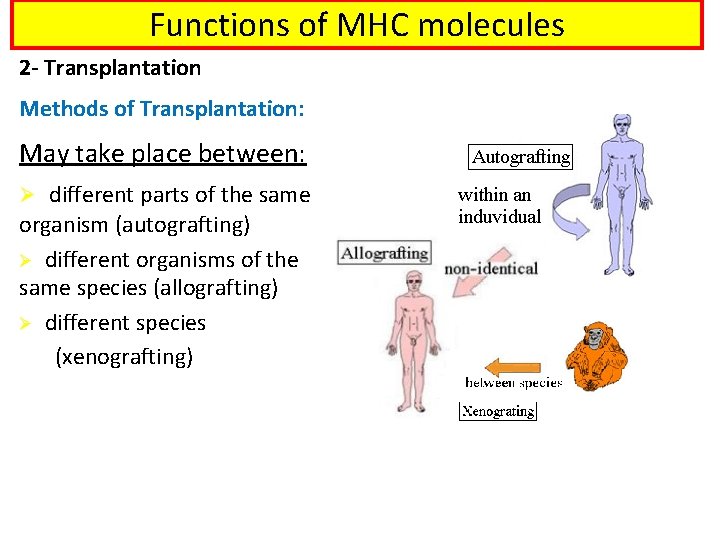
Functions of MHC molecules 2 - Transplantation Methods of Transplantation: May take place between: Ø different parts of the same organism (autografting) Ø different organisms of the same species (allografting) Ø different species (xenografting)
Matching and cross-matching • Matching: finding a donor who shares maximum amount of HLA antigens of the recipient, to minimize antigen disparities – requires donor and recipient antigens to be identified • Cross-matching: testing the SERUM of the recipient for antibodies against the donor antigens
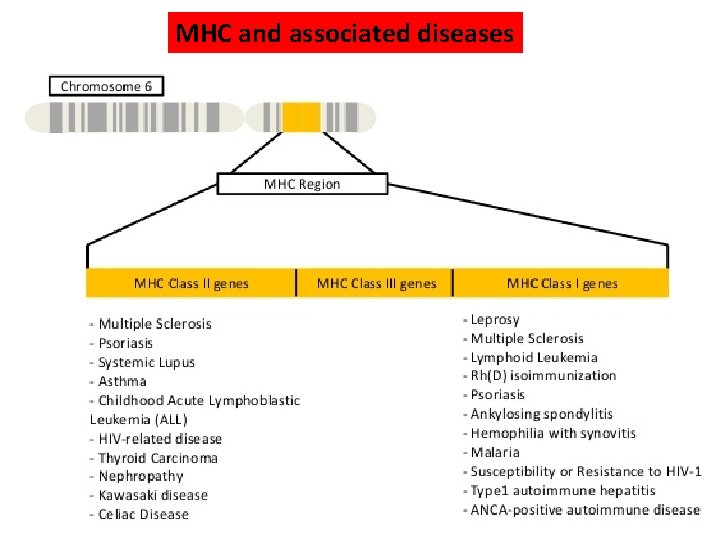
MHC and associated diseases
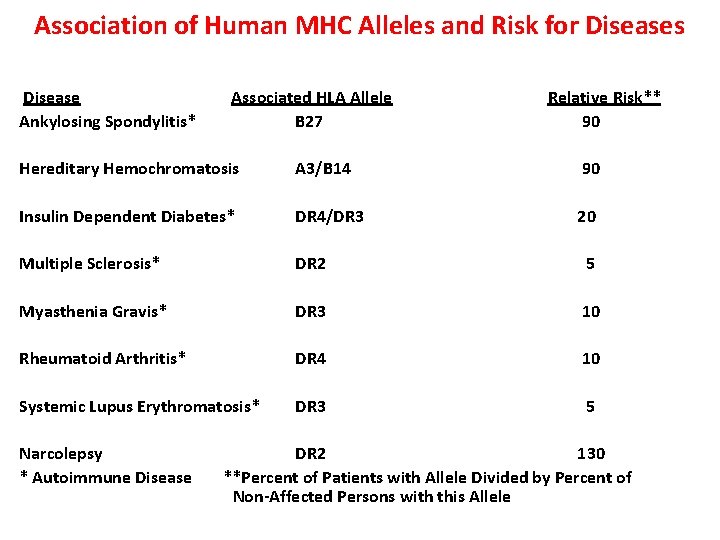
Association of Human MHC Alleles and Risk for Diseases Disease Ankylosing Spondylitis* Associated HLA Allele B 27 Relative Risk** 90 Hereditary Hemochromatosis A 3/B 14 90 Insulin Dependent Diabetes* DR 4/DR 3 20 Multiple Sclerosis* DR 2 5 Myasthenia Gravis* DR 3 10 Rheumatoid Arthritis* DR 4 10 Systemic Lupus Erythromatosis* DR 3 5 Narcolepsy * Autoimmune Disease DR 2 130 **Percent of Patients with Allele Divided by Percent of Non-Affected Persons with this Allele

Than You
- Slides: 29