
MAJOR DESIGN PROJECT 32 MEMS MICROPHONE FEEDBACK CONTROLLER
MAJOR DESIGN PROJECT #32 MEMS MICROPHONE FEEDBACK CONTROLLER Wesley Chiu, Adam Hess, Andrew Steinmann
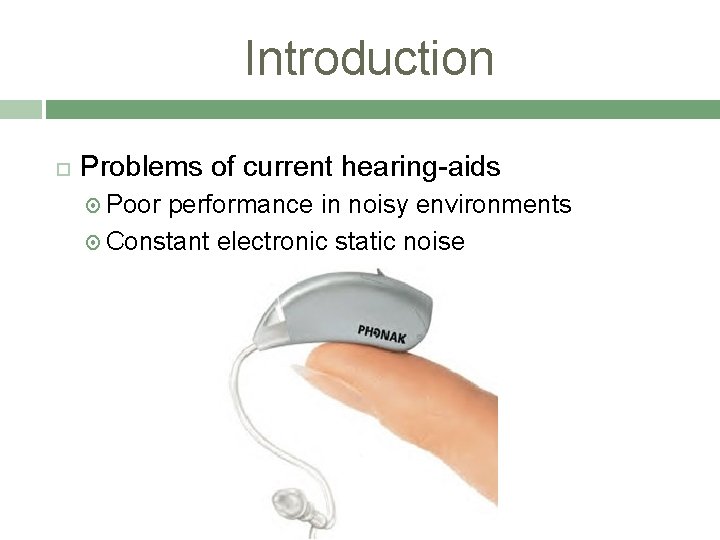
Introduction Problems of current hearing-aids Poor performance in noisy environments Constant electronic static noise
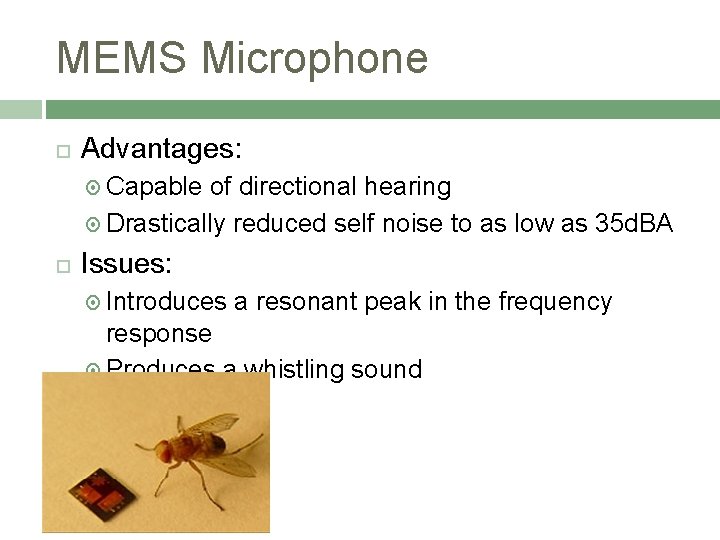
MEMS Microphone Advantages: Capable of directional hearing Drastically reduced self noise to as low as 35 d. BA Issues: Introduces a resonant peak in the frequency response Produces a whistling sound
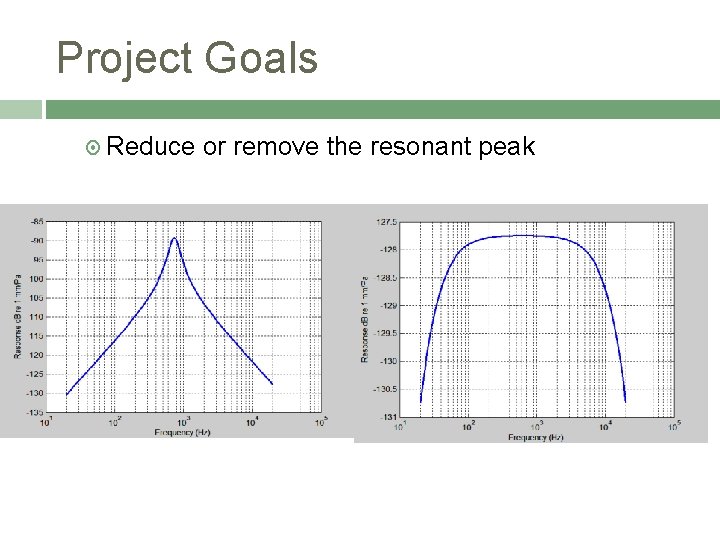
Project Goals Reduce or remove the resonant peak
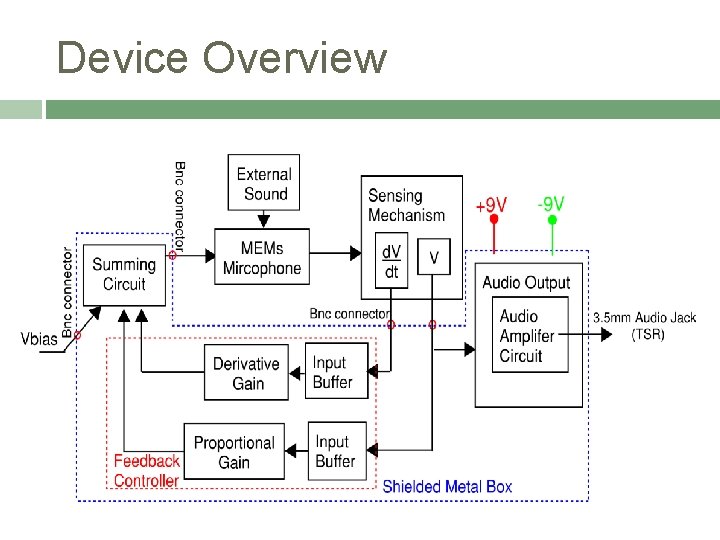
Device Overview
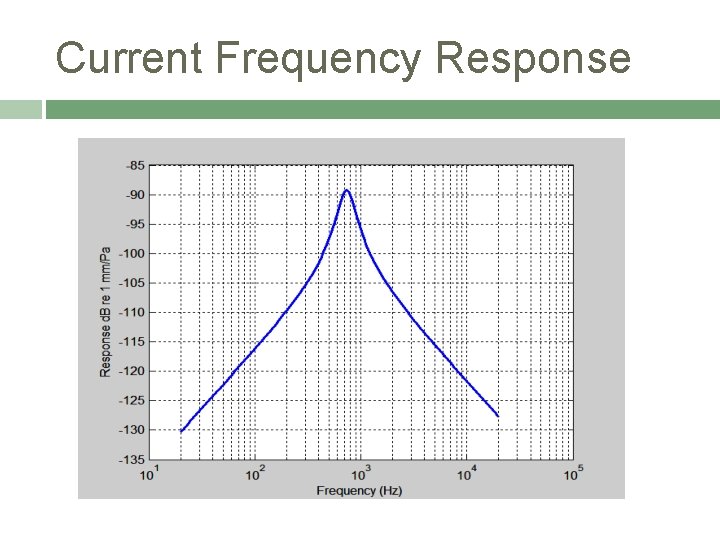
Current Frequency Response
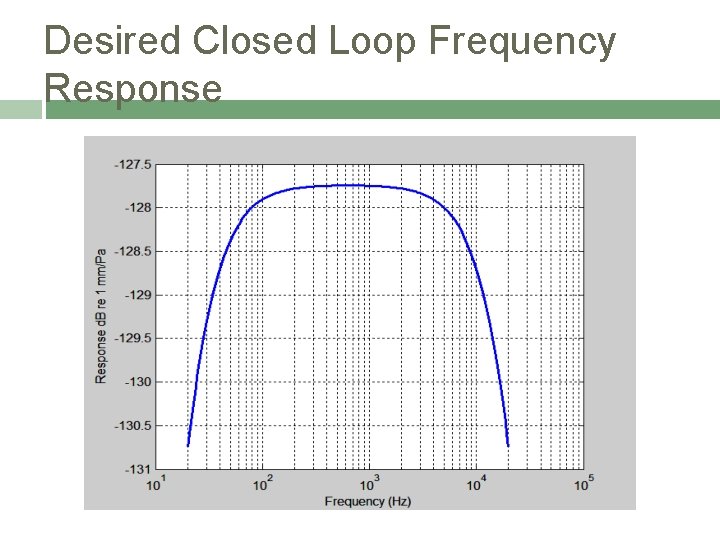
Desired Closed Loop Frequency Response

Microphone Differential Equation Θ - diaphragm rotation I – Mass moment of inertia kt – Torsional stiffness ct – Torsional dashpot M – Moment due to sound field V – Voltage Θ Must select operating point to linearize equation
![Linearization of Differential Equation If Vf << Vb [1] R. N. Miles and Q.](http://slidetodoc.com/presentation_image_h2/02154edfc642bd27b41cb25da0c4626a/image-9.jpg "Linearization of Differential Equation If Vf << Vb [1] R. N. Miles and Q.")
Linearization of Differential Equation If Vf << Vb [1] R. N. Miles and Q. T. Su, “Differential MEMS Microphone with Active Q-Control”, ME Dept. Binghamton University, October 2009
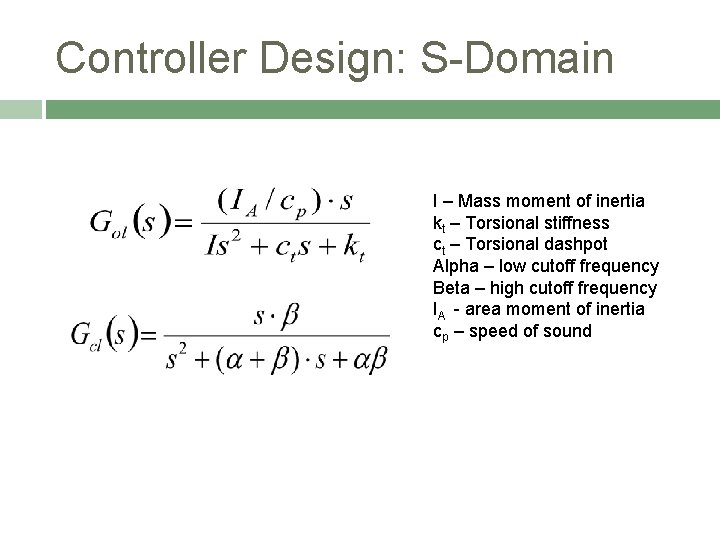
Controller Design: S-Domain I – Mass moment of inertia kt – Torsional stiffness ct – Torsional dashpot Alpha – low cutoff frequency Beta – high cutoff frequency IA - area moment of inertia cp – speed of sound
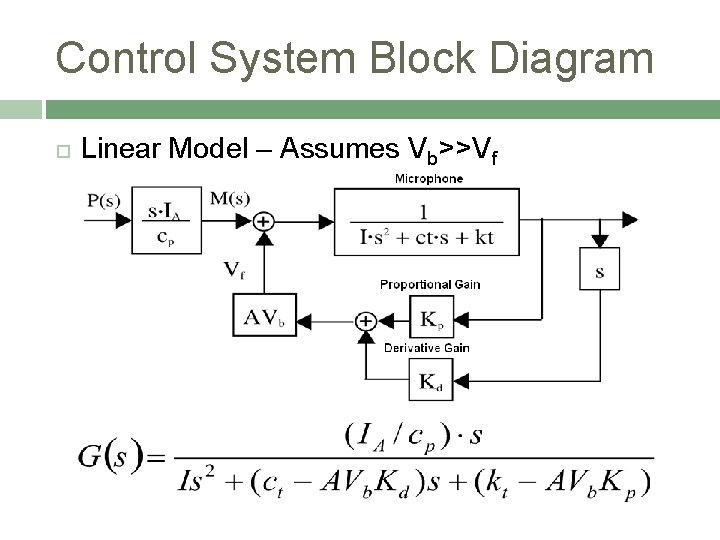
Control System Block Diagram Linear Model – Assumes Vb>>Vf
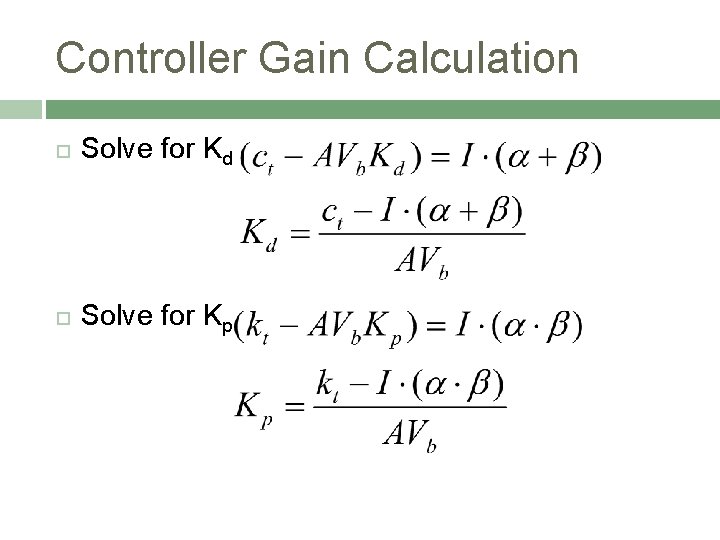
Controller Gain Calculation Solve for Kd Solve for Kp

Linear Simulink Model
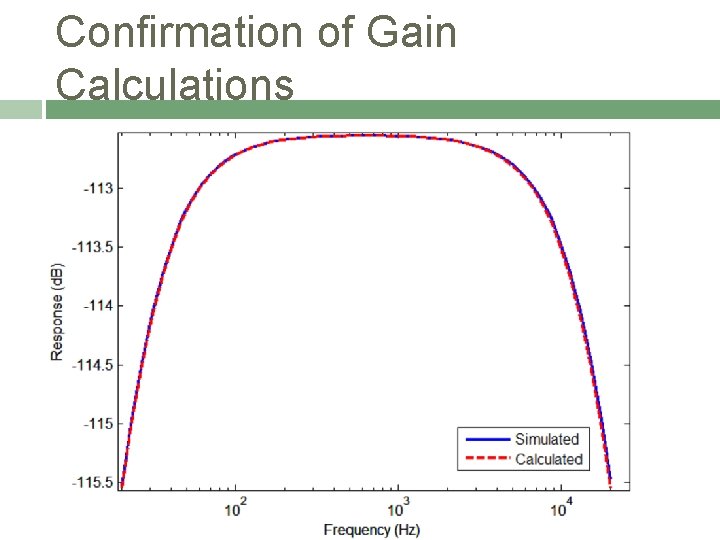
Confirmation of Gain Calculations
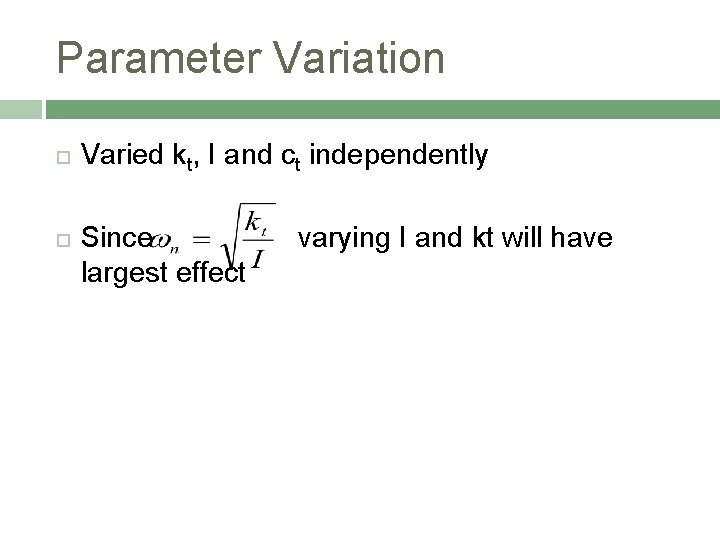
Parameter Variation Varied kt, I and ct independently Since largest effect varying I and kt will have
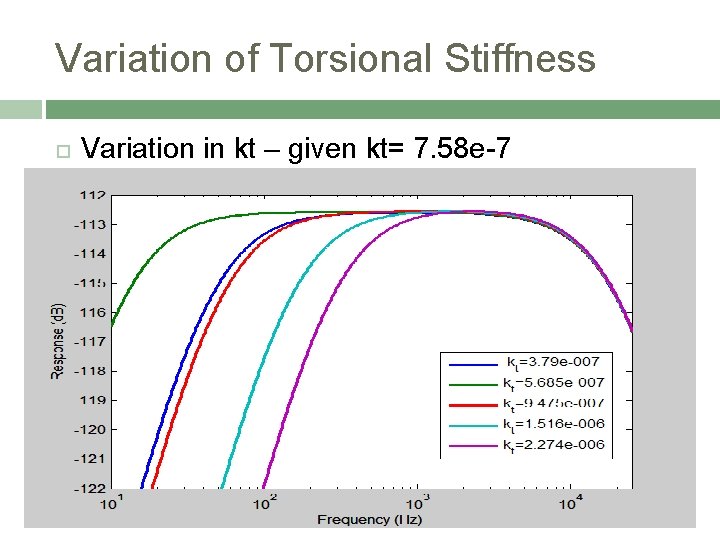
Variation of Torsional Stiffness Variation in kt – given kt= 7. 58 e-7
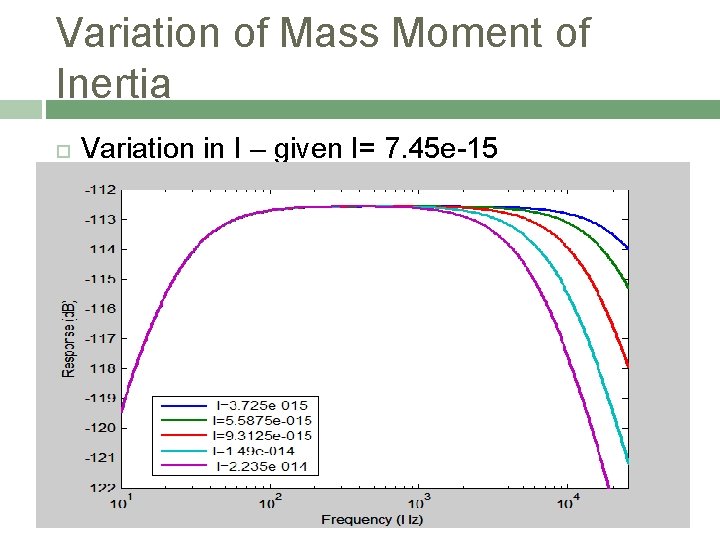
Variation of Mass Moment of Inertia Variation in I – given I= 7. 45 e-15
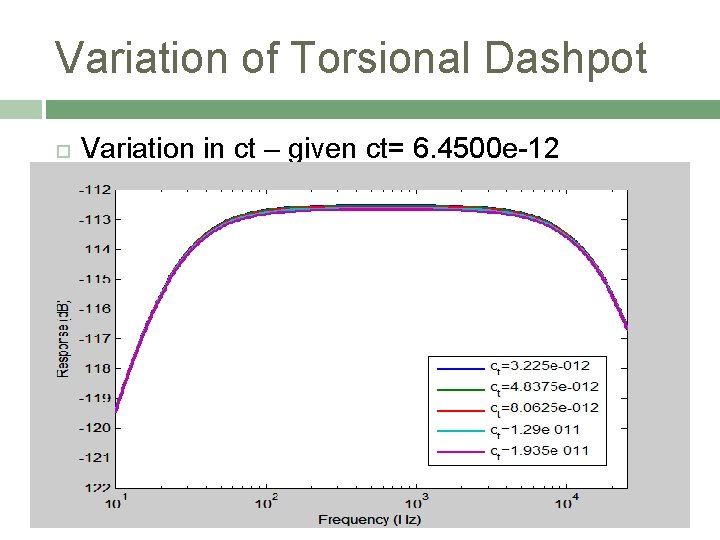
Variation of Torsional Dashpot Variation in ct – given ct= 6. 4500 e-12
Laser Vibrometer A bridge step before testing with optical sensor. Used to measure the response of the microphone. Outputs a displacement voltage - Proportional Outputs a velocity voltage - Derivative
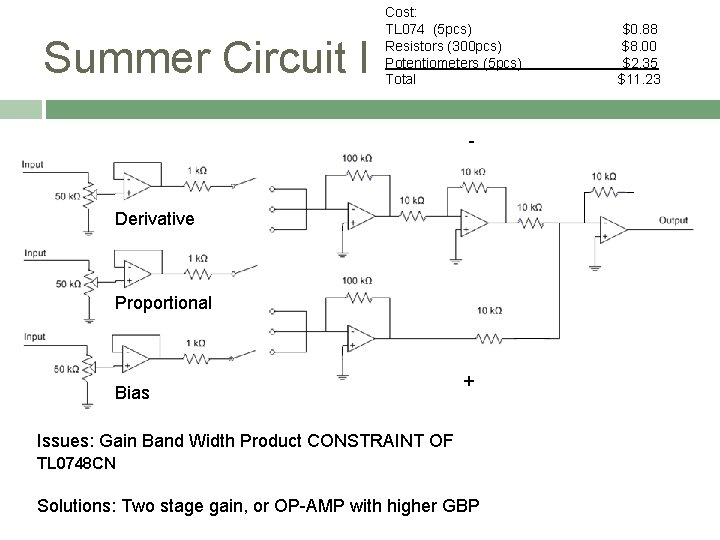
Summer Circuit I Cost: TL 074 (5 pcs) Resistors (300 pcs) Potentiometers (5 pcs) Total - Derivative Proportional Bias + Issues: Gain Band Width Product CONSTRAINT OF TL 0748 CN Solutions: Two stage gain, or OP-AMP with higher GBP $0. 88 $8. 00 $2. 35 $11. 23
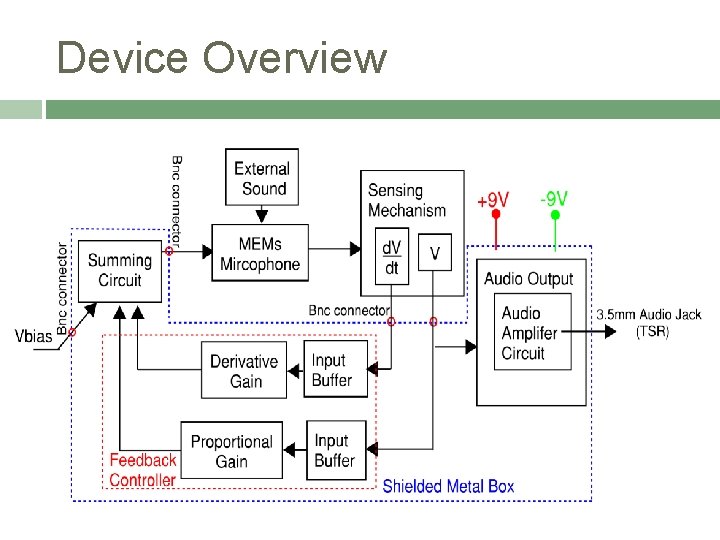
Device Overview
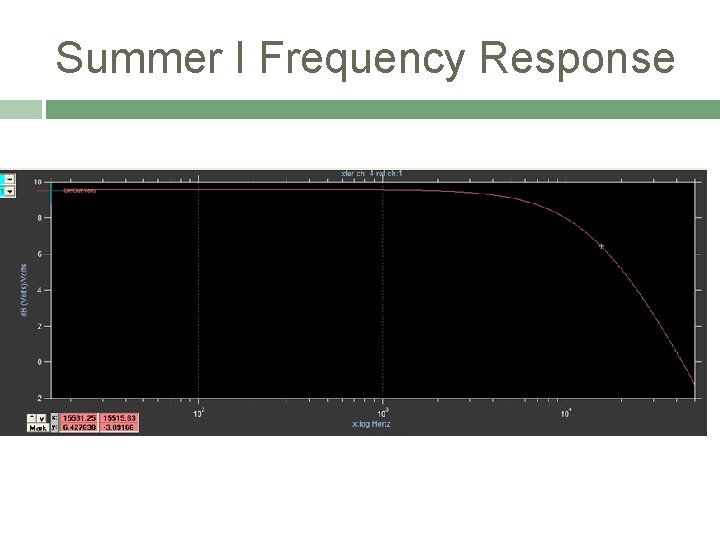
Summer I Frequency Response

Audio Output Designs Desired output is between. 5 V and 3 V
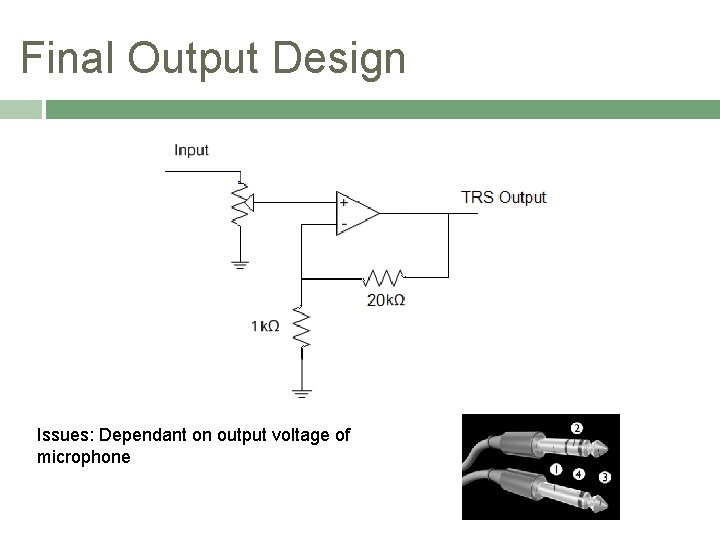
Final Output Design Issues: Dependant on output voltage of microphone
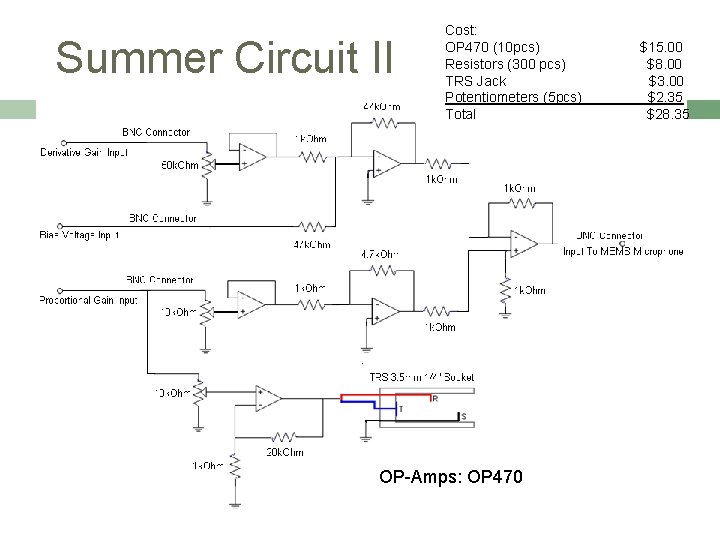
Summer Circuit II Cost: OP 470 (10 pcs) Resistors (300 pcs) TRS Jack Potentiometers (5 pcs) Total OP-Amps: OP 470 $15. 00 $8. 00 $3. 00 $2. 35 $28. 35

Noise Requirement The feedback controller shall add no more than 5 d. B of noise Noise Analysis Models Types Thermal Shot Flicker
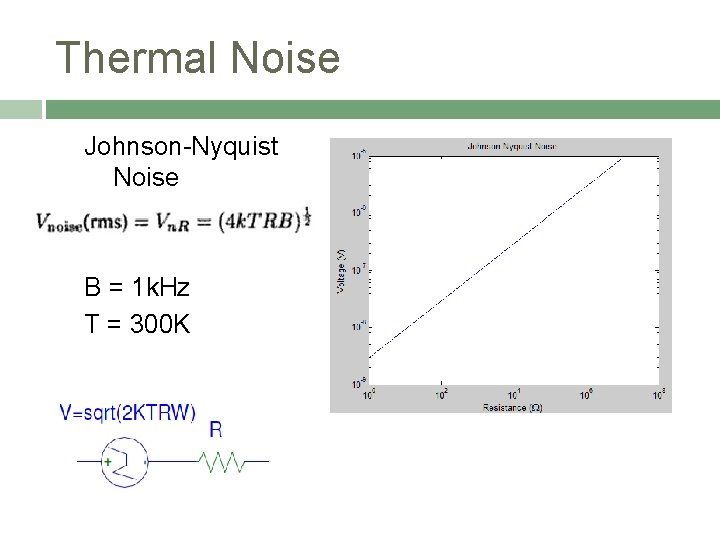
Thermal Noise Johnson-Nyquist Noise B = 1 k. Hz T = 300 K

Shot Noise B= 1 k. Hz Bursts of current Pockets
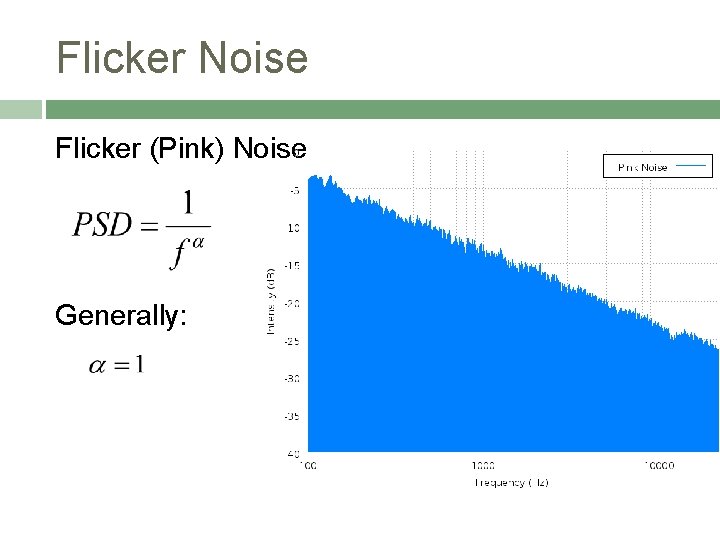
Flicker Noise Flicker (Pink) Noise Generally:
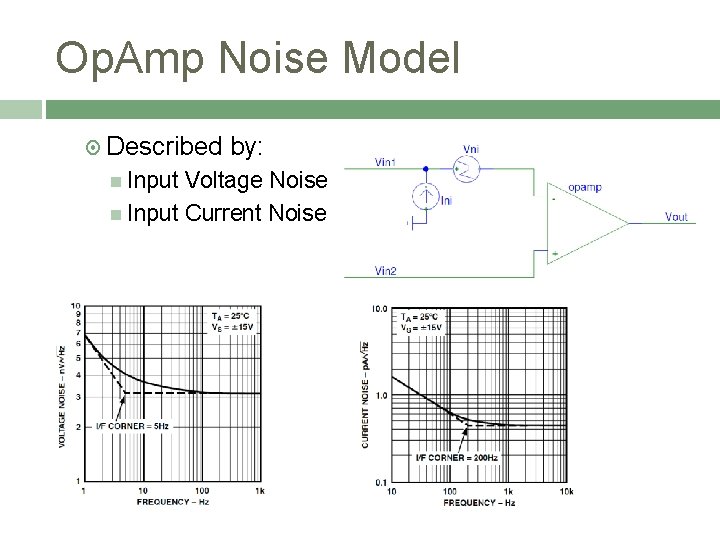
Op. Amp Noise Model Described Input by: Voltage Noise Input Current Noise
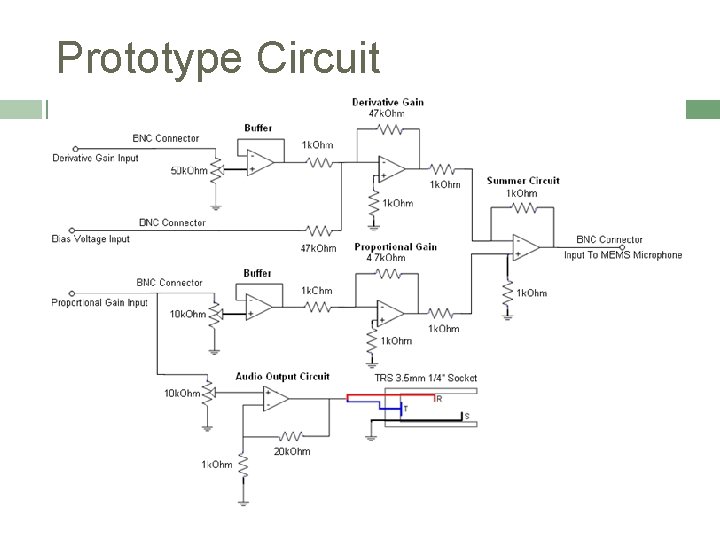
Prototype Circuit OP-Amps: OP 470

Summing/Inverting Amplifier Noise
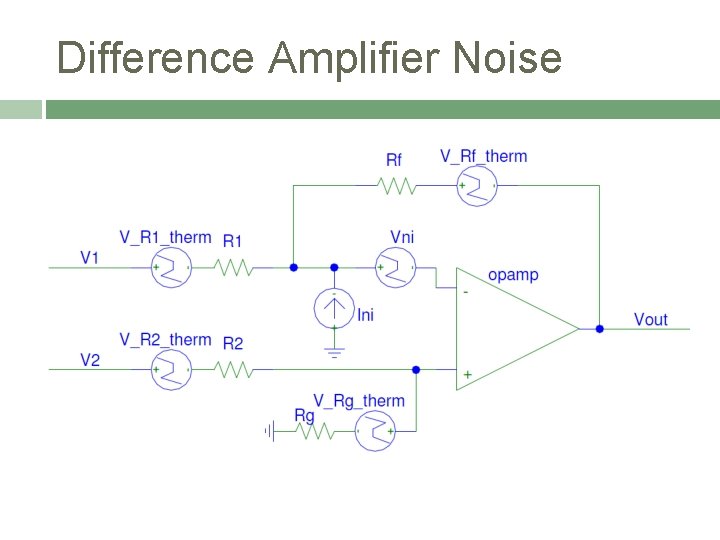
Difference Amplifier Noise
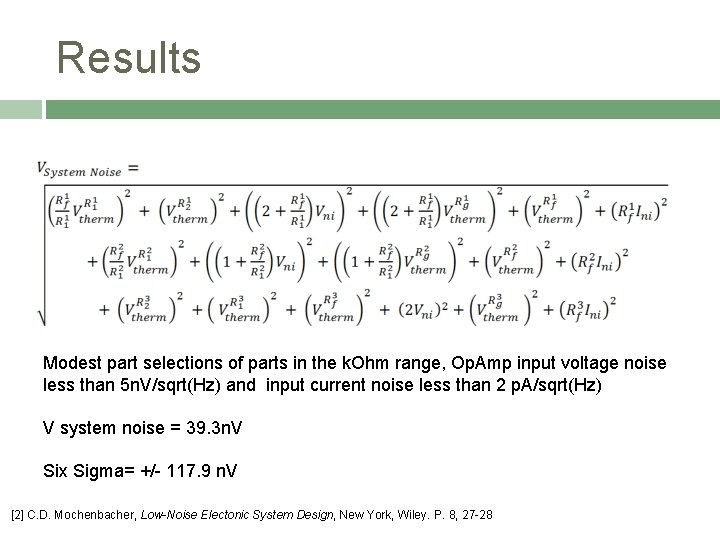
Results Modest part selections of parts in the k. Ohm range, Op. Amp input voltage noise less than 5 n. V/sqrt(Hz) and input current noise less than 2 p. A/sqrt(Hz) V system noise = 39. 3 n. V Six Sigma= +/- 117. 9 n. V [2] C. D. Mochenbacher, Low-Noise Electonic System Design, New York, Wiley. P. 8, 27 -28
Non-Idealities of Op Amp Harmonic Distortion Input Bias Current Gain Bandwidth Product Unity Gain Stability
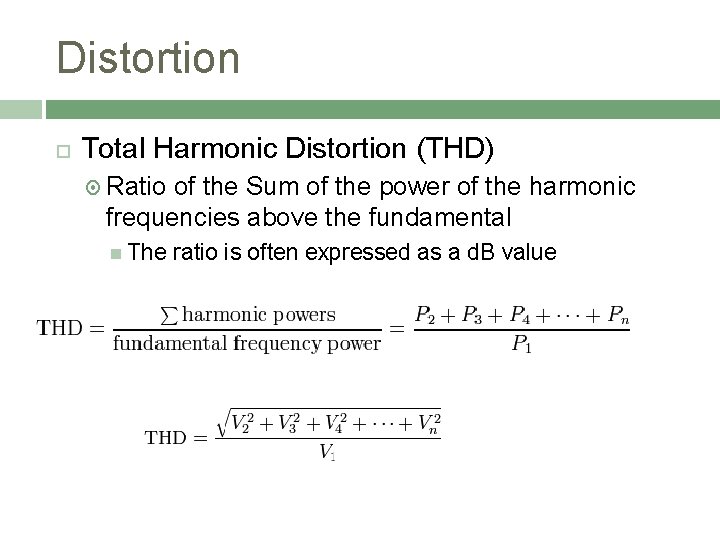
Distortion Total Harmonic Distortion (THD) Ratio of the Sum of the power of the harmonic frequencies above the fundamental The ratio is often expressed as a d. B value
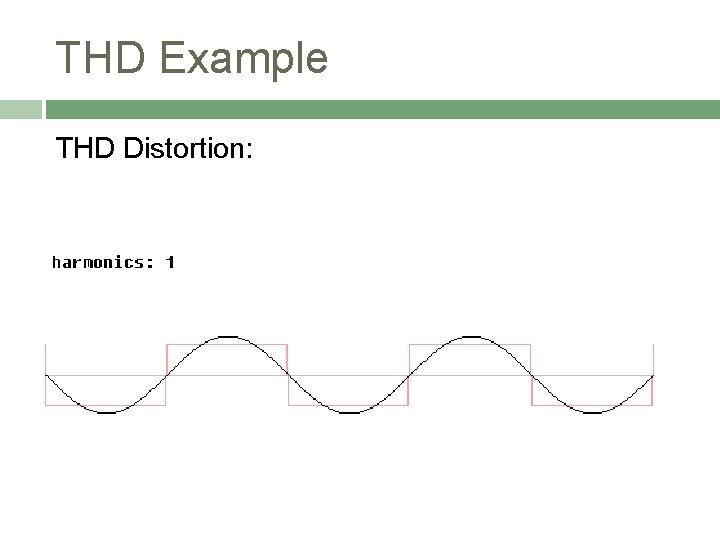
THD Example THD Distortion:
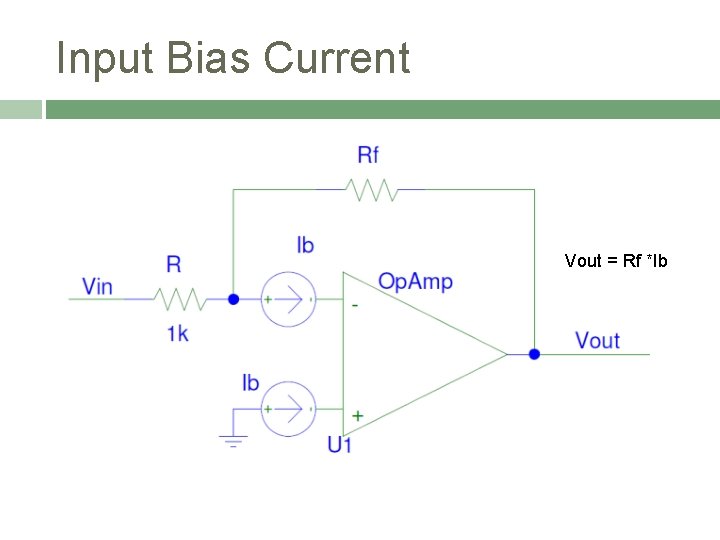
Input Bias Current Vout = Rf *Ib
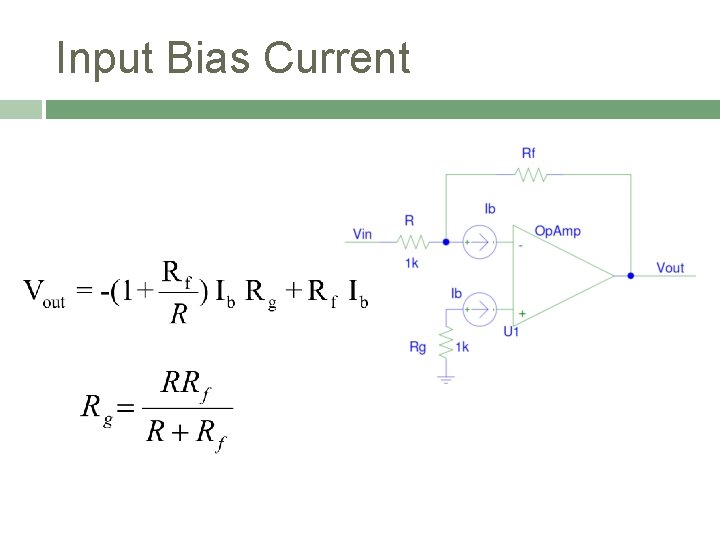
Input Bias Current
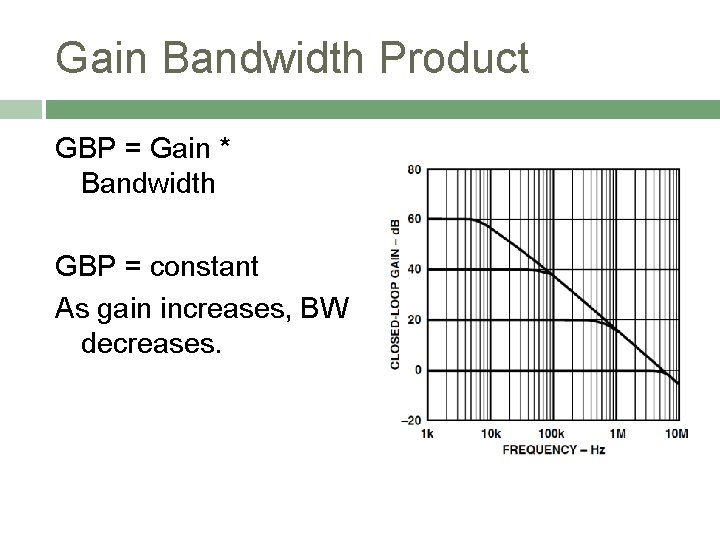
Gain Bandwidth Product GBP = Gain * Bandwidth GBP = constant As gain increases, BW decreases.
Unity Gain Stability AD 797 Distorted Output Minimum Required Gain Unstable In breadboards
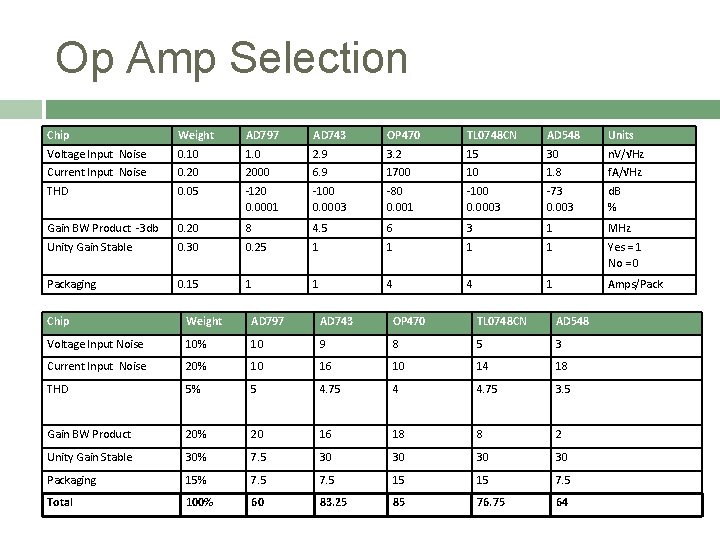
Op Amp Selection Chip Weight AD 797 AD 743 OP 470 TL 0748 CN AD 548 Units Voltage Input Noise 0. 10 1. 0 2. 9 3. 2 15 30 n. V/√Hz Current Input Noise 0. 20 2000 6. 9 1700 10 1. 8 f. A/√Hz THD 0. 05 -120 0. 0001 -100 0. 0003 -80 0. 001 -100 0. 0003 -73 0. 003 d. B % Gain BW Product -3 db 0. 20 8 4. 5 6 3 1 MHz Unity Gain Stable 0. 30 0. 25 1 1 Yes = 1 No = 0 Packaging 0. 15 1 1 4 4 1 Amps/Pack Chip Weight AD 797 AD 743 OP 470 TL 0748 CN AD 548 Voltage Input Noise 10% 10 9 8 5 3 Current Input Noise 20% 10 16 10 14 18 THD 5% 5 4. 75 4 4. 75 3. 5 Gain BW Product 20% 20 16 18 8 2 Unity Gain Stable 30% 7. 5 30 30 Packaging 15% 7. 5 15 15 7. 5 Total 100% 60 83. 25 85 76. 75 64
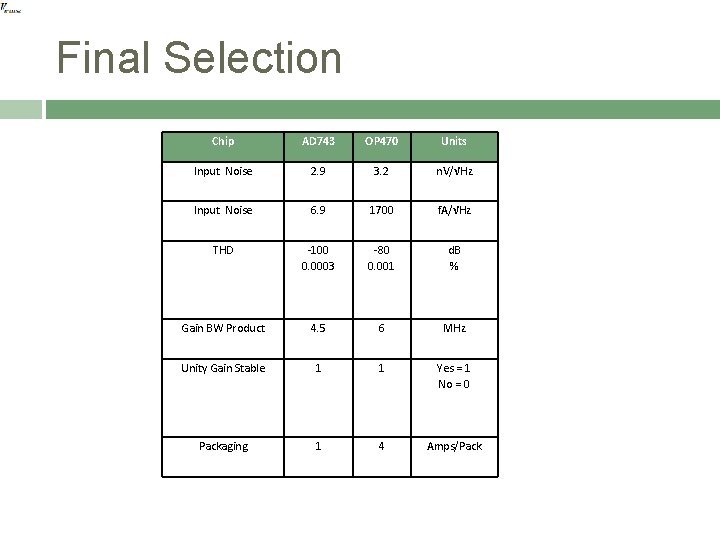
Final Selection Chip AD 743 OP 470 Units Input Noise 2. 9 3. 2 n. V/√Hz Input Noise 6. 9 1700 f. A/√Hz THD -100 0. 0003 -80 0. 001 d. B % Gain BW Product 4. 5 6 MHz Unity Gain Stable 1 1 Yes = 1 No = 0 Packaging 1 4 Amps/Pack
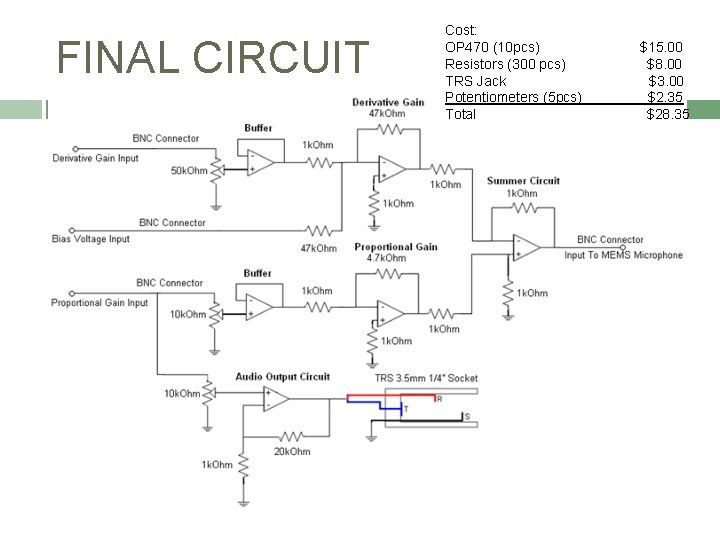
FINAL CIRCUIT Cost: OP 470 (10 pcs) Resistors (300 pcs) TRS Jack Potentiometers (5 pcs) Total $15. 00 $8. 00 $3. 00 $2. 35 $28. 35
Considerations for Next Semester Non-Linear Simulink Model Optical Sensor Differentiator Chassis and PCB Closed Loop System Noise Model Capacitive Microphone Sensing
Aknowedgements Professor Ron Miles Professor Eva Wu Professor Quang Su Professor Chris Twigg Professor Vladimir Nikulin Professor Kurt Rogers
- Slides: 46