
Major Case Study Presentation Enteral Nutrition in a


- Slides: 50
Major Case Study Presentation Enteral Nutrition in a Critically Ill Patient with Severe Acute Pancreatitis Hilary Smith Sodexo Mid-Atlantic Dietetic Internship January 30, 2015
Objectives 1. To discuss the clinical course of a patient in the Intensive Care Unit with severe acute pancreatitis including major medical events and therapies. 2. To introduce recent recommendations in literature for providing nutrition in patients with severe acute pancreatitis and to compare to the patient’s case. 3. To learn the etiology, pathophysiology, and nutritional implications of severe acute pancreatitis.
Meet Patient KN l l l 61 y/o Caucasian male from Ocean City, MD Admit dx: Severe acute pancreatitis, ARDS Lives at home, married, has 5 children and pets Supportive family Works at a golf course Religious affiliation: Protestant Christian
Nutrition History l l l H/o good appetite pta, eats 3 meals a day and snacks Diabetic, checks blood sugar and weight 1 x/day, wife says he is a little “obsessive” Gives into cravings at times but leads an active lifestyle Takes home medications regularly 1 month pta, was asked by home MD to start taking insulin, but refused so Metformin dosage increased (1000 mg BID)
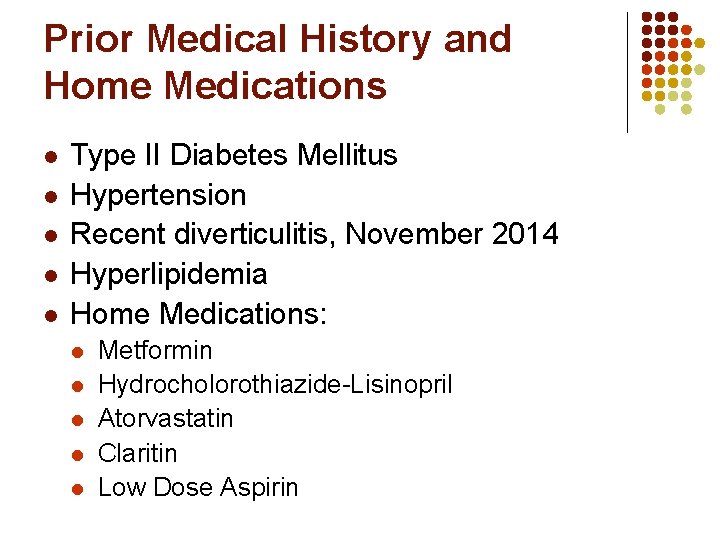
Prior Medical History and Home Medications l l l Type II Diabetes Mellitus Hypertension Recent diverticulitis, November 2014 Hyperlipidemia Home Medications: l l l Metformin Hydrocholorothiazide-Lisinopril Atorvastatin Claritin Low Dose Aspirin
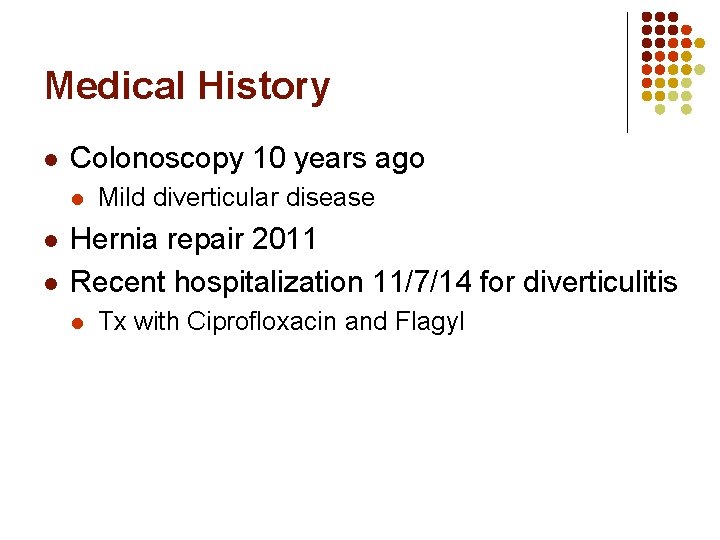
Medical History l Colonoscopy 10 years ago l l l Mild diverticular disease Hernia repair 2011 Recent hospitalization 11/7/14 for diverticulitis l Tx with Ciprofloxacin and Flagyl
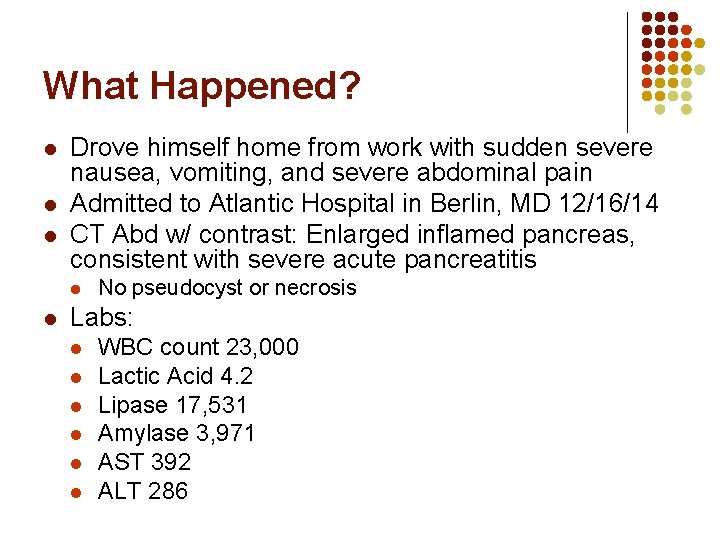
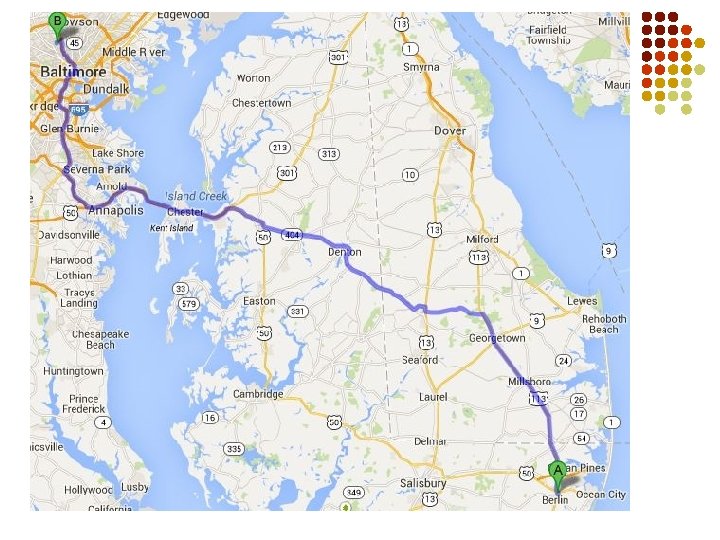
What Happened? l l l Drove himself home from work with sudden severe nausea, vomiting, and severe abdominal pain Admitted to Atlantic Hospital in Berlin, MD 12/16/14 CT Abd w/ contrast: Enlarged inflamed pancreas, consistent with severe acute pancreatitis l l No pseudocyst or necrosis Labs: l l l WBC count 23, 000 Lactic Acid 4. 2 Lipase 17, 531 Amylase 3, 971 AST 392 ALT 286
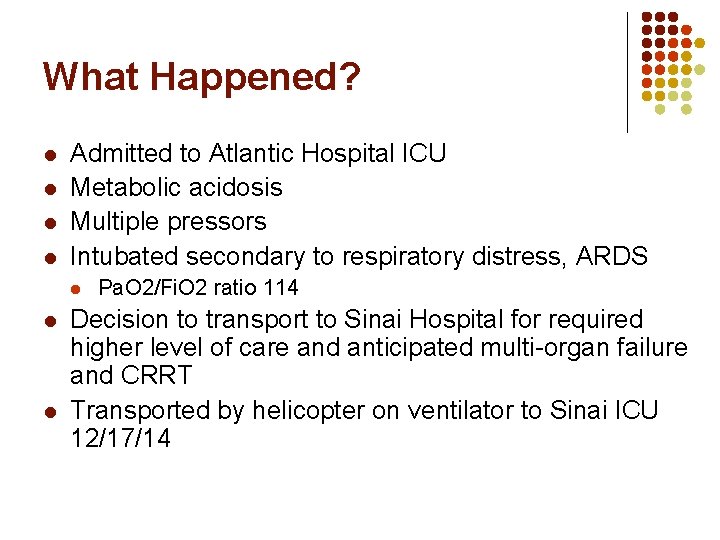
What Happened? l l Admitted to Atlantic Hospital ICU Metabolic acidosis Multiple pressors Intubated secondary to respiratory distress, ARDS l l l Pa. O 2/Fi. O 2 ratio 114 Decision to transport to Sinai Hospital for required higher level of care and anticipated multi-organ failure and CRRT Transported by helicopter on ventilator to Sinai ICU 12/17/14
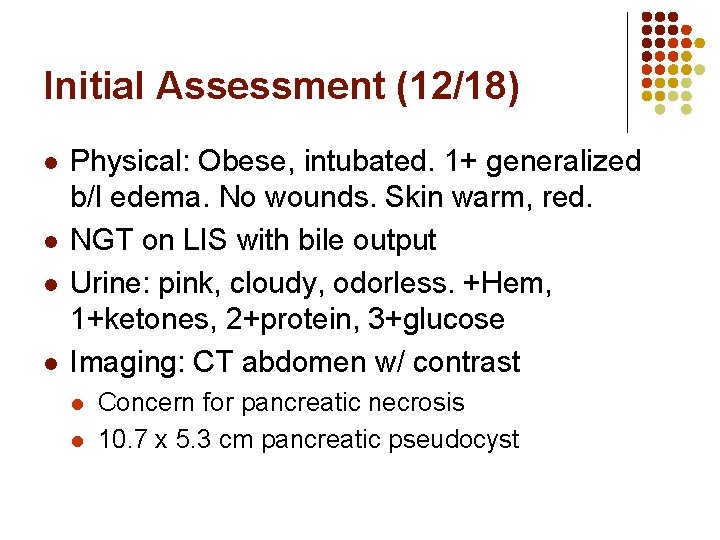
Initial Assessment (12/18) l l Physical: Obese, intubated. 1+ generalized b/l edema. No wounds. Skin warm, red. NGT on LIS with bile output Urine: pink, cloudy, odorless. +Hem, 1+ketones, 2+protein, 3+glucose Imaging: CT abdomen w/ contrast l l Concern for pancreatic necrosis 10. 7 x 5. 3 cm pancreatic pseudocyst
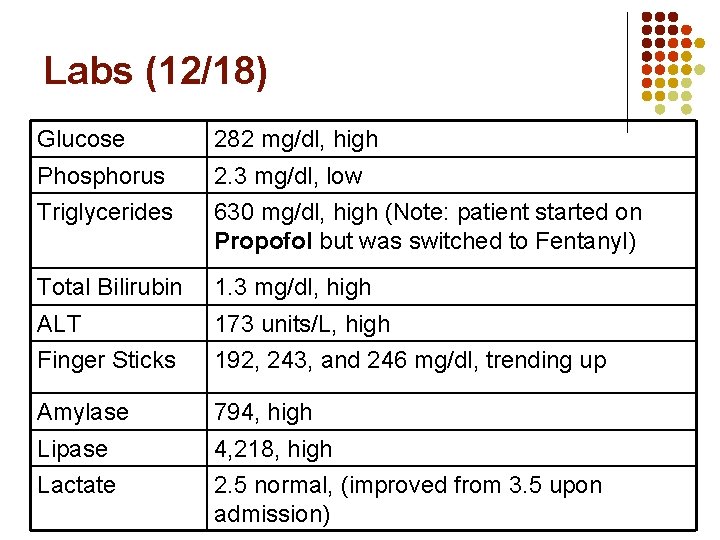
Labs (12/18) Glucose 282 mg/dl, high Phosphorus 2. 3 mg/dl, low Triglycerides 630 mg/dl, high (Note: patient started on Propofol but was switched to Fentanyl) Total Bilirubin 1. 3 mg/dl, high ALT 173 units/L, high Finger Sticks 192, 243, and 246 mg/dl, trending up Amylase 794, high Lipase 4, 218, high Lactate 2. 5 normal, (improved from 3. 5 upon admission)
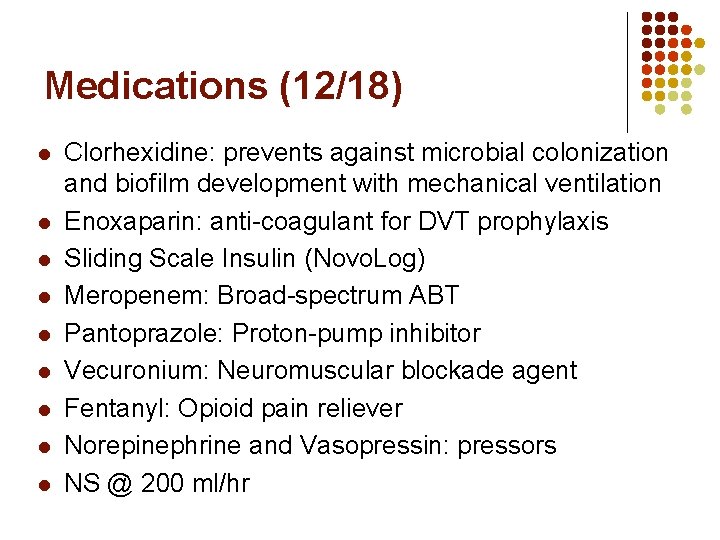
Medications (12/18) l l l l l Clorhexidine: prevents against microbial colonization and biofilm development with mechanical ventilation Enoxaparin: anti-coagulant for DVT prophylaxis Sliding Scale Insulin (Novo. Log) Meropenem: Broad-spectrum ABT Pantoprazole: Proton-pump inhibitor Vecuronium: Neuromuscular blockade agent Fentanyl: Opioid pain reliever Norepinephrine and Vasopressin: pressors NS @ 200 ml/hr
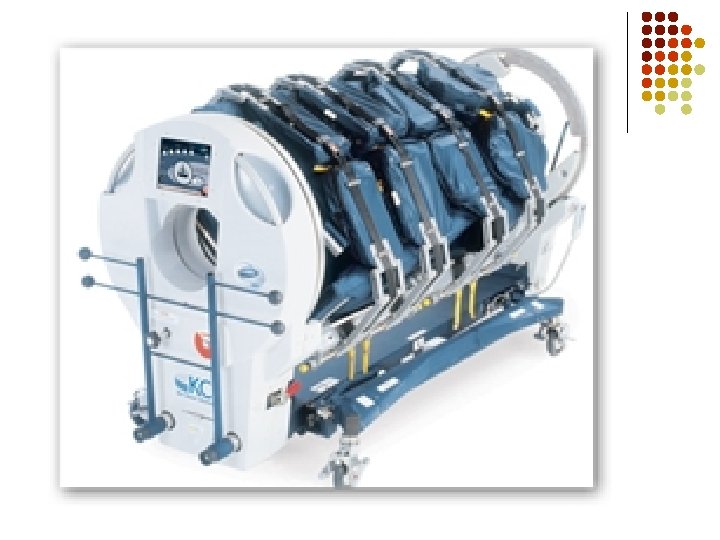
Medications (12/18) l Neuromuscular blockade agents used to achieve better synchronization with ventilator l l Used when pt is “breathing over the vent” Can improve oxygenation and reduce ventilatorinduced lung injury
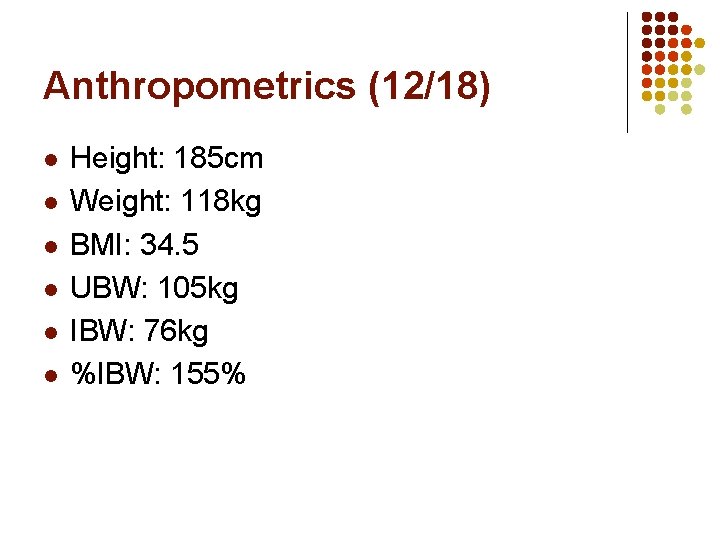
Anthropometrics (12/18) l l l Height: 185 cm Weight: 118 kg BMI: 34. 5 UBW: 105 kg IBW: 76 kg %IBW: 155%
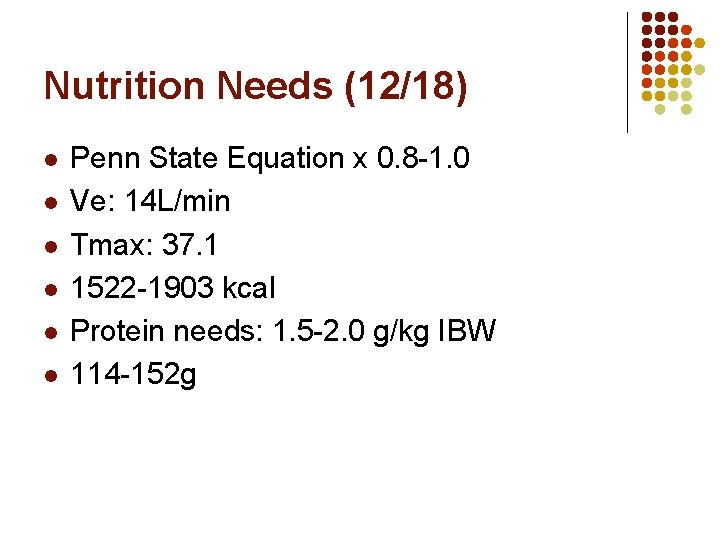
Nutrition Needs (12/18) l l l Penn State Equation x 0. 8 -1. 0 Ve: 14 L/min Tmax: 37. 1 1522 -1903 kcal Protein needs: 1. 5 -2. 0 g/kg IBW 114 -152 g
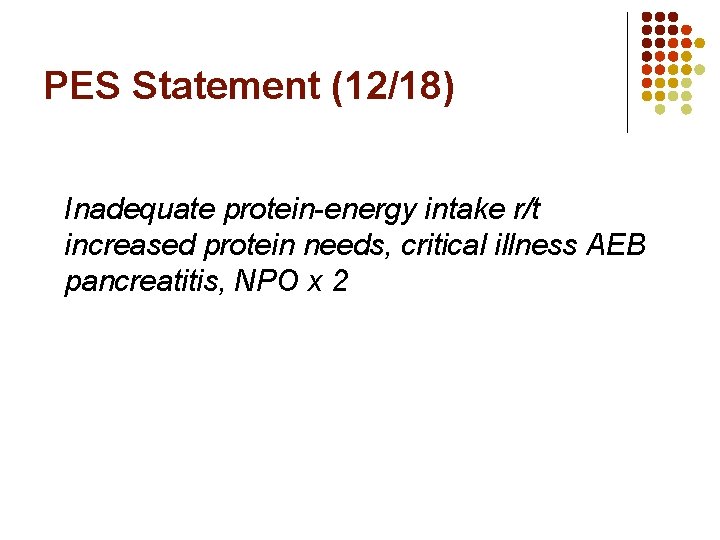
PES Statement (12/18) Inadequate protein-energy intake r/t increased protein needs, critical illness AEB pancreatitis, NPO x 2
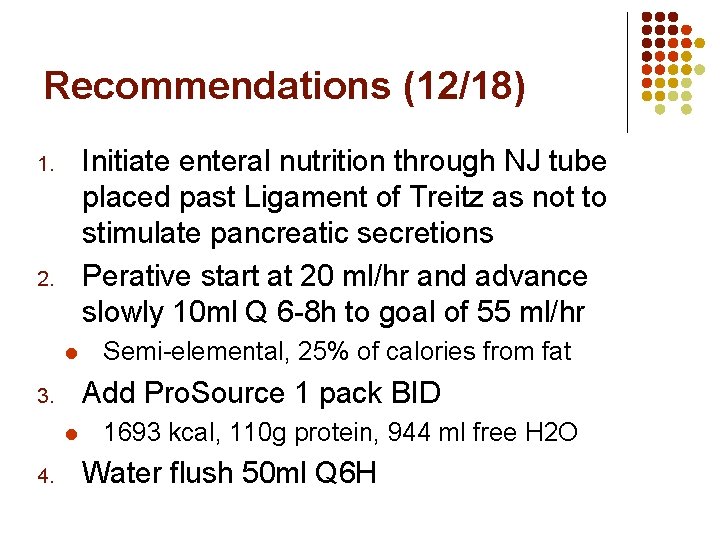
Recommendations (12/18) Initiate enteral nutrition through NJ tube placed past Ligament of Treitz as not to stimulate pancreatic secretions Perative start at 20 ml/hr and advance slowly 10 ml Q 6 -8 h to goal of 55 ml/hr 1. 2. l Add Pro. Source 1 pack BID 3. l 4. Semi-elemental, 25% of calories from fat 1693 kcal, 110 g protein, 944 ml free H 2 O Water flush 50 ml Q 6 H
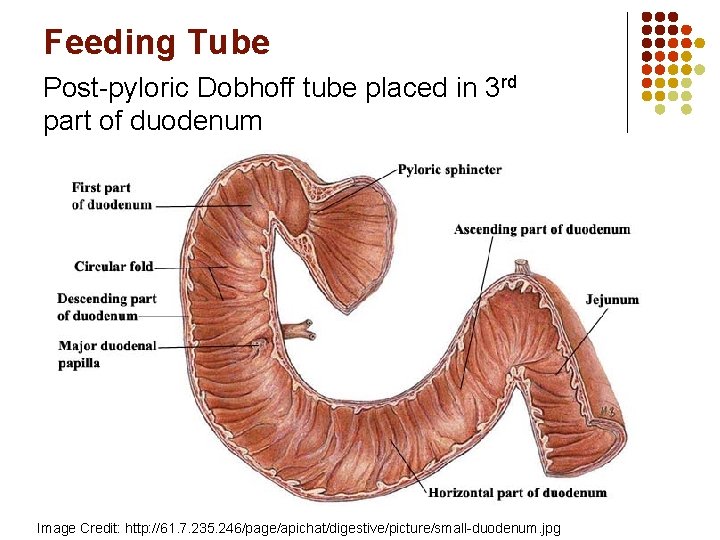
Feeding Tube Post-pyloric Dobhoff tube placed in 3 rd part of duodenum Image Credit: http: //61. 7. 235. 246/page/apichat/digestive/picture/small-duodenum. jpg
Severe Acute Pancreatitis l l l Inflammatory process that begins in the pancreas Hallmark symptom: Persistent acute upper abdominal pain, nausea, vomiting Immune activation caused by active pancreatic enzymes damaging pancreatic tissue with involvement of other bodily tissues and organ systems
Severe Acute Pancreatitis l l l Systemic effects and distal organ failure typically 1 to 3 days after peak cytokine production Mean hospital stay: 1 month Organ failure in 16 to 33% of cases Infectious complications in 30 to 50% of cases Mortality ranges from 19 to 30% l Can increase to 80% if organ failure or sepsis is a complication
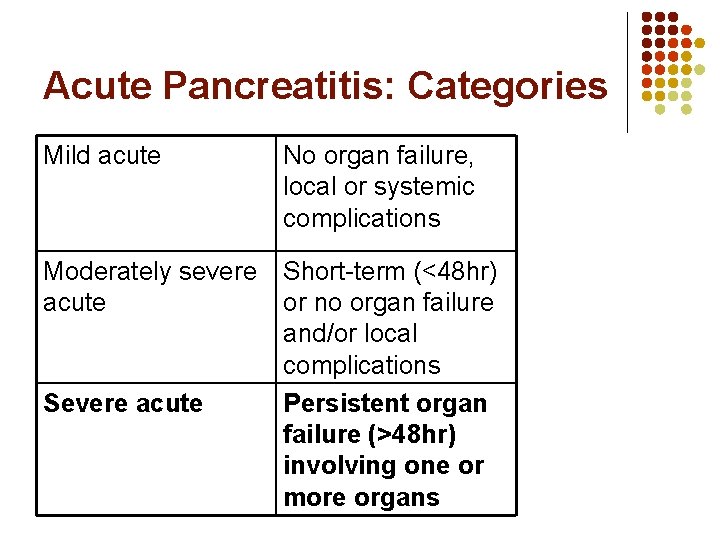
Acute Pancreatitis: Categories Mild acute No organ failure, local or systemic complications Moderately severe acute Short-term (<48 hr) or no organ failure and/or local complications Persistent organ failure (>48 hr) involving one or more organs Severe acute
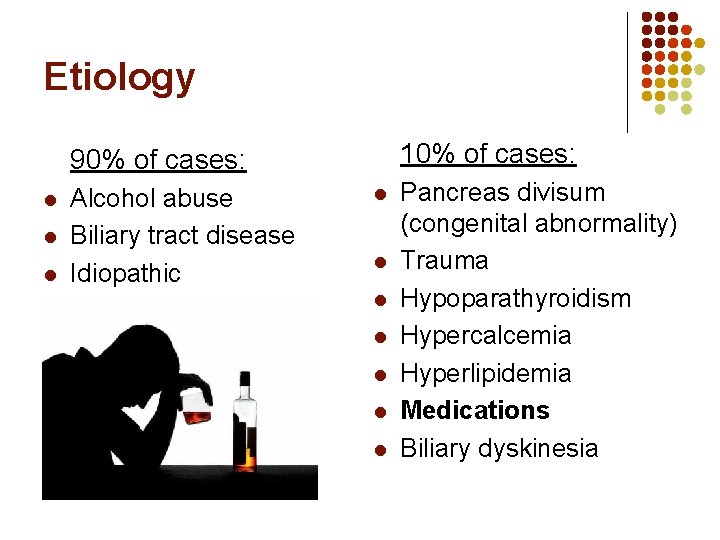
Etiology 10% of cases: 90% of cases: l l l Alcohol abuse Biliary tract disease Idiopathic l l l l Pancreas divisum (congenital abnormality) Trauma Hypoparathyroidism Hypercalcemia Hyperlipidemia Medications Biliary dyskinesia
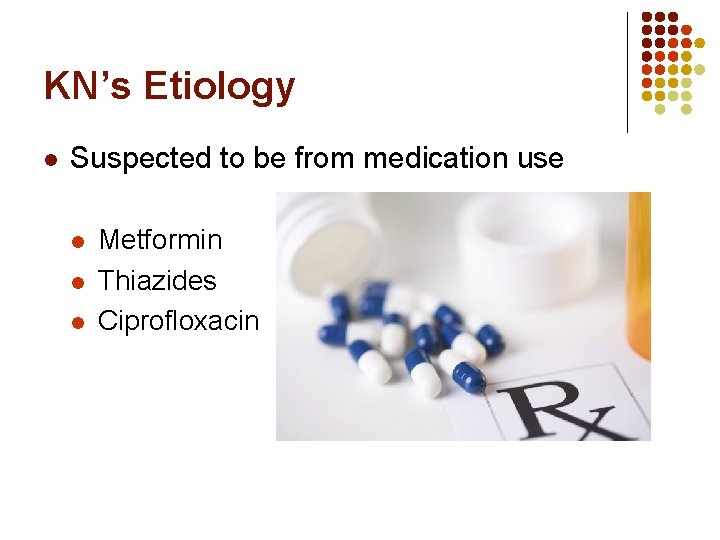
KN’s Etiology l Suspected to be from medication use l l l Metformin Thiazides Ciprofloxacin
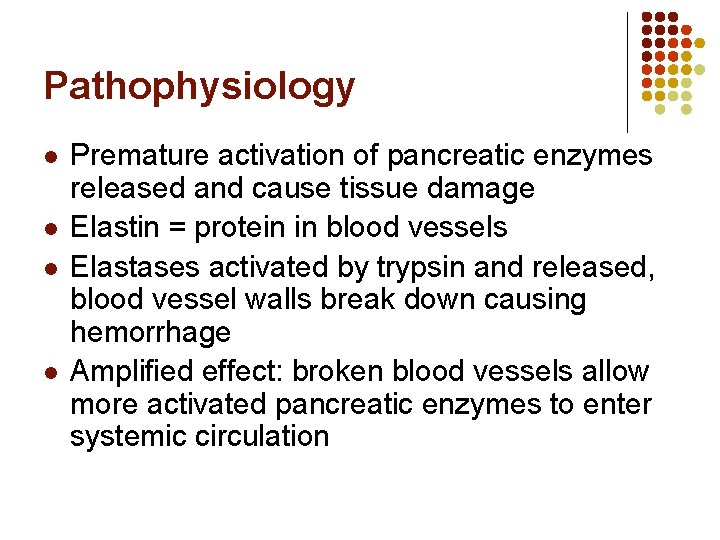
Pathophysiology l l Premature activation of pancreatic enzymes released and cause tissue damage Elastin = protein in blood vessels Elastases activated by trypsin and released, blood vessel walls break down causing hemorrhage Amplified effect: broken blood vessels allow more activated pancreatic enzymes to enter systemic circulation
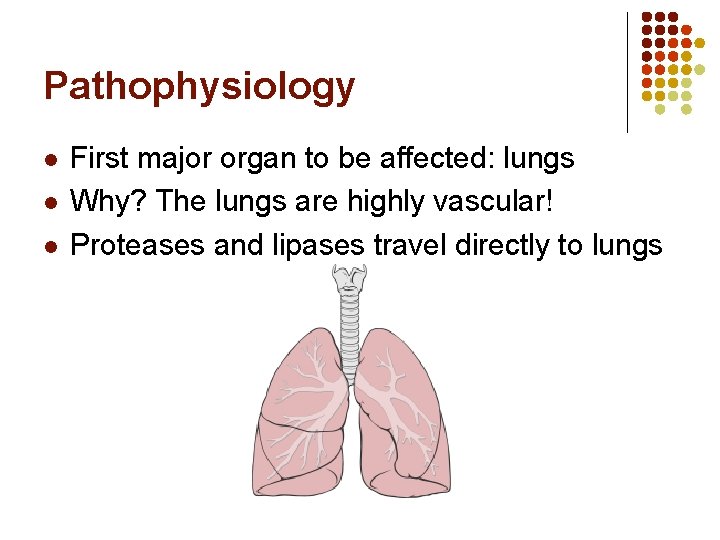
Pathophysiology l l l First major organ to be affected: lungs Why? The lungs are highly vascular! Proteases and lipases travel directly to lungs
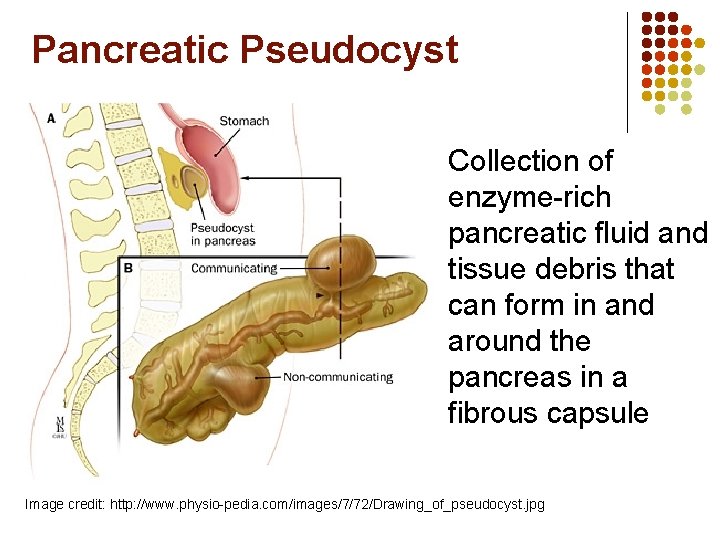
Pancreatic Pseudocyst l Collection of enzyme-rich pancreatic fluid and tissue debris that can form in and around the pancreas in a fibrous capsule Image credit: http: //www. physio-pedia. com/images/7/72/Drawing_of_pseudocyst. jpg
ARDS l l l l Acute Respiratory Distress Syndrome Acute onset of diffuse b/l lung infiltrates consistent with pulmonary edema on chest xray or CT scan Excludes respiratory failure solely explained by cardiac failure or fluid overload Pa. O 2: Partial pressure of oxygen in blood Fi. O 2: Fraction of inspired oxygen Pa. O 2: Fi. O 2 <200 for ARDS Smaller the ratio, larger the severity of hypoxemia
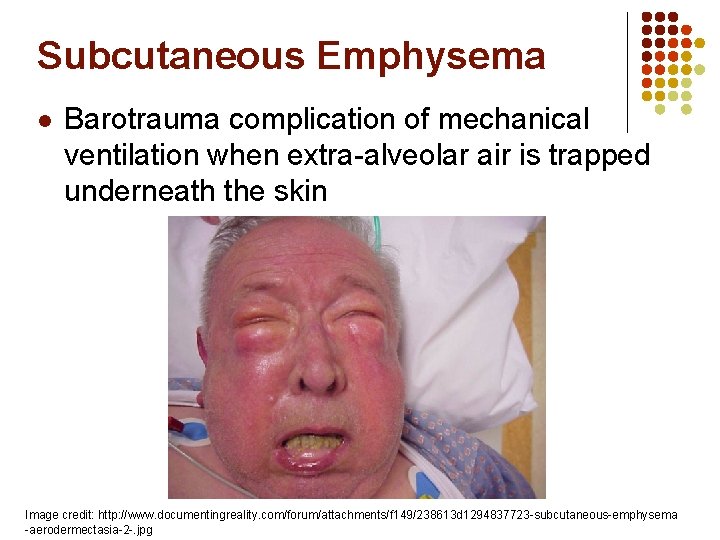
Subcutaneous Emphysema l Barotrauma complication of mechanical ventilation when extra-alveolar air is trapped underneath the skin Image credit: http: //www. documentingreality. com/forum/attachments/f 149/238613 d 1294837723 -subcutaneous-emphysema -aerodermectasia-2 -. jpg
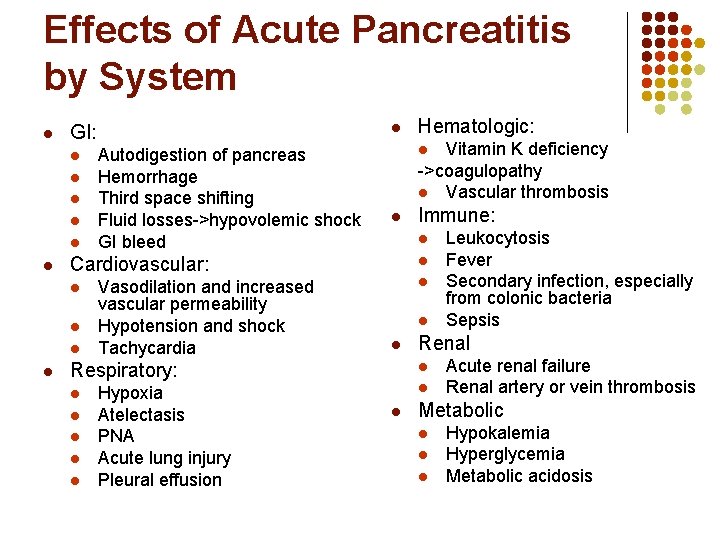
Effects of Acute Pancreatitis by System l l l l Autodigestion of pancreas Hemorrhage Third space shifting Fluid losses->hypovolemic shock GI bleed l l Vasodilation and increased vascular permeability Hypotension and shock Tachycardia Vitamin K deficiency ->coagulopathy l Vascular thrombosis l l l Hypoxia Atelectasis PNA Acute lung injury Pleural effusion Immune: l l l Respiratory: l Hematologic: l Cardiovascular: l l l GI: Renal l Leukocytosis Fever Secondary infection, especially from colonic bacteria Sepsis Acute renal failure Renal artery or vein thrombosis Metabolic l l l Hypokalemia Hyperglycemia Metabolic acidosis
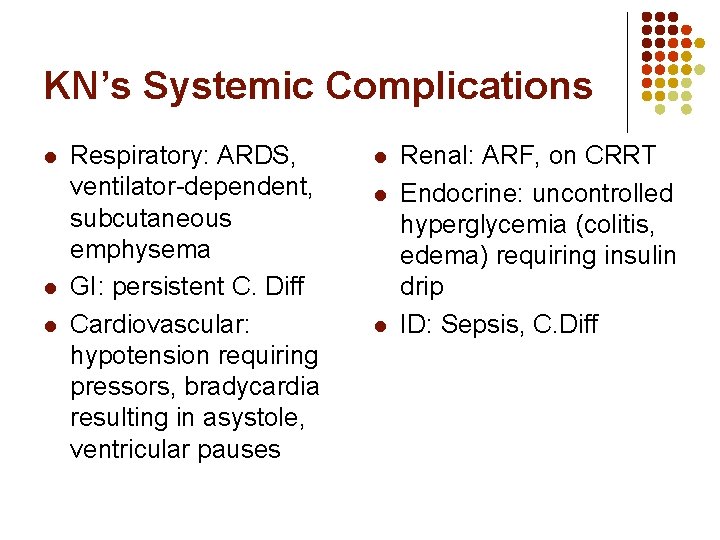
KN’s Systemic Complications l l l Respiratory: ARDS, ventilator-dependent, subcutaneous emphysema GI: persistent C. Diff Cardiovascular: hypotension requiring pressors, bradycardia resulting in asystole, ventricular pauses l l l Renal: ARF, on CRRT Endocrine: uncontrolled hyperglycemia (colitis, edema) requiring insulin drip ID: Sepsis, C. Diff
Nutritional Implications l l Energy expenditure can be increased by as much as 139% of the Harris-Benedict Equation’s estimations Sepsis can further increase energy expenditure by 15% Catabolic stress state can increase muscle catabolism and proteolysis resulting in loss of lean muscle mass Nutrient losses can increase from maldigestion, malabsorption, or excessive protein loss
Nutritional Implications l l l The duodenum can become obstructed from enlargement of the pancreas Stress hyperglycemia and insulin resistance in 4090% of patients Hypertriglyceridemia in 12 -15% of cases Altered electrolyte and micronutrient values in up to 25% of cases Not likely that a patient in the severe state will be able to advance to an oral diet within one week of hospitalization
Management l l l Aggressive IV fluid resuscitation Pain management Monitoring and intervention: l l l O 2 Saturation Blood gases Urine output Electrolytes Blood glucose l Hyperglycemia with blood glucose greater than 180 -200 mg/dl can increase the risk of secondary pancreatic infection
Nutritional Management l l Old method: Bowel rest and PN In the last 10 years: PN not preferred Can increase bacterial translocation, impair immunity, and increase rates of infection Indications for PN – Society of Critical Care Medicine 2009 and ASPEN l l l Protein-calorie malnutrition is evident and enteral nutrition is not feasible (i. e. SBO, persistent ileus) Enteral nutrition is not available after 7 days of admission, and anticipated PN >/= 7 days Specific conditions where upper GI surgery needed
Nutritional Management l l ASPEN recommends EN within 48 -72 hours of admission Early EN: l l l Reduces complications, length of stay, and mortality Digestion of nutrients can aid in organ recovery Can suppress the inflammatory response, prevent bacterial overgrowth, and maintain gut health
Nutritional Management l l l Optimal formula: mixed evidence ASPEN: Polymeric formula when feeding distal to the LOT Elemental or semi-elemental when extensive necrosis or signs of maldigestion or malabsorption
Gastric EN for SAP l l l Need for more studies with gastric EN Is a safe and effective means Early access is easier to achieve Full tolerance achieved in >80% of pts with SAP New “Gut rousing” hypothesis – restoring the function of the gut is more important than avoiding pancreatic stimulation
Jejunal Feeding for SAP l l l Preferred method Can be beneficial when pancreatic mass present Mass can compress the stomach and duodenum The compression can obstruct the gastric outlet, cause vomiting, and possibly a need to stop feedings A double-lumen nasogastric decompressionjejunal feeding tube would be ideal l To simultaneously decompress the stomach and feed into the jejunum at the same time
Nutrition Progress l l 12/22/14: Tolerating TF at low rate, abdomen slightly distended 12/23/14: Abdomen distended, Perative @ 40 (Goal of 55). Unable to check residuals. Advance when abdomen feels softer. Consult for liquid stool. l l In a post-pyloric feeding tube, accuracy of gastric residual volumes is questionable since at this point in the GI contents are being propelled forward, and tube has small diameter No intervention for liquid stool
Nutrition Progress l l 12/24/14: Renal failure. Monitor renal labs and electrolytes. D/C Pro. Source. TFs held; pt coded. Restart @ 40 ml/hr and advance as tolerated. 12/25/14: Started on CRRT for AKI, will increase needs for protein 1. 5 -2. 5 g/kg. Add Pro. Source BID when BUN/Cr trend down. Monitor hyperglycemia.
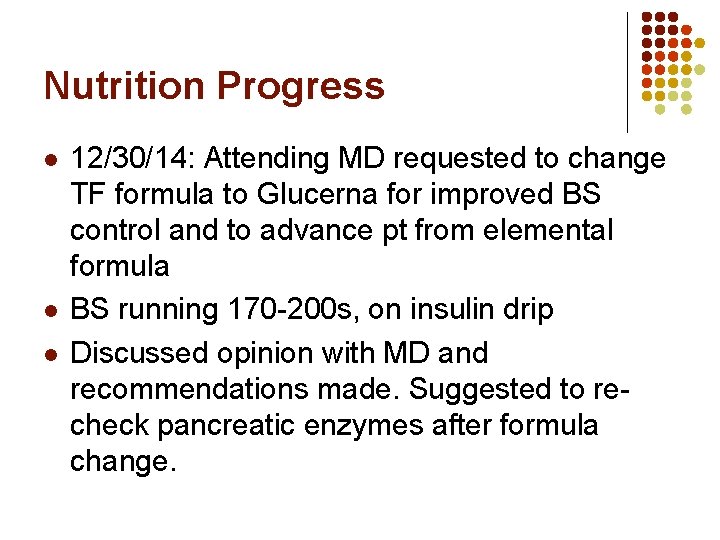
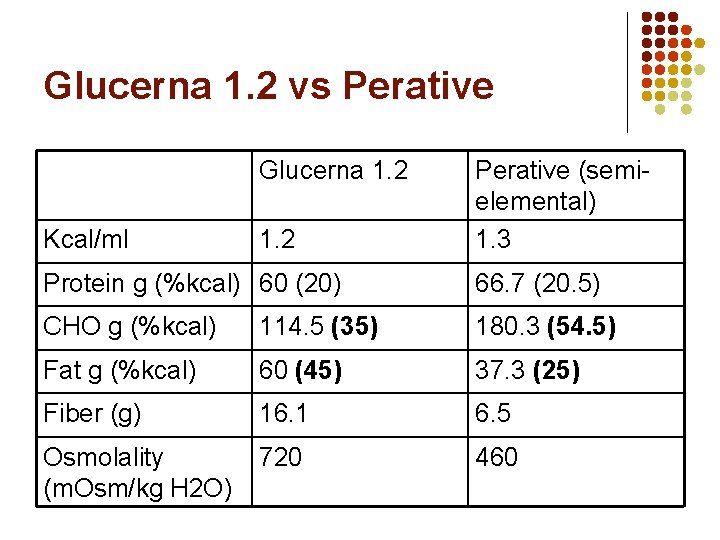
Nutrition Progress l l l 12/30/14: Attending MD requested to change TF formula to Glucerna for improved BS control and to advance pt from elemental formula BS running 170 -200 s, on insulin drip Discussed opinion with MD and recommendations made. Suggested to recheck pancreatic enzymes after formula change.
Glucerna 1. 2 vs Perative Glucerna 1. 2 Kcal/ml 1. 2 Perative (semielemental) 1. 3 Protein g (%kcal) 60 (20) 66. 7 (20. 5) CHO g (%kcal) 114. 5 (35) 180. 3 (54. 5) Fat g (%kcal) 60 (45) 37. 3 (25) Fiber (g) 16. 1 6. 5 Osmolality (m. Osm/kg H 2 O) 720 460
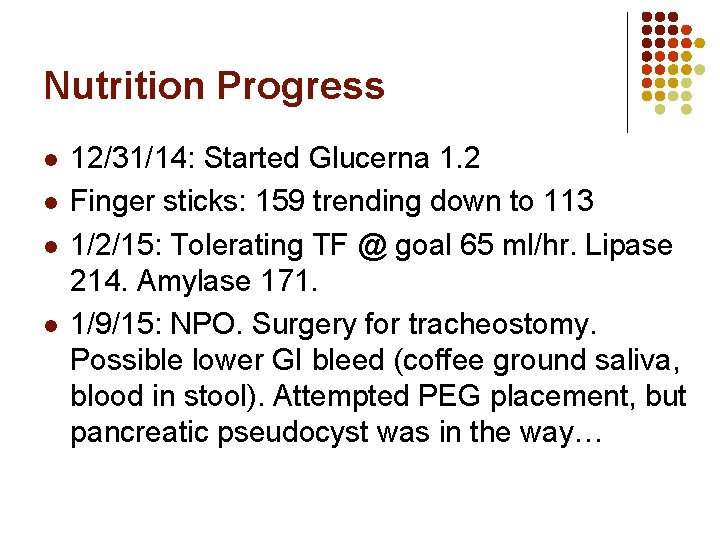
Nutrition Progress l l 12/31/14: Started Glucerna 1. 2 Finger sticks: 159 trending down to 113 1/2/15: Tolerating TF @ goal 65 ml/hr. Lipase 214. Amylase 171. 1/9/15: NPO. Surgery for tracheostomy. Possible lower GI bleed (coffee ground saliva, blood in stool). Attempted PEG placement, but pancreatic pseudocyst was in the way…
Questions?
References 1. Micromedex® Healthcare Series. (n. d. ). Retrieved December 20, 2014, from http: //thomsonhc. com. Greenwood Village, CO: Thomson Micromedex. 2. Chlorhexidine Facts. (n. d. ). Retrieved December 28, 2014, from http: //chlorhexidinefacts. com/mechanism-of-action. html 3. Academy of Nutrition and Dietetics Evidence Analysis Library. CI: Initiation of Enteral Nutrition 2012. Retrieved December 20, 2014, from http: //www. andeal. org/template. cfm? template=guide_summary&key=320 5 4. Academy of Nutrition and Dietetics Evidence Analysis Library. CI: Gastric vs. Small Bowel Feeding Tube Placement 2012. Retrieved December 20, 2014, from http: //www. andeal. org/template. cfm? template=guide_summary&key=319 9 5. Academy of Nutrition and Dietetics Evidence Analysis Library. CI: Hypocaloric, High Protein Feeding Regimen 2012. Retrieved December 20, 2014, from http: //www. andeal. org/template. cfm? template=guide_summary&key=319 0
References 6. Dissanaike, S. , Pham, T. , Shalhub, S. , Warner, K. , Hennessy, L. , Moore, E. , Cuschieri, J. (2008). Effect of Immediate Enteral Feeding on Trauma Patients with an Open Abdomen: Protection from Nosocomial Infections. Journal of the American College of Surgeons, 690 -697. 7. Hsu CW, Sun SF, Lin SL, Kang SP, Chu KA, Lin CH, Huang HH. Duodenal vs. gastric feeding in medical intensive care unit patients: A prospective, randomized, clinical study. Crit Care Med. 2009 Jun; 37(6): 1, 866 -1, 872. 8. Dickerson, R. , Boschert, K. , Kudsk, K. , & Brown, R. (2002). Hypocaloric enteral tube feeding in critically ill obese patients. Nutrition, 241 -246. 9. Mueller, C. (2012). The A. S. P. E. N. Adult Nutrition Support Core Curriculum (2 nd ed. , pp. 473 -480). Silver Spring, MD: American Society for Parenteral and Enteral Nutrition. 10. Acute Pancreatitis. (n. d. ). Retrieved December 19, 2014, from http: //www. merckmanuals. com/professional/gastrointestinal_disorders/pa ncreatitis/acute_pancreatitis. html#v 892797 11. Swaroop Vege, MD, S. (n. d. ). Management of acute pancreatitis. Retrieved December 19, 2014, from http: //www. uptodate. com/contents/management-of-acute-pancreatitis
References 12. Marik, P. (2009, January 1). What is the best way to feed patients with pancreatitis? Retrieved December 30, 2014, from http: //journals. lww. com/co. Criticalcare/pages/author. aspx? first. Name=Paul&middle. Name=E&last. Na me=Marik 13. Wu, X. , Ji, K. , Wang, H. , Li, G. , Zang, B. , & Chen, W. (2010). Total Enteral Nutrition In Prevention Of Pancreatic Necrotic Infection In Severe Acute Pancreatitis. Pancreas, 39(2), 248 -251. 14. Martindale, R. , Mcclave, S. , Vanek, V. , Mccarthy, M. , Roberts, P. , Taylor, B. , Cresci, G. (2009). Guidelines for the provision and assessment of nutrition support therapy in the adult critically ill patient: Society of Critical Care Medicine and American Society for Parenteral and Enteral Nutrition: Executive Summary. Critical Care Medicine, 37(5), 1757 -1761. 15. Seminario, J. , and O’Keefe, S. (2014). Jejunal Feeding in Patients with Pancreatitis. Nutrition in Clinical Practice, 29(3), 283 -286.
References 16. Petrov, M. , Loveday, B. , Pylypchuk, R. , Mcilroy, K. , Phillips, A. , & Windsor, J. (2009). Systematic review and meta-analysis of enteral nutrition formulations in acute pancreatitis. British Journal of Surgery, 96, 1243 -1252. 17. Singh, N. , Sharma, B. , Sharma, M. , Sachdev, V. , Bhardwaj, P. , Mani, K. , Saraya, A. (2012). Evaluation of Early Enteral Feeding Through Nasogastric and Nasojejunal Tube in Severe Acute Pancreatitis. Pancreas, 41(1), 153 -159. 18. Chang, Y. , Fu, H. , Xiao, Y. , & Liu, J. (2013). Nasogastric or nasojejunal feeding in predicted severe acute pancreatitis: A meta-analysis. Critical Care, 17, R 118 -R 118. 19. Petrov, M. Gastric feeding and "Gut Rousing" in Acute Pancreatitis. (2014). Nutrition in Clinical Practice, 29(3), 287 -290. 20. Hepatic ischemia. (n. d. ). Retrieved January 21, 2015, from http: //umm. edu/health/medical/ency/articles/hepatic-ischemia 21. Yegneswaran, B. , & Murugan, R. (n. d. ). Neuromuscular Blockers And ARDS: Thou Shalt Not Breathe, Move, Or Die! Critical Care, 311 -311.
References 22. Questioning Common Nursing Practices: Gastric Residual Volume. (n. d. ). Retrieved January 28, 2015, from http: //www. medscape. com/viewarticle/780771_3 23. Barotrauma and Mechanical Ventilation. (n. d. ). Retrieved January 28, 2015, from http: //emedicine. medscape. com/article/296625 -overview