
Major basic science discoveries in HIV Dr Matthew
Major basic science discoveries in HIV Dr. Matthew Marsden, Ph. D. UCLA School of Medicine
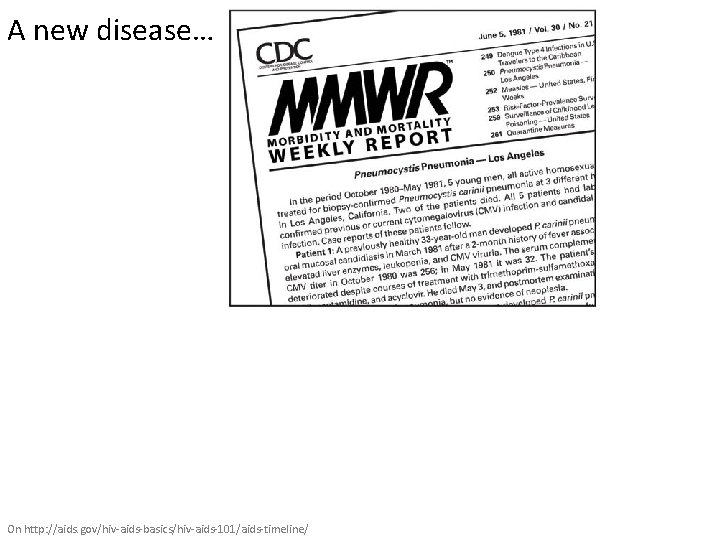
A new disease… On http: //aids. gov/hiv-aids-basics/hiv-aids-101/aids-timeline/

A new disease… • By the end of 1981, there was a cumulative total of 270 reported cases of severe immune deficiency among gay men, and 121 of those individuals had died. • In 1983, Luc Montagnier and Françoise Barré-Sinoussi reported the discovery of a new virus (later called HIV) that is the cause of AIDS. • The first commercial blood test for HIV was licensed in 1985, allowing screening of the U. S. blood supply. • In 1987 the first anti-HIV drug (AZT) was approved by the U. S. Food and Drug Administration. • The first potent combination of anti-HIV drugs became available in 1995. On http: //aids. gov/hiv-aids-basics/hiv-aids-101/aids-timeline/
Some Significant Historical Discoveries in the field of Retrovirology 1908 - Discovery of Retroviruses in chickens (Ellermann and Bang). 1911 - Cell free transmission of a sarcoma in chickens (Rous) named “Rous sarcoma virus”.
Some Significant Historical Discoveries in the field of Retrovirology 1908 - Discovery of Retroviruses in chickens (Ellermann and Bang). 1911 - Cell free transmission of a sarcoma in chickens (Rous) named “Rous sarcoma virus”. Many additional retroviruses were subsequently identified in different animals, including important model systems: 1936 - Mammary carcinoma in mice caused by milktransmitted, filterable agent (Bittner) termed “Mouse Mammary Tumor virus”. 1957 - Potent leukemia virus isolated from mice (Gross) named “Gross murine leukemia virus”.
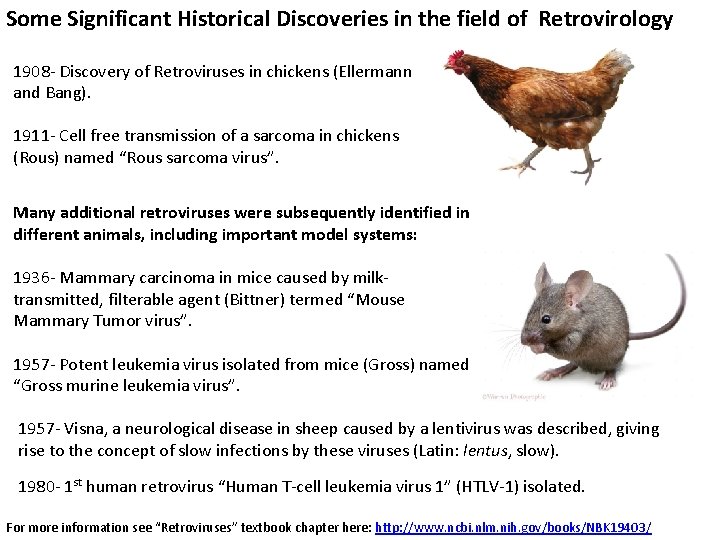
Some Significant Historical Discoveries in the field of Retrovirology 1908 - Discovery of Retroviruses in chickens (Ellermann and Bang). 1911 - Cell free transmission of a sarcoma in chickens (Rous) named “Rous sarcoma virus”. Many additional retroviruses were subsequently identified in different animals, including important model systems: 1936 - Mammary carcinoma in mice caused by milktransmitted, filterable agent (Bittner) termed “Mouse Mammary Tumor virus”. 1957 - Potent leukemia virus isolated from mice (Gross) named “Gross murine leukemia virus”. 1957 - Visna, a neurological disease in sheep caused by a lentivirus was described, giving rise to the concept of slow infections by these viruses (Latin: lentus, slow). 1980 - 1 st human retrovirus “Human T-cell leukemia virus 1” (HTLV-1) isolated. For more information see “Retroviruses” textbook chapter here: http: //www. ncbi. nlm. nih. gov/books/NBK 19403/
Timeline of discoveries 1970 s: Discovery of retroviruses and retroviral enzymes

1970 - Discovery of Reverse Transcriptase- Howard Temin and David Baltimore (Received 1975 Nobel Prize in Physiology or Medicine) “Central dogma” of molecular biology http: //www. ncbi. nlm. nih. gov/Class/MLACourse/Modules/Mol. Bio. Review/central_dogma. html
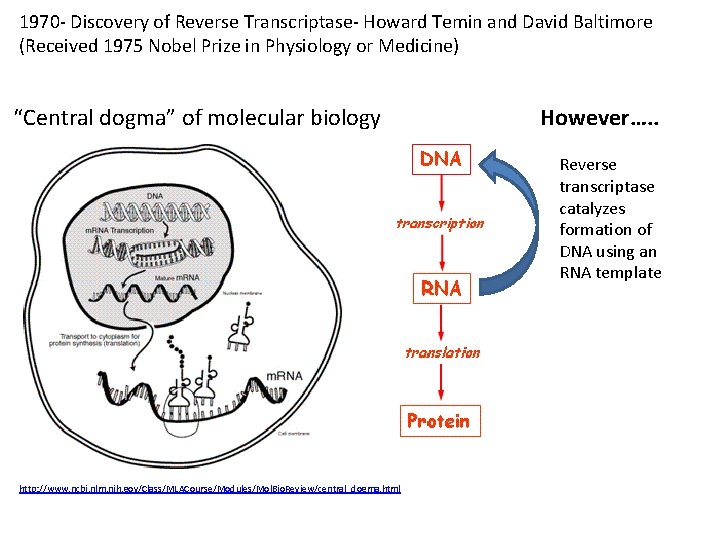
1970 - Discovery of Reverse Transcriptase- Howard Temin and David Baltimore (Received 1975 Nobel Prize in Physiology or Medicine) “Central dogma” of molecular biology However…. . Reverse transcriptase catalyzes formation of DNA using an RNA template http: //www. ncbi. nlm. nih. gov/Class/MLACourse/Modules/Mol. Bio. Review/central_dogma. html
Timeline of discoveries 1970 s: Discovery of retroviruses and retroviral enzymes 1981: Epidemic first identified 1983: Identification of the HIV virus

1983 - Identification of the HIV virus- Françoise Barré-Sinoussi and Luc Montagnier (Shared 2008 Nobel Prize in Physiology or Medicine) http: //www. nobelprize. org/nobel_prizes/medicine/laureates/2008/press. html
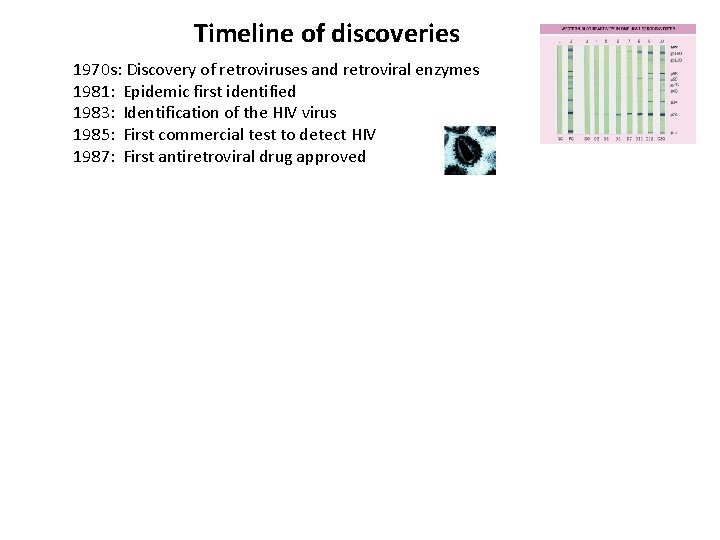
Timeline of discoveries 1970 s: Discovery of retroviruses and retroviral enzymes 1981: Epidemic first identified 1983: Identification of the HIV virus 1985: First commercial test to detect HIV 1987: First antiretroviral drug approved

1987 - First antiretroviral drug approved (AZT; azidothymidine; zidovudine) Just 25 months from demonstrated efficacy in vitro (in a test tube) to FDA approval- Record time http: //www. mcld. co. uk/hiv/? q=AZT
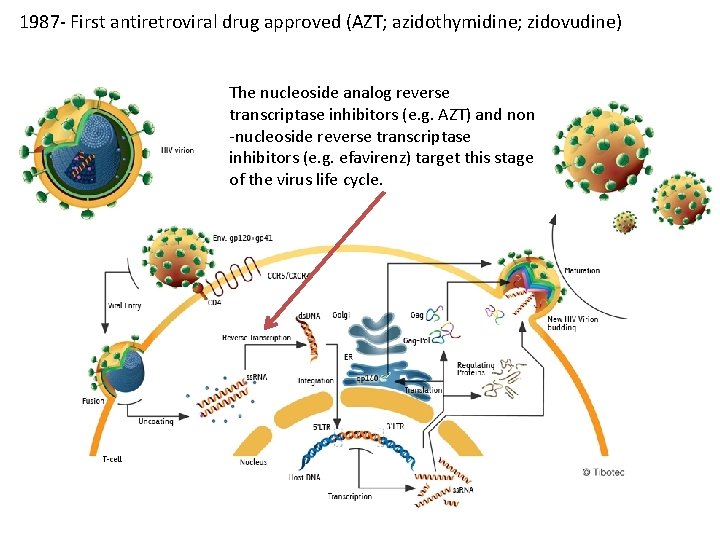
1987 - First antiretroviral drug approved (AZT; azidothymidine; zidovudine) The nucleoside analog reverse transcriptase inhibitors (e. g. AZT) and non -nucleoside reverse transcriptase inhibitors (e. g. efavirenz) target this stage of the virus life cycle.
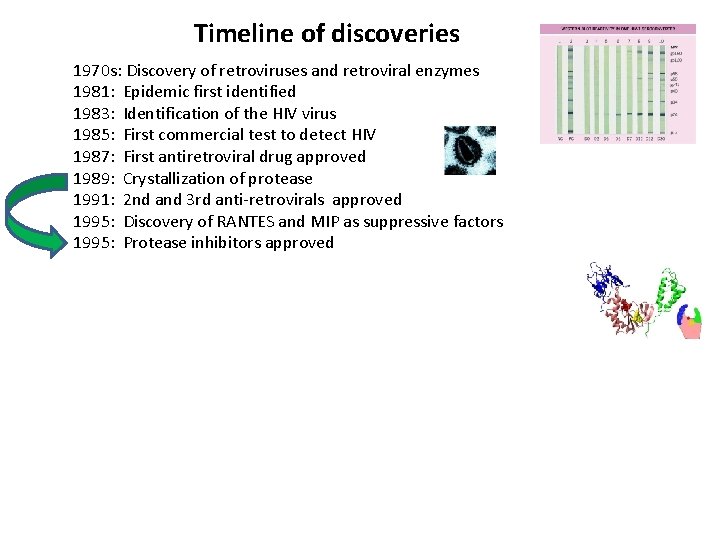
Timeline of discoveries 1970 s: Discovery of retroviruses and retroviral enzymes 1981: Epidemic first identified 1983: Identification of the HIV virus 1985: First commercial test to detect HIV 1987: First antiretroviral drug approved 1989: Crystallization of protease 1991: 2 nd and 3 rd anti-retrovirals approved 1995: Discovery of RANTES and MIP as suppressive factors 1995: Protease inhibitors approved
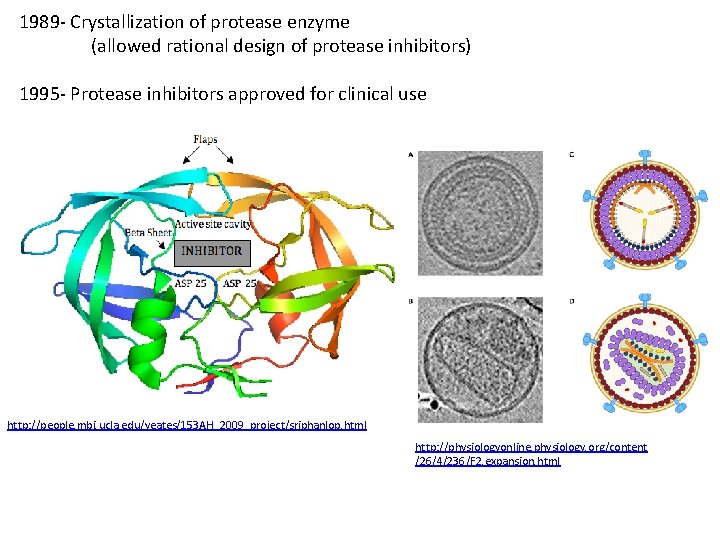
1989 - Crystallization of protease enzyme (allowed rational design of protease inhibitors) 1995 - Protease inhibitors approved for clinical use http: //people. mbi. ucla. edu/yeates/153 AH_2009_project/sriphanlop. html http: //physiologyonline. physiology. org/content /26/4/236/F 2. expansion. html
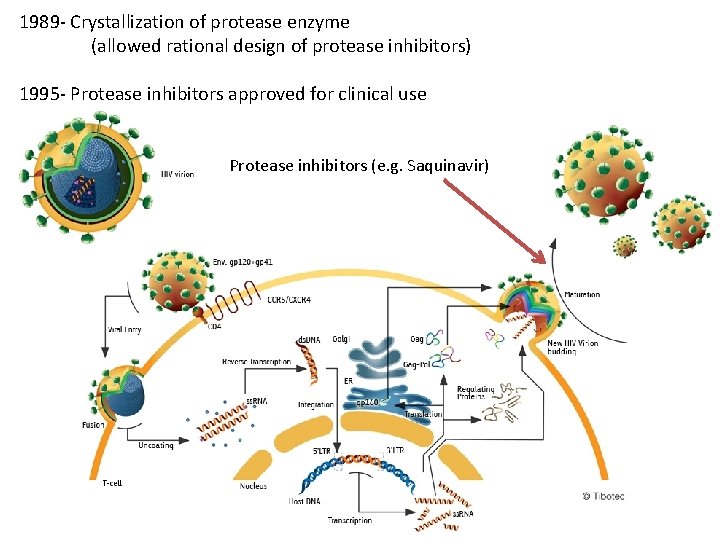
1989 - Crystallization of protease enzyme (allowed rational design of protease inhibitors) 1995 - Protease inhibitors approved for clinical use Protease inhibitors (e. g. Saquinavir)
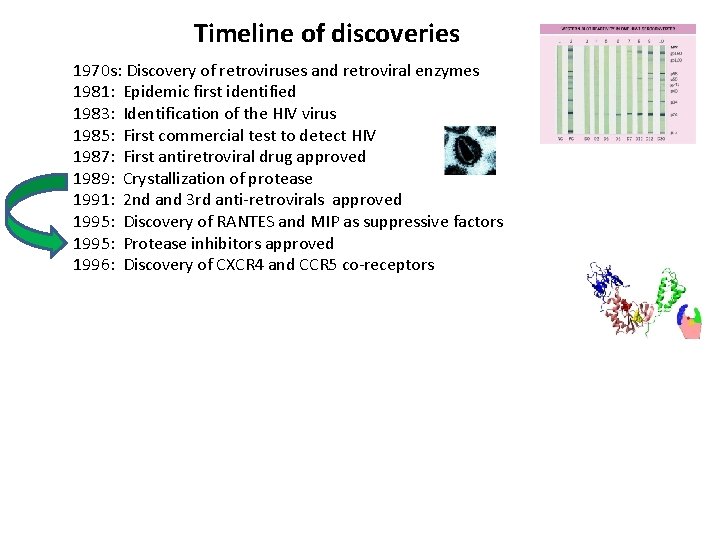
Timeline of discoveries 1970 s: Discovery of retroviruses and retroviral enzymes 1981: Epidemic first identified 1983: Identification of the HIV virus 1985: First commercial test to detect HIV 1987: First antiretroviral drug approved 1989: Crystallization of protease 1991: 2 nd and 3 rd anti-retrovirals approved 1995: Discovery of RANTES and MIP as suppressive factors 1995: Protease inhibitors approved 1996: Discovery of CXCR 4 and CCR 5 co-receptors
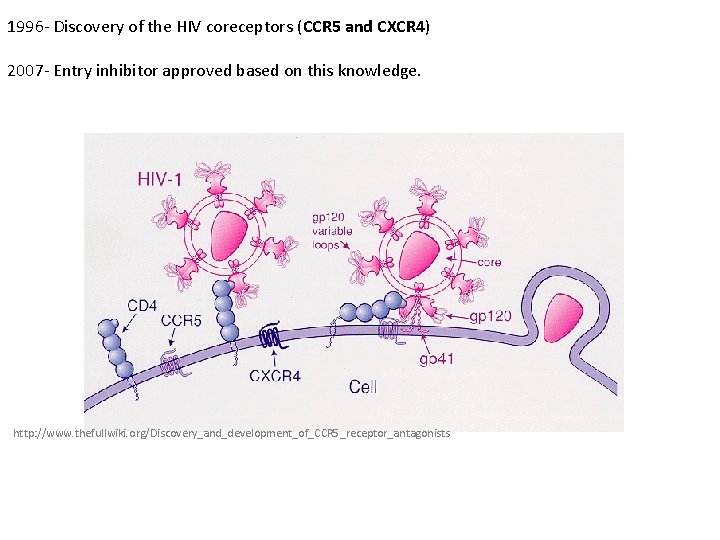
1996 - Discovery of the HIV coreceptors (CCR 5 and CXCR 4) 2007 - Entry inhibitor approved based on this knowledge. http: //www. thefullwiki. org/Discovery_and_development_of_CCR 5_receptor_antagonists
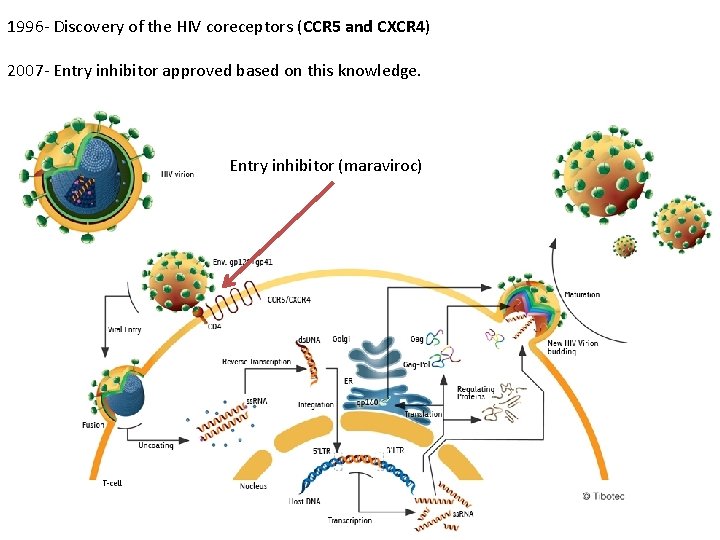
1996 - Discovery of the HIV coreceptors (CCR 5 and CXCR 4) 2007 - Entry inhibitor approved based on this knowledge. Entry inhibitor (maraviroc)
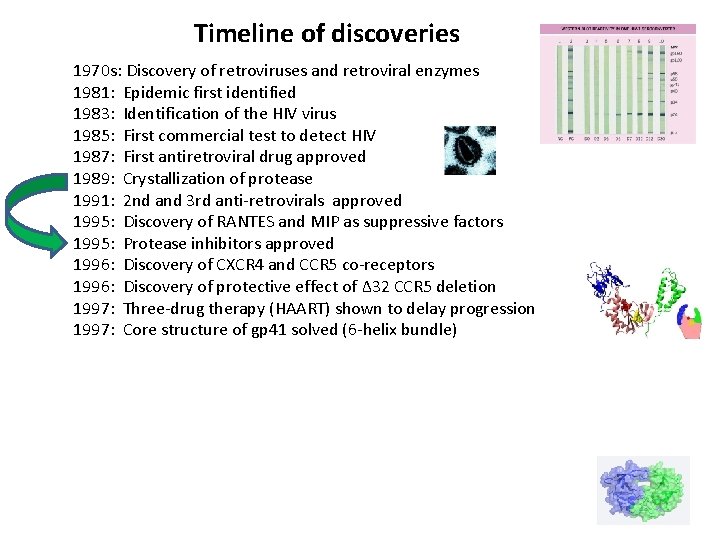
Timeline of discoveries 1970 s: Discovery of retroviruses and retroviral enzymes 1981: Epidemic first identified 1983: Identification of the HIV virus 1985: First commercial test to detect HIV 1987: First antiretroviral drug approved 1989: Crystallization of protease 1991: 2 nd and 3 rd anti-retrovirals approved 1995: Discovery of RANTES and MIP as suppressive factors 1995: Protease inhibitors approved 1996: Discovery of CXCR 4 and CCR 5 co-receptors 1996: Discovery of protective effect of Δ 32 CCR 5 deletion 1997: Three-drug therapy (HAART) shown to delay progression 1997: Core structure of gp 41 solved (6 -helix bundle)
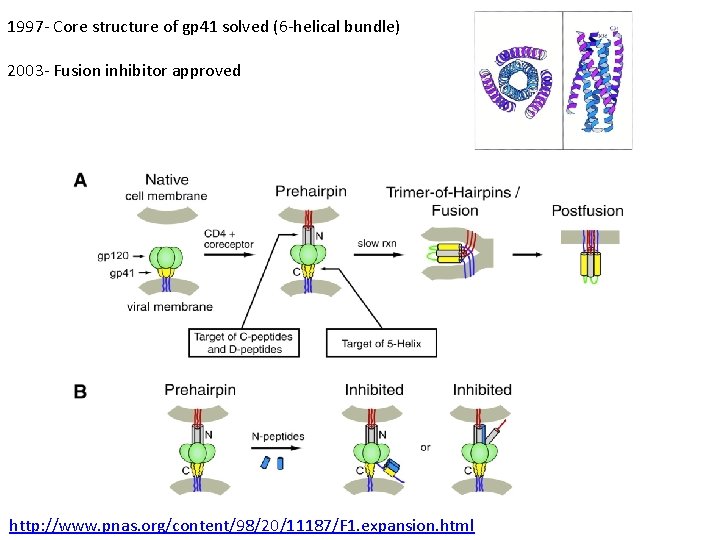
1997 - Core structure of gp 41 solved (6 -helical bundle) 2003 - Fusion inhibitor approved http: //www. pnas. org/content/98/20/11187/F 1. expansion. html
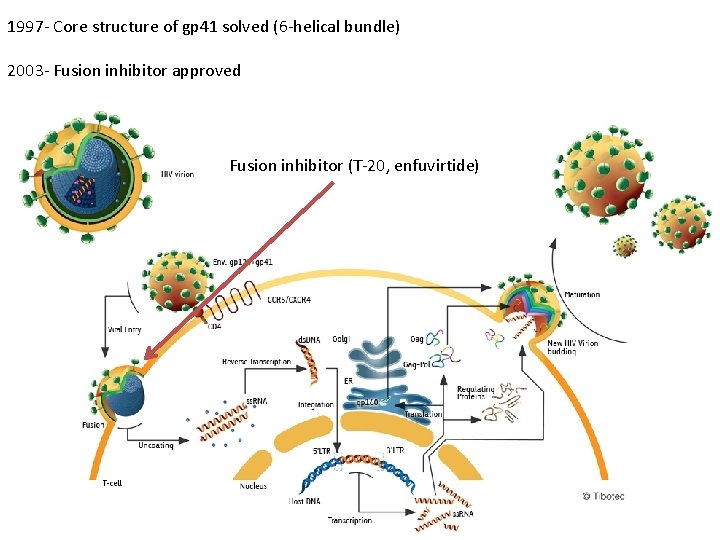
1997 - Core structure of gp 41 solved (6 -helical bundle) 2003 - Fusion inhibitor approved Fusion inhibitor (T-20, enfuvirtide)
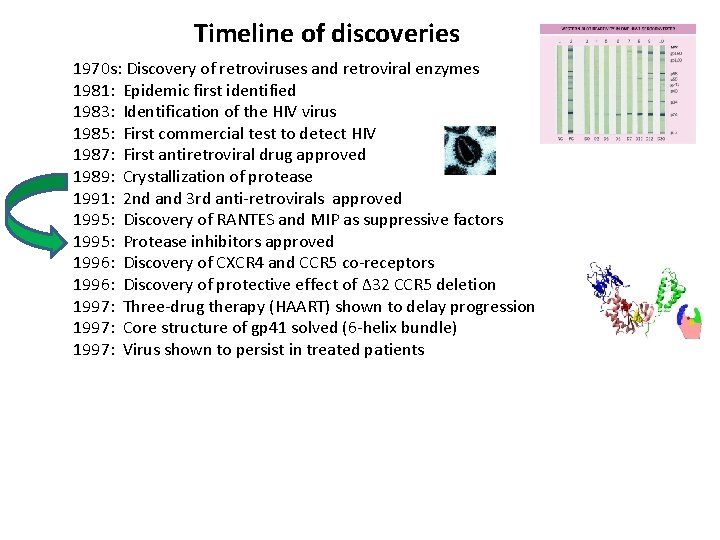
Timeline of discoveries 1970 s: Discovery of retroviruses and retroviral enzymes 1981: Epidemic first identified 1983: Identification of the HIV virus 1985: First commercial test to detect HIV 1987: First antiretroviral drug approved 1989: Crystallization of protease 1991: 2 nd and 3 rd anti-retrovirals approved 1995: Discovery of RANTES and MIP as suppressive factors 1995: Protease inhibitors approved 1996: Discovery of CXCR 4 and CCR 5 co-receptors 1996: Discovery of protective effect of Δ 32 CCR 5 deletion 1997: Three-drug therapy (HAART) shown to delay progression 1997: Core structure of gp 41 solved (6 -helix bundle) 1997: Virus shown to persist in treated patients
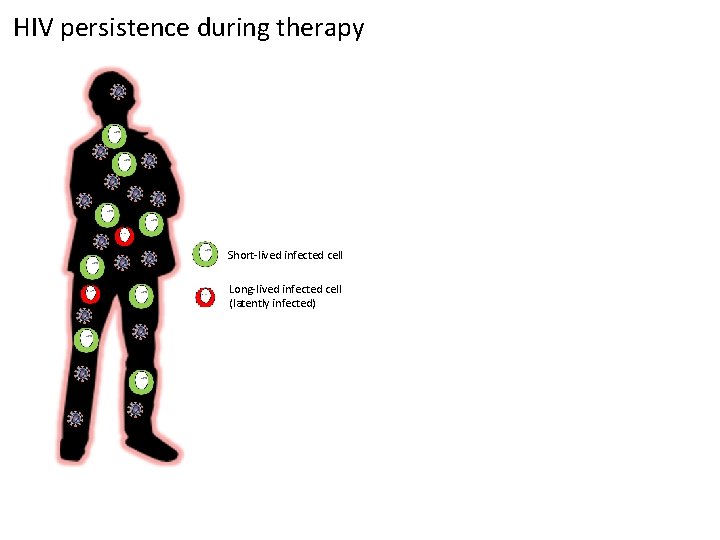
HIV persistence during therapy Short-lived infected cell Long-lived infected cell (latently infected)
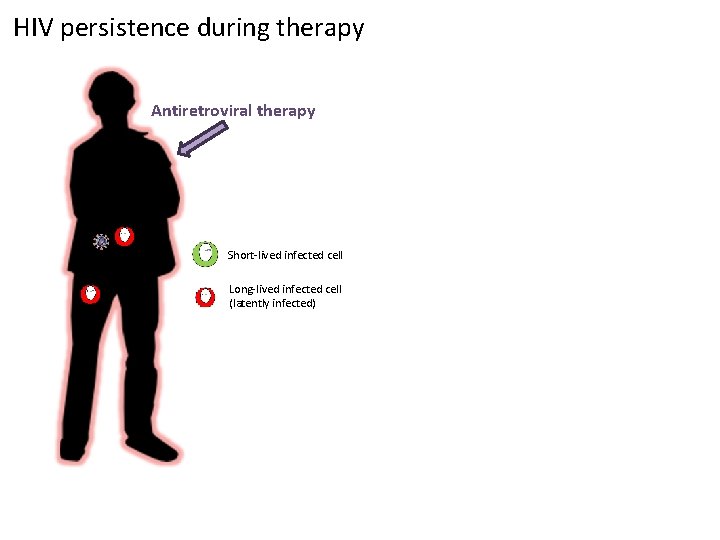
HIV persistence during therapy Antiretroviral therapy Short-lived infected cell Long-lived infected cell (latently infected)
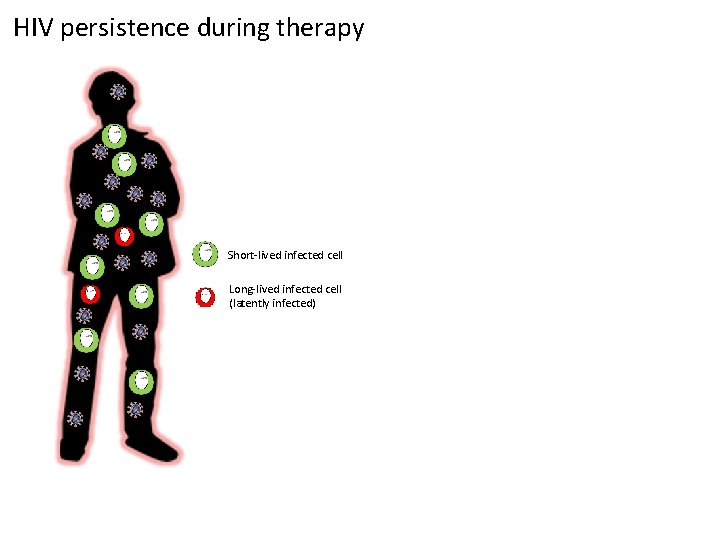
HIV persistence during therapy Short-lived infected cell Long-lived infected cell (latently infected)
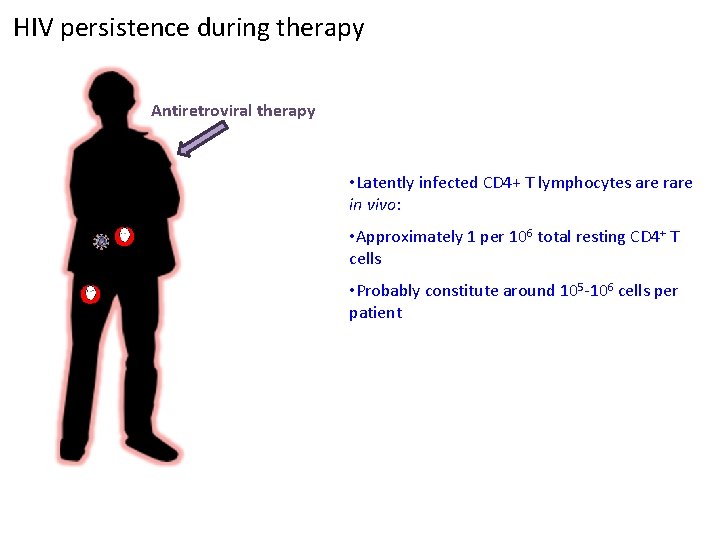
HIV persistence during therapy Antiretroviral therapy • Latently infected CD 4+ T lymphocytes are rare in vivo: • Approximately 1 per 106 total resting CD 4+ T cells • Probably constitute around 105 -106 cells per patient
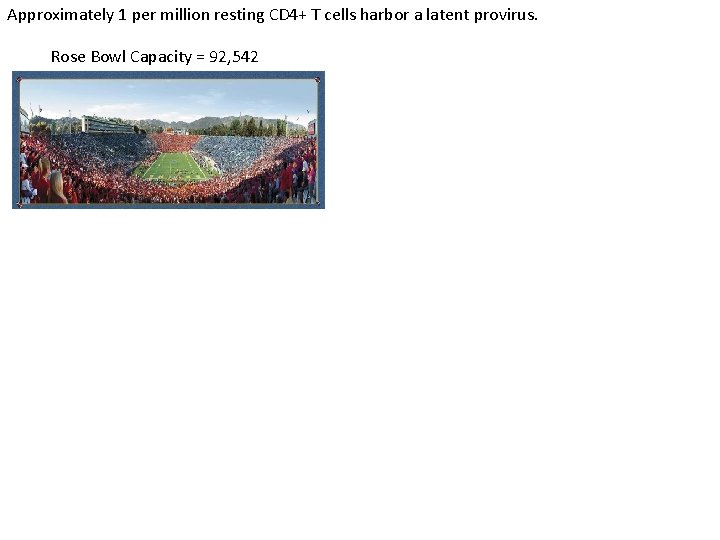
Approximately 1 per million resting CD 4+ T cells harbor a latent provirus. Rose Bowl Capacity = 92, 542
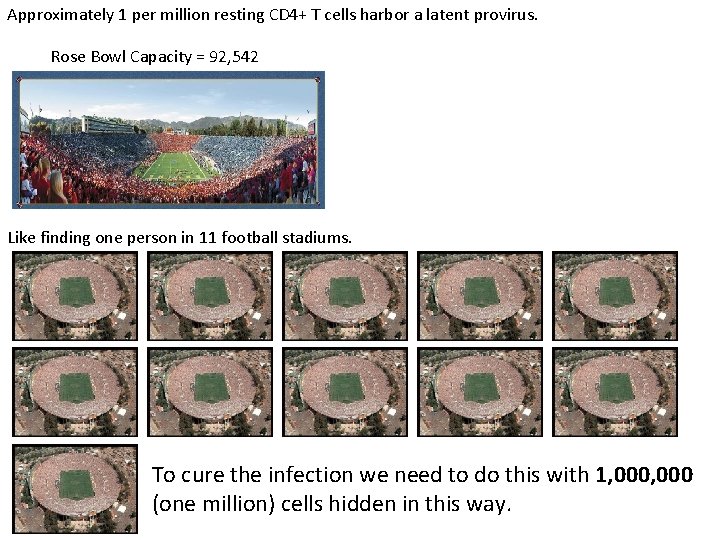
Approximately 1 per million resting CD 4+ T cells harbor a latent provirus. Rose Bowl Capacity = 92, 542 Like finding one person in 11 football stadiums. To cure the infection we need to do this with 1, 000 (one million) cells hidden in this way.
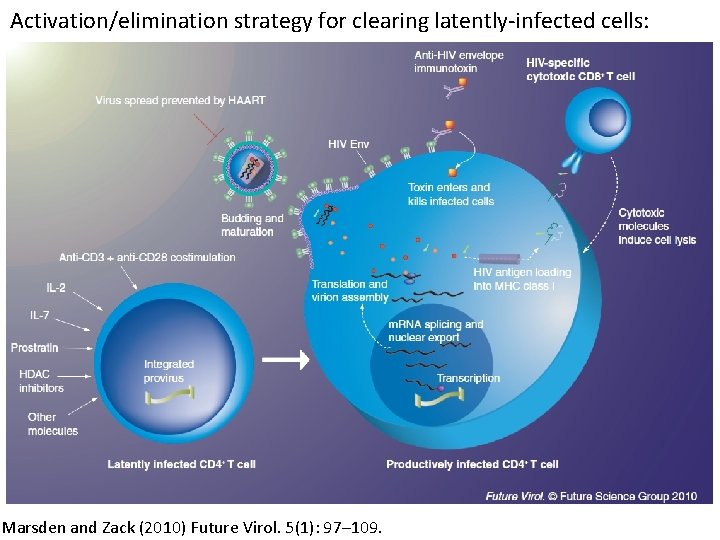
Activation/elimination strategy for clearing latently-infected cells: Marsden and Zack (2010) Future Virol. 5(1): 97– 109.
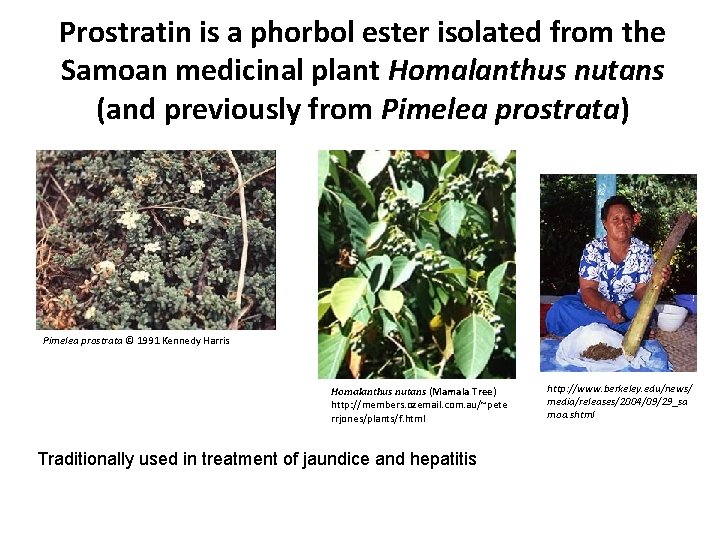
Prostratin is a phorbol ester isolated from the Samoan medicinal plant Homalanthus nutans (and previously from Pimelea prostrata) Pimelea prostrata © 1991 Kennedy Harris Homalanthus nutans (Mamala Tree) http: //members. ozemail. com. au/~pete rrjones/plants/f. html Traditionally used in treatment of jaundice and hepatitis http: //www. berkeley. edu/news/ media/releases/2004/09/29_sa moa. shtml
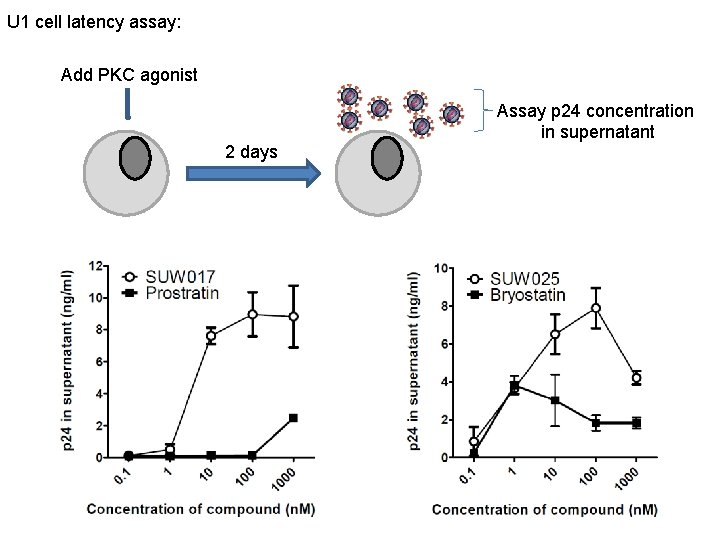
U 1 cell latency assay: Add PKC agonist 2 days Assay p 24 concentration in supernatant
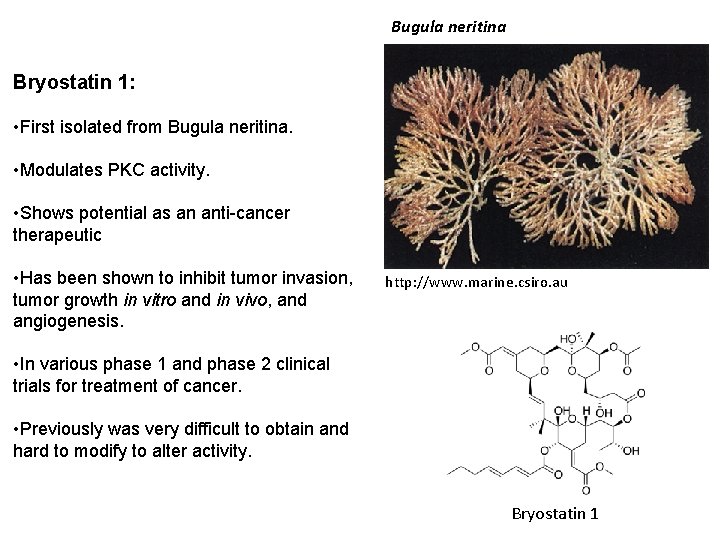
Bugula neritina Bryostatin 1: • First isolated from Bugula neritina. • Modulates PKC activity. • Shows potential as an anti-cancer therapeutic • Has been shown to inhibit tumor invasion, tumor growth in vitro and in vivo, and angiogenesis. http: //www. marine. csiro. au • In various phase 1 and phase 2 clinical trials for treatment of cancer. • Previously was very difficult to obtain and hard to modify to alter activity. Bryostatin 1
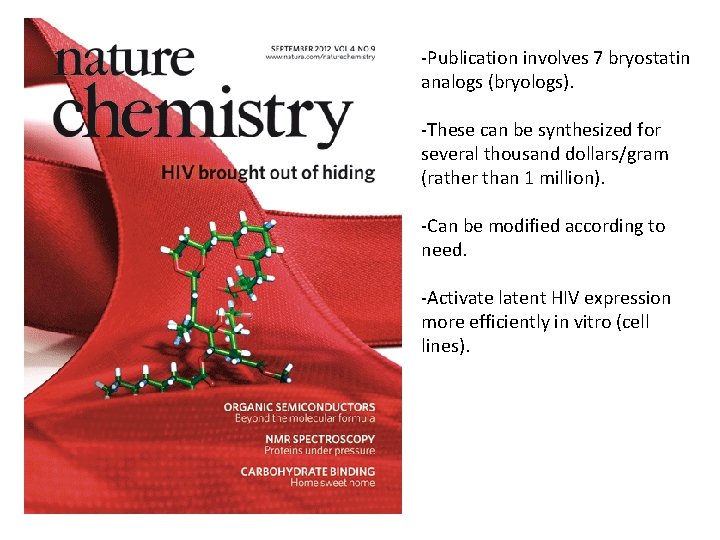
-Publication involves 7 bryostatin analogs (bryologs). -These can be synthesized for several thousand dollars/gram (rather than 1 million). -Can be modified according to need. -Activate latent HIV expression more efficiently in vitro (cell lines).
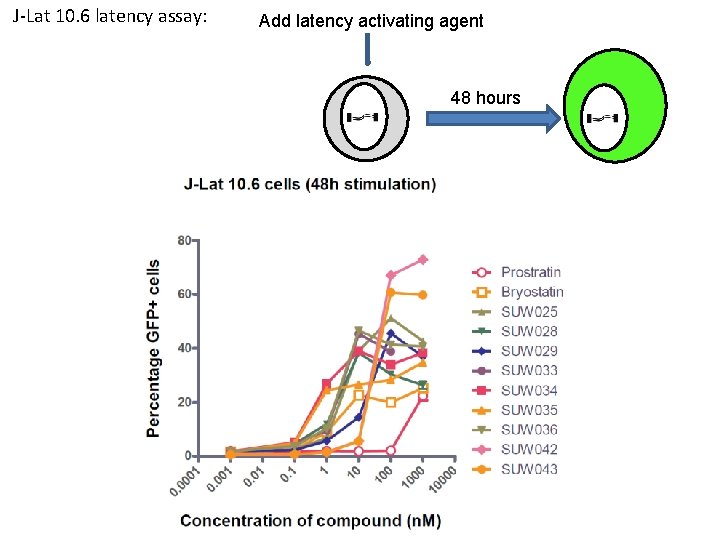
J-Lat 10. 6 latency assay: Add latency activating agent 48 hours
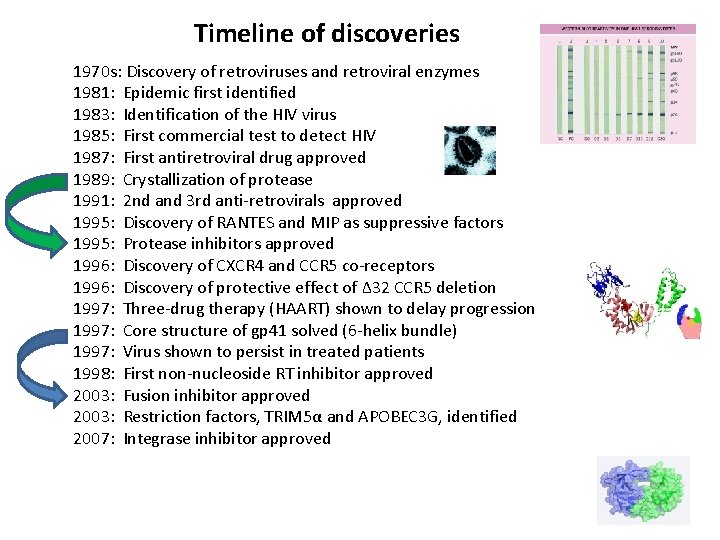
Timeline of discoveries 1970 s: Discovery of retroviruses and retroviral enzymes 1981: Epidemic first identified 1983: Identification of the HIV virus 1985: First commercial test to detect HIV 1987: First antiretroviral drug approved 1989: Crystallization of protease 1991: 2 nd and 3 rd anti-retrovirals approved 1995: Discovery of RANTES and MIP as suppressive factors 1995: Protease inhibitors approved 1996: Discovery of CXCR 4 and CCR 5 co-receptors 1996: Discovery of protective effect of Δ 32 CCR 5 deletion 1997: Three-drug therapy (HAART) shown to delay progression 1997: Core structure of gp 41 solved (6 -helix bundle) 1997: Virus shown to persist in treated patients 1998: First non-nucleoside RT inhibitor approved 2003: Fusion inhibitor approved 2003: Restriction factors, TRIM 5α and APOBEC 3 G, identified 2007: Integrase inhibitor approved
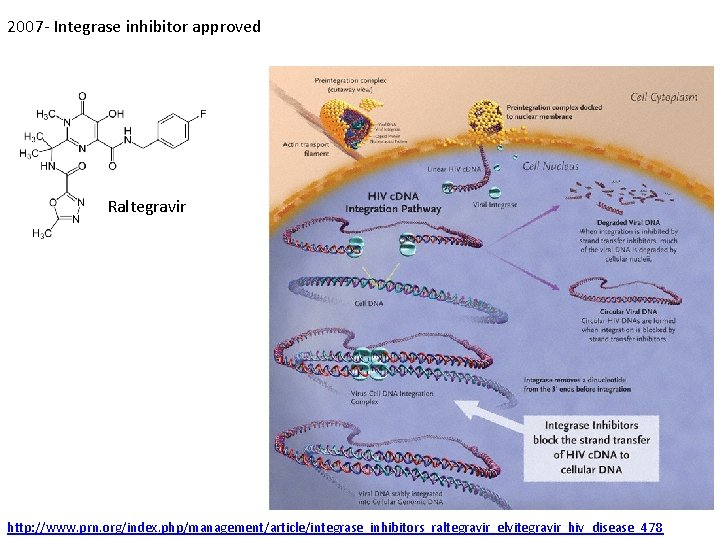
2007 - Integrase inhibitor approved Raltegravir http: //www. prn. org/index. php/management/article/integrase_inhibitors_raltegravir_elvitegravir_hiv_disease_478
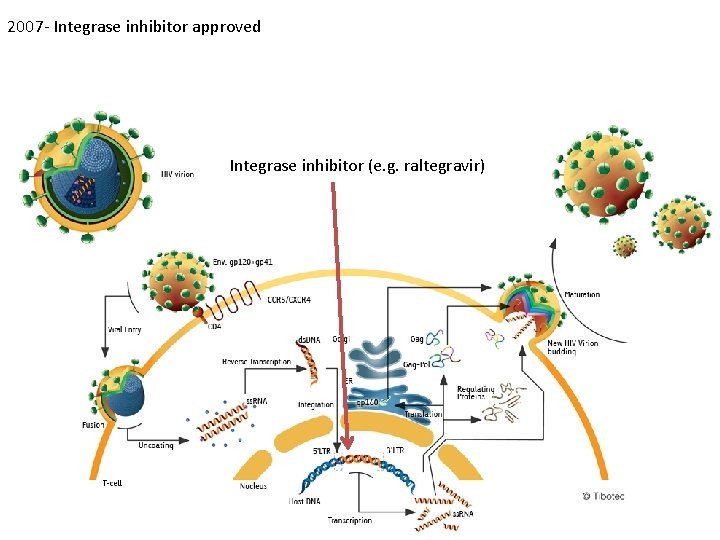
2007 - Integrase inhibitor approved Integrase inhibitor (e. g. raltegravir)
Movie of the HIV Life Cycle http: //www. youtube. com/watch? v=9 le. O 28 ydyf. U
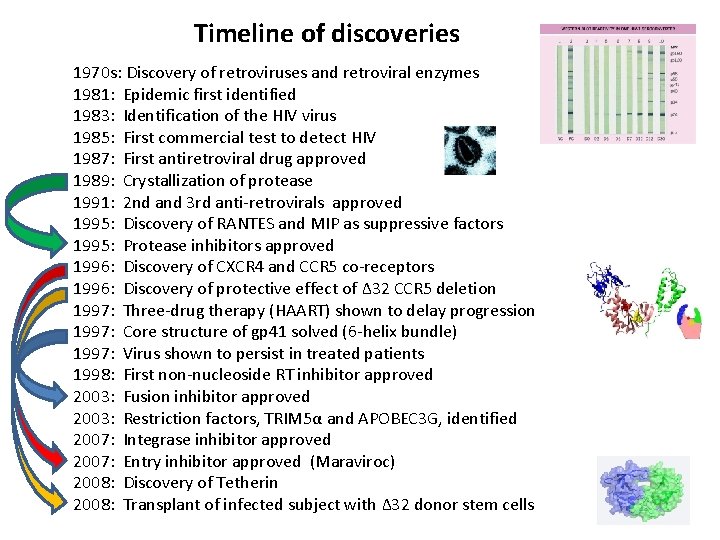
Timeline of discoveries 1970 s: Discovery of retroviruses and retroviral enzymes 1981: Epidemic first identified 1983: Identification of the HIV virus 1985: First commercial test to detect HIV 1987: First antiretroviral drug approved 1989: Crystallization of protease 1991: 2 nd and 3 rd anti-retrovirals approved 1995: Discovery of RANTES and MIP as suppressive factors 1995: Protease inhibitors approved 1996: Discovery of CXCR 4 and CCR 5 co-receptors 1996: Discovery of protective effect of Δ 32 CCR 5 deletion 1997: Three-drug therapy (HAART) shown to delay progression 1997: Core structure of gp 41 solved (6 -helix bundle) 1997: Virus shown to persist in treated patients 1998: First non-nucleoside RT inhibitor approved 2003: Fusion inhibitor approved 2003: Restriction factors, TRIM 5α and APOBEC 3 G, identified 2007: Integrase inhibitor approved 2007: Entry inhibitor approved (Maraviroc) 2008: Discovery of Tetherin 2008: Transplant of infected subject with Δ 32 donor stem cells
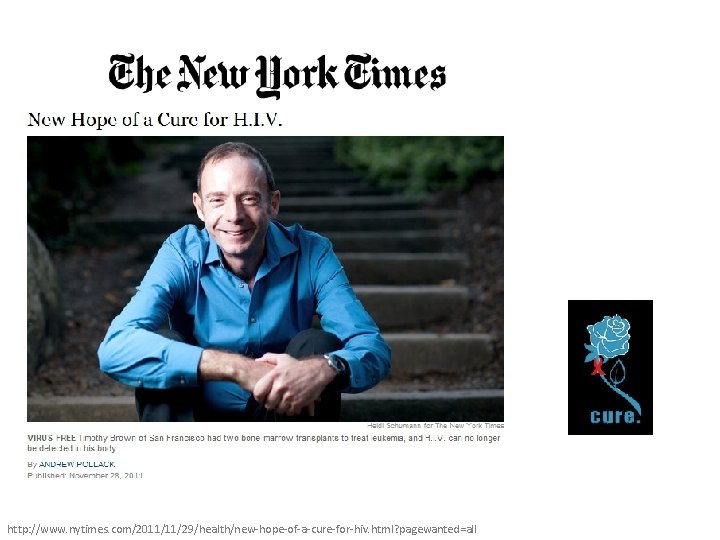
http: //www. nytimes. com/2011/11/29/health/new-hope-of-a-cure-for-hiv. html? pagewanted=all
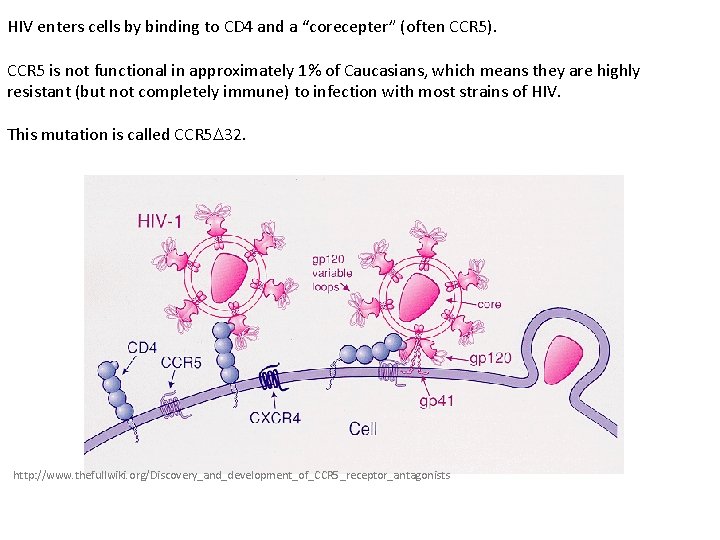
HIV enters cells by binding to CD 4 and a “corecepter” (often CCR 5). CCR 5 is not functional in approximately 1% of Caucasians, which means they are highly resistant (but not completely immune) to infection with most strains of HIV. This mutation is called CCR 5 32. http: //www. thefullwiki. org/Discovery_and_development_of_CCR 5_receptor_antagonists
• The “Berlin Patient” was HIV positive and also developed leukemia. • He underwent aggressive chemotherapy to clear the leukemia, and in the process almost all the HIV+ cells in his body were also killed. • This patient then received two bone marrow transplants from a CCR 5 - 32 individual. • The new immune cells were not susceptible HIV, and the virus in currently undetectable more than four years post-transplant.
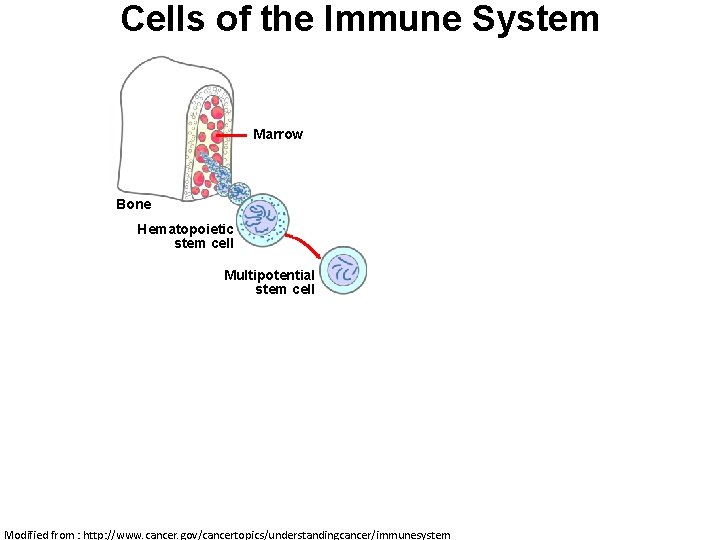
Cells of the Immune System Macrophage Marrow Mast cell Eosinophil Erythrocytes Basophil Monocyte Bone Megakaryocyte Hematopoietic stem cell Multipotential stem cell Myeloid progenitor Neutrophil cell Platelets Lymphoid progenitor cell T lymphocyte Dendritic cell CD 4+ T cell CD 8+ T cell B lymphocyte Natural killer cell Modified from : http: //www. cancer. gov/cancertopics/understandingcancer/immunesystem
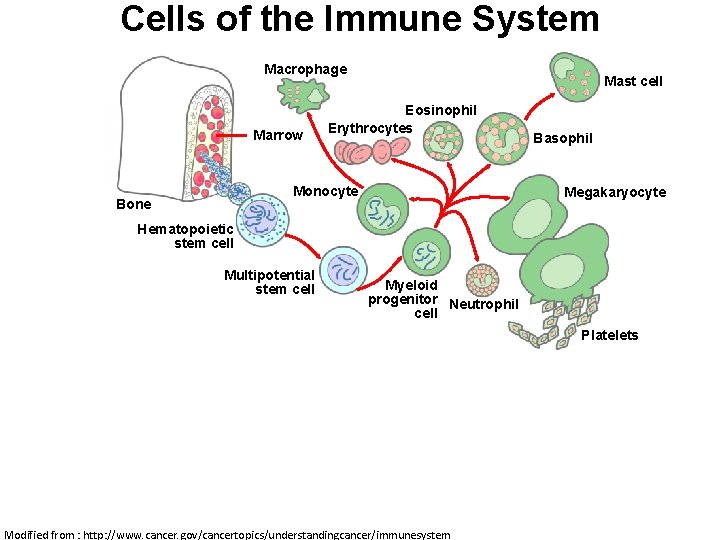
Cells of the Immune System Macrophage Marrow Mast cell Eosinophil Erythrocytes Basophil Monocyte Bone Megakaryocyte Hematopoietic stem cell Multipotential stem cell Myeloid progenitor Neutrophil cell Platelets Lymphoid progenitor cell T lymphocyte Dendritic cell CD 4+ T cell CD 8+ T cell B lymphocyte Natural killer cell Modified from : http: //www. cancer. gov/cancertopics/understandingcancer/immunesystem
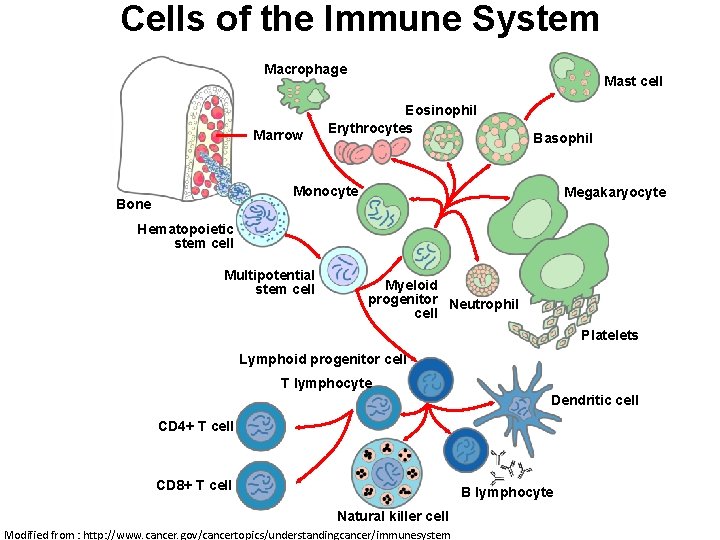
Cells of the Immune System Macrophage Marrow Mast cell Eosinophil Erythrocytes Basophil Monocyte Bone Megakaryocyte Hematopoietic stem cell Multipotential stem cell Myeloid progenitor Neutrophil cell Platelets Lymphoid progenitor cell T lymphocyte Dendritic cell CD 4+ T cell CD 8+ T cell B lymphocyte Natural killer cell Modified from : http: //www. cancer. gov/cancertopics/understandingcancer/immunesystem
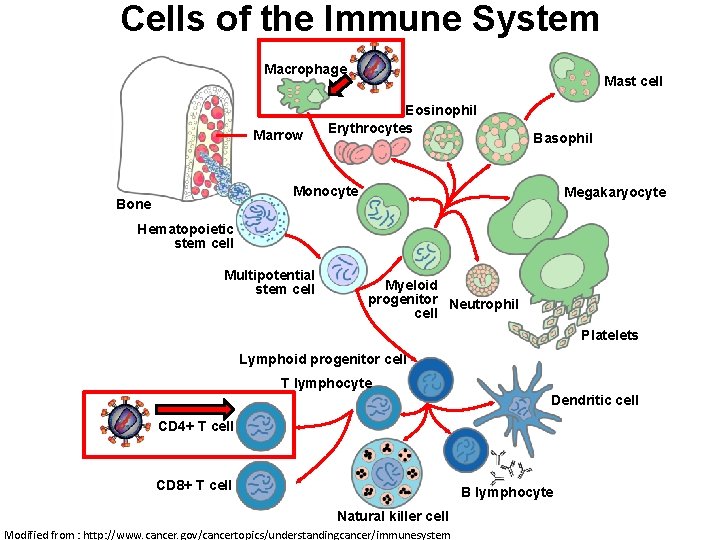
Cells of the Immune System Macrophage Marrow Mast cell Eosinophil Erythrocytes Basophil Monocyte Bone Megakaryocyte Hematopoietic stem cell Multipotential stem cell Myeloid progenitor Neutrophil cell Platelets Lymphoid progenitor cell T lymphocyte Dendritic cell CD 4+ T cell CD 8+ T cell B lymphocyte Natural killer cell Modified from : http: //www. cancer. gov/cancertopics/understandingcancer/immunesystem
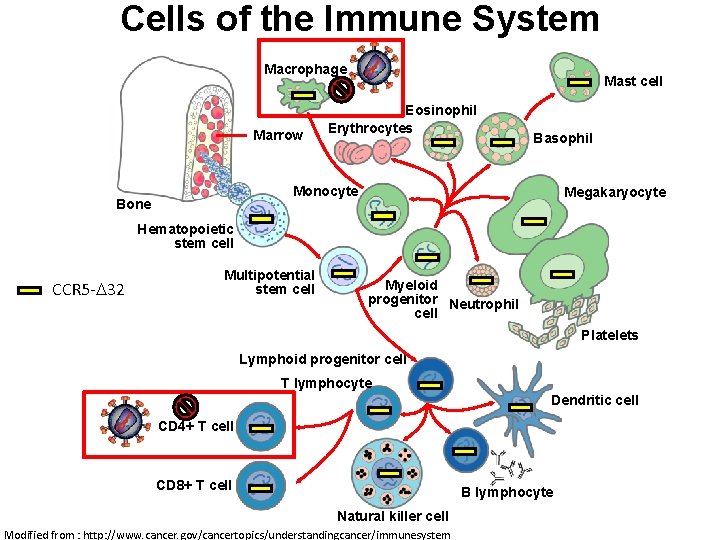
Cells of the Immune System Macrophage Marrow Mast cell Eosinophil Erythrocytes Basophil Monocyte Bone Megakaryocyte Hematopoietic stem cell CCR 5 - 32 Multipotential stem cell Myeloid progenitor Neutrophil cell Platelets Lymphoid progenitor cell T lymphocyte Dendritic cell CD 4+ T cell CD 8+ T cell B lymphocyte Natural killer cell Modified from : http: //www. cancer. gov/cancertopics/understandingcancer/immunesystem
Why can’t we use this approach for everybody? • The chemotherapy and bone marrow transplant procedure was very risky (the patient nearly died). • Matching donors that are also CCR 5 - 32 are very hard to find. • The procedure is very expensive, time consuming, and requires excellent medical facilities (not feasible in many parts of the world). • The patient will have to take immunosuppressive drugs for the rest of their life to avoid problems with the transplant (this may be worse than just taking the anti-HIV drugs).
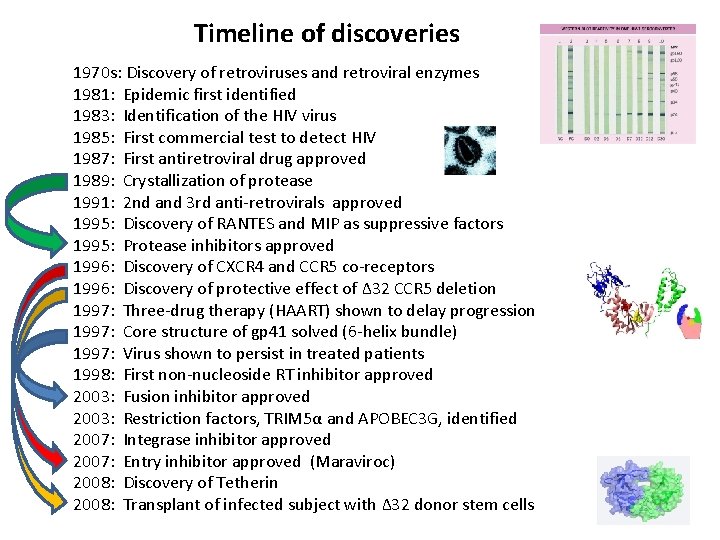
Timeline of discoveries 1970 s: Discovery of retroviruses and retroviral enzymes 1981: Epidemic first identified 1983: Identification of the HIV virus 1985: First commercial test to detect HIV 1987: First antiretroviral drug approved 1989: Crystallization of protease 1991: 2 nd and 3 rd anti-retrovirals approved 1995: Discovery of RANTES and MIP as suppressive factors 1995: Protease inhibitors approved 1996: Discovery of CXCR 4 and CCR 5 co-receptors 1996: Discovery of protective effect of Δ 32 CCR 5 deletion 1997: Three-drug therapy (HAART) shown to delay progression 1997: Core structure of gp 41 solved (6 -helix bundle) 1997: Virus shown to persist in treated patients 1998: First non-nucleoside RT inhibitor approved 2003: Fusion inhibitor approved 2003: Restriction factors, TRIM 5α and APOBEC 3 G, identified 2007: Integrase inhibitor approved 2007: Entry inhibitor approved (Maraviroc) 2008: Discovery of Tetherin 2008: Transplant of infected subject with Δ 32 donor stem cells

Thank you for your attention! Questions?
- Slides: 52