
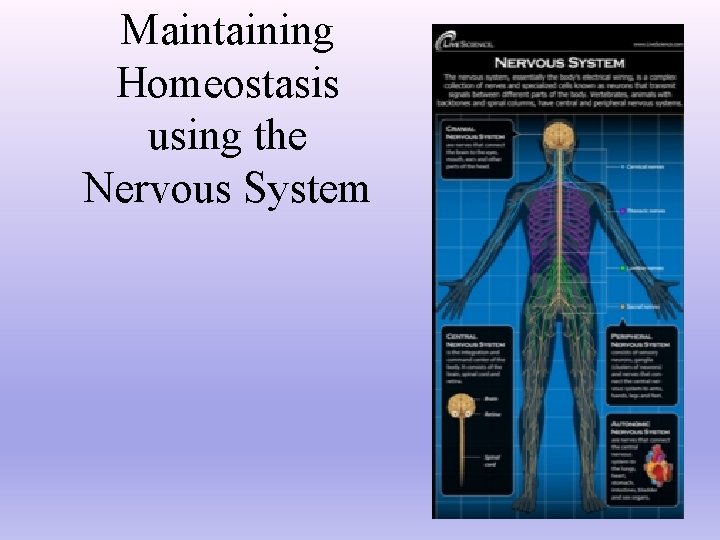
Maintaining Homeostasis using the Nervous System Nervous System
- Slides: 22
Maintaining Homeostasis using the Nervous System
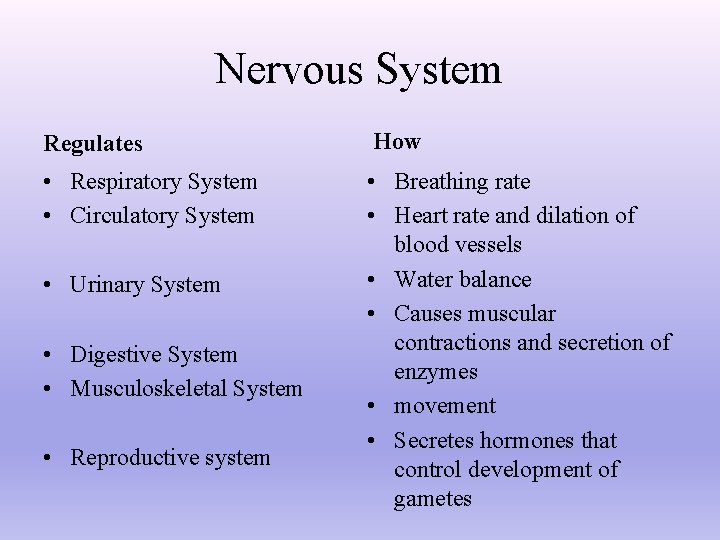
Nervous System Regulates How • Respiratory System • Circulatory System • Breathing rate • Heart rate and dilation of blood vessels • Water balance • Causes muscular contractions and secretion of enzymes • movement • Secretes hormones that control development of gametes • Urinary System • Digestive System • Musculoskeletal System • Reproductive system
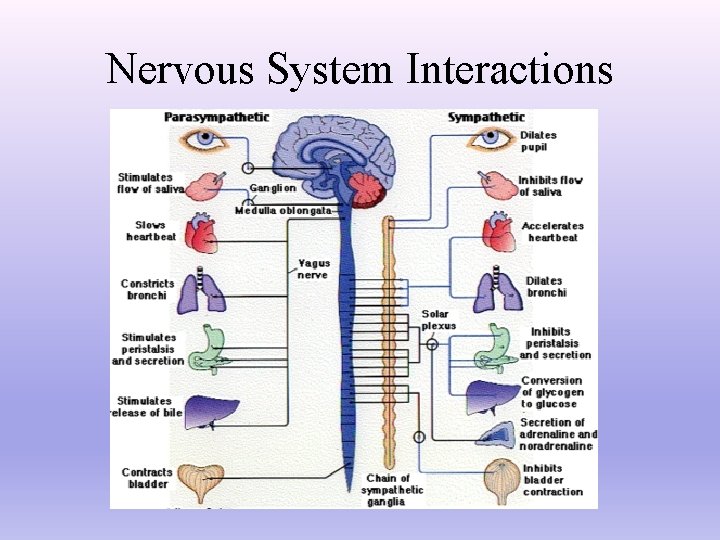
Nervous System Interactions
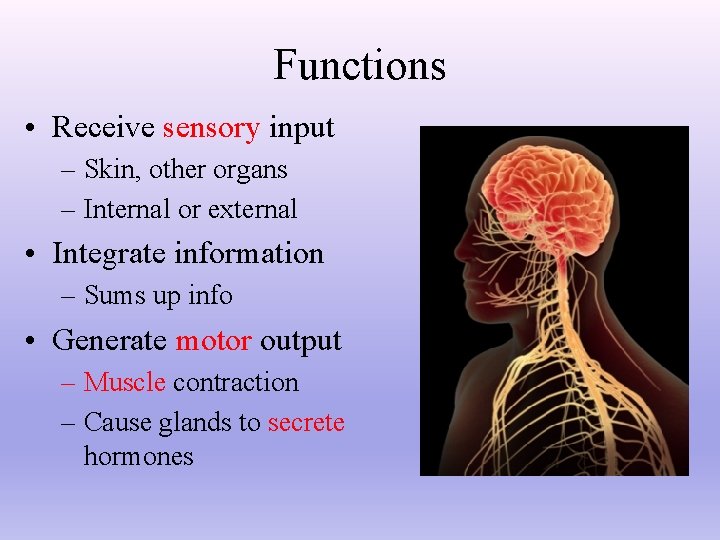
Functions • Receive sensory input – Skin, other organs – Internal or external • Integrate information – Sums up info • Generate motor output – Muscle contraction – Cause glands to secrete hormones
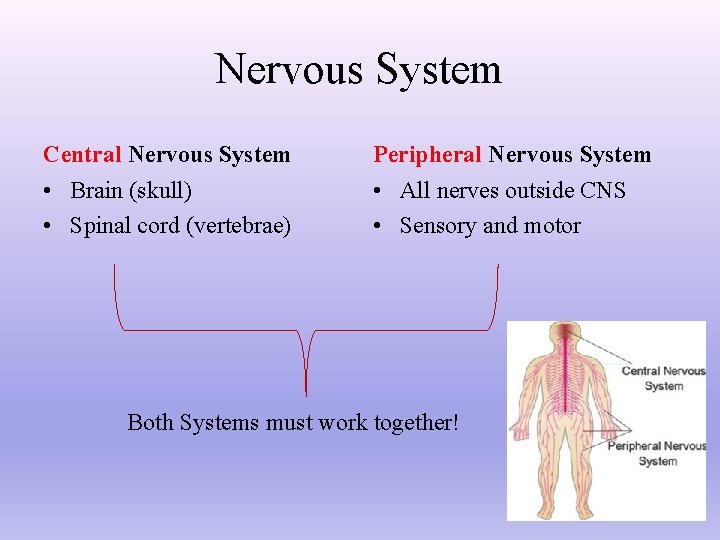
Nervous System Central Nervous System Peripheral Nervous System • Brain (skull) • Spinal cord (vertebrae) • All nerves outside CNS • Sensory and motor Both Systems must work together!
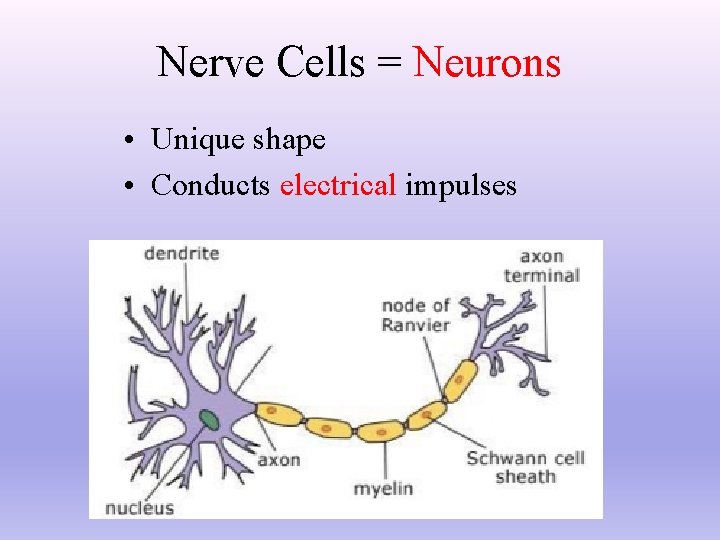
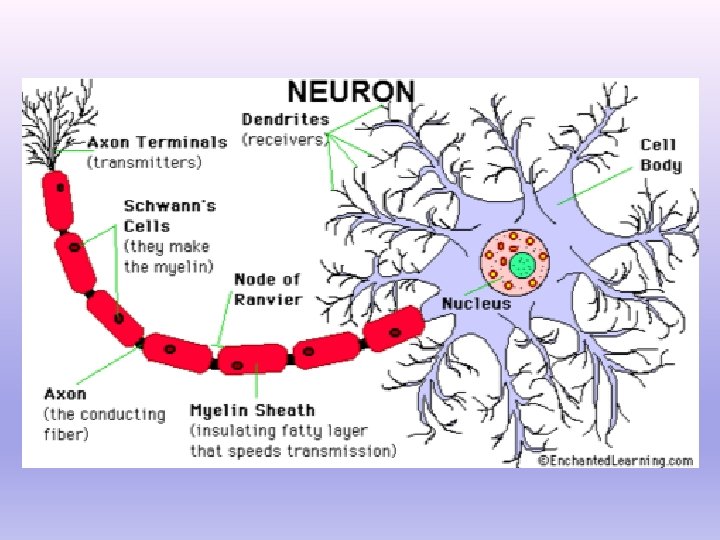
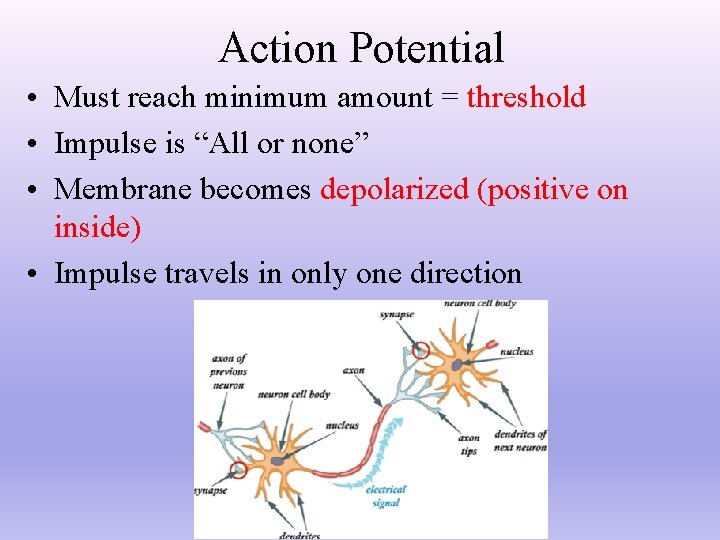
Nerve Cells = Neurons • Unique shape • Conducts electrical impulses
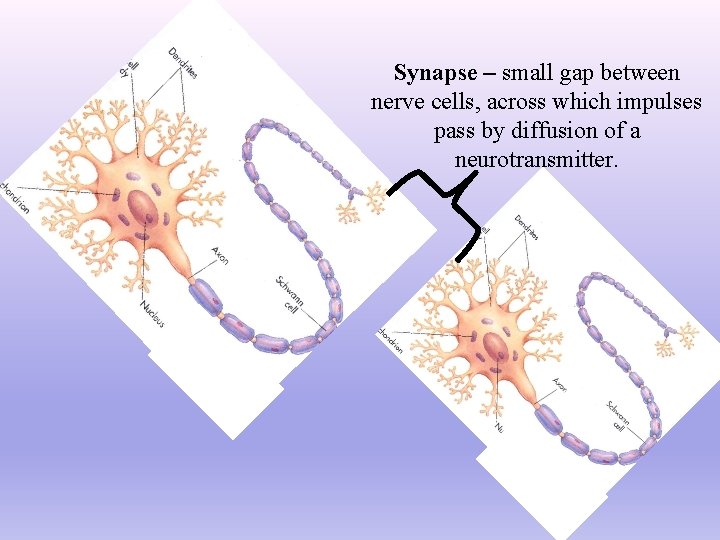
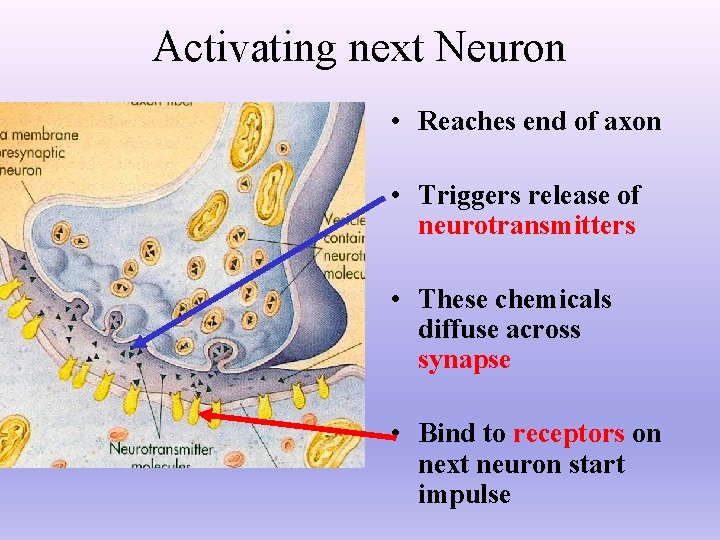
Synapse – small gap between nerve cells, across which impulses pass by diffusion of a neurotransmitter.
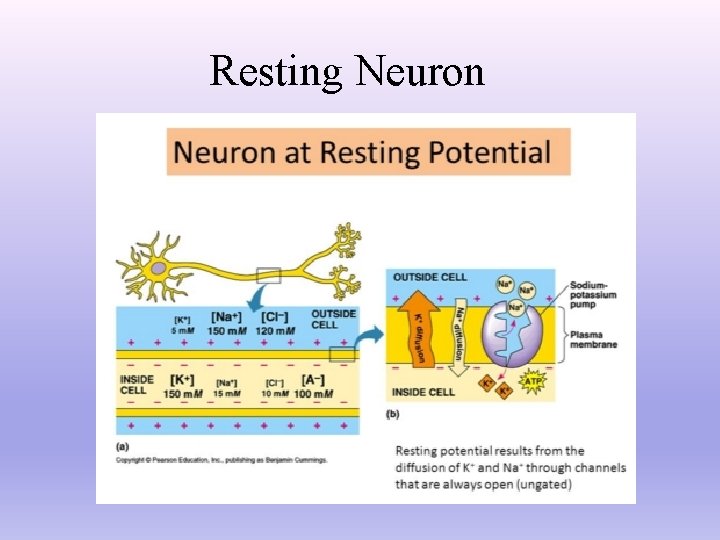
Resting Neuron
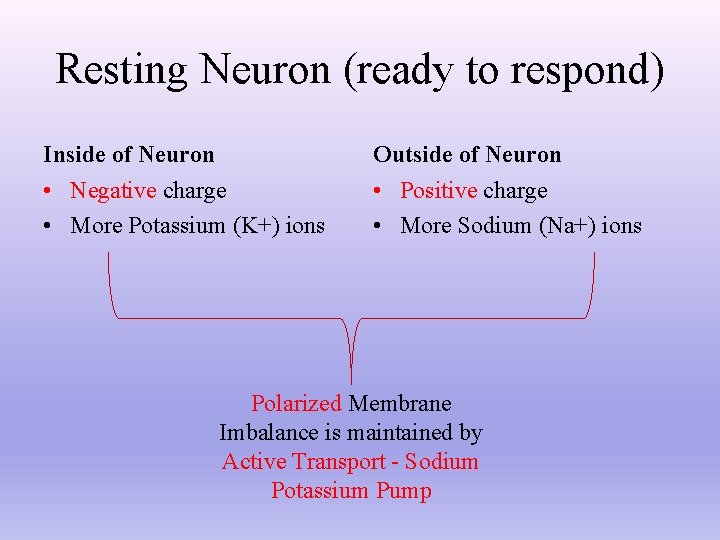
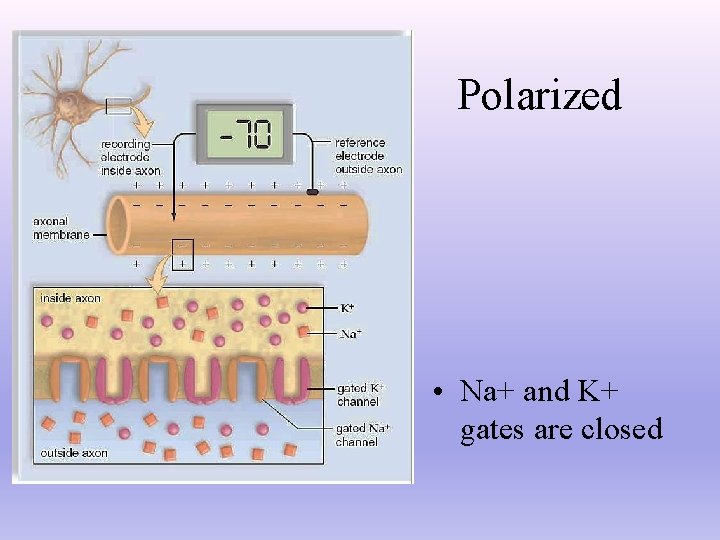
Resting Neuron (ready to respond) Inside of Neuron Outside of Neuron • Negative charge • More Potassium (K+) ions • Positive charge • More Sodium (Na+) ions Polarized Membrane Imbalance is maintained by Active Transport - Sodium Potassium Pump
Polarized • Na+ and K+ gates are closed
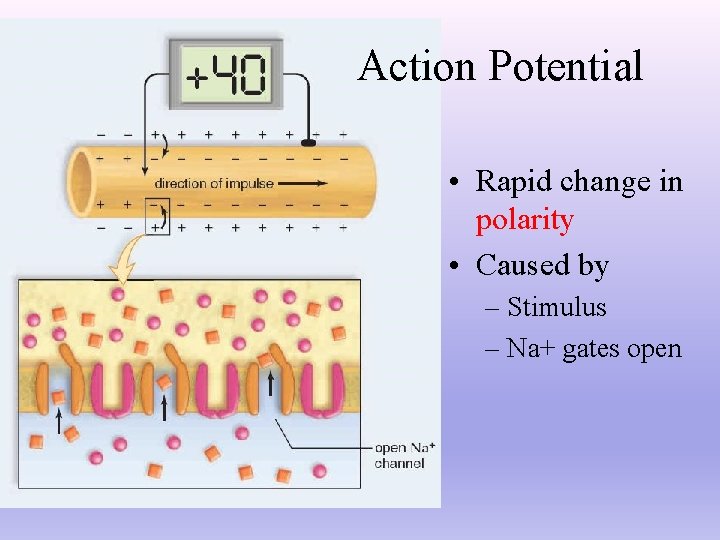
Action Potential • Rapid change in polarity • Caused by – Stimulus – Na+ gates open
Action Potential • Must reach minimum amount = threshold • Impulse is “All or none” • Membrane becomes depolarized (positive on inside) • Impulse travels in only one direction
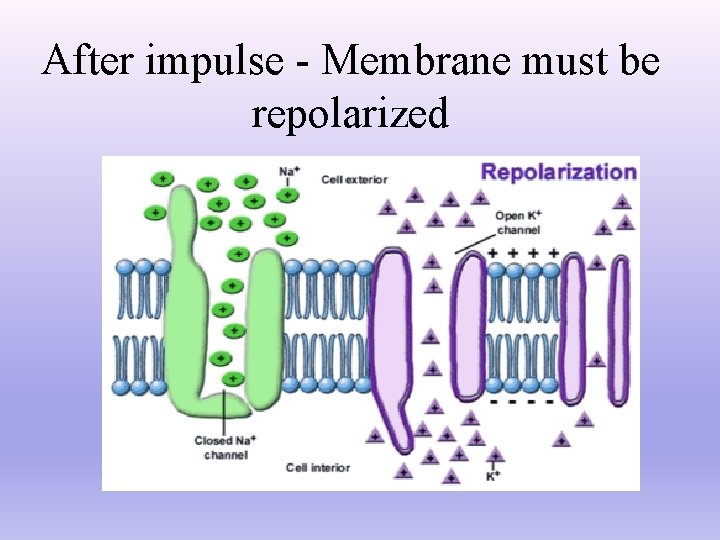
After impulse - Membrane must be repolarized
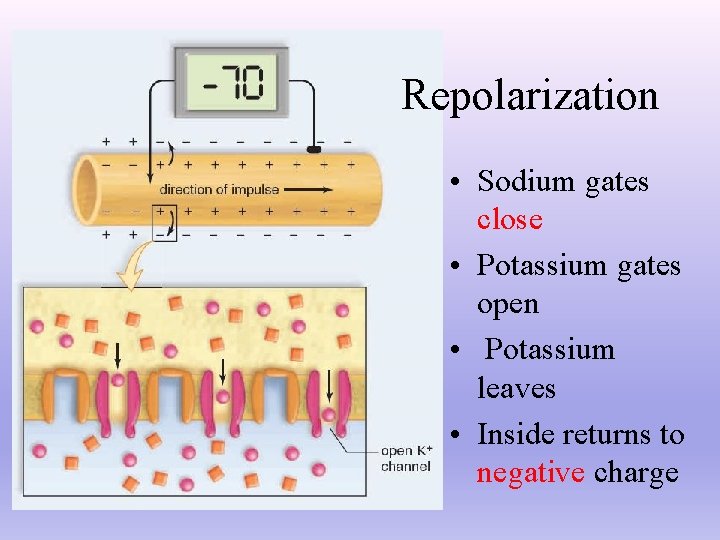
Repolarization • Sodium gates close • Potassium gates open • Potassium leaves • Inside returns to negative charge
Activating next Neuron • Reaches end of axon • Triggers release of neurotransmitters • These chemicals diffuse across synapse • Bind to receptors on next neuron start impulse
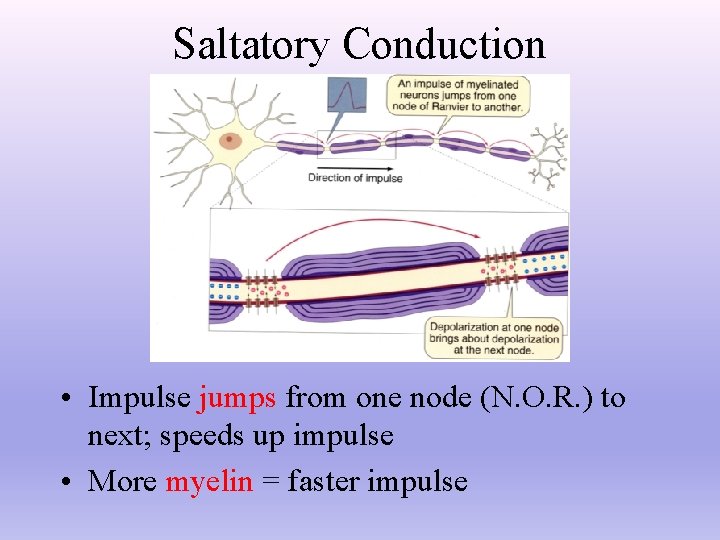
Saltatory Conduction • Impulse jumps from one node (N. O. R. ) to next; speeds up impulse • More myelin = faster impulse
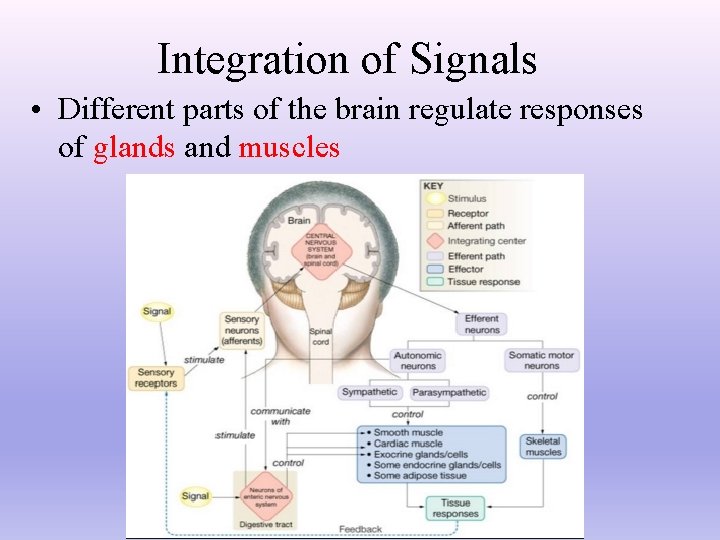
Integration of Signals • Different parts of the brain regulate responses of glands and muscles
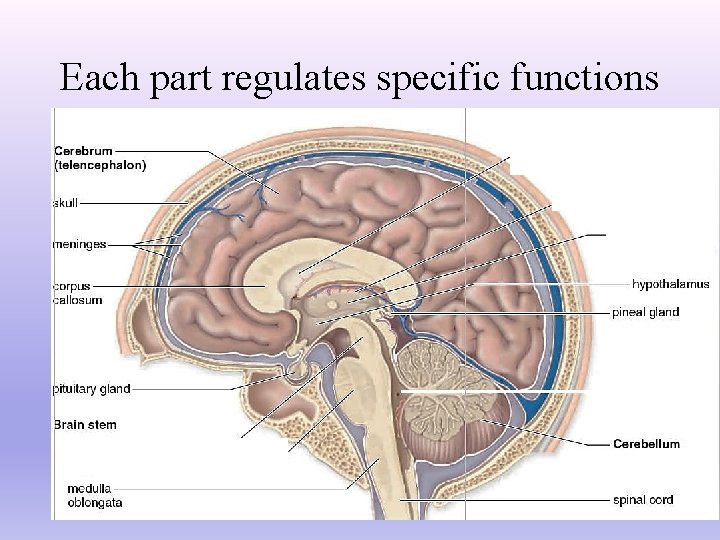
Each part regulates specific functions
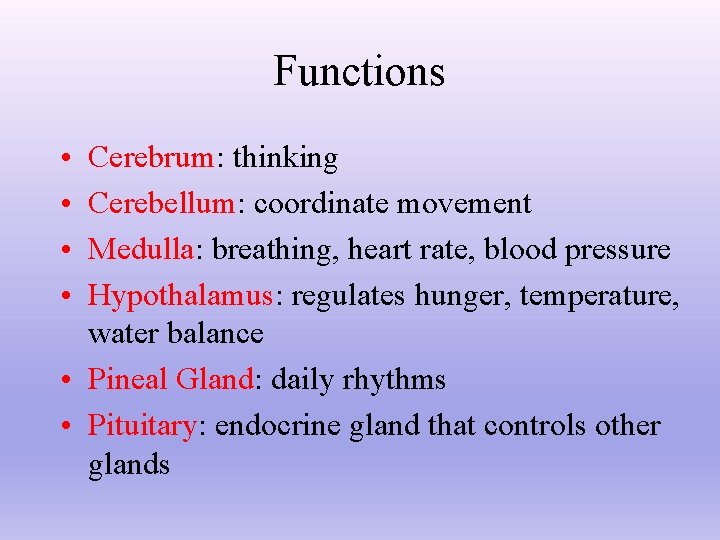
Functions • • Cerebrum: thinking Cerebellum: coordinate movement Medulla: breathing, heart rate, blood pressure Hypothalamus: regulates hunger, temperature, water balance • Pineal Gland: daily rhythms • Pituitary: endocrine gland that controls other glands
Destroying Nervous Systems Homeostasis • Spinal cord injury – can’t be repaired • Epilepsy – neurons don’t fire correctly • Multiple sclerosis – destroys myelin sheath
Effects of Drugs • Block receptor • caffeine • Activate neurotransmitters • Nicotine - dopamine • Block receptors • Novacain • Block normal breakdown of neurotransmitter • Cocaine