
MAINTAINING APPRENTICESHIP IN MEDICINE Professor Janet Grant Emeritus


- Slides: 46
MAINTAINING APPRENTICESHIP IN MEDICINE Professor Janet Grant Emeritus Professor of Education in Medicine, Open University
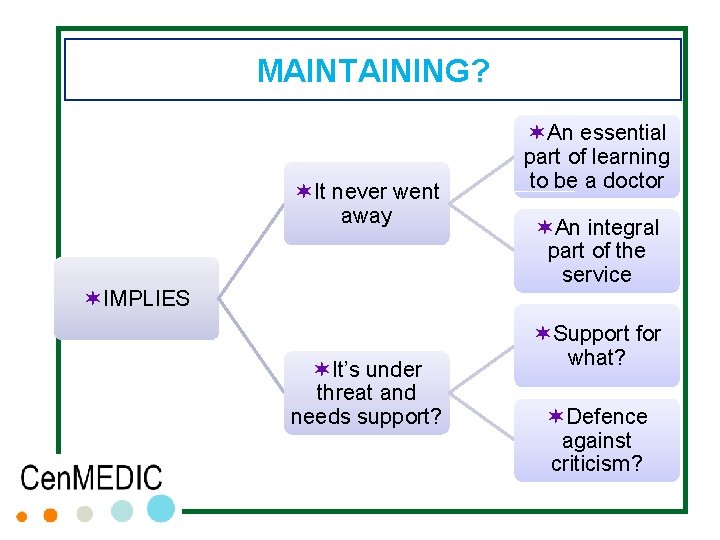
MAINTAINING? ¬It never went away ¬IMPLIES ¬It’s under threat and needs support? ¬An essential part of learning to be a doctor ¬An integral part of the service ¬Support for what? ¬Defence against criticism?
WHY BOTHER TO TALK ABOUT IT?
APPRENTICESHIP
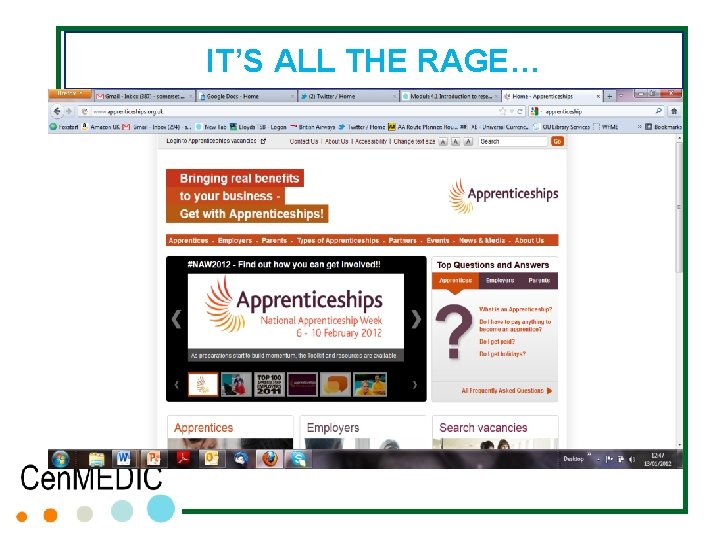
IT’S ALL THE RAGE…
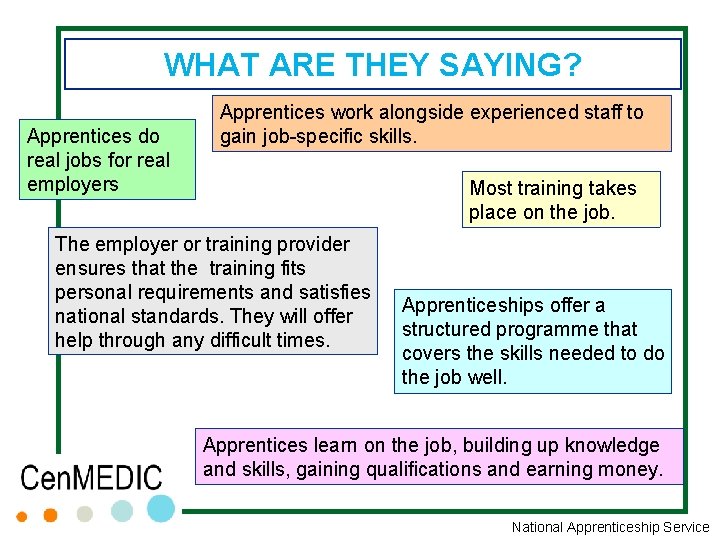
WHAT ARE THEY SAYING? Apprentices do real jobs for real employers Apprentices work alongside experienced staff to gain job-specific skills. Most training takes place on the job. The employer or training provider ensures that the training fits personal requirements and satisfies national standards. They will offer help through any difficult times. Apprenticeships offer a structured programme that covers the skills needed to do the job well. Apprentices learn on the job, building up knowledge and skills, gaining qualifications and earning money. National Apprenticeship Service
LET’S LOOK AT IT…. . ¬Why is apprenticeship important? ¬Is there cause for concern?
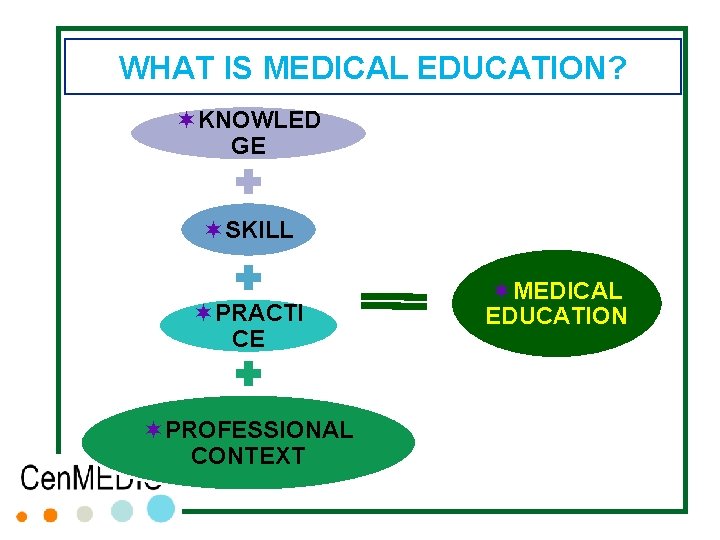
WHAT IS MEDICAL EDUCATION? ¬KNOWLED GE ¬SKILL ¬PRACTI CE ¬PROFESSIONAL CONTEXT ¬MEDICAL EDUCATION
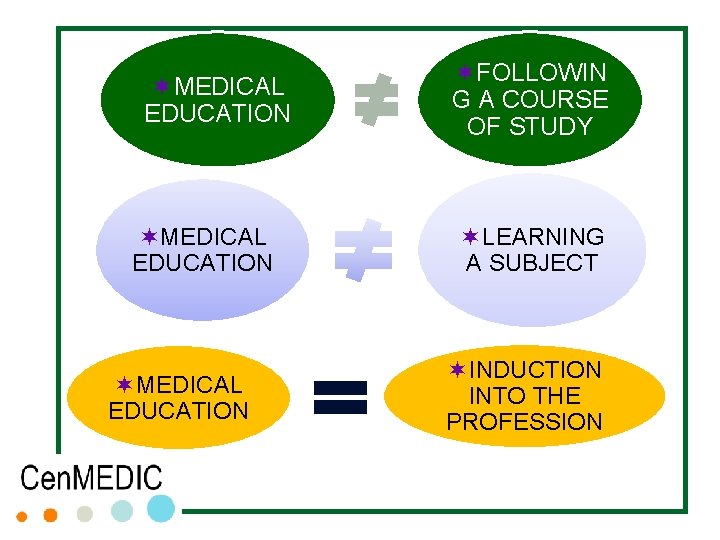
¬MEDICAL EDUCATION ¬FOLLOWIN G A COURSE OF STUDY ¬LEARNING A SUBJECT ¬INDUCTION INTO THE PROFESSION
HOW DOES THIS INDUCTION WORK?
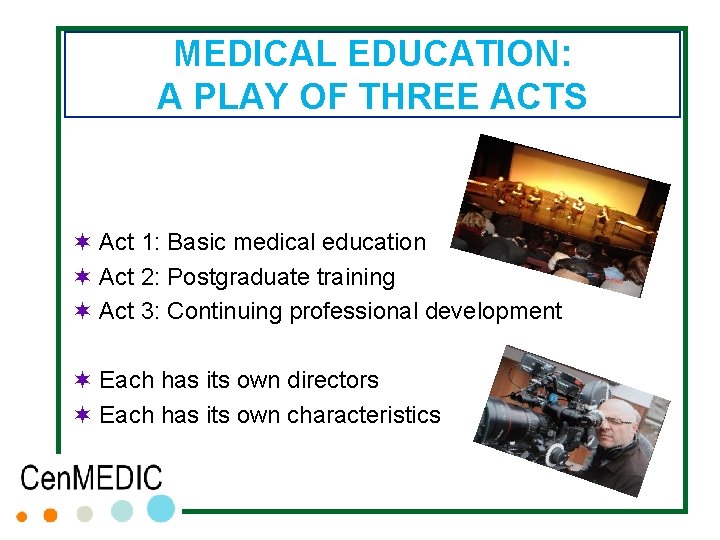
MEDICAL EDUCATION: A PLAY OF THREE ACTS ¬ Act 1: Basic medical education ¬ Act 2: Postgraduate training ¬ Act 3: Continuing professional development ¬ Each has its own directors ¬ Each has its own characteristics
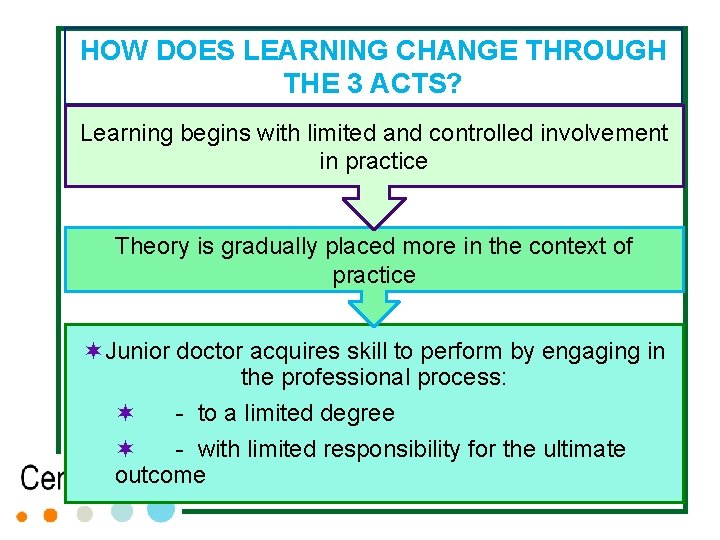
HOW DOES LEARNING CHANGE THROUGH THE 3 ACTS? Learning begins with limited and controlled involvement in practice Theory is gradually placed more in the context of practice ¬Junior doctor acquires skill to perform by engaging in the professional process: ¬ - to a limited degree ¬ - with limited responsibility for the ultimate outcome
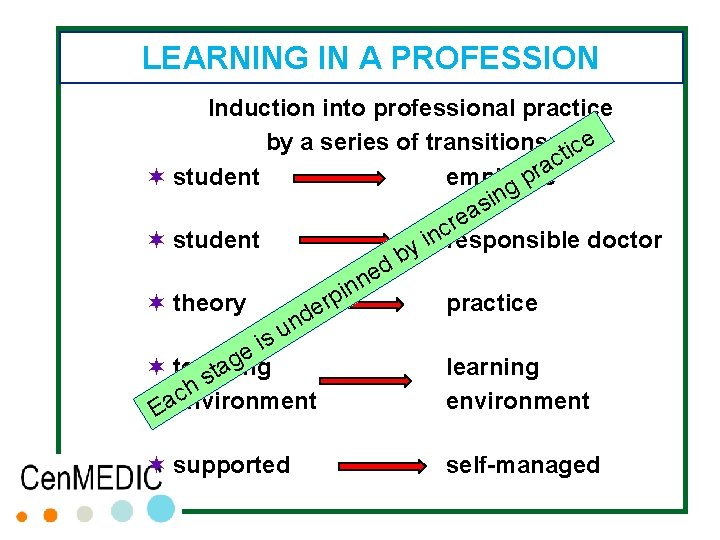
LEARNING IN A PROFESSION Induction into professional practice by a series of transitions: tice c a r ¬ student employee p g in s a e r ncresponsible doctor i ¬ student y b d e n n i rp ¬ theory practice e d n u s i e g ¬ teaching learning a t s h c environment Eaenvironment ¬ supported self-managed
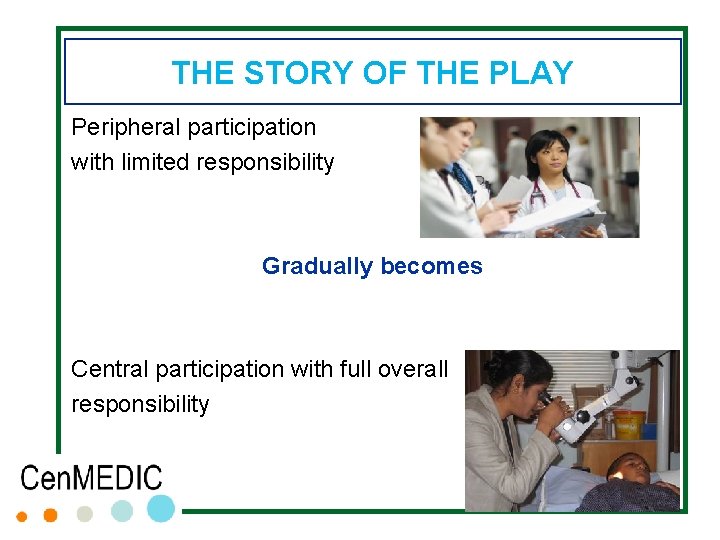
THE STORY OF THE PLAY Peripheral participation with limited responsibility Gradually becomes Central participation with full overall responsibility
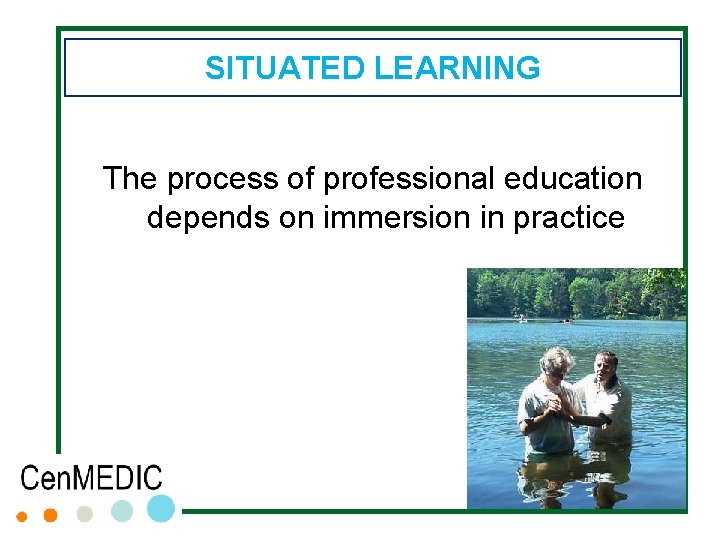
SITUATED LEARNING The process of professional education depends on immersion in practice
INDIVIDUALITY CHARACTERISES A PROFESSION How does that happen?
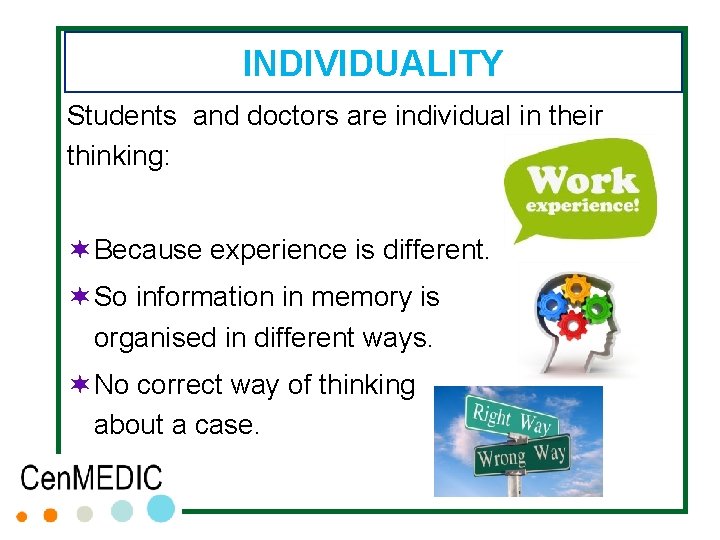
INDIVIDUALITY Students and doctors are individual in their thinking: ¬ Because experience is different. ¬ So information in memory is organised in different ways. ¬ No correct way of thinking about a case.
SOME EVIDENCE…
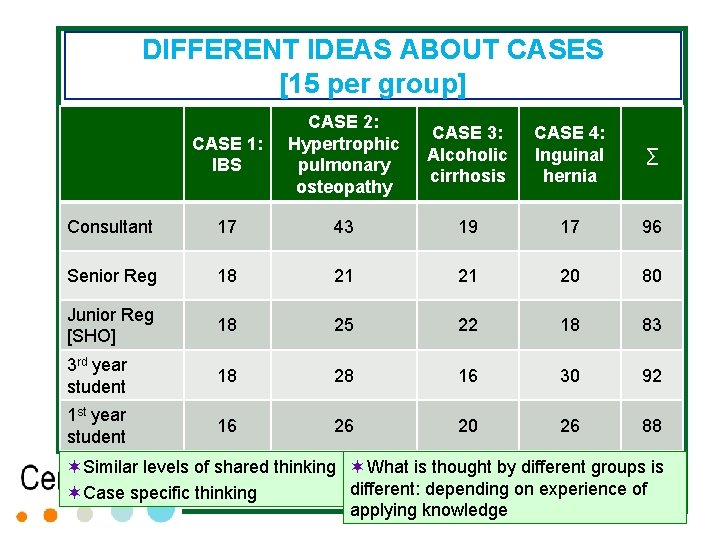
DIFFERENT IDEAS ABOUT CASES [15 per group] CASE 1: IBS CASE 2: Hypertrophic pulmonary osteopathy CASE 3: Alcoholic cirrhosis CASE 4: Inguinal hernia ∑ Consultant 17 43 19 17 96 Senior Reg 18 21 21 20 80 Junior Reg [SHO] 18 25 22 18 83 3 rd year student 18 28 16 30 92 1 st year student 16 26 20 26 88 ¬Similar levels of shared thinking ¬What is thought by different groups is different: depending on experience of ¬Case specific thinking applying knowledge
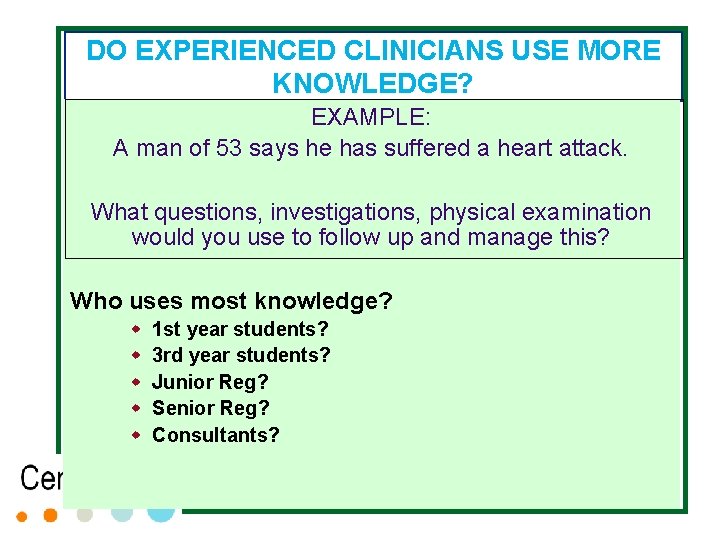
DO EXPERIENCED CLINICIANS USE MORE KNOWLEDGE? EXAMPLE: A man of 53 says he has suffered a heart attack. What questions, investigations, physical examination would you use to follow up and manage this? Who uses most knowledge? w w w 1 st year students? 3 rd year students? Junior Reg? Senior Reg? Consultants?
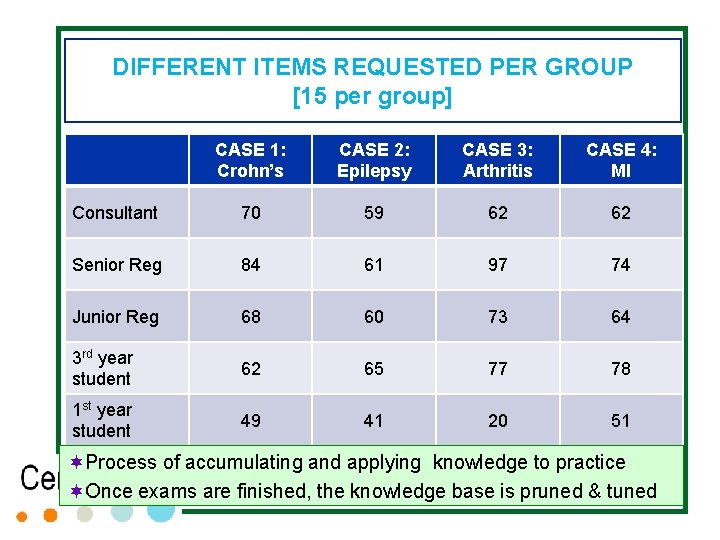
DIFFERENT ITEMS REQUESTED PER GROUP [15 per group] CASE 1: Crohn’s CASE 2: Epilepsy CASE 3: Arthritis CASE 4: MI Consultant 70 59 62 62 Senior Reg 84 61 97 74 Junior Reg 68 60 73 64 3 rd year student 62 65 77 78 1 st year student 49 41 20 51 ¬Process of accumulating and applying knowledge to practice ¬Once exams are finished, the knowledge base is pruned & tuned
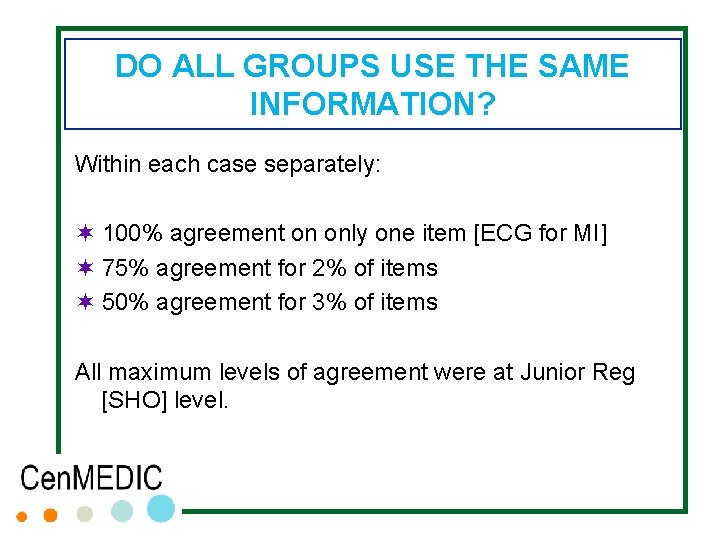
DO ALL GROUPS USE THE SAME INFORMATION? Within each case separately: ¬ 100% agreement on only one item [ECG for MI] ¬ 75% agreement for 2% of items ¬ 50% agreement for 3% of items All maximum levels of agreement were at Junior Reg [SHO] level.
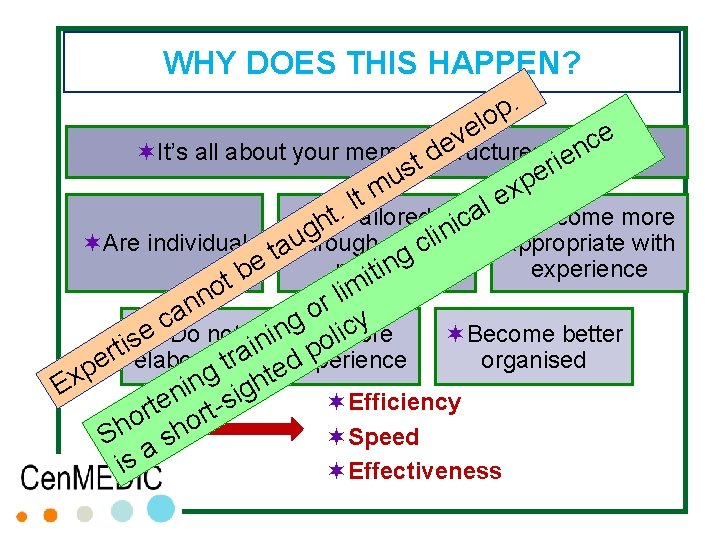
WHY DOES THIS HAPPEN? . p lo e e v c e n ¬It’s all about your memory structures which: d e i t r s e u p x m e t I l ¬Become more . a t ¬ Tailored h ic g n i l ¬Are individual tauthrough clinical appropriate with c g e n practice experience i t b i t o im l n r n o a c g licy Do not become more n ¬ ¬Become better e i s n o i i p rt elaborate with experience a r organised e t d p e g t x n h i E n -sig ¬Efficiency e t t r o hor h ¬Speed S s a is ¬Effectiveness
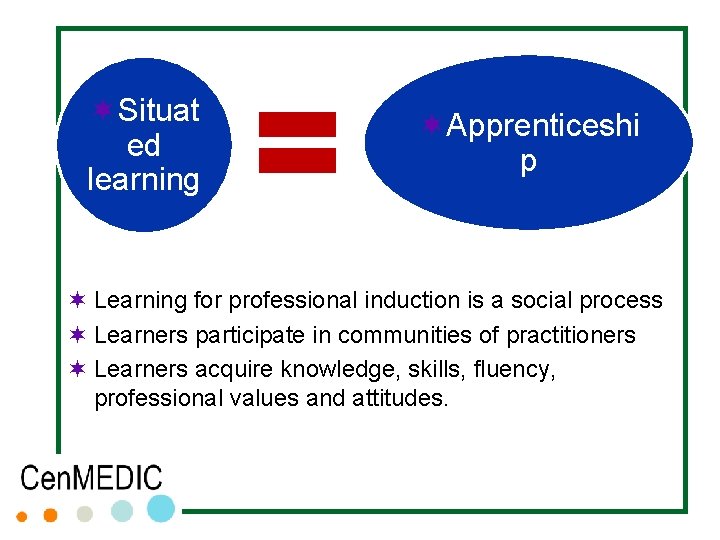
¬Situat ed learning ¬Apprenticeshi p ¬ Learning for professional induction is a social process ¬ Learners participate in communities of practitioners ¬ Learners acquire knowledge, skills, fluency, professional values and attitudes.
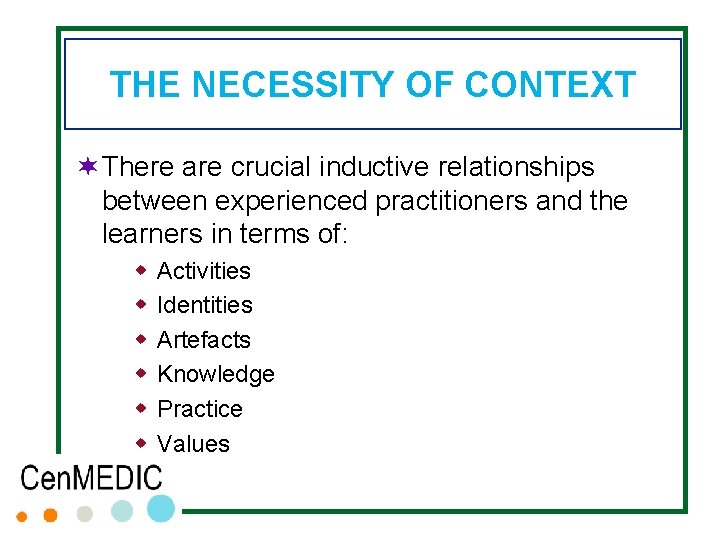
THE NECESSITY OF CONTEXT ¬ There are crucial inductive relationships between experienced practitioners and the learners in terms of: w w w Activities Identities Artefacts Knowledge Practice Values
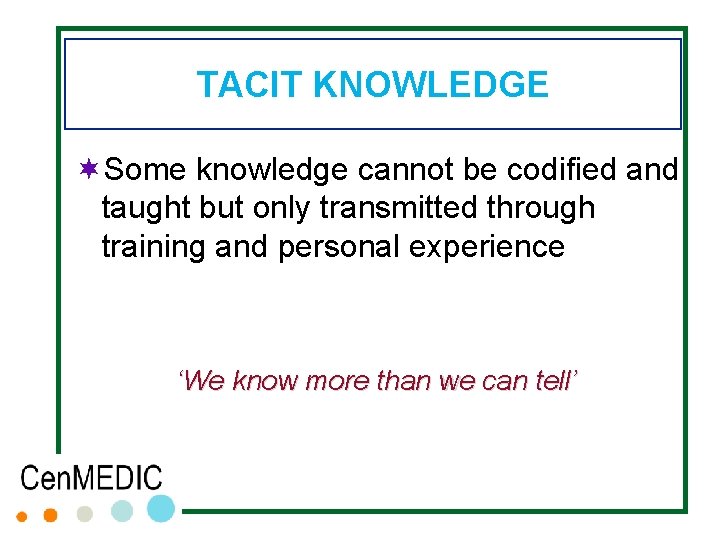
TACIT KNOWLEDGE ¬Some knowledge cannot be codified and taught but only transmitted through training and personal experience ‘We know more than we can tell’
AN ILLUSTRATION OF THE COMMUNITY OF PRACTICE: PATTERNS OF COMMUNICATION
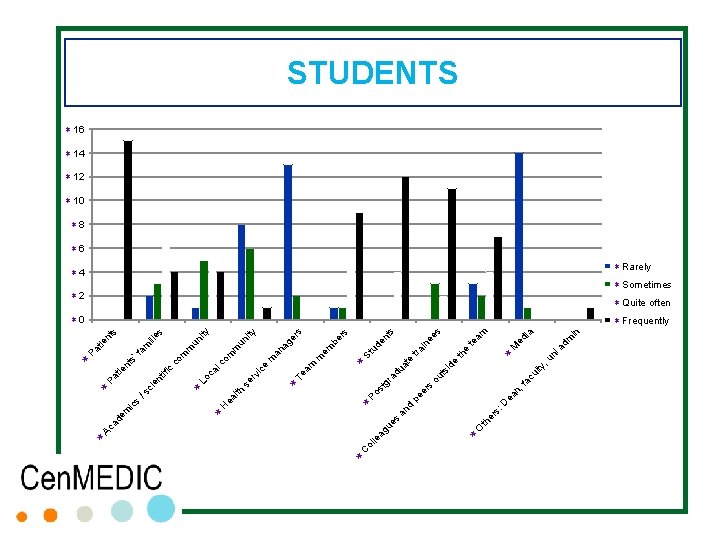
¬ C ol ¬ O in ed ia M a dm ni , u ¬ te am es ne ai e de th lty ac u n, f ea si ut o rs s nt ud e St e tr at ¬ rs er s ag em be m Te am gr ad u Po st p ee : D rs th e ¬ ¬ m an ce m un ity m un om s m ilie fa nt s tie Pa om al c vi er s lth Lo c c ic s’ ¬ nt tie Pa en tif ¬ ci ¬ / s s ea H nd a ue s ¬ ic em ad Ac ag le ¬ STUDENTS ¬ 16 ¬ 14 ¬ 12 ¬ 10 ¬ 8 ¬ 6 ¬ 4 ¬Rarely ¬ 2 ¬Sometimes ¬Quite often ¬ 0 ¬Frequently
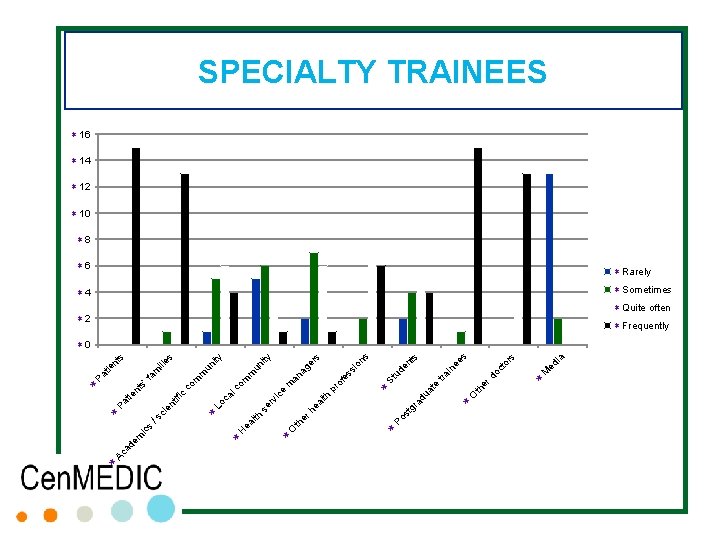
¬ ¬ ed ia M or s oc t d er th O es ne ai s nt ud e St e tr at ¬ ns io es s of er s ag m an pr th gr ad u Po st ea l h er th O ce m un ity m un om s m ilie fa nt s tie Pa om al c vi er s lth Lo c c ic s’ nt tie Pa en tif ¬ ci ¬ / s s ea H ¬ ¬ ic em ad Ac ¬ SPECIALTY TRAINEES ¬ 16 ¬ 14 ¬ 12 ¬ 10 ¬ 8 ¬ 6 ¬Rarely ¬ 4 ¬Sometimes ¬ 2 ¬Quite often ¬Frequently ¬ 0
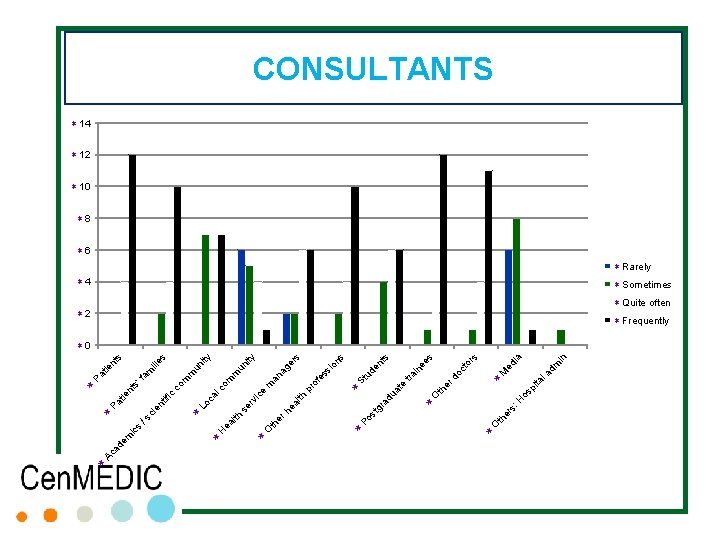
¬ ¬ dm in ed ia M l a ta pi os ¬ or s s in ee oc t d er th O H s: er th ¬ s nt ud e St e tra at ¬ ns er s io fe ss ro th p un ity ag m an s ity m un om m c ce gr ad u st Po O ¬ ea l h er th O vi er s al Lo c om c ilie m nt s tie Pa fa s’ nt tie Pa en tif ic ¬ ci / s s ¬ ea lth H ¬ ¬ ic em ad Ac ¬ CONSULTANTS ¬ 14 ¬ 12 ¬ 10 ¬ 8 ¬ 6 ¬Rarely ¬ 4 ¬Sometimes ¬ 2 ¬Quite often ¬Frequently ¬ 0
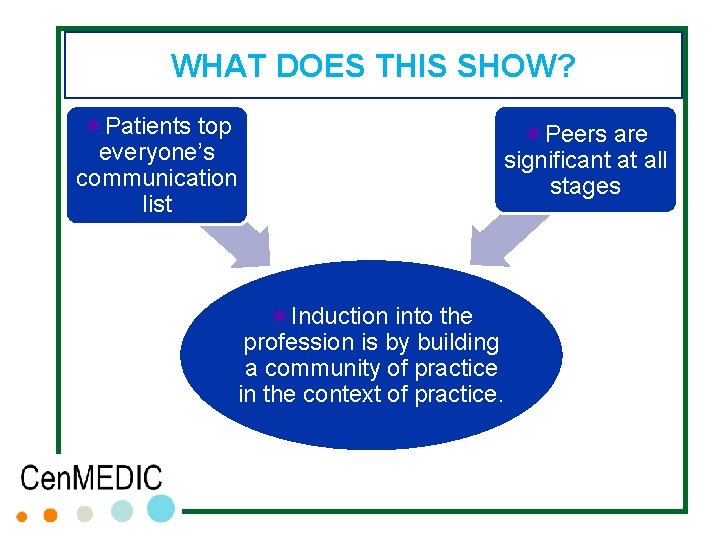
WHAT DOES THIS SHOW? ¬Patients top everyone’s communication list ¬Peers are significant at all stages ¬Induction into the profession is by building a community of practice in the context of practice.
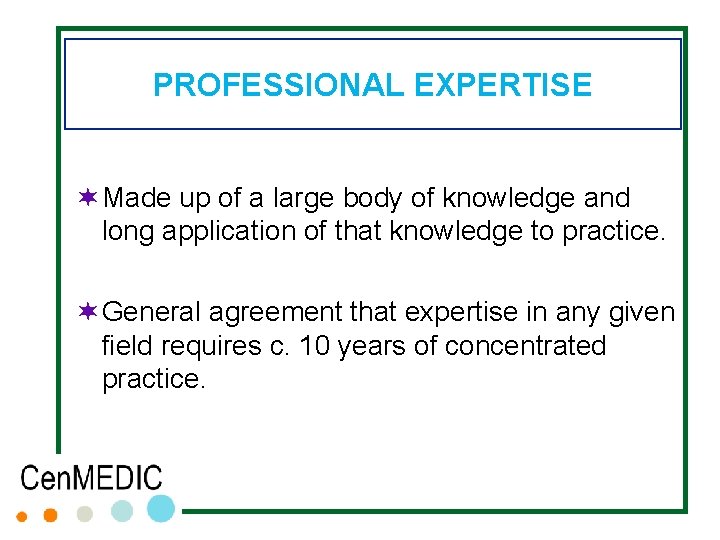
PROFESSIONAL EXPERTISE ¬ Made up of a large body of knowledge and long application of that knowledge to practice. ¬ General agreement that expertise in any given field requires c. 10 years of concentrated practice.
HOW DOES PRACTICE WORK?
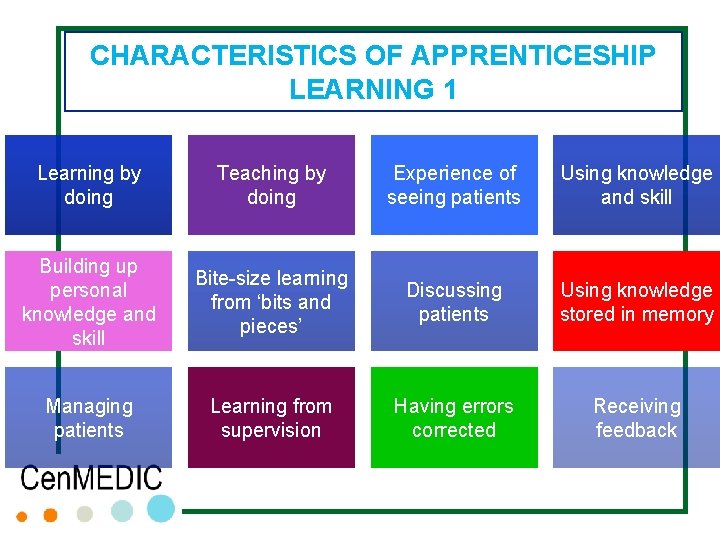
CHARACTERISTICS OF APPRENTICESHIP LEARNING 1 Learning by doing Teaching by doing Experience of seeing patients Using knowledge and skill Building up personal knowledge and skill Bite-size learning from ‘bits and pieces’ Discussing patients Using knowledge stored in memory Managing patients Learning from supervision Having errors corrected Receiving feedback
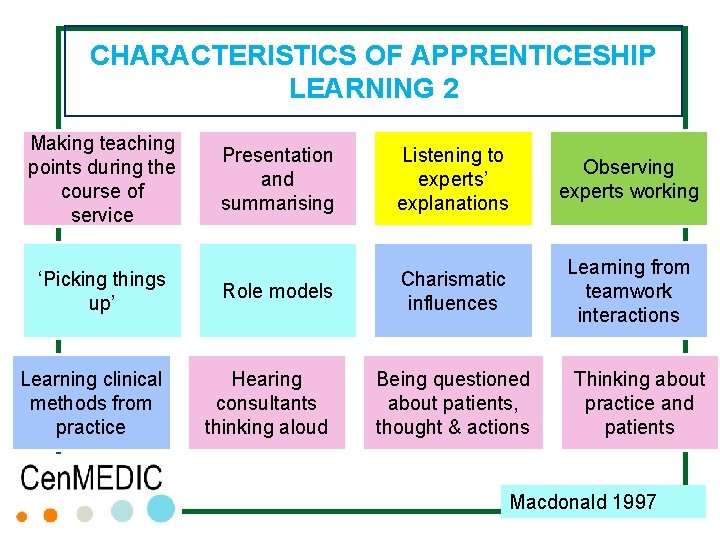
CHARACTERISTICS OF APPRENTICESHIP LEARNING 2 Making teaching points during the course of service Presentation and summarising Listening to experts’ explanations Observing experts working ‘Picking things up’ Role models Charismatic influences Learning from teamwork interactions Learning clinical methods from practice Hearing consultants thinking aloud Being questioned about patients, thought & actions Thinking about practice and patients Macdonald 1997
ONE MORE THING…… Professionalism is learned from role models in practice…. .
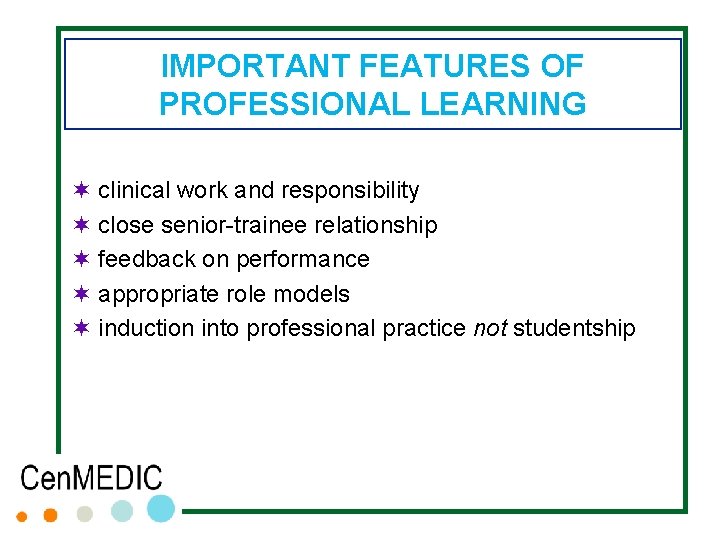
IMPORTANT FEATURES OF PROFESSIONAL LEARNING ¬ clinical work and responsibility ¬ close senior-trainee relationship ¬ feedback on performance ¬ appropriate role models ¬ induction into professional practice not studentship
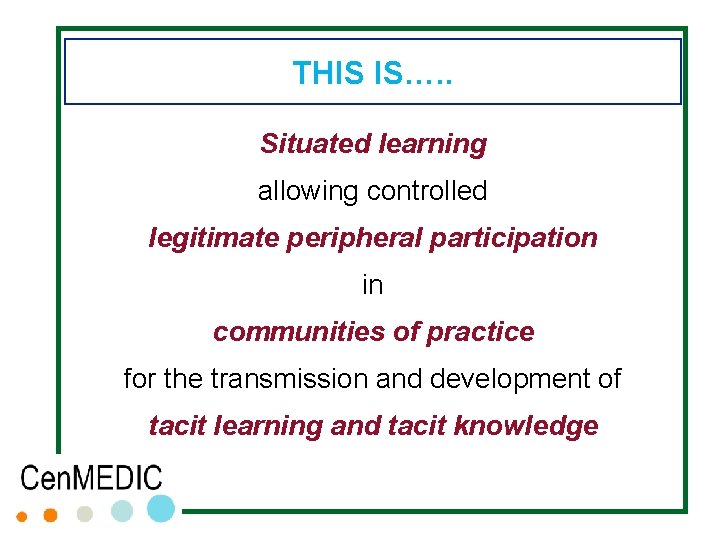
THIS IS…. . Situated learning allowing controlled legitimate peripheral participation in communities of practice for the transmission and development of tacit learning and tacit knowledge
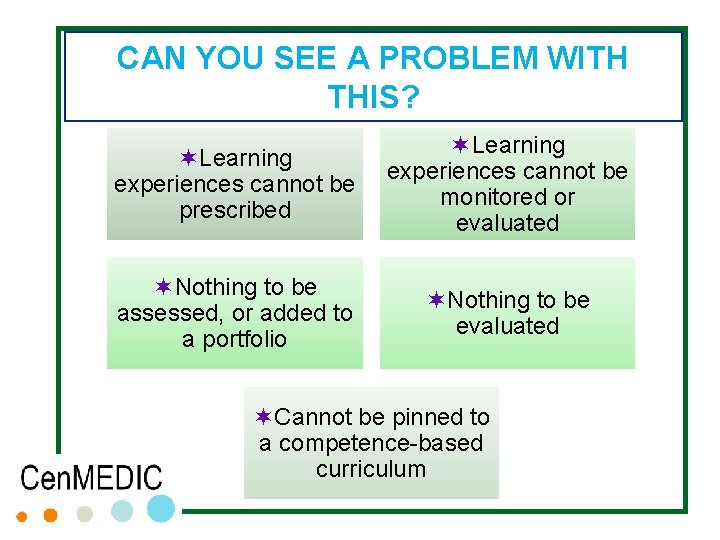
CAN YOU SEE A PROBLEM WITH THIS? ¬Learning experiences cannot be prescribed ¬Learning experiences cannot be monitored or evaluated ¬Nothing to be assessed, or added to a portfolio ¬Nothing to be evaluated ¬Cannot be pinned to a competence-based curriculum
WHAT HAMPERS LEARNING IN THE CONTEXT OF SERVICE?
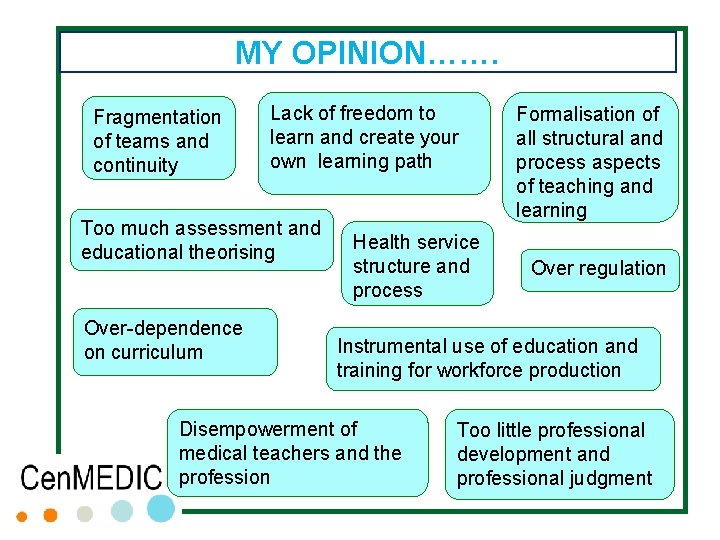
MY OPINION……. Fragmentation of teams and continuity Lack of freedom to learn and create your own learning path Too much assessment and educational theorising Over-dependence on curriculum Health service structure and process Formalisation of all structural and process aspects of teaching and learning Over regulation Instrumental use of education and training for workforce production Disempowerment of medical teachers and the profession Too little professional development and professional judgment
HOW IS APPRENTICESHIP TO BE MAINTAINED? ¬ Think more clearly about the importance of practice. ¬ Consider the perverse effects of current imperatives and conditions of medical education
BUT…… As long as there is service, and junior doctors, there is apprenticeship. It is being maintained.
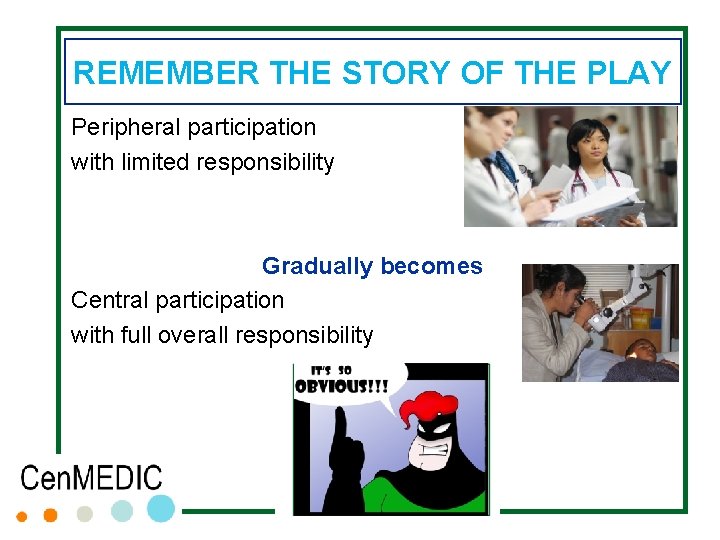
REMEMBER THE STORY OF THE PLAY Peripheral participation with limited responsibility Gradually becomes Central participation with full overall responsibility