
Maintaining A Dynamic Equilibrium Homeostasis What is homeostasis
Maintaining A Dynamic Equilibrium
Homeostasis… § What is homeostasis? Homeostasis is the ability of organisms to maintain a steady internal state. § What types of things are controlled by it? Internal temperature Sugar levels Blood pressure Urea concentration—and many more!
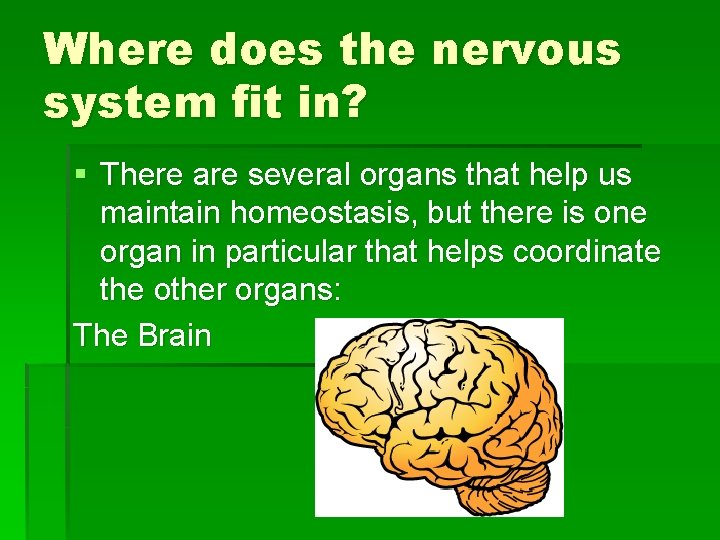
Where does the nervous system fit in? § There are several organs that help us maintain homeostasis, but there is one organ in particular that helps coordinate the other organs: The Brain
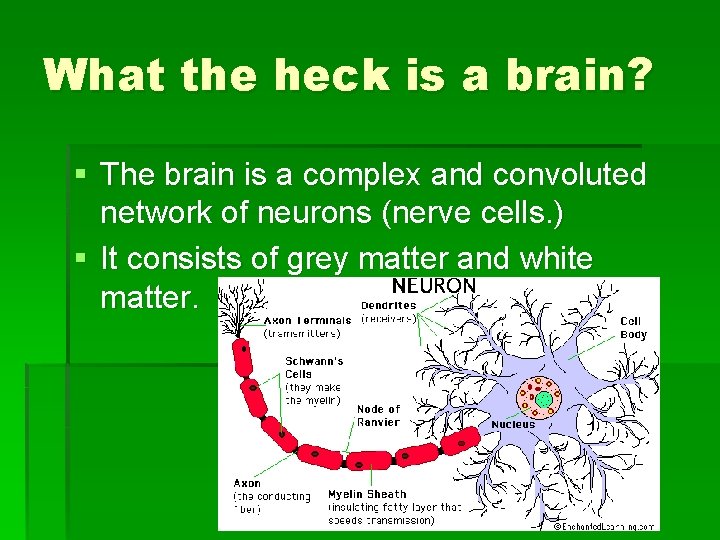
What the heck is a brain? § The brain is a complex and convoluted network of neurons (nerve cells. ) § It consists of grey matter and white matter.
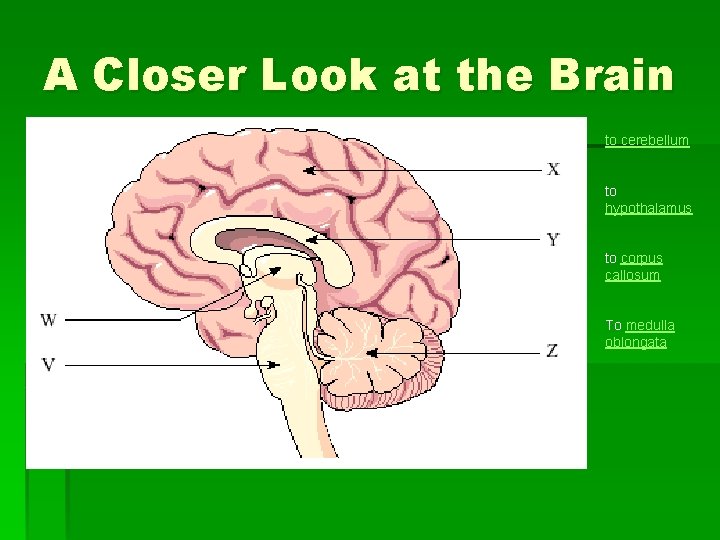
A Closer Look at the Brain to cerebellum to hypothalamus to corpus callosum To medulla oblongata
The Cerebrum § X is the cerebrum: The cerebrum is LATIN for brain. This is the area of the brain responsible for consciousness. It is the largest section of the brain and it consists of 4 lobes.
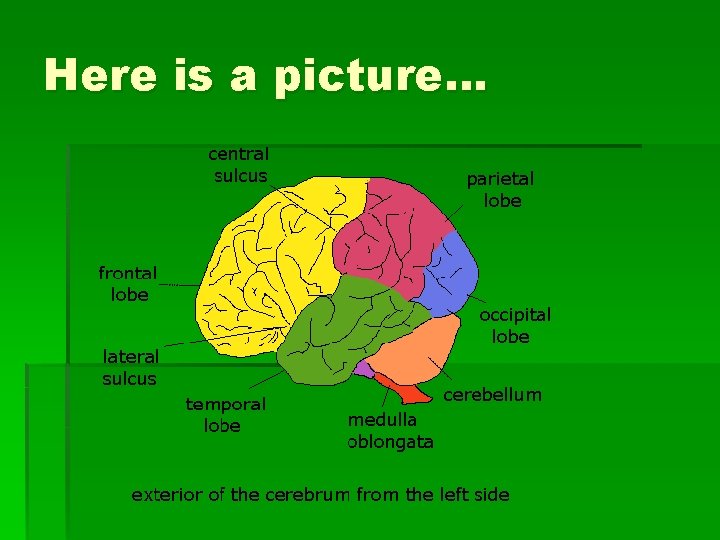
Here is a picture…
More about the cerebrum § The cerebrum contains some of the most important sections of the brain including… § 1) The motor cortex—controls movements of muscles. § 2) The somatosensory cortex—controls anything to do with the 5 senses. § 3) Auditory cortex—specific to memory of sounds. § 4) Visual Cortex—specific to memory of sights.
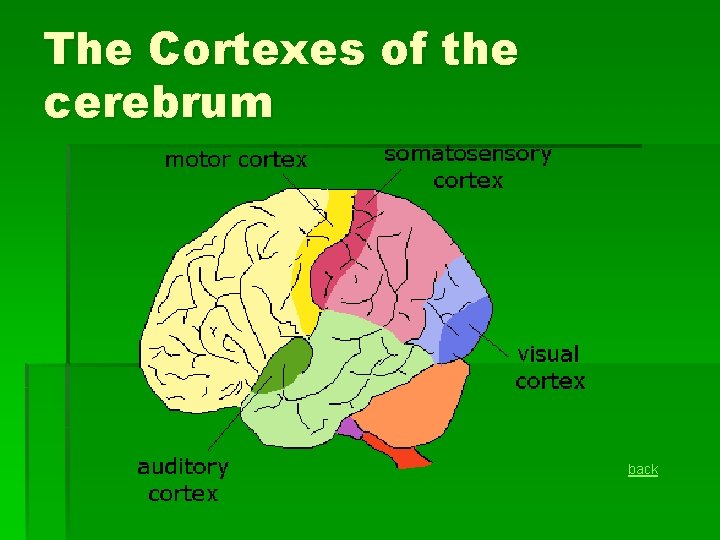
The Cortexes of the cerebrum back
The Cerebellum § Z is the cerebellum. § This is the section of the brain in charge of coordination and balance. back
The Hypothalamus § W is the hypothalamus. § The hypothalamus is in charge of maintaining many functions in the body. It regulates body temperature and controls the actions of the pituitary. back
Corpus Callosum § Y is the corpus callosum. § The corpus callosum is in charge of relaying messages between the to cerebral hemispheres (left and right brains. ) back
Medulla Oblongata § V is the medulla oblongata. § This part of the brain is in charge of heartbeat, blood pressure and breathing. § I would also like you to label the pituitary and the spinal cord—I will show you where they are. back
- Slides: 13