
Main Sequence Stars Internal structure Nuclear fusion Protons
- Slides: 34
Main Sequence Stars • Internal structure • Nuclear fusion – Protons, neutrons, electrons, neutrinos – Fusion reactions – Lifetime of the Sun • Transport of energy in the sun – Radiation versus convection Demos: 8 B 10. 40 convection and 8 B 10. 60 random walk
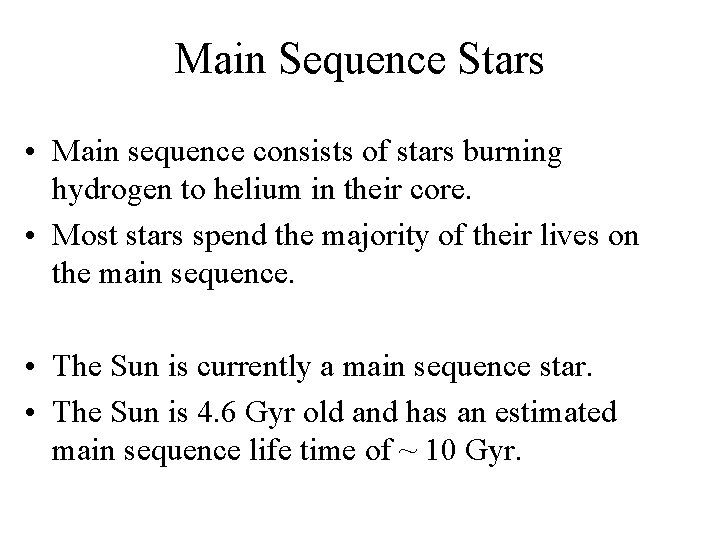
Main Sequence Stars • Main sequence consists of stars burning hydrogen to helium in their core. • Most stars spend the majority of their lives on the main sequence. • The Sun is currently a main sequence star. • The Sun is 4. 6 Gyr old and has an estimated main sequence life time of ~ 10 Gyr.
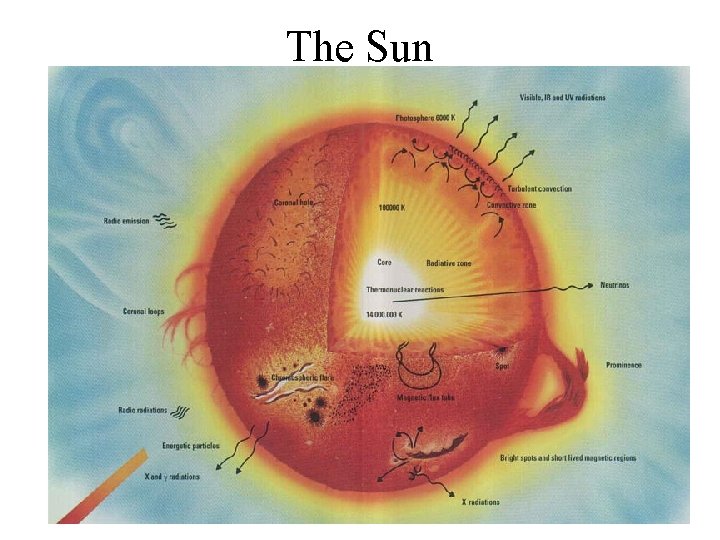
The Sun
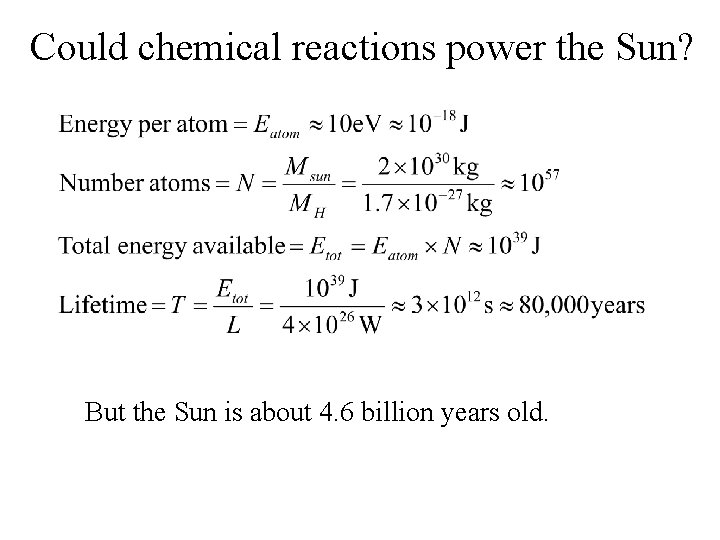
Could chemical reactions power the Sun? But the Sun is about 4. 6 billion years old.
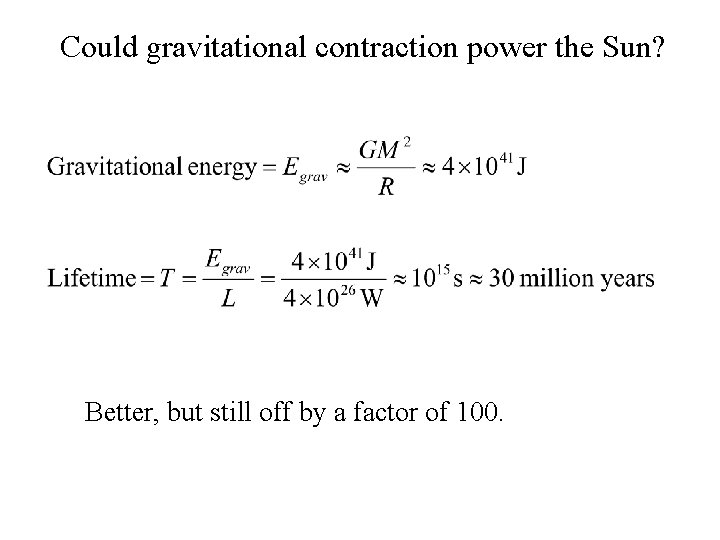
Could gravitational contraction power the Sun? Better, but still off by a factor of 100.
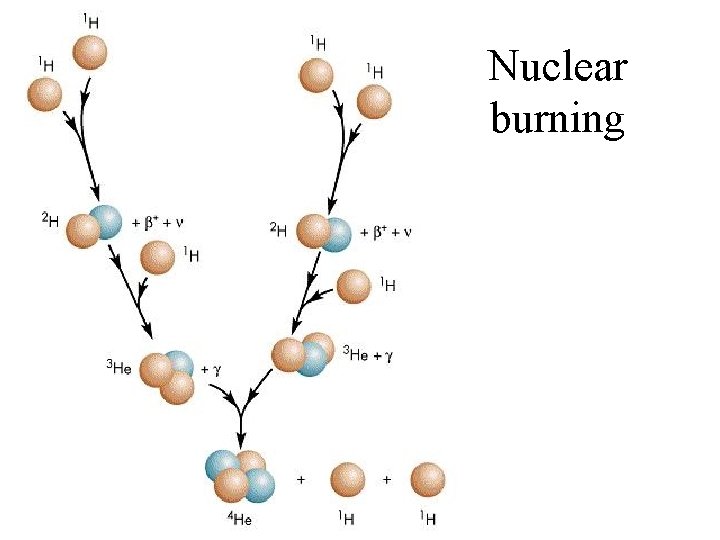
Nuclear burning
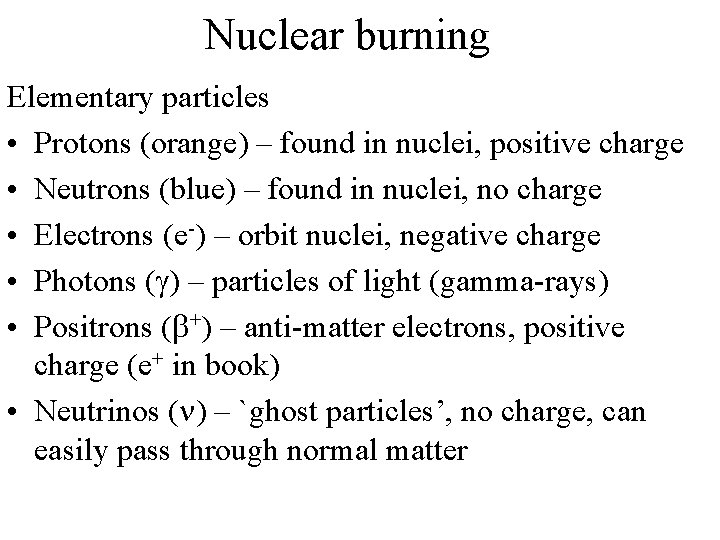
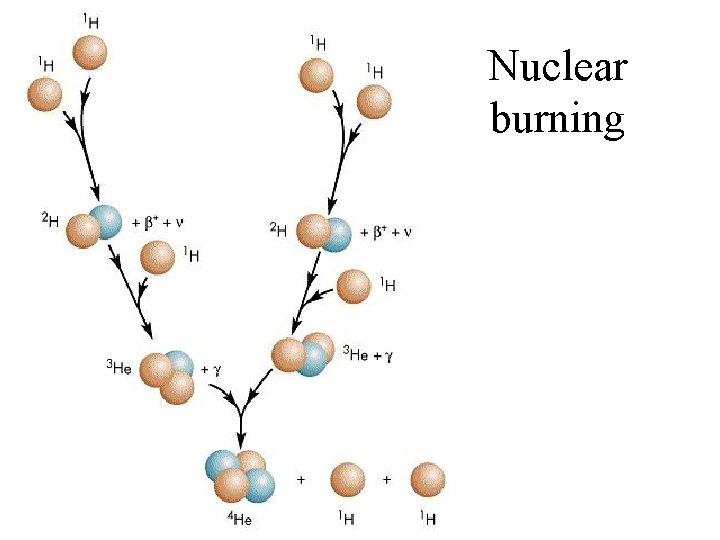
Nuclear burning Elementary particles • Protons (orange) – found in nuclei, positive charge • Neutrons (blue) – found in nuclei, no charge • Electrons (e-) – orbit nuclei, negative charge • Photons (g) – particles of light (gamma-rays) • Positrons (b+) – anti-matter electrons, positive charge (e+ in book) • Neutrinos (n) – `ghost particles’, no charge, can easily pass through normal matter
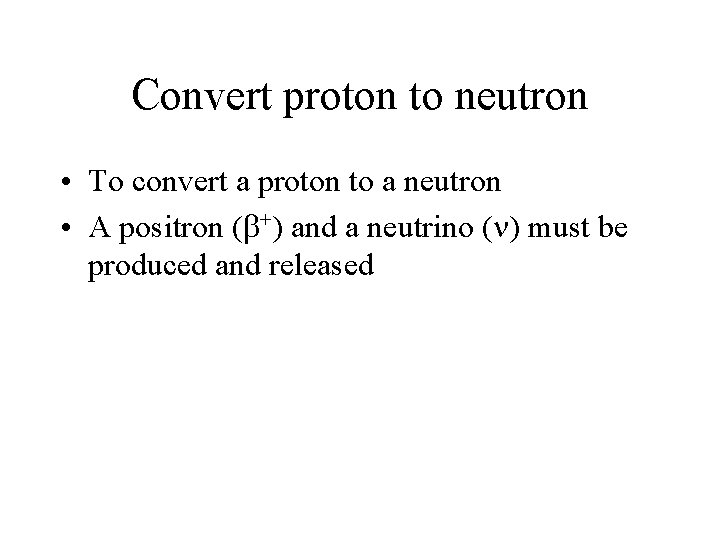
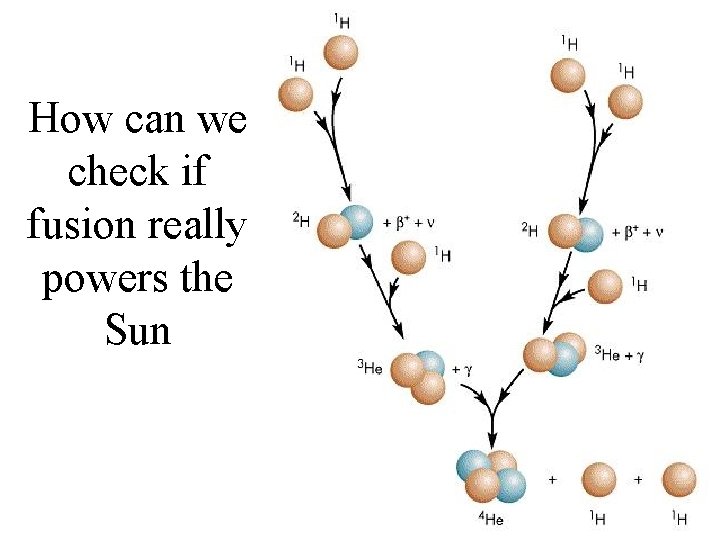
Convert proton to neutron • To convert a proton to a neutron • A positron (b+) and a neutrino (n) must be produced and released
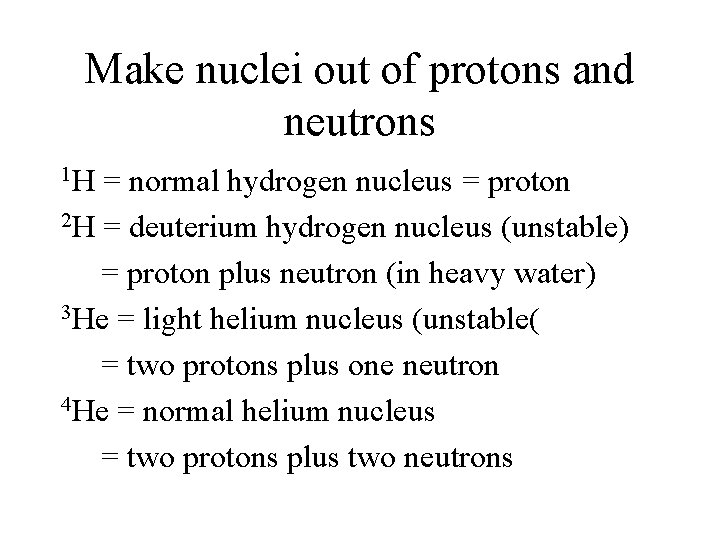
Make nuclei out of protons and neutrons 1 H = normal hydrogen nucleus = proton 2 H = deuterium hydrogen nucleus (unstable) = proton plus neutron (in heavy water) 3 He = light helium nucleus (unstable( = two protons plus one neutron 4 He = normal helium nucleus = two protons plus two neutrons
Nuclear burning
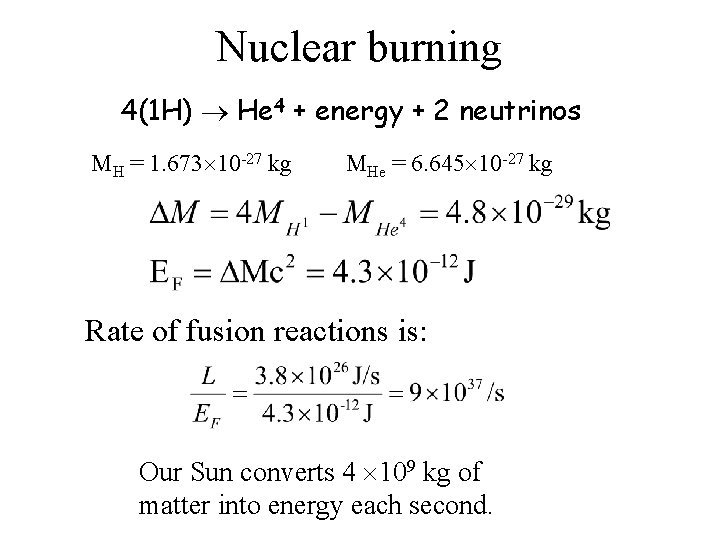
Nuclear burning 4(1 H) He 4 + energy + 2 neutrinos MH = 1. 673 10 -27 kg MHe = 6. 645 10 -27 kg Rate of fusion reactions is: Our Sun converts 4 109 kg of matter into energy each second.
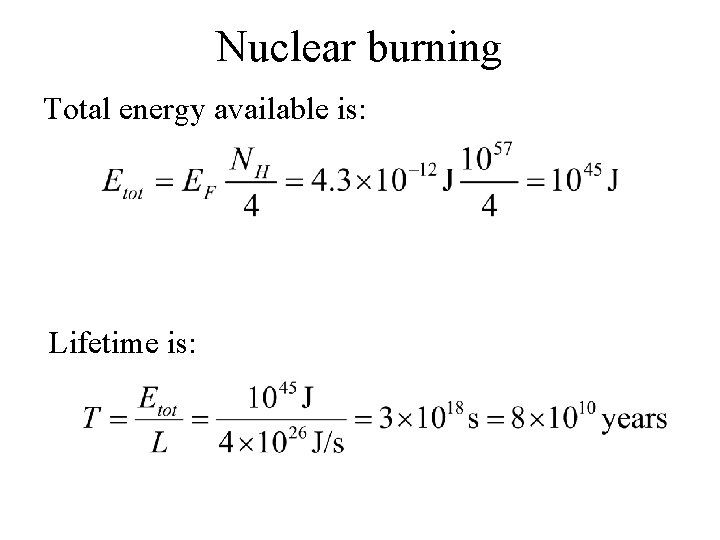
Nuclear burning Total energy available is: Lifetime is:
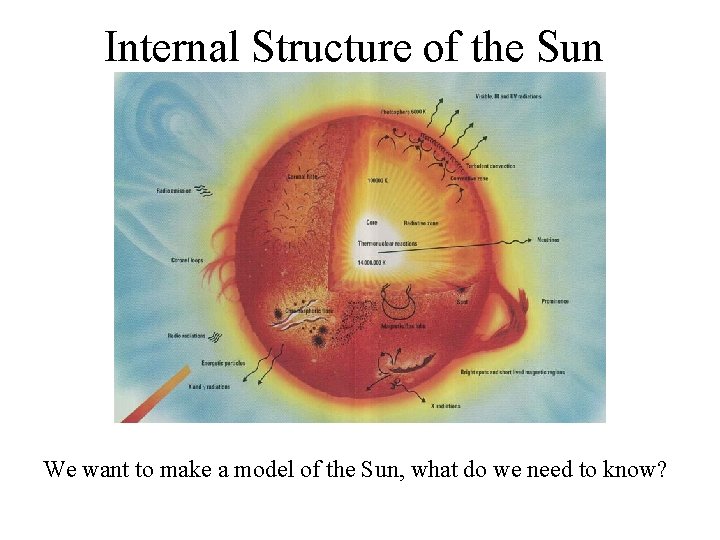
Internal Structure of the Sun We want to make a model of the Sun, what do we need to know?
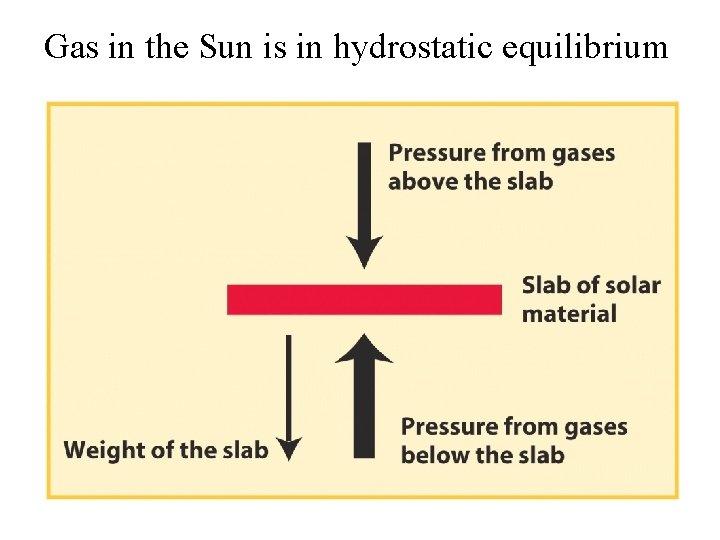
Gas in the Sun is in hydrostatic equilibrium
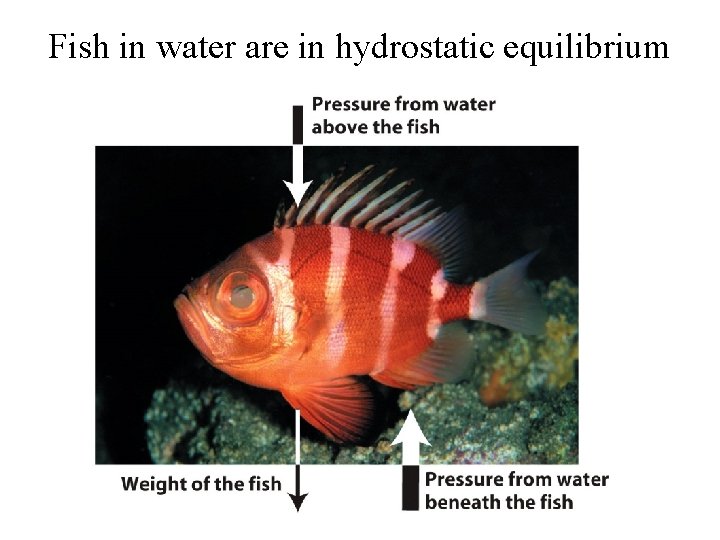
Fish in water are in hydrostatic equilibrium
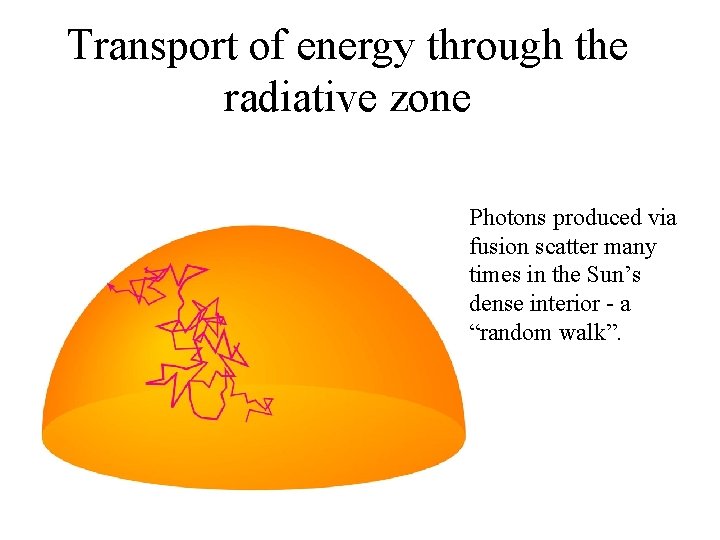
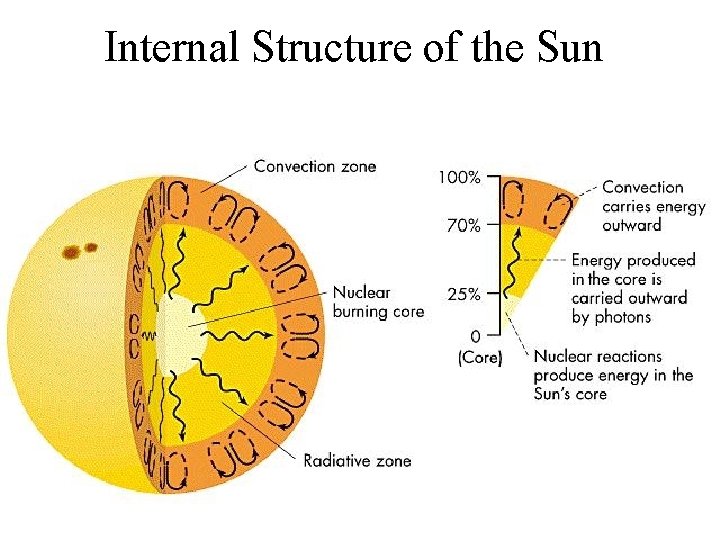
Transport of energy through the radiative zone Photons produced via fusion scatter many times in the Sun’s dense interior - a “random walk”.
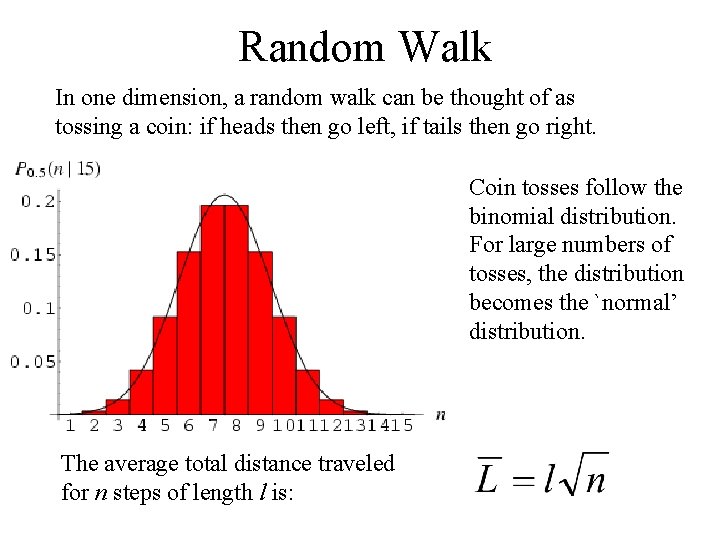
Random Walk In one dimension, a random walk can be thought of as tossing a coin: if heads then go left, if tails then go right. Coin tosses follow the binomial distribution. For large numbers of tosses, the distribution becomes the `normal’ distribution. The average total distance traveled for n steps of length l is:
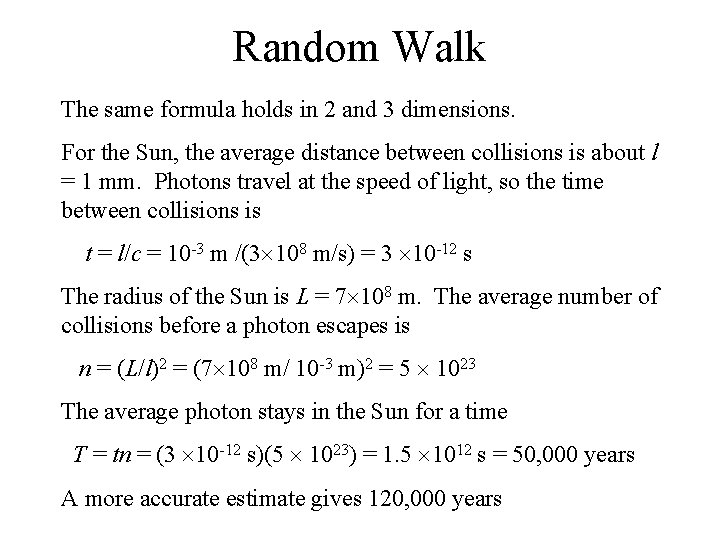
Random Walk The same formula holds in 2 and 3 dimensions. For the Sun, the average distance between collisions is about l = 1 mm. Photons travel at the speed of light, so the time between collisions is t = l/c = 10 -3 m /(3 108 m/s) = 3 10 -12 s The radius of the Sun is L = 7 108 m. The average number of collisions before a photon escapes is n = (L/l)2 = (7 108 m/ 10 -3 m)2 = 5 1023 The average photon stays in the Sun for a time T = tn = (3 10 -12 s)(5 1023) = 1. 5 1012 s = 50, 000 years A more accurate estimate gives 120, 000 years
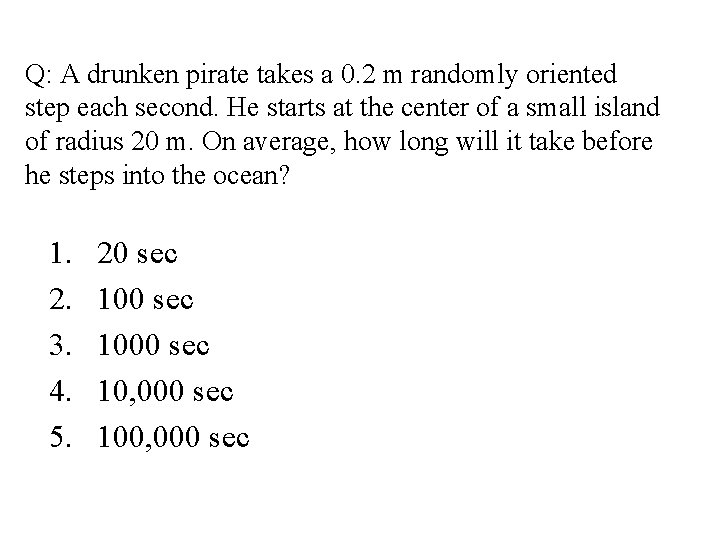
Q: A drunken pirate takes a 0. 2 m randomly oriented step each second. He starts at the center of a small island of radius 20 m. On average, how long will it take before he steps into the ocean? 1. 2. 3. 4. 5. 20 sec 1000 sec 10, 000 sec 100, 000 sec
Internal Structure of the Sun
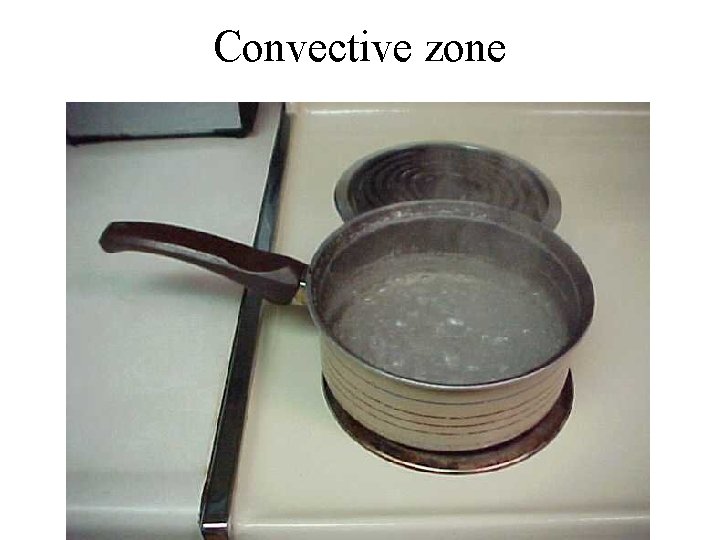
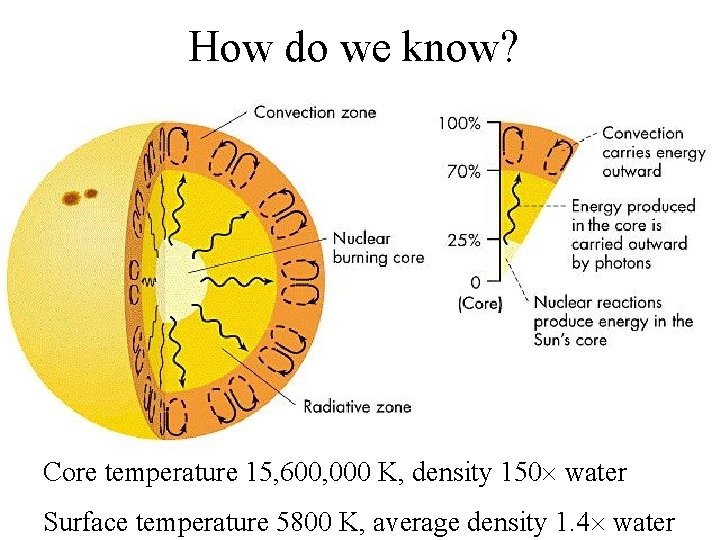
Convective zone
Do the following transport energy by convection or radiation? 1. 2. 3. 4. A gas oven A microwave A heat lamp An electric radiator
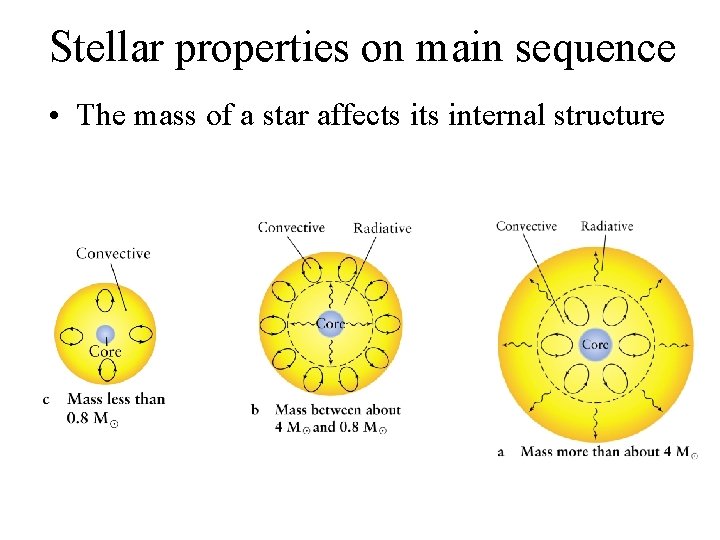
Stellar properties on main sequence • The mass of a star affects internal structure
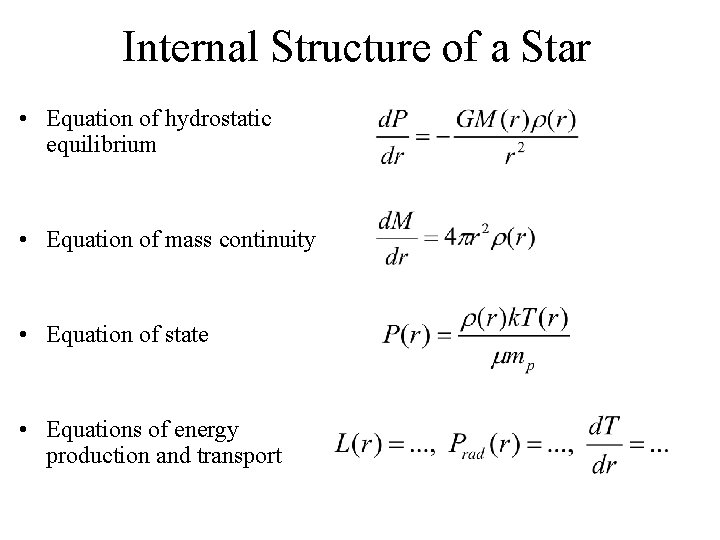
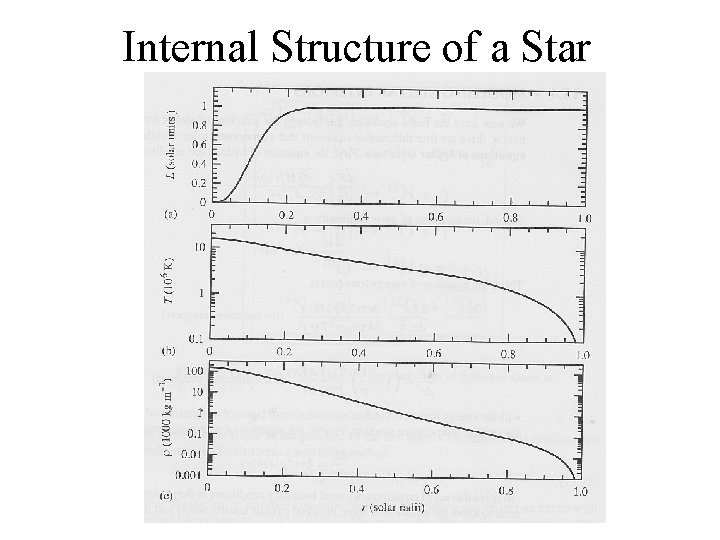
Internal Structure of a Star • Equation of hydrostatic equilibrium • Equation of mass continuity • Equation of state • Equations of energy production and transport
Internal Structure of a Star
How do we know? Core temperature 15, 600, 000 K, density 150 water Surface temperature 5800 K, average density 1. 4 water
How can we check if fusion really powers the Sun
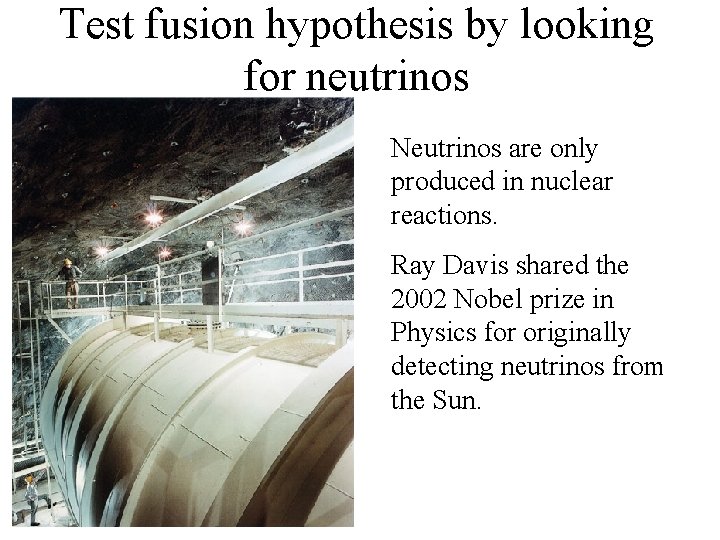
Test fusion hypothesis by looking for neutrinos Neutrinos are only produced in nuclear reactions. Ray Davis shared the 2002 Nobel prize in Physics for originally detecting neutrinos from the Sun.
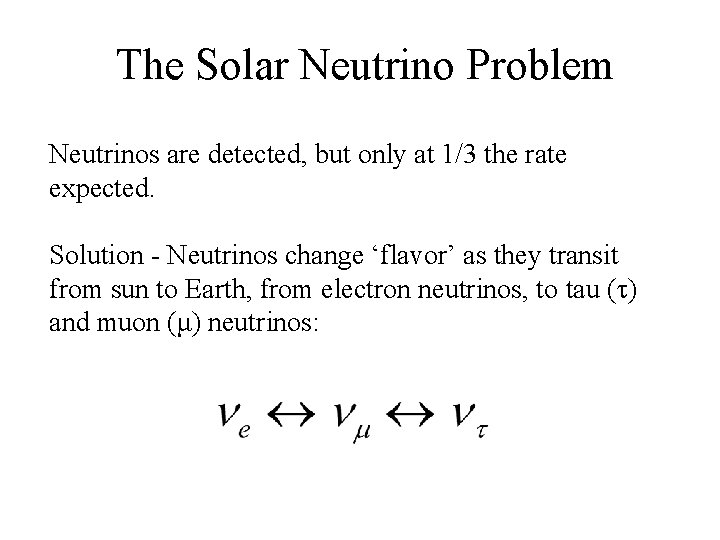
The Solar Neutrino Problem Neutrinos are detected, but only at 1/3 the rate expected. Solution - Neutrinos change ‘flavor’ as they transit from sun to Earth, from electron neutrinos, to tau ( ) and muon (μ) neutrinos:
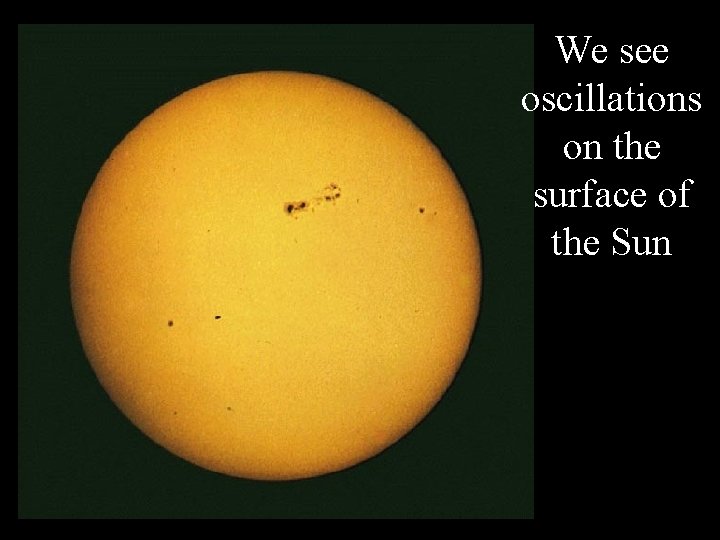
We see oscillations on the surface of the Sun
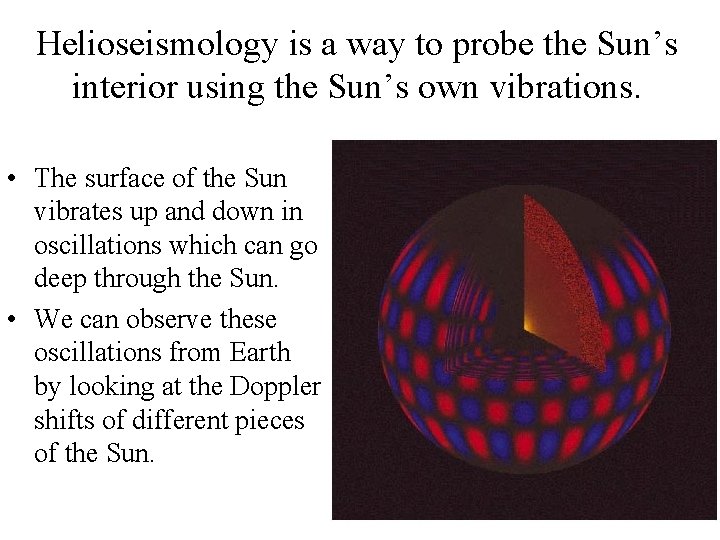
Helioseismology is a way to probe the Sun’s interior using the Sun’s own vibrations. • The surface of the Sun vibrates up and down in oscillations which can go deep through the Sun. • We can observe these oscillations from Earth by looking at the Doppler shifts of different pieces of the Sun.
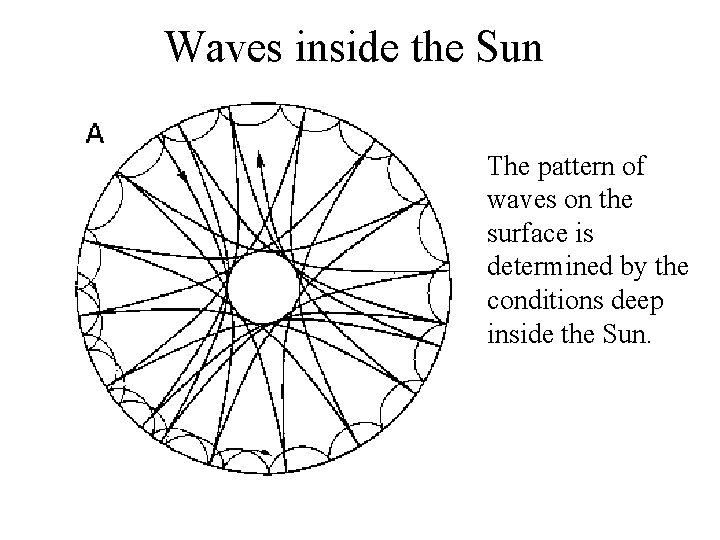
Waves inside the Sun The pattern of waves on the surface is determined by the conditions deep inside the Sun.
What direct observational evidence supports the model of thermonuclear reactions in the Sun’s core? 1. 2. 3. 4. Neutrinos Gamma rays Sun spot counts WMD inspections
Review Questions 1. How long could the Sun continue to burn H at its current luminosity? 2. What is produced in the fusion of H to He? 3. If the radius of the Sun were doubled, how much longer would it take photons produced in the Sun’s core to escape?