
Main PLC upgradation Project of PHS PRESENTED BY

Main PLC up-gradation Project of PH&S PRESENTED BY RAHMANULLAH KHAN
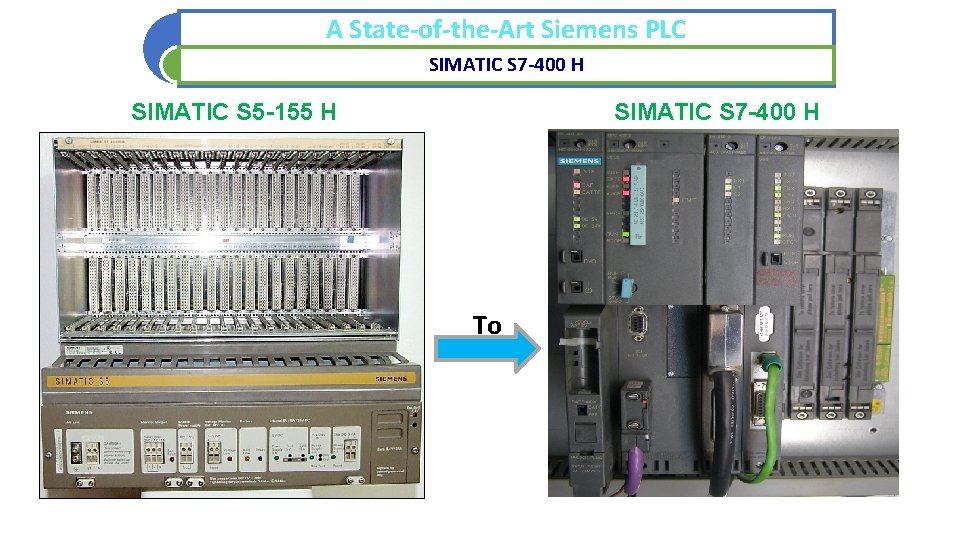
A State-of-the-Art Siemens PLC SIMATIC S 7 -400 H SIMATIC S 5 -155 H SIMATIC S 7 -400 H To
Overview S 7 -400 H Highlights Design SIMATIC S 7 -400 Modules CPUs
SIMATIC S 7 -400 Overview Highlights CPUs Modules Design flexibility SIMATIC S 7 -400 H System Family aa aa aa

SIMATIC S 7 -400 SIMATIC S 7 Overview SIMATIC Highlights S 7 - 400 H CPUs Modules Hot Standby (Redundant) Design flexibility STEP 7 (Programming Software) SIMATIC S 7 -400 H SIM AT I Siemens Automation C Industrial Components (Siemens’ Industrial Automation Components) CPU Series (412, 414, 416, 417)
ss ss ss
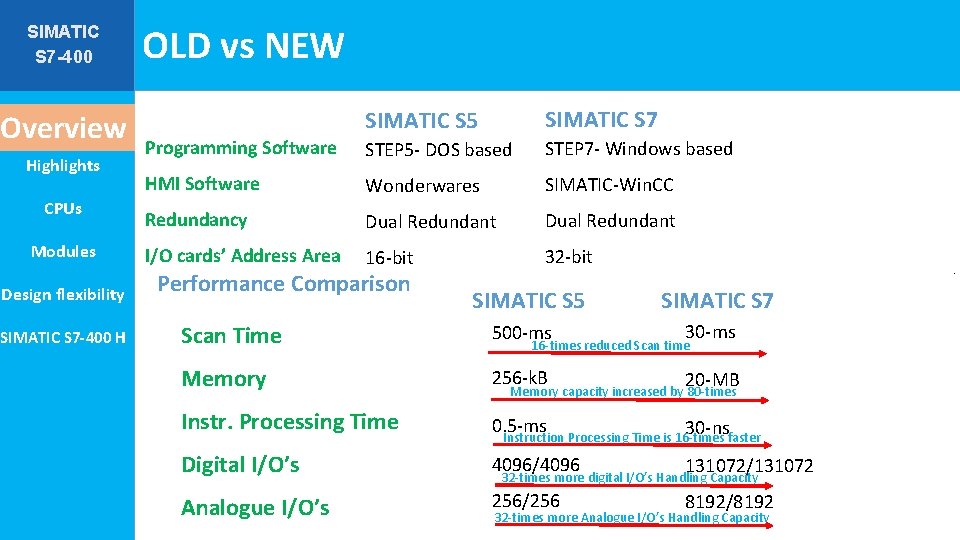
SIMATIC S 7 -400 Overview Highlights CPUs Modules Design flexibility SIMATIC S 7 -400 H OLD vs NEW SIMATIC S 5 SIMATIC S 7 Programming Software STEP 5 - DOS based STEP 7 - Windows based HMI Software Wonderwares SIMATIC-Win. CC Redundancy Dual Redundant I/O cards’ Address Area 16 -bit 32 -bit Performance Comparison SIMATIC S 5 Windows SIMATIC S 7 Scan Time 500 -ms 30 -ms Memory 256 -k. B 20 -MB Instr. Processing Time 0. 5 -ms 30 -ns Instruction Processing Time is 16 -times faster Digital I/O’s 4096/4096 131072/131072 Analogue I/O’s 256/256 8192/8192 16 -times reduced Scan time Memory capacity increased by 80 -times 32 -times more digital I/O’s Handling Capacity 32 -times more Analogue I/O’s Handling Capacity C C Control Center
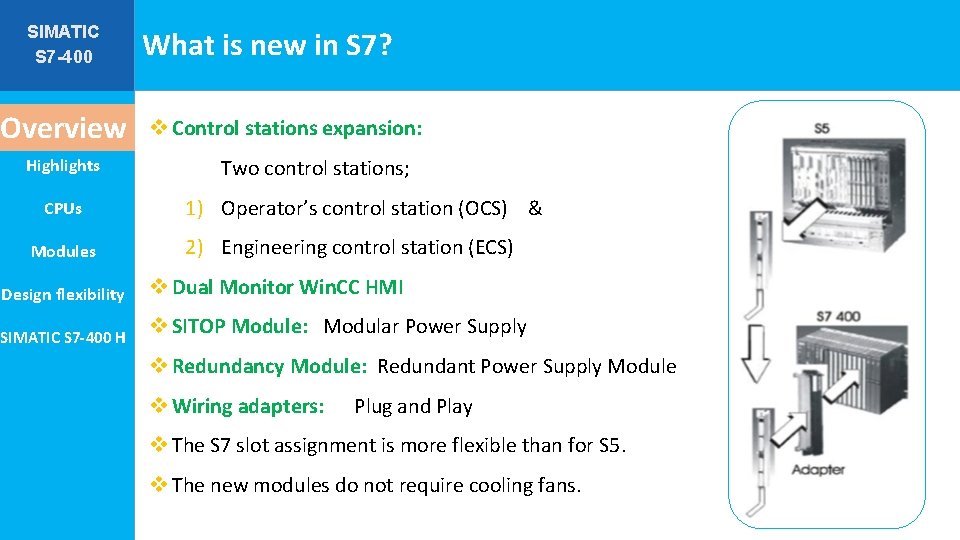
SIMATIC S 7 -400 Overview Highlights CPUs Modules What is new in S 7? v Control stations expansion: Two control stations; 1) Operator’s control station (OCS) & 2) Engineering control station (ECS) Design flexibility v Dual Monitor Win. CC HMI SIMATIC S 7 -400 H v SITOP Module: Modular Power Supply v Redundancy Module: Redundant Power Supply Module v Wiring adapters: Plug and Play v The S 7 slot assignment is more flexible than for S 5. v The new modules do not require cooling fans.
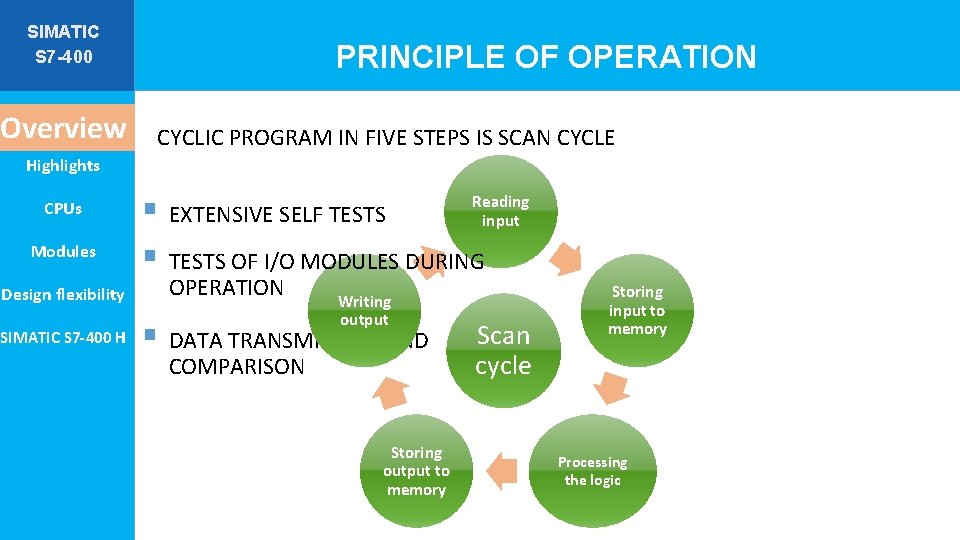
SIMATIC S 7 -400 Overview PRINCIPLE OF OPERATION CYCLIC PROGRAM IN FIVE STEPS IS SCAN CYCLE Highlights CPUs Modules Design flexibility SIMATIC S 7 -400 H § EXTENSIVE SELF TESTS § TESTS OF I/O MODULES DURING Reading input OPERATION Writing output § DATA TRANSMISSION AND COMPARISON Storing output to memory Scan cycle Storing input to memory Processing the logic

Cyclic PLC program execution SIMATIC S 7 -400 Watch-dog Timer Overview Reading Inputs Highlights CPUs Storing Inputs Modules Logic Processing Design flexibility SIMATIC S 7 -400 H Storing Outputs Writing outputs

SIMATIC S 7 -400 overview Overview Highlights CPUs Modules Design flexibility SIMATIC S 7 -400 H system S 7 -400 FH system
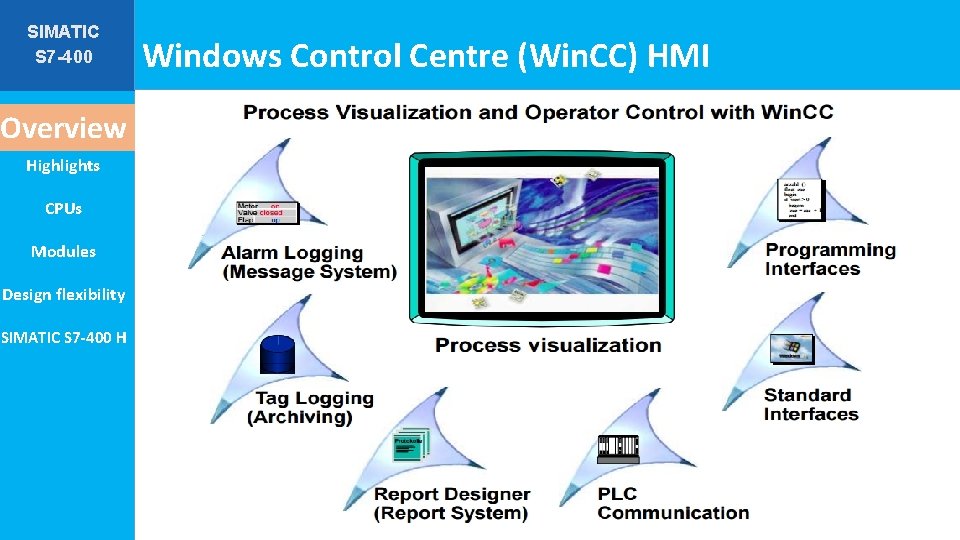
SIMATIC S 7 -400 Overview Highlights CPUs Modules Design flexibility SIMATIC S 7 -400 H Windows Control Centre (Win. CC) HMI
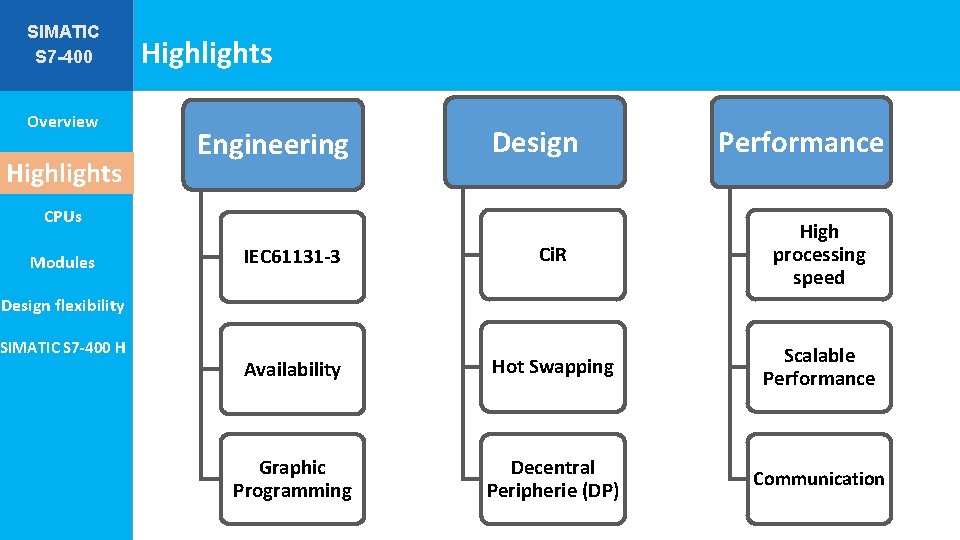
SIMATIC S 7 -400 Overview Highlights Engineering Design CPUs Modules Performance IEC 61131 -3 Ci. R High processing speed Availability Hot Swapping Scalable Performance Graphic Programming Decentral Peripherie (DP) Communication Design flexibility SIMATIC S 7 -400 H

SIMATIC S 7 -400 Overview Highlights CPUs Modules Design flexibility SIMATIC S 7 -400 H CPU Design

SIMATIC S 7 -400 Graduated Performance Spectrum Overview Highlights CPUs Modules Type 412 -1 Design flexibility SIMATIC S 7 -400 H PLC 412 -2 PLC 414 -2 414 -3 PLC 416 -2 416 -3 PLC 417 -4 Memory is increased with CPU advancement Memory Instr. processing Communication interfaces Counters/timers 144 KB 256 KB from 100 ns 512 KB 1. 4 MB 2. 8 MB 5. 6 MB Inst. Processing time is reduced with CPU advancement from 60 ns from 40 ns 20 MB from 30 ns MPI/DP PROFIBUS-DP 2048 / 2048
SIMATIC S 7 -400 Overview Highlights CPUs Modules Design flexibility SIMATIC S 7 -400 H S 7 -400: Modules ss ss ss
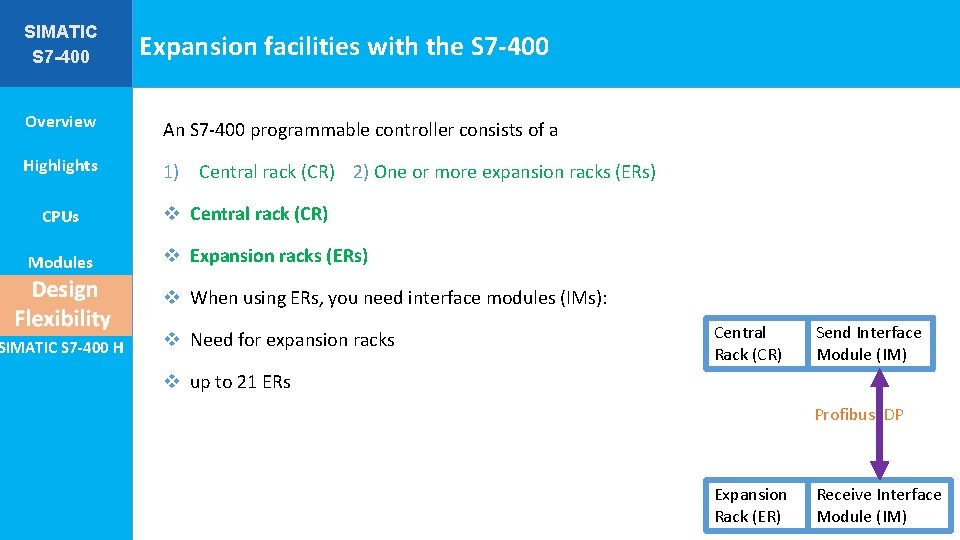
SIMATIC S 7 -400 Expansion facilities with the S 7 -400 Overview An S 7 -400 programmable controller consists of a Highlights 1) Central rack (CR) 2) One or more expansion racks (ERs) CPUs Modules v Central rack (CR) v Expansion racks (ERs) Design flexibility v When using ERs, you need interface modules (IMs): SIMATIC S 7 -400 H v Need for expansion racks Central Rack (CR) Send Interface Module (IM) v up to 21 ERs Profibus DP Expansion Rack (ER) Receive Interface Module (IM)
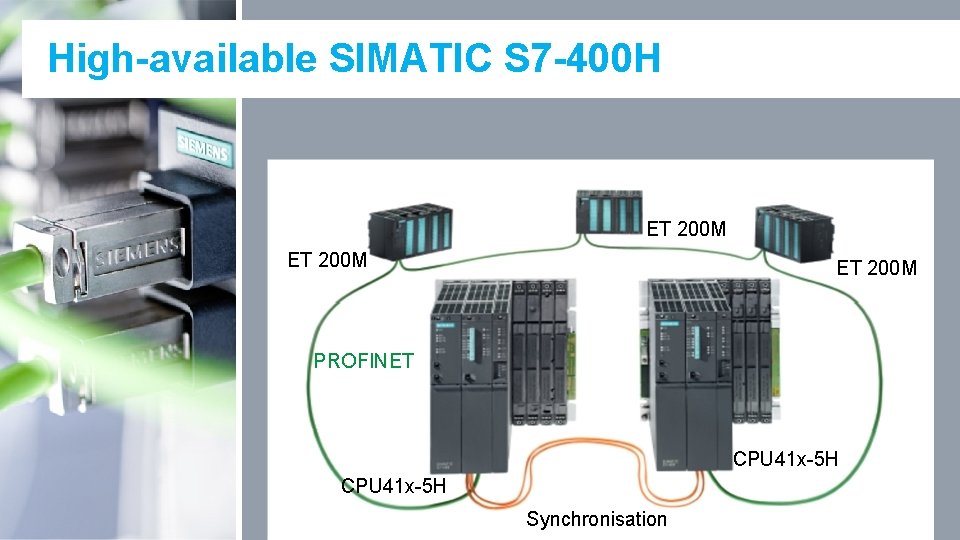
High-available SIMATIC S 7 -400 H ET 200 M PROFINET CPU 41 x-5 H For internal use only / © Siemens AG 2012. All Rights Reserved. Synchronisation

SIMATIC S 7 -400 H Fault Tolerant Automation System Overview Redundany Features Configuration Pros & Cons PH&S Architecture Motivation for the use of H-PLC Systems Ø Expensive downtimes Ø Production Loss Ø High restart costs after control failure Ø High availability
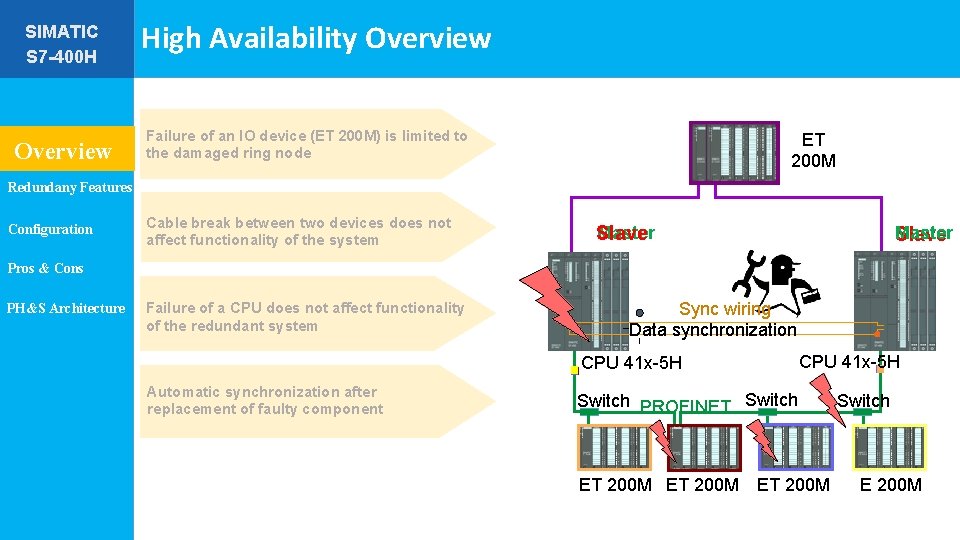
SIMATIC S 7 -400 H Overview High Availability Overview Failure of an IO device (ET 200 M) is limited to the damaged ring node ET 200 M Redundany Features Configuration Cable break between two devices does not affect functionality of the system Master Slave Pros & Cons PH&S Architecture Failure of a CPU does not affect functionality of the redundant system Sync wiring Data synchronization CPU 41 x-5 H Automatic synchronization after replacement of faulty component CPU 41 x-5 H Switch PROFINET Switch ET 200 M Switch E 200 M
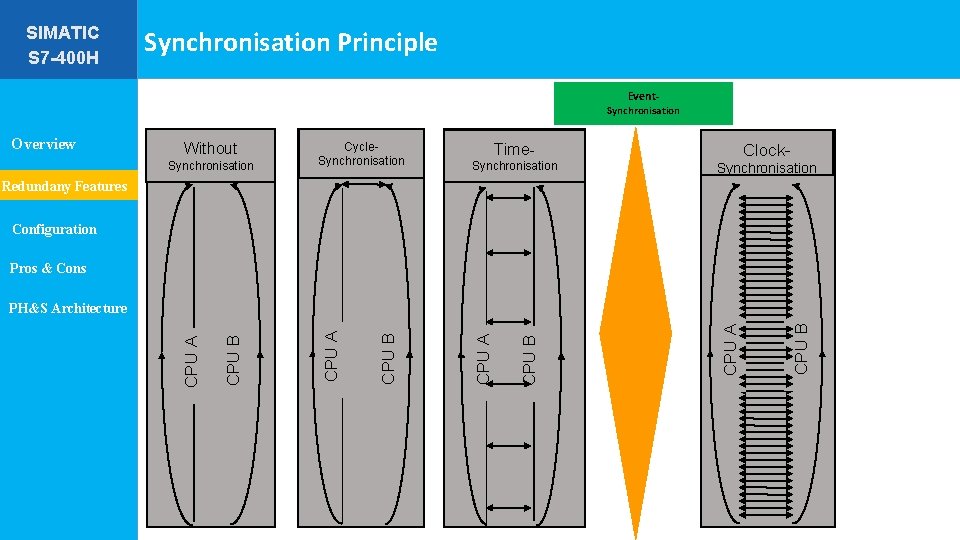
SIMATIC S 7 -400 H Synchronisation Principle Event- Synchronisation Overview Without Synchronisation Cycle. Synchronisation Time. Synchronisation Clock. Synchronisation Redundany Features Configuration Pros & Cons CPU B CPU A PH&S Architecture
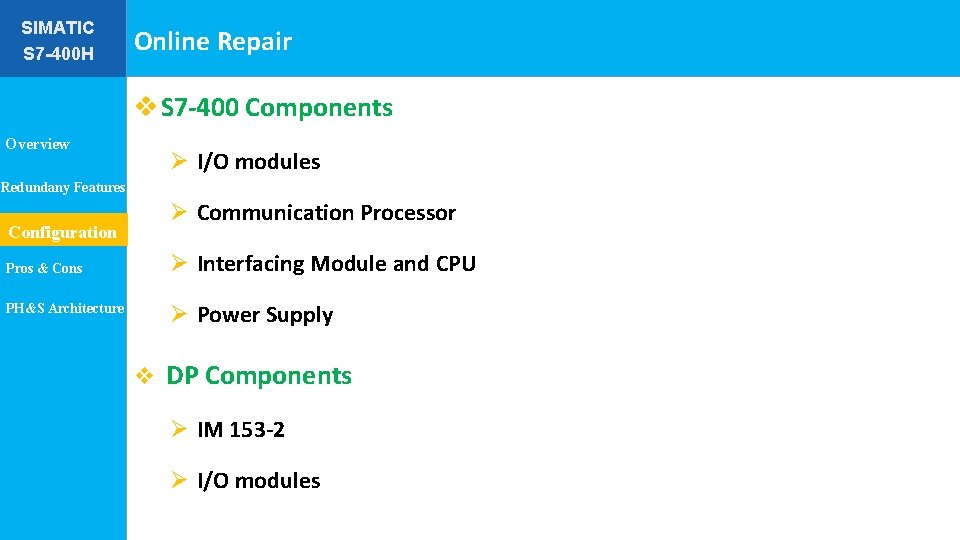
SIMATIC S 7 -400 H Online Repair v S 7 -400 Components Overview Ø I/O modules Redundany Features Configuration Ø Communication Processor Pros & Cons Ø Interfacing Module and CPU PH&S Architecture Ø Power Supply v DP Components Ø IM 153 -2 Ø I/O modules
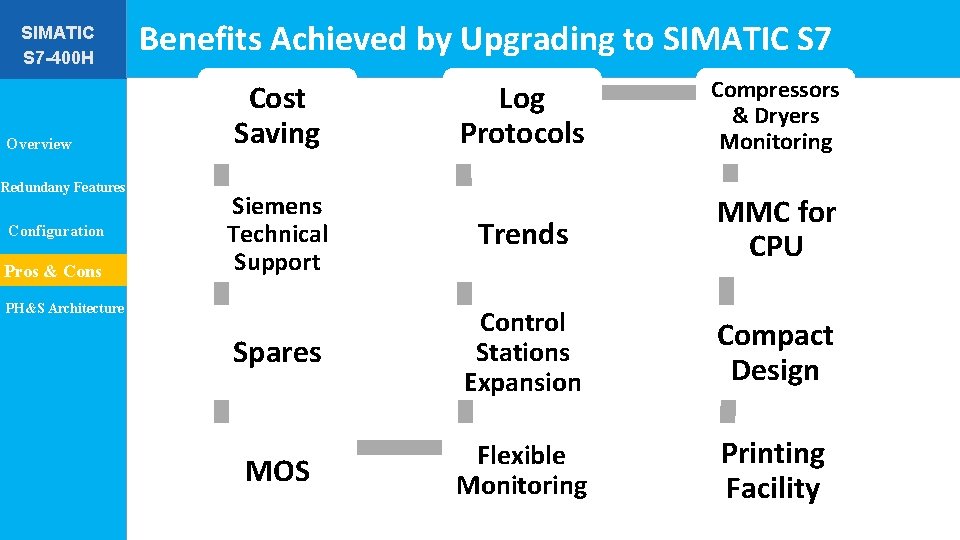
SIMATIC S 7 -400 H Overview Redundany Features Configuration Pros & Cons Benefits Achieved by Upgrading to SIMATIC S 7 Log Protocols Compressors & Dryers Monitoring Siemens Technical Support Trends MMC for CPU Spares Control Stations Expansion Compact Design MOS Flexible Monitoring Printing Facility Cost Saving PH&S Architecture
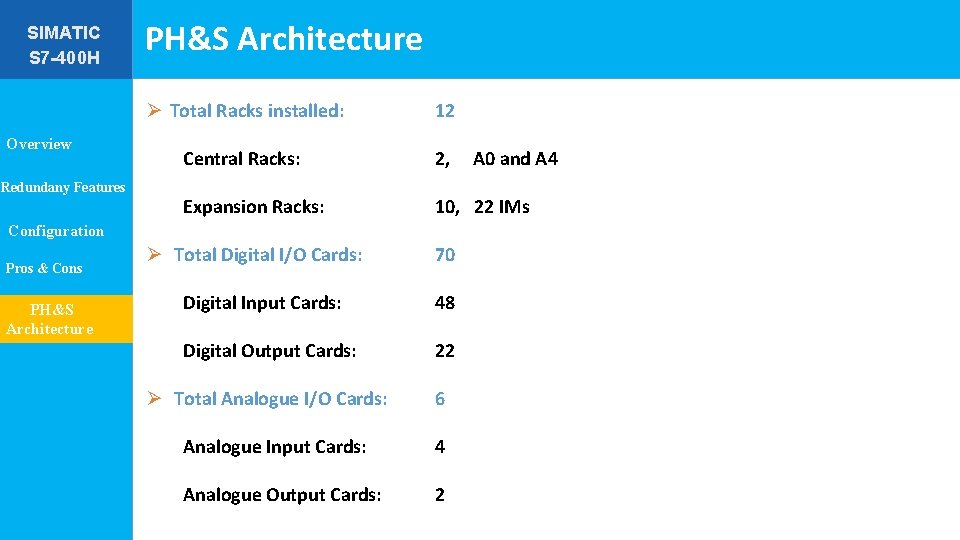
SIMATIC S 7 -400 H Overview Redundany Features PH&S Architecture Ø Total Racks installed: 12 Central Racks: 2, Expansion Racks: 10, 22 IMs Configuration Pros & Cons PH&S Architecture Ø Total Digital I/O Cards: 70 Digital Input Cards: 48 Digital Output Cards: 22 Ø Total Analogue I/O Cards: 6 Analogue Input Cards: 4 Analogue Output Cards: 2 A 0 and A 4
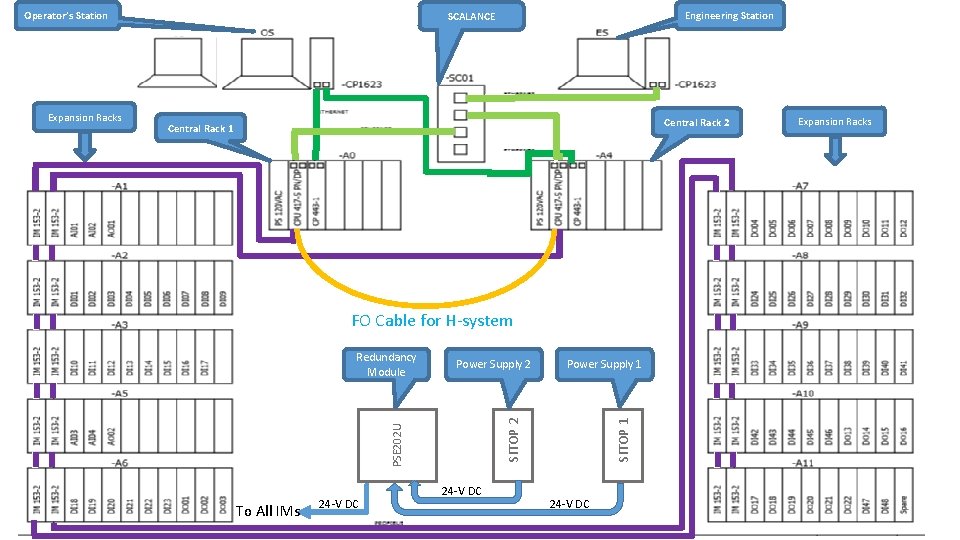
Operator’s Station Central Rack 2 Central Rack 1 FO Cable for H-system To All IMs 24 -V DC Power Supply 1 SITOP 1 Power Supply 2 SITOP 2 Redundancy Module PSE 202 U Expansion Racks Engineering Station SCALANCE 24 -V DC Expansion Racks
SIMATIC S 7 -400 H Overview Redundany Features Configuration Pros & Cons PH&S Architecture Up-gradation Steps at a glance
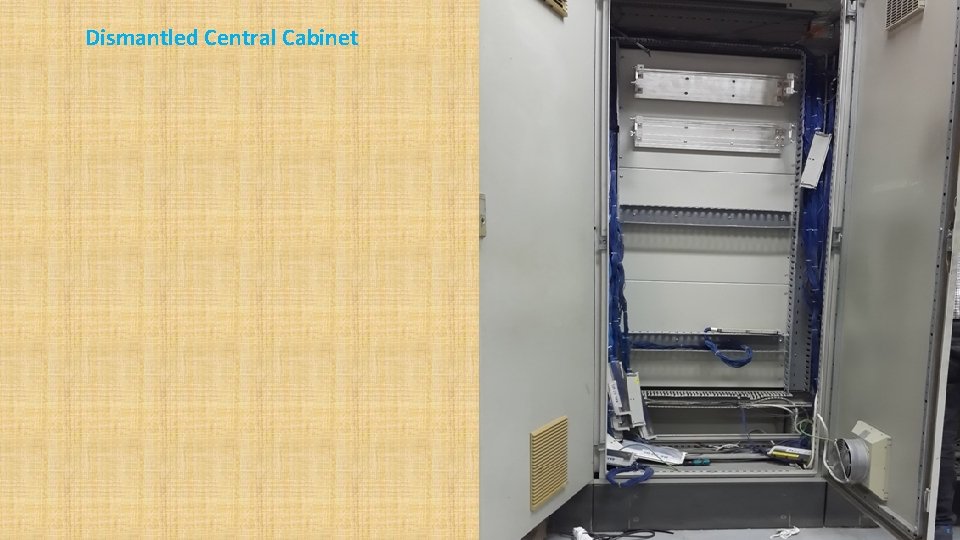
Dismantled Central Cabinet
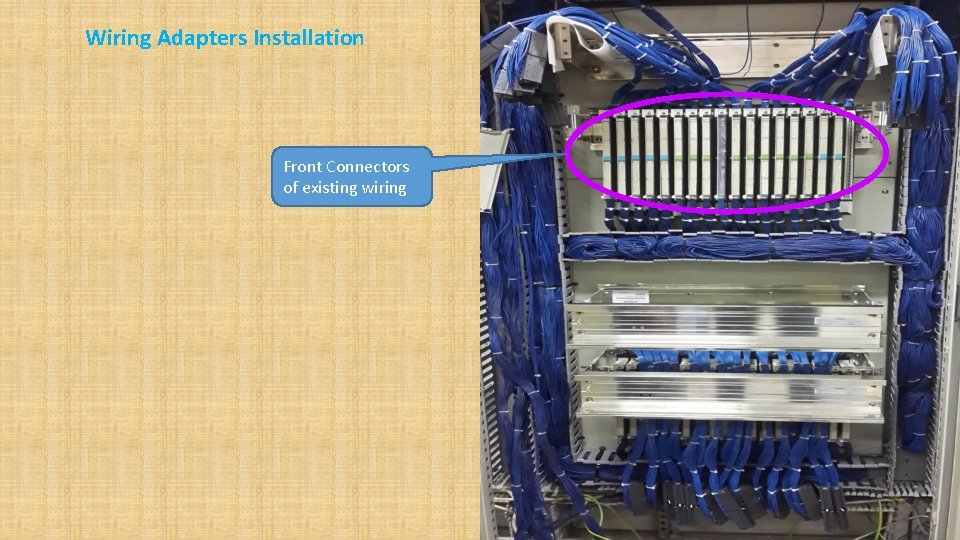
Wiring Adapters Installation Front Connectors of existing wiring

Backplane Bus Module Front Connectors
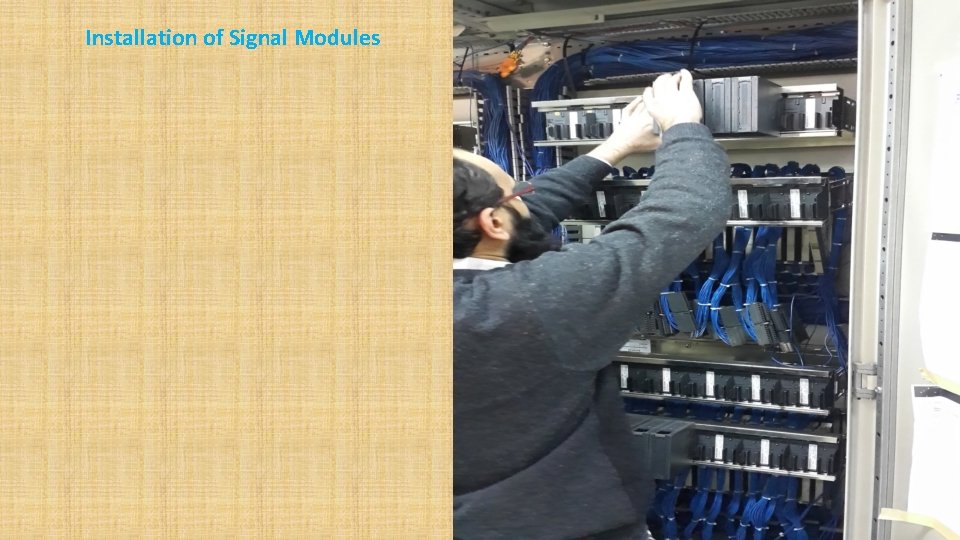
Installation of Signal Modules
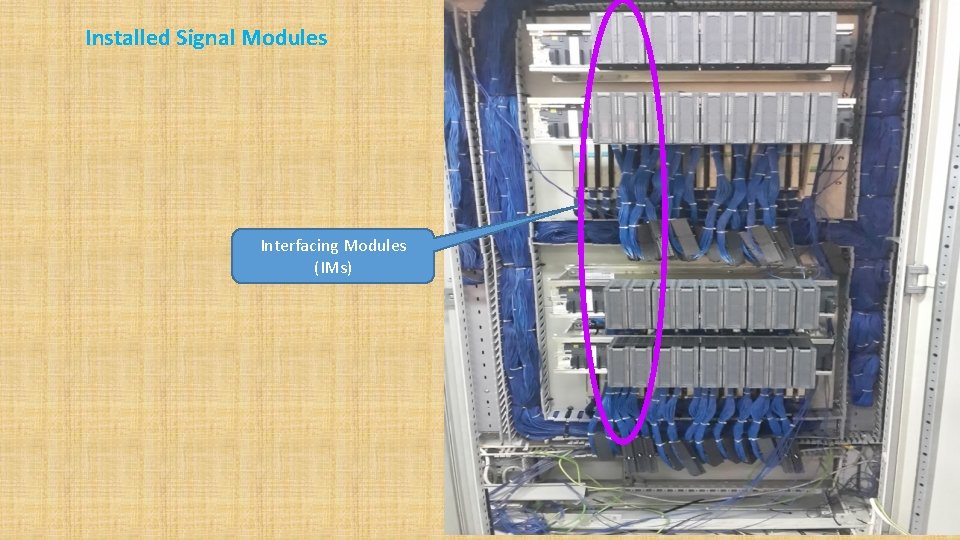
Installed Signal Modules Interfacing Modules (IMs)

End Connection of Wiring Adapters with SMs Front Connectors Inserted
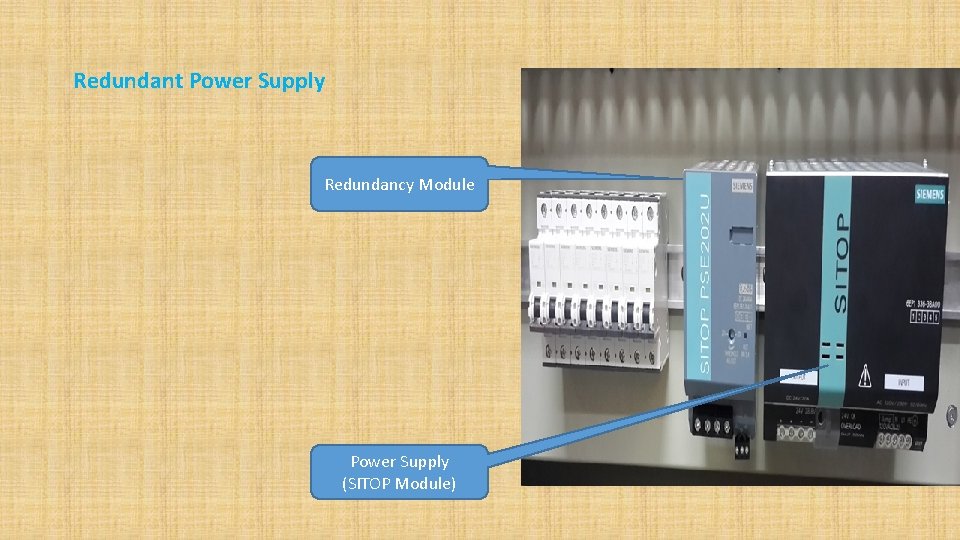
Redundant Power Supply Redundancy Module Power Supply (SITOP Module)
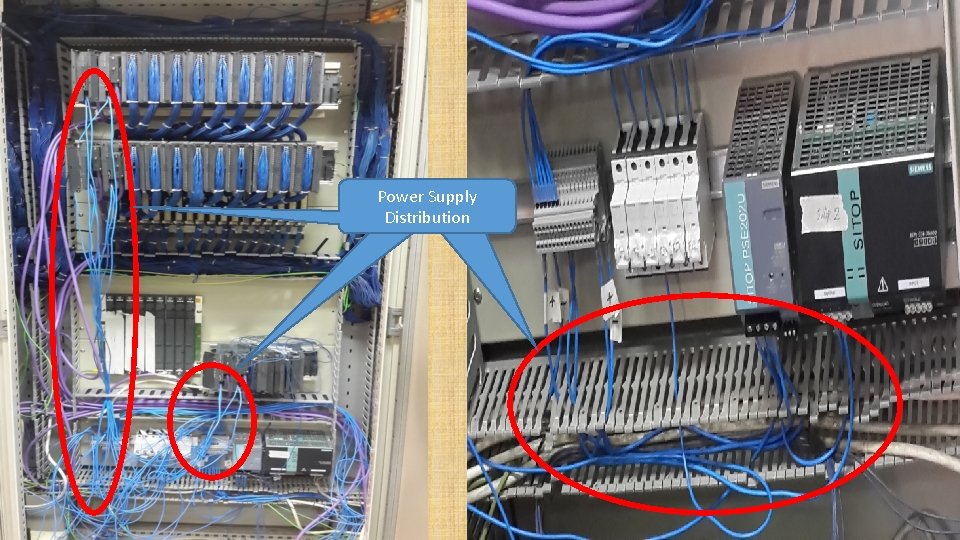
Power Supply Redundancy Module Distribution
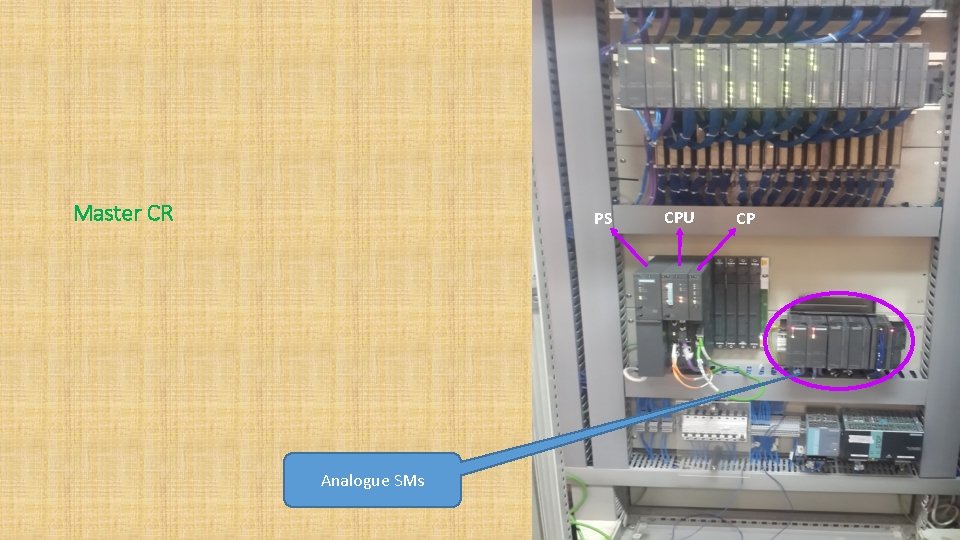
Master CR PS Analogue SMs CPU CP
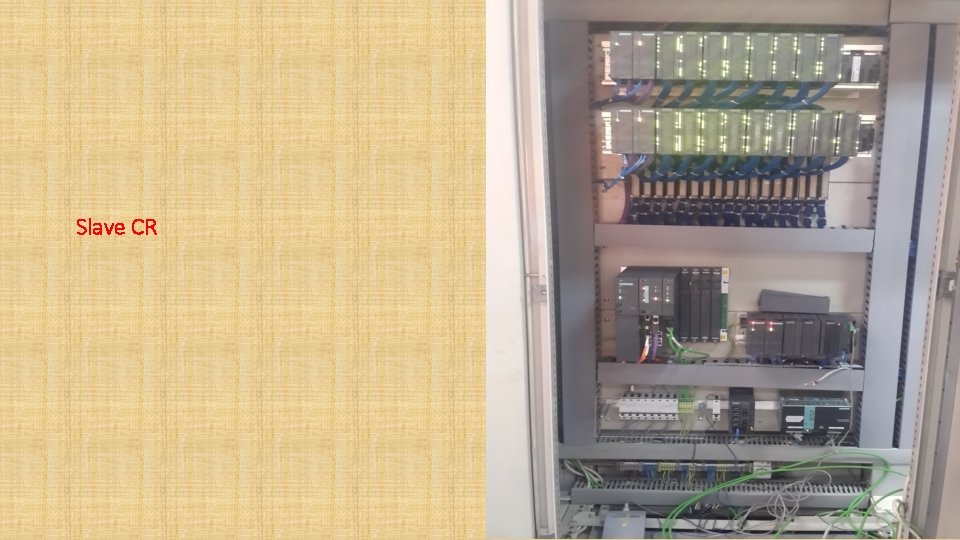
Slave CR
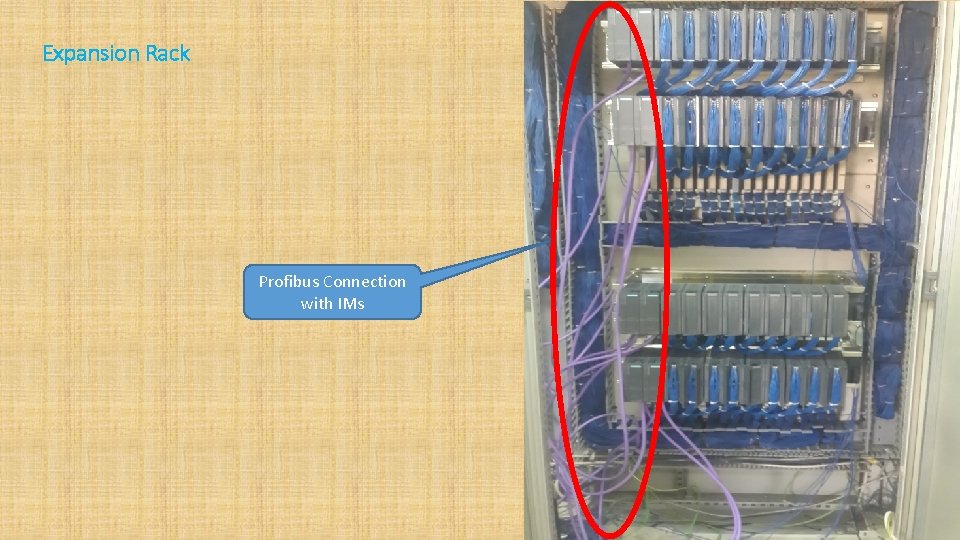
Expansion Rack Profibus Connection with IMs
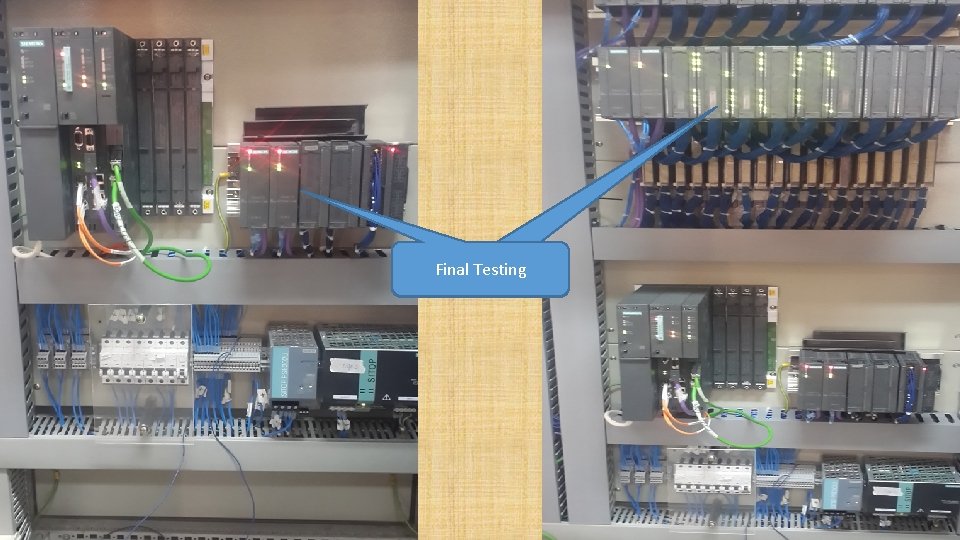
Final Testing Redundancy Module


- Slides: 40