
Main nutrient groups and their Functions Aims and

- Slides: 20
Main nutrient groups and their Functions
Aims and Objectives To state the nutrients needed in a maintenance diet and understand their function By the end of the lesson you will be able to: • State the 7 nutrient groups • Explain how the nutrients are used in the body
What are the 7 nutrient groups? Carbohydrates Protein Fats or lipids Fibre Vitamins Minerals Water Which one is the most important in any animals life?
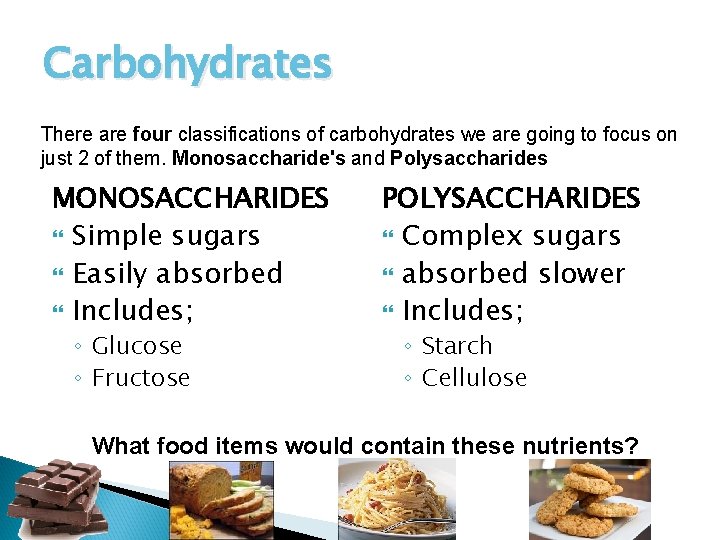
Carbohydrates There are four classifications of carbohydrates we are going to focus on just 2 of them. Monosaccharide's and Polysaccharides MONOSACCHARIDES Simple sugars Easily absorbed Includes; ◦ Glucose ◦ Fructose POLYSACCHARIDES Complex sugars absorbed slower Includes; ◦ Starch ◦ Cellulose What food items would contain these nutrients?
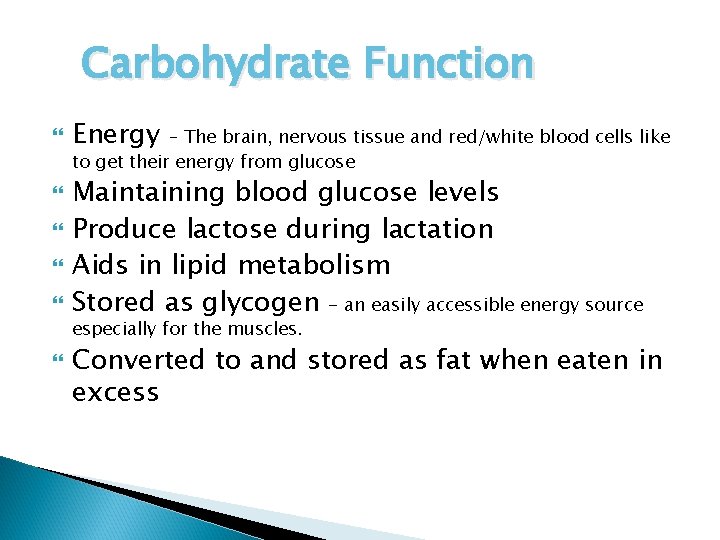
Carbohydrate Function Energy – The brain, nervous tissue and red/white blood cells like to get their energy from glucose Maintaining blood glucose levels Produce lactose during lactation Aids in lipid metabolism Stored as glycogen - an easily accessible energy source especially for the muscles. Converted to and stored as fat when eaten in excess
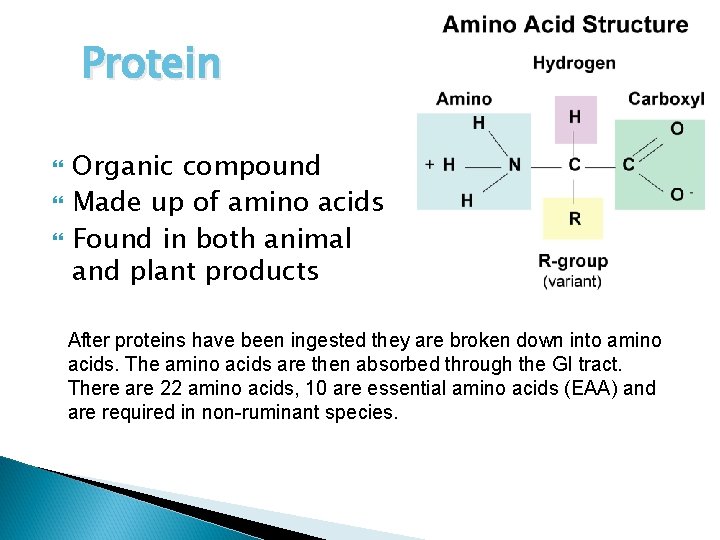
Protein Organic compound Made up of amino acids Found in both animal and plant products After proteins have been ingested they are broken down into amino acids. The amino acids are then absorbed through the GI tract. There are 22 amino acids, 10 are essential amino acids (EAA) and are required in non-ruminant species.
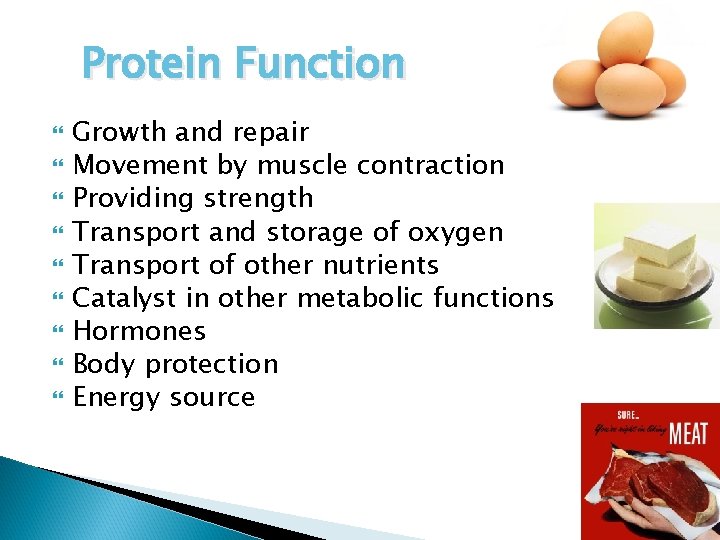
Protein Function Growth and repair Movement by muscle contraction Providing strength Transport and storage of oxygen Transport of other nutrients Catalyst in other metabolic functions Hormones Body protection Energy source
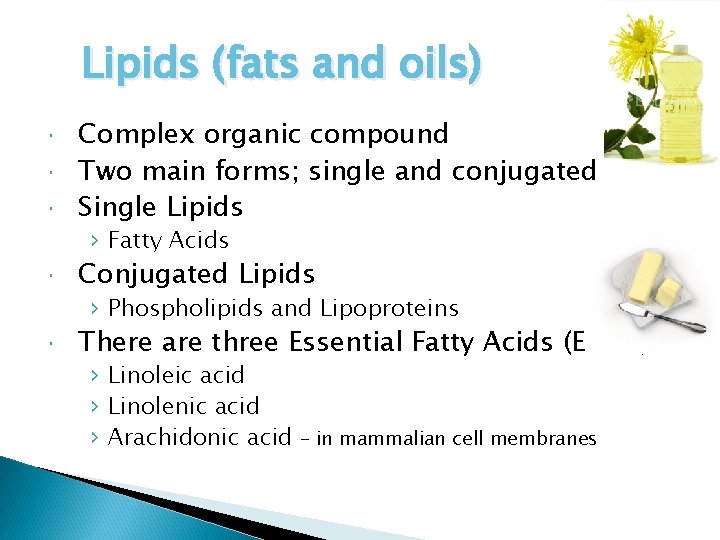
Lipids (fats and oils) Complex organic compound Two main forms; single and conjugated Single Lipids › Fatty Acids Conjugated Lipids › Phospholipids and Lipoproteins There are three Essential Fatty Acids (EFA’s) › Linoleic acid › Linolenic acid › Arachidonic acid – in mammalian cell membranes
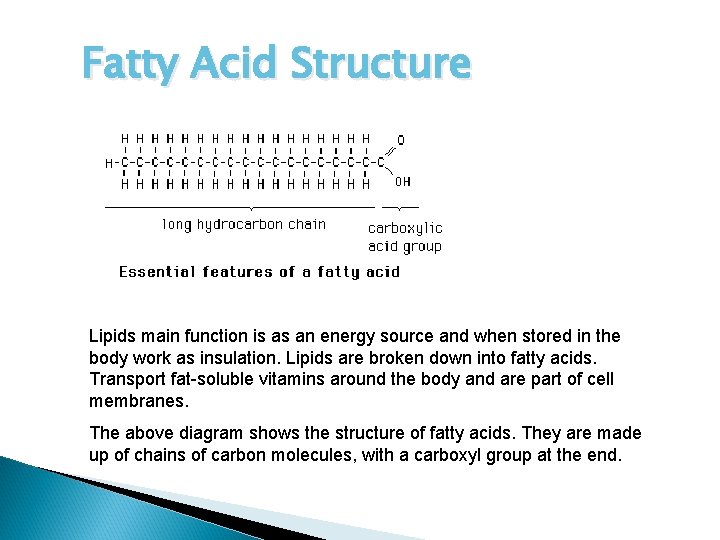
Fatty Acid Structure Lipids main function is as an energy source and when stored in the body work as insulation. Lipids are broken down into fatty acids. Transport fat-soluble vitamins around the body and are part of cell membranes. The above diagram shows the structure of fatty acids. They are made up of chains of carbon molecules, with a carboxyl group at the end.
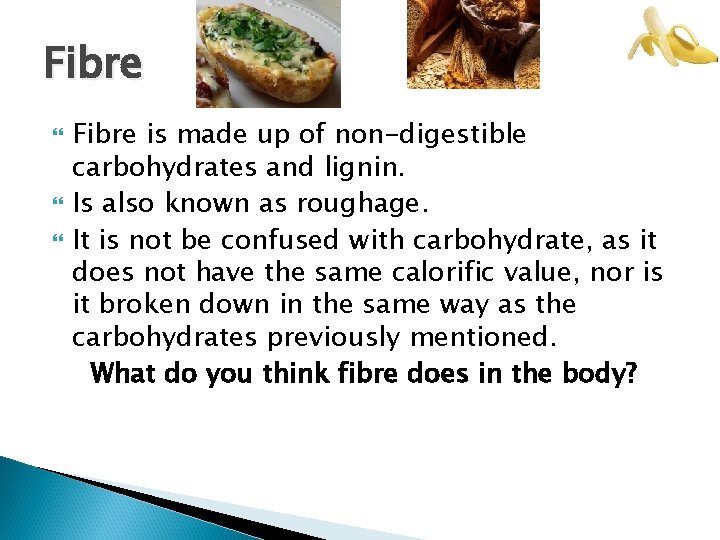
Fibre Fibre is made up of non-digestible carbohydrates and lignin. Is also known as roughage. It is not be confused with carbohydrate, as it does not have the same calorific value, nor is it broken down in the same way as the carbohydrates previously mentioned. What do you think fibre does in the body?
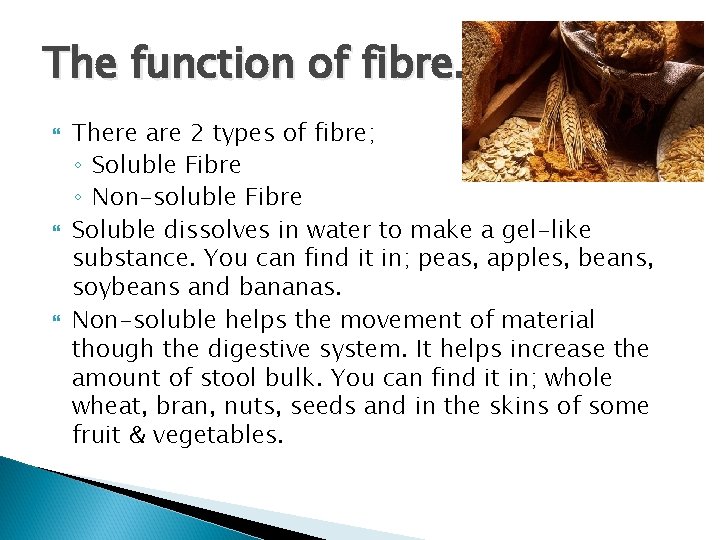
The function of fibre. There are 2 types of fibre; ◦ Soluble Fibre ◦ Non-soluble Fibre Soluble dissolves in water to make a gel-like substance. You can find it in; peas, apples, beans, soybeans and bananas. Non-soluble helps the movement of material though the digestive system. It helps increase the amount of stool bulk. You can find it in; whole wheat, bran, nuts, seeds and in the skins of some fruit & vegetables.
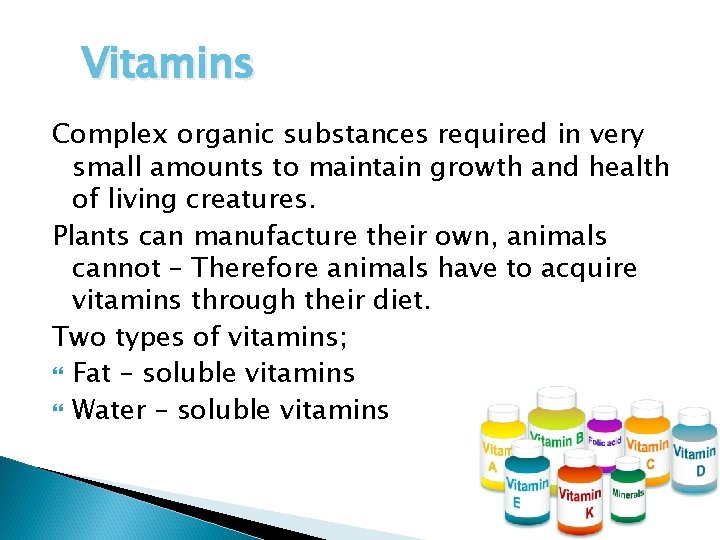
Vitamins Complex organic substances required in very small amounts to maintain growth and health of living creatures. Plants can manufacture their own, animals cannot – Therefore animals have to acquire vitamins through their diet. Two types of vitamins; Fat – soluble vitamins Water – soluble vitamins
Fat Soluble Vitamins – A, D, E , K Vitamin A is required for night vision, makes up epithelial cells and normal bone growth. Vitamin D increase level of Ca and P to allow bone mineralization. Ultraviolet light converts Vitamin D to its active form. Vitamin E helps maintain cellular membrane, breaks down nucleic acid and protein and is used in mitochondrial metabolism. Vitamin K is needed for normal blood clotting
Water Soluble Vitamins These are not stored in the body, so they must be included in the diet. Except for ruminants and herbivores where they are synthesized in the GI tract. Some Water soluble vitamins are; ◦ Ascorbic Acid (Vitamin C) – Prevents scurvy ◦ Vitamin B 6 and B 12 ◦ Thiamin – Deficiency syndrome – Beriberi ◦ Riboflavin – Deficiency = Reduced growth rate
Minerals These are inorganic substances. They make up less than 1% of bodyweight and yet they are essential for correct growth and functioning of the body. There are two groups; Macro minerals and Micro minerals.
Macrominerals Calcium (Ca) Bone formation Phosphorus (P) Bone formation Magnesium (Mg) Bone formation Sodium (Na) For nerve impulses Chlorine (Cl) Maintains osmotic pressure Potassium (K) Maintains osmotic pressure Sulphur (S) Needed for metabolism
Micro minerals The list of micro minerals continued to grow throughout the 20 th century. Some are required by animals and a few of those are listed below; Iodine (I) Deficiency causes goiter Iron (Fe) Needed in blood formation Manganese (Mn) Bone/cartilage formation Zinc (Zn) Involved in the immune system
Water This is the most important nutrient that any living organism needs to survive. It makes up about 1/3 of the body mass. Newborn animals are made up of about 90% water. Why do animals need water?
Water All biochemical reactions that occur in an animal need water Water transports essential nutrients around the body Essential in temperature regulation. Vital for consumption of feed and without it animals will dehydrate
Your Task Now complete your handout. When complete compare your notes with your friends. Can you add more detail? You will then be asked some questions to test your knowledge. http: //www. online-stopwatch. com/fullscreen-stopwatch/