
Main Menu 17 3 How Aldehydes and Ketones

- Slides: 23
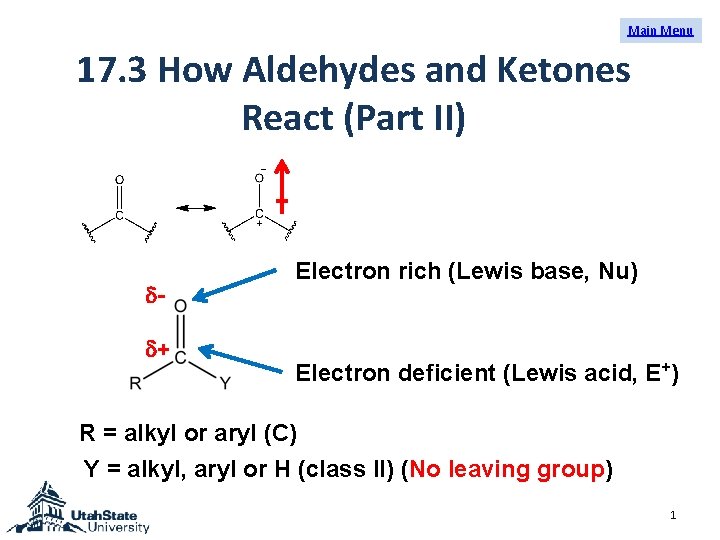
Main Menu 17. 3 How Aldehydes and Ketones React (Part II) dd+ Electron rich (Lewis base, Nu) Electron deficient (Lewis acid, E+) R = alkyl or aryl (C) Y = alkyl, aryl or H (class II) (No leaving group) 1
Nucleophilic Addition (Class II) 1. General mechanism in basic condition: 2. General mechanism in acidic condition: 2
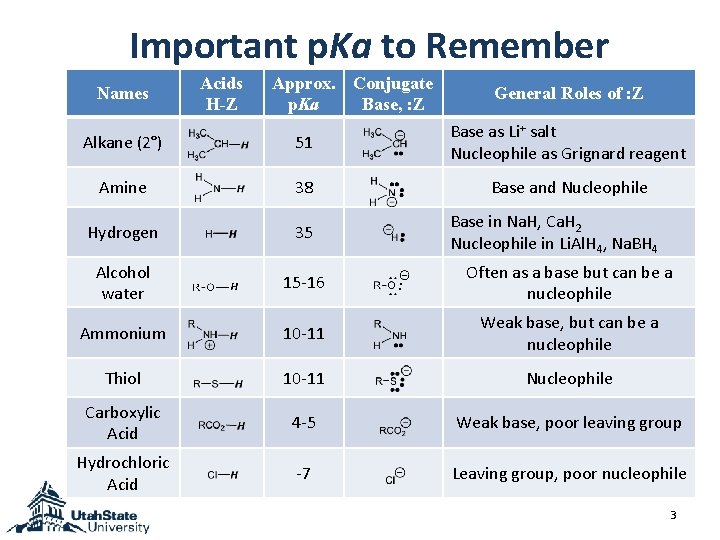
Important p. Ka to Remember Names Acids H-Z Approx. Conjugate p. Ka Base, : Z General Roles of : Z Alkane (2°) 51 Base as Li+ salt Nucleophile as Grignard reagent Amine 38 Base and Nucleophile Hydrogen 35 Alcohol water 15 -16 Often as a base but can be a nucleophile Ammonium 10 -11 Weak base, but can be a nucleophile Thiol 10 -11 Nucleophile Carboxylic Acid 4 -5 Weak base, poor leaving group Hydrochloric Acid -7 Leaving group, poor nucleophile Base in Na. H, Ca. H 2 Nucleophile in Li. Al. H 4, Na. BH 4 3
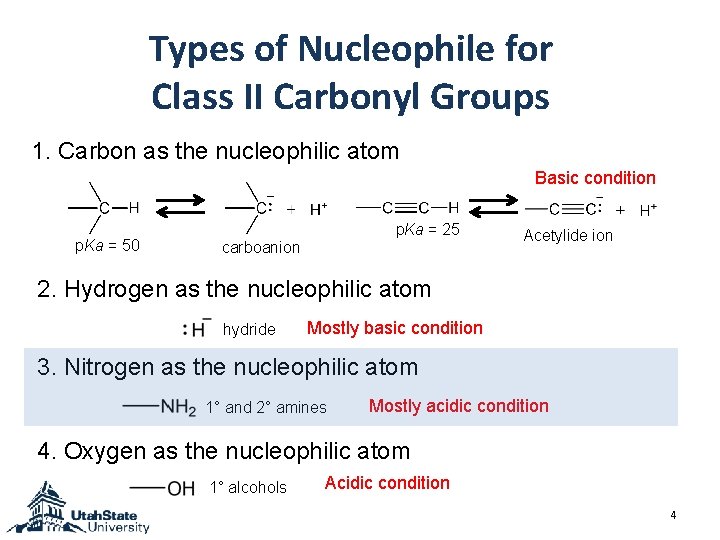
Types of Nucleophile for Class II Carbonyl Groups 1. Carbon as the nucleophilic atom Basic condition p. Ka = 50 p. Ka = 25 carboanion Acetylide ion 2. Hydrogen as the nucleophilic atom hydride Mostly basic condition 3. Nitrogen as the nucleophilic atom 1° and 2° amines Mostly acidic condition 4. Oxygen as the nucleophilic atom 1° alcohols Acidic condition 4
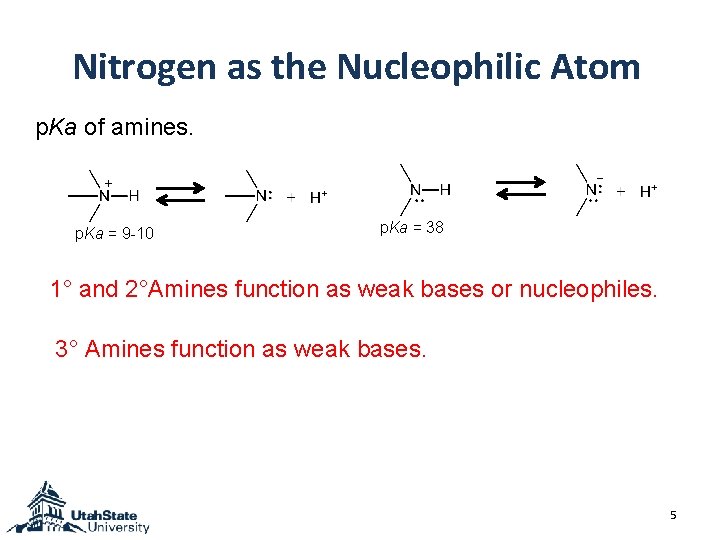
Nitrogen as the Nucleophilic Atom p. Ka of amines. p. Ka = 9 -10 p. Ka = 38 1° and 2°Amines function as weak bases or nucleophiles. 3° Amines function as weak bases. 5
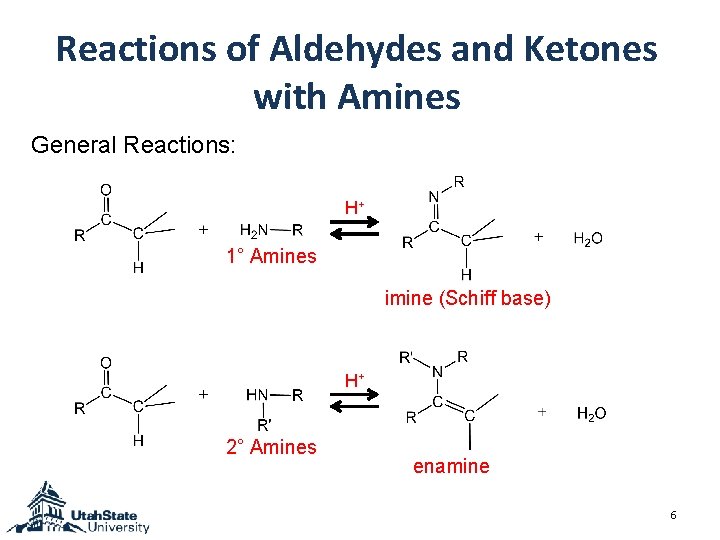
Reactions of Aldehydes and Ketones with Amines General Reactions: H+ 1° Amines imine (Schiff base) H+ 2° Amines enamine 6
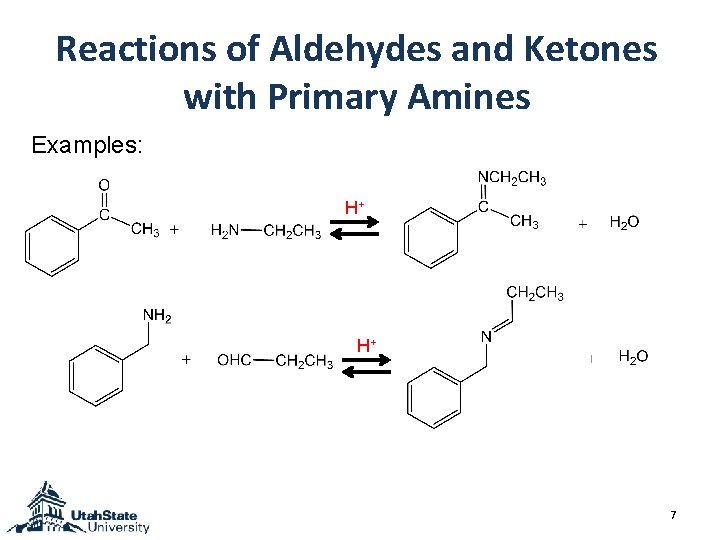
Reactions of Aldehydes and Ketones with Primary Amines Examples: H+ H+ 7
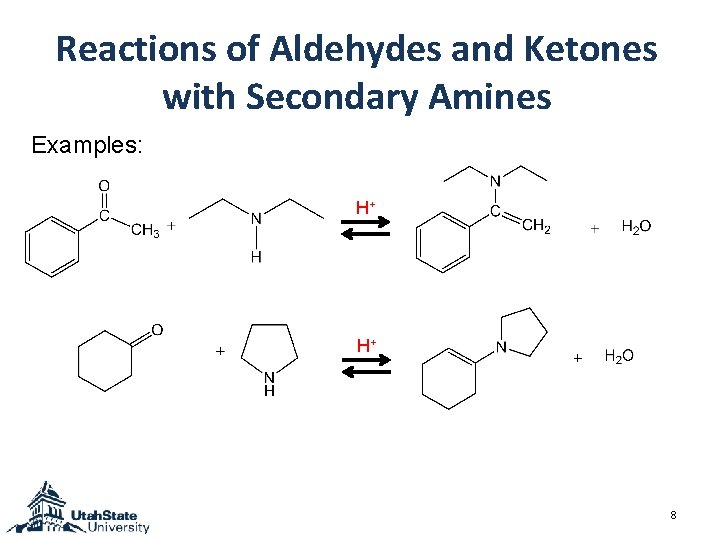
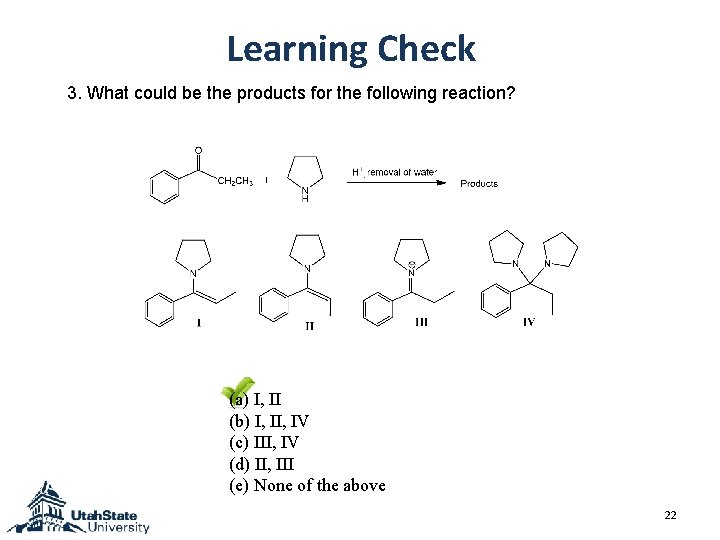
Reactions of Aldehydes and Ketones with Secondary Amines Examples: H+ H+ 8
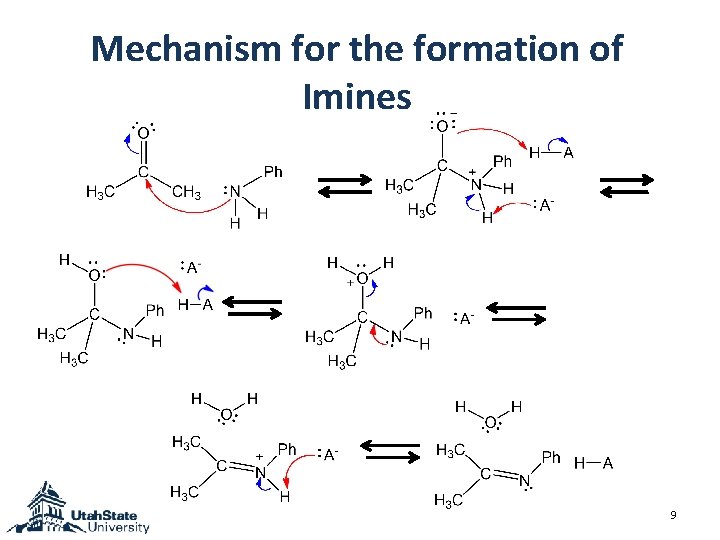
Mechanism for the formation of Imines 9
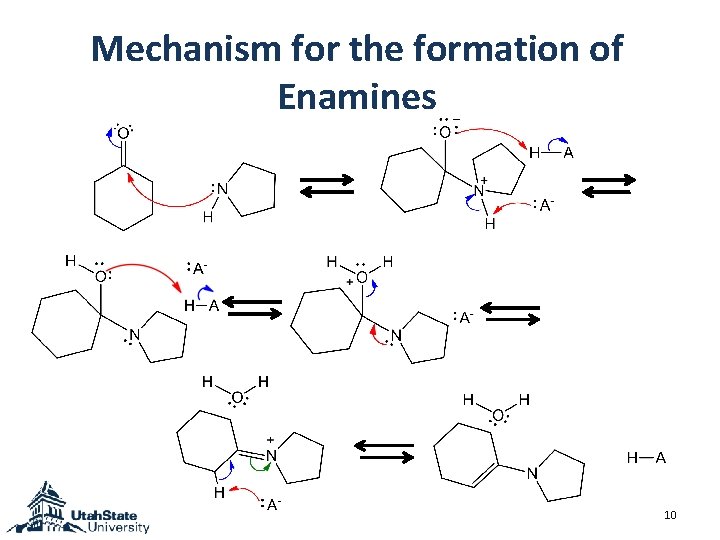
Mechanism for the formation of Enamines 10
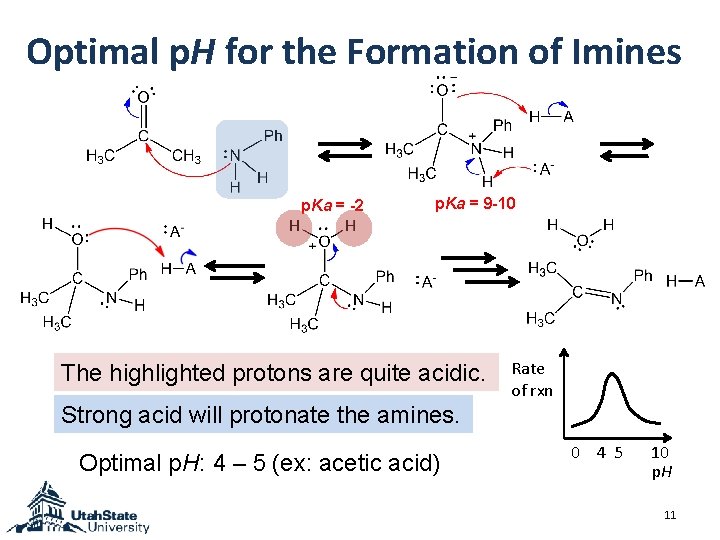
Optimal p. H for the Formation of Imines p. Ka = -2 p. Ka = 9 -10 The highlighted protons are quite acidic. Strong acid will protonate the amines. Optimal p. H: 4 – 5 (ex: acetic acid) Rate of rxn 0 4 5 10 p. H 11
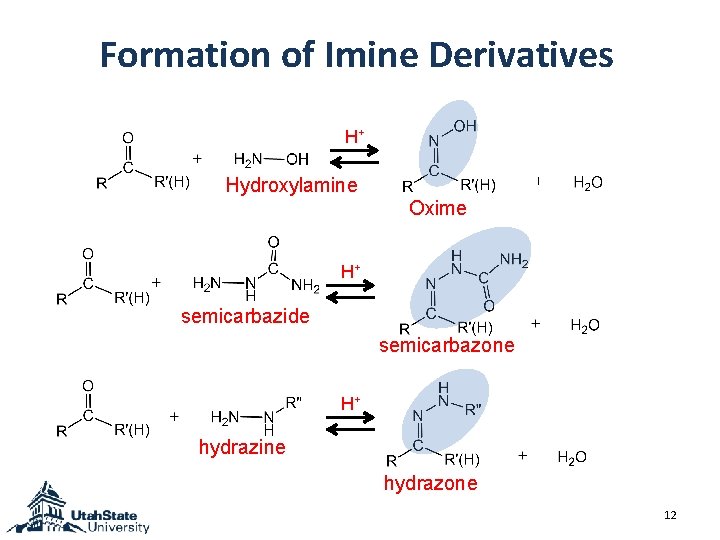
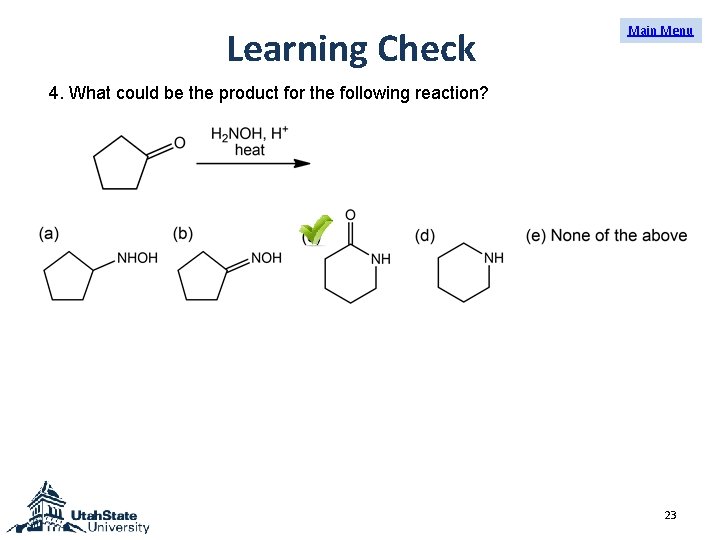
Formation of Imine Derivatives H+ Hydroxylamine Oxime H+ semicarbazide semicarbazone H+ hydrazine hydrazone 12
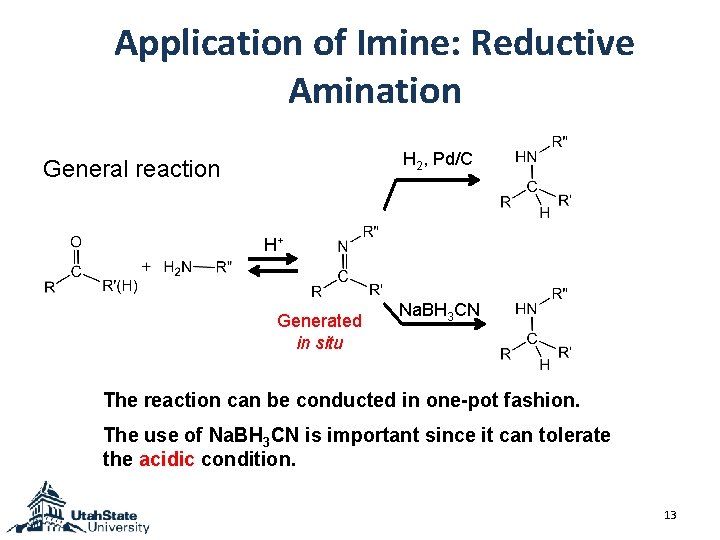
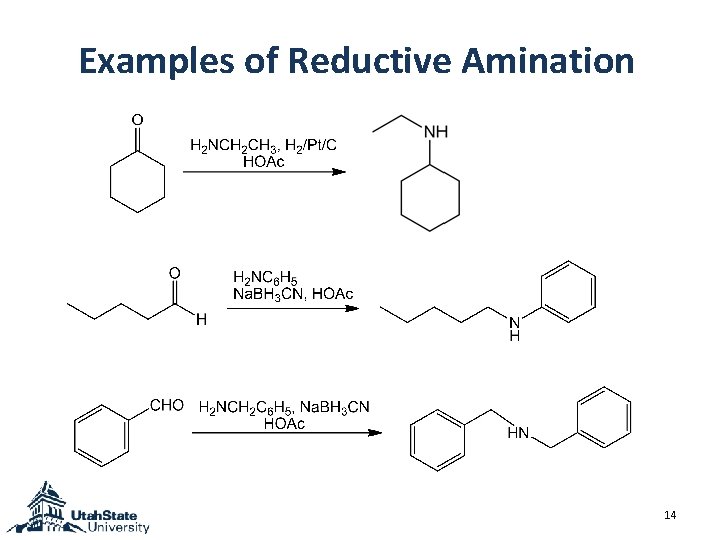
Application of Imine: Reductive Amination H 2, Pd/C General reaction H+ Generated in situ Na. BH 3 CN The reaction can be conducted in one-pot fashion. The use of Na. BH 3 CN is important since it can tolerate the acidic condition. 13
Examples of Reductive Amination 14
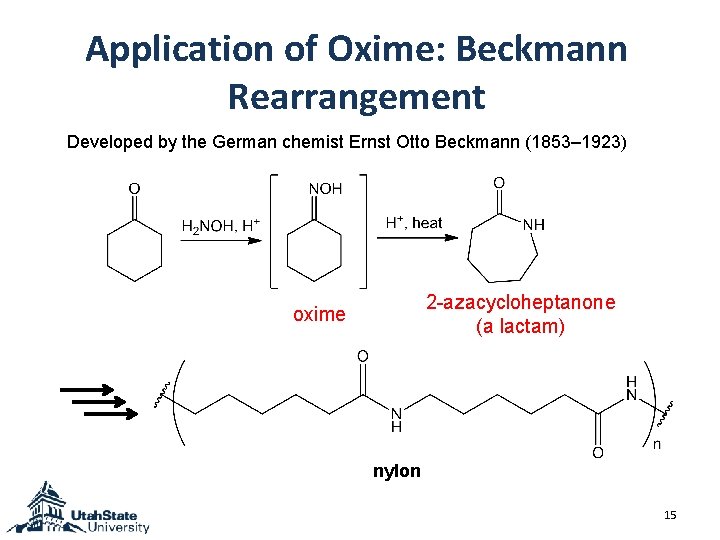
Application of Oxime: Beckmann Rearrangement Developed by the German chemist Ernst Otto Beckmann (1853– 1923) 2 -azacycloheptanone (a lactam) oxime nylon 15
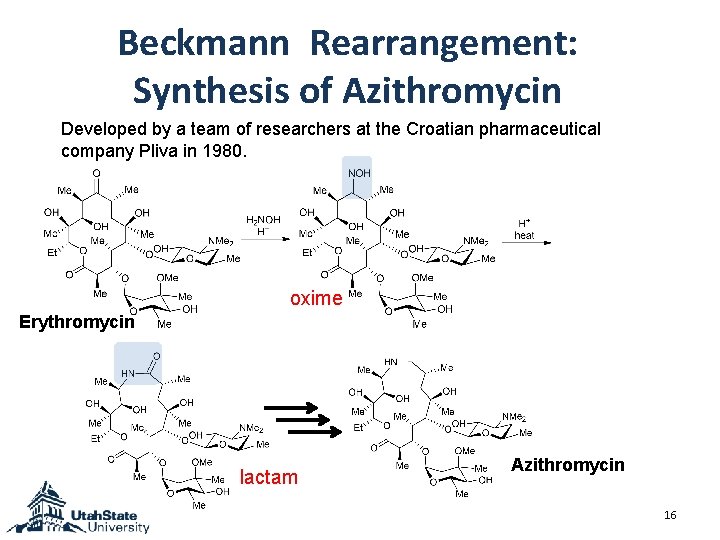
Beckmann Rearrangement: Synthesis of Azithromycin Developed by a team of researchers at the Croatian pharmaceutical company Pliva in 1980. oxime Erythromycin lactam Azithromycin 16
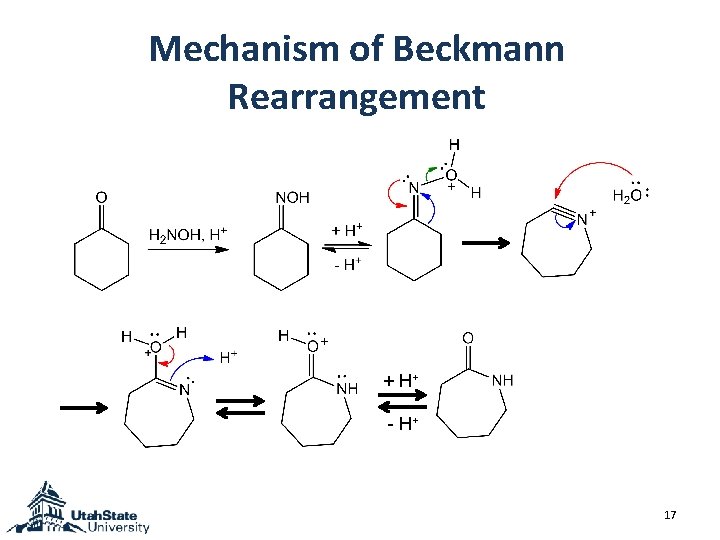
Mechanism of Beckmann Rearrangement + H+ - H+ 17
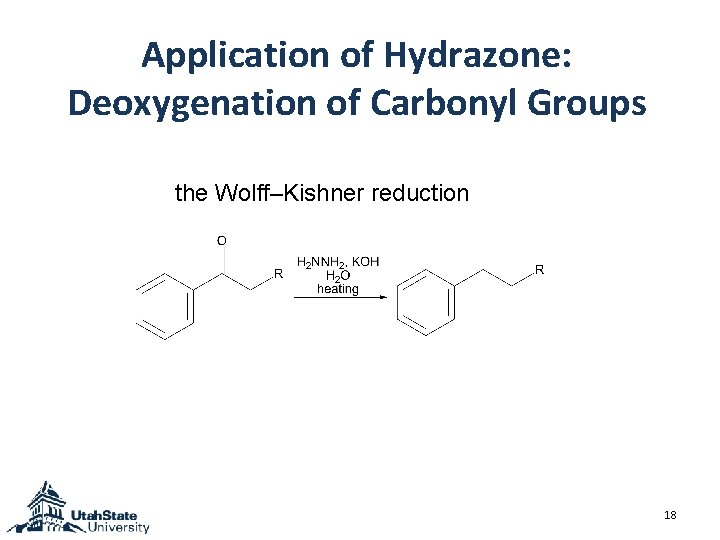
Application of Hydrazone: Deoxygenation of Carbonyl Groups the Wolff–Kishner reduction 18
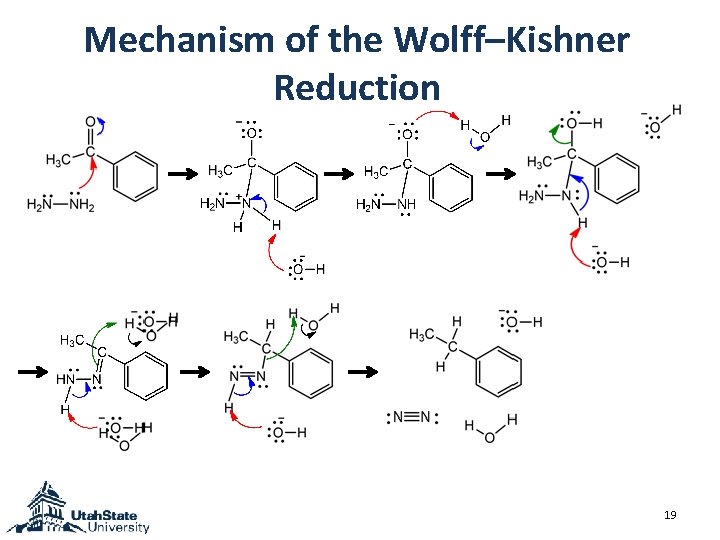
Mechanism of the Wolff–Kishner Reduction 19
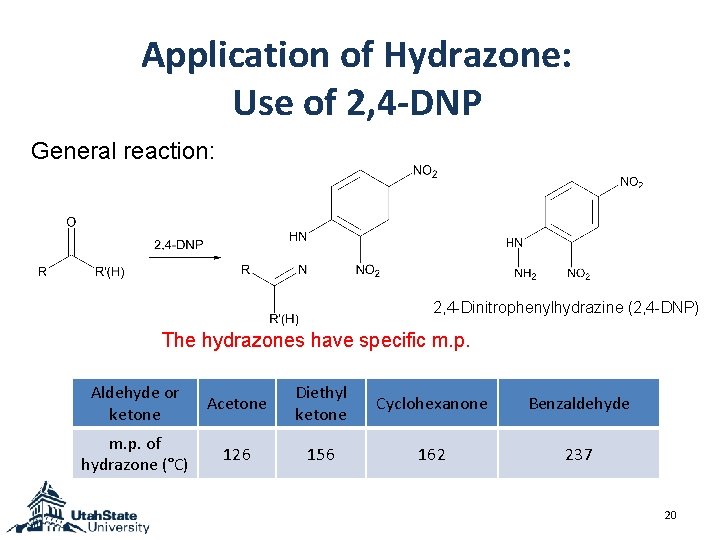
Application of Hydrazone: Use of 2, 4 -DNP General reaction: 2, 4 -Dinitrophenylhydrazine (2, 4 -DNP) The hydrazones have specific m. p. Aldehyde or ketone Acetone Diethyl ketone Cyclohexanone Benzaldehyde m. p. of hydrazone (°C) 126 156 162 237 20
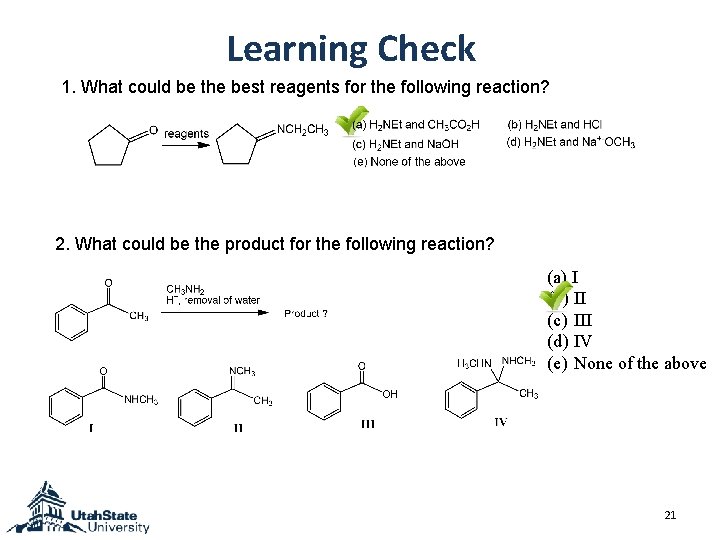
Learning Check 1. What could be the best reagents for the following reaction? 2. What could be the product for the following reaction? (a) I (b) II (c) III (d) IV (e) None of the above 21
Learning Check 3. What could be the products for the following reaction? (a) I, II (b) I, IV (c) III, IV (d) II, III (e) None of the above 22
Learning Check Main Menu 4. What could be the product for the following reaction? 23