
MAIN INDIVIDUALS OF AP PSYCH Part 2 Developmental
- Slides: 53
MAIN INDIVIDUALS OF AP PSYCH Part 2
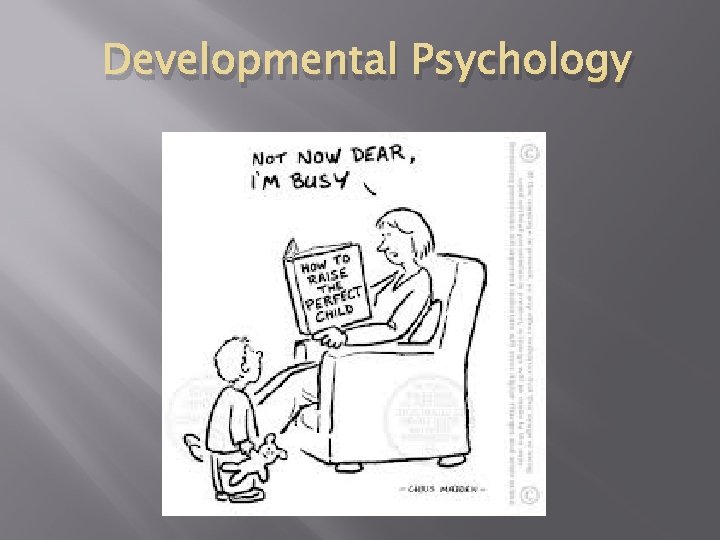
Developmental Psychology
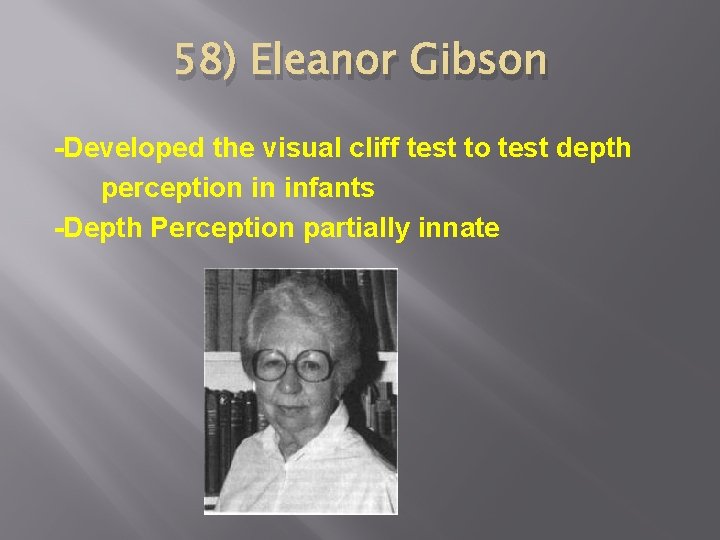
58) Eleanor Gibson -Developed the visual cliff test to test depth perception in infants -Depth Perception partially innate
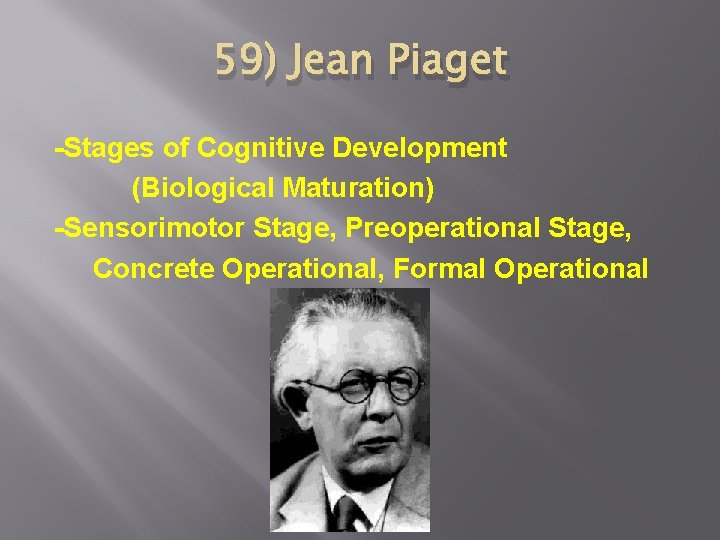
59) Jean Piaget -Stages of Cognitive Development (Biological Maturation) -Sensorimotor Stage, Preoperational Stage, Concrete Operational, Formal Operational
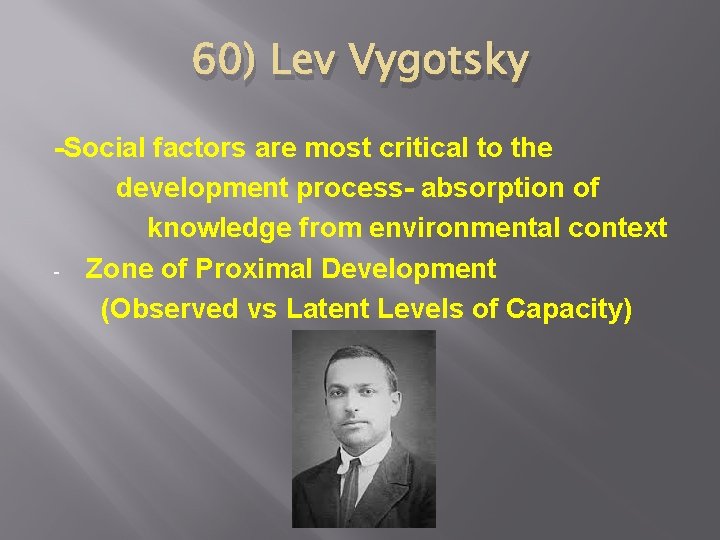
60) Lev Vygotsky -Social factors are most critical to the development process- absorption of knowledge from environmental context - Zone of Proximal Development (Observed vs Latent Levels of Capacity)
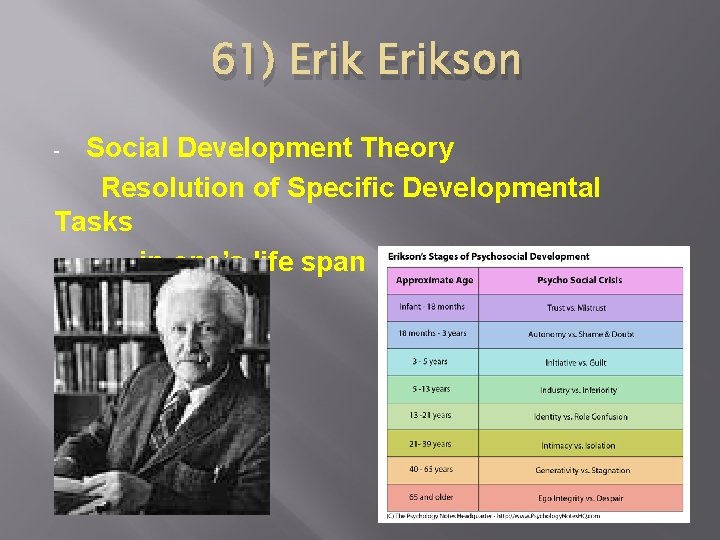
61) Erikson Social Development Theory Resolution of Specific Developmental Tasks in one’s life span -
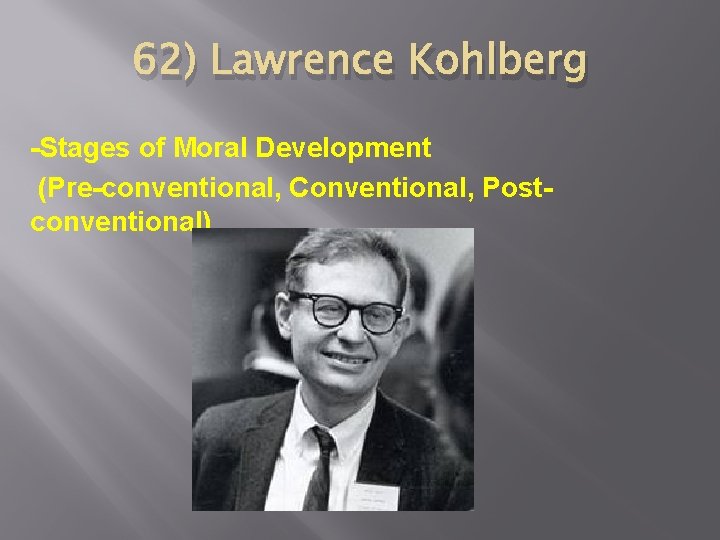
62) Lawrence Kohlberg -Stages of Moral Development (Pre-conventional, Conventional, Postconventional)
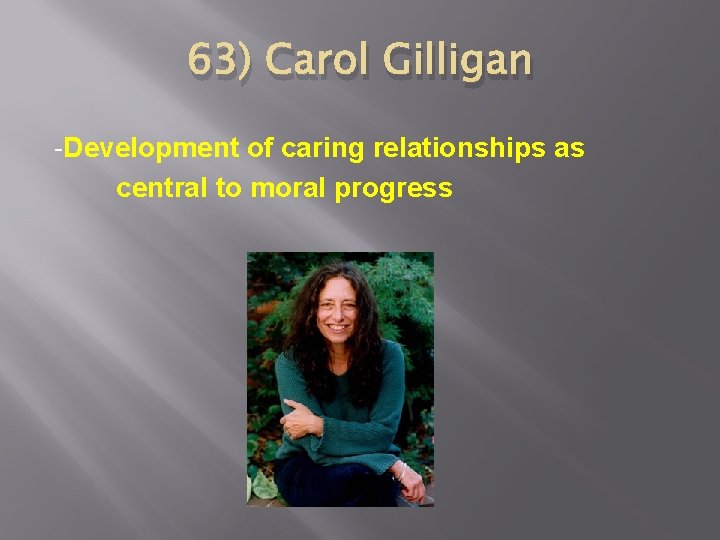
63) Carol Gilligan -Development of caring relationships as central to moral progress
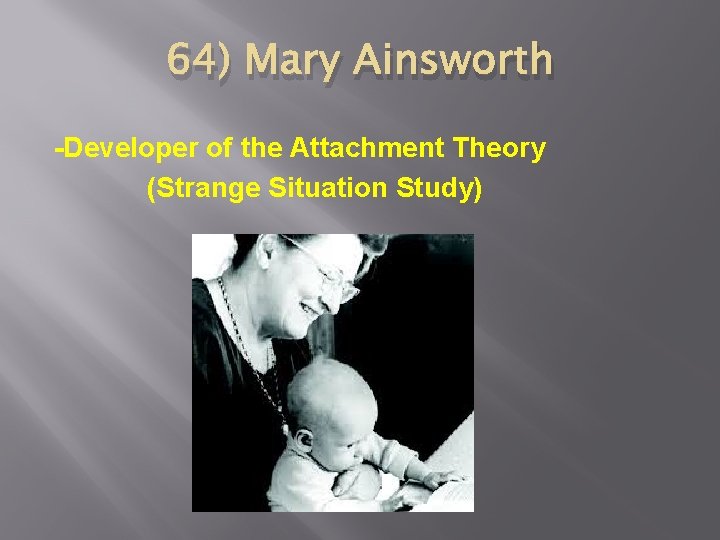
64) Mary Ainsworth -Developer of the Attachment Theory (Strange Situation Study)
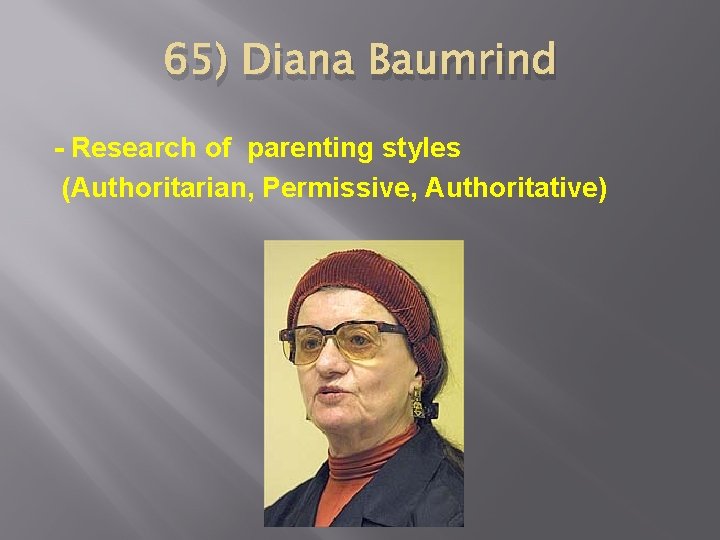
65) Diana Baumrind - Research of parenting styles (Authoritarian, Permissive, Authoritative)
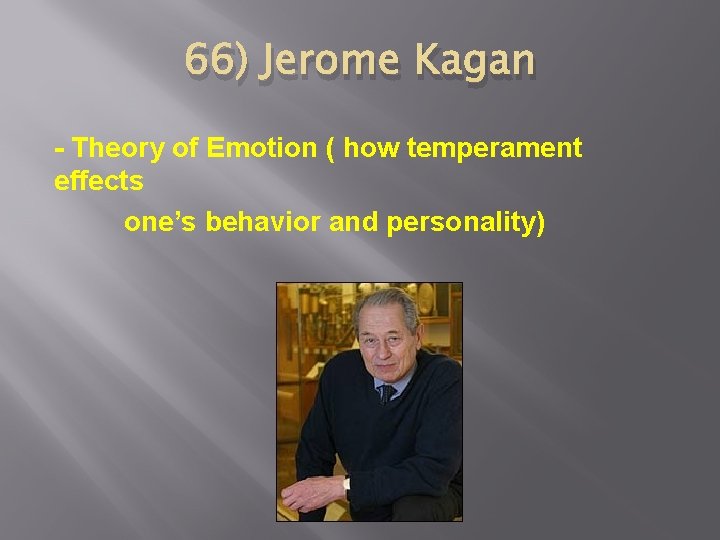
66) Jerome Kagan - Theory of Emotion ( how temperament effects one’s behavior and personality)
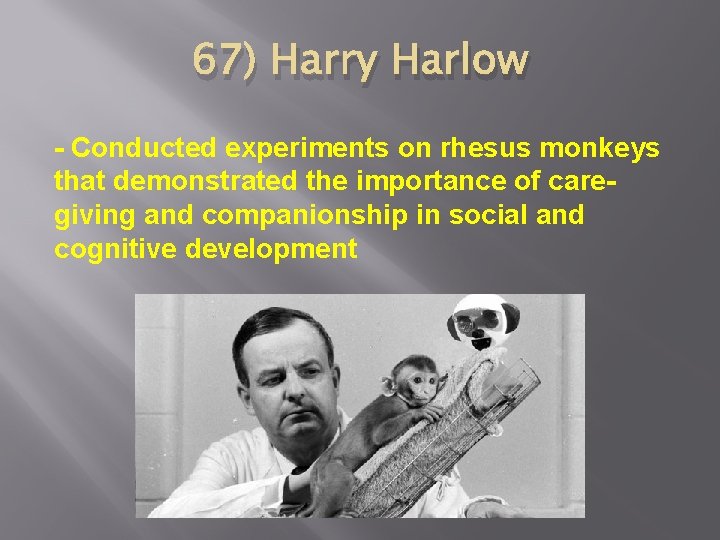
67) Harry Harlow - Conducted experiments on rhesus monkeys that demonstrated the importance of caregiving and companionship in social and cognitive development
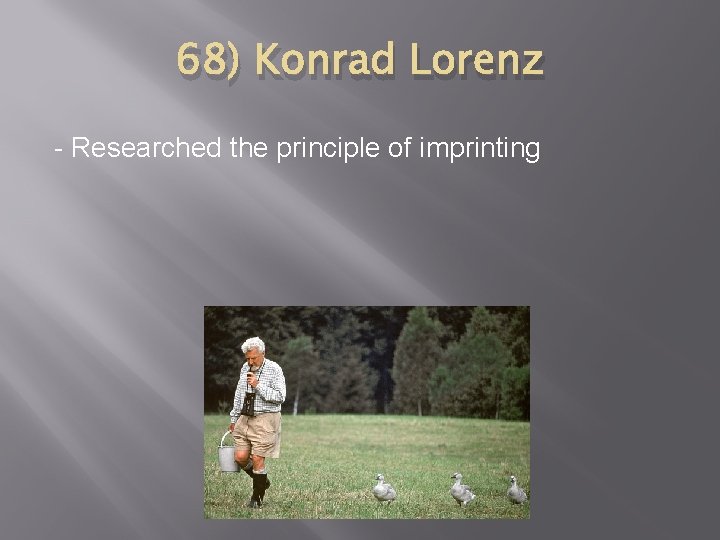
68) Konrad Lorenz - Researched the principle of imprinting
Personality
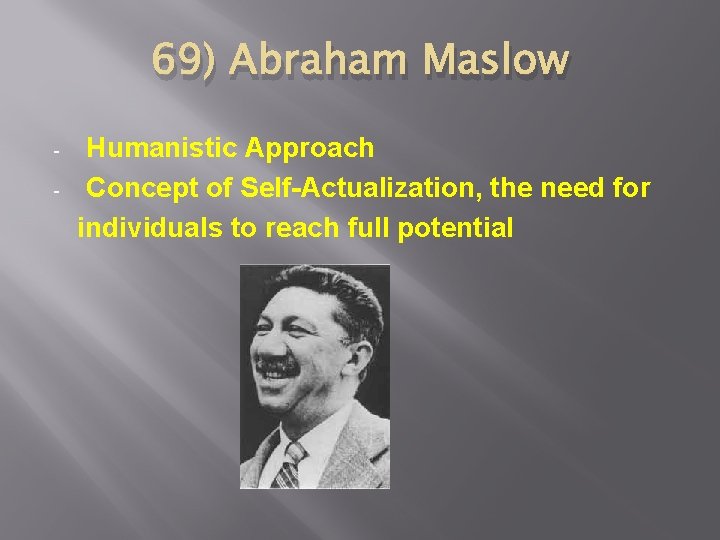
69) Abraham Maslow - Humanistic Approach Concept of Self-Actualization, the need for individuals to reach full potential
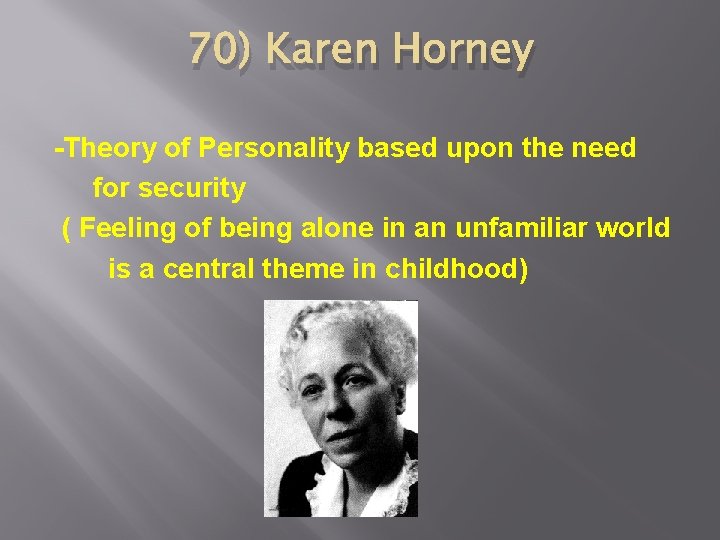
70) Karen Horney -Theory of Personality based upon the need for security ( Feeling of being alone in an unfamiliar world is a central theme in childhood)
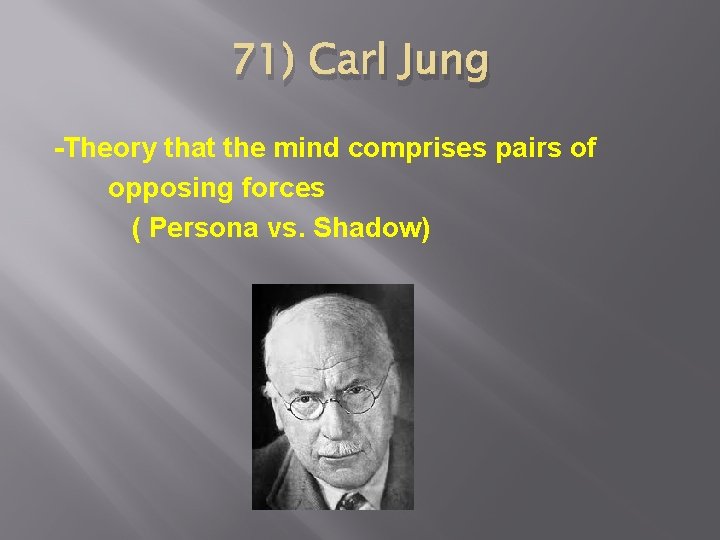
71) Carl Jung -Theory that the mind comprises pairs of opposing forces ( Persona vs. Shadow)
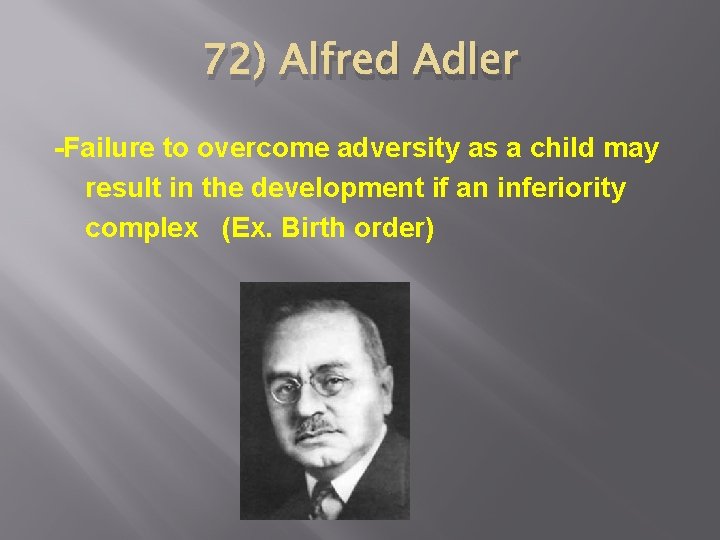
72) Alfred Adler -Failure to overcome adversity as a child may result in the development if an inferiority complex (Ex. Birth order)
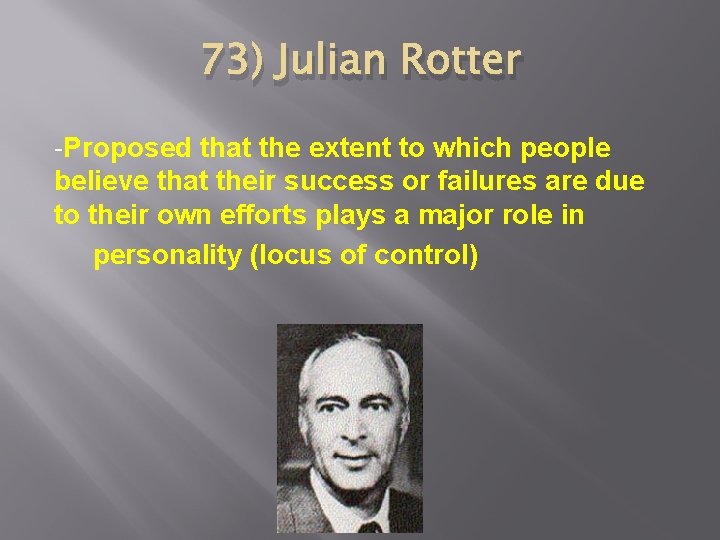
73) Julian Rotter -Proposed that the extent to which people believe that their success or failures are due to their own efforts plays a major role in personality (locus of control)
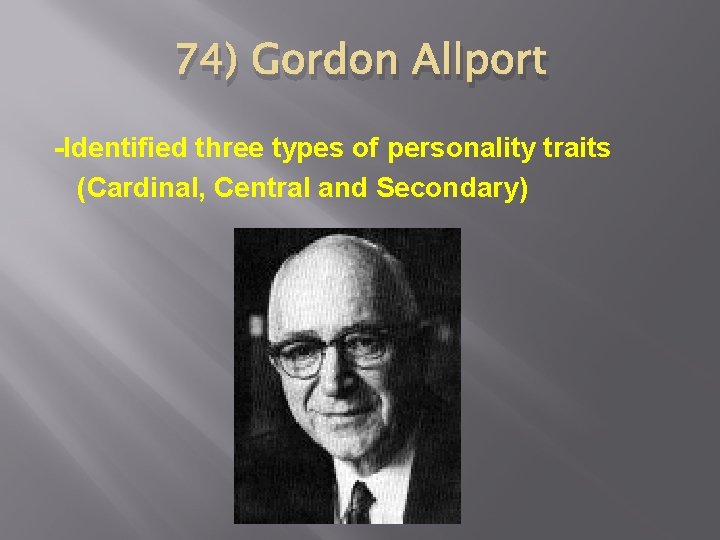
74) Gordon Allport -Identified three types of personality traits (Cardinal, Central and Secondary)
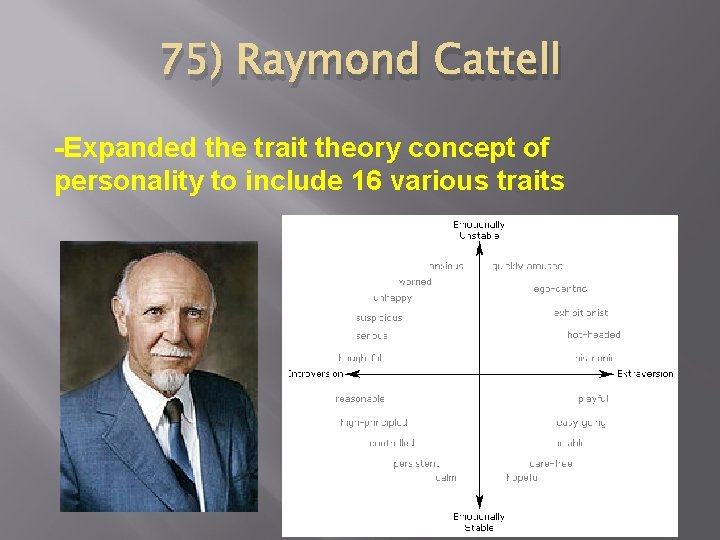
75) Raymond Cattell -Expanded the trait theory concept of personality to include 16 various traits
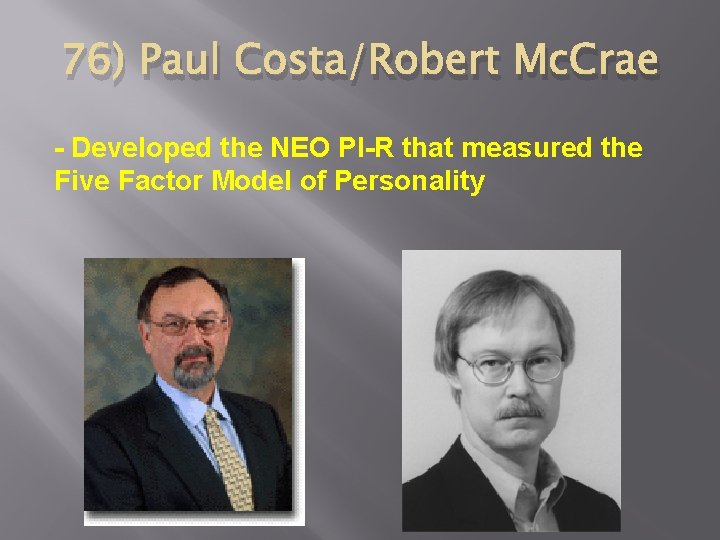
76) Paul Costa/Robert Mc. Crae - Developed the NEO PI-R that measured the Five Factor Model of Personality
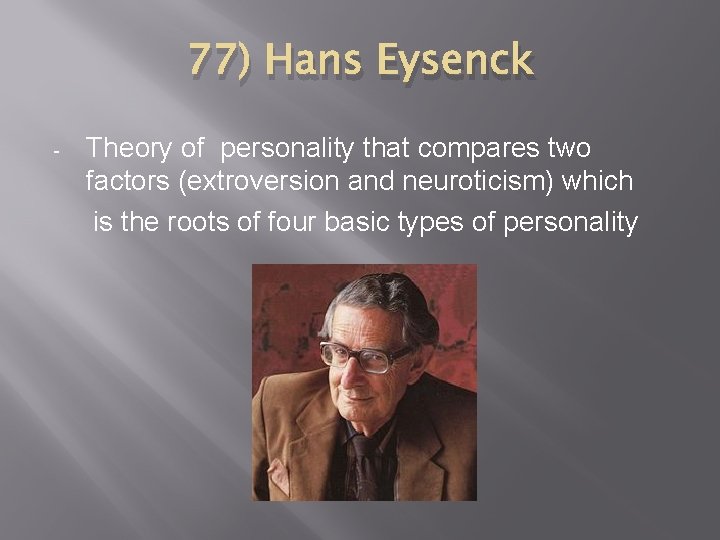
77) Hans Eysenck - Theory of personality that compares two factors (extroversion and neuroticism) which is the roots of four basic types of personality
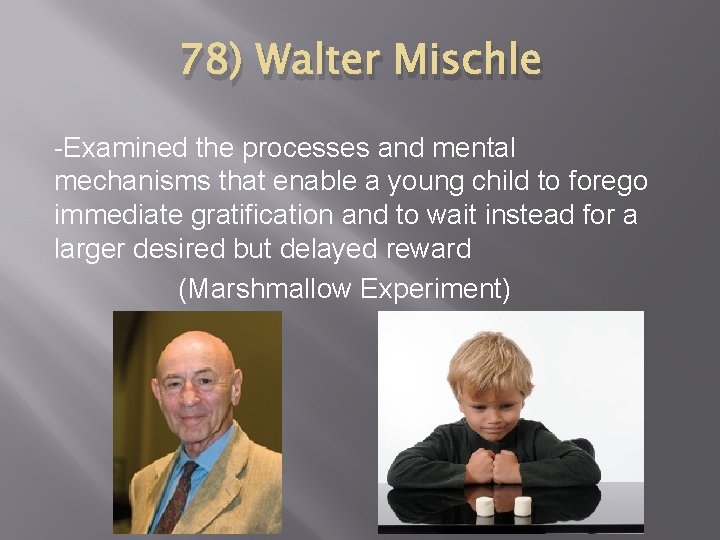
78) Walter Mischle -Examined the processes and mental mechanisms that enable a young child to forego immediate gratification and to wait instead for a larger desired but delayed reward (Marshmallow Experiment)
79) Robert Rosenthal - Conducted research on the role of self-fulfilling prophecies in everyday life
Testing and Individual Differences
80) Charles Spearman -General intelligence is the basis for all other intelligence
81) Robert Sternberg -Intelligence has three main components (Analytical, Practical, Creative Intelligence)
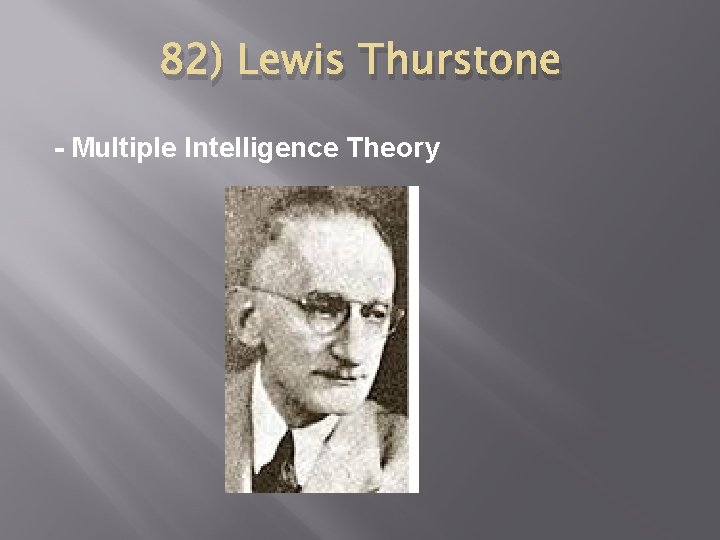
82) Lewis Thurstone - Multiple Intelligence Theory
83) Howard Gardner - Verbal and Mathematical types of Intelligence
84) Daniel Goleman - Emotional Intelligence Theory
85) Fritz Peris -Gestalt Therapy Form of Treatment (Act out psychological conflicts)
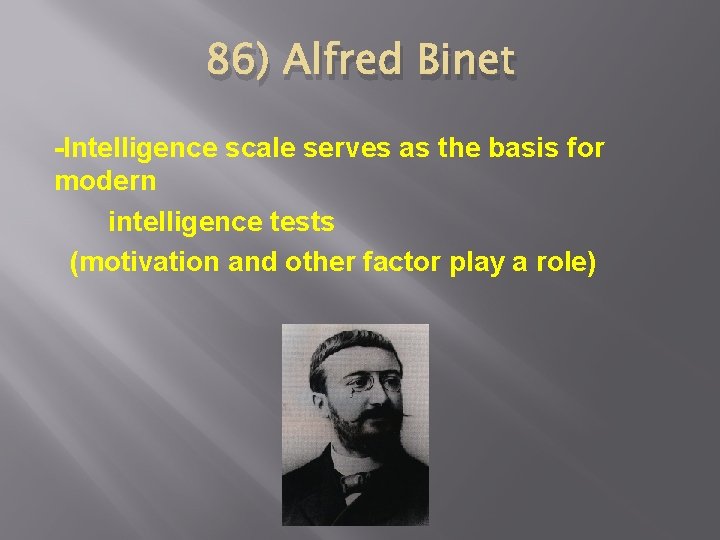
86) Alfred Binet -Intelligence scale serves as the basis for modern intelligence tests (motivation and other factor play a role)
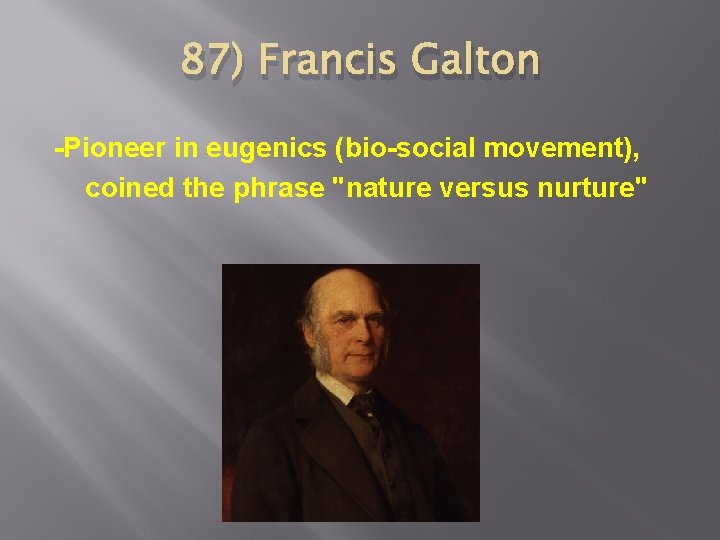
87) Francis Galton -Pioneer in eugenics (bio-social movement), coined the phrase "nature versus nurture"
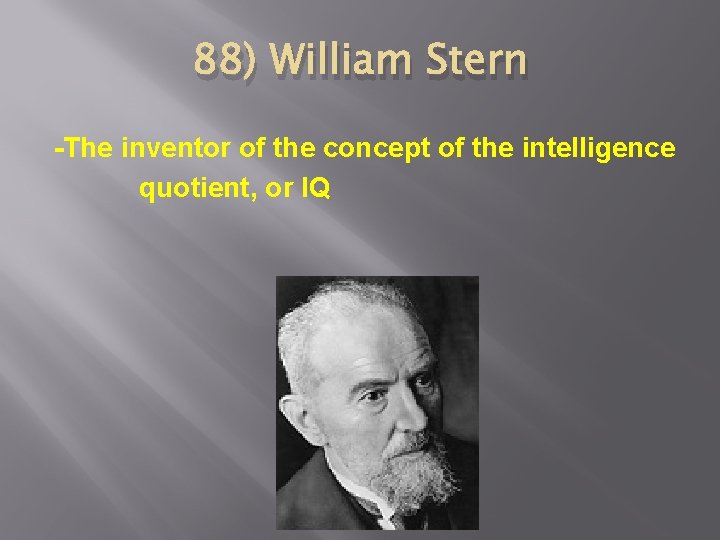
88) William Stern -The inventor of the concept of the intelligence quotient, or IQ
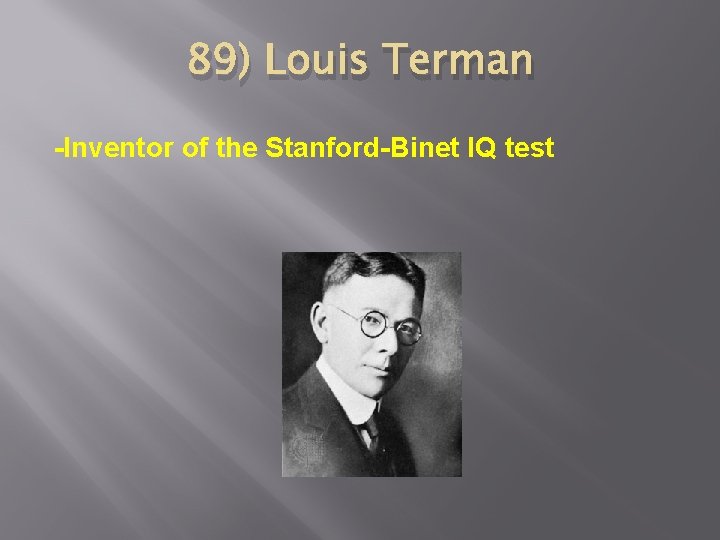
89) Louis Terman -Inventor of the Stanford-Binet IQ test
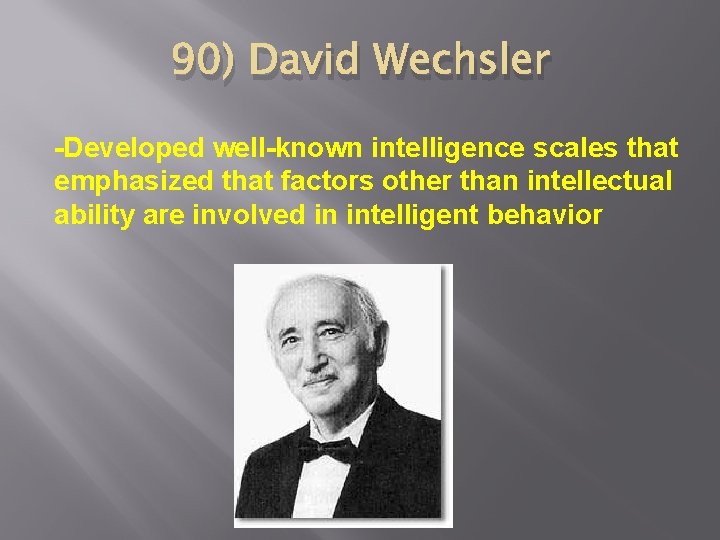
90) David Wechsler -Developed well-known intelligence scales that emphasized that factors other than intellectual ability are involved in intelligent behavior
Treatment of Abnormal Behavior
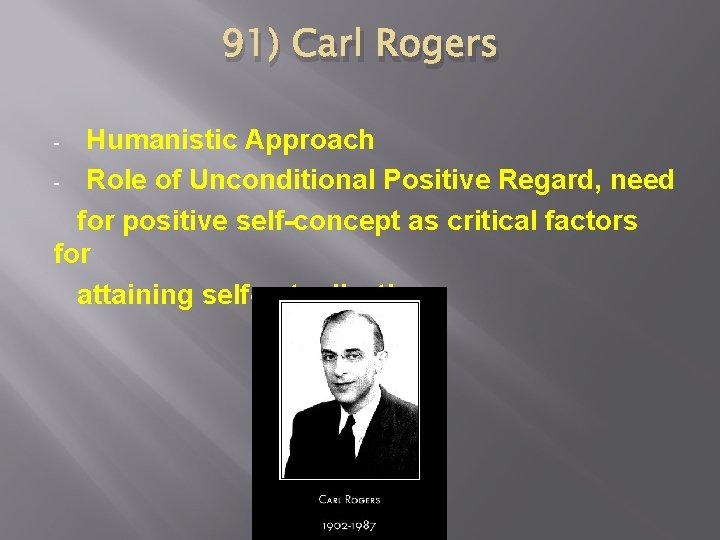
91) Carl Rogers Humanistic Approach - Role of Unconditional Positive Regard, need for positive self-concept as critical factors for attaining self-actualization -
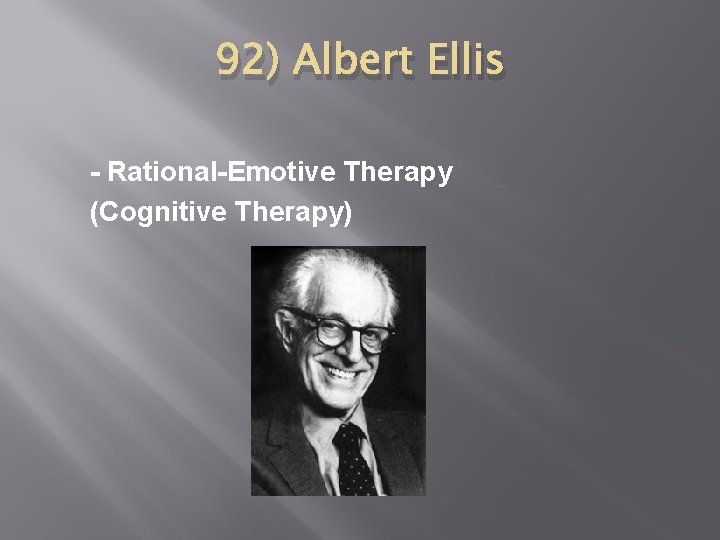
92) Albert Ellis - Rational-Emotive Therapy (Cognitive Therapy)
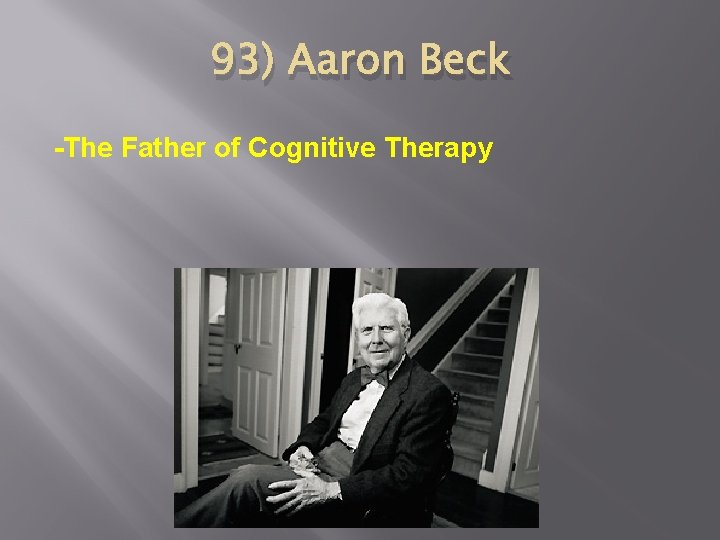
93) Aaron Beck -The Father of Cognitive Therapy
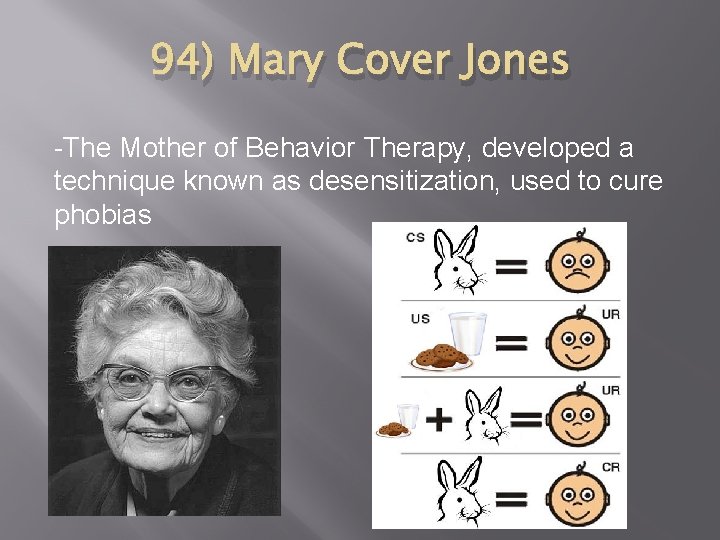
94) Mary Cover Jones -The Mother of Behavior Therapy, developed a technique known as desensitization, used to cure phobias
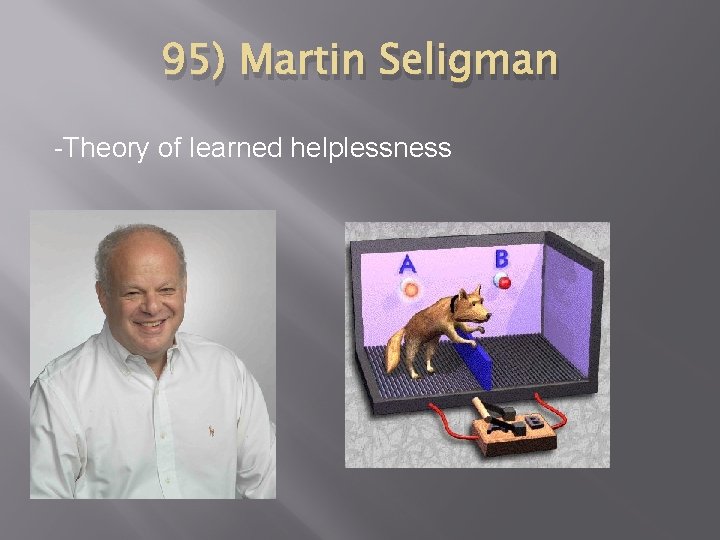
95) Martin Seligman -Theory of learned helplessness
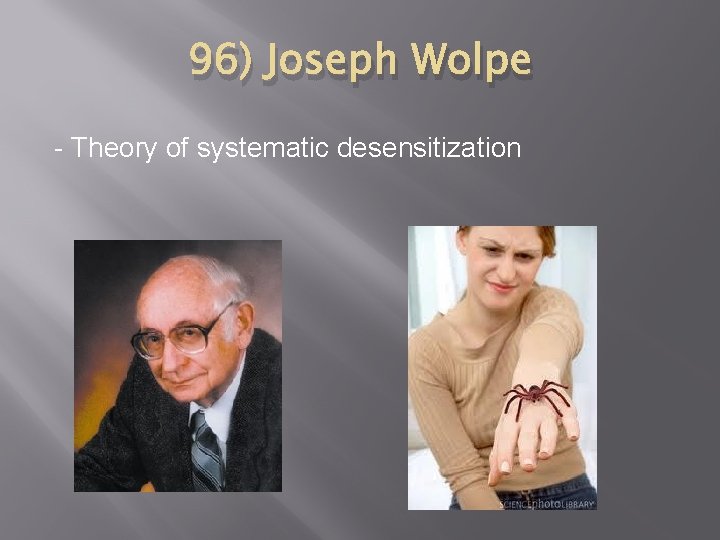
96) Joseph Wolpe - Theory of systematic desensitization
Social Psychology
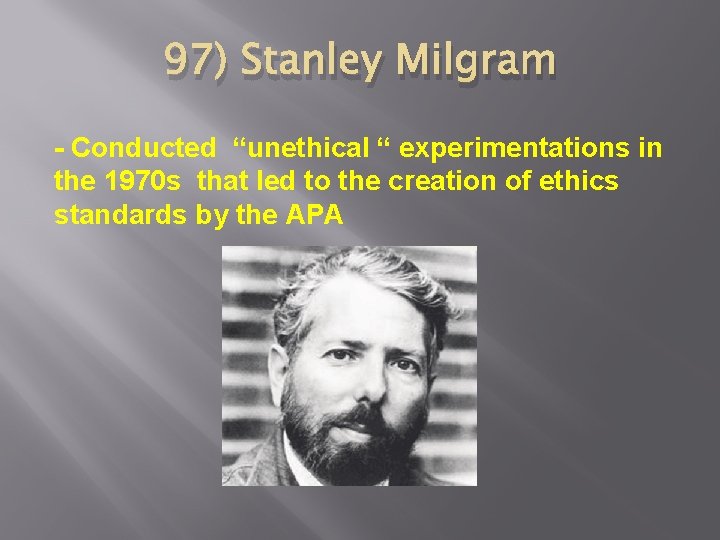
97) Stanley Milgram - Conducted “unethical “ experimentations in the 1970 s that led to the creation of ethics standards by the APA
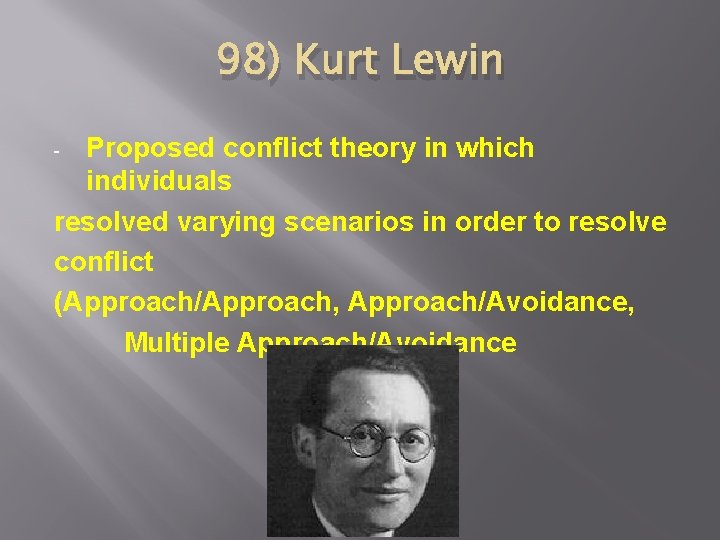
98) Kurt Lewin Proposed conflict theory in which individuals resolved varying scenarios in order to resolve conflict (Approach/Approach, Approach/Avoidance, Multiple Approach/Avoidance -
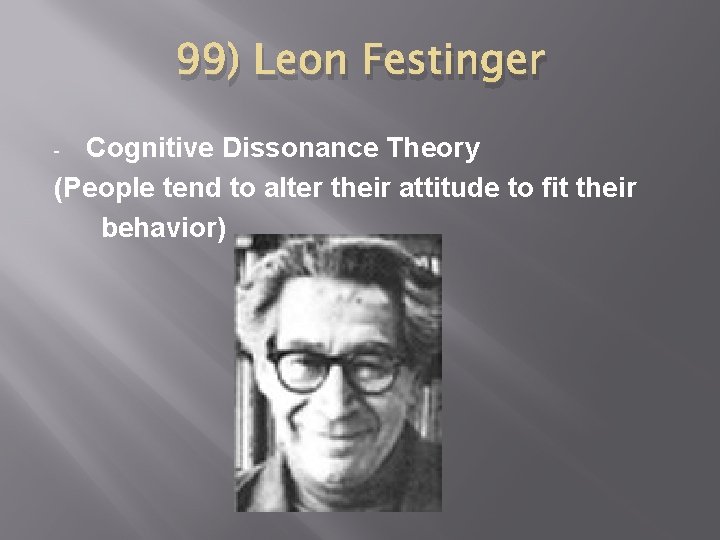
99) Leon Festinger Cognitive Dissonance Theory (People tend to alter their attitude to fit their behavior) -
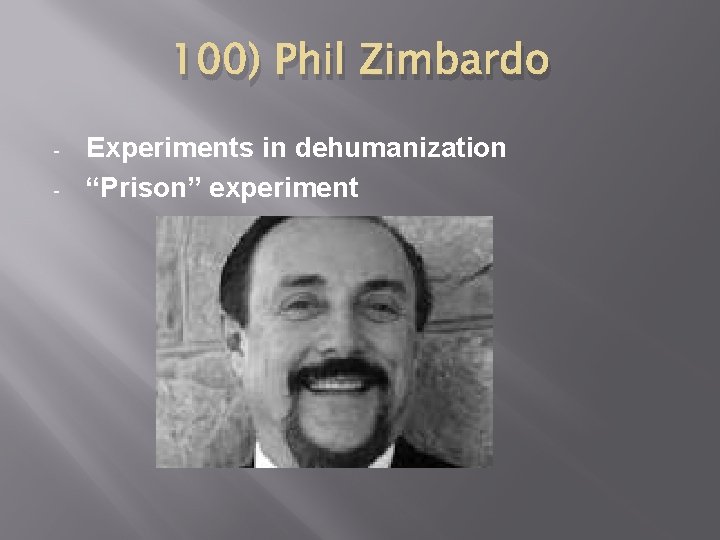
100) Phil Zimbardo - Experiments in dehumanization “Prison” experiment
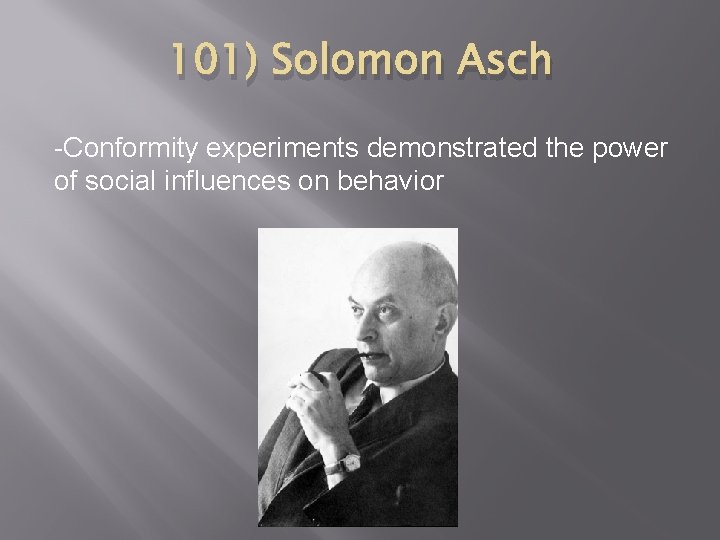
101) Solomon Asch -Conformity experiments demonstrated the power of social influences on behavior
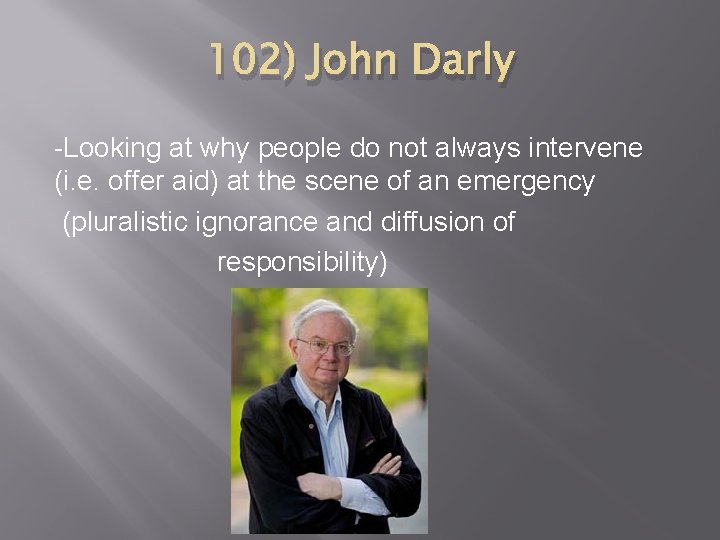
102) John Darly -Looking at why people do not always intervene (i. e. offer aid) at the scene of an emergency (pluralistic ignorance and diffusion of responsibility)
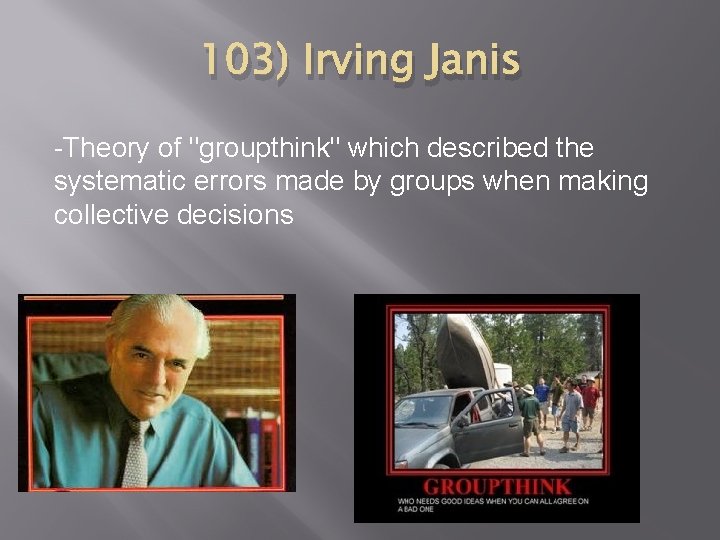
103) Irving Janis -Theory of "groupthink" which described the systematic errors made by groups when making collective decisions
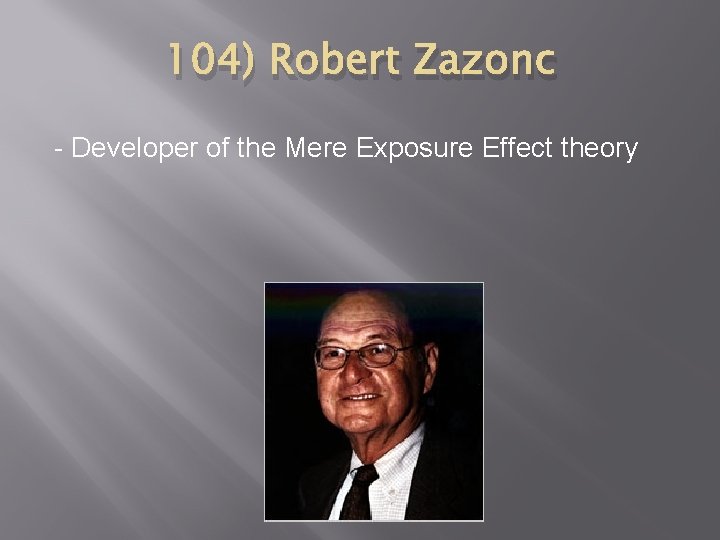
104) Robert Zazonc - Developer of the Mere Exposure Effect theory