
Main Ideas Colonial America Colonies were founded for



- Slides: 30
Main Ideas: Colonial America • Colonies were founded for different reasons. – Some settled for religious freedom. – Some settled for wealth & opportunity. – Some settled to escape debt.
Main Ideas: Colonial America • Geography made each region different. – Climate and type of soil affected which crops could be grown there. – Natural resources led to different industries. – Where people lived determined how they lived.
Main Ideas: Colonial America • Government and laws were different in each colony. – Colonies in the same region had different governments and laws. – Many colonists experienced more democracy than they had known in Britain and other European countries.
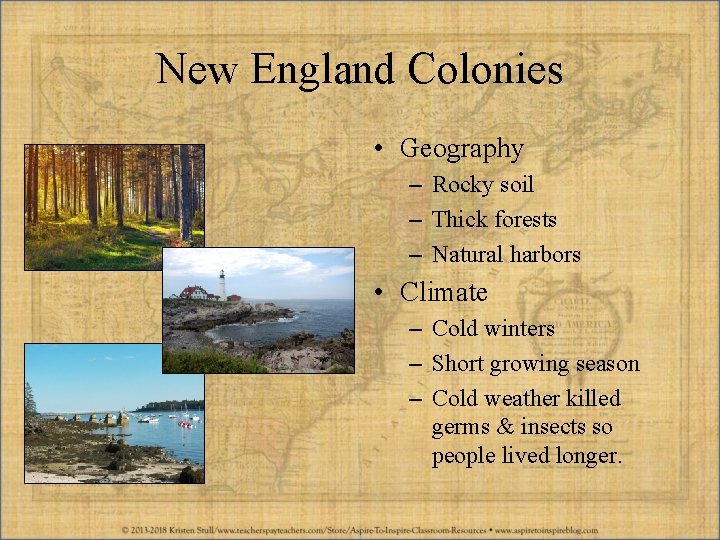
New England Colonies • Geography – Rocky soil – Thick forests – Natural harbors • Climate – Cold winters – Short growing season – Cold weather killed germs & insects so people lived longer.
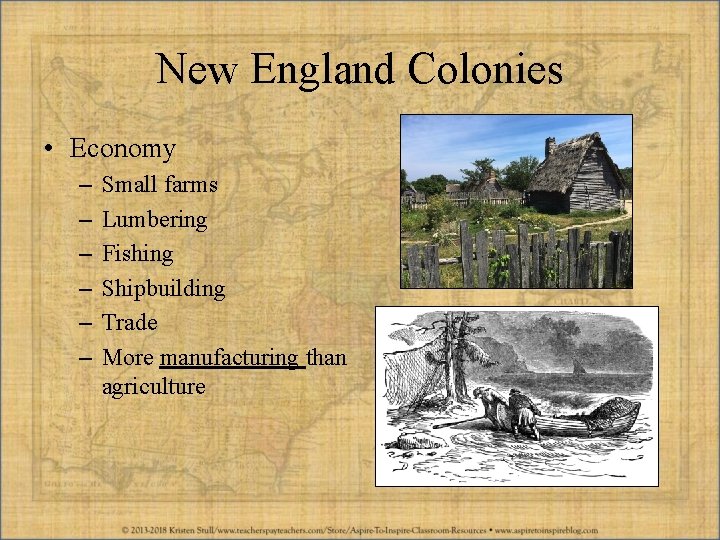
New England Colonies • Economy – – – Small farms Lumbering Fishing Shipbuilding Trade More manufacturing than agriculture
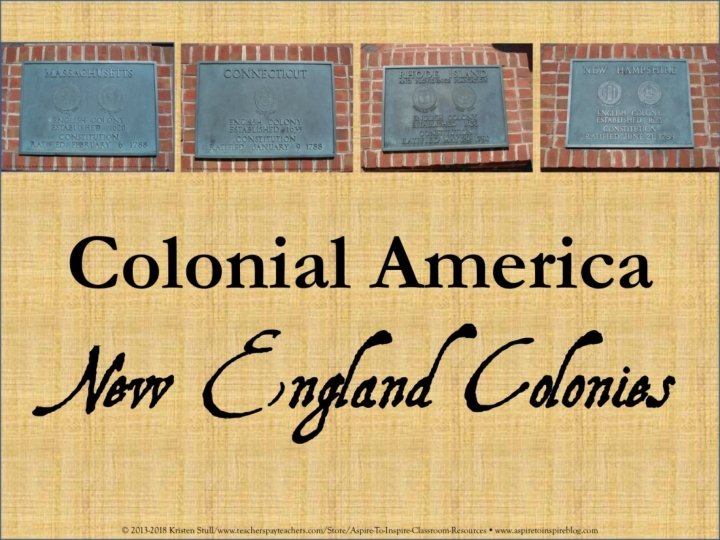
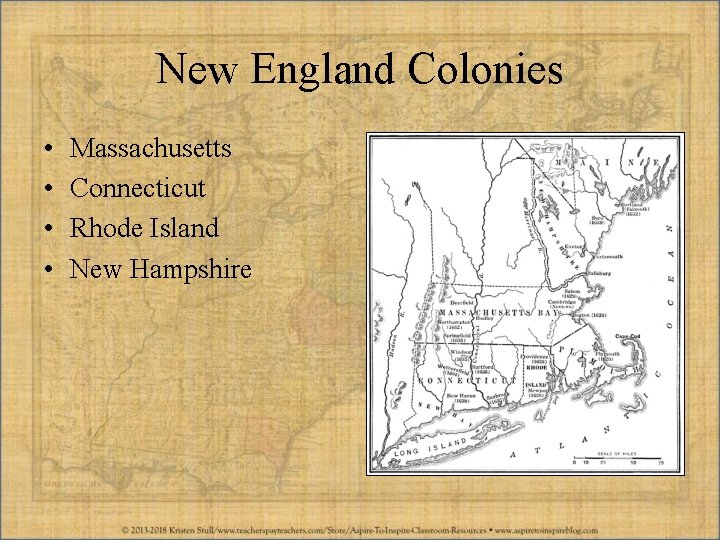
New England Colonies • • Massachusetts Connecticut Rhode Island New Hampshire
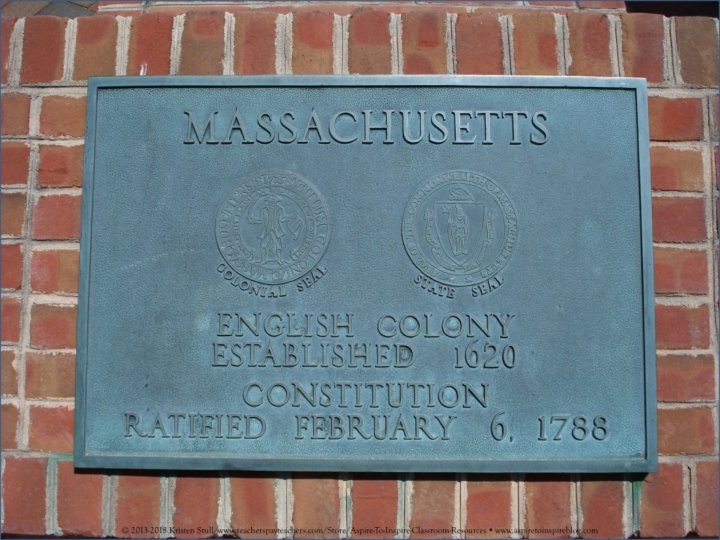
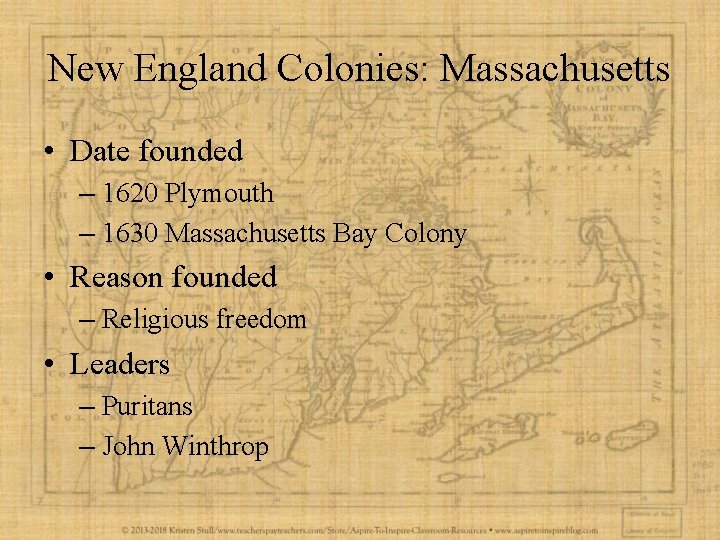
New England Colonies: Massachusetts • Date founded – 1620 Plymouth – 1630 Massachusetts Bay Colony • Reason founded – Religious freedom • Leaders – Puritans – John Winthrop
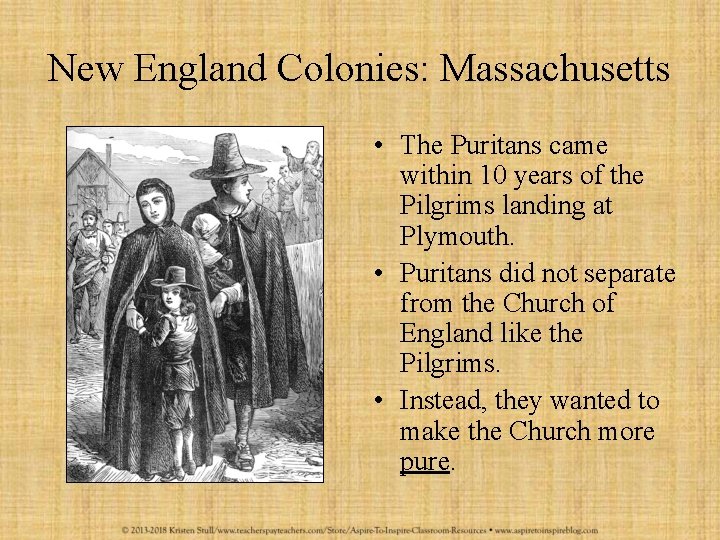
New England Colonies: Massachusetts • The Puritans came within 10 years of the Pilgrims landing at Plymouth. • Puritans did not separate from the Church of England like the Pilgrims. • Instead, they wanted to make the Church more pure.
New England Colonies: Massachusetts • The Puritans received a charter from the King of England to start a colony in Massachusetts. • Puritans wanted to freely practice their religious beliefs. • Religion was at the center of their lives. Each town had a meetinghouse in the center of it. • Newcomers had to share the same beliefs; otherwise, they were not welcome.
New England Colonies: Massachusetts • Puritans built settlements around Boston, the main port in Massachusetts. • Colonists grew crops and raised animals on small farms. • Men also cut lumbers to build houses and ships for trading. • Colonists were also fisherman and whalers.
New England Colonies: Massachusetts • Massachusetts had a more democratic government than most countries in Europe. • At first, only Puritan men could vote. • As time passed, all men who owned land could vote. • The colonists met at town meetings to solve local problems and made decisions by majority rule.
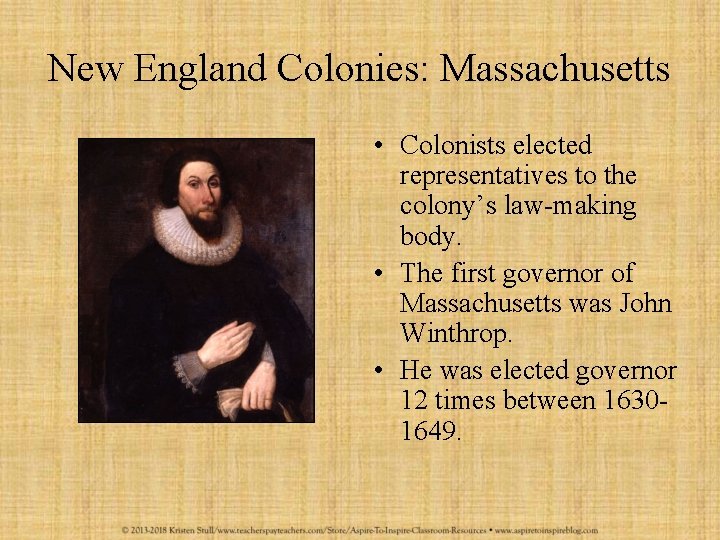
New England Colonies: Massachusetts • Colonists elected representatives to the colony’s law-making body. • The first governor of Massachusetts was John Winthrop. • He was elected governor 12 times between 16301649.
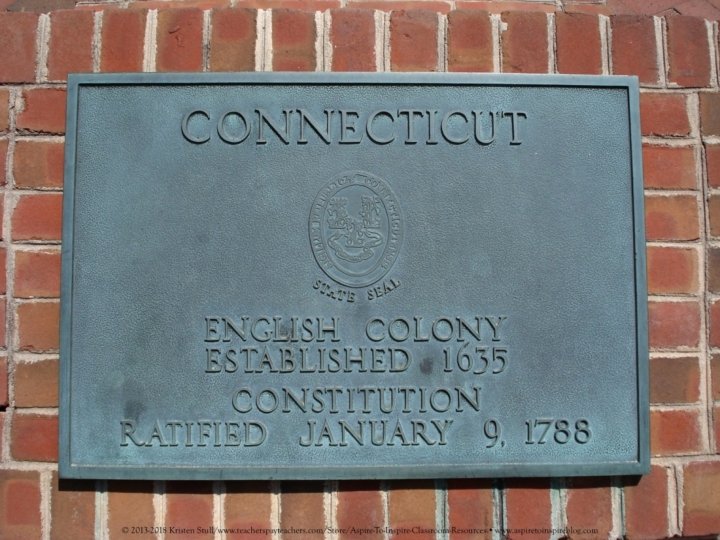
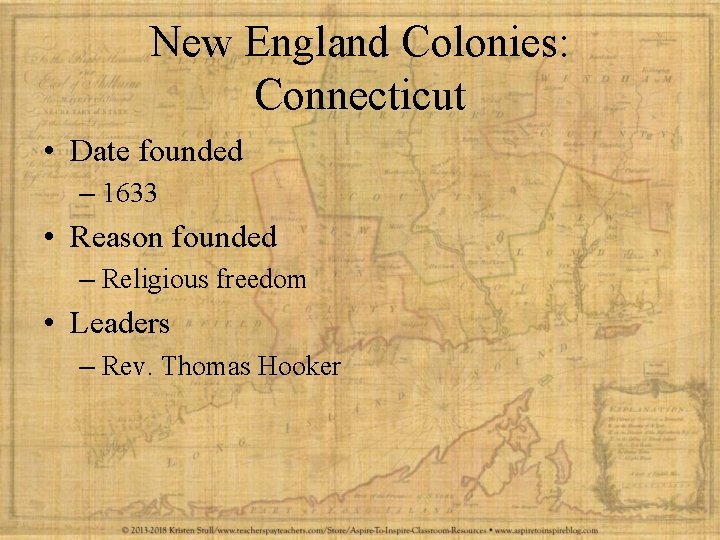
New England Colonies: Connecticut • Date founded – 1633 • Reason founded – Religious freedom • Leaders – Rev. Thomas Hooker
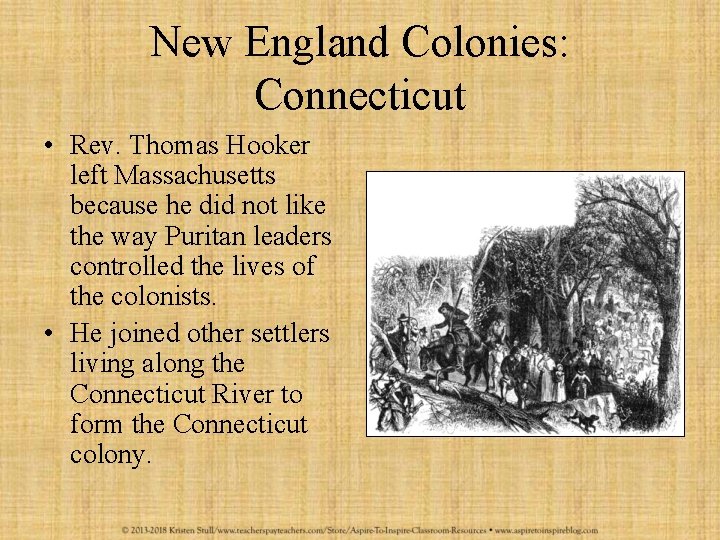
New England Colonies: Connecticut • Rev. Thomas Hooker left Massachusetts because he did not like the way Puritan leaders controlled the lives of the colonists. • He joined other settlers living along the Connecticut River to form the Connecticut colony.
New England Colonies: Connecticut • Rev. Hooker’s ideas 1. A colony’s government should be based on what the people want, not its leaders. 2. A colony should be able to elect its own leaders. • In 1639, these ideas were written as the Fundamental Orders. • Some claim this was the first written system of government (constitution) in the North America.
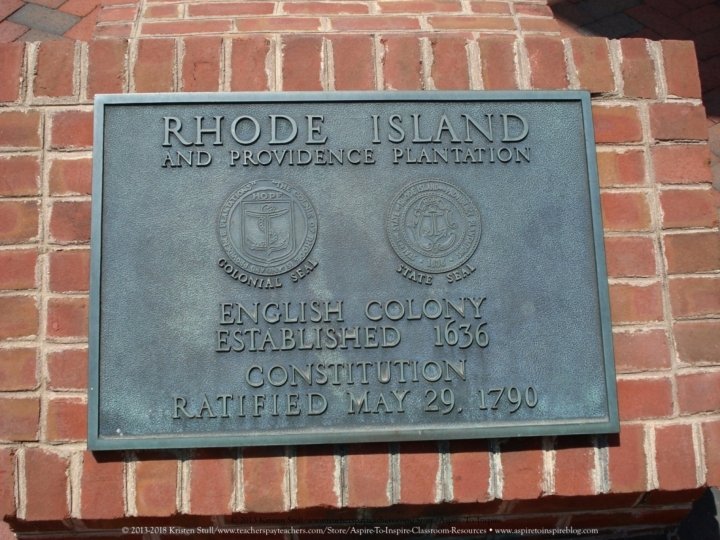
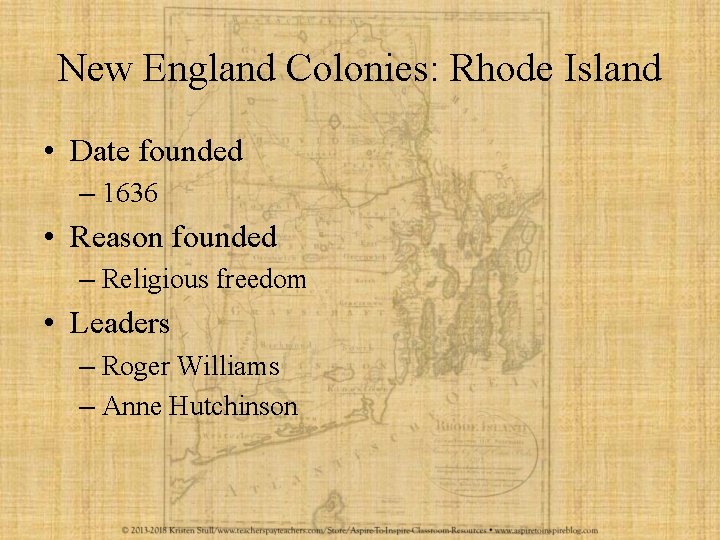
New England Colonies: Rhode Island • Date founded – 1636 • Reason founded – Religious freedom • Leaders – Roger Williams – Anne Hutchinson
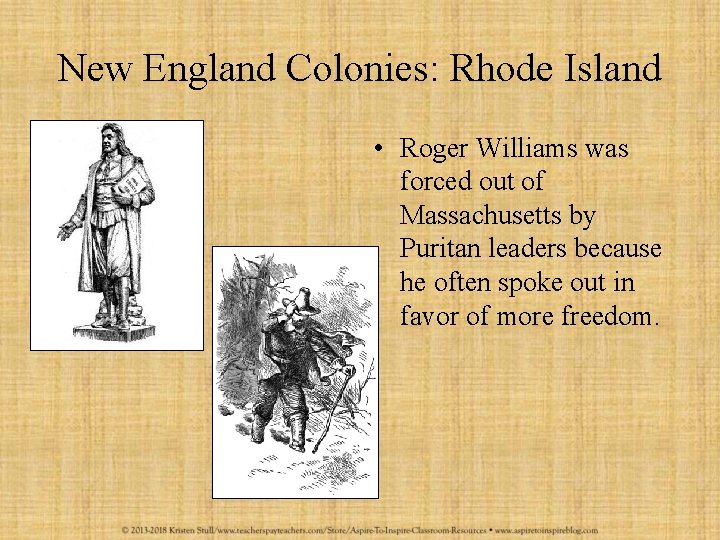
New England Colonies: Rhode Island • Roger Williams was forced out of Massachusetts by Puritan leaders because he often spoke out in favor of more freedom.
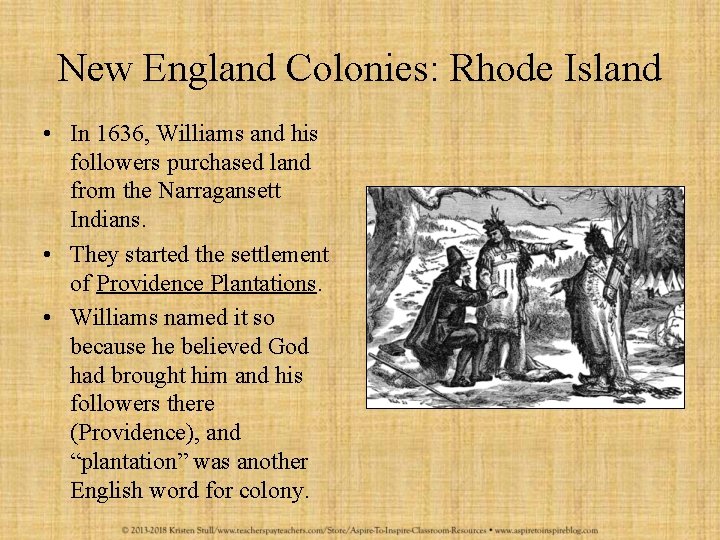
New England Colonies: Rhode Island • In 1636, Williams and his followers purchased land from the Narragansett Indians. • They started the settlement of Providence Plantations. • Williams named it so because he believed God had brought him and his followers there (Providence), and “plantation” was another English word for colony.
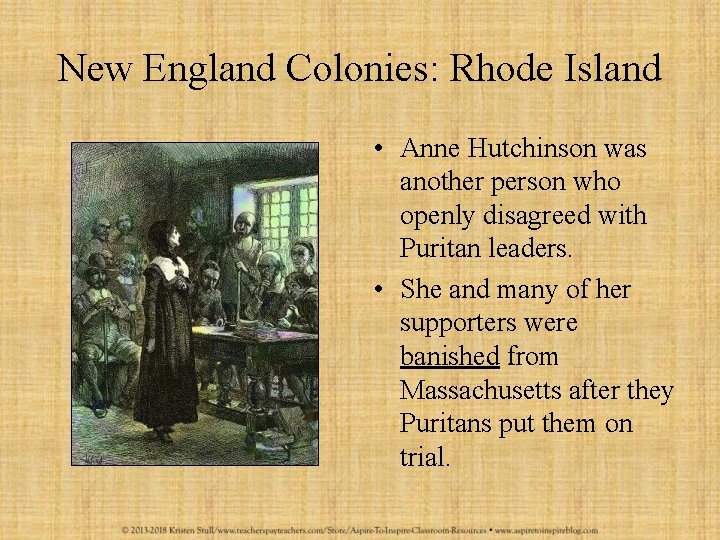
New England Colonies: Rhode Island • Anne Hutchinson was another person who openly disagreed with Puritan leaders. • She and many of her supporters were banished from Massachusetts after they Puritans put them on trial.
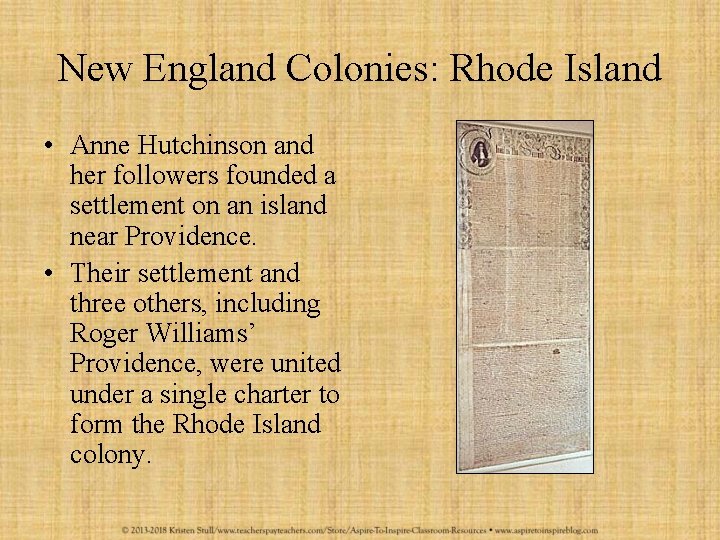
New England Colonies: Rhode Island • Anne Hutchinson and her followers founded a settlement on an island near Providence. • Their settlement and three others, including Roger Williams’ Providence, were united under a single charter to form the Rhode Island colony.
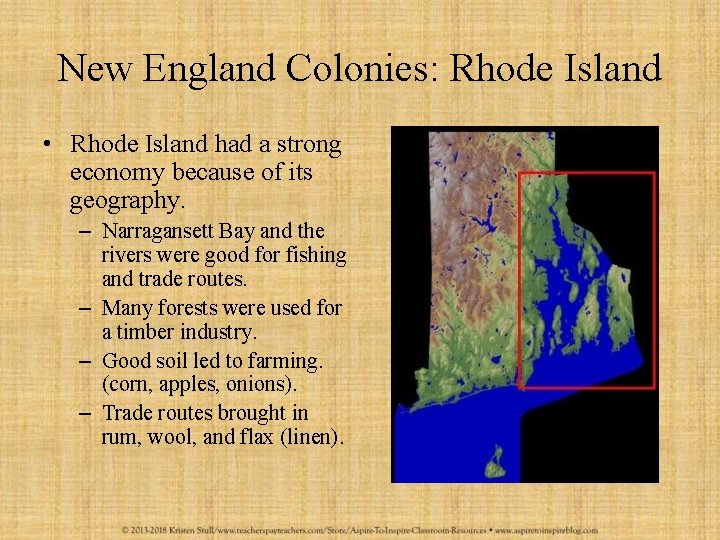
New England Colonies: Rhode Island • Rhode Island had a strong economy because of its geography. – Narragansett Bay and the rivers were good for fishing and trade routes. – Many forests were used for a timber industry. – Good soil led to farming. (corn, apples, onions). – Trade routes brought in rum, wool, and flax (linen).
New England Colonies: Rhode Island • Rhode Island was one of the most democratic colonies. – At first, most men could vote for the colony’s governor and local officials. – Later on, only men who owned property could vote. – Voters did not have to practice a certain religion in order to vote.
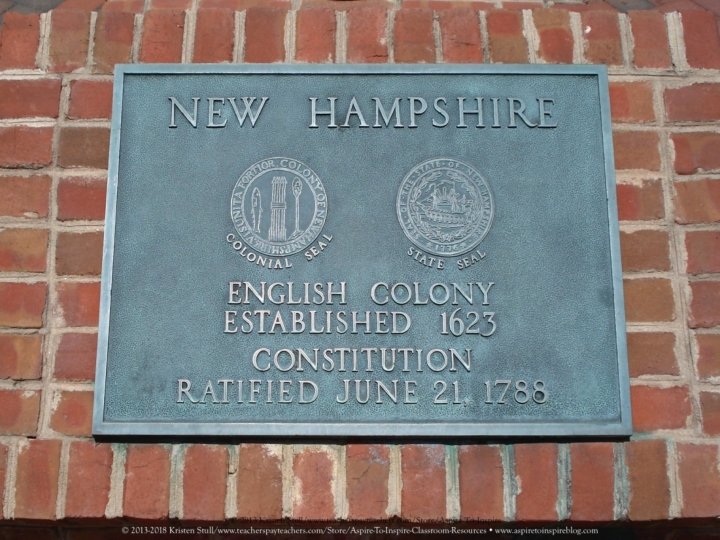
New England Colonies: New Hampshire • Date founded – 1622 First settlers – 1679 Charter • Reason founded – Business • Leaders – Captain John Mason (proprietor)
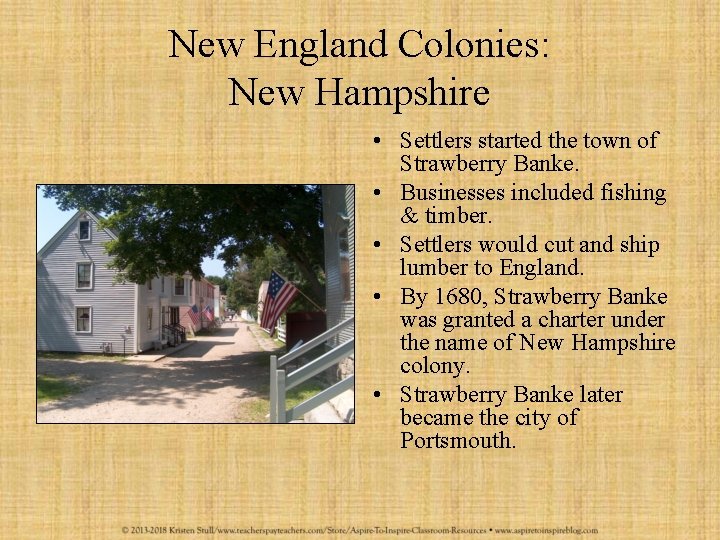
New England Colonies: New Hampshire • Settlers started the town of Strawberry Banke. • Businesses included fishing & timber. • Settlers would cut and ship lumber to England. • By 1680, Strawberry Banke was granted a charter under the name of New Hampshire colony. • Strawberry Banke later became the city of Portsmouth.
New England Colonies: Review • Which four colonies made up the New England colonies? • For what purposes were each of these colonies founded? • Describe the geography & climate of New England. • How did the geography & climate affect the economies of each colony? • How were the governments similar and different in these colonies?