
Main Function This communication system controls and coordinates
- Slides: 28
Main Function: This communication system controls and coordinates functions throughout the body and responds to internal and external stimuli. Our nervous system allows us to feel pain.
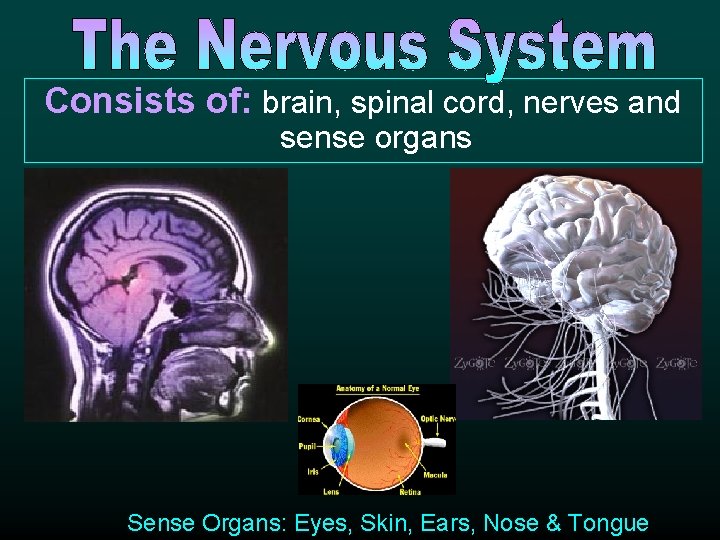
Consists of: brain, spinal cord, nerves and sense organs Sense Organs: Eyes, Skin, Ears, Nose & Tongue
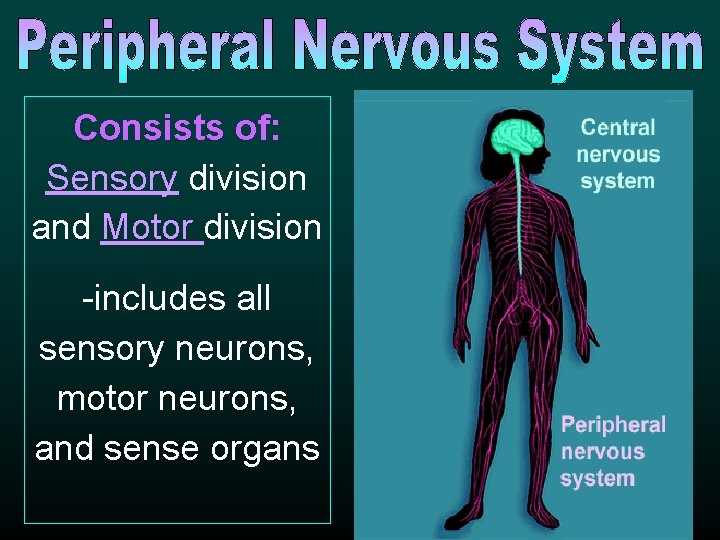
Consists of: Sensory division and Motor division -includes all sensory neurons, motor neurons, and sense organs
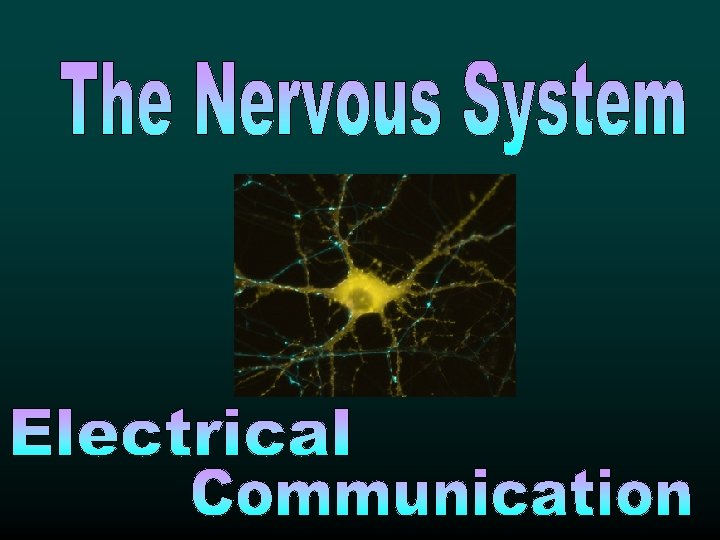
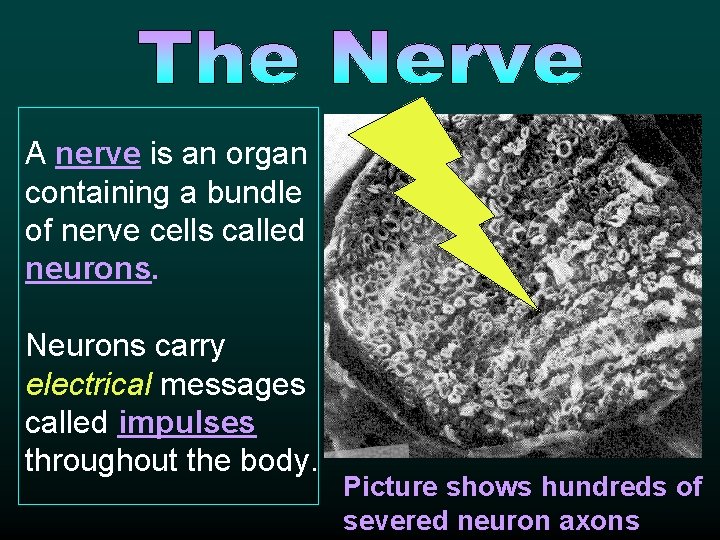
A nerve is an organ containing a bundle of nerve cells called neurons. Neurons carry electrical messages called impulses throughout the body. Picture shows hundreds of severed neuron axons
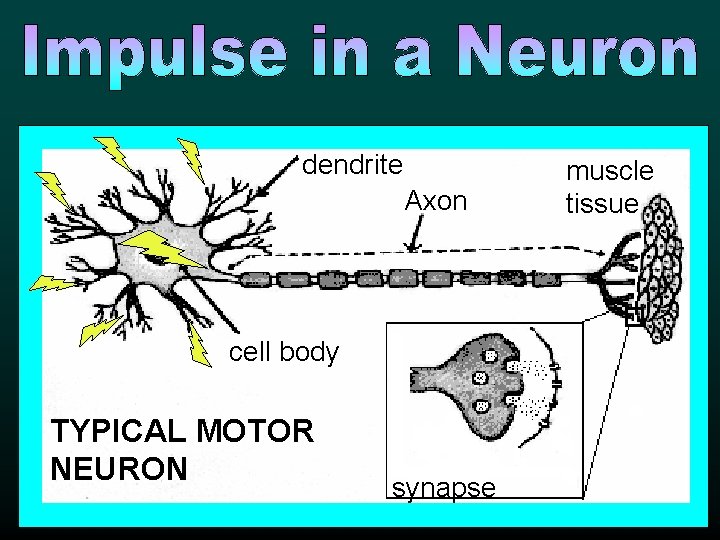
dendrite Axon cell body TYPICAL MOTOR NEURON synapse muscle tissue
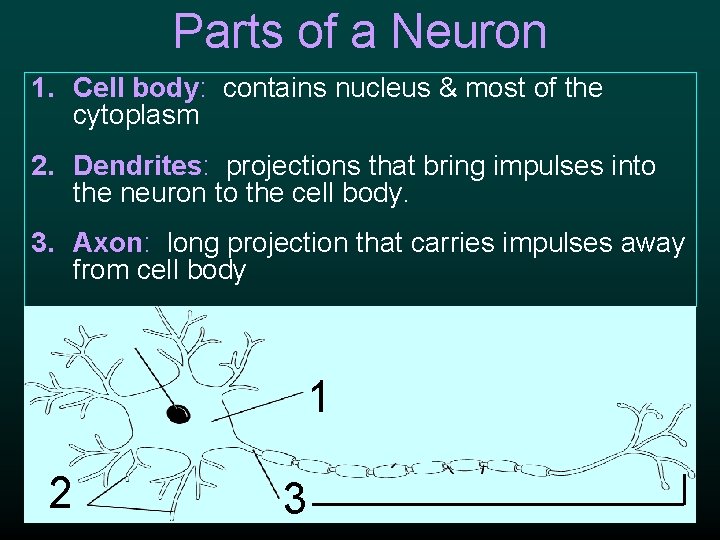
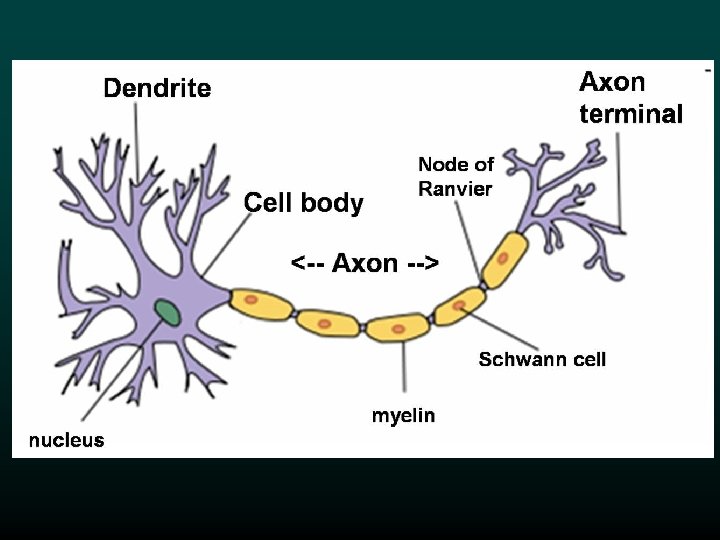
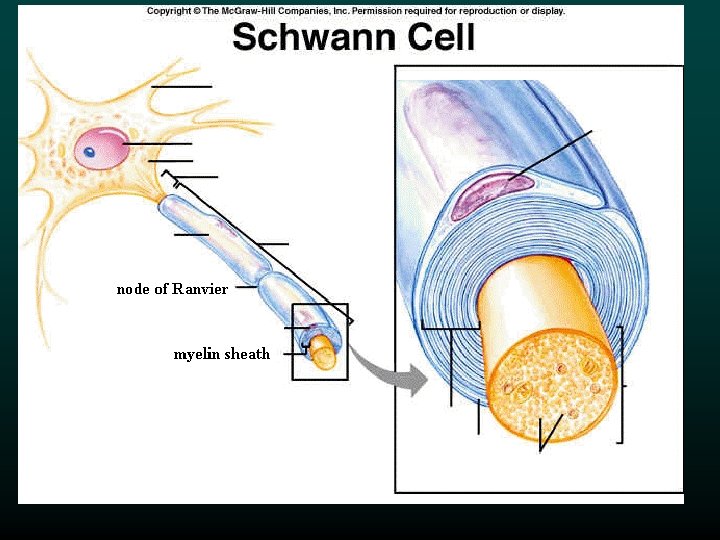
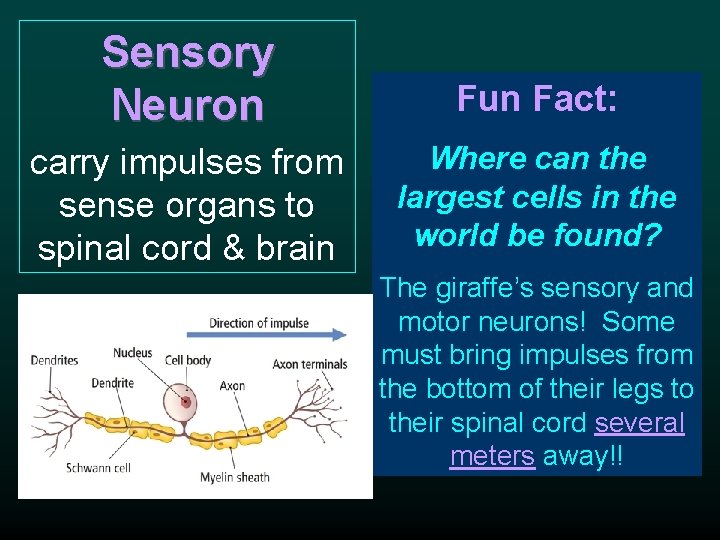
Parts of a Neuron 1. Cell body: contains nucleus & most of the cytoplasm 2. Dendrites: projections that bring impulses into the neuron to the cell body. 3. Axon: long projection that carries impulses away from cell body 1 2 3
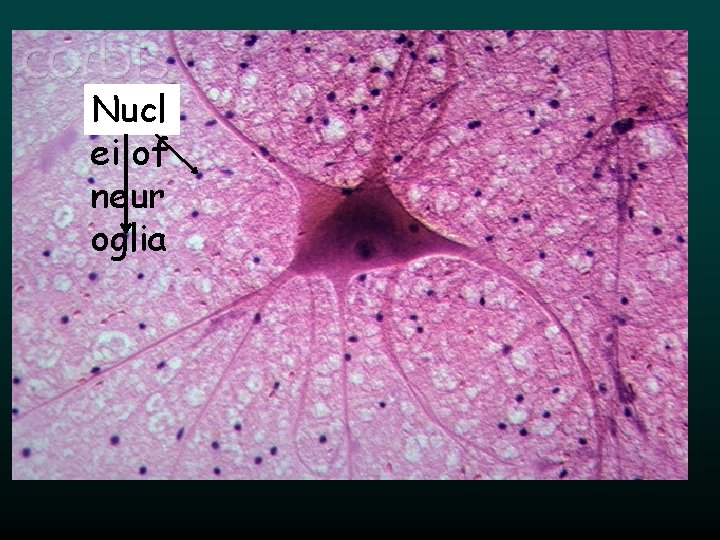
Nucl ei of neur oglia
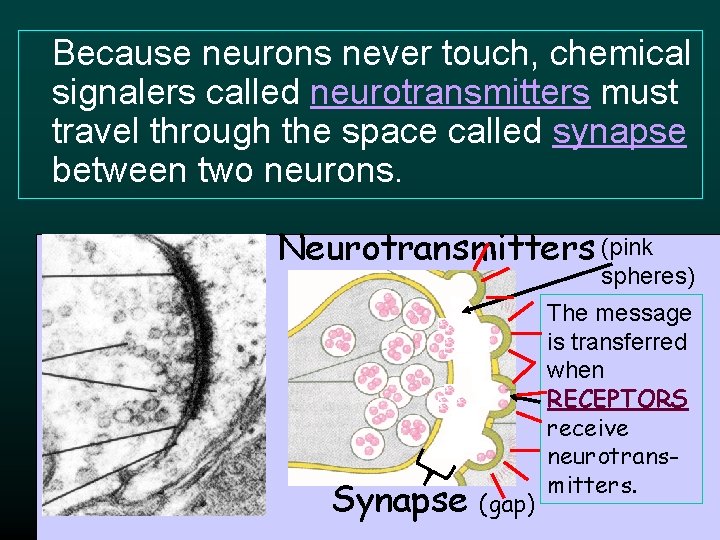
Because neurons never touch, chemical signalers called neurotransmitters must travel through the space called synapse between two neurons. Neurotransmitters (pink spheres) Synapse (gap) The message is transferred when RECEPTORS receive neurotransmitters.
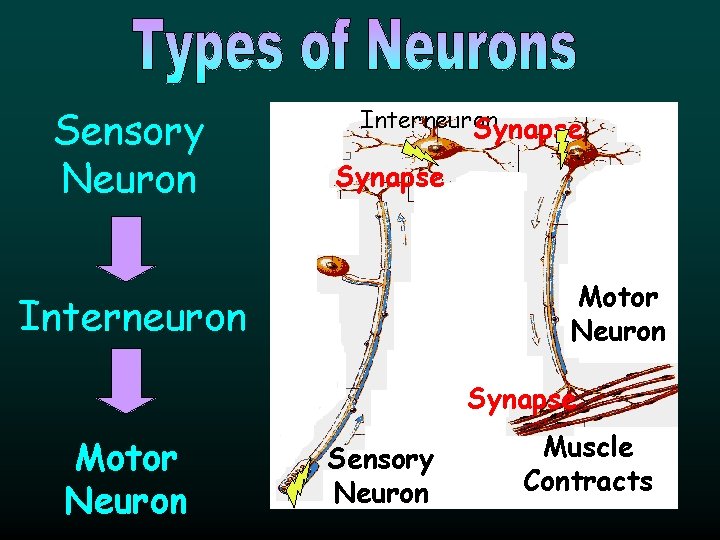
Sensory Neuron Interneuron Synapse Motor Neuron Sensory Neuron Muscle Contracts
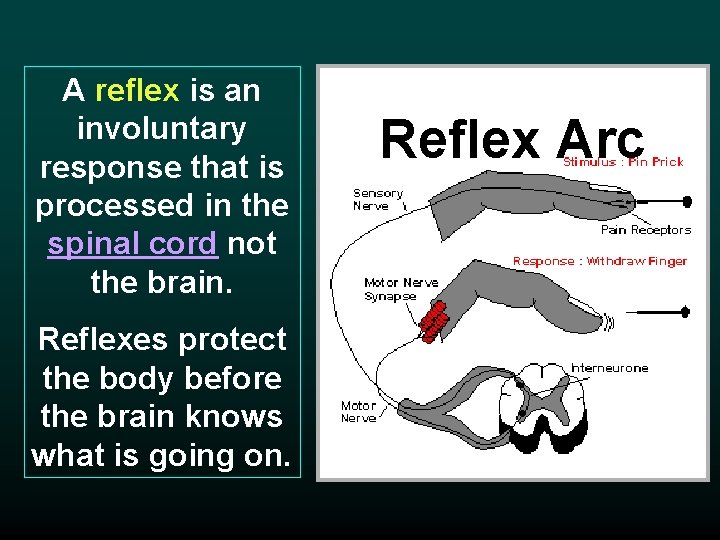
A reflex is an involuntary response that is processed in the spinal cord not the brain. Reflexes protect the body before the brain knows what is going on. Reflex Arc
Sensory Neuron Fun Fact: carry impulses from sense organs to spinal cord & brain Where can the largest cells in the world be found? The giraffe’s sensory and motor neurons! Some must bring impulses from the bottom of their legs to their spinal cord several meters away!!
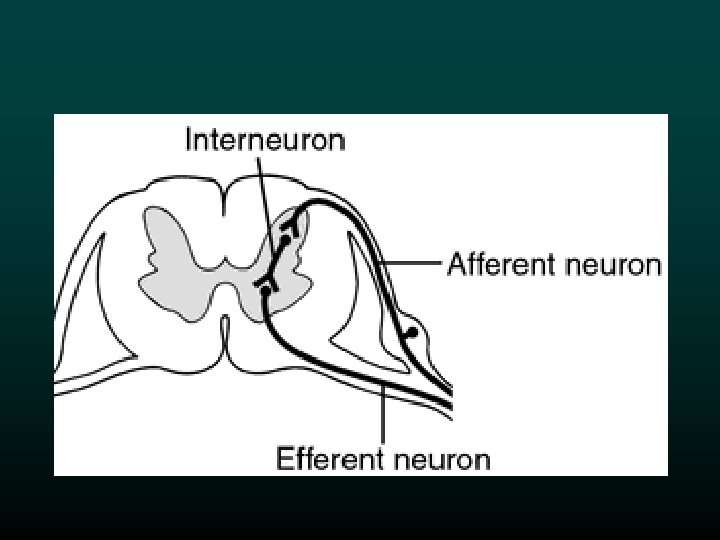
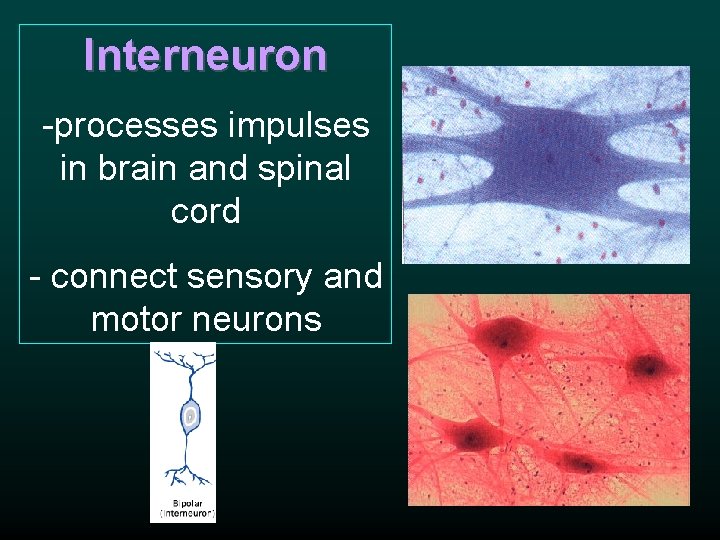
Interneuron -processes impulses in brain and spinal cord - connect sensory and motor neurons
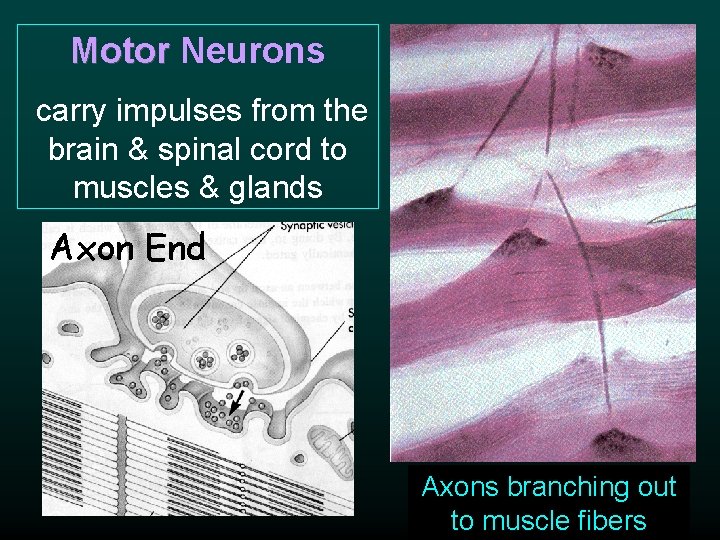
Motor Neurons carry impulses from the brain & spinal cord to muscles & glands Axon End Axons branching out to muscle fibers
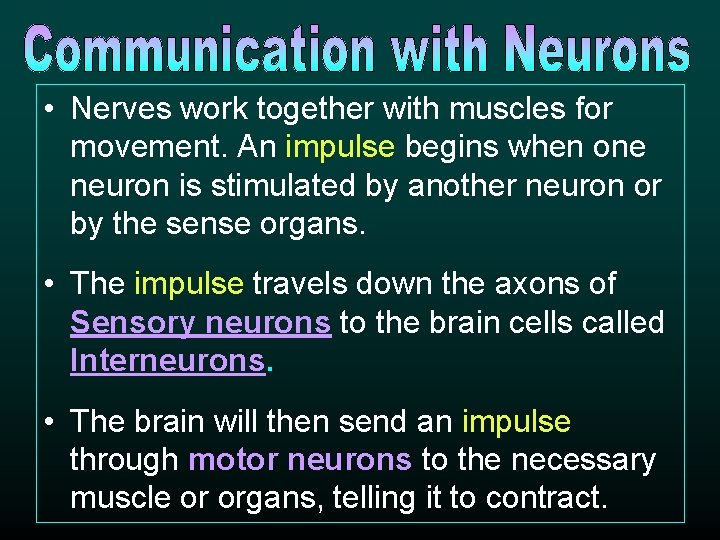
• Nerves work together with muscles for movement. An impulse begins when one neuron is stimulated by another neuron or by the sense organs. • The impulse travels down the axons of Sensory neurons to the brain cells called Interneurons. • The brain will then send an impulse through motor neurons to the necessary muscle or organs, telling it to contract.
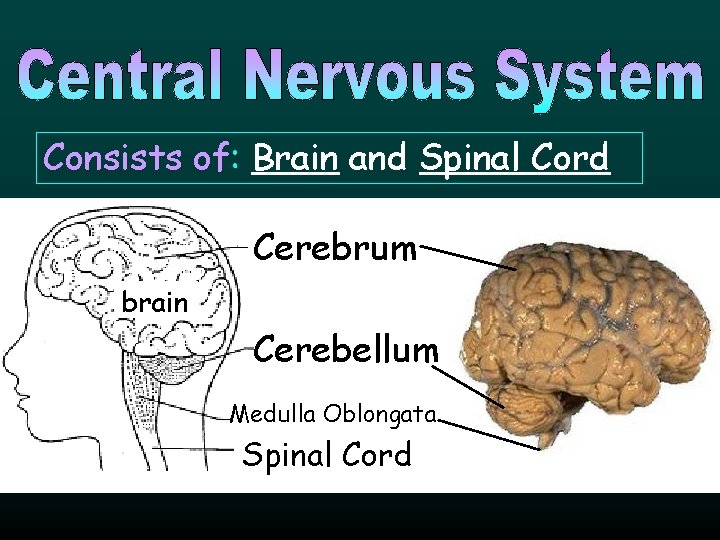
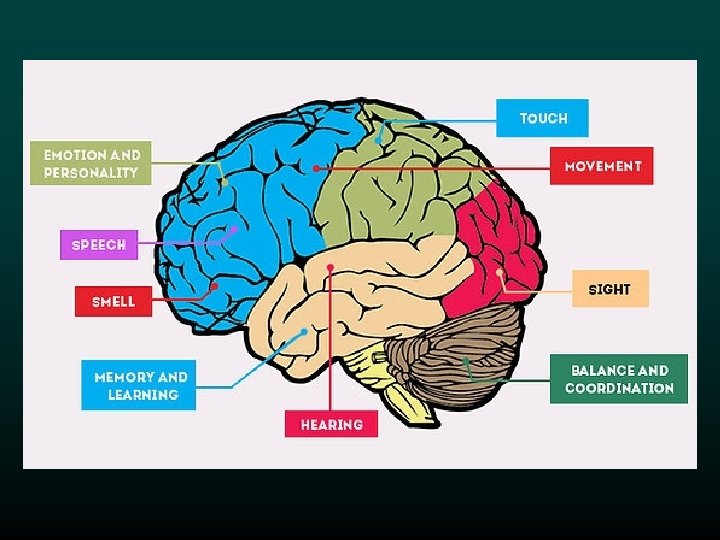
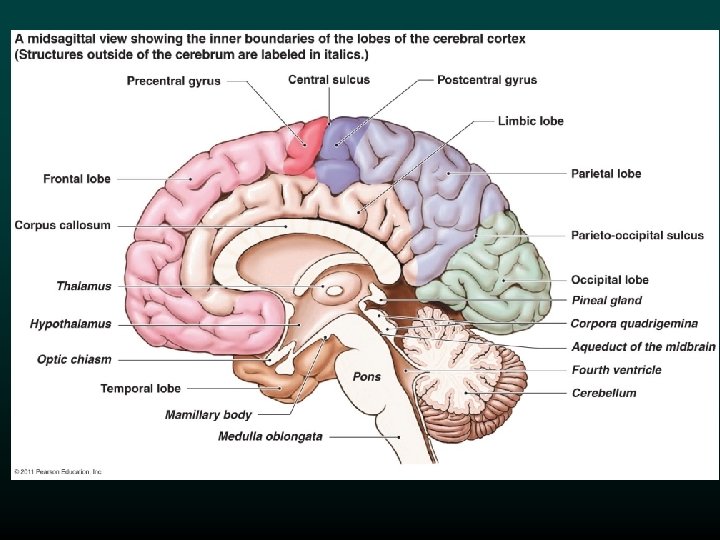
Consists of: Brain and Spinal Cord Cerebrum brain Cerebellum Medulla Oblongata Spinal Cord
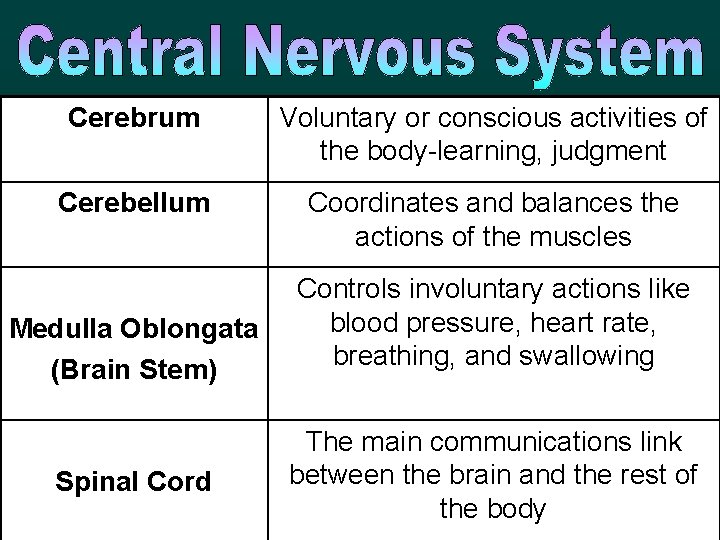
Cerebrum Voluntary or conscious activities of the body-learning, judgment Cerebellum Coordinates and balances the actions of the muscles Medulla Oblongata (Brain Stem) Spinal Cord Controls involuntary actions like blood pressure, heart rate, breathing, and swallowing The main communications link between the brain and the rest of the body