
Main Features of the Finnish Core Curriculum 1
- Slides: 23
Main Features of the Finnish Core Curriculum 1
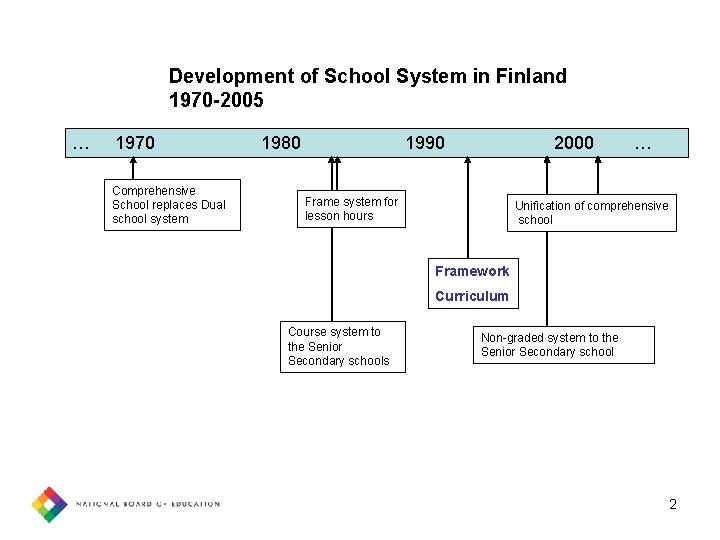
Development of School System in Finland 1970 -2005 … 1970 Comprehensive School replaces Dual school system 1980 1990 2000 Frame system for lesson hours … Unification of comprehensive school Framework Curriculum Course system to the Senior Secondary schools Non-graded system to the Senior Secondary school 2
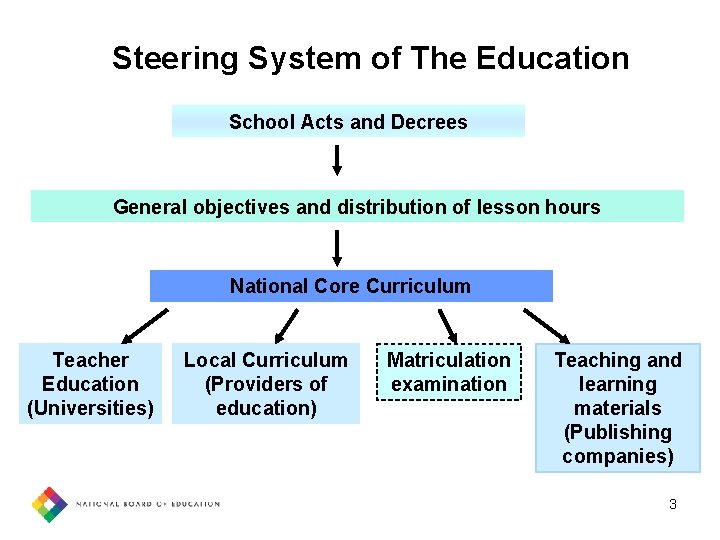
Steering System of The Education School Acts and Decrees General objectives and distribution of lesson hours National Core Curriculum Teacher Education (Universities) Local Curriculum (Providers of education) Matriculation examination Teaching and learning materials (Publishing companies) 3
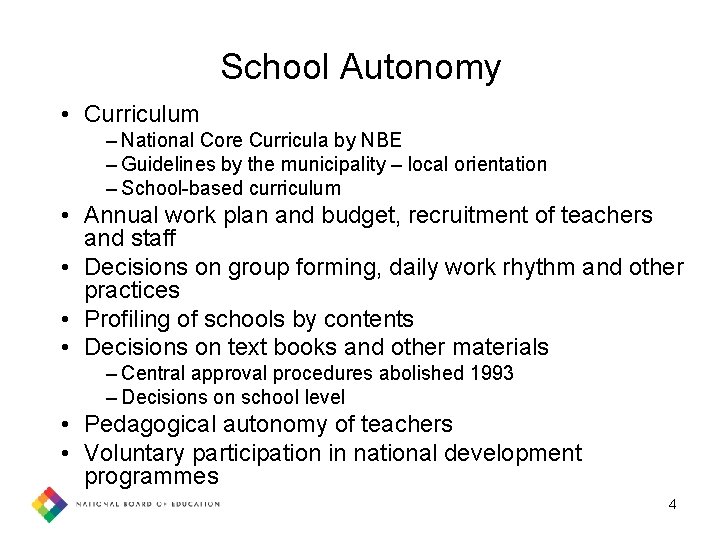
School Autonomy • Curriculum – National Core Curricula by NBE – Guidelines by the municipality – local orientation – School-based curriculum • Annual work plan and budget, recruitment of teachers and staff • Decisions on group forming, daily work rhythm and other practices • Profiling of schools by contents • Decisions on text books and other materials – Central approval procedures abolished 1993 – Decisions on school level • Pedagogical autonomy of teachers • Voluntary participation in national development programmes 4
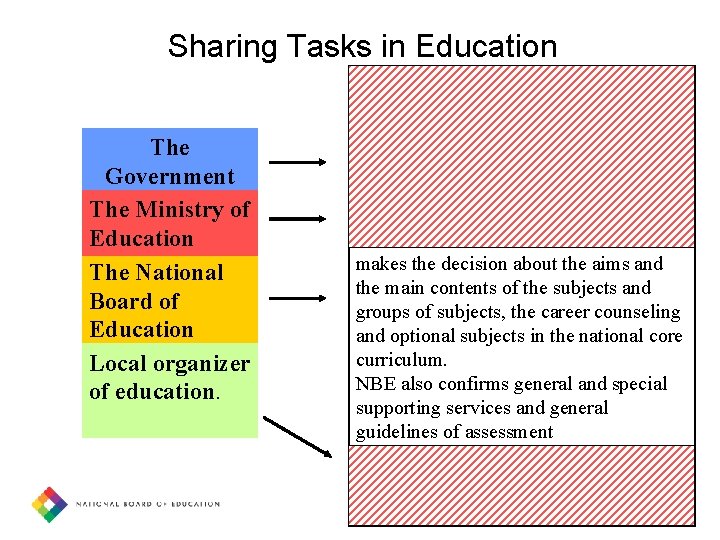
Sharing Tasks in Education The Government The Ministry of Education The National Board of Education Local organizer of education. makes decision about the general national aims, the division of time sharing between different subjects and groups and in addition about career counseling. prepares legislation and decides educational policy. makes the decision about the aims and the main contents of the subjects and groups of subjects, the career counseling and optional subjects in the national core curriculum. NBE also confirms general and special supporting services and general guidelines of assessment creates the local curriculum for schools and municipalities according to the core 5 curriculum.
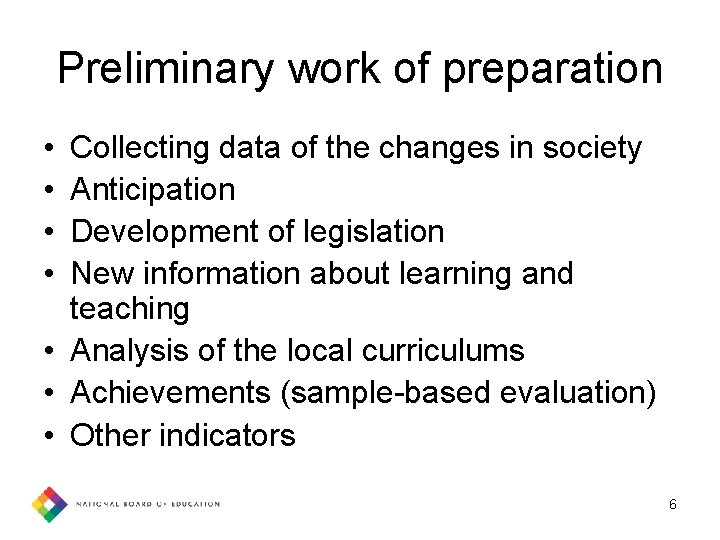
Preliminary work of preparation • • Collecting data of the changes in society Anticipation Development of legislation New information about learning and teaching • Analysis of the local curriculums • Achievements (sample-based evaluation) • Other indicators 6
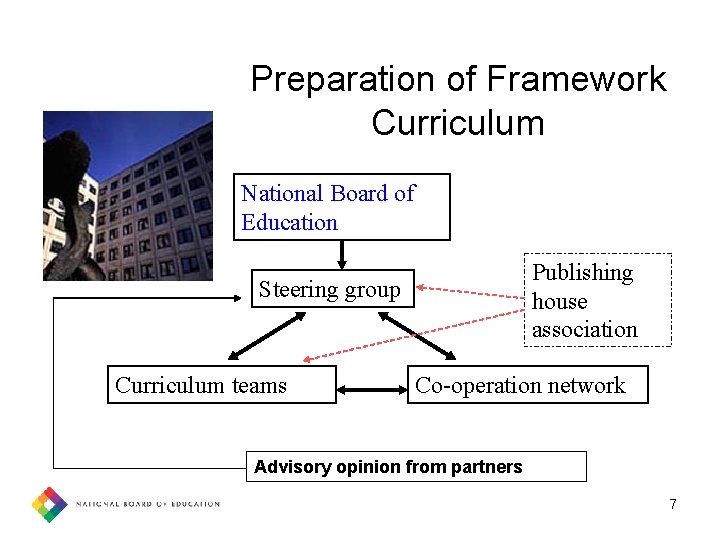
Preparation of Framework Curriculum National Board of Education Publishing house association Steering group Curriculum teams Co-operation network Advisory opinion from partners 7
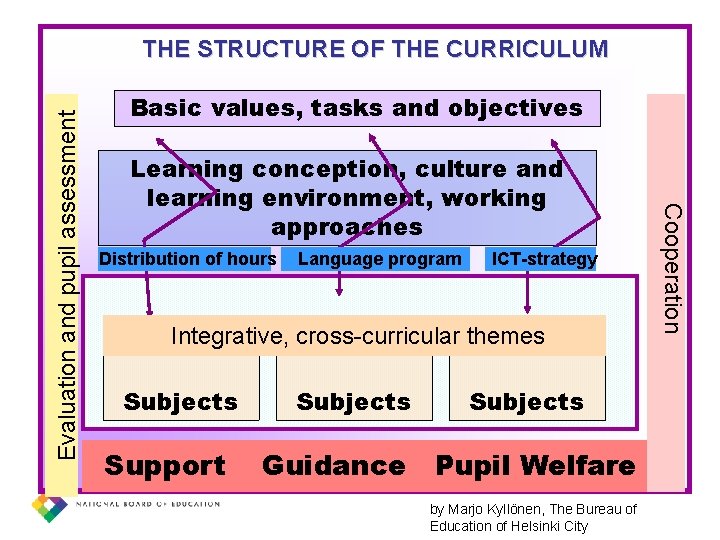
Basic values, tasks and objectives Learning conception, culture and learning environment, working approaches Distribution of hours Language program ICT-strategy Integrative, cross-curricular themes Subjects Support Subjects Guidance Pupil Welfare by Marjo Kyllönen, The Bureau of Education of Helsinki City Cooperation Evaluation and pupil assessment THE STRUCTURE OF THE CURRICULUM
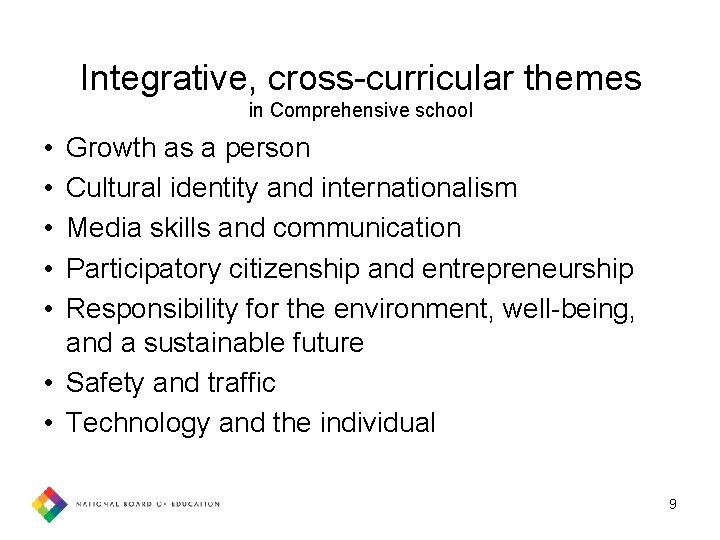
Integrative, cross-curricular themes in Comprehensive school • • • Growth as a person Cultural identity and internationalism Media skills and communication Participatory citizenship and entrepreneurship Responsibility for the environment, well-being, and a sustainable future • Safety and traffic • Technology and the individual 9
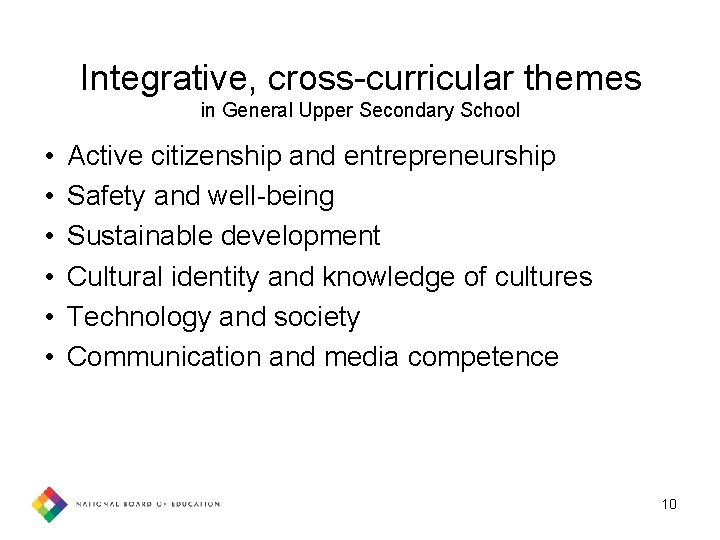
Integrative, cross-curricular themes in General Upper Secondary School • • • Active citizenship and entrepreneurship Safety and well-being Sustainable development Cultural identity and knowledge of cultures Technology and society Communication and media competence 10
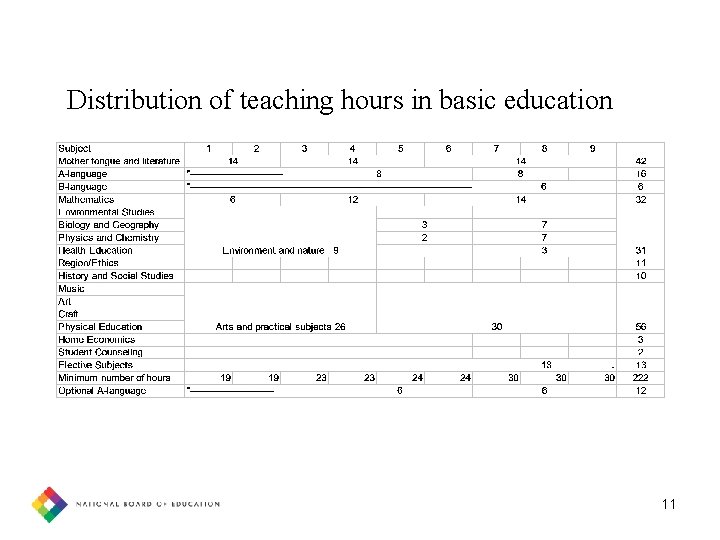
Distribution of teaching hours in basic education 11
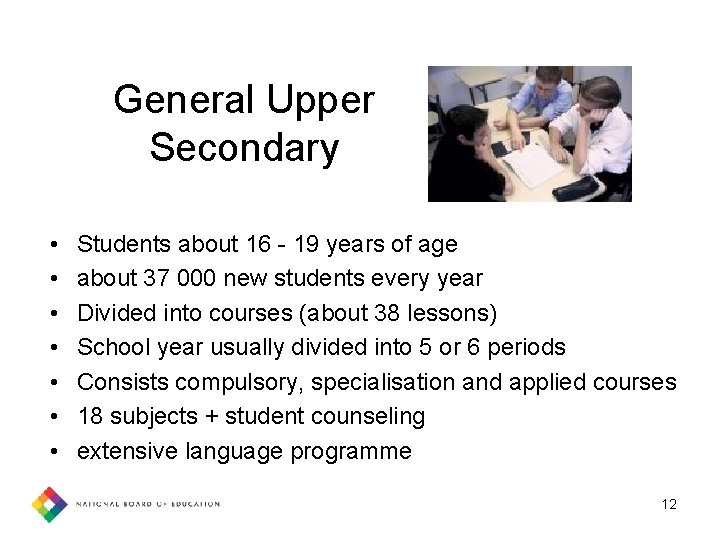
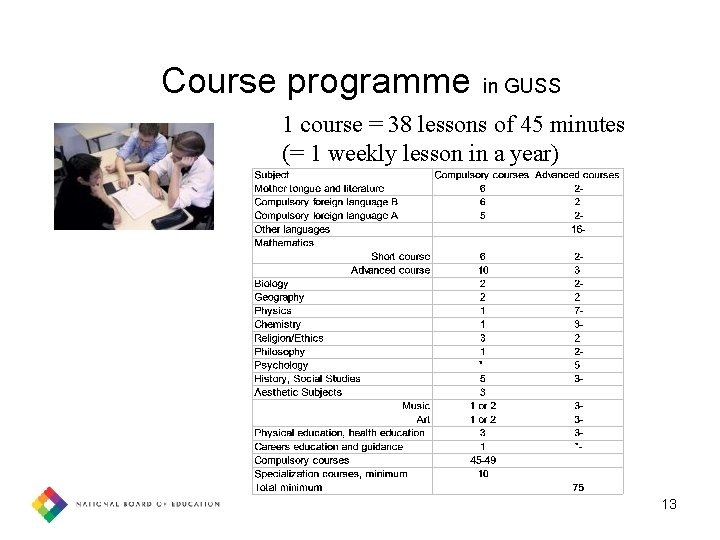
General Upper Secondary • • Students about 16 - 19 years of age about 37 000 new students every year Divided into courses (about 38 lessons) School year usually divided into 5 or 6 periods Consists compulsory, specialisation and applied courses 18 subjects + student counseling extensive language programme 12
Course programme in GUSS 1 course = 38 lessons of 45 minutes (= 1 weekly lesson in a year) 13
Flexible structures • to make local decisions concerning curriculum (municipality) • to work out an annual work plan (school) • to construct an individual study programme (student) • to complete matriculation examination (student) 14
Flexible structures • student´s study programme is non-graded, sequence of courses is free or partly bound; usually the whole programme becomes completed in 3 years, 4 years allowed • matriculation examination can be completed in three consecutive examination periods and can also be supplemented later on 15
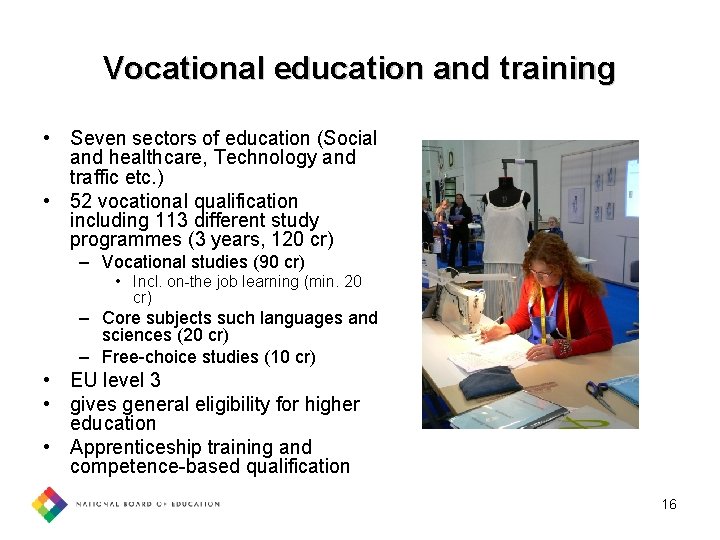
Vocational education and training • Seven sectors of education (Social and healthcare, Technology and traffic etc. ) • 52 vocational qualification including 113 different study programmes (3 years, 120 cr) – Vocational studies (90 cr) • Incl. on-the job learning (min. 20 cr) – Core subjects such languages and sciences (20 cr) – Free-choice studies (10 cr) • EU level 3 • gives general eligibility for higher education • Apprenticeship training and competence-based qualification 16
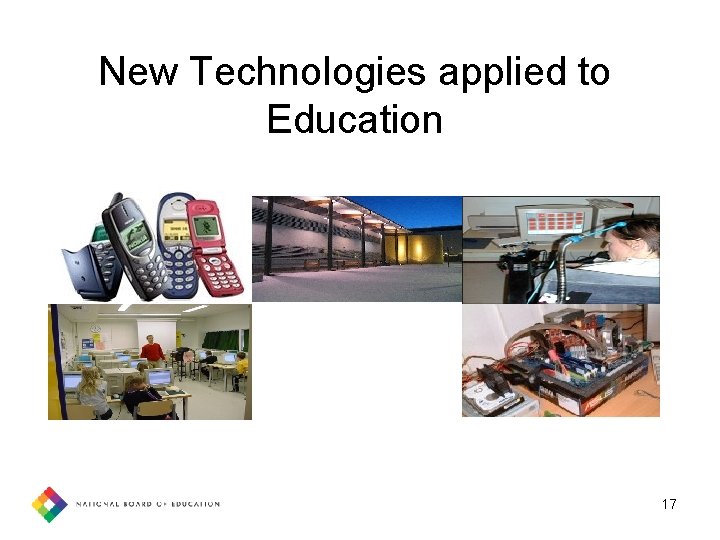
New Technologies applied to Education 17
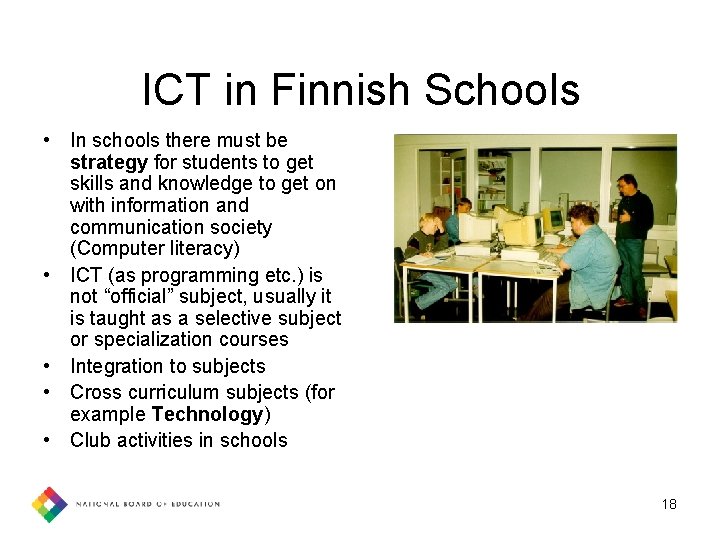
ICT in Finnish Schools • In schools there must be strategy for students to get skills and knowledge to get on with information and communication society (Computer literacy) • ICT (as programming etc. ) is not “official” subject, usually it is taught as a selective subject or specialization courses • Integration to subjects • Cross curriculum subjects (for example Technology) • Club activities in schools 18
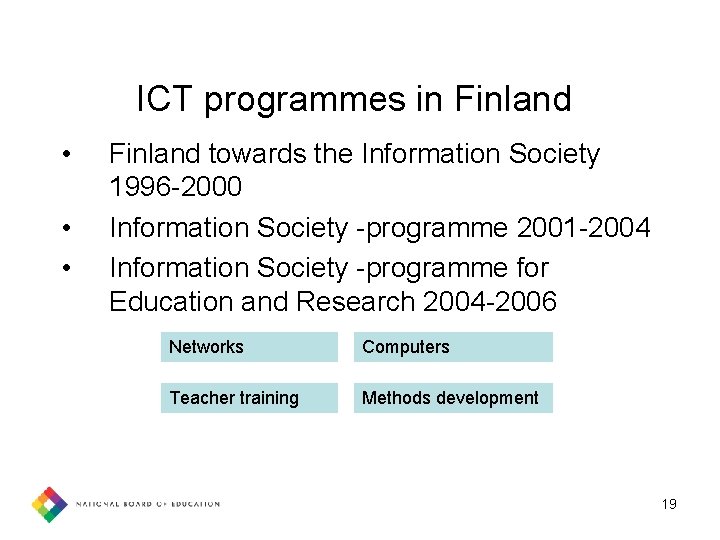
ICT programmes in Finland • • • Finland towards the Information Society 1996 -2000 Information Society -programme 2001 -2004 Information Society -programme for Education and Research 2004 -2006 Networks Computers Teacher training Methods development 19
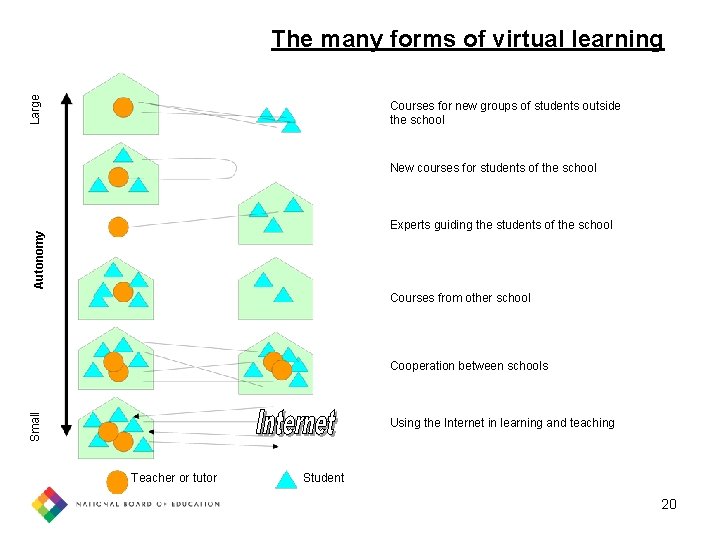
Large The many forms of virtual learning Courses for new groups of students outside the school New courses for students of the school Autonomy Experts guiding the students of the school Courses from other school Small Cooperation between schools Using the Internet in learning and teaching Teacher or tutor Student 20
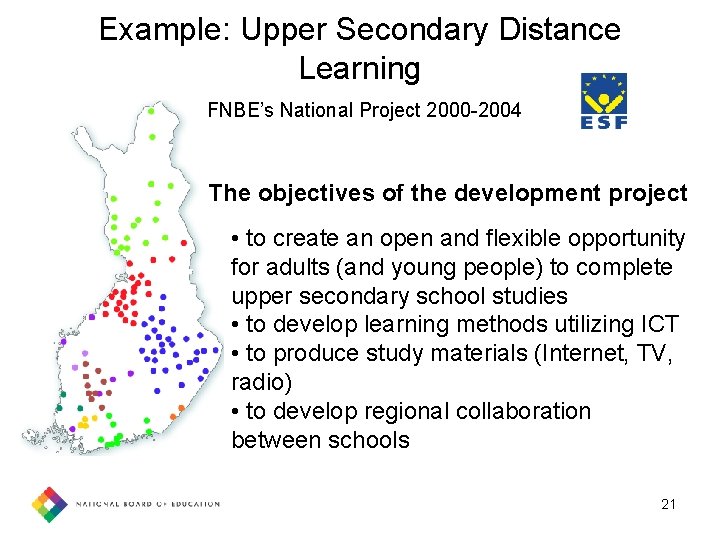
Example: Upper Secondary Distance Learning FNBE’s National Project 2000 -2004 The objectives of the development project • to create an open and flexible opportunity for adults (and young people) to complete upper secondary school studies • to develop learning methods utilizing ICT • to produce study materials (Internet, TV, radio) • to develop regional collaboration between schools 21
Links: www. minedu. fi www. edu. fi/english www. oph. fi 22
Thank you for your attention! 23