
Main Concepts of SIT Henri TajfelJohn Turner 1979
- Slides: 10
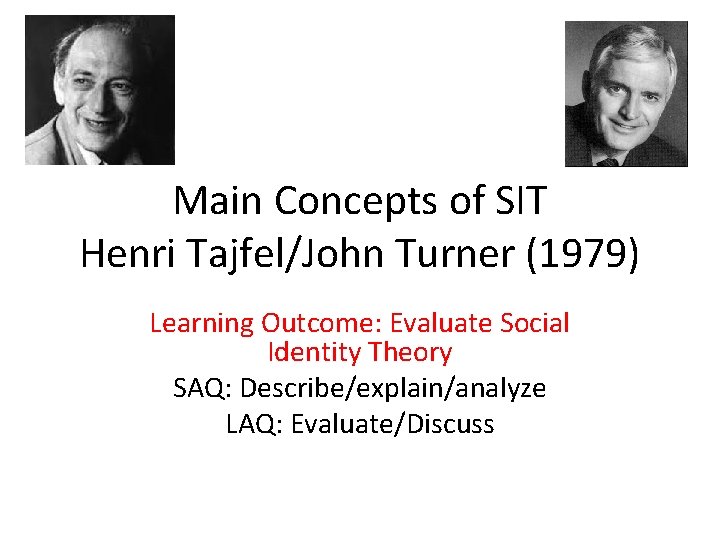
Main Concepts of SIT Henri Tajfel/John Turner (1979) Learning Outcome: Evaluate Social Identity Theory SAQ: Describe/explain/analyze LAQ: Evaluate/Discuss
Social Identity Theory Principle links… • We have social self & individual self • We are social and tend to want to belong Context/development • Growing interest in intergroup relations • Research into how groups form (minimal group paradigm) • Was conflict necessary for intergroup difficulty? • Integrative theory links w/cognitions (perc, attention, schema) w/behaviour
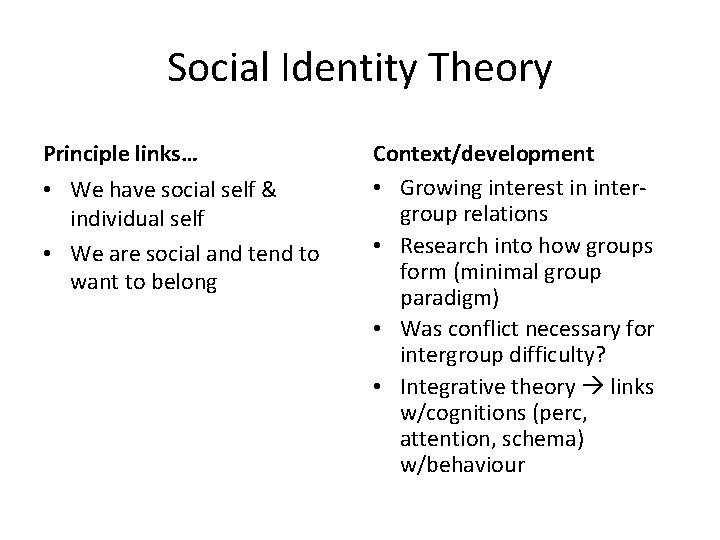
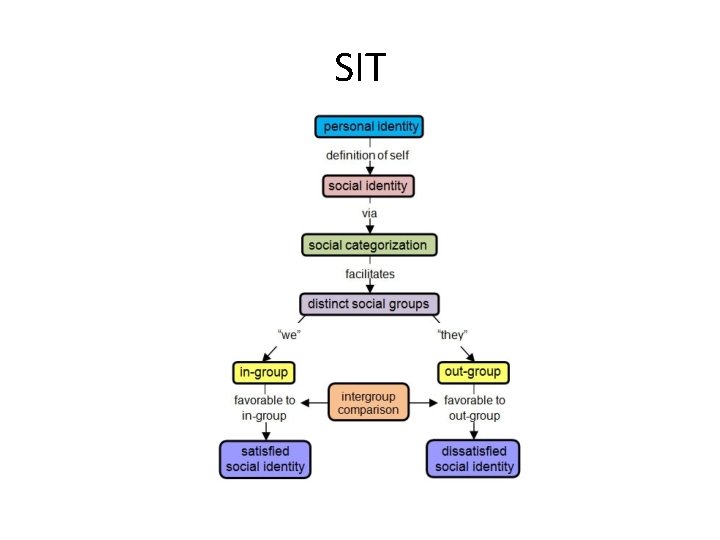
Social categorization • In-groups (we are similar) • Out-groups (they are similar) • Our group different from their group • ‘Us’ v ‘them’ • *Perceived variability reduced • *Category accentuation effect • *Stereotype formation • www. washingtonpost. com
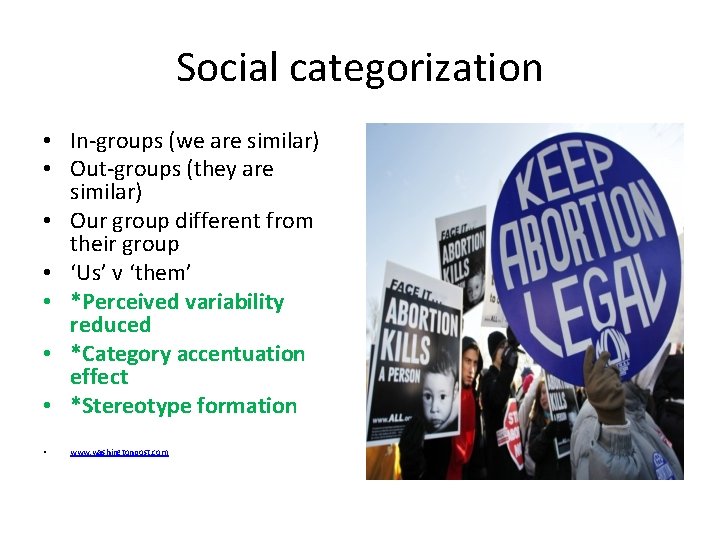
Social Identity (through comparison) • Do you understand yourself in terms of any group membership? • Intergroup behaviours… • SIT argues when we interact based on group membership, our interactions change… • ‘Identity’ becomes malleable/fluid • www. thejakartapost. com
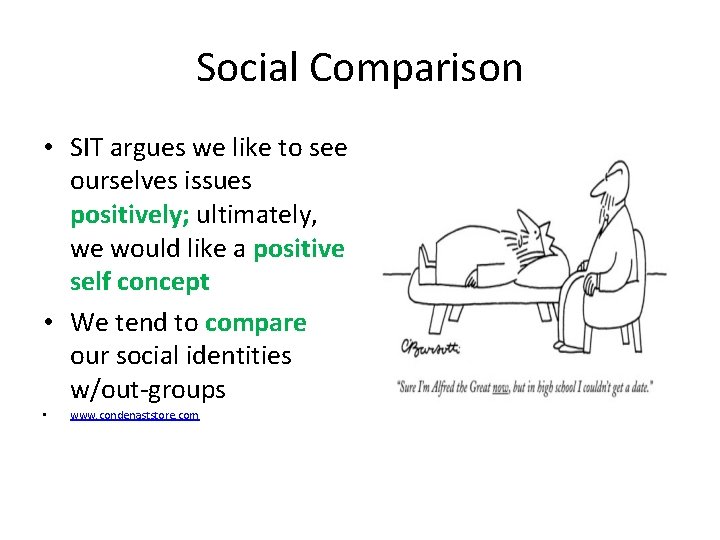
Social Comparison • SIT argues we like to see ourselves issues positively; ultimately, we would like a positive self concept • We tend to compare our social identities w/out-groups • www. condenaststore. com
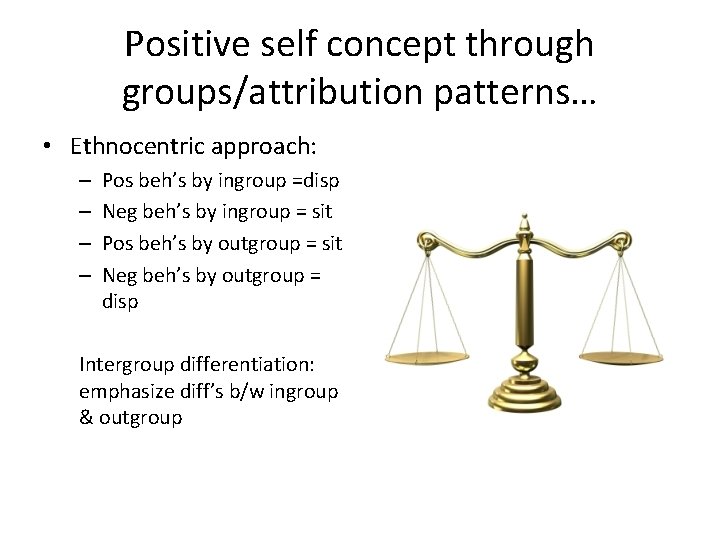
Positive self concept through groups/attribution patterns… • Ethnocentric approach: – – Pos beh’s by ingroup =disp Neg beh’s by ingroup = sit Pos beh’s by outgroup = sit Neg beh’s by outgroup = disp Intergroup differentiation: emphasize diff’s b/w ingroup & outgroup
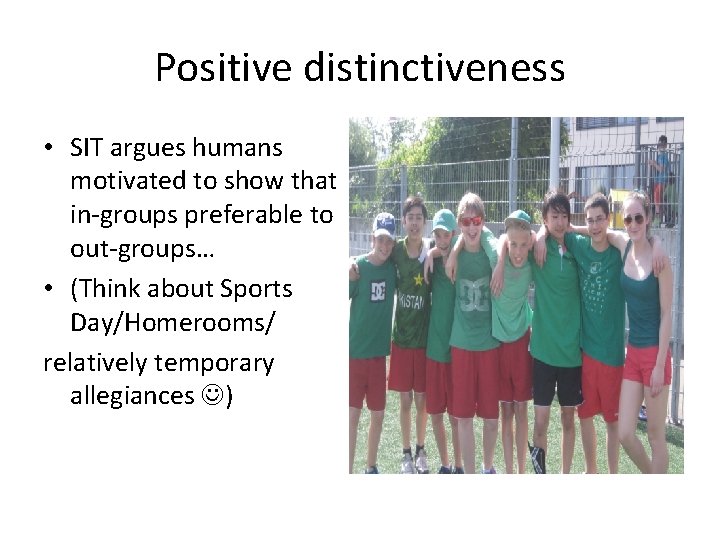
Positive distinctiveness • SIT argues humans motivated to show that in-groups preferable to out-groups… • (Think about Sports Day/Homerooms/ relatively temporary allegiances )
SIT
Let’s remember our job: • Evaluate/Discuss Social identity theory • To what extent does social identity theory explain behaviour?
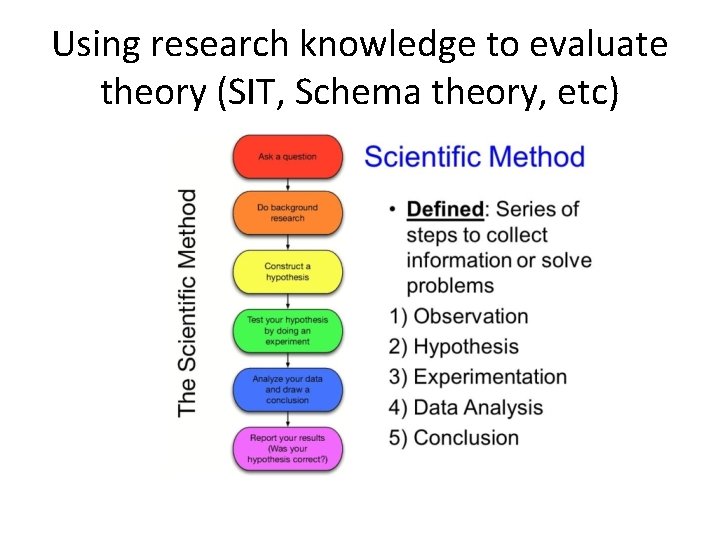
Using research knowledge to evaluate theory (SIT, Schema theory, etc)