
Mahatma Gandhi National Rural Employment Act MGNREGA Prof

- Slides: 9
Mahatma Gandhi National Rural Employment Act (MGNREGA) Prof. Jyothis Sathyapalan Centre for Wage Employment National Institute of Rural Development and Panchayati Raj Ragendranagar Hyderabad Jyothis. nird@gov. in
Background • Several Initiative since Indian Independence (Poverty alleviation) • National Rural Employment Programme (NREP) in 1980 -89; • Rural Landless Employment Guarantee Programme (RLEGP) in 1983 -89; • Jawahar Rojgar Yojana (JRY) in 1989 -99; • Employment Assurance Scheme (EAS) in 1993 -99; • Jawahar Gram Samridhi Yojana since 2001 • National Food for Work (NFFW) from 2004. • Supply-driven programmes, with marginal role for the Panchayati Raj Institutions (PRIs).
Mahatma Gandhi National Rural Employment Act (MGNREGA) • Act passed in August 2005 came into force on 2 February 2006 • Shared Liabilities between Centre and State • Implemented in Phased Manner • 1 st Phase 200 most back ward State and 130 district added in 2 nd phase (2007 -08) • All remaining rural districts added 3 rd Phase from April 1 st 2008
Preamble • For enhancement of Livelihood Security of rural households by providing at least 100 days of guaranteed wage employment in every financial year to every households whose adult members volunteer to do unskilled manual work.
Focus of the program • Wage employment • Livelihood security , Gender etc • Assets Creation • Ecological Security , Connectivity , infrastructure • Decentralized Governance • Strengthening grassroots democracy and planning • Labour budgeting and GPDP
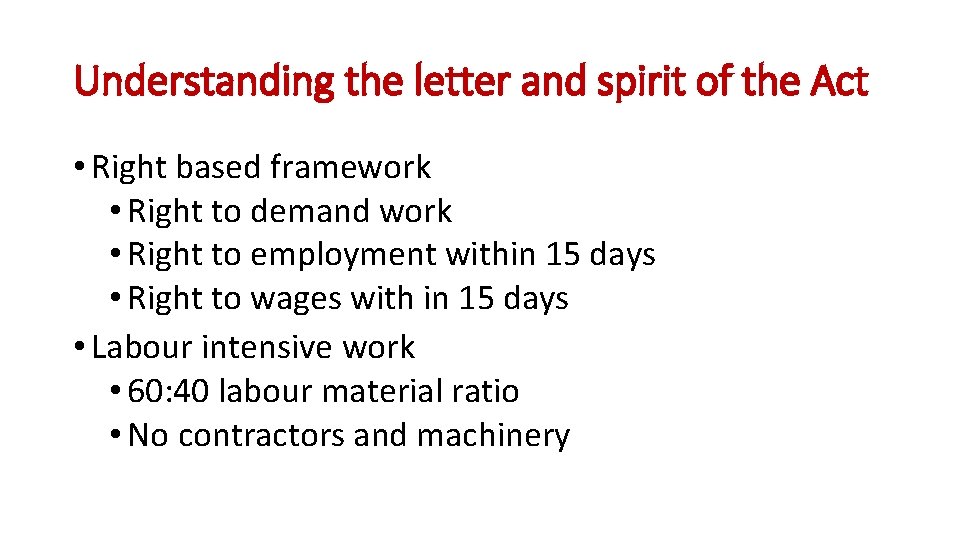
Understanding the letter and spirit of the Act • Right based framework • Right to demand work • Right to employment within 15 days • Right to wages with in 15 days • Labour intensive work • 60: 40 labour material ratio • No contractors and machinery
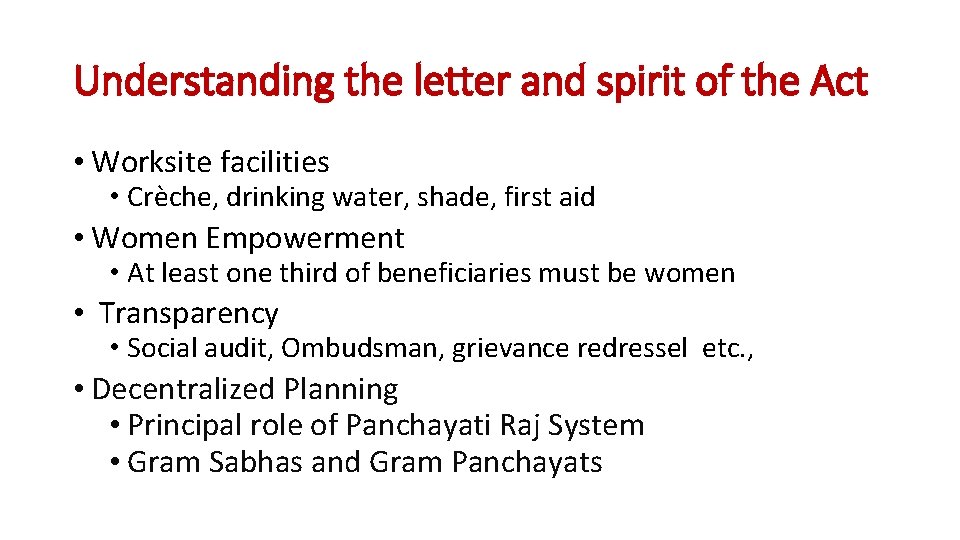
Understanding the letter and spirit of the Act • Worksite facilities • Crèche, drinking water, shade, first aid • Women Empowerment • At least one third of beneficiaries must be women • Transparency • Social audit, Ombudsman, grievance redressel etc. , • Decentralized Planning • Principal role of Panchayati Raj System • Gram Sabhas and Gram Panchayats
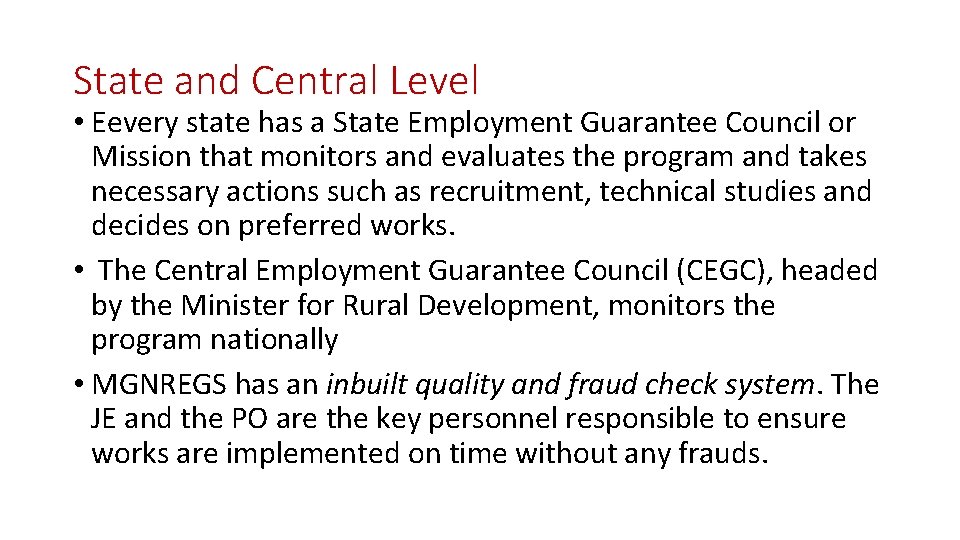
State and Central Level • Eevery state has a State Employment Guarantee Council or Mission that monitors and evaluates the program and takes necessary actions such as recruitment, technical studies and decides on preferred works. • The Central Employment Guarantee Council (CEGC), headed by the Minister for Rural Development, monitors the program nationally • MGNREGS has an inbuilt quality and fraud check system. The JE and the PO are the key personnel responsible to ensure works are implemented on time without any frauds.
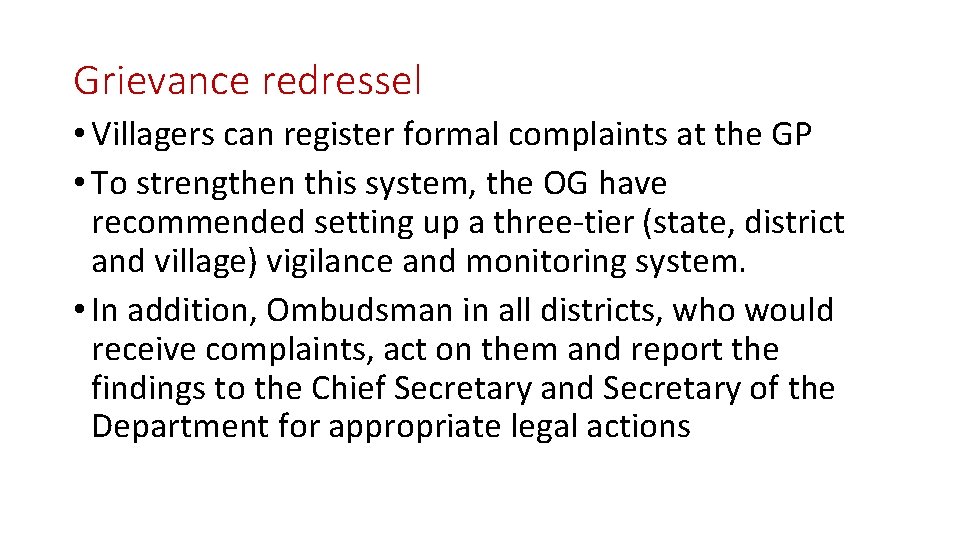
Grievance redressel • Villagers can register formal complaints at the GP • To strengthen this system, the OG have recommended setting up a three-tier (state, district and village) vigilance and monitoring system. • In addition, Ombudsman in all districts, who would receive complaints, act on them and report the findings to the Chief Secretary and Secretary of the Department for appropriate legal actions