
Mahatma Gandhi 1869 1948 Lawyer and Civil Rights
- Slides: 5
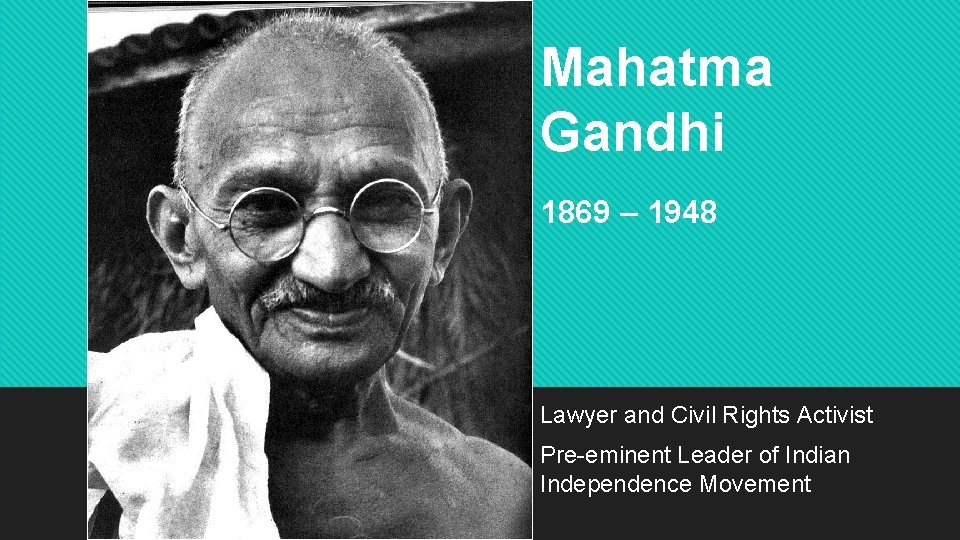
Mahatma Gandhi 1869 – 1948 Lawyer and Civil Rights Activist Pre-eminent Leader of Indian Independence Movement
Gandhi’s Understanding of Conflict Feelings of injustice or deprivation give rise to conflict. Conflicts are also created or imposed by persons or groups to make some gain from it. In a democratic country, political conflicts will always be there: “In a multi-racial, multi-religious, multi-cultural country like India there is always a challenge on ethnic, communal or cultural issues creating conflicts. The contradiction between the privileged and deprived sections of the people, educated and illiterate people, people of higher caste and lower caste within the same religion, social discrimination between men and women, trend of political subjugation of a small section of the population are the major sources of origin of conflict. ”
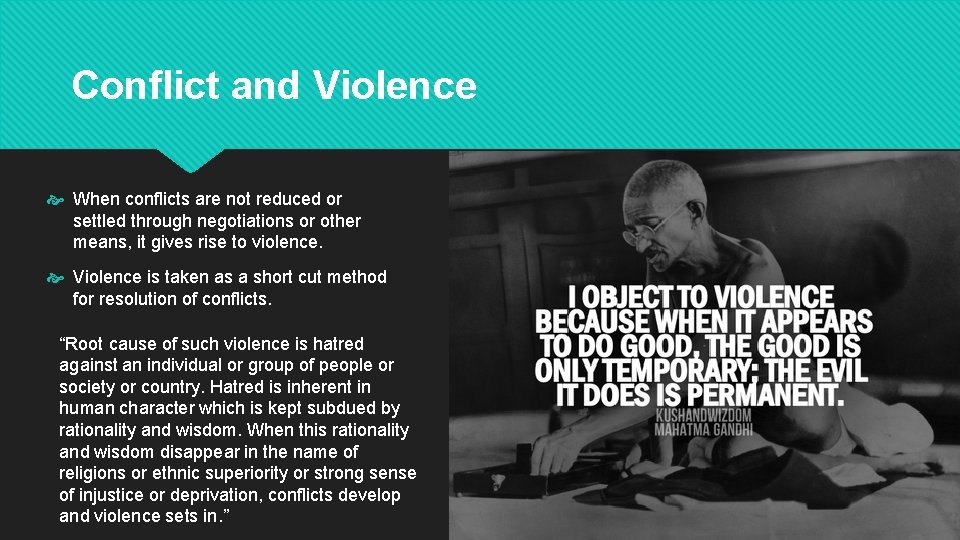
Conflict and Violence When conflicts are not reduced or settled through negotiations or other means, it gives rise to violence. Violence is taken as a short cut method for resolution of conflicts. “Root cause of such violence is hatred against an individual or group of people or society or country. Hatred is inherent in human character which is kept subdued by rationality and wisdom. When this rationality and wisdom disappear in the name of religions or ethnic superiority or strong sense of injustice or deprivation, conflicts develop and violence sets in. ”
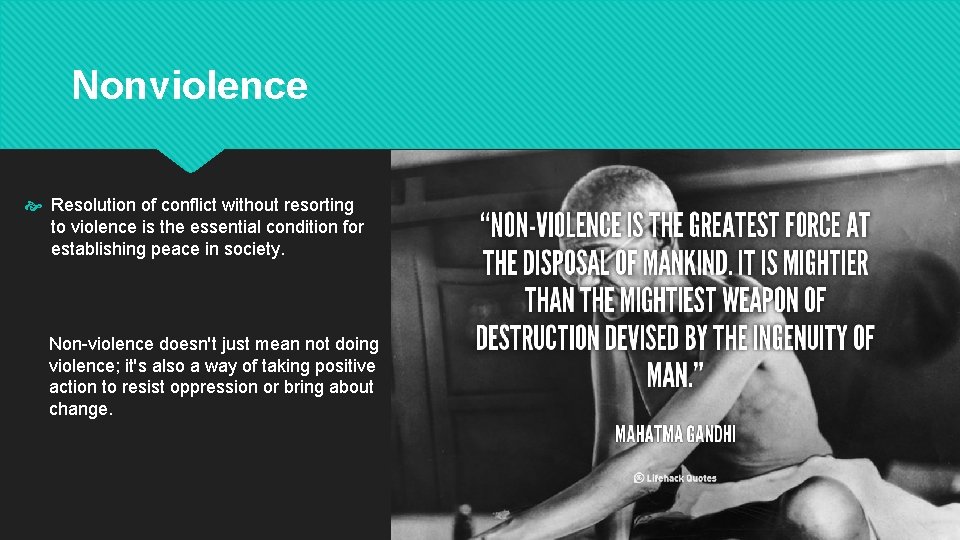
Nonviolence Resolution of conflict without resorting to violence is the essential condition for establishing peace in society. Non-violence doesn't just mean not doing violence; it's also a way of taking positive action to resist oppression or bring about change.
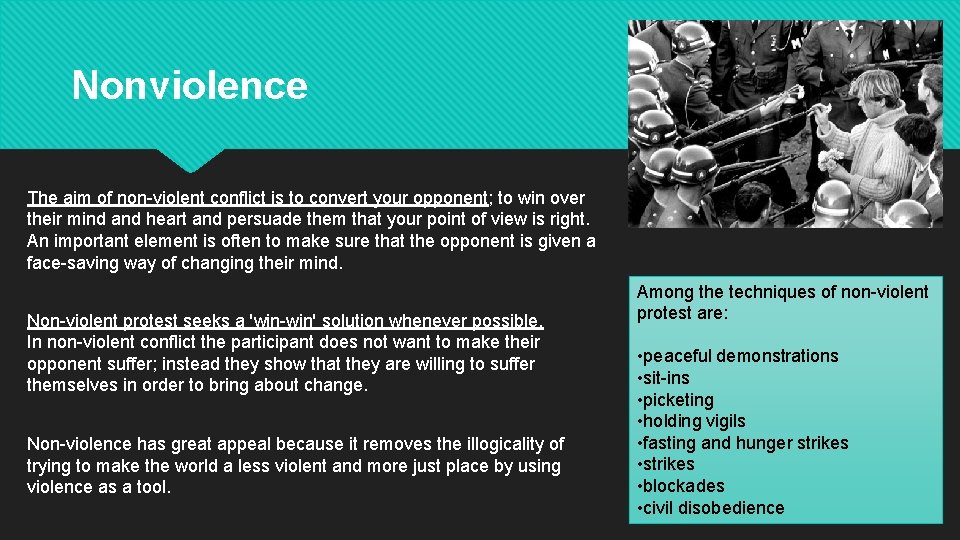
Nonviolence The aim of non-violent conflict is to convert your opponent; to win over their mind and heart and persuade them that your point of view is right. An important element is often to make sure that the opponent is given a face-saving way of changing their mind. Non-violent protest seeks a 'win-win' solution whenever possible. In non-violent conflict the participant does not want to make their opponent suffer; instead they show that they are willing to suffer themselves in order to bring about change. Non-violence has great appeal because it removes the illogicality of trying to make the world a less violent and more just place by using violence as a tool. Among the techniques of non-violent protest are: • peaceful demonstrations • sit-ins • picketing • holding vigils • fasting and hunger strikes • blockades • civil disobedience