
Magnification On an image of a specimen it



- Slides: 21
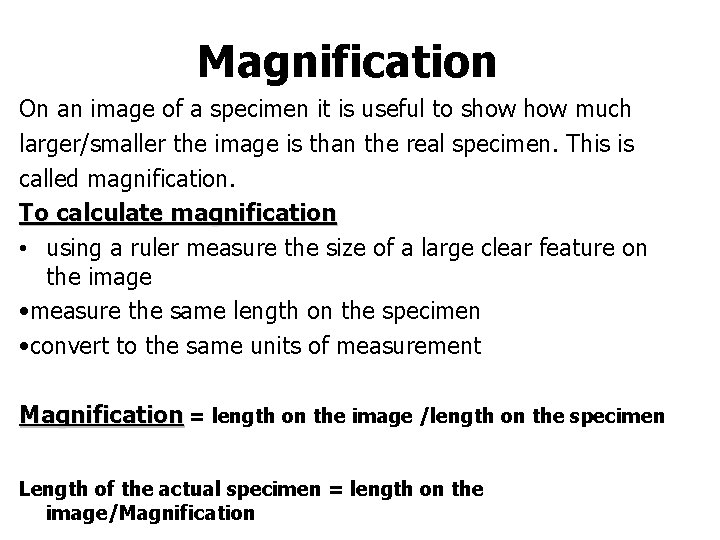
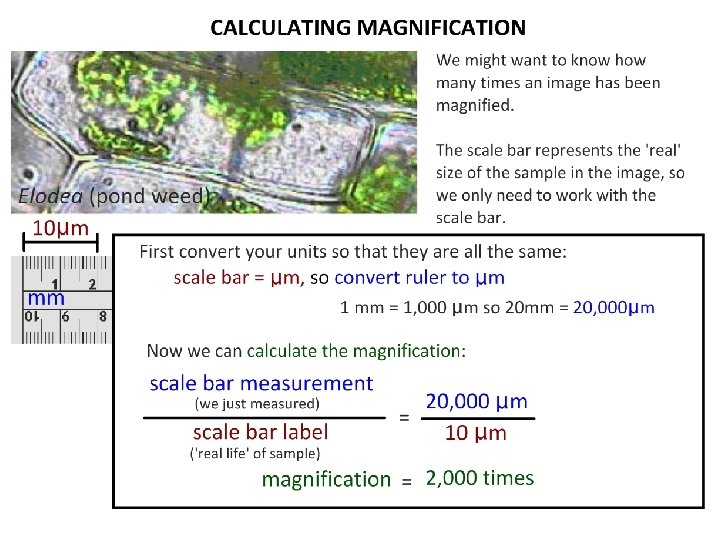
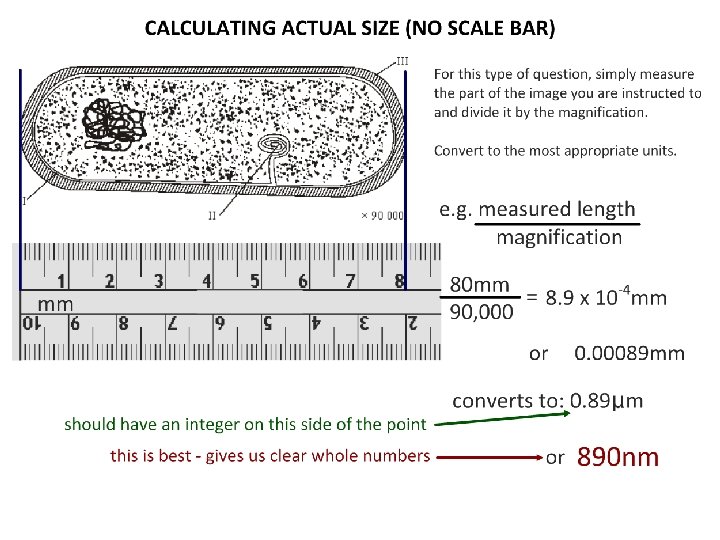
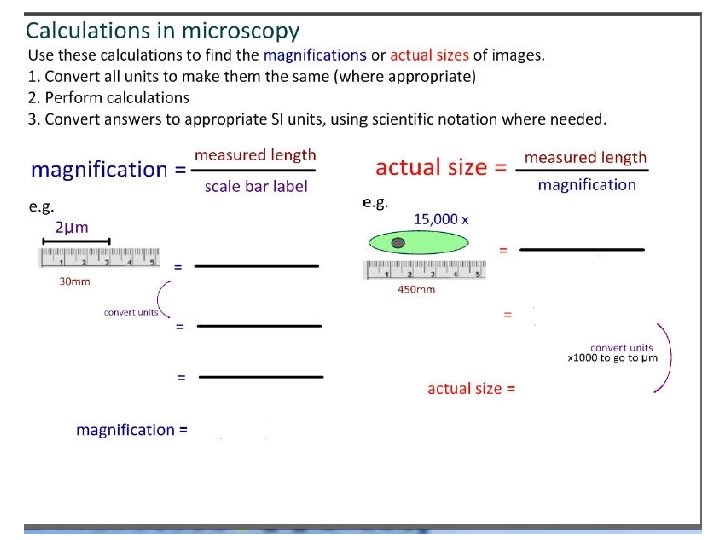
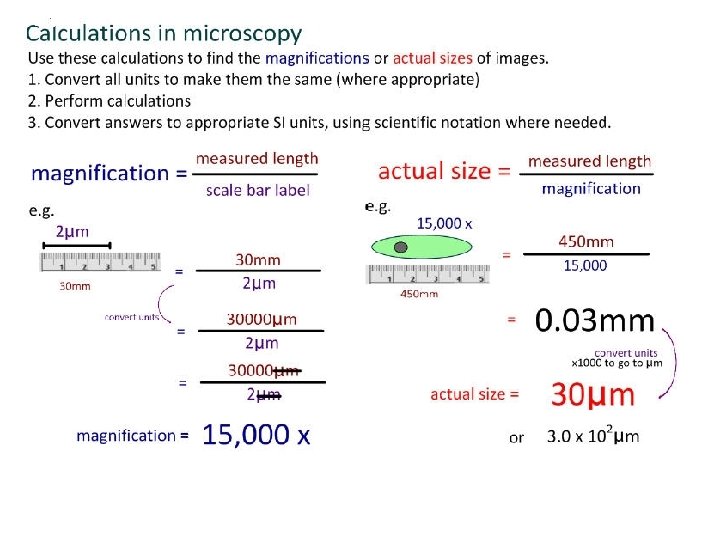
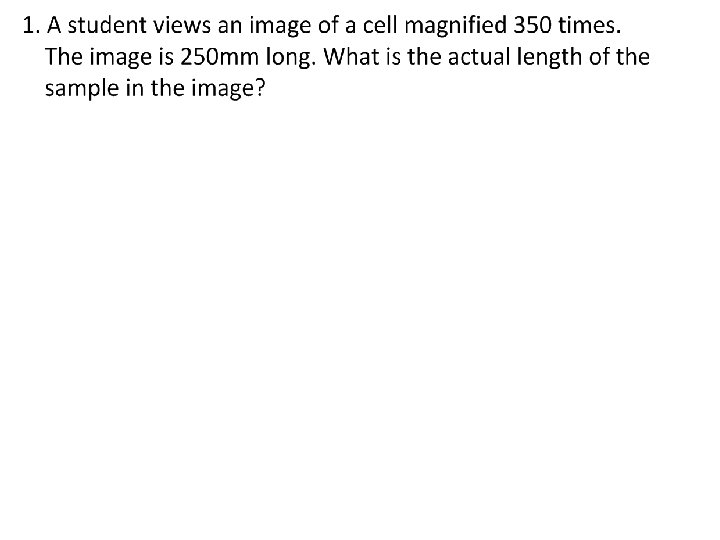
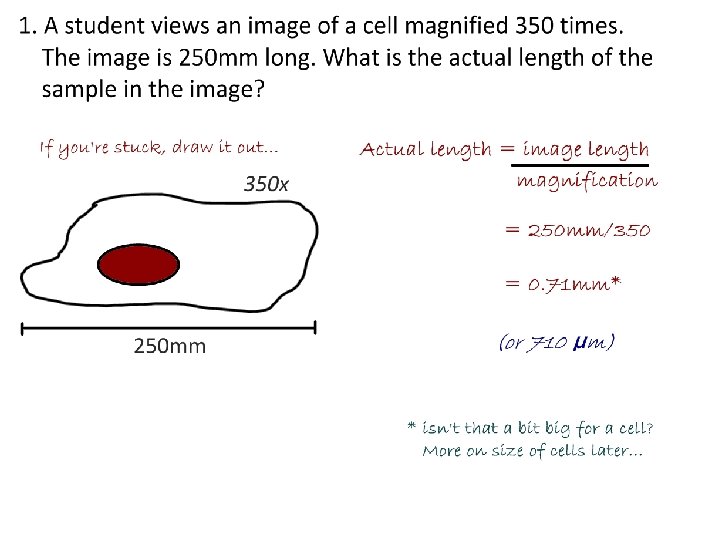
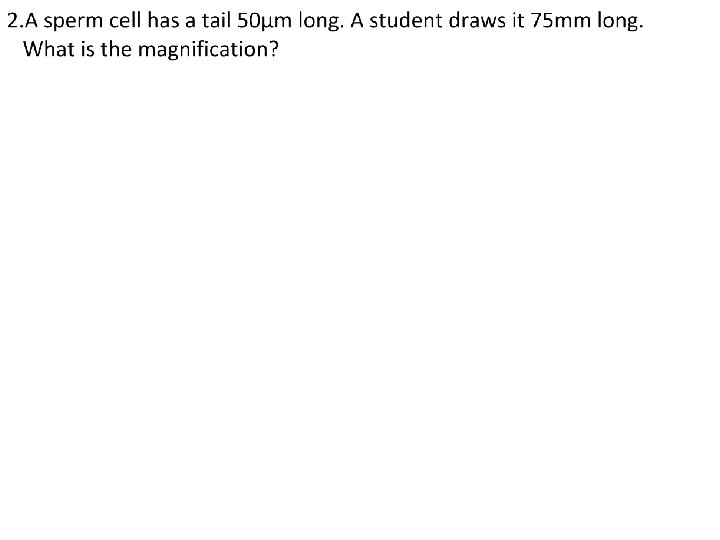
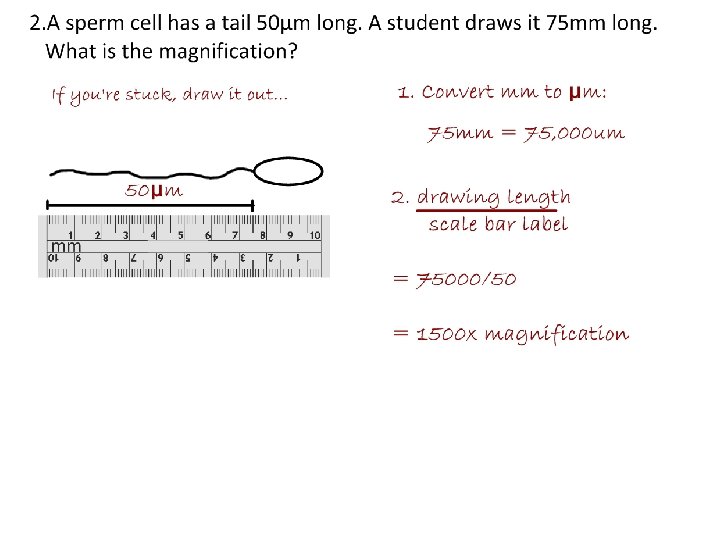
Magnification On an image of a specimen it is useful to show much larger/smaller the image is than the real specimen. This is called magnification. To calculate magnification • using a ruler measure the size of a large clear feature on the image • measure the same length on the specimen • convert to the same units of measurement Magnification = length on the image /length on the specimen Length of the actual specimen = length on the image/Magnification
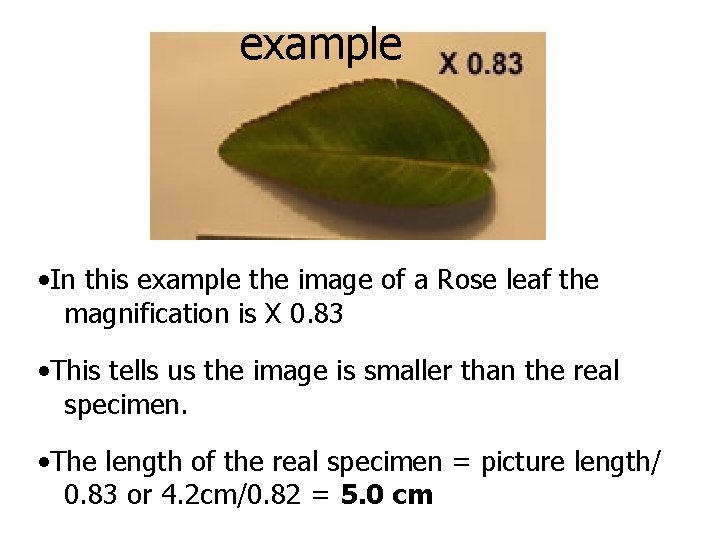
example • In this example the image of a Rose leaf the magnification is X 0. 83 • This tells us the image is smaller than the real specimen. • The length of the real specimen = picture length/ 0. 83 or 4. 2 cm/0. 82 = 5. 0 cm
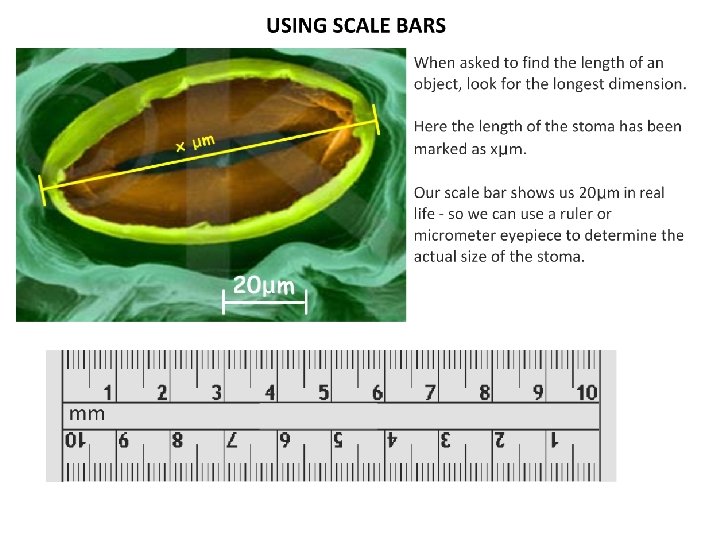
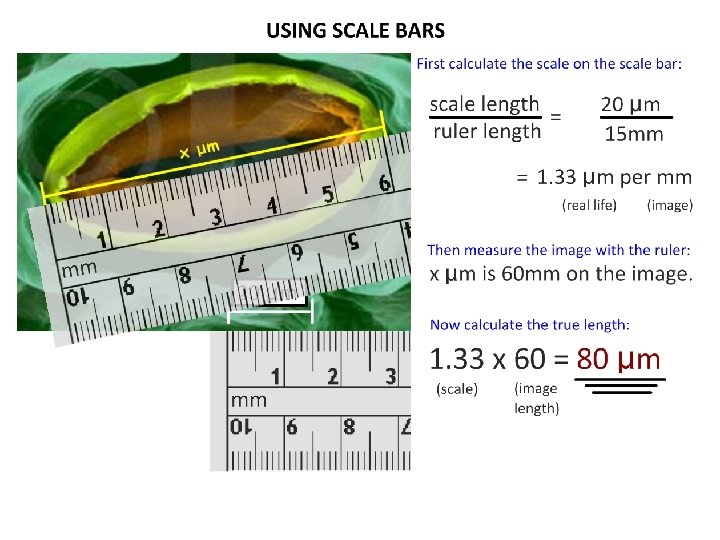
Scale Bars • A scale bar is a line added to a drawing, diagram or photograph to show the actual size of the structures. • The scale bar in the picture allows you quickly to determine the approximate size of a feature. • The main feature in the micrograph is a nucleus with a dark region called the nucleolus. • Using the picture estimate the size of the nucleus and its nucleolus.
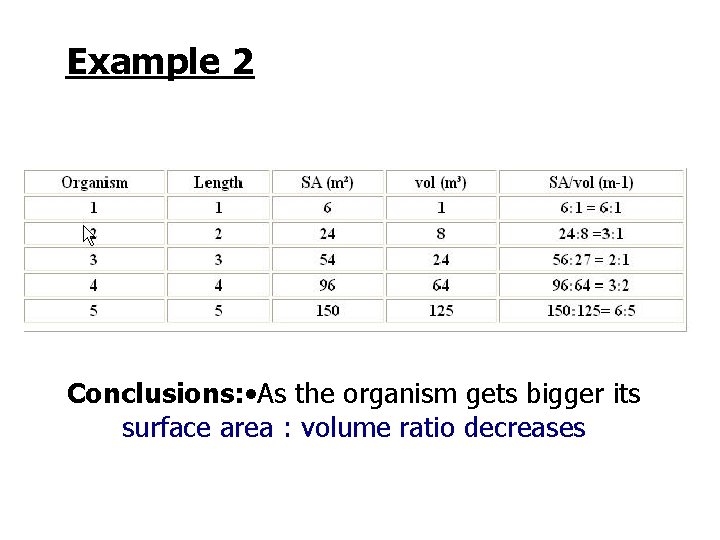
Surface area : Volume ratio and cell size • • All organisms need to exchange substances such as food, waste, gases and heat with their surroundings. These substances must be exchanged between the organism and its surroundings. As the size of a structure increases the surface area to volume ratio decreases. • Therefore the rate of exchange (diffusion/radiation) decreases. • This is true for organelles, cells, tissues, organs and organisms.
• The rate of exchange of substances therefore depends on the organism's surface area that is in contact with the surroundings. • The exchange depends on the volume of the organism, so the ability to meet the requirements depends on , which is known as the surface area : volume ratio • As organisms get bigger their volume and surface area both get bigger, but not by the same amount. This can be seen by performing some simple calculations concerning different-sized organisms.
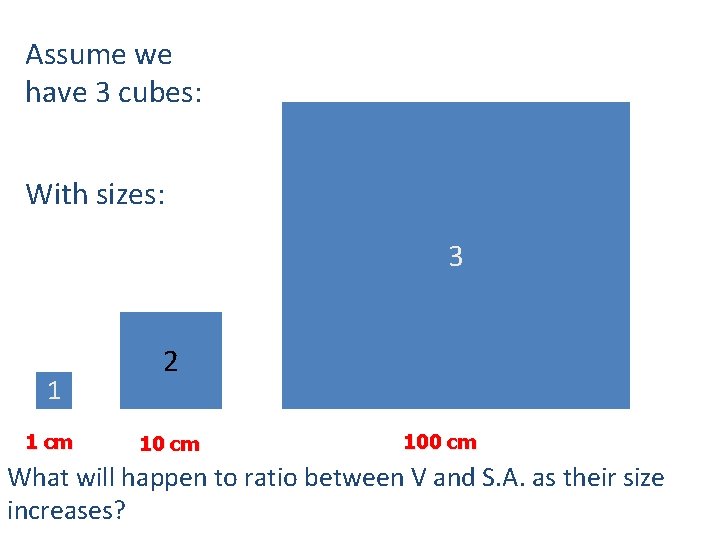
Assume we have 3 cubes: With sizes: 3 1 1 cm 2 10 cm 100 cm What will happen to ratio between V and S. A. as their size increases?
Ratio of V: S. A. Cube Side Length Volume (x 3) S. A. (6 x 2) Ratio (S. A. /V) 1 1 cm 3 6 cm 2 6 2 10 cm 1 000 cm 3 600 cm 2 3 100 cm 1 000 60 000 cm 2 cm 3 0. 6 0. 06
Example 2 Conclusions: • As the organism gets bigger its surface area : volume ratio decreases
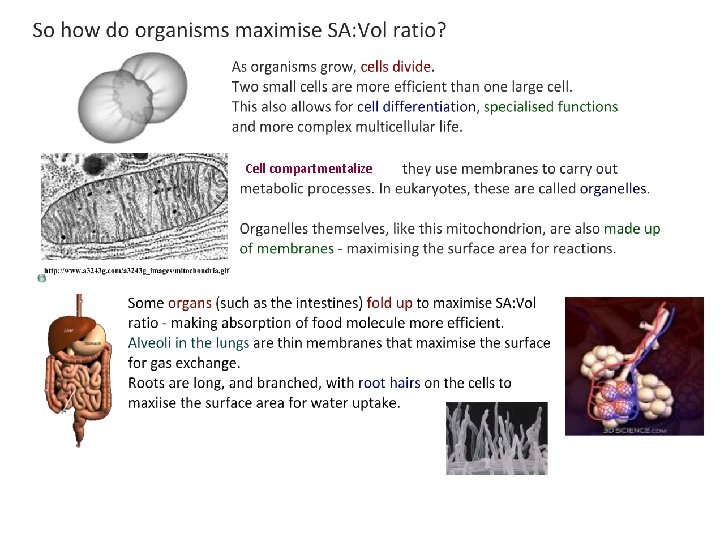
Cell compartmentalize