
Magnets and Charges Vector Direction Conventions Left Right
- Slides: 32
Magnets and Charges
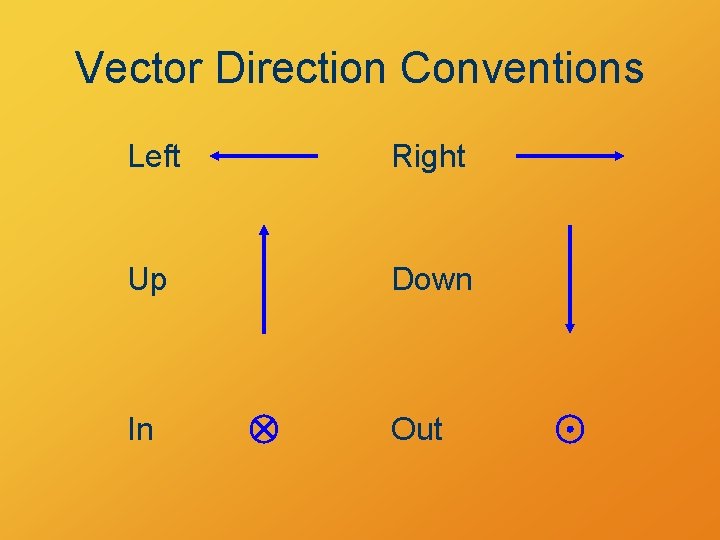
Vector Direction Conventions Left Right Up Down In Out
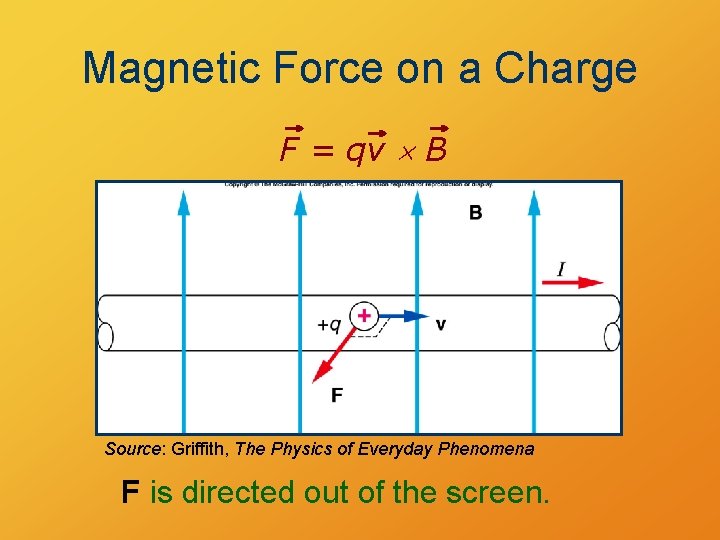
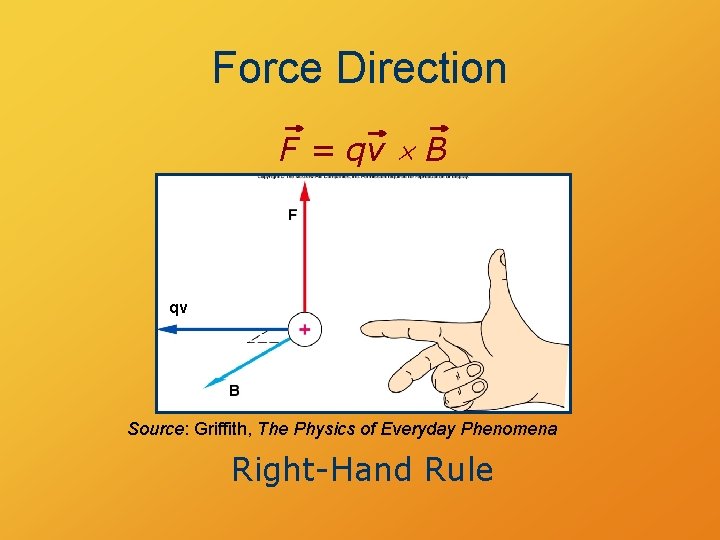
Magnetic Force on a Charge F = qv B Source: Griffith, The Physics of Everyday Phenomena F is directed out of the screen.
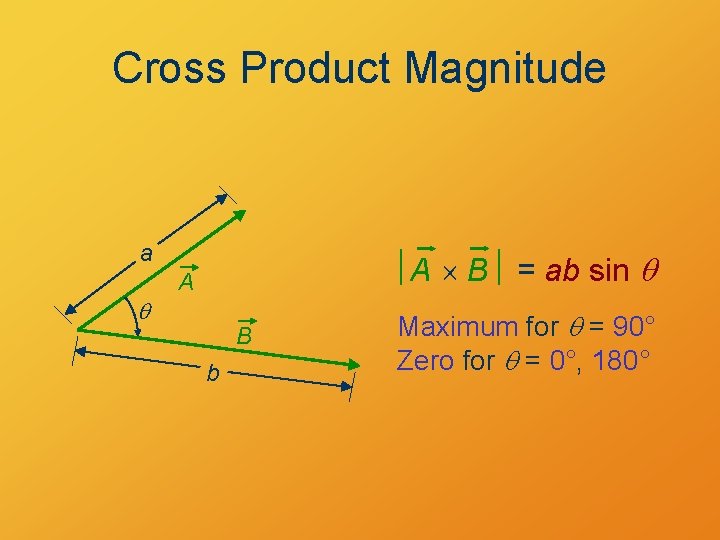
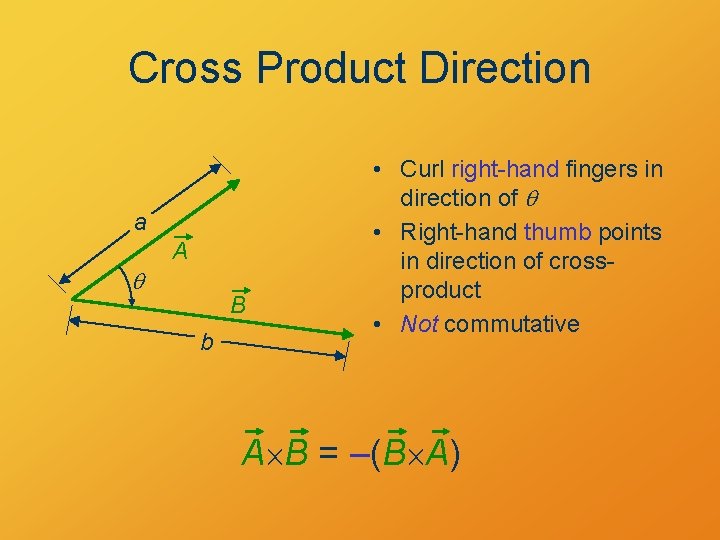
Vector Cross Product • • Operation symbol Another way to multiply two vectors Product is a vector! Direction of A B is perpendicular to both A and B
Cross Product Magnitude a q A B = ab sin q A B b Maximum for q = 90° Zero for q = 0°, 180°
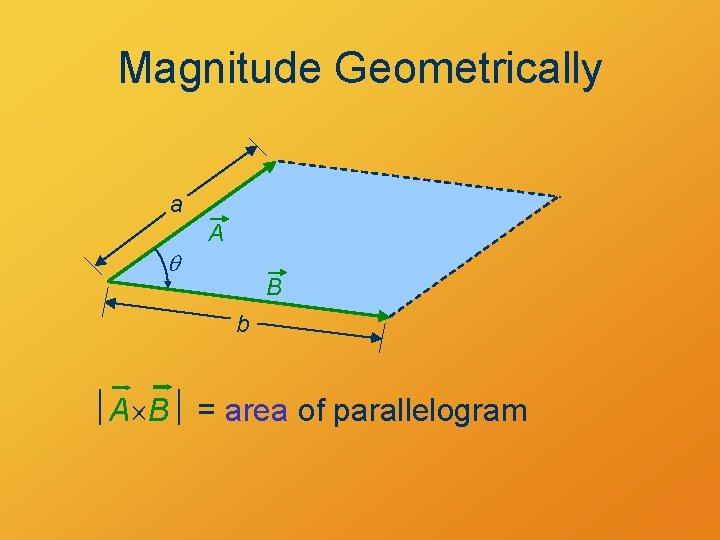
Magnitude Geometrically a q A B b A B = area of parallelogram
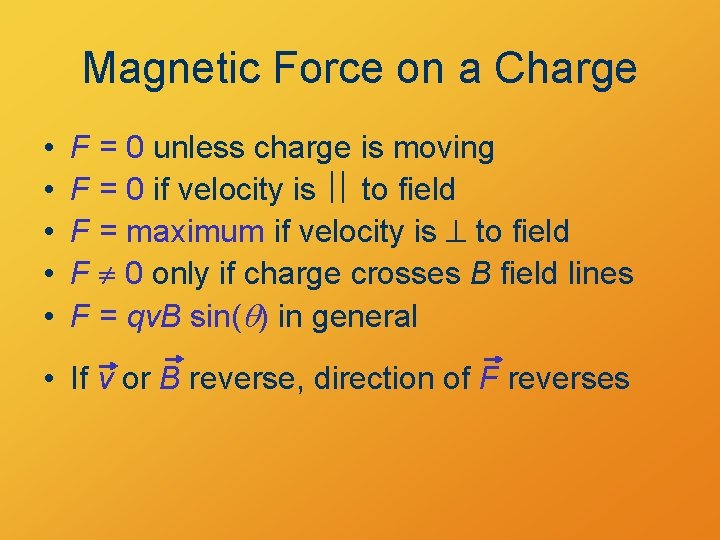
Magnetic Force on a Charge • • • F = 0 unless charge is moving F = 0 if velocity is to field F = maximum if velocity is to field F 0 only if charge crosses B field lines F = qv. B sin(q) in general • If v or B reverse, direction of F reverses
Group Work What are the units of magnetic field B?
Cross Product Direction a q A B b • Curl right-hand fingers in direction of q • Right-hand thumb points in direction of crossproduct • Not commutative A B = –(B A)
Force Direction F = qv B qv Source: Griffith, The Physics of Everyday Phenomena Right-Hand Rule
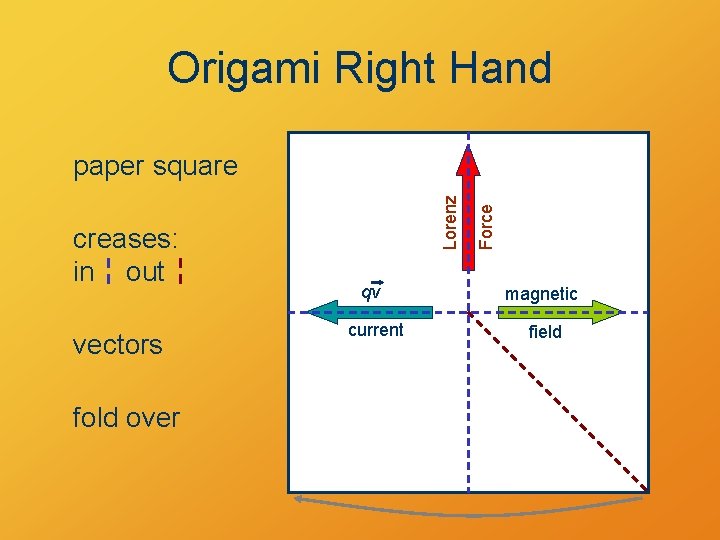
Origami Right Hand vectors fold over qv current Force creases: in out Lorenz paper square magnetic field
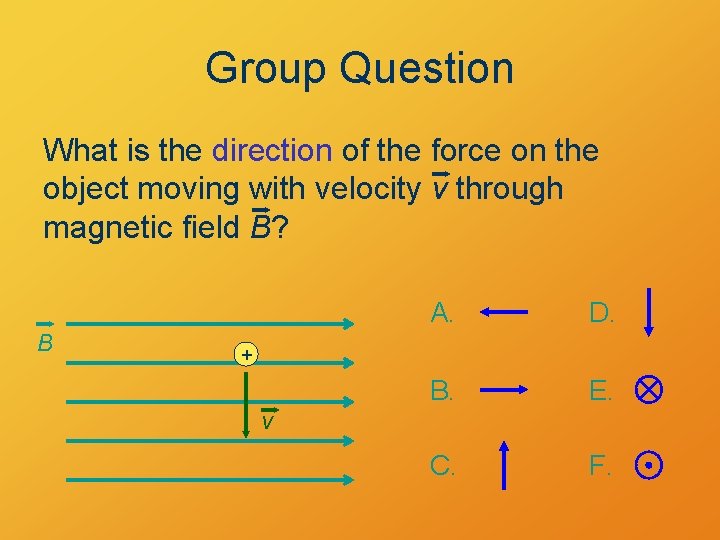
Group Question What is the direction of the force on the object moving with velocity v through magnetic field B? B A. D. B. E. C. F. + v
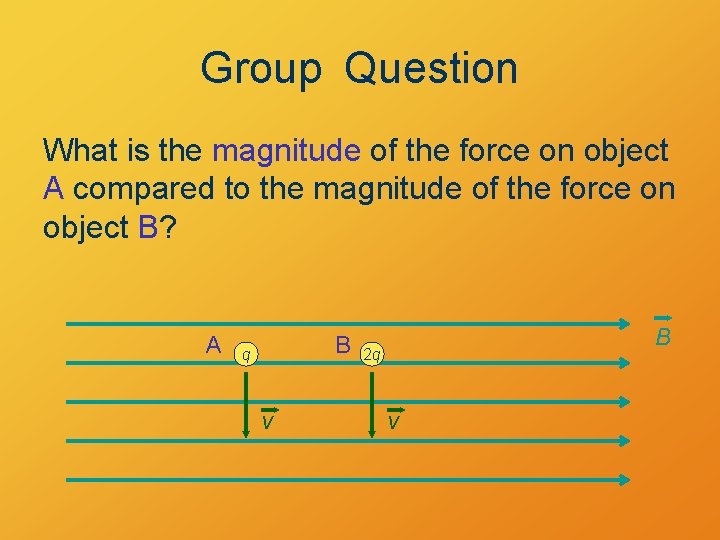
Group Question What is the magnitude of the force on object A compared to the magnitude of the force on object B? A B q v B 2 q v
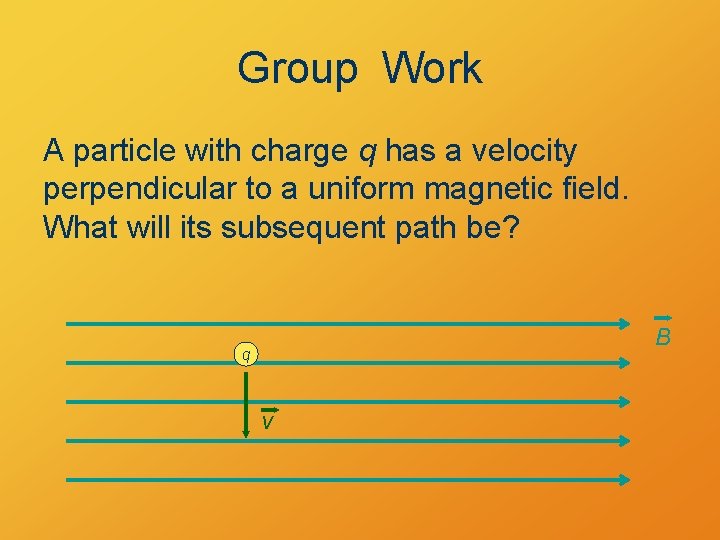
Group Work A particle with charge q has a velocity perpendicular to a uniform magnetic field. What will its subsequent path be? B q v
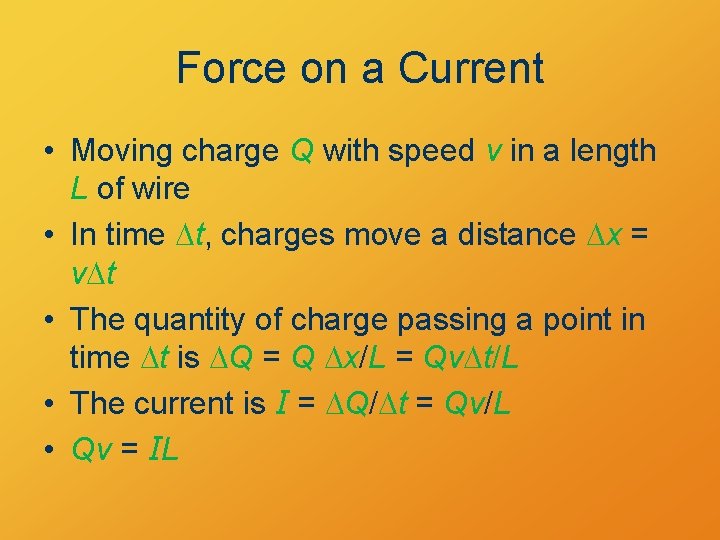
Force on a Current • Moving charge Q with speed v in a length L of wire • In time Dt, charges move a distance Dx = v. Dt • The quantity of charge passing a point in time Dt is DQ = Q Dx/L = Qv. Dt/L • The current is I = DQ/Dt = Qv/L • Qv = IL
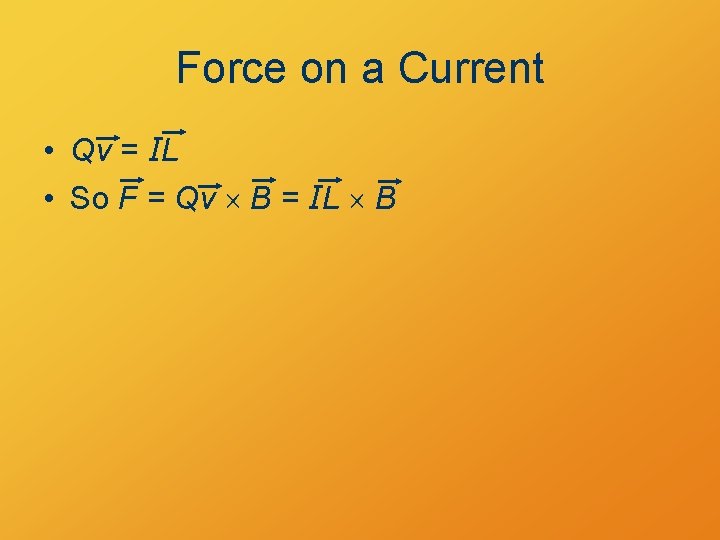
Force on a Current • Qv = IL • So F = Qv B = IL B
Currents and Magnets
CPS Question What happens if you break a magnet between its north and south poles? A. You make two smaller magnets, each with a north and south pole. B. One piece becomes a north pole and one piece becomes a south pole. C. One piece is a magnet and the other is not. D. None of these.
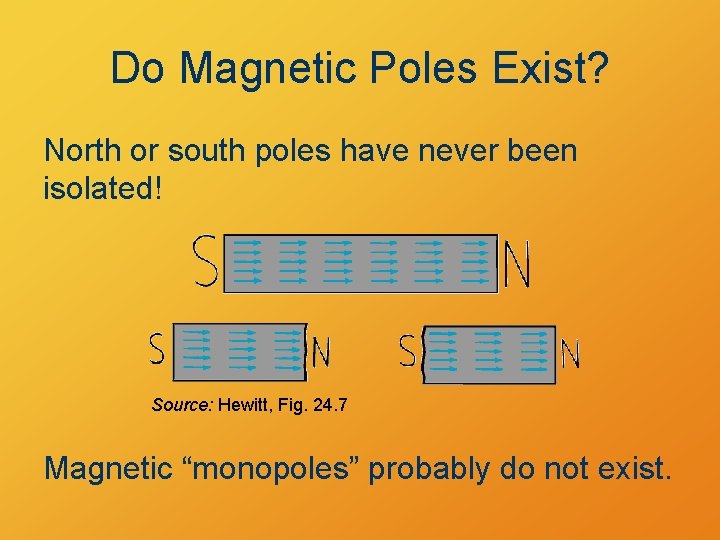
Do Magnetic Poles Exist? North or south poles have never been isolated! Source: Hewitt, Fig. 24. 7 Magnetic “monopoles” probably do not exist.
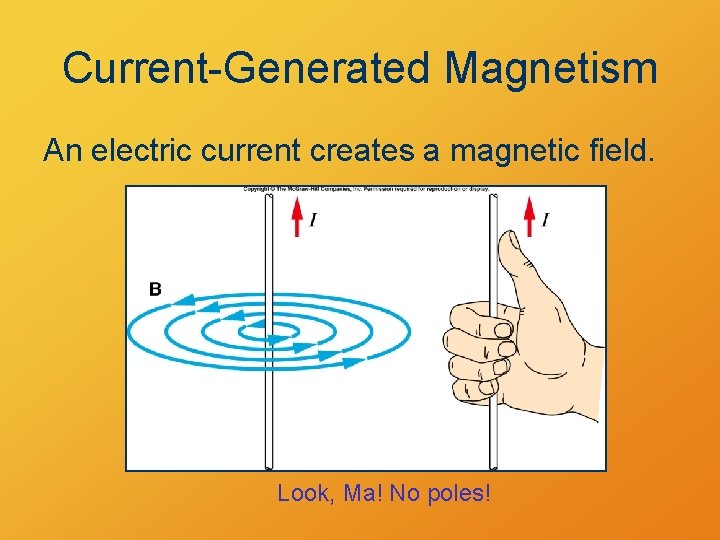
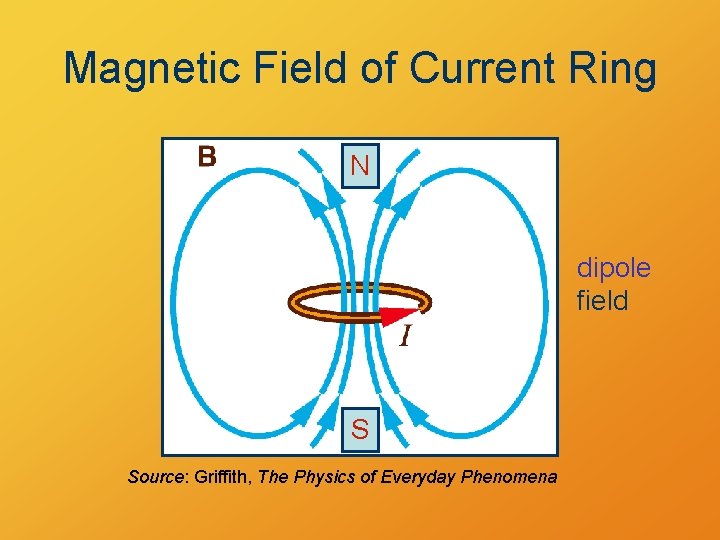
Current-Generated Magnetism An electric current creates a magnetic field. Look, Ma! No poles!
Magnetic Field of Current Ring N dipole field S Source: Griffith, The Physics of Everyday Phenomena
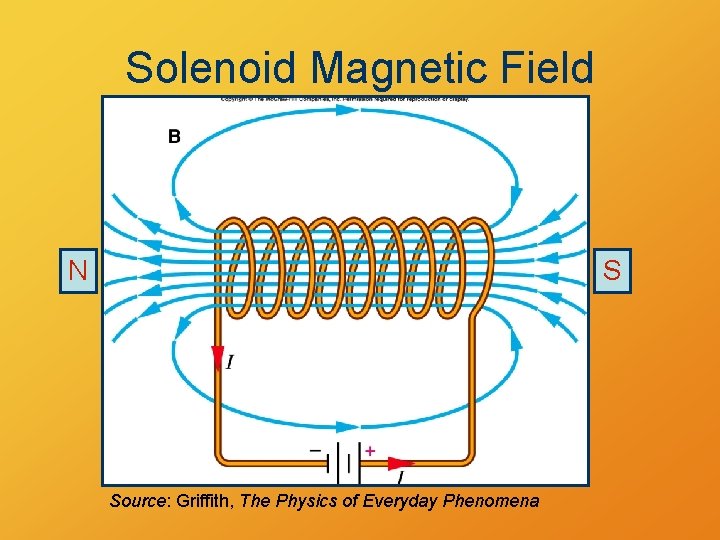
Solenoid Magnetic Field N S Source: Griffith, The Physics of Everyday Phenomena
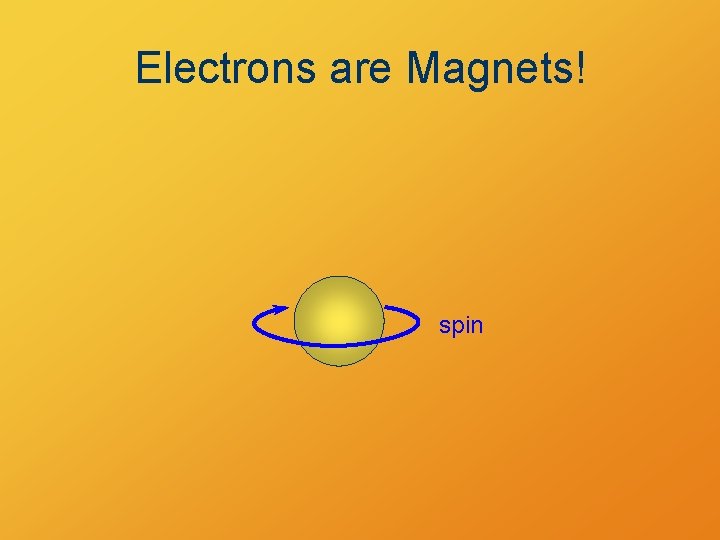
Electrons are Magnets! spin
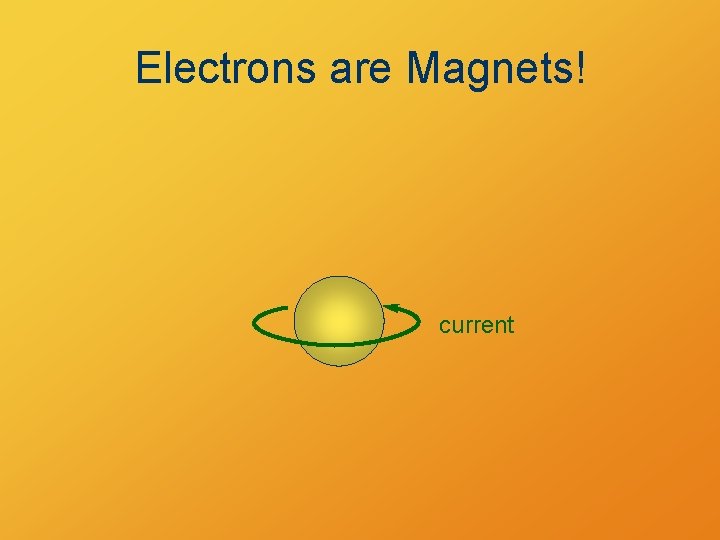
Electrons are Magnets! current
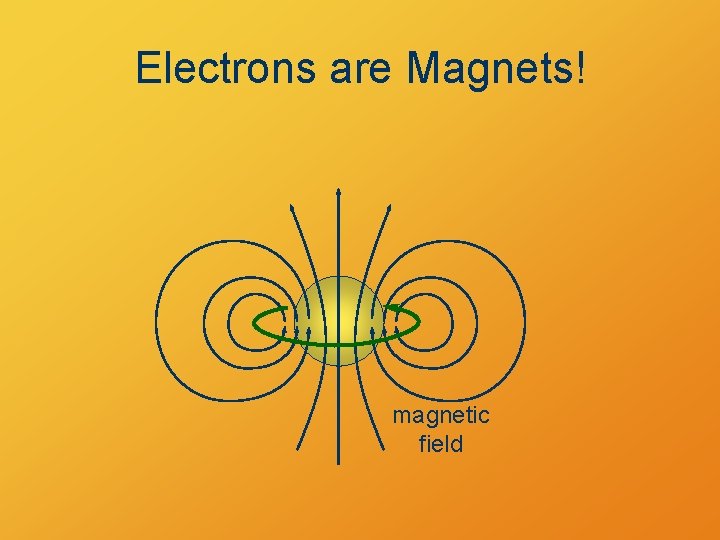
Electrons are Magnets! magnetic field
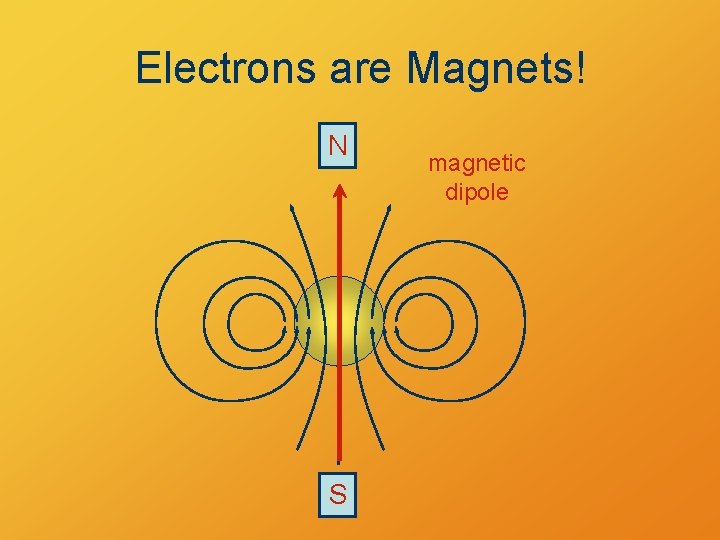
Electrons are Magnets! N S magnetic dipole
Types of Magnets • Electromagnets – currents travel through conducting coils • Permanent Magnets – materials whose electrons have aligned spins Moving charges create the fields!
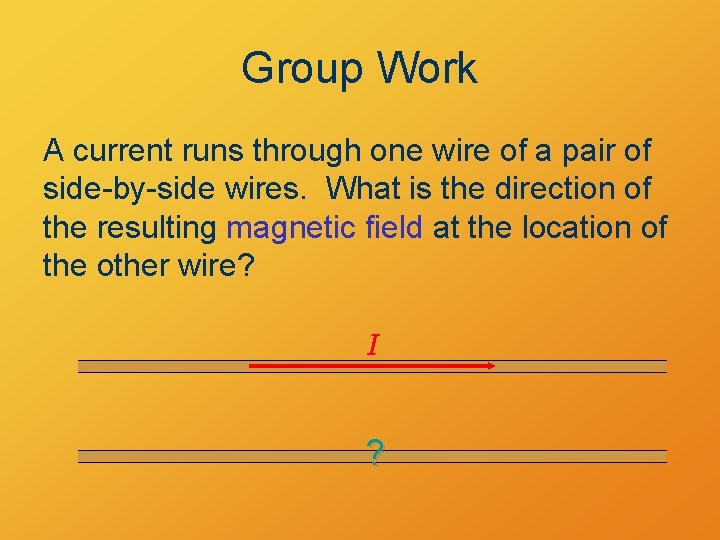
Group Work A current runs through one wire of a pair of side-by-side wires. What is the direction of the resulting magnetic field at the location of the other wire? I ?
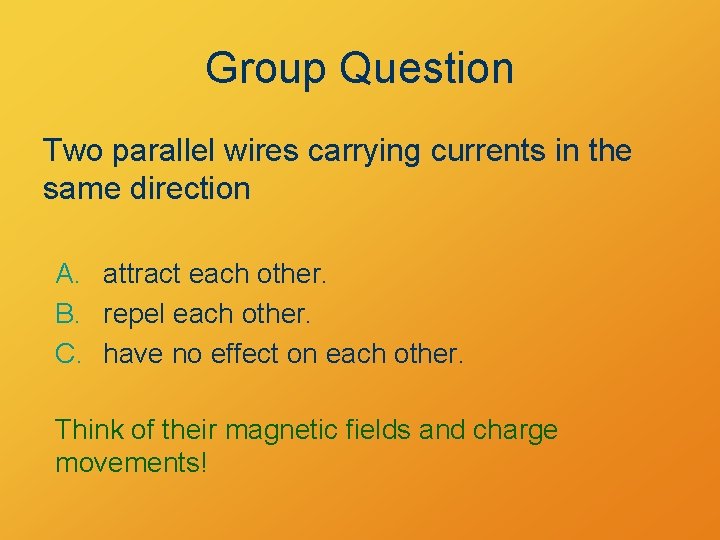
Group Question Two parallel wires carrying currents in the same direction A. attract each other. B. repel each other. C. have no effect on each other. Think of their magnetic fields and charge movements!
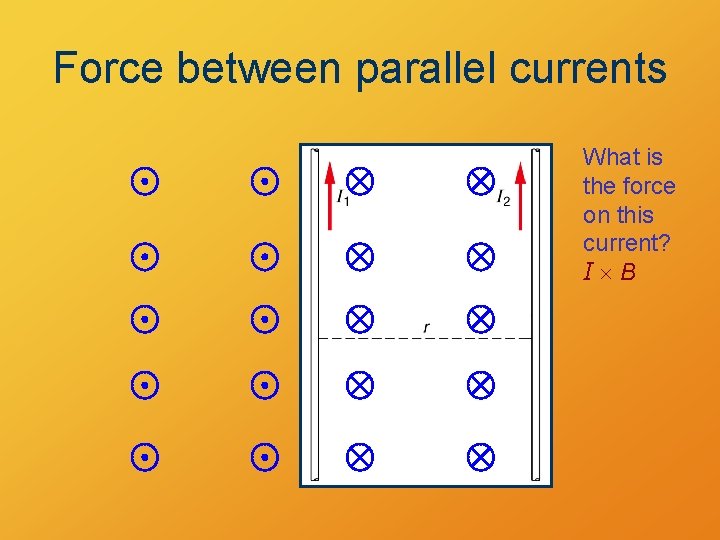
Force between parallel currents What is the force on this current? I B
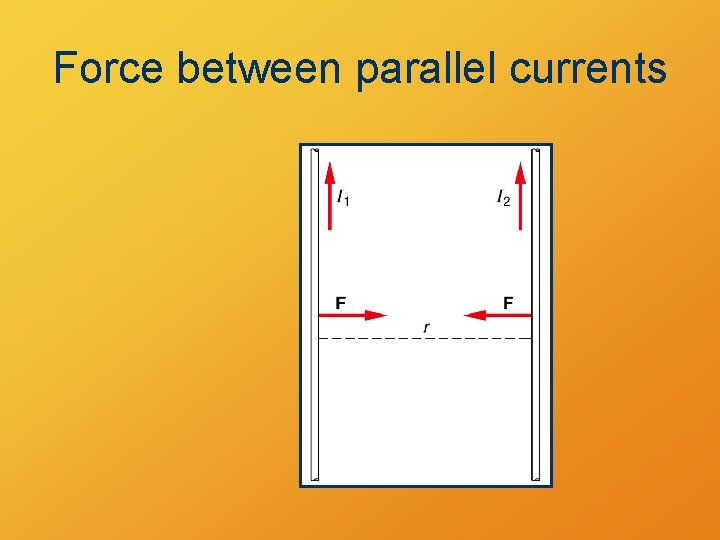
Force between parallel currents
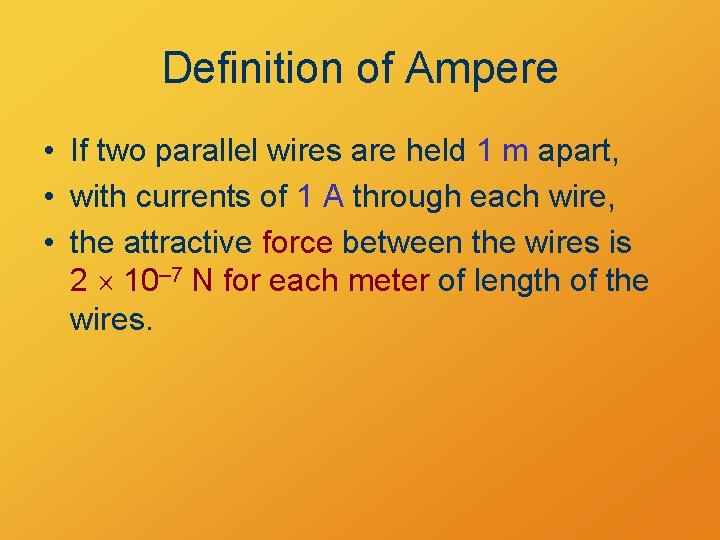
Definition of Ampere • If two parallel wires are held 1 m apart, • with currents of 1 A through each wire, • the attractive force between the wires is 2 10– 7 N for each meter of length of the wires.