
Magnetism The science all magnetic phenomena result from

- Slides: 24
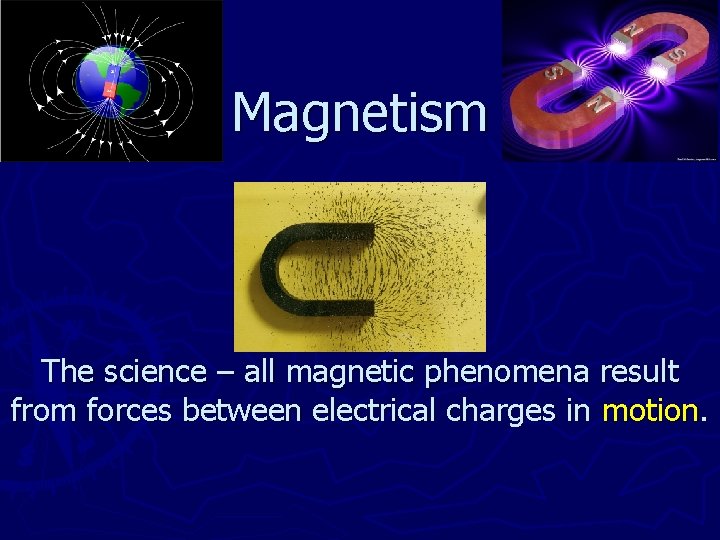
Magnetism The science – all magnetic phenomena result from forces between electrical charges in motion.
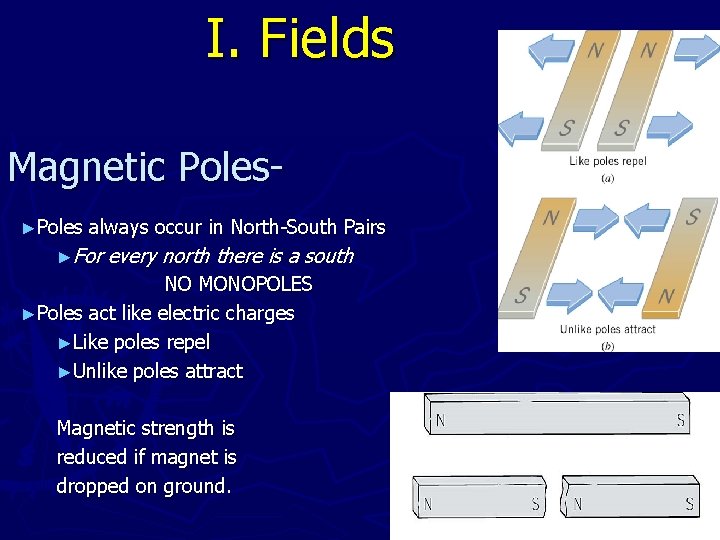
I. Fields Magnetic Poles►Poles always occur in North-South Pairs ►For every north there is a south NO MONOPOLES ►Poles act like electric charges ►Like poles repel ►Unlike poles attract Magnetic strength is reduced if magnet is dropped on ground.
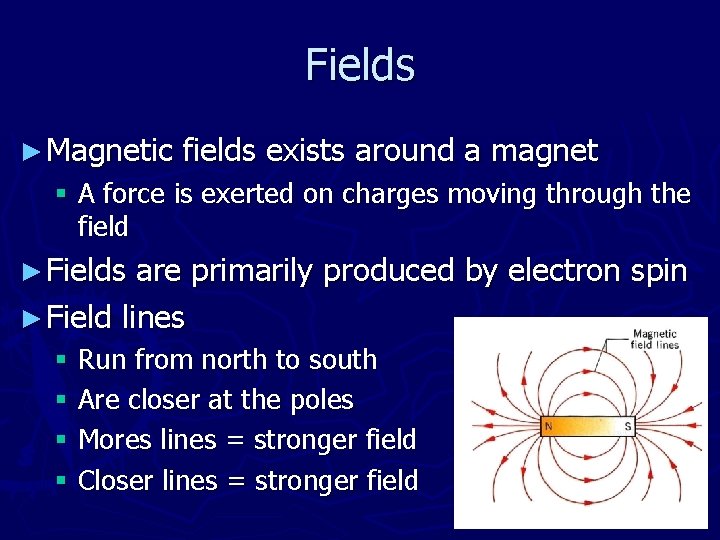
Fields ► Magnetic fields exists around a magnet § A force is exerted on charges moving through the field ► Fields are primarily produced by electron spin ► Field lines § Run from north to south § Are closer at the poles § Mores lines = stronger field § Closer lines = stronger field
N S Where is the magnetic field the strongest?
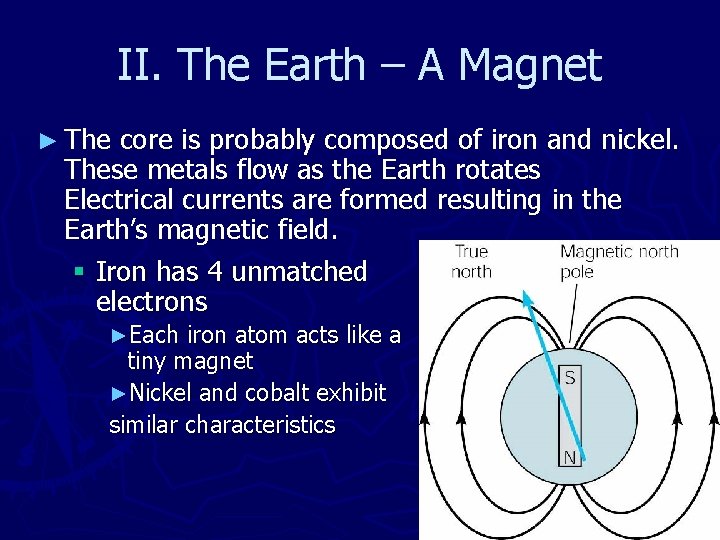
II. The Earth – A Magnet ► The core is probably composed of iron and nickel. These metals flow as the Earth rotates Electrical currents are formed resulting in the Earth’s magnetic field. § Iron has 4 unmatched electrons ►Each iron atom acts like a tiny magnet ►Nickel and cobalt exhibit similar characteristics
• • • What is a monopole and why do they not exist? Magnetism results from forces between charges in. What happens if you drop a magnet? Magnetic field lines run from – to – The north pole is actually the magnetic. What is responsible for the EMF? Why does the earth’s EMF flip? Why is the EMF weak? How do we know a magnetic field existed on Mars?
III. Electrical Charges and Magnetic Fields All magnetic phenomena result from forces between electric charges in motion.
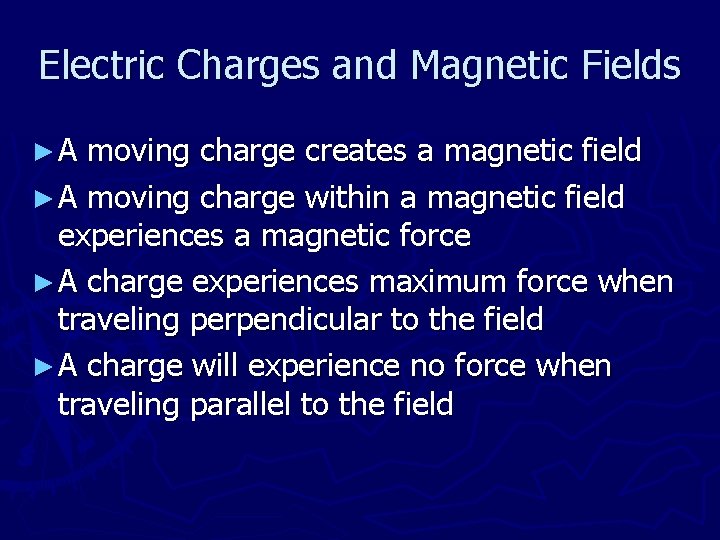
Electric Charges and Magnetic Fields ►A moving charge creates a magnetic field ► A moving charge within a magnetic field experiences a magnetic force ► A charge experiences maximum force when traveling perpendicular to the field ► A charge will experience no force when traveling parallel to the field
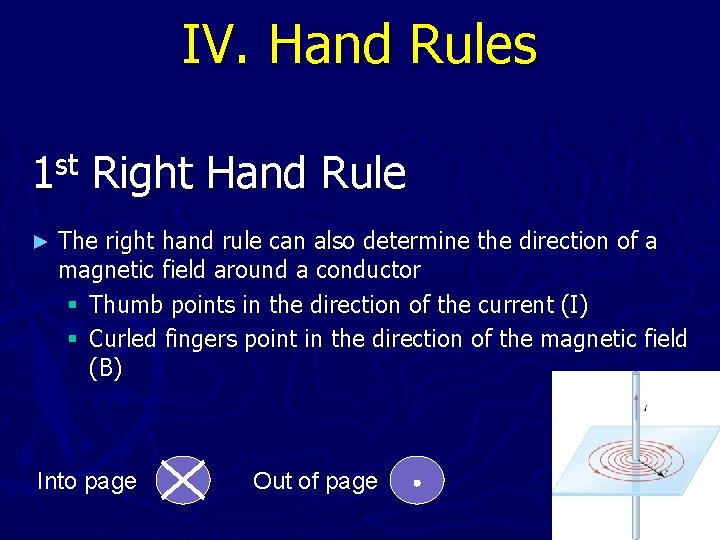
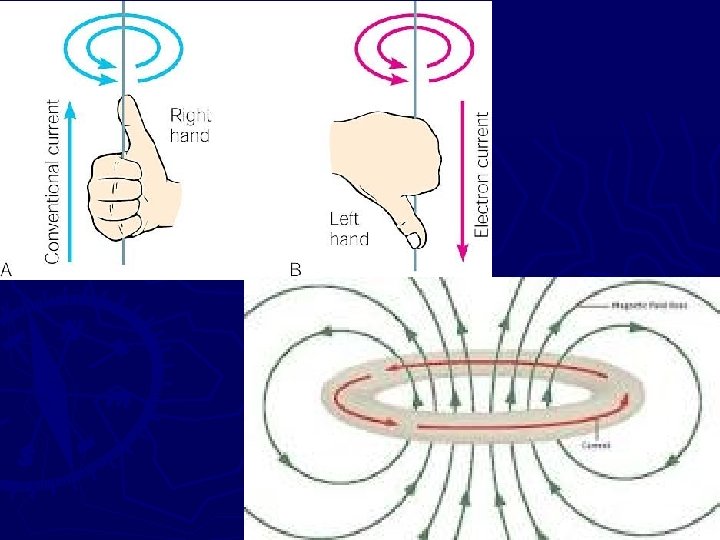
IV. Hand Rules st 1 ► Right Hand Rule The right hand rule can also determine the direction of a magnetic field around a conductor § Thumb points in the direction of the current (I) § Curled fingers point in the direction of the magnetic field (B) Into page Out of page
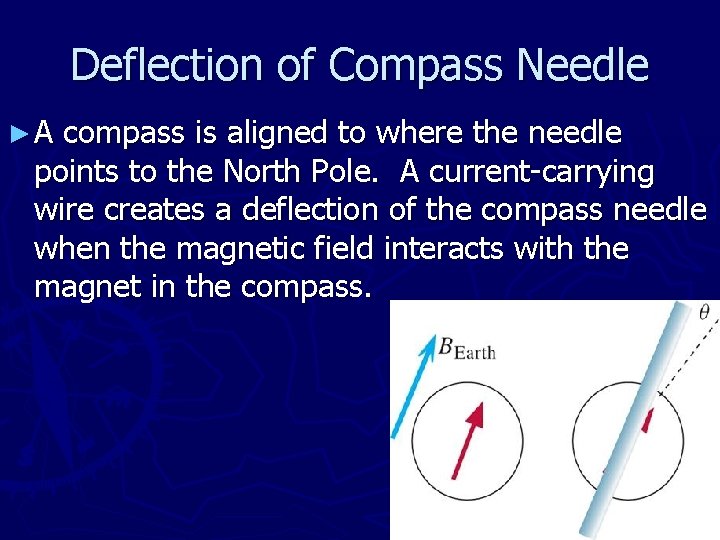
Deflection of Compass Needle ►A compass is aligned to where the needle points to the North Pole. A current-carrying wire creates a deflection of the compass needle when the magnetic field interacts with the magnet in the compass.
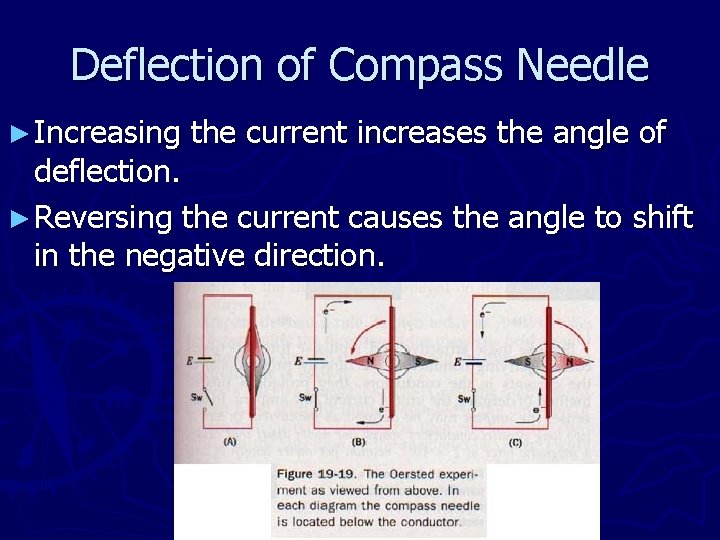
Deflection of Compass Needle ► Increasing the current increases the angle of deflection. ► Reversing the current causes the angle to shift in the negative direction.
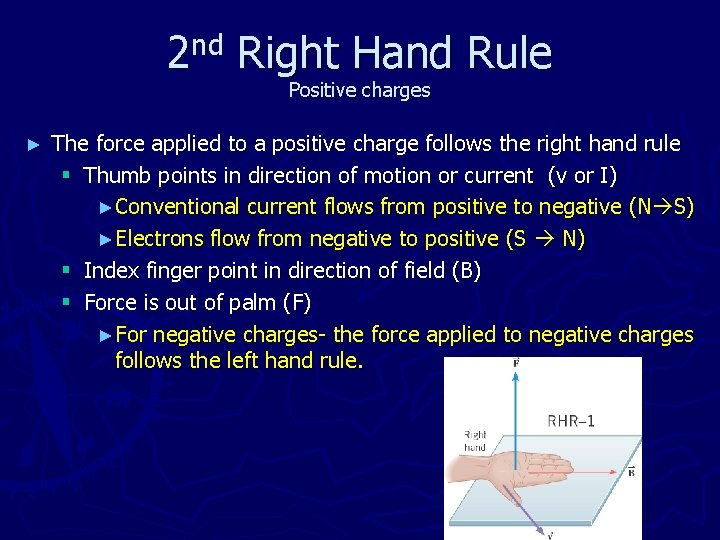
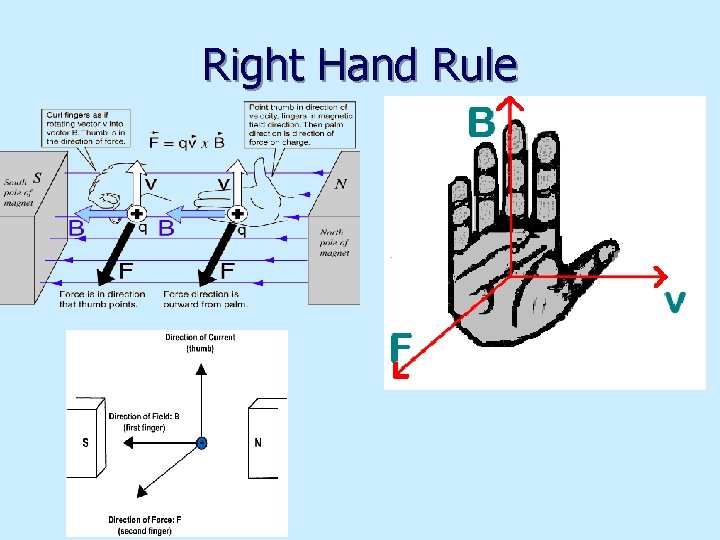
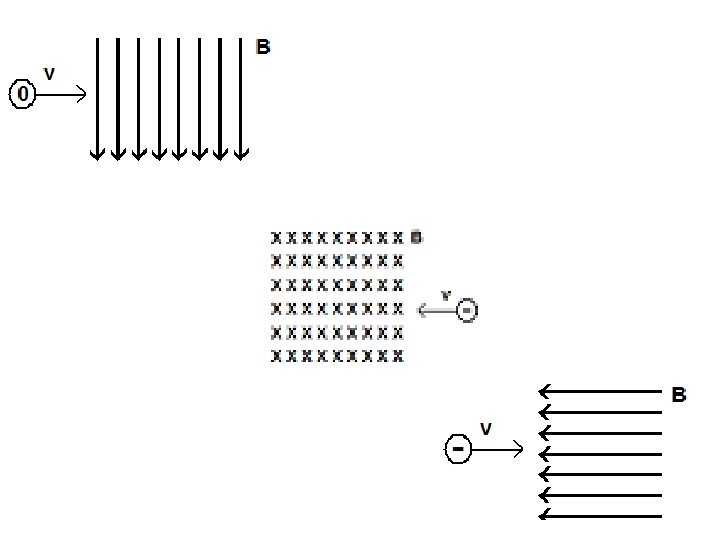
nd 2 ► Right Hand Rule Positive charges The force applied to a positive charge follows the right hand rule § Thumb points in direction of motion or current (v or I) ►Conventional current flows from positive to negative (N S) ►Electrons flow from negative to positive (S N) § Index finger point in direction of field (B) § Force is out of palm (F) ►For negative charges- the force applied to negative charges follows the left hand rule.
Right Hand Rule
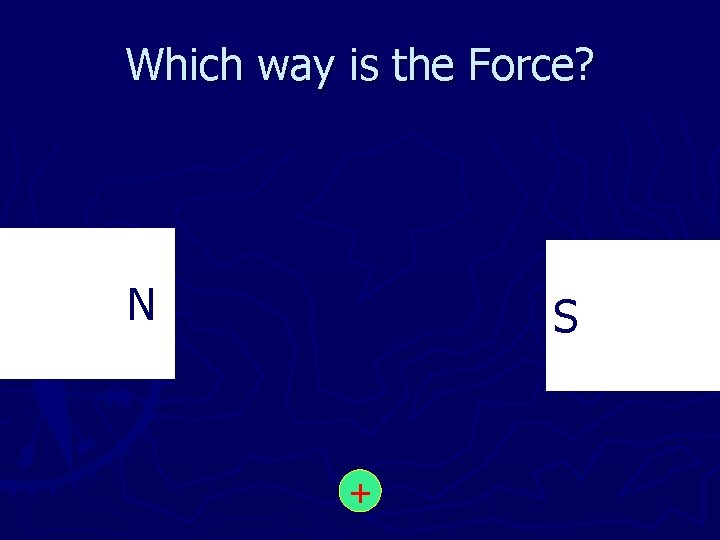
Which way is the Force? N S +
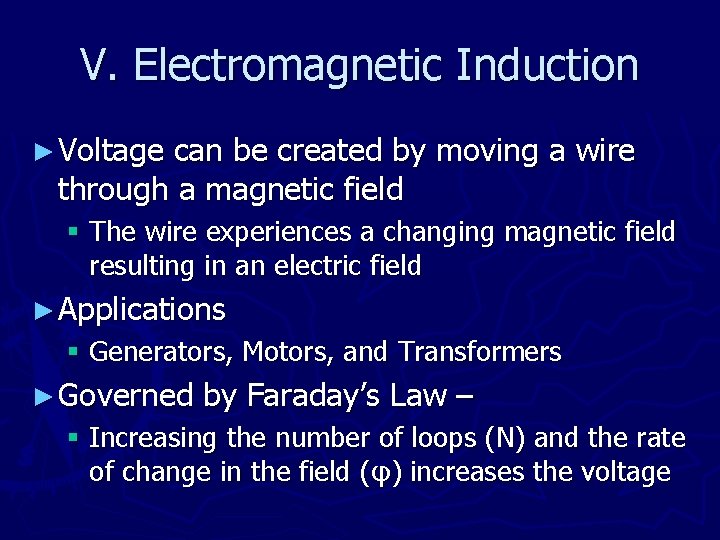
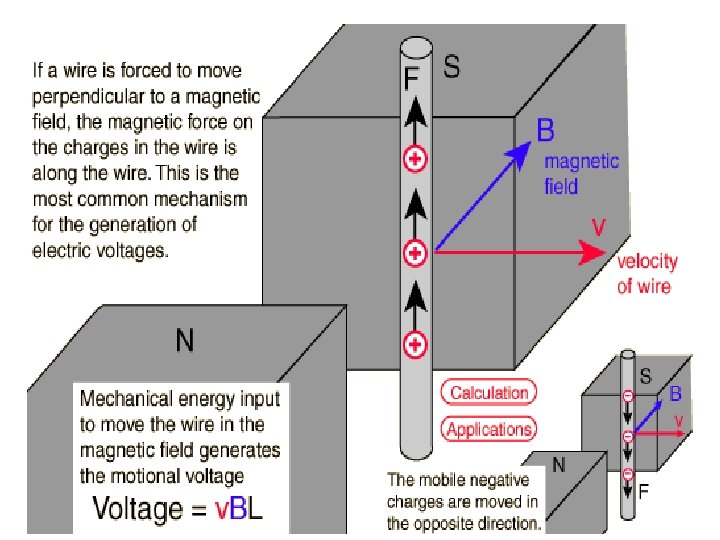
V. Electromagnetic Induction ► Voltage can be created by moving a wire through a magnetic field § The wire experiences a changing magnetic field resulting in an electric field ► Applications § Generators, Motors, and Transformers ► Governed by Faraday’s Law – § Increasing the number of loops (N) and the rate of change in the field (φ) increases the voltage
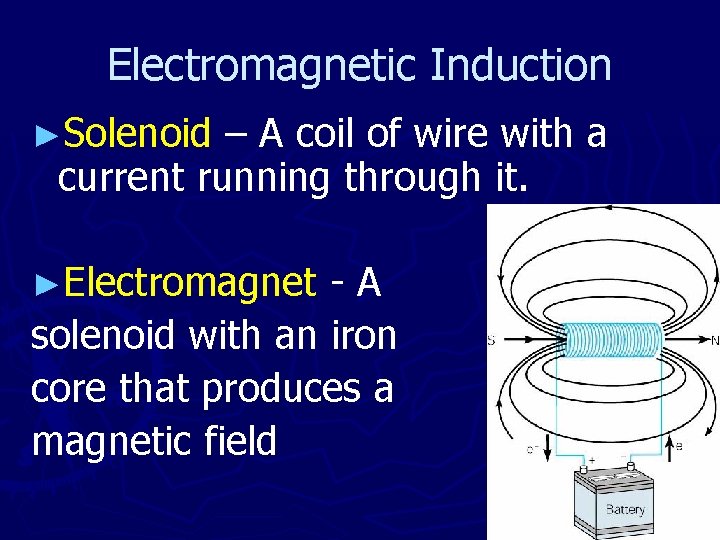
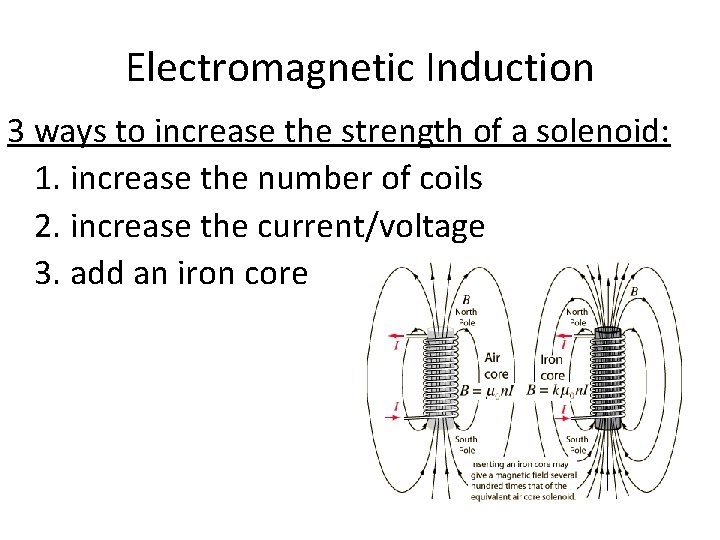
Electromagnetic Induction ►Solenoid – A coil of wire with a current running through it. ►Electromagnet -A solenoid with an iron core that produces a magnetic field
Electromagnetic Induction 3 ways to increase the strength of a solenoid: 1. increase the number of coils 2. increase the current/voltage 3. add an iron core
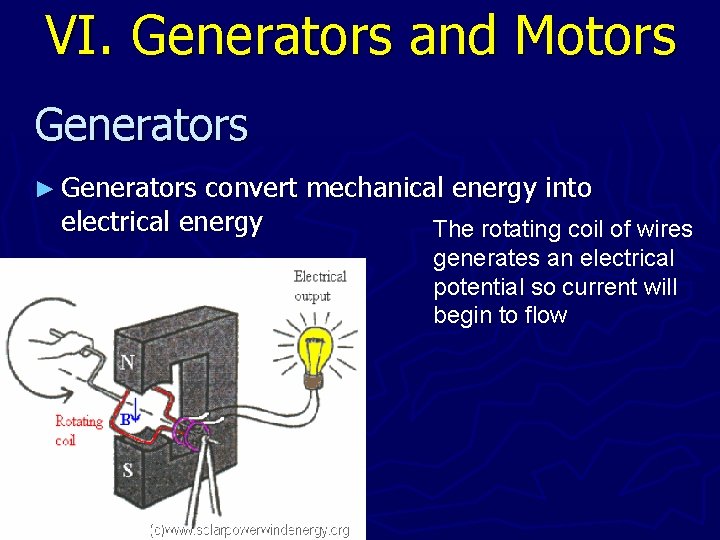
VI. Generators and Motors Generators ► Generators convert mechanical energy into electrical energy The rotating coil of wires generates an electrical potential so current will begin to flow
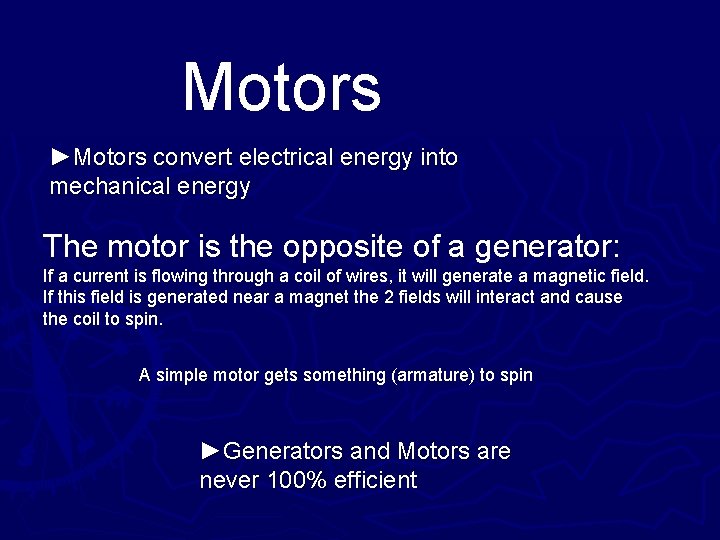
Motors ►Motors convert electrical energy into mechanical energy The motor is the opposite of a generator: If a current is flowing through a coil of wires, it will generate a magnetic field. If this field is generated near a magnet the 2 fields will interact and cause the coil to spin. A simple motor gets something (armature) to spin ►Generators and Motors are never 100% efficient
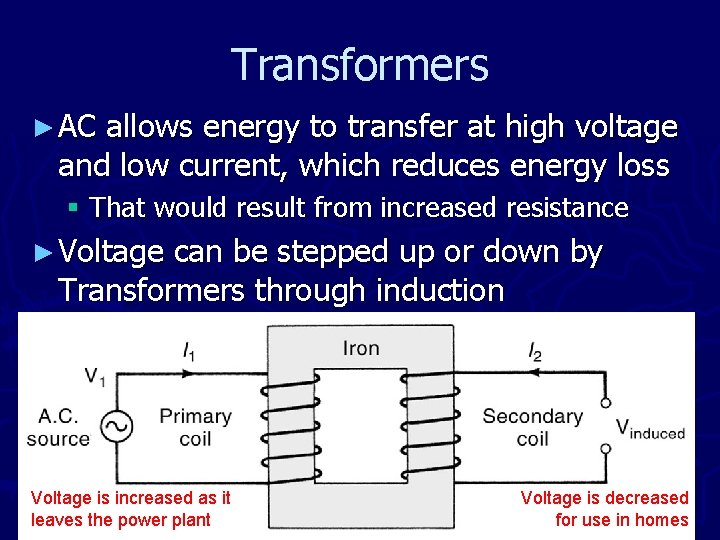
Transformers ► AC allows energy to transfer at high voltage and low current, which reduces energy loss § That would result from increased resistance ► Voltage can be stepped up or down by Transformers through induction Voltage is increased as it leaves the power plant Voltage is decreased for use in homes