
Magnetism In Magnesia in Ancient Greece there lived




- Slides: 29
Magnetism
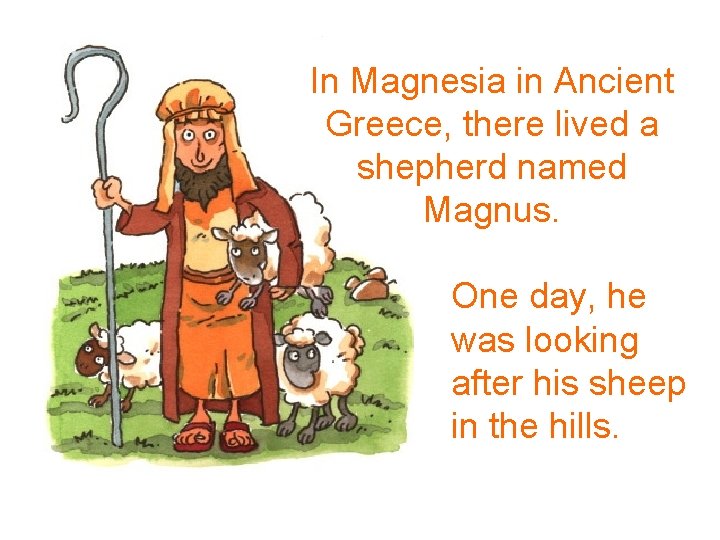
In Magnesia in Ancient Greece, there lived a shepherd named Magnus. One day, he was looking after his sheep in the hills.
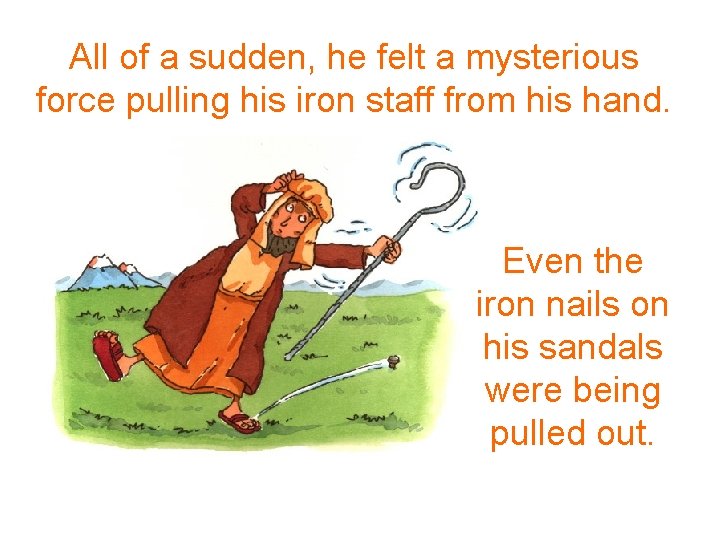
All of a sudden, he felt a mysterious force pulling his iron staff from his hand. Even the iron nails on his sandals were being pulled out.
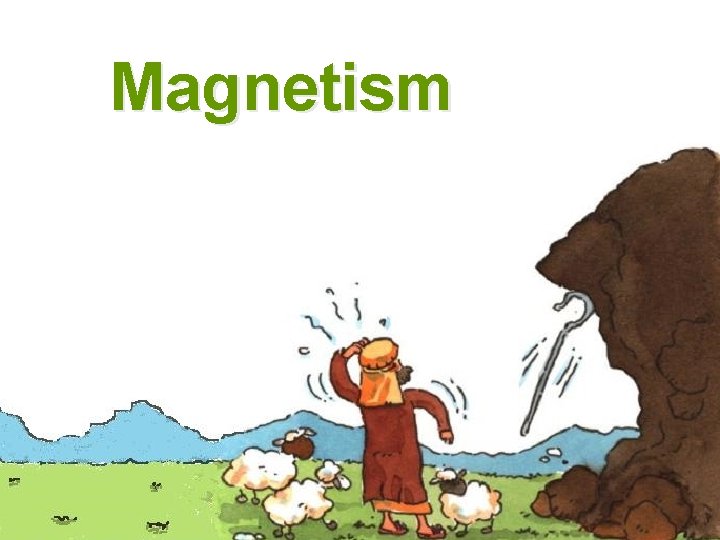
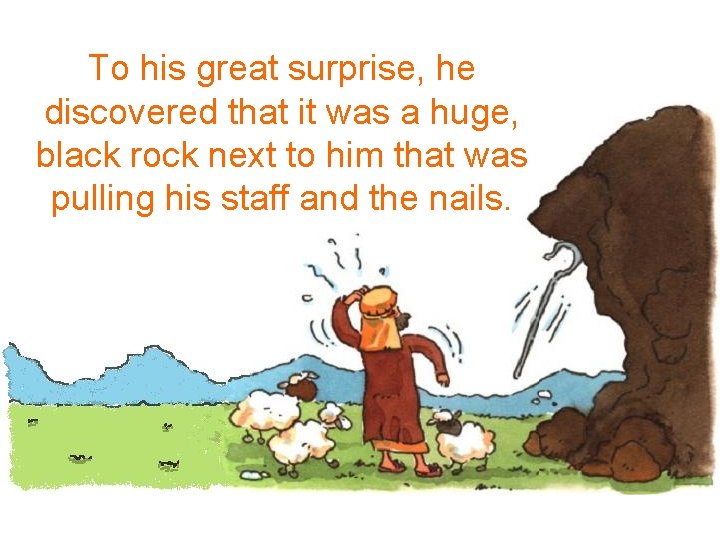
To his great surprise, he discovered that it was a huge, black rock next to him that was pulling his staff and the nails.
Soon, news spread across the country about the strange rock (now called lodestone) that had the power to pull things to it.
The Greeks later found other similar black rocks which had this power. These rocks were named ‘magnets’, after either Magnesia or Magnus himself.
Magnets today • Magnets are one of the most important forces in our world • There is a magnet or an electromagnet inside many things
• Computers store data in magnetic disks and CDs. • Electromagnets are used to lift heavy objects
• Doctors can see the inside of our bodies thanks to magnetic resonance imaging (MRI) • Maglev trains ‘float’ on top of tracks
• The Earth has a magnetic field which we can use for navigation
What is magnetism? Magnetism: an invisible force that pushes or pulls magnetic material. Which materials are magnetic?
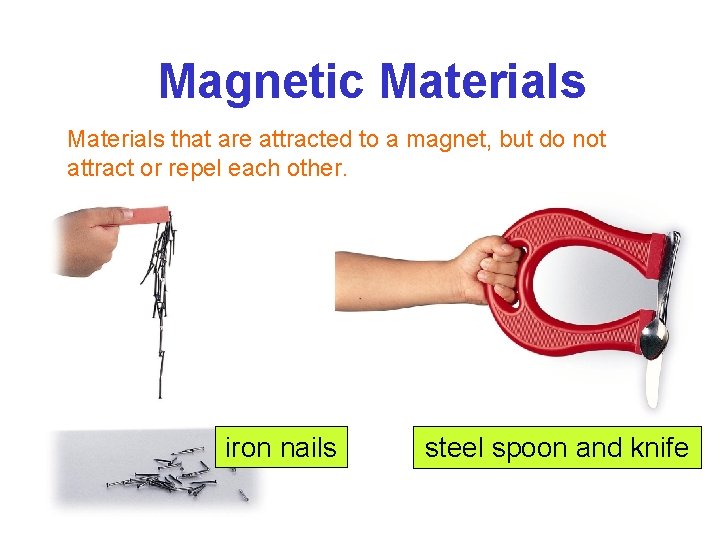
Magnetic Materials that are attracted to a magnet, but do not attract or repel each other. iron nails steel spoon and knife
Which of the metals below are magnetic metals? co iro n (F e) ba cop ma m u i s e gn per ) g M lt (C o) (Cu ) gold (Au) ) n Z ( zinc ( silver (Ag) nic ke l( Ni ) l) A ( m u i n i m u l a
A magnetic material is attracted to a magnet. Only iron (Fe), nickel (Ni) and cobalt (Co) are magnetic. S N N i Fe Mg Co Au Cu Ag Al Zn
Non-magnetic Materials that are not attracted to a magnet. copper container gold jewelry …metals such as gold, aluminium, silver and copper. Aluminium jewelry
All non-metals such as plastic, wood, paper, glass and clay are non-magnetic materials.
A magnet has 2 poles Poles – part of the magnet with strongest magnetic force. The poles are called North pole and South pole bar magnet
Law of magnets If you bring 2 bar magnets close together… Two Opposite poles attract Two like poles repel
If you cut a magnet in half…. you get 2 smaller magnets with 2 poles. If you cut a magnet into many pieces, each piece is a magnet with 2 poles.
Inside materials Materials are made of many tiny electrons. They are always spinning around. Domain - A group of spinning electrons. Each domain acts as a tiny magnet. In non-magnetic materials, the domains are pointing in all directions
Domains inside magnetic materials In magnetic materials, the domains are pointing in one direction. The domains (tiny magnets) are working together and make the entire object magnetic.
Magnets have magnetic fields A magnetic field is the area around a magnet where there is a magnetic force Magnetic force is invisible, so how can we draw the magnetic field lines?
If you put some iron filings around a magnet, you can see the magnetic field lines. weakest field further away from poles strongest field at poles
The direction of the magnetic force is from NORTH to SOUTH
Two like poles repel
Two Opposite poles attract
The earth has a magnetic field • Earth’s core has molten iron and nickel which is always spinning • The spinning core acts like a magnet
Magnetic north pole and geographic north pole are not at the same place.
Who can tell me… 1. How could you tell which pole is which on a magnet you made? 2. Why does the earth have a magnetic field? 3. In a magnet, where is the magnetic force the strongest?