
Magnetism Electromagnetism and its Applications Magnetism u What

- Slides: 42
Magnetism, Electromagnetism, and its Applications
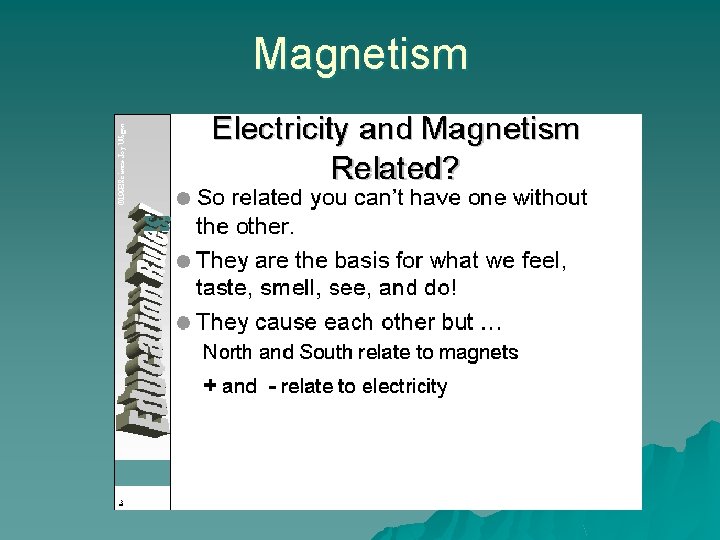
Magnetism u What is a magnet? – Phenomenon of magnetism has been known since ancient times… – Certain rocks (called lodestones) attracted iron – When iron was rubbed with lodestone, the iron became magnetized – If a thin magnet was floated on water, one end of the magnet always pointed in the northern direction u A magnet, then, is any substance that possesses these properties.
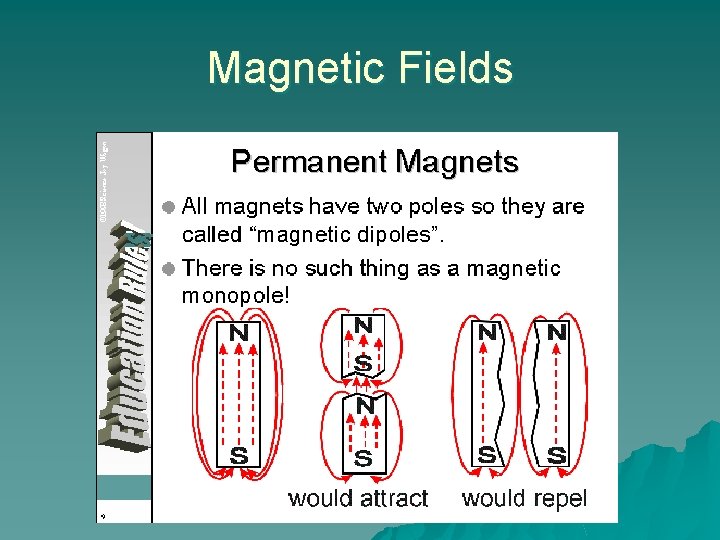
Magnetism u Magnets have polarity – The end that points northward is the north pole of a magnet. – The end that points southward is the south pole of a magnet. u Like poles repel, and unlike poles attract.
Magnetism u If a piece of metal is placed in the vicinity of a magnet, the metal itself will become magnetized. – If the metal retains its magnetism after the original magnet is removed, it is called a permanent magnet. (example alloy called ALNICO) – Otherwise, it is called a temporary magnet. (example soft iron)
Magnetism u Demo – Bar magnet, nail, and paper clip.
Magnetism
Magnetism
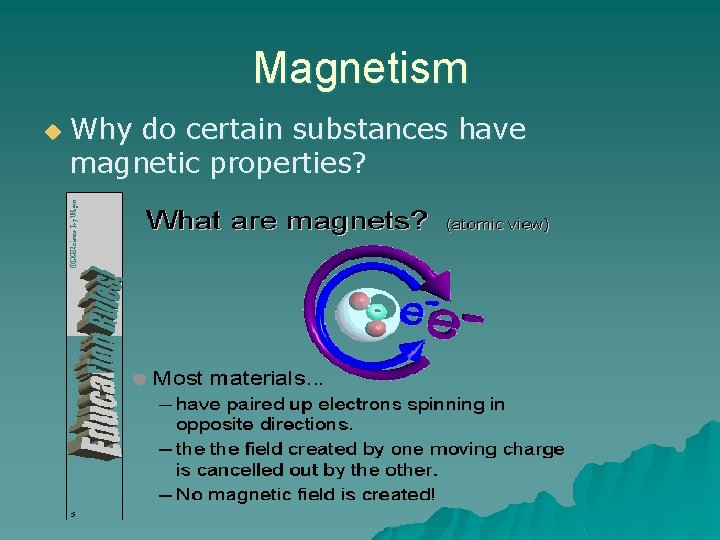
Magnetism u Why do certain substances have magnetic properties?
Magnetism
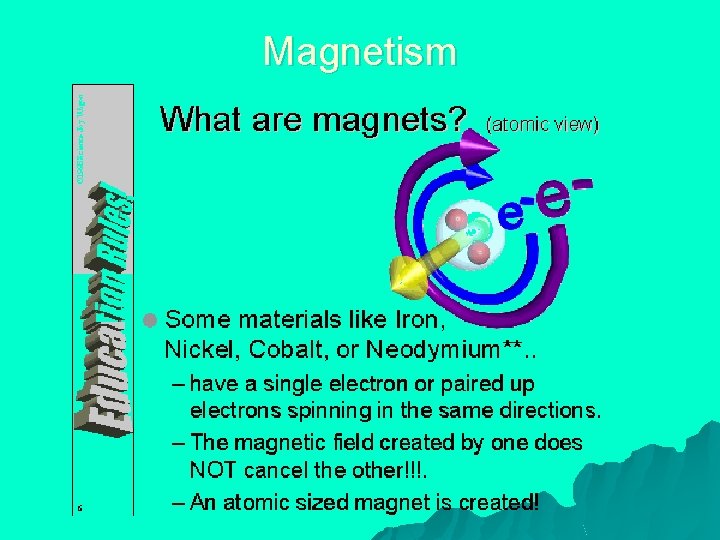
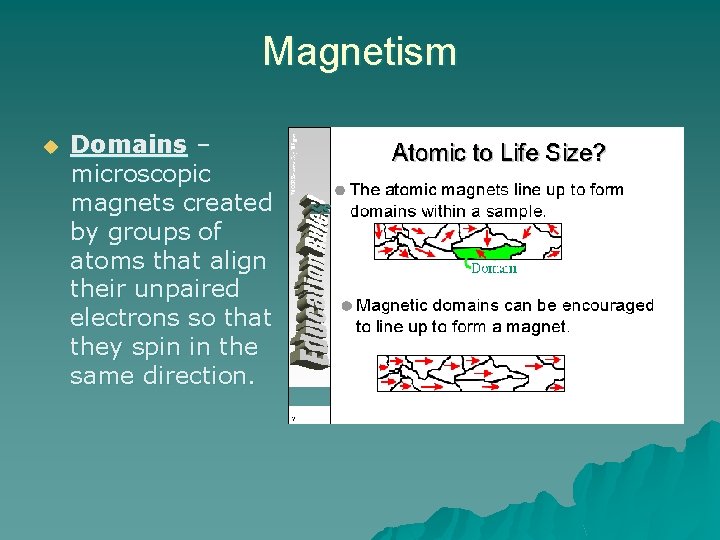
Magnetism u Domains – microscopic magnets created by groups of atoms that align their unpaired electrons so that they spin in the same direction.
Magnetic Fields u Lab - Magnetic Field Lines
Magnetic Fields
Magnetic Fields u Note that field lines form closed loops inside the magnet. – As a consequence, magnetic monopoles are not believed to exist.
Magnetic Fields
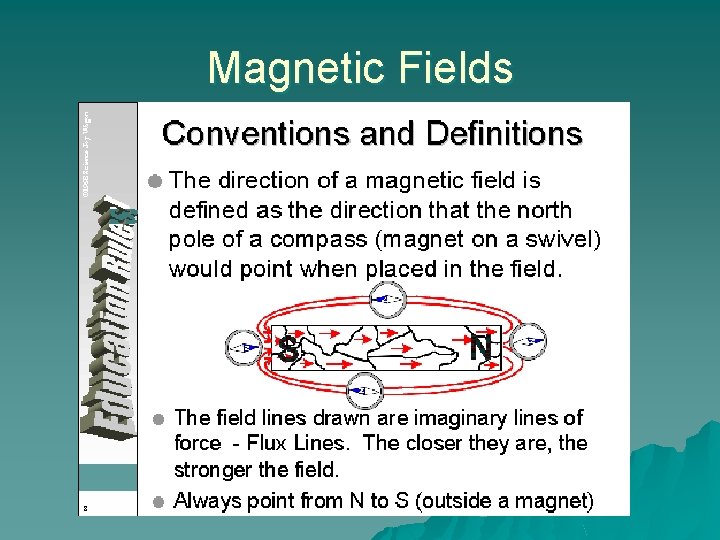
Magnetic Fields u Each magnetic flux line has been standardized and has the SI unit of 1 weber (Wb). u The strength of the magnetic field, known as the magnetic induction, is given by the concentration of the flux lines (i. e. the number of flux lines per unit area)
Magnetic Fields u Magnetic induction is a vector quantity because it has magnitude and direction. u We represent magnetic induction by the letter B, and its unit is the weber per square meter, also known as the tesla (T).
Magnetic Fields u The Earth’s magnetic field is weak, and has a magnetic induction of ~5 x 10 -5 tesla. u A field of 1 tesla is extremely strong – Magnetic resonance imaging
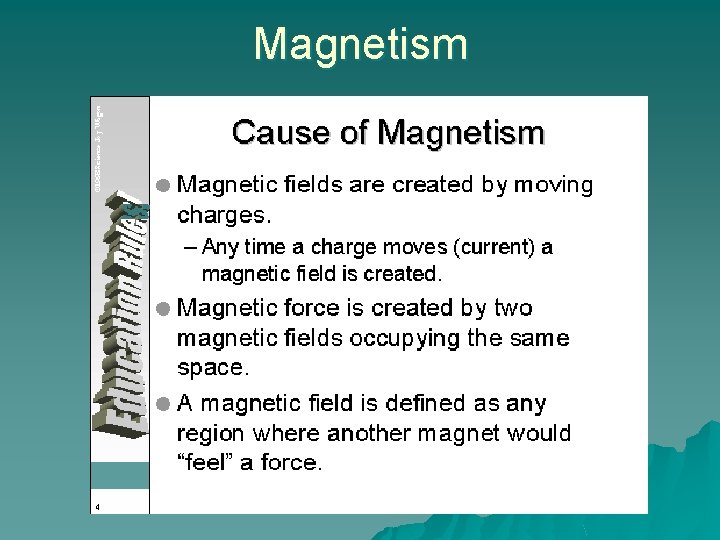
Electromagnetism u In 1820, the Danish physicist Hans Oersted discovered that a wire carrying current produced a magnetic field as follows… (on board) – Note that the magnetic field is circular and that its plane is perpendicular to the direction of the wire carrying the current.
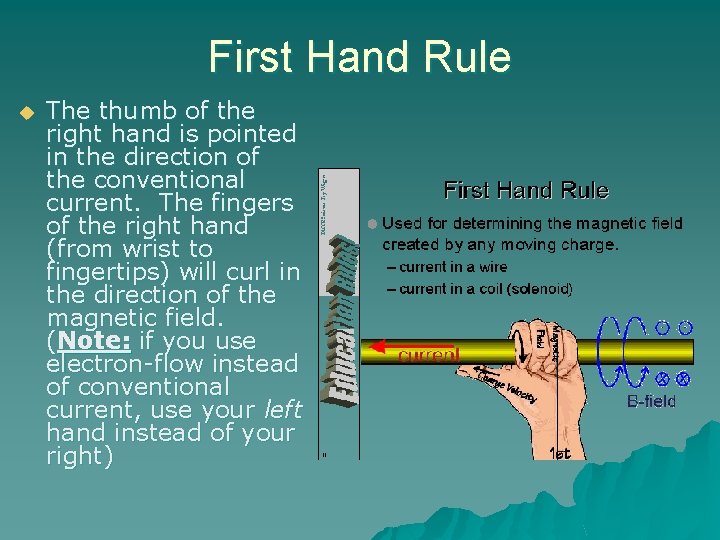
First Hand Rule u The thumb of the right hand is pointed in the direction of the conventional current. The fingers of the right hand (from wrist to fingertips) will curl in the direction of the magnetic field. (Note: if you use electron-flow instead of conventional current, use your left hand instead of your right)
Electromagnetism u To represent the direction of a magnetic field in two dimensions, we use dots ( • ) to indicate that the direction is out of the plane of the paper and X’s (x) to indicate that the direction is into the plane of paper
Magnetic Field Around a Coil u Second Hand Rule – The fingers of the right hand are wrapped in the direction of the conventional current. The thumb will point to the end of the coil which is the north pole.
Solenoid Magnetic Field Strength u Moving charges create magnetic fields. Each electron moving in a conductor creates its own magnetic field. As electrons move through the coil of wire, the magnetic field of one electron adds to the field of any others moving in the same direction. The faster a charge moves, the stronger the magnetic field it creates. For this reason alone, a higher current implies an electron is moving faster, and as a result, it would create a stronger magnetic field.
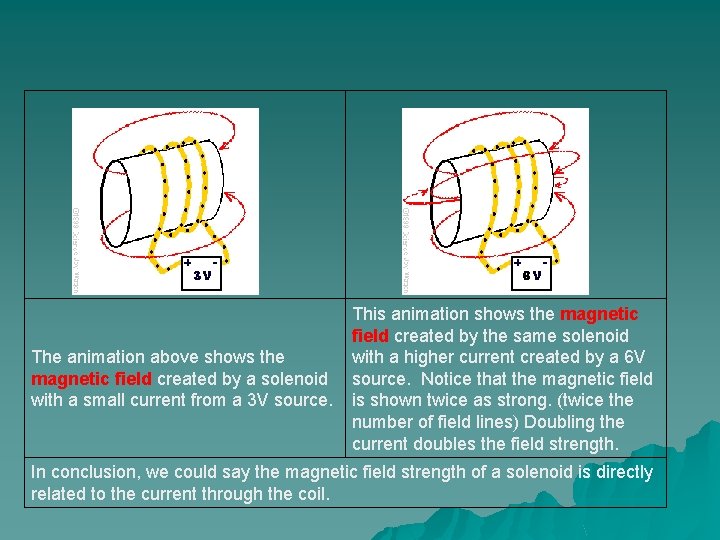
The animation above shows the magnetic field created by a solenoid with a small current from a 3 V source. This animation shows the magnetic field created by the same solenoid with a higher current created by a 6 V source. Notice that the magnetic field is shown twice as strong. (twice the number of field lines) Doubling the current doubles the field strength. In conclusion, we could say the magnetic field strength of a solenoid is directly related to the current through the coil.
Solenoid Magnetic Field Strength u Since the magnetic field is created by moving electrons we could argue that the more electrons are moving, the stronger the magnetic field would be. A given length of wire contains a certain number of electrons. Twice that length will contain twice as many electrons. If a solenoid is made with more "turns" or "wraps" of wire, then it must create a stronger magnetic field.
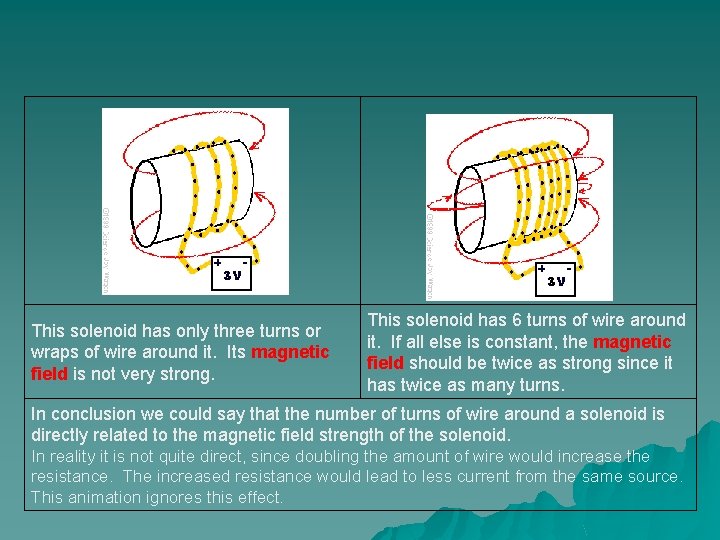
This solenoid has only three turns or wraps of wire around it. Its magnetic field is not very strong. This solenoid has 6 turns of wire around it. If all else is constant, the magnetic field should be twice as strong since it has twice as many turns. In conclusion we could say that the number of turns of wire around a solenoid is directly related to the magnetic field strength of the solenoid. In reality it is not quite direct, since doubling the amount of wire would increase the resistance. The increased resistance would lead to less current from the same source. This animation ignores this effect.
Solenoid Magnetic Field Strength u Some materials are more susceptible to magnetic fields than others. We say they are more "permeable" to the magnetic field.
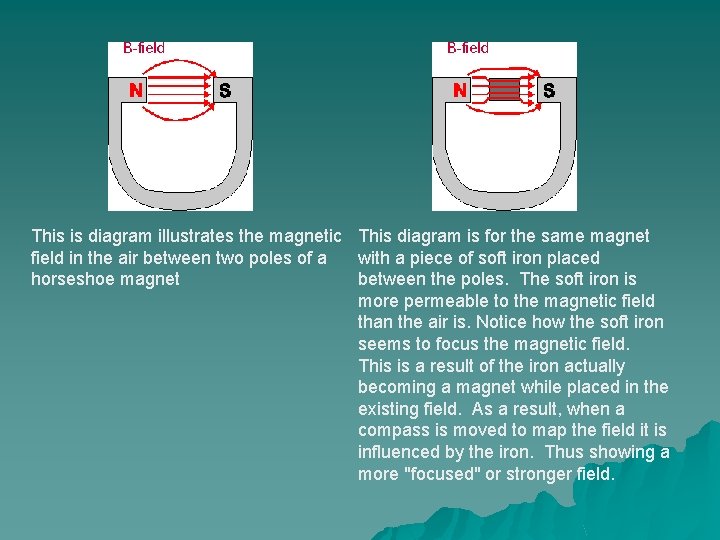
This is diagram illustrates the magnetic This diagram is for the same magnet field in the air between two poles of a with a piece of soft iron placed horseshoe magnet between the poles. The soft iron is more permeable to the magnetic field than the air is. Notice how the soft iron seems to focus the magnetic field. This is a result of the iron actually becoming a magnet while placed in the existing field. As a result, when a compass is moved to map the field it is influenced by the iron. Thus showing a more "focused" or stronger field.
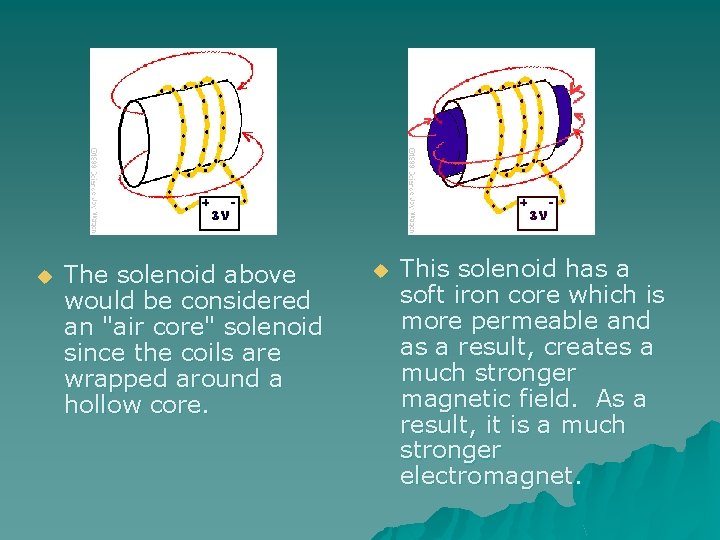
u The solenoid above would be considered an "air core" solenoid since the coils are wrapped around a hollow core. u This solenoid has a soft iron core which is more permeable and as a result, creates a much stronger magnetic field. As a result, it is a much stronger electromagnet.
Magnetic Field Around a Coil u Factors that affect the magnetic induction of a coil (summary) – The current in the coil (the more current, the stronger the field) – The number of turns per unit length of the coil (the more turns the stronger the field) – The nature (material) of the core. u Demo with wood core and metal core
Forces on a Current Carrier in a B Field Ø If a wire carrying a current is placed in a magnetic field so that the direction of the current is perpendicular to the direction of a magnetic field, the magnetic field of the wire will interact with the magnetic field of the magnet to produce a force on the wire. Ø Demo Ø Illustration Page 502 of text.
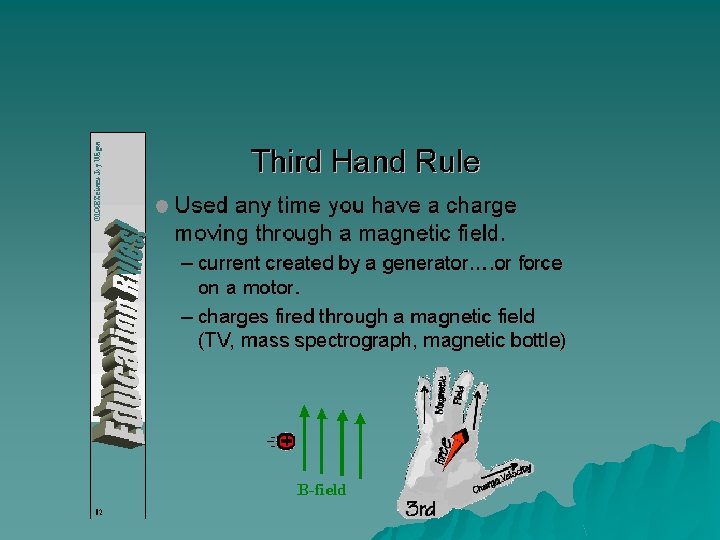
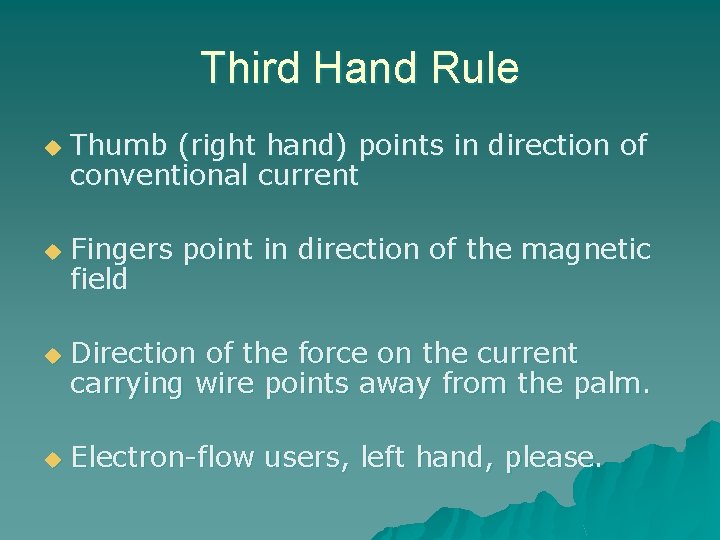
Third Hand Rule u u Thumb (right hand) points in direction of conventional current Fingers point in direction of the magnetic field Direction of the force on the current carrying wire points away from the palm. Electron-flow users, left hand, please.
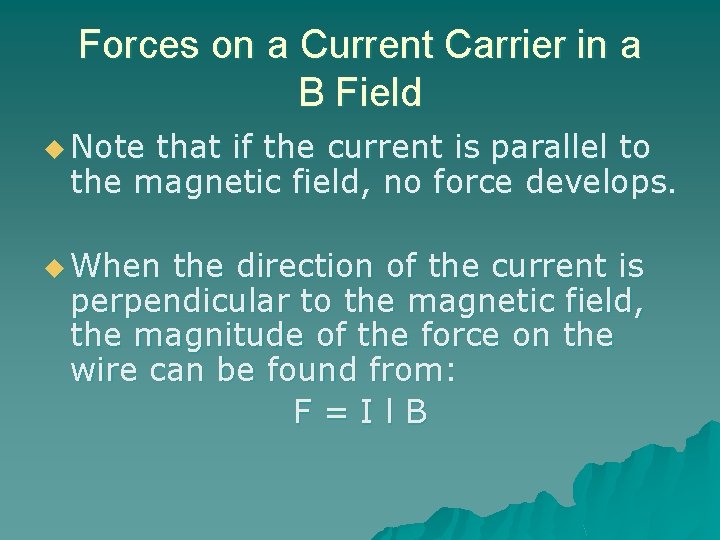
Forces on a Current Carrier in a B Field u Note that if the current is parallel to the magnetic field, no force develops. u When the direction of the current is perpendicular to the magnetic field, the magnitude of the force on the wire can be found from: F = I l B
Electromagnetic Induction u Electromagnetic induction is the process of generating a potential difference in a conductor due to relative motion between the conductor and a magnetic field. – Overhead diagram – Apply third hand rule
Electromagnetic Induction u If a conductor “cuts” across magnetic flux lines, a magnetic force acts on the electrons in the conductor, causing them to move from one end to the other. – This results in a potential difference, specifically called an induced potential difference. – If the conductor is part of a complete circuit, an electric current is produced. – If the conductor is moved parallel to the lines of flux, no potential difference is induced. – This is the principle behind electric generators
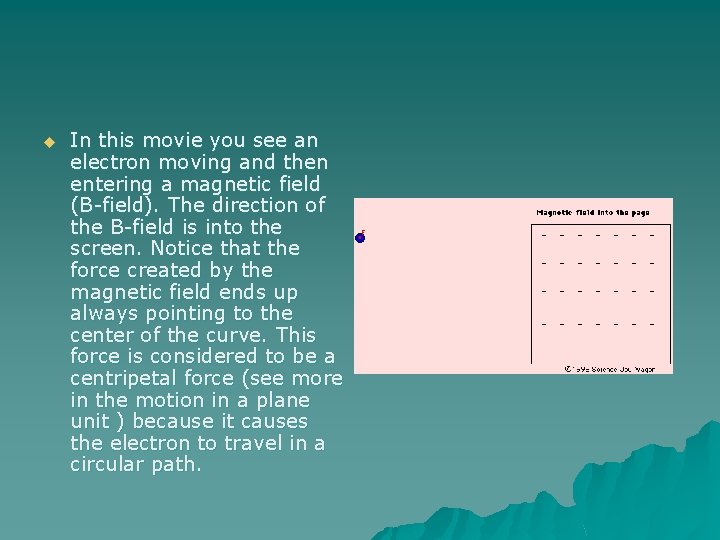
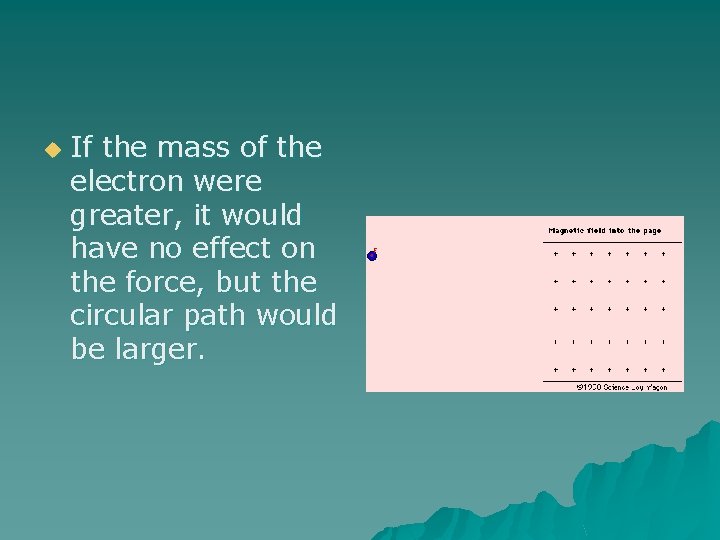
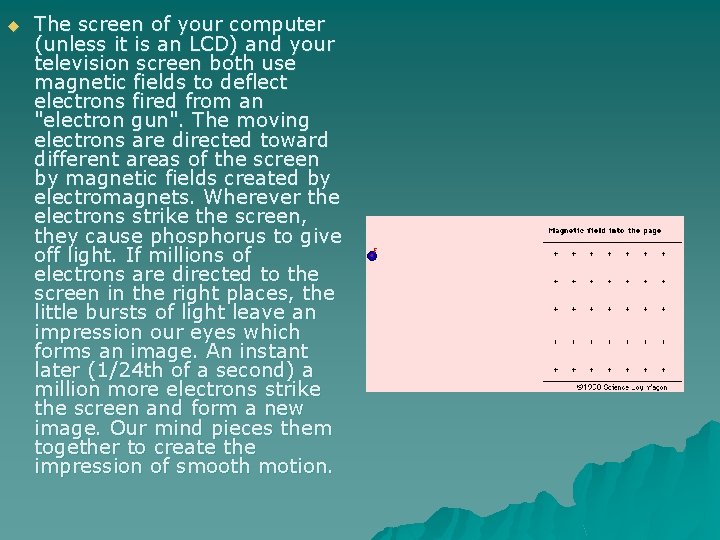
u In this movie you see an electron moving and then entering a magnetic field (B-field). The direction of the B-field is into the screen. Notice that the force created by the magnetic field ends up always pointing to the center of the curve. This force is considered to be a centripetal force (see more in the motion in a plane unit ) because it causes the electron to travel in a circular path.
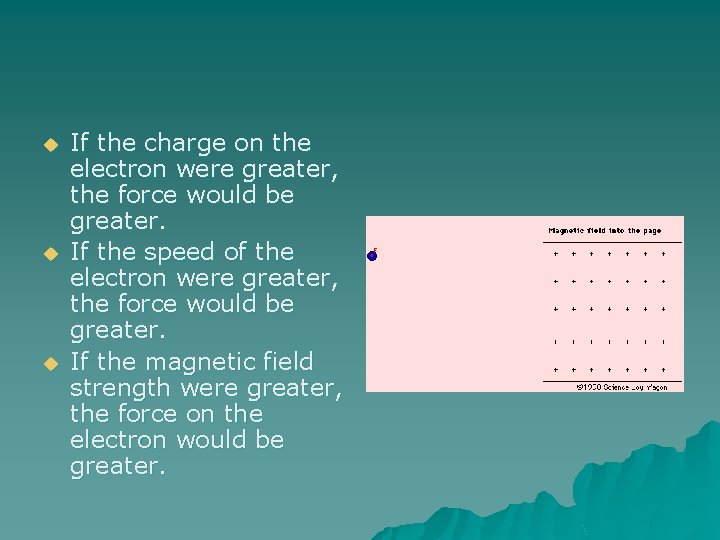
u u u If the charge on the electron were greater, the force would be greater. If the speed of the electron were greater, the force would be greater. If the magnetic field strength were greater, the force on the electron would be greater.
u If the mass of the electron were greater, it would have no effect on the force, but the circular path would be larger.
u The screen of your computer (unless it is an LCD) and your television screen both use magnetic fields to deflect electrons fired from an "electron gun". The moving electrons are directed toward different areas of the screen by magnetic fields created by electromagnets. Wherever the electrons strike the screen, they cause phosphorus to give off light. If millions of electrons are directed to the screen in the right places, the little bursts of light leave an impression our eyes which forms an image. An instant later (1/24 th of a second) a million more electrons strike the screen and form a new image. Our mind pieces them together to create the impression of smooth motion.