
MAGNETIC RESONANCE IMAGING MRI Neju Mathew Philip Inspire
![MAGNETIC RESONANCE IMAGING [MRI] Neju Mathew Philip Inspire Fellow Optoelectronic Materials & Devices 1](https://slidetodoc.com/presentation_image/582dcca15e4cbf46dc8f834dc77a3994/image-1.jpg "MAGNETIC RESONANCE IMAGING [MRI] Neju Mathew Philip Inspire Fellow Optoelectronic Materials & Devices 1")

- Slides: 10
MAGNETIC RESONANCE IMAGING [MRI] Neju Mathew Philip Inspire Fellow Optoelectronic Materials & Devices 1 Lab NITT
OVERVIEW • • • Introduction Theory Instrumentation &Working Applications Review 2
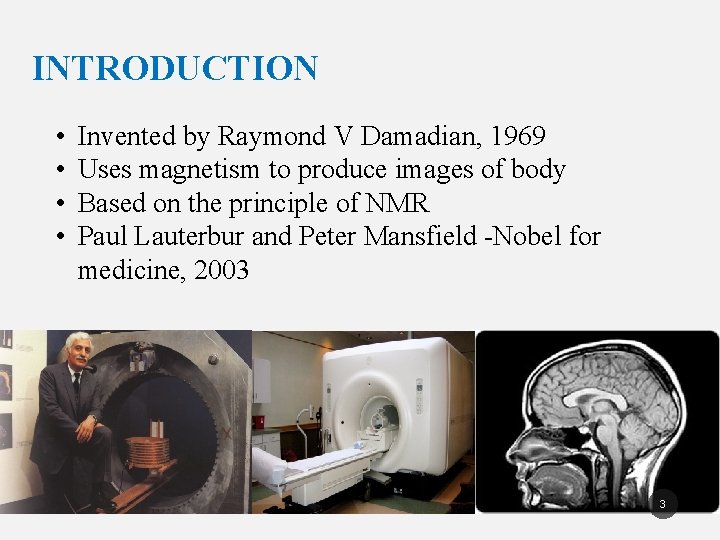
INTRODUCTION • • Invented by Raymond V Damadian, 1969 Uses magnetism to produce images of body Based on the principle of NMR Paul Lauterbur and Peter Mansfield -Nobel for medicine, 2003 3
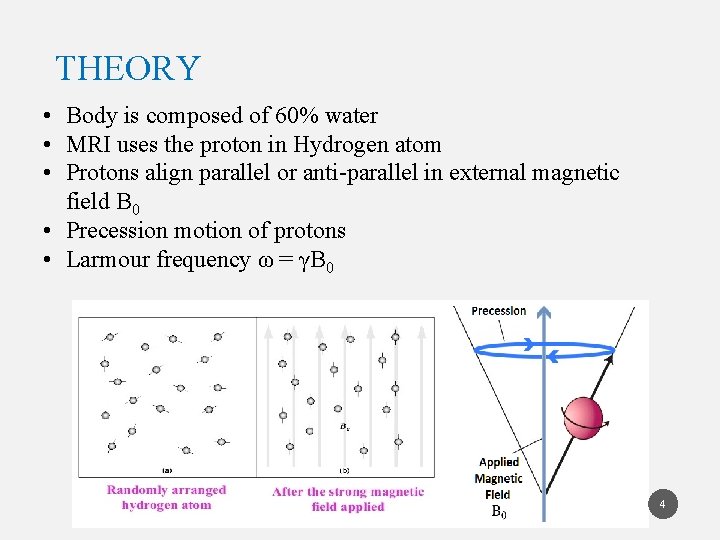
THEORY • Body is composed of 60% water • MRI uses the proton in Hydrogen atom • Protons align parallel or anti-parallel in external magnetic field B 0 • Precession motion of protons • Larmour frequency ω = γB 0 4
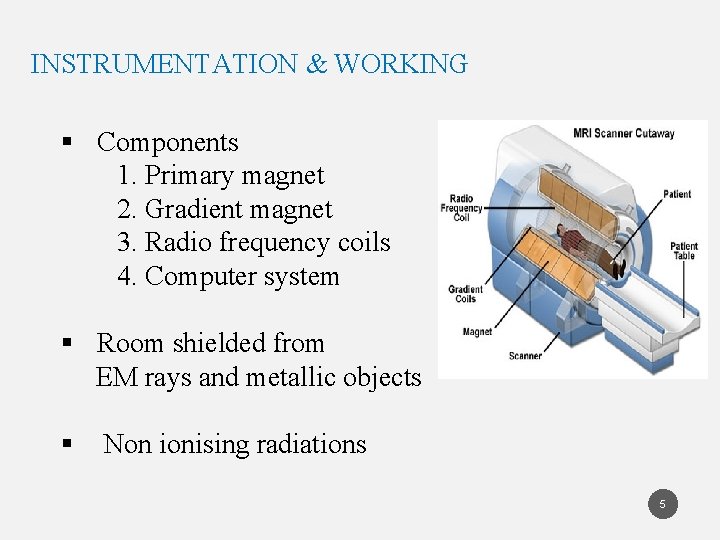
INSTRUMENTATION & WORKING § Components 1. Primary magnet 2. Gradient magnet 3. Radio frequency coils 4. Computer system § Room shielded from EM rays and metallic objects § Non ionising radiations 5
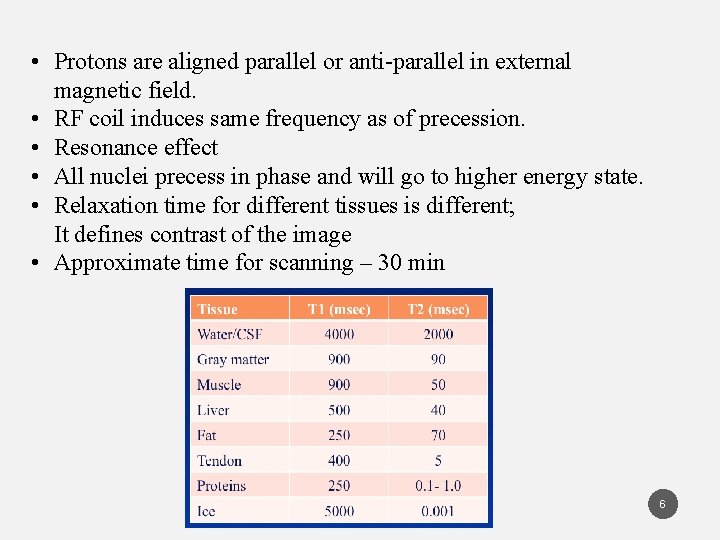
• Protons are aligned parallel or anti-parallel in external magnetic field. • RF coil induces same frequency as of precession. • Resonance effect • All nuclei precess in phase and will go to higher energy state. • Relaxation time for different tissues is different; It defines contrast of the image • Approximate time for scanning – 30 min 6
APPLICATIONS • Can be used to image soft tissues and organs • Widely used to image tumour cells • To detect diseases affecting central nervous systems, spine and brain • Doesn’t use ionising radiation • No after effects DISADVANTAGES • Room should be shielded from EM interference • Patients with surgical pins, pace makers, etc. cannot undergo MRI • Expensive 7
REVIEW • Uses magnetism to image soft cells and diagnose diseases • Spin of protons • Relaxation time • Advantages & Disadvantages 8
9
10