
Magnetic Field Measurement GEOGPHYS 182 Fundamental Forces 1
- Slides: 11
Magnetic Field Measurement GEOG/PHYS 182
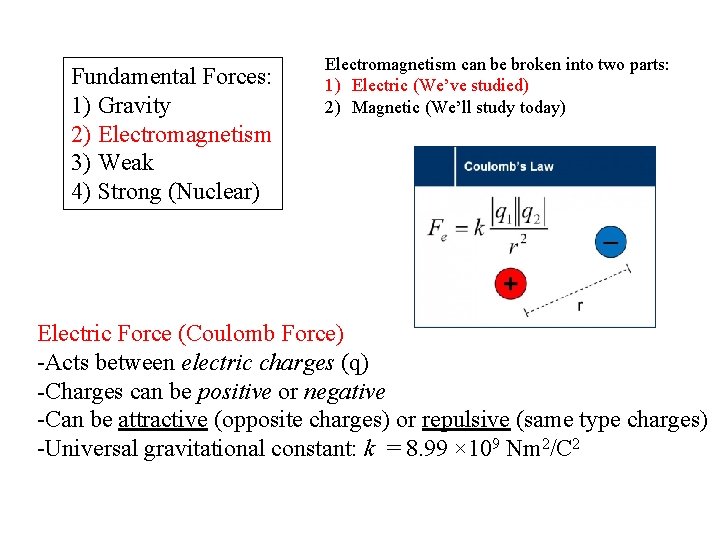
Fundamental Forces: 1) Gravity 2) Electromagnetism 3) Weak 4) Strong (Nuclear) Electromagnetism can be broken into two parts: 1) Electric (We’ve studied) 2) Magnetic (We’ll study today) Electric Force (Coulomb Force) -Acts between electric charges (q) -Charges can be positive or negative -Can be attractive (opposite charges) or repulsive (same type charges) -Universal gravitational constant: k = 8. 99 × 109 Nm 2/C 2
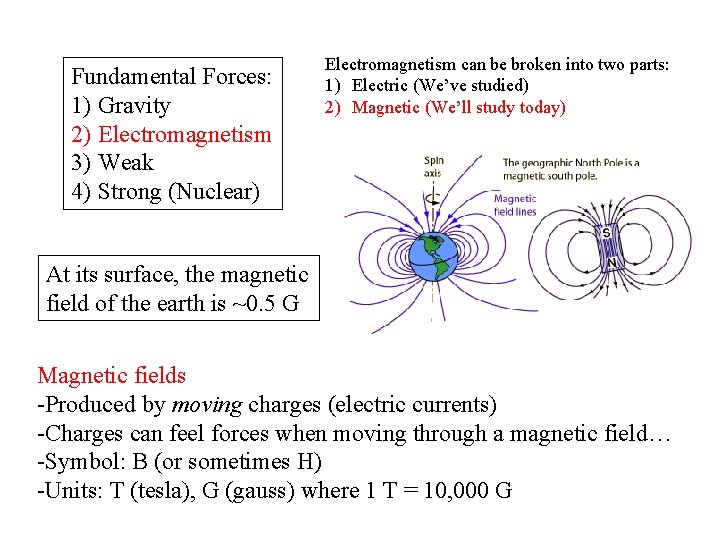
Fundamental Forces: 1) Gravity 2) Electromagnetism 3) Weak 4) Strong (Nuclear) Electromagnetism can be broken into two parts: 1) Electric (We’ve studied) 2) Magnetic (We’ll study today) At its surface, the magnetic field of the earth is ~0. 5 G Magnetic fields -Produced by moving charges (electric currents) -Charges can feel forces when moving through a magnetic field… -Symbol: B (or sometimes H) -Units: T (tesla), G (gauss) where 1 T = 10, 000 G
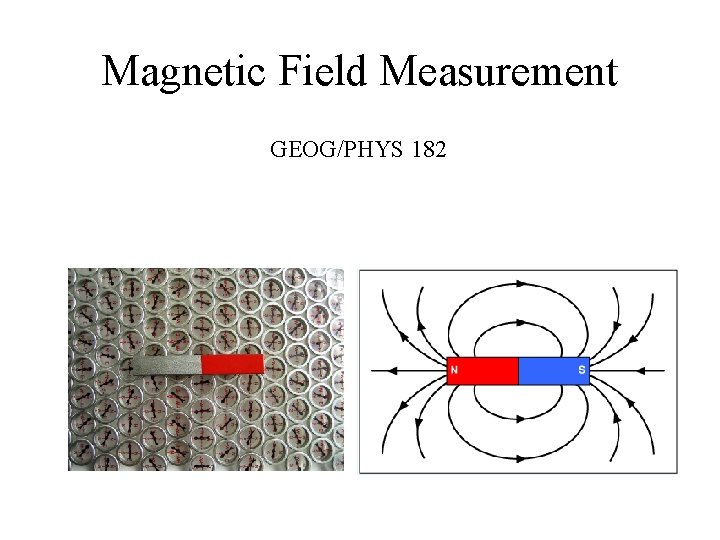
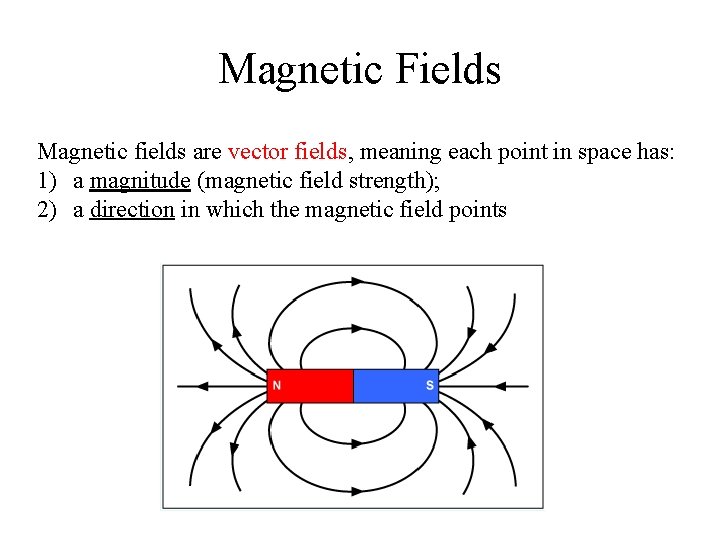
Magnetic Fields Magnetic fields are vector fields, meaning each point in space has: 1) a magnitude (magnetic field strength); 2) a direction in which the magnetic field points
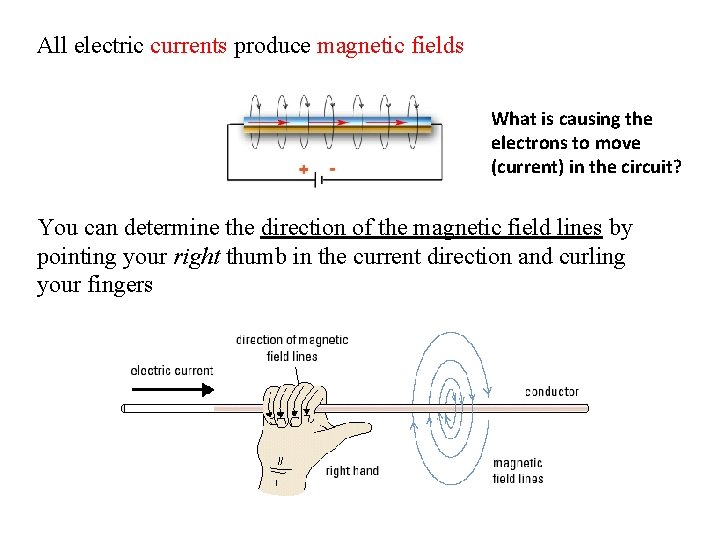
All electric currents produce magnetic fields What is causing the electrons to move (current) in the circuit? You can determine the direction of the magnetic field lines by pointing your right thumb in the current direction and curling your fingers
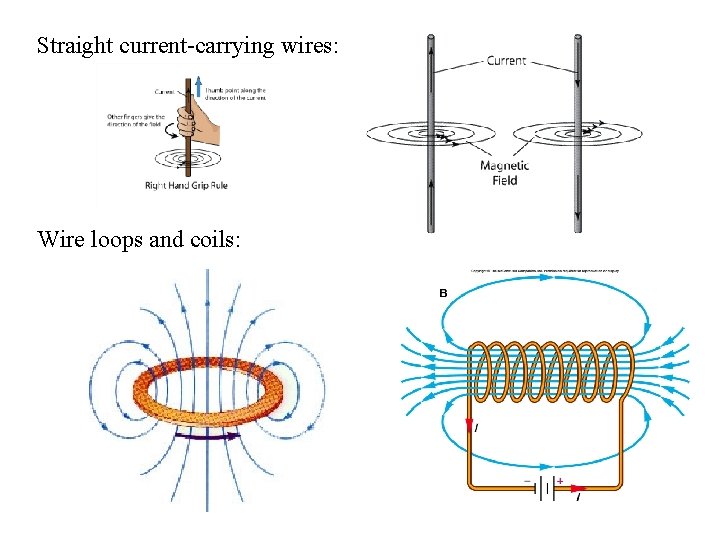
Straight current-carrying wires: Wire loops and coils:
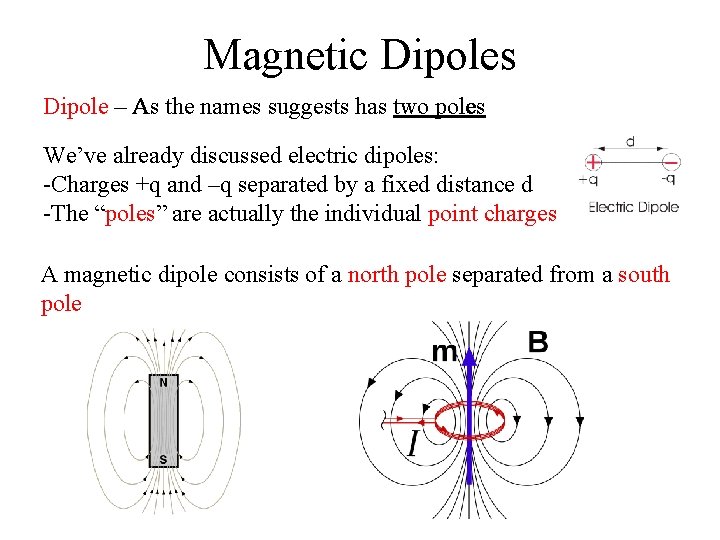
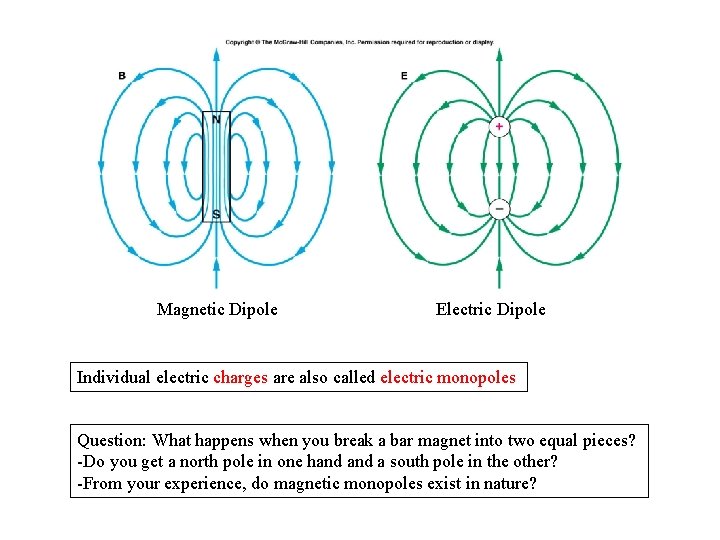
Magnetic Dipoles Dipole – As the names suggests has two poles We’ve already discussed electric dipoles: -Charges +q and –q separated by a fixed distance d -The “poles” are actually the individual point charges A magnetic dipole consists of a north pole separated from a south pole
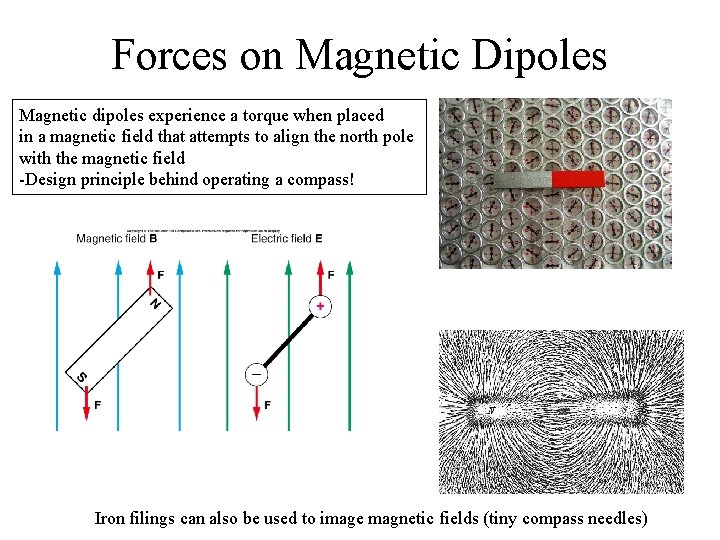
Forces on Magnetic Dipoles Magnetic dipoles experience a torque when placed in a magnetic field that attempts to align the north pole with the magnetic field -Design principle behind operating a compass! Iron filings can also be used to image magnetic fields (tiny compass needles)
Magnetic Dipole Electric Dipole Individual electric charges are also called electric monopoles Question: What happens when you break a bar magnet into two equal pieces? -Do you get a north pole in one hand a south pole in the other? -From your experience, do magnetic monopoles exist in nature?
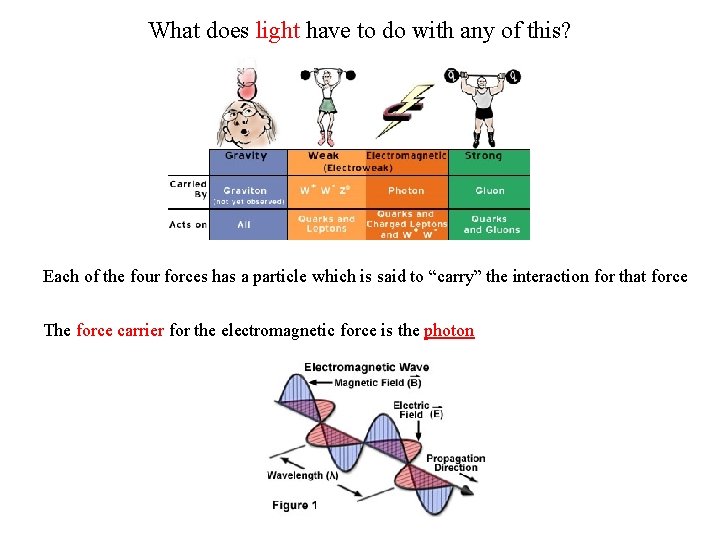
What does light have to do with any of this? Each of the four forces has a particle which is said to “carry” the interaction for that force The force carrier for the electromagnetic force is the photon
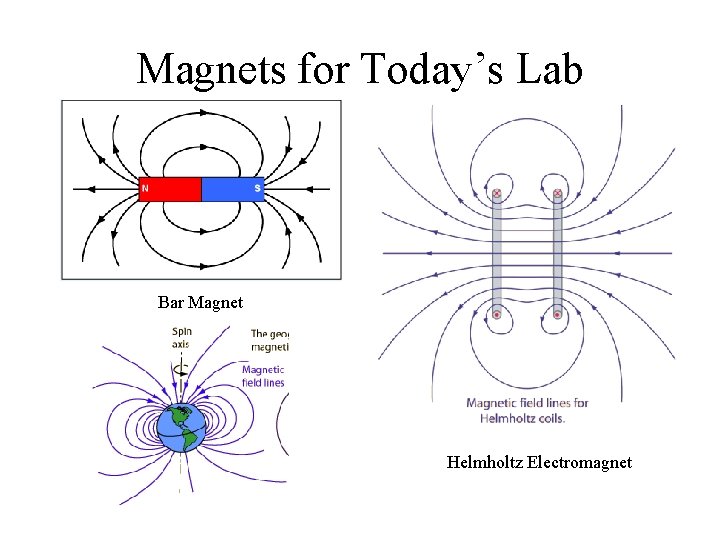
Magnets for Today’s Lab Bar Magnet Helmholtz Electromagnet