
Magnetic Expansion Control MAGEC Master Technique Mr Colin



- Slides: 18
Magnetic Expansion Control (MAGEC) Master Technique Mr Colin Nnnadi, FRCS (Orth) Oxford University Teaching Hospitals
MAGEC™ SYSTEM • Titanium Rod Implant • External Remote Controller (ERC)
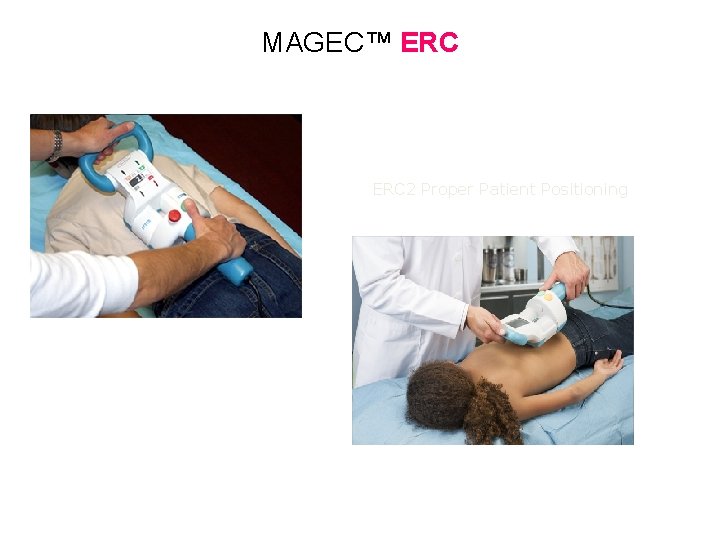
MAGEC™ ERC • EXTERNAL REMOTE CONTROLLER
MAGEC™ ERC 2 Proper Patient Positioning
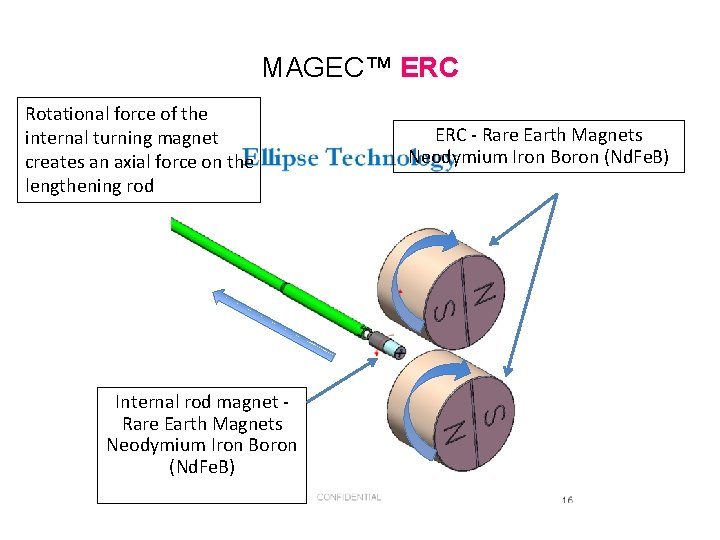
MAGEC™ ERC Rotational force of the internal turning magnet creates an axial force on the lengthening rod Internal rod magnet Rare Earth Magnets Neodymium Iron Boron (Nd. Fe. B) ERC - Rare Earth Magnets Neodymium Iron Boron (Nd. Fe. B)
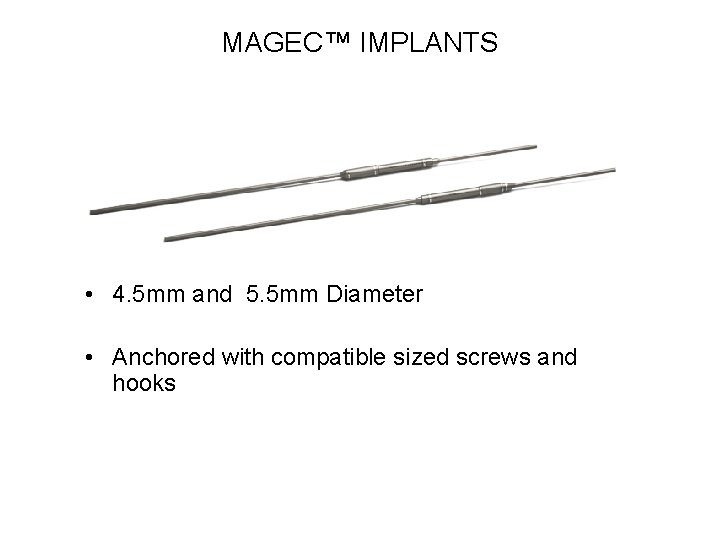
MAGEC™ IMPLANTS • 4. 5 mm and 5. 5 mm Diameter • Anchored with compatible sized screws and hooks
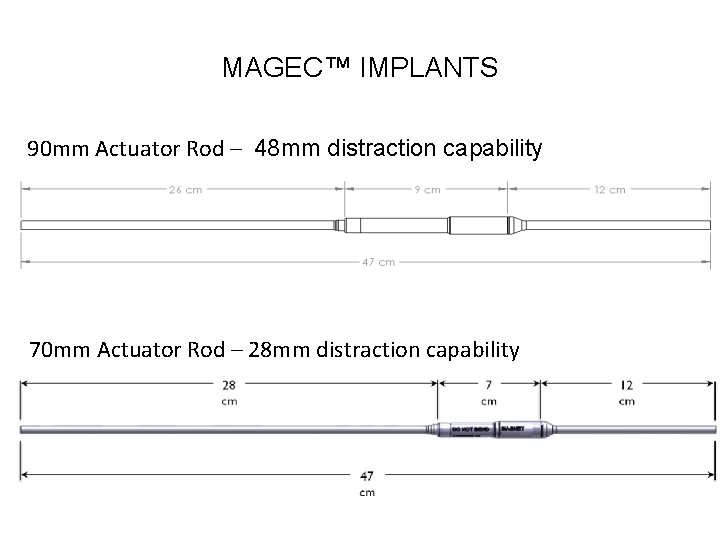
MAGEC™ IMPLANTS 90 mm Actuator Rod – 48 mm distraction capability 70 mm Actuator Rod – 28 mm distraction capability
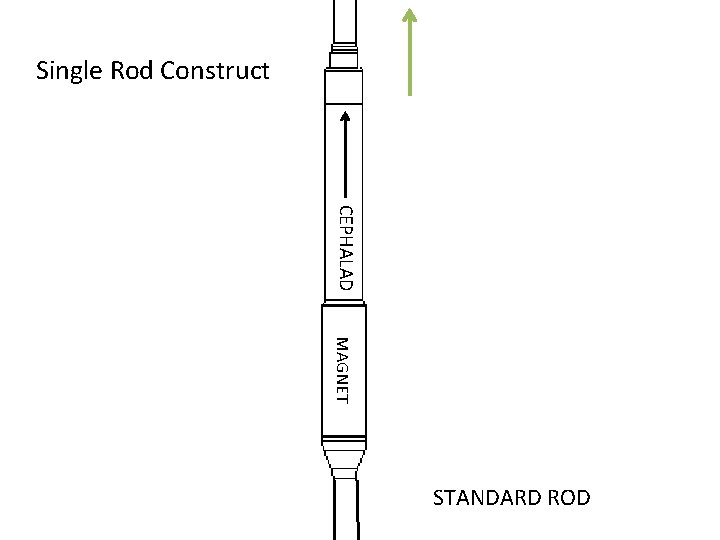
Single Rod Construct CEPHALAD MAGNET STANDARD ROD
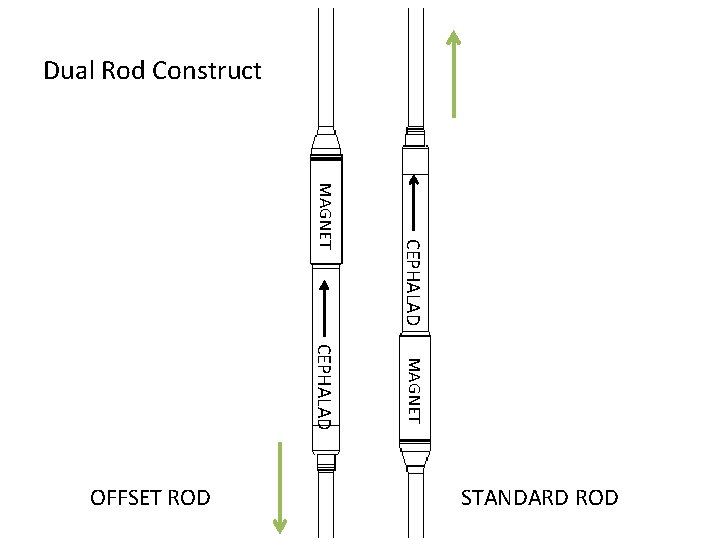
Dual Rod Construct CEPHALAD MAGNET CEPHALAD OFFSET ROD STANDARD ROD
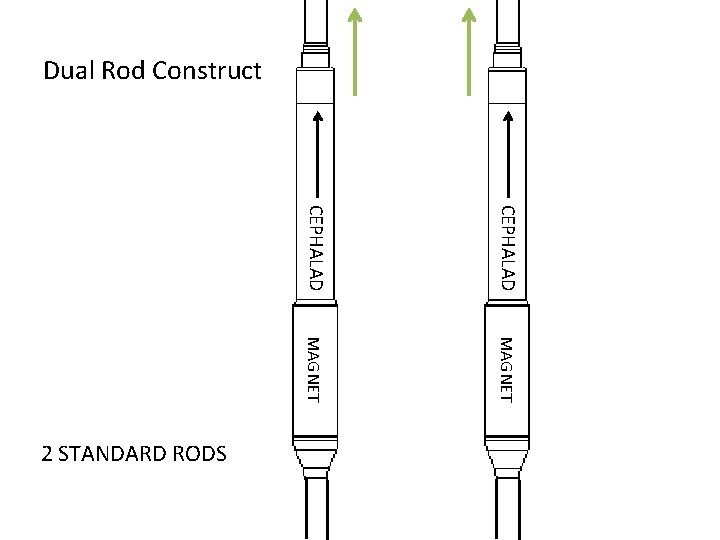
Dual Rod Construct CEPHALAD MAGNET 2 STANDARD RODS
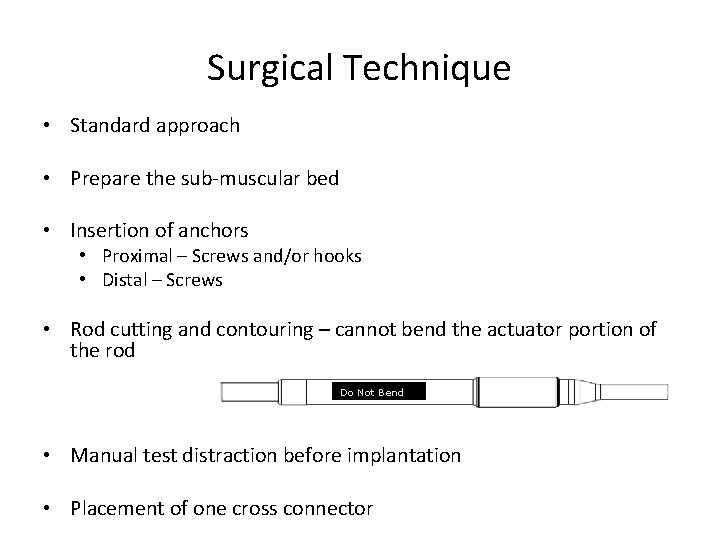
Surgical Technique • Standard approach • Prepare the sub-muscular bed • Insertion of anchors • Proximal – Screws and/or hooks • Distal – Screws • Rod cutting and contouring – cannot bend the actuator portion of the rod Do Not Bend • Manual test distraction before implantation • Placement of one cross connector
Manual Test Distraction
Manual Distractor
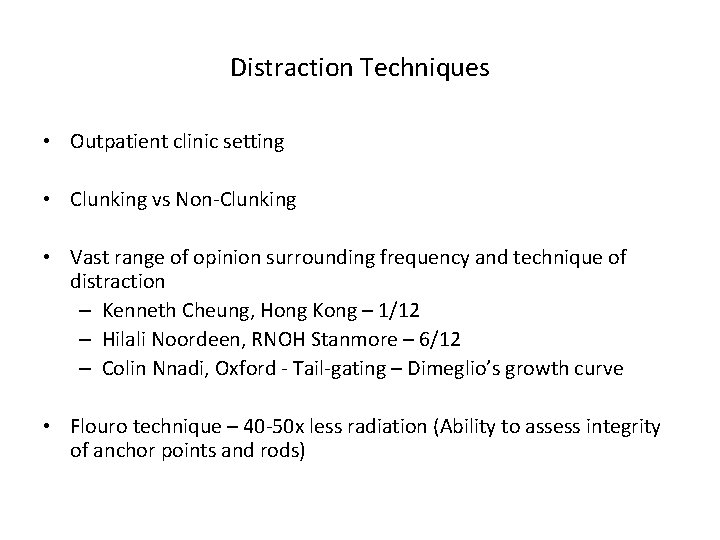
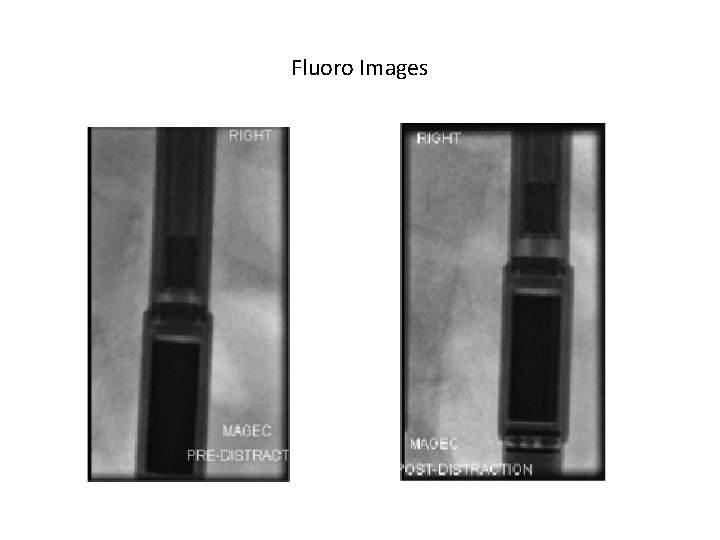
Distraction Techniques • Outpatient clinic setting • Clunking vs Non-Clunking • Vast range of opinion surrounding frequency and technique of distraction – Kenneth Cheung, Hong Kong – 1/12 – Hilali Noordeen, RNOH Stanmore – 6/12 – Colin Nnadi, Oxford - Tail-gating – Dimeglio’s growth curve • Flouro technique – 40 -50 x less radiation (Ability to assess integrity of anchor points and rods)
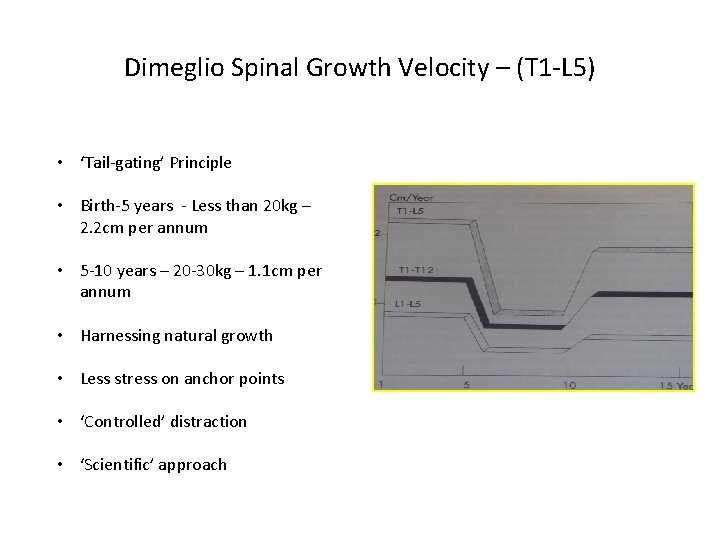
Dimeglio Spinal Growth Velocity – (T 1 -L 5) • ‘Tail-gating’ Principle • Birth-5 years - Less than 20 kg – 2. 2 cm per annum • 5 -10 years – 20 -30 kg – 1. 1 cm per annum • Harnessing natural growth • Less stress on anchor points • ‘Controlled’ distraction • ‘Scientific’ approach
Fluoro Images
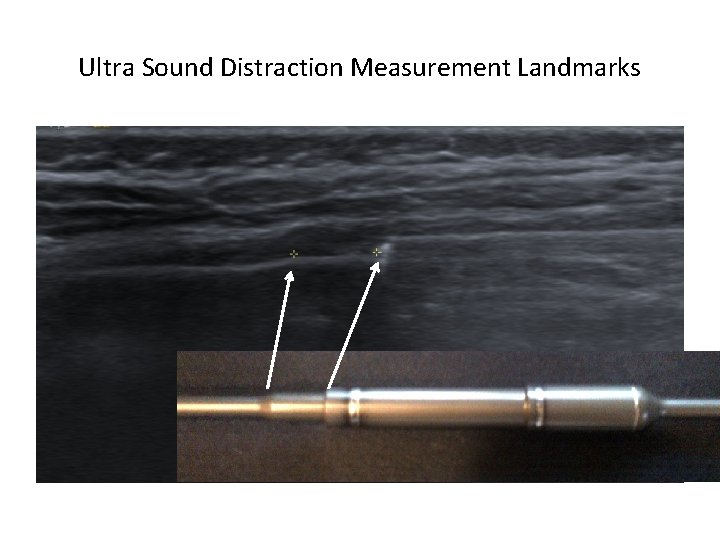
Ultra Sound Distraction Measurement Landmarks
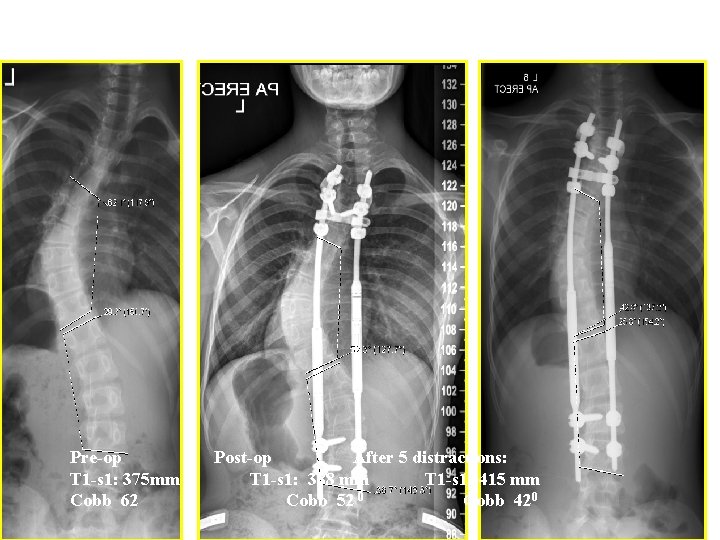
Pre-op T 1 -s 1: 375 mm Cobb 62 Post-op After 5 distractions: T 1 -s 1: 388 mm T 1 -s 1: 415 mm Cobb 52 0 Cobb 420