
Magnet Options for Modular Stellarator Power Plants Leslie




- Slides: 38
Magnet Options for Modular Stellarator Power Plants Leslie Bromberg J. H. Schultz ARIES team MIT Plasma Science and Fusion Center Cambridge MA 02139 US/Japan Workshop on Power Plant Studies and Related Advanced Technologies with EU Participation San Diego CA January 24 -25, 2006
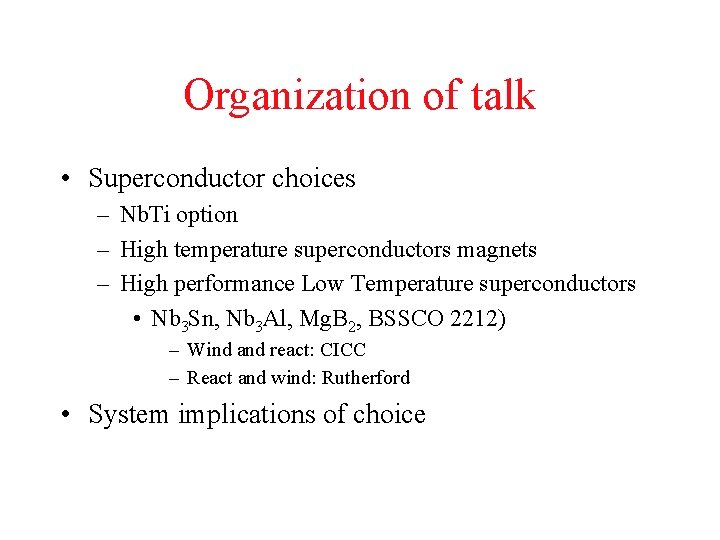
Organization of talk • Superconductor choices – Nb. Ti option – High temperature superconductors magnets – High performance Low Temperature superconductors • Nb 3 Sn, Nb 3 Al, Mg. B 2, BSSCO 2212) – Wind and react: CICC – React and wind: Rutherford • System implications of choice
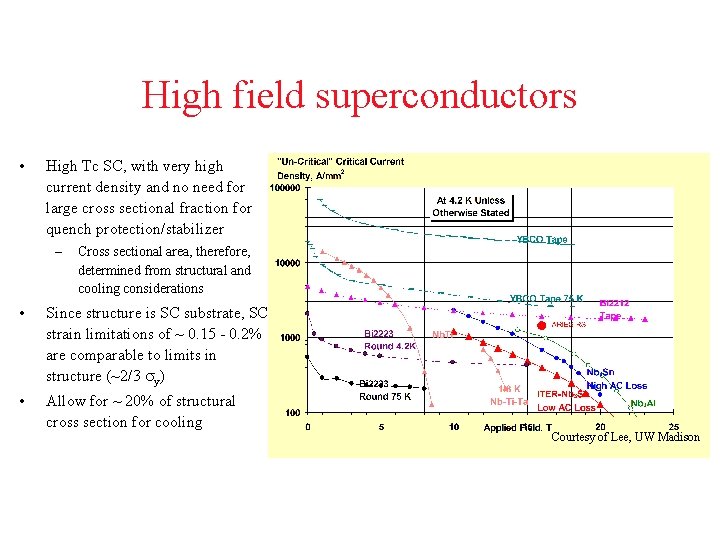
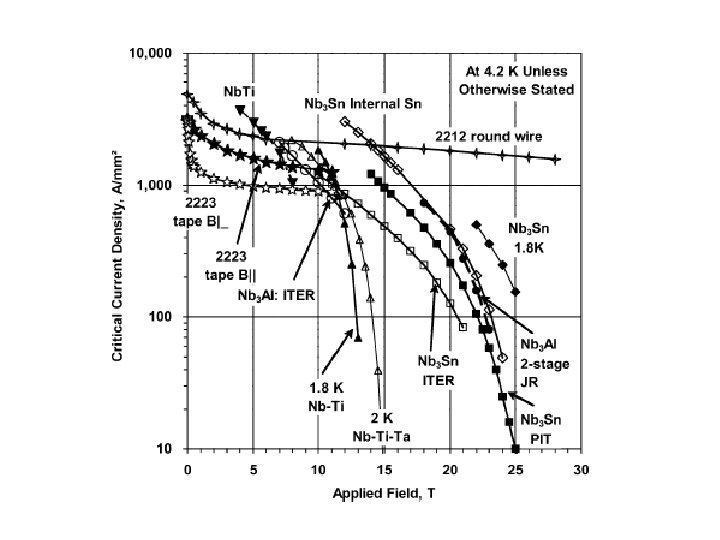
High field superconductors • High Tc SC, with very high current density and no need for large cross sectional fraction for quench protection/stabilizer – Cross sectional area, therefore, determined from structural and cooling considerations • Since structure is SC substrate, SC strain limitations of ~ 0. 15 - 0. 2% are comparable to limits in structure (~2/3 sy) • Allow for ~ 20% of structural cross section for cooling Courtesy of Lee, UW Madison
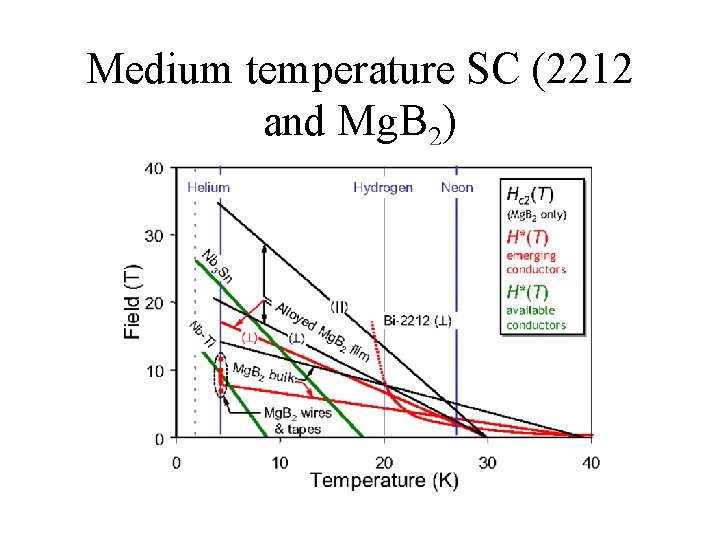
Medium temperature SC (2212 and Mg. B 2)
Modular stellarator magnets • Modular stellarator coils requires unconventional shapes for the main magnets – Large deviations from constant toroidal cross section that characterizes tokamaks – The magnet shape places strong demands on the magnet construction – Four type of magnets have been considered: • • Subcooled Nb. Ti magnets (Helias effort, HSR designs) High Tc magnets (using gen-2 YBCO magnets) Low Tc magnets with wind and react Low Tc magnets with react and wind
Nb. Ti magnets
Design with Nb. Ti • The HSR designs use Nb. Ti – Ductile material can be easily wound – Same as Wendelstein 7 -X • Reactor (HSR 4/18) – Nb. Ti at 1. 8 -1. 9 K, at a maximum field of about 10. 3 T • Ignition machine (based on HSR 4/18) – Nb. Ti at 4. 2 K with a peak field of 8. 5 T • These designs have very low temperature margin – However, device is more stable than tokamaks, with lower pulse sources.
Low temperature SC winding pack current density
ARIES CS with High Tc Supeconductors
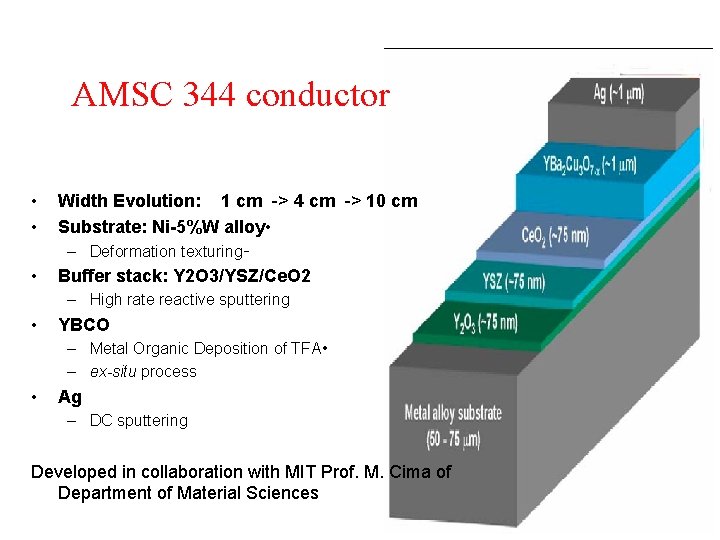
AMSC 344 conductor • • Width Evolution: 1 cm -> 4 cm -> 10 cm Substrate: Ni-5%W alloy • – Deformation texturing- • Buffer stack: Y 2 O 3/YSZ/Ce. O 2 – High rate reactive sputtering • YBCO – Metal Organic Deposition of TFA • – ex-situ process • Ag – DC sputtering Developed in collaboration with MIT Prof. M. Cima of Department of Material Sciences
Stellerator magnet construction Epitaxial YBCO films SC for modular coil-1
Patterned magnets • Similar technology employed in ARIES-AT and in ARIESIFE final focusing magnets • Advantages over low temperature superconductors: – Much higher engineering current density • • • Better SC properties Higher temperature of operation Comparable or better irradiation properties Absence of stabilizer/quench protection Compatibility with epitaxial techniques Use of inorganic insulator an integral part of the process SC for modular coil-5
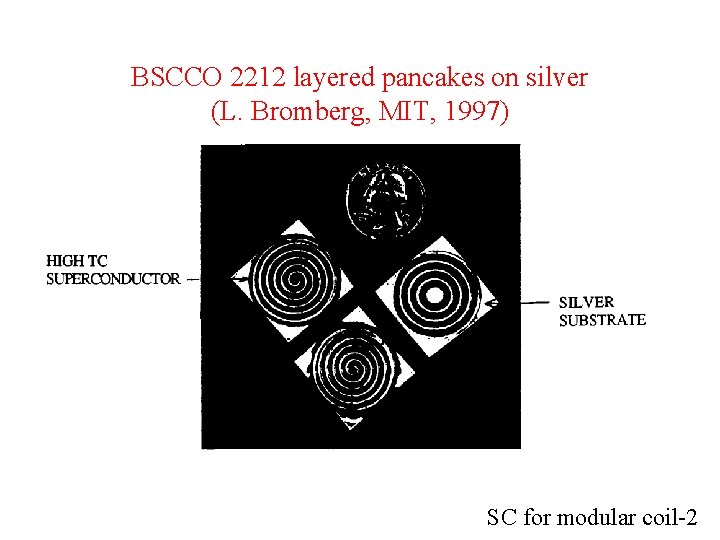
BSCCO 2212 layered pancakes on silver (L. Bromberg, MIT, 1997) SC for modular coil-2
344 tape - 2 nd gen YBCO from AMSC • • Highly strain resistant 1% strain tolerant, compared with 0. 2% for other low temperature conductors – Cheaper materials that do not have to match the coefficient of thermal expansion (CTE) for the superconductor • • – – • • • I. e. , conventional steels, instead of Incoloy 908 Thus higher stresses in the superconductor material than in the structure Note: 1% of a structure that is 10 m is about 10 cm! Deformations need to be included in the design Simplified the design of the coil, as material is determined more from strain than from stresses Substantial savings in structural materials Japanese group has record performance with ~250 m of conductor
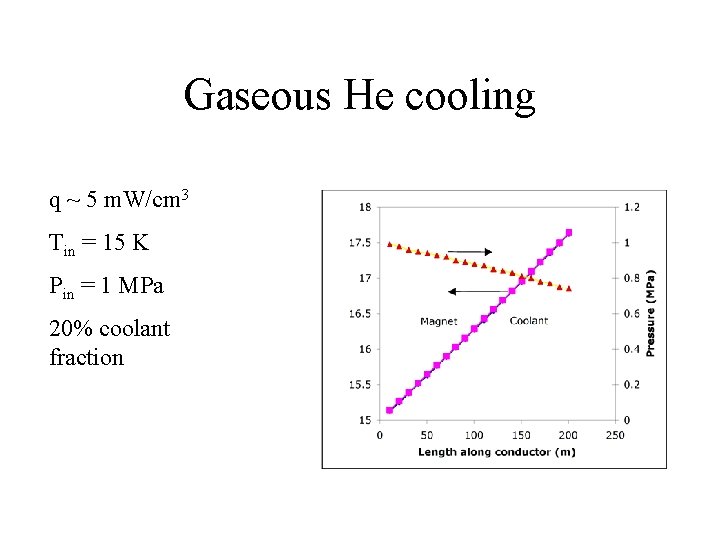
Gaseous He cooling q ~ 5 m. W/cm 3 Tin = 15 K Pin = 1 MPa 20% coolant fraction
Gaseous He cooling? • • • Large heating rate (5 m. W/cm 3, instead of more likely 2 m. W/cm 3) Pumping pressure drop about 2 bar in about 200 m of cooling passage Exit velocity ~ 5 m/s (vs about 220 m/s sound speed) Large Reynolds number (increases surface heat transfer coefficient, resulting in less than 0. 01 K temperature difference between coolant and magnet) Effect of transient heat conduction (important for addressing quench protection/recovery) Looks good!
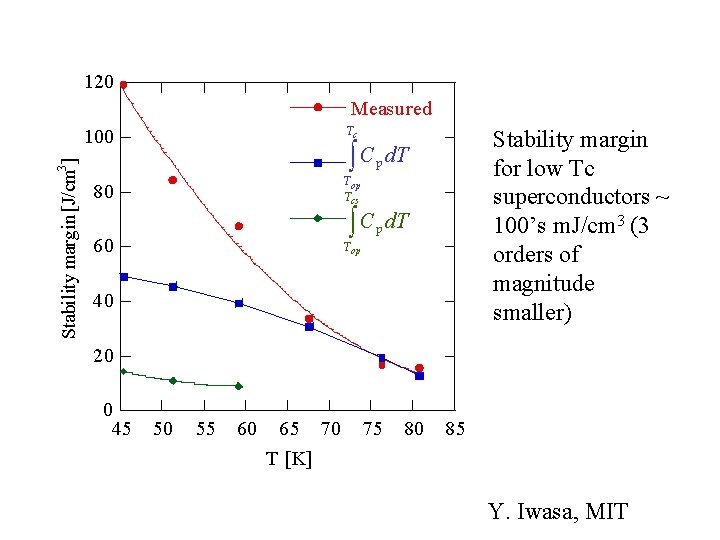
Stability margin for low Tc superconductors ~ 100’s m. J/cm 3 (3 orders of magnitude smaller) Y. Iwasa, MIT
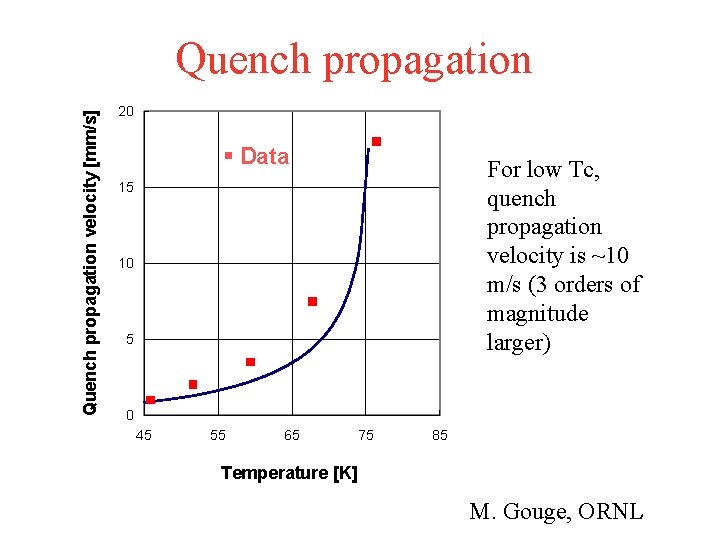
Quench propagation For low Tc, quench propagation velocity is ~10 m/s (3 orders of magnitude larger) M. Gouge, ORNL
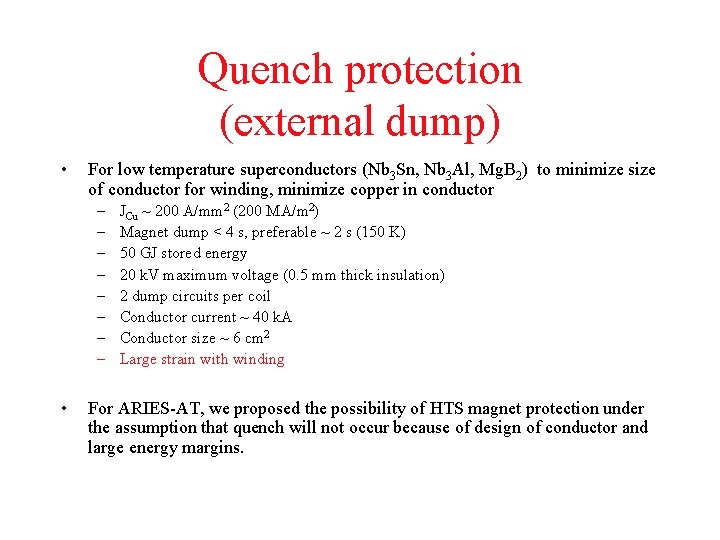
Quench protection (external dump) • For low temperature superconductors (Nb 3 Sn, Nb 3 Al, Mg. B 2) to minimize size of conductor for winding, minimize copper in conductor – – – – • JCu ~ 200 A/mm 2 (200 MA/m 2) Magnet dump < 4 s, preferable ~ 2 s (150 K) 50 GJ stored energy 20 k. V maximum voltage (0. 5 mm thick insulation) 2 dump circuits per coil Conductor current ~ 40 k. A Conductor size ~ 6 cm 2 Large strain with winding For ARIES-AT, we proposed the possibility of HTS magnet protection under the assumption that quench will not occur because of design of conductor and large energy margins.
Low temperature superconductors
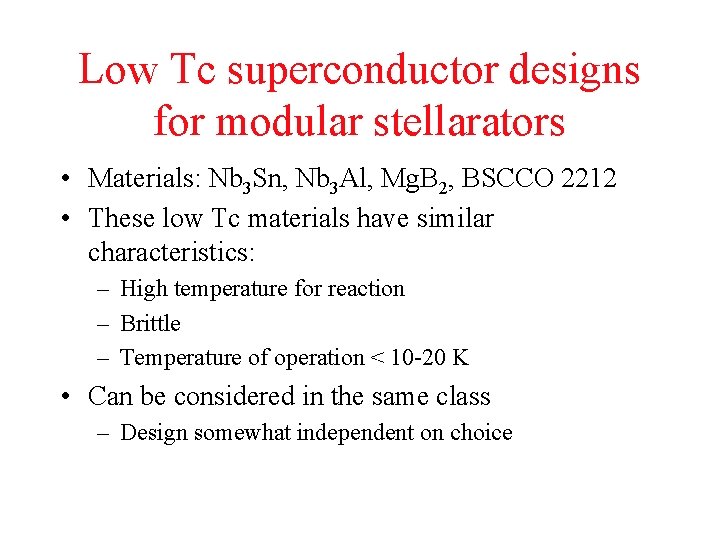
Low Tc superconductor designs for modular stellarators • Materials: Nb 3 Sn, Nb 3 Al, Mg. B 2, BSCCO 2212 • These low Tc materials have similar characteristics: – High temperature for reaction – Brittle – Temperature of operation < 10 -20 K • Can be considered in the same class – Design somewhat independent on choice
Hyper. Tech Mg. B 2
Mg. B 2 multifilamentary SC
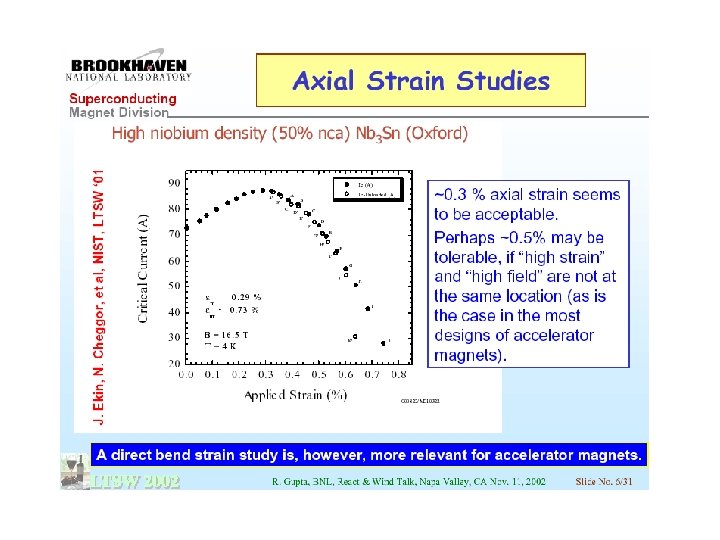
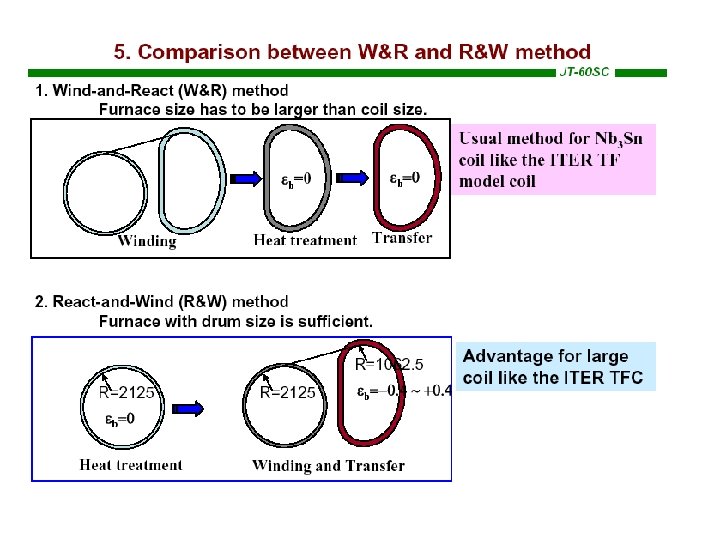
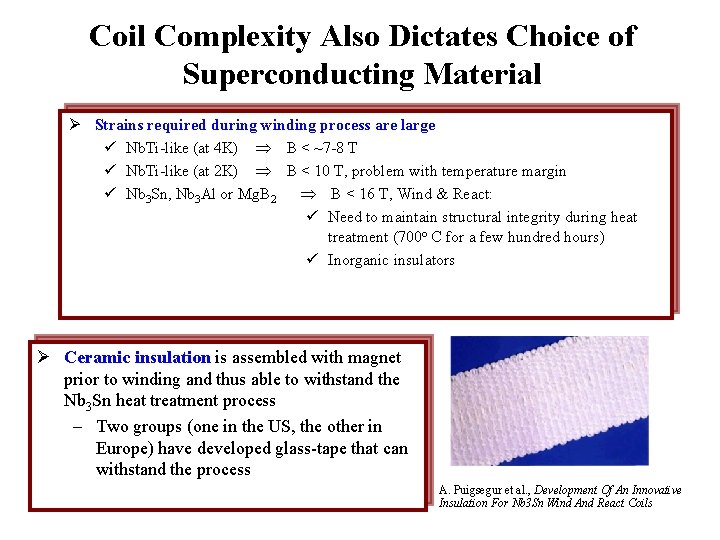
Coil Complexity Also Dictates Choice of Superconducting Material Ø Strains required during winding process are large ü Nb. Ti-like (at 4 K) B < ~7 -8 T ü Nb. Ti-like (at 2 K) B < 10 T, problem with temperature margin ü Nb 3 Sn, Nb 3 Al or Mg. B 2 B < 16 T, Wind & React: ü Need to maintain structural integrity during heat treatment (700 o C for a few hundred hours) ü Inorganic insulators Ø Ceramic insulation is assembled with magnet prior to winding and thus able to withstand the Nb 3 Sn heat treatment process – Two groups (one in the US, the other in Europe) have developed glass-tape that can withstand the process A. Puigsegur et al. , Development Of An Innovative Insulation For Nb 3 Sn Wind And React Coils
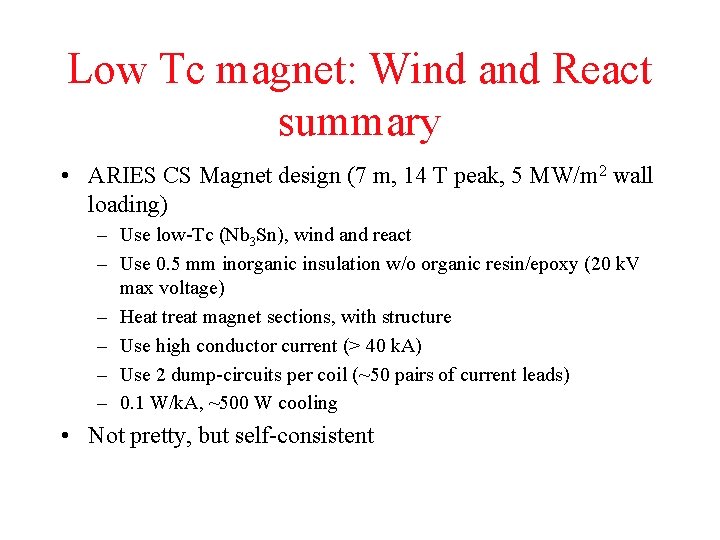
Low Tc magnet: Wind and React summary • ARIES CS Magnet design (7 m, 14 T peak, 5 MW/m 2 wall loading) – Use low-Tc (Nb 3 Sn), wind and react – Use 0. 5 mm inorganic insulation w/o organic resin/epoxy (20 k. V max voltage) – Heat treat magnet sections, with structure – Use high conductor current (> 40 k. A) – Use 2 dump-circuits per coil (~50 pairs of current leads) – 0. 1 W/k. A, ~500 W cooling • Not pretty, but self-consistent
Heresy: React and with internal dump
Motivation • Problem with manufacturing is due to large size of conductor required by quench protection – External dump, with voltage and heating limitations of the conductor • Increase amount of copper • Increase conductor current, and size • So, what happens if we work with internal dump?
Consequences of internal dump • Large amount of energy needs to be removed from the magnet – So what? Refrigerator is sized for steady state loads could possible recool magnet in a couple of days • Large magnets for HEP are designed for internal dump, as well as MRI magnets • Requires conductor heating from a resistive heater (over most of the magnet) to drive conductor normal – Requirement Tconductor ~ 10 K (for Nb 3 Sn, Nb 3 Al), requiring ~ 20 J/kg (0. 2 J/cm 3) – Energy required ~ 100 m 3 of conductor ~ 20 MJ – For 0. 2 s initiation of quench, 50 MW
Resistive quench in internal dump • Low temperature superconductors have relatively high normal zone propagation velocity – Several m/s • If locally the conductor is heated in a zone smaller than the minimum propagation zone, the normal zone will shrink (recover) – Minimum propagation zone in SC is ~ 1 cm. – Produce local heating in SC magnet, and depending in quench propagation to fill in the coil – Does result in increased temperature uniformity, but has the advantage of reducing power required – Heater has high resistivity elements a few cm long, spaced about 1 m – Power decreased by a factor of about 50.
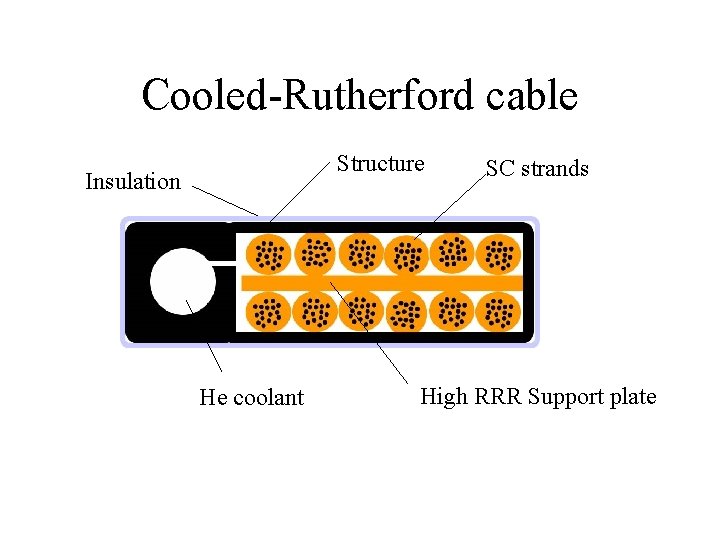
Conductor implications of internal quench • • Low current, small conductor, can use react and wind! Can use Rutherford-like cables (conventional high performance cables used in accelerators) Largest Rutherford cable made from 60 strands (vs ~ 1000 strands for CICC). If quench is symmetrical, no voltages are induced – – – Inductive voltage balances resistive voltage If non-uniform heating, uncancelled voltages will appear Need to determine actual voltages
Cooled-Rutherford cable Structure Insulation He coolant SC strands High RRR Support plate
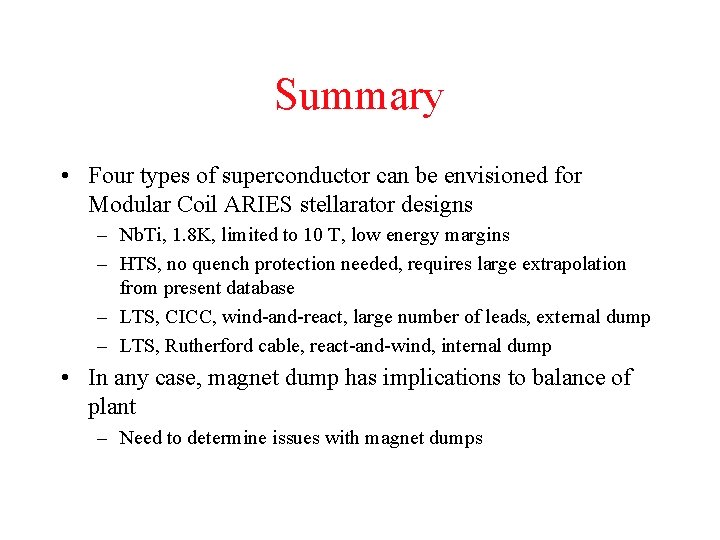
Summary • Four types of superconductor can be envisioned for Modular Coil ARIES stellarator designs – Nb. Ti, 1. 8 K, limited to 10 T, low energy margins – HTS, no quench protection needed, requires large extrapolation from present database – LTS, CICC, wind-and-react, large number of leads, external dump – LTS, Rutherford cable, react-and-wind, internal dump • In any case, magnet dump has implications to balance of plant – Need to determine issues with magnet dumps
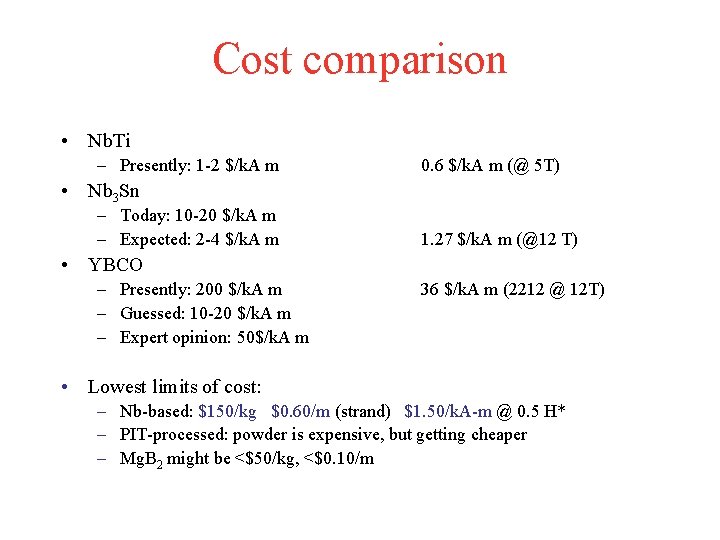
Cost comparison • Nb. Ti – Presently: 1 -2 $/k. A m 0. 6 $/k. A m (@ 5 T) • Nb 3 Sn – Today: 10 -20 $/k. A m – Expected: 2 -4 $/k. A m 1. 27 $/k. A m (@12 T) • YBCO – Presently: 200 $/k. A m – Guessed: 10 -20 $/k. A m – Expert opinion: 50$/k. A m 36 $/k. A m (2212 @ 12 T) • Lowest limits of cost: – Nb-based: $150/kg $0. 60/m (strand) $1. 50/k. A-m @ 0. 5 H* – PIT-processed: powder is expensive, but getting cheaper – Mg. B 2 might be <$50/kg, <$0. 10/m