
MAGNET NOTES WHAT IS A MAGNET A magnet
- Slides: 21
MAGNET NOTES!
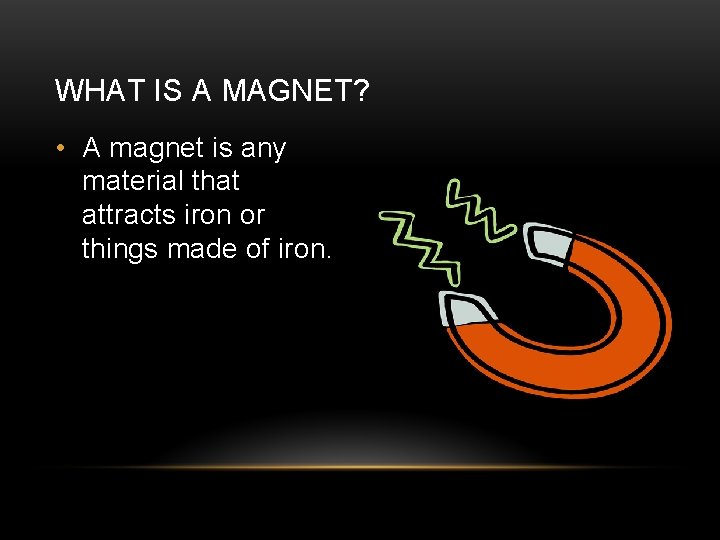
WHAT IS A MAGNET? • A magnet is any material that attracts iron or things made of iron.
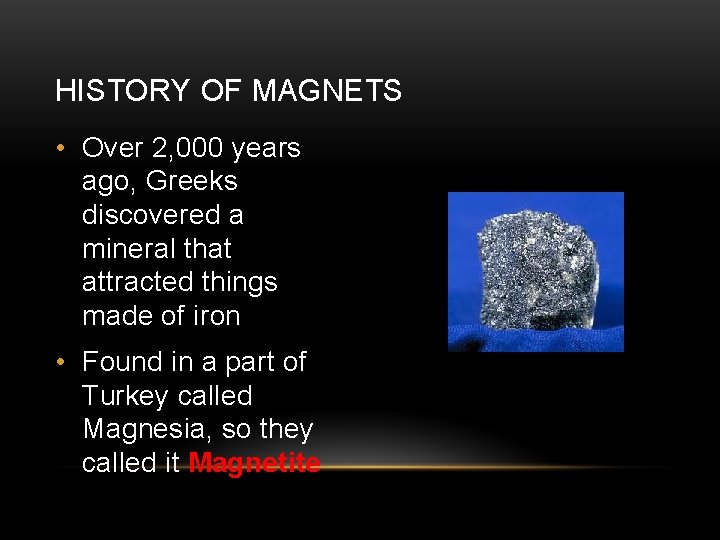
HISTORY OF MAGNETS • Over 2, 000 years ago, Greeks discovered a mineral that attracted things made of iron • Found in a part of Turkey called Magnesia, so they called it Magnetite
MAGNETIC PROPERTIES • Magnetic Poles • Magnetic Forces • Magnetic Fields
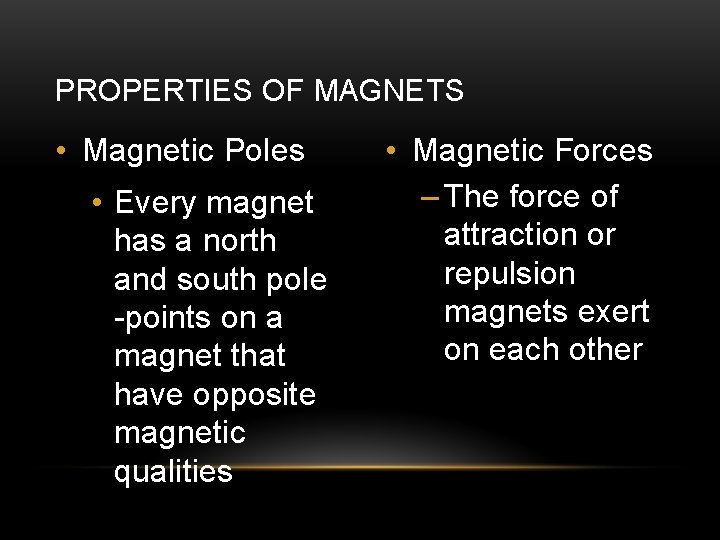
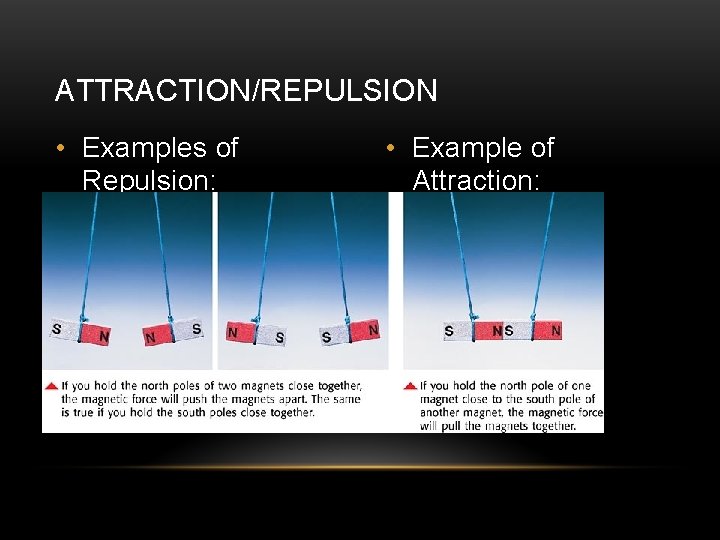
PROPERTIES OF MAGNETS • Magnetic Poles • Every magnet has a north and south pole -points on a magnet that have opposite magnetic qualities • Magnetic Forces – The force of attraction or repulsion magnets exert on each other
ATTRACTION/REPULSION • Examples of Repulsion: • Example of Attraction:
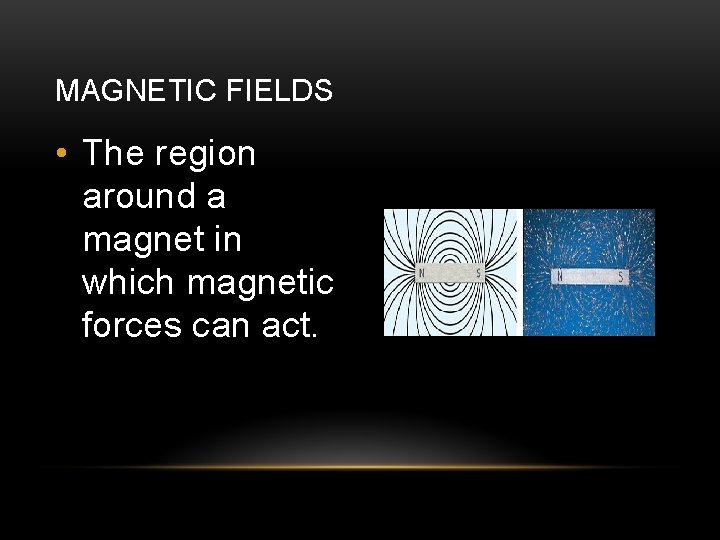
MAGNETIC FIELDS • The region around a magnet in which magnetic forces can act.
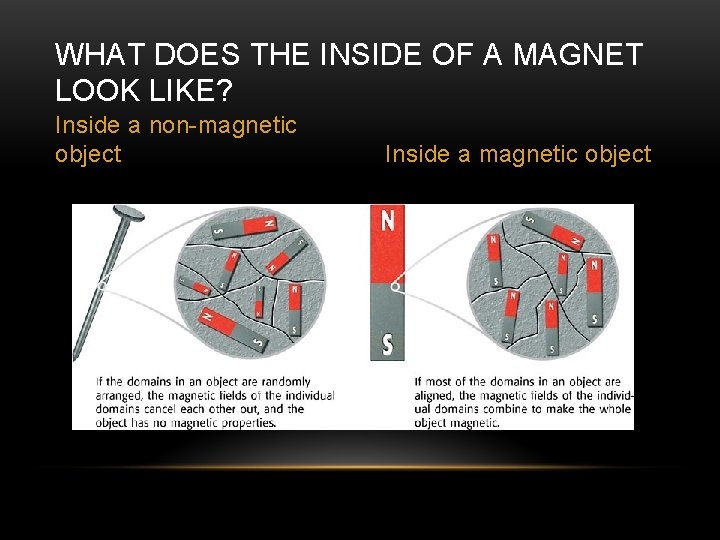
WHAT ARE THE ATOMS INSIDE OF A MAGNET DOING? • As negatively charged electrons move around, they make, or induce, a magnetic field. • In most material the magnetic field of individual atoms cancel each other. • In some materials the north and south poles line up in a domain (place where groups of atoms are found). • If most of the domains in an object align they can combine to make an entire object magnetic.
WHAT DOES THE INSIDE OF A MAGNET LOOK LIKE? Inside a non-magnetic object Inside a magnetic object
CAN MAGNETS BE DEMAGNETIZED? • When a magnet’s domains move, the magnet is demagnetized and loses its magnetic properties. • This can be done by: • Dropping a magnet • Hitting it too hard • Putting a magnet in a strong magnetic field that is opposite to its own • Increasing the magnet’s temperature-with a higher temperature, atoms vibrate faster and the atoms in the domains may no longer line up
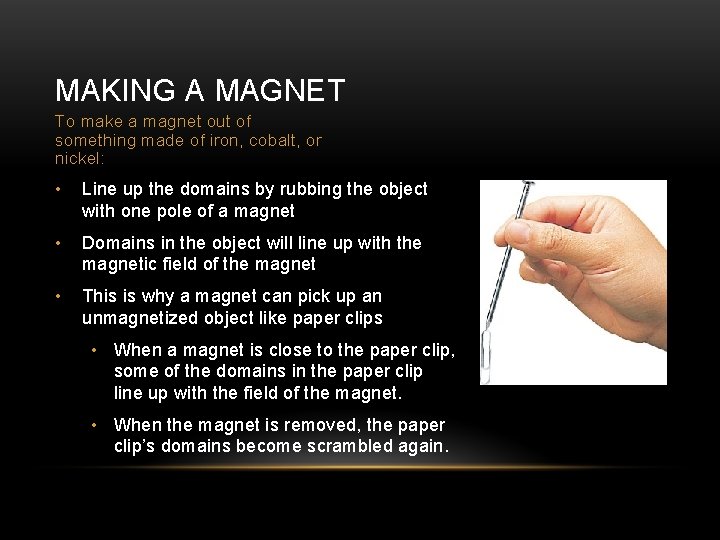
MAKING A MAGNET To make a magnet out of something made of iron, cobalt, or nickel: • Line up the domains by rubbing the object with one pole of a magnet • Domains in the object will line up with the magnetic field of the magnet • This is why a magnet can pick up an unmagnetized object like paper clips • When a magnet is close to the paper clip, some of the domains in the paper clip line up with the field of the magnet. • When the magnet is removed, the paper clip’s domains become scrambled again.
KINDS OF MAGNETS Temporary Magnets Permanent Magnets • Made from materials that are easy to magnetize, but lose their magnetism easily. • Difficult to magnetize and keep their magnetic properties longer than temporary magnets. • Soft iron is iron that has not been mixed with any other materials and can be made into temporary magnets • The paper clip and nail in the mini-lab were temporary magnets. • Some permanent magnets are made with alnico-an alloy made up of aluminum, nickel, cobalt, and iron.
WHAT WOULD HAPPEN IF YOU CUT A MAGNET? • Would you end up with one north pole and one south pole? • NO • When you cut a magnet, you get two magnets, each with its own north and south pole. • Why? • A magnet has poles because its domains are lined up, and each domain is like a very tiny magnet with a north and south pole, so even the smallest pieces of a magnet have a north and south pole.
MAGNETIC FIELD NOTES
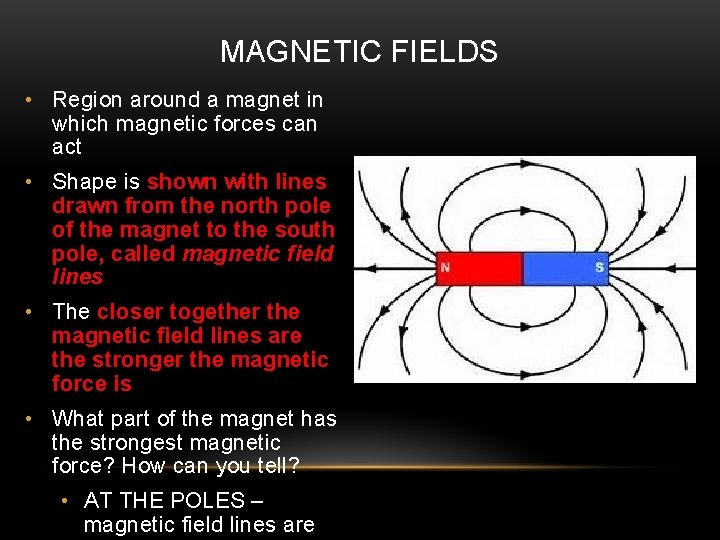
MAGNETIC FIELDS • Region around a magnet in which magnetic forces can act • Shape is shown with lines drawn from the north pole of the magnet to the south pole, called magnetic field lines • The closer together the magnetic field lines are the stronger the magnetic force is • What part of the magnet has the strongest magnetic force? How can you tell? • AT THE POLES – magnetic field lines are
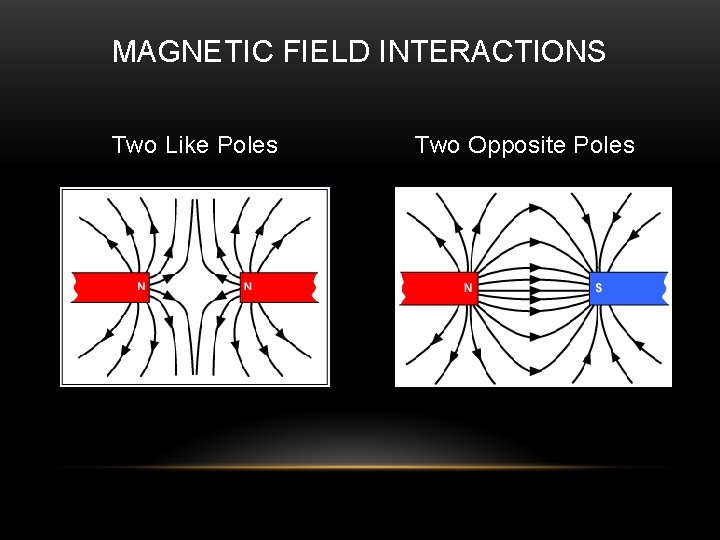
MAGNETIC FIELD INTERACTIONS Two Like Poles Two Opposite Poles
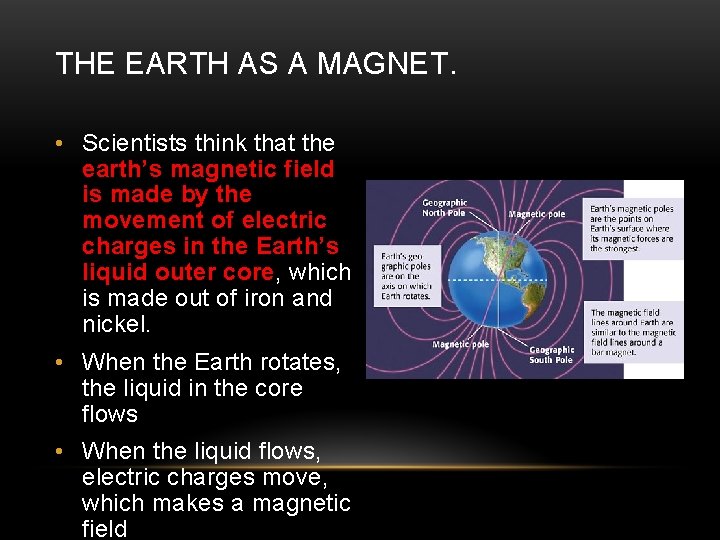
THE EARTH AS A MAGNET. • Scientists think that the earth’s magnetic field is made by the movement of electric charges in the Earth’s liquid outer core, which is made out of iron and nickel. • When the Earth rotates, the liquid in the core flows • When the liquid flows, electric charges move, which makes a magnetic field
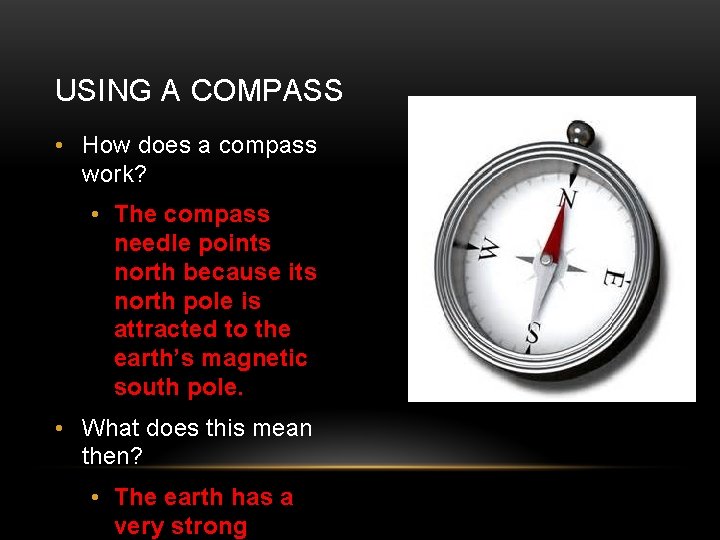
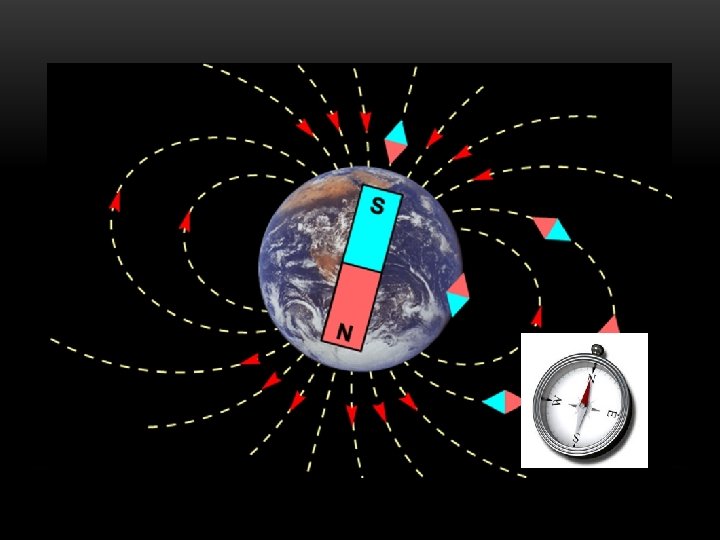
USING A COMPASS • How does a compass work? • The compass needle points north because its north pole is attracted to the earth’s magnetic south pole. • What does this mean then? • The earth has a very strong
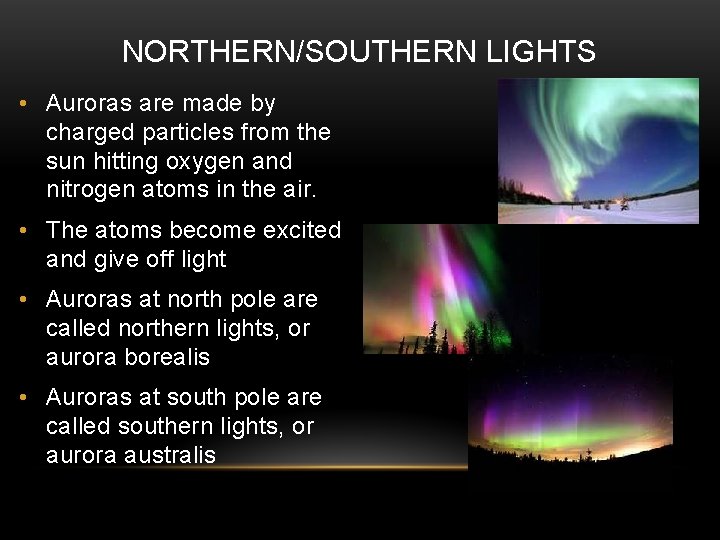
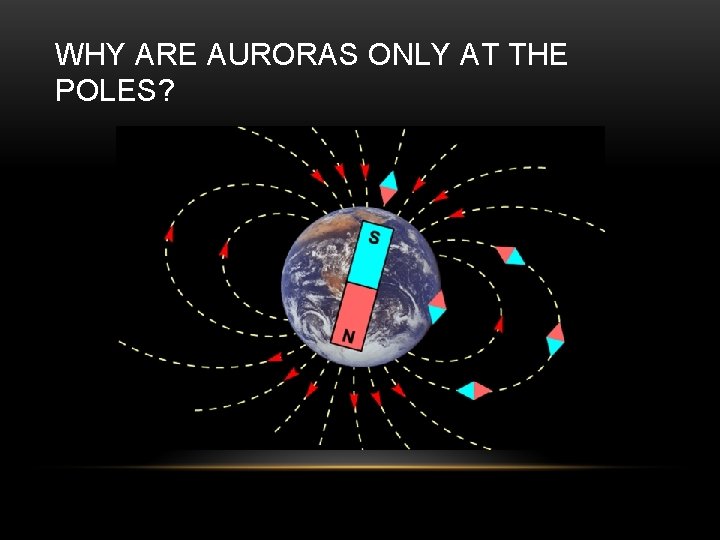
NORTHERN/SOUTHERN LIGHTS • Auroras are made by charged particles from the sun hitting oxygen and nitrogen atoms in the air. • The atoms become excited and give off light • Auroras at north pole are called northern lights, or aurora borealis • Auroras at south pole are called southern lights, or aurora australis
WHY ARE AURORAS ONLY AT THE POLES?