
Magnet Inquiry Investigation Based on the work from
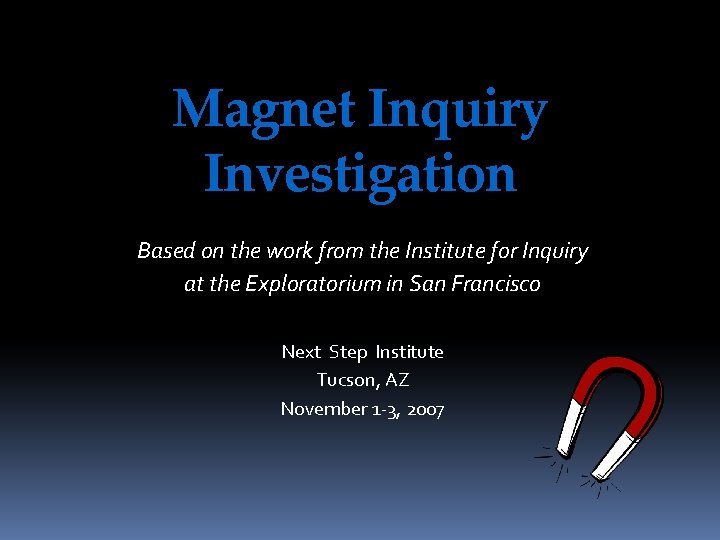
Magnet Inquiry Investigation Based on the work from the Institute for Inquiry at the Exploratorium in San Francisco Next Step Institute Tucson, AZ November 1 -3, 2007

Workshop Strands Understanding by Design Supporting Inquiry How can I facilitate and assess inquiry investigations in a K-8 classroom and achieve a standards-based curriculum? How can I plan an inquiry to ensure that students demonstrate critical learning of content and process skills? Literature Inquiry Next Steps & Collaboration

Agenda Inquiry Investigation (integrate break) – approx 2. 5 hours Phase 1 Phase 2 Lunch @ 12: 00 – 1: 00 Phase 3 Debrief and share strategies to support inquiry in the classroom @ 1: 45 Share Inquiry Template

Purpose Provide a quick, intensive experience of inquiry to create a feel for inquiry and vision of the process.
Magnets Inquiry q. Based on the Exploratorium’s work q. Model structure of inquiry (see map) q. Focused on elementary school (Grades 3 -5)
This experience includes: Science content associated with magnets. Use of process skills to learn content. Process of doing inquiry.
Become the learner.
Mess around and explore.
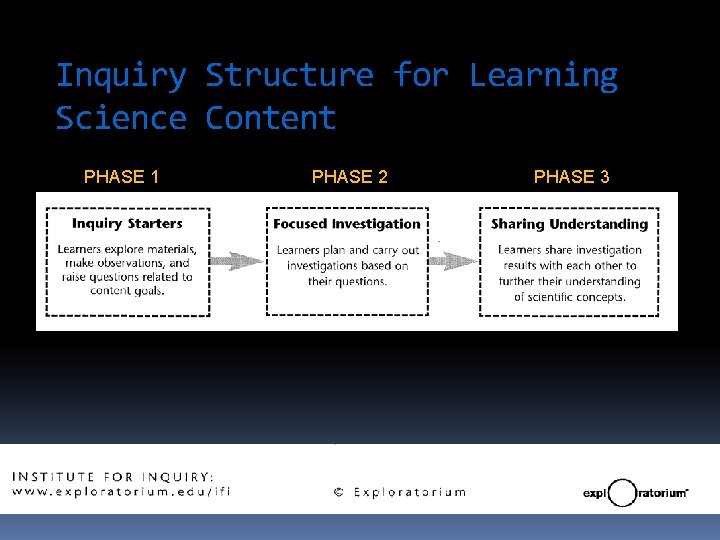
Inquiry Structure for Learning Science Content PHASE 1 PHASE 2 PHASE 3
Inquiry Starters – Phase 1 The inquiry experience is introduced. Explore engaging materials and phenomena. Raise and record questions.
PHASE I Inquiry Starter #1 (1 magnet) q Every group has 1 magnet in a cup and a ‘bag o’ stuff’ q On paper, make predictions about whether an object is magnetic or not to an object found in the bag. q Test the object and record whether or not it is magnetic. q 5 minutes to do this
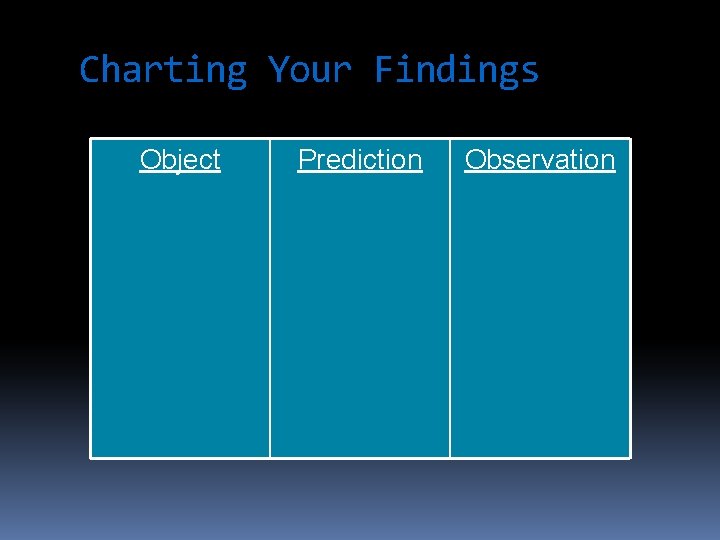
Charting Your Findings Object Prediction Observation
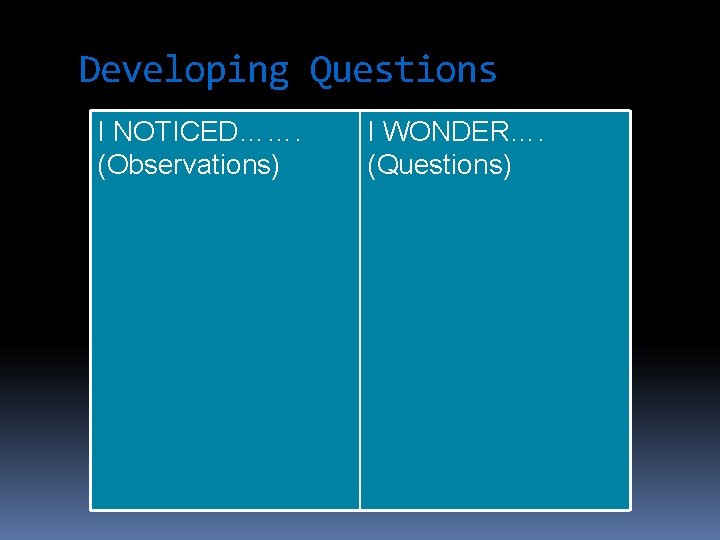
Developing Questions I NOTICED……. (Observations) I WONDER…. (Questions)
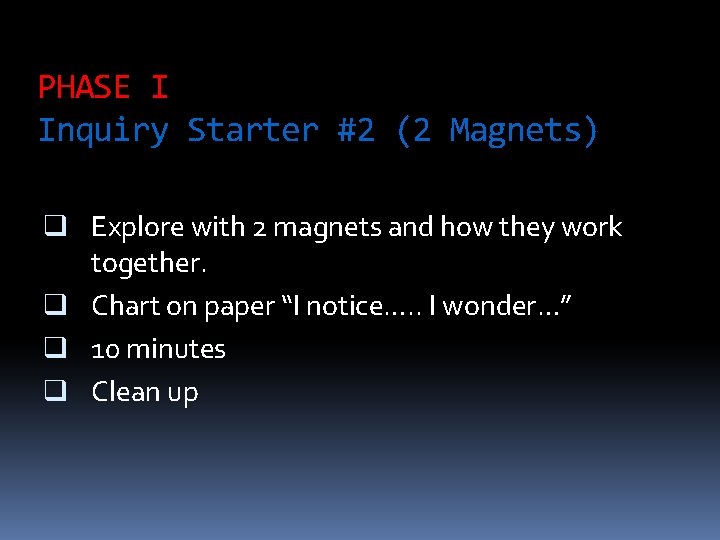
PHASE I Inquiry Starter #2 (2 Magnets) q Explore with 2 magnets and how they work together. q Chart on paper “I notice…. . I wonder…” q 10 minutes q Clean up
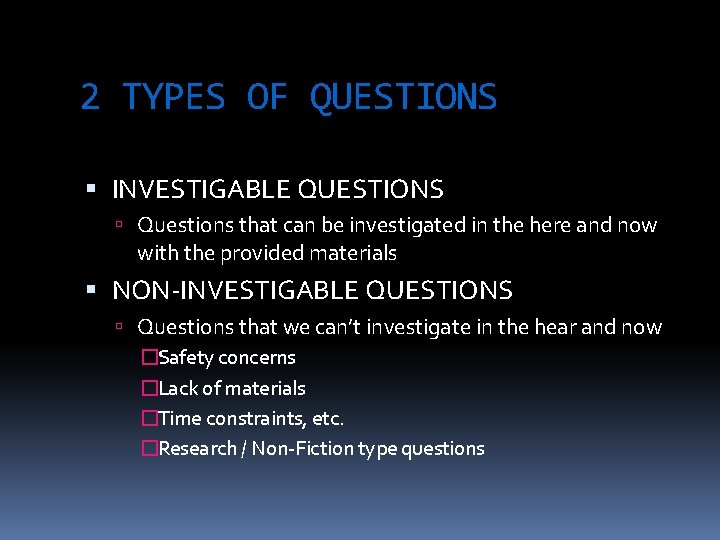
2 TYPES OF QUESTIONS INVESTIGABLE QUESTIONS Questions that can be investigated in the here and now with the provided materials NON-INVESTIGABLE QUESTIONS Questions that we can’t investigate in the hear and now �Safety concerns �Lack of materials �Time constraints, etc. �Research / Non-Fiction type questions
Fair Test / Controlled Experiment What is a fair test? What are controlled variables? How do you plan an investigation?
Gallery Walk Post questions on wall Read questions Form groups of approximately 3 Revise question if necessary (investigable) Use planning template
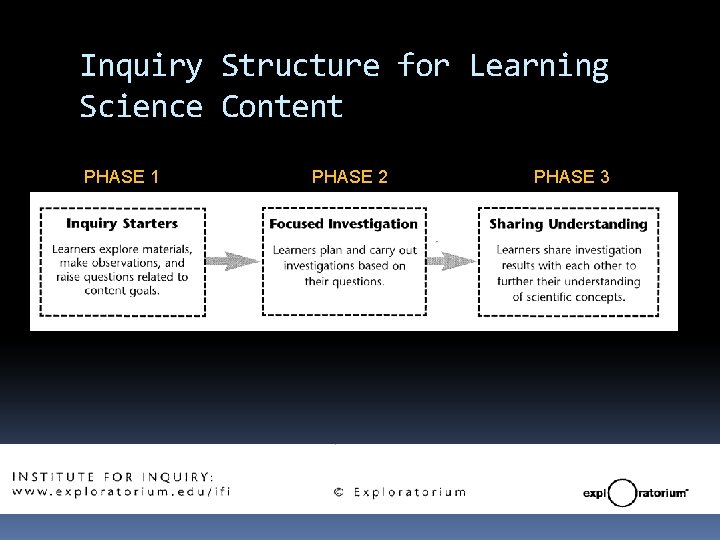
Inquiry Structure for Learning Science Content PHASE 1 PHASE 2 PHASE 3
Phase 2 – Focused Investigation ØFigure something out ØReceive help from facilitators ØShare information with other groups ØRaise new questions ØRevise your plan
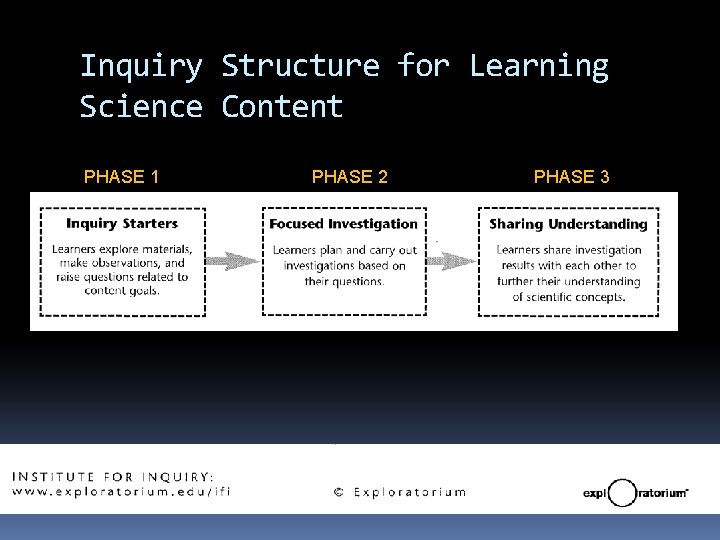
Inquiry Structure for Learning Science Content PHASE 1 PHASE 2 PHASE 3
Phase 3 – Sharing Understanding Process for meaning Share results of investigations Facilitator synthesizes these results 2 -3 minutes Template as a guide Chart paper & markers available
Magnets Synthesis We learned…
Content Goals Magnets produce a force that some things respond to and some things do not Magnets exert a force at a distance ; they can push or pull without touching A Magnet’s pull is greatest when measured close to the magnet A magnetic force can hold a limited amount of weight Magnets possess various degrees of strength Magnets can exert their force though materials 23
Process Skills Addressed Observation Raising Questions Planning Data collection, Organization, Display Presenting/Sharing 24
Inquiry Skills Investigable (testable) questions can be answered in the here and now. Noninvestigable questions need to be answered using print resources. To help ensure reliable data, the experimental design should have only one independent variable, the rest of the variables should be held constant. (controlled experiment / fair test) Rich inquiry investigations lead to more questions. MORE. .
Chart Talk Identify strategies that help support these critical elements of inquiry Debrief
Inquiry Template Common structure to communicate grade level inquires to teachers Structure to design new inquiries 3 phases Apply to unit of choice on Saturday. Exploratorium’s work is focused on professional development
Essential Questions Supporting Inquiry How can I facilitate and assess inquiry investigations in a K-8 classroom and achieve a standards-based curriculum? How can I plan an inquiry to ensure that students demonstrate critical learning of content and process skills?
BACKGROUND Very successful and engaging with grades 3 -5 In the classroom might normally take about 3 hours (could be spread over 3 days) Simple and fairly inexpensive Would need to make modifications for classroom – need more time Aligns with new CT Science Framework
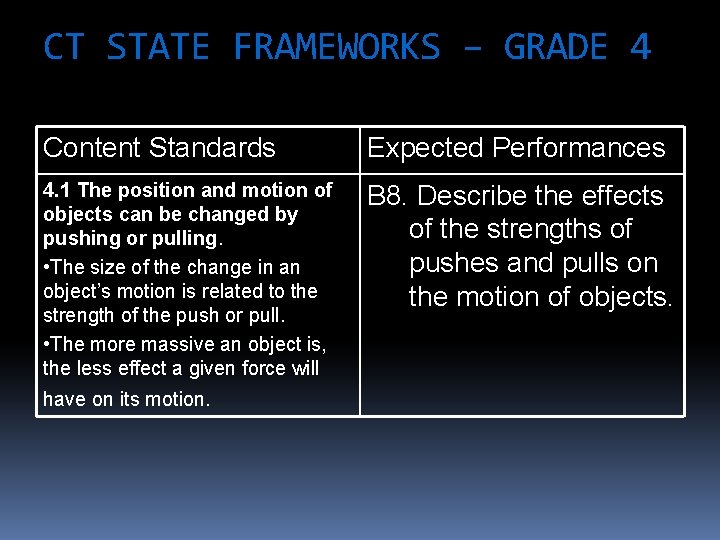
CT STATE FRAMEWORKS – GRADE 4 Content Standards Expected Performances 4. 1 The position and motion of objects can be changed by pushing or pulling. • The size of the change in an object’s motion is related to the strength of the push or pull. • The more massive an object is, the less effect a given force will B 8. Describe the effects of the strengths of pushes and pulls on the motion of objects. have on its motion.
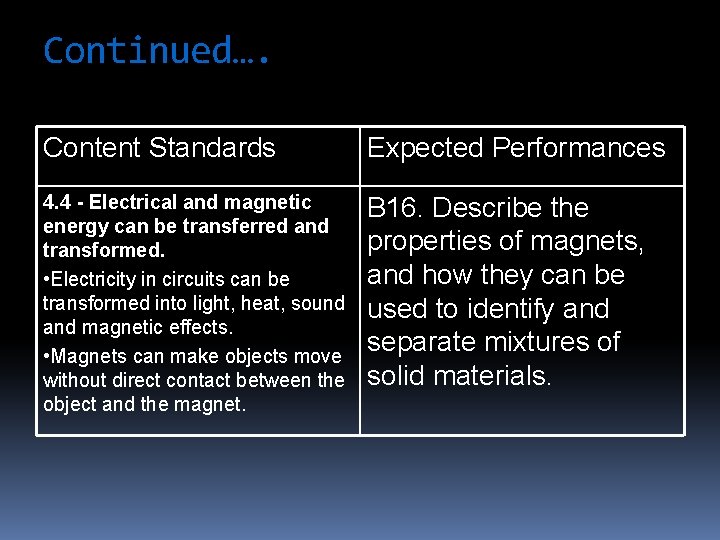
Continued…. Content Standards Expected Performances 4. 4 - Electrical and magnetic energy can be transferred and transformed. • Electricity in circuits can be transformed into light, heat, sound and magnetic effects. • Magnets can make objects move without direct contact between the object and the magnet. B 16. Describe the properties of magnets, and how they can be used to identify and separate mixtures of solid materials.
- Slides: 31