
Magnet design for EMu S experiment Hou Zhilong
- Slides: 32
Magnet design for EMu. S experiment Hou Zhilong (houzl@ihep. ac. cn) Xie Zongtai, Zhao Guang, Yuan Ye, Nikos Vassilopoulos, Chen Yuan 2018. 11. 20
Contents ØMagnet design for the target station ØMagnetic Field design ØMechanical design and analysis ØManufacture and test of coil ØMagnet design for the superferric dipole ØMagnetic Field design ØMechanical analysis ØConceptual design for the transport line magnet ØSummary
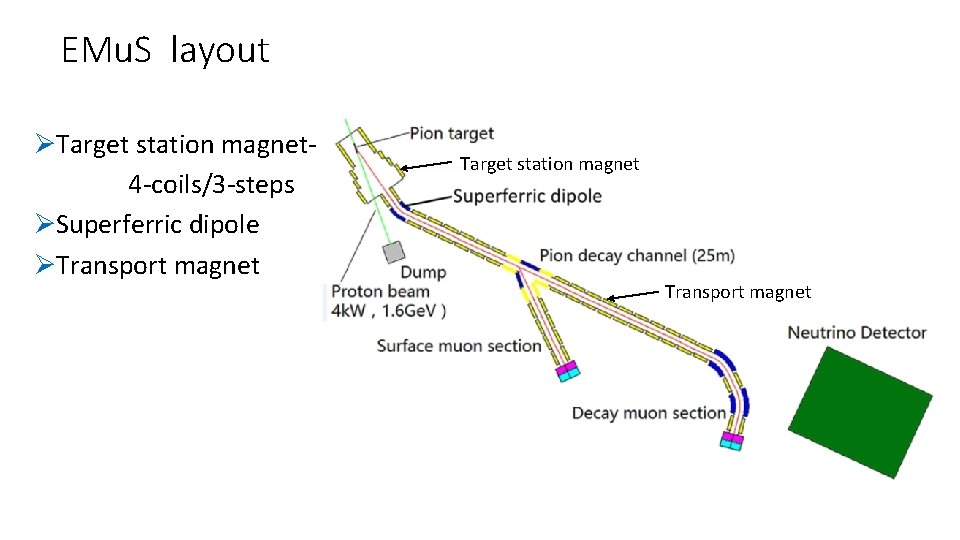
EMu. S layout ØTarget station magnet 4 -coils/3 -steps ØSuperferric dipole ØTransport magnet Target station magnet Transport magnet
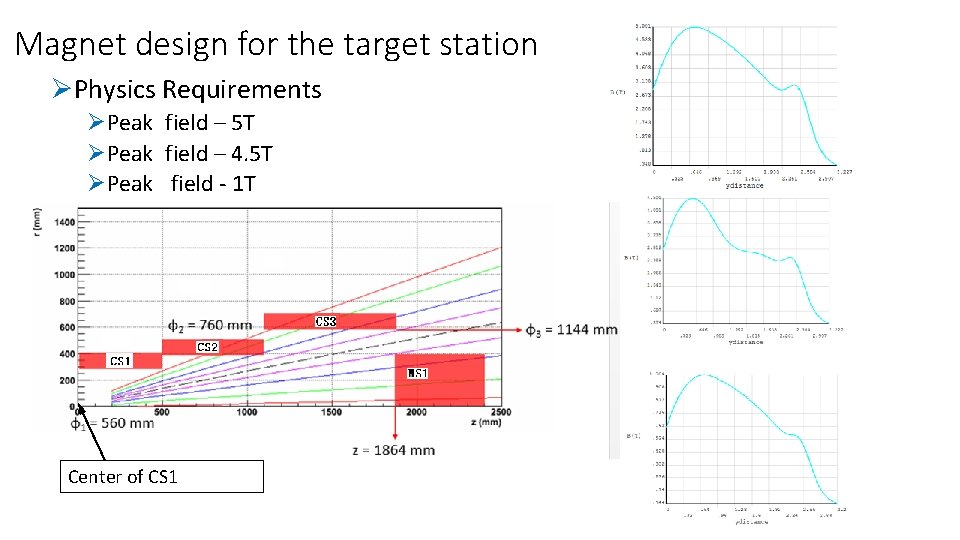
Magnet design for the target station ØPhysics Requirements ØPeak field – 5 T ØPeak field – 4. 5 T ØPeak field - 1 T Center of CS 1
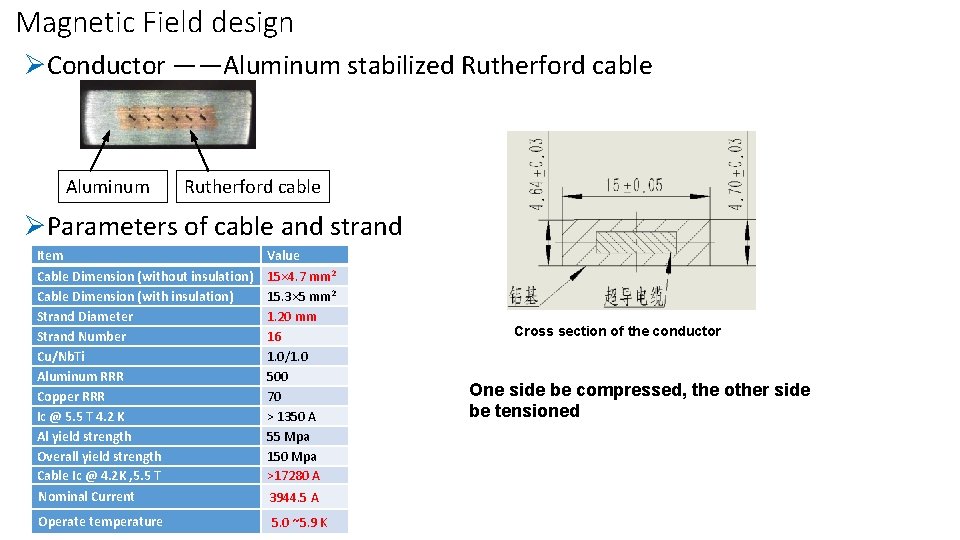
Magnetic Field design ØConductor ——Aluminum stabilized Rutherford cable Aluminum Rutherford cable ØParameters of cable and strand Item Cable Dimension (without insulation) Cable Dimension (with insulation) Strand Diameter Strand Number Cu/Nb. Ti Aluminum RRR Copper RRR Ic @ 5. 5 T 4. 2 K Al yield strength Overall yield strength Cable Ic @ 4. 2 K , 5. 5 T Nominal Current Value 15× 4. 7 mm 2 15. 3× 5 mm 2 1. 20 mm 16 1. 0/1. 0 500 70 > 1350 A 55 Mpa 150 Mpa >17280 A Operate temperature 5. 0 ~5. 9 K 3944. 5 A Cross section of the conductor One side be compressed, the other side be tensioned
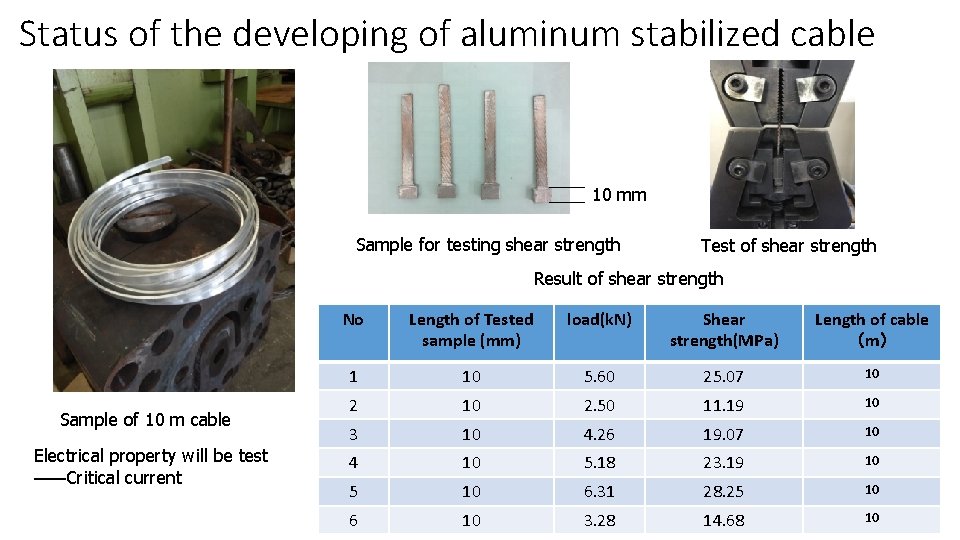
Status of the developing of aluminum stabilized cable 10 mm Sample for testing shear strength Test of shear strength Result of shear strength Sample of 10 m cable Electrical property will be test ——Critical current No Length of Tested sample (mm) load(k. N) Shear strength(MPa) Length of cable (m) 1 10 5. 60 25. 07 10 2. 50 11. 19 10 3 10 4. 26 19. 07 10 4 10 5. 18 23. 19 10 5 10 6. 31 28. 25 10 6 10 3. 28 14. 68 10
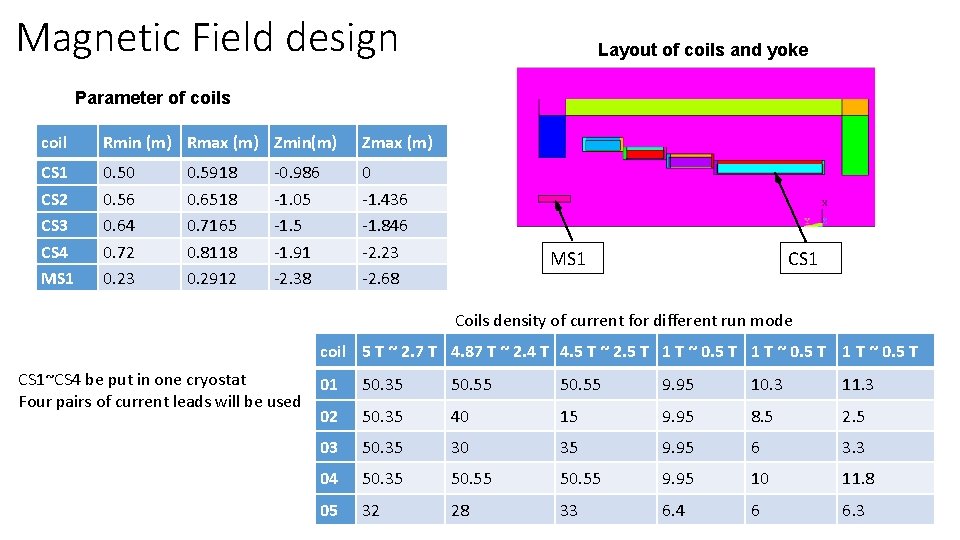
Magnetic Field design Layout of coils and yoke Parameter of coils coil Rmin (m) Rmax (m) Zmin(m) Zmax (m) CS 1 CS 2 CS 3 CS 4 MS 1 0. 50 0. 56 0. 64 0. 72 0. 23 0 -1. 436 -1. 846 -2. 23 -2. 68 0. 5918 0. 6518 0. 7165 0. 8118 0. 2912 -0. 986 -1. 05 -1. 91 -2. 38 MS 1 Coils density of current for different run mode coil 5 T ~ 2. 7 T 4. 87 T ~ 2. 4 T 4. 5 T ~ 2. 5 T 1 T ~ 0. 5 T CS 1~CS 4 be put in one cryostat Four pairs of current leads will be used 01 50. 35 50. 55 9. 95 10. 3 11. 3 02 50. 35 40 15 9. 95 8. 5 2. 5 03 50. 35 30 35 9. 95 6 3. 3 04 50. 35 50. 55 9. 95 10 11. 8 05 32 28 33 6. 4 6 6. 3
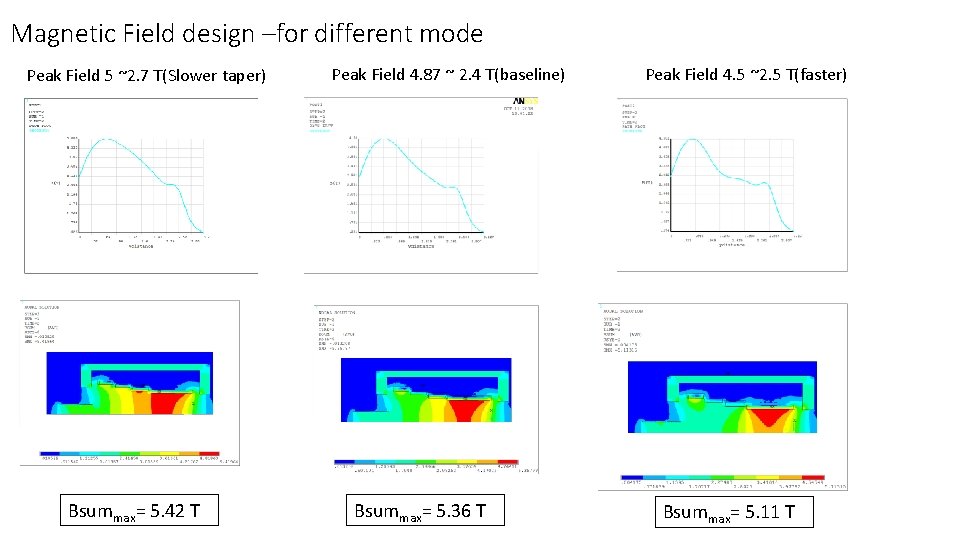
Magnetic Field design –for different mode Peak Field 5 ~2. 7 T(Slower taper) Bsummax= 5. 42 T Peak Field 4. 87 ~ 2. 4 T(baseline) Bsummax= 5. 36 T Peak Field 4. 5 ~2. 5 T(faster) Bsummax= 5. 11 T
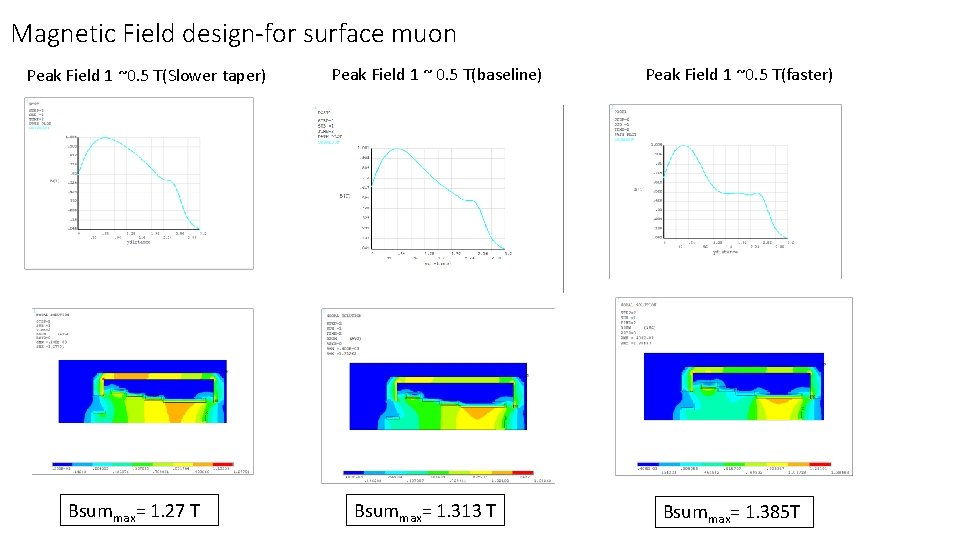
Magnetic Field design-for surface muon Peak Field 1 ~0. 5 T(Slower taper) Bsummax= 1. 27 T Peak Field 1 ~ 0. 5 T(baseline) Bsummax= 1. 313 T Peak Field 1 ~0. 5 T(faster) Bsummax= 1. 385 T
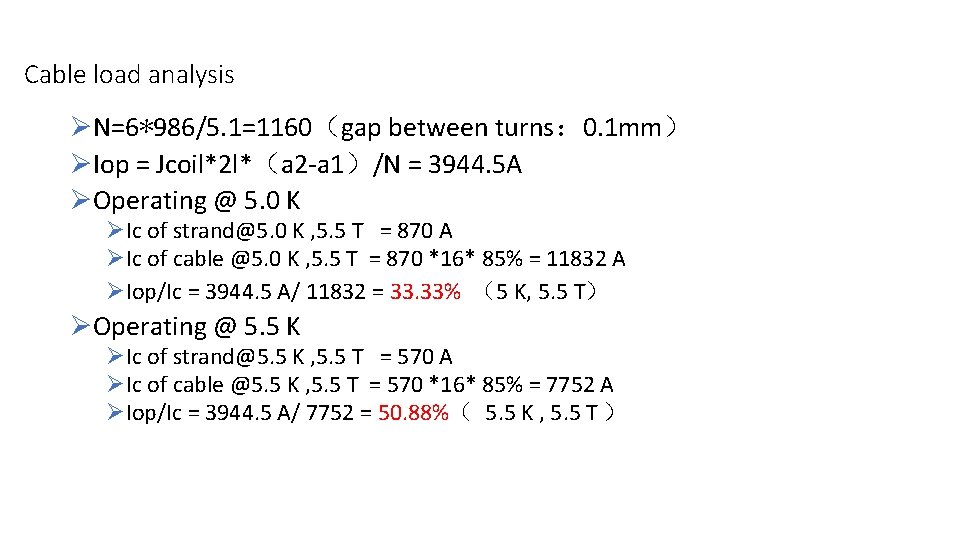
Cable load analysis ØN=6*986/5. 1=1160(gap between turns: 0. 1 mm) ØIop = Jcoil*2 l*(a 2 -a 1)/N = 3944. 5 A ØOperating @ 5. 0 K ØIc of strand@5. 0 K , 5. 5 T = 870 A ØIc of cable @5. 0 K , 5. 5 T = 870 *16* 85% = 11832 A ØIop/Ic = 3944. 5 A/ 11832 = 33. 33% (5 K, 5. 5 T) ØOperating @ 5. 5 K ØIc of strand@5. 5 K , 5. 5 T = 570 A ØIc of cable @5. 5 K , 5. 5 T = 570 *16* 85% = 7752 A ØIop/Ic = 3944. 5 A/ 7752 = 50. 88%( 5. 5 K , 5. 5 T )
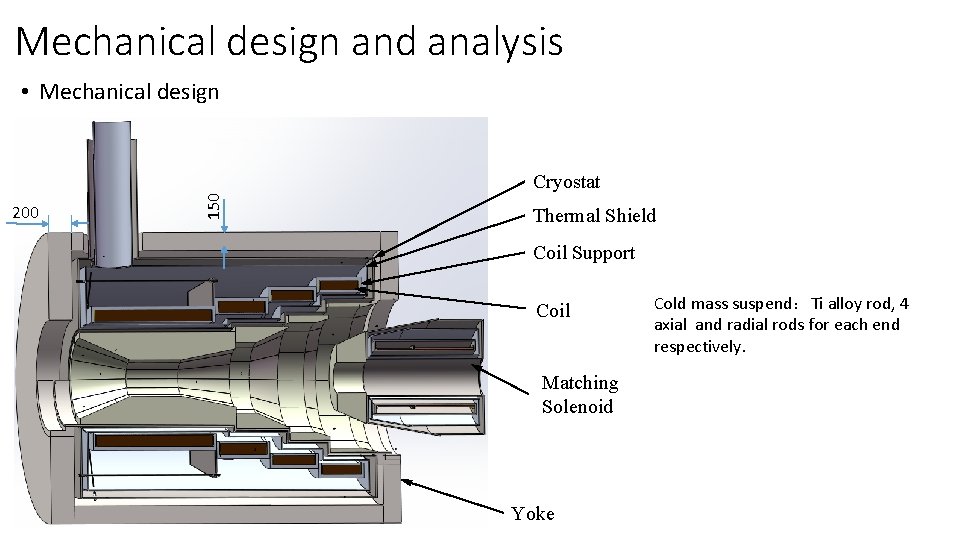
Mechanical design and analysis • Mechanical design 200 150 Cryostat Thermal Shield Coil Support Coil Matching Solenoid Yoke Cold mass suspend:Ti alloy rod, 4 axial and radial rods for each end respectively.
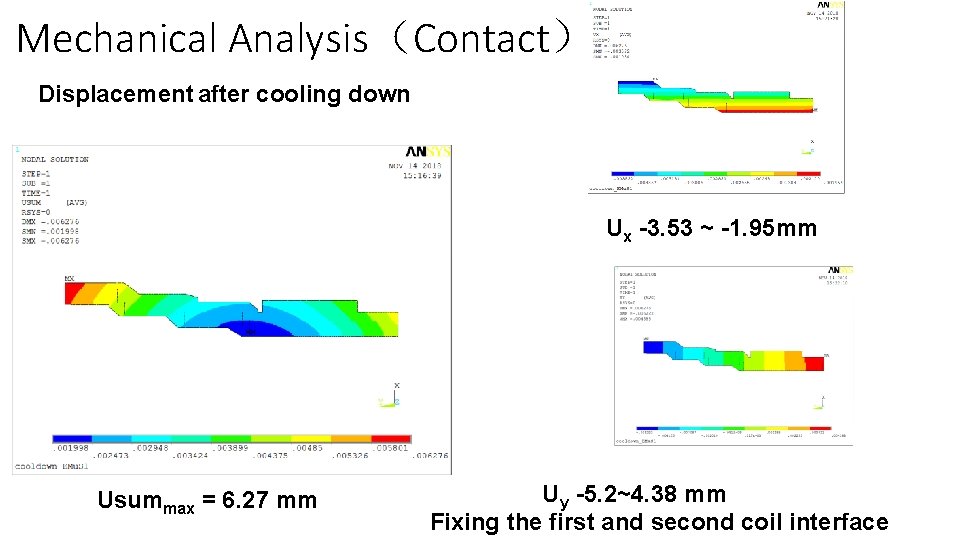
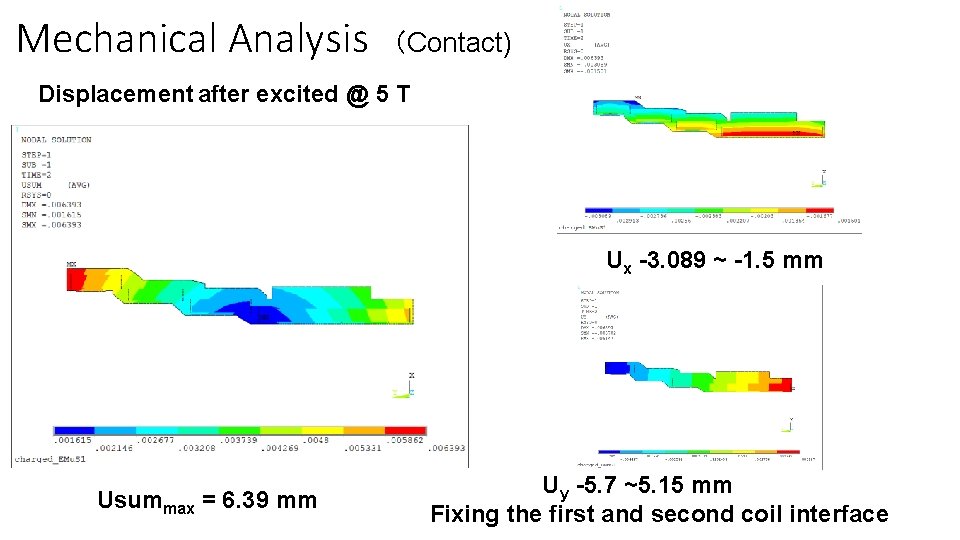
Mechanical Analysis(Contact) Displacement after cooling down Ux -3. 53 ~ -1. 95 mm Usummax = 6. 27 mm Uy -5. 2~4. 38 mm Fixing the first and second coil interface
Mechanical Analysis (Contact) Displacement after excited @ 5 T Ux -3. 089 ~ -1. 5 mm Usummax = 6. 39 mm Uy -5. 7 ~5. 15 mm Fixing the first and second coil interface
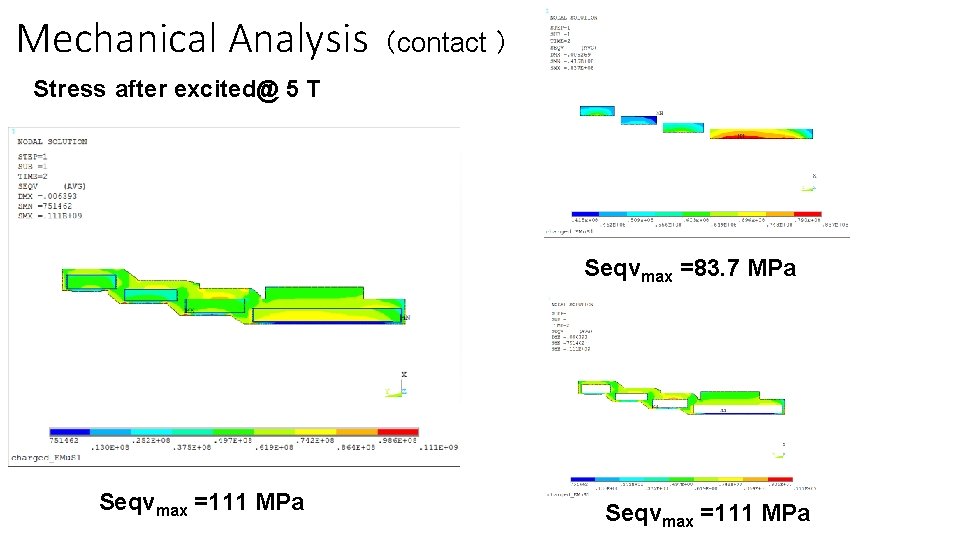
Mechanical Analysis(contact ) Stress after excited@ 5 T Seqvmax =83. 7 MPa Seqvmax =111 MPa
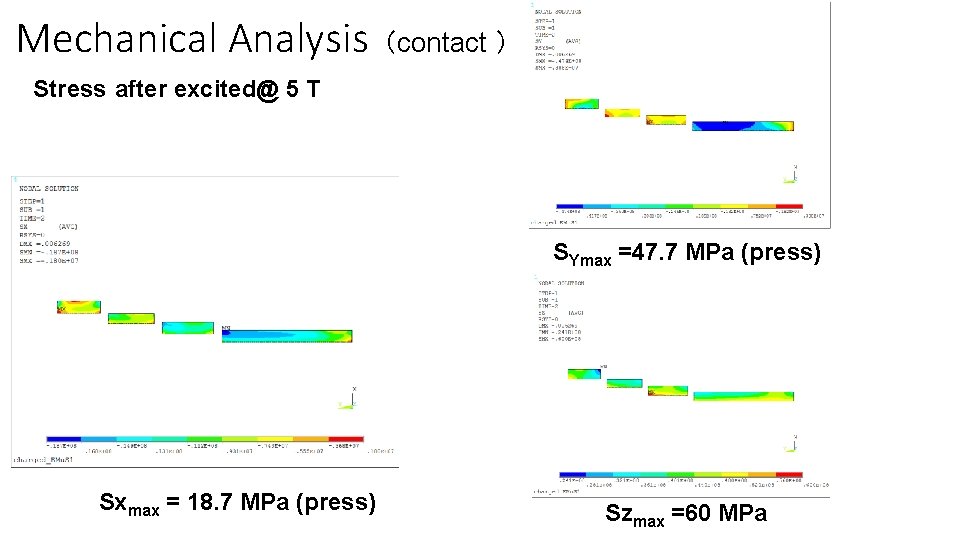
Mechanical Analysis(contact ) Stress after excited@ 5 T SYmax =47. 7 MPa (press) Sxmax = 18. 7 MPa (press) Szmax =60 MPa
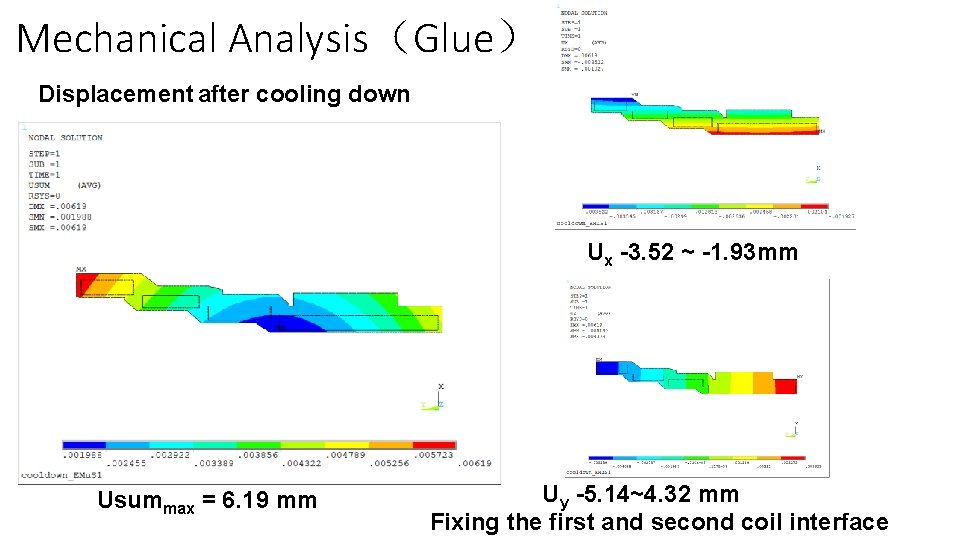
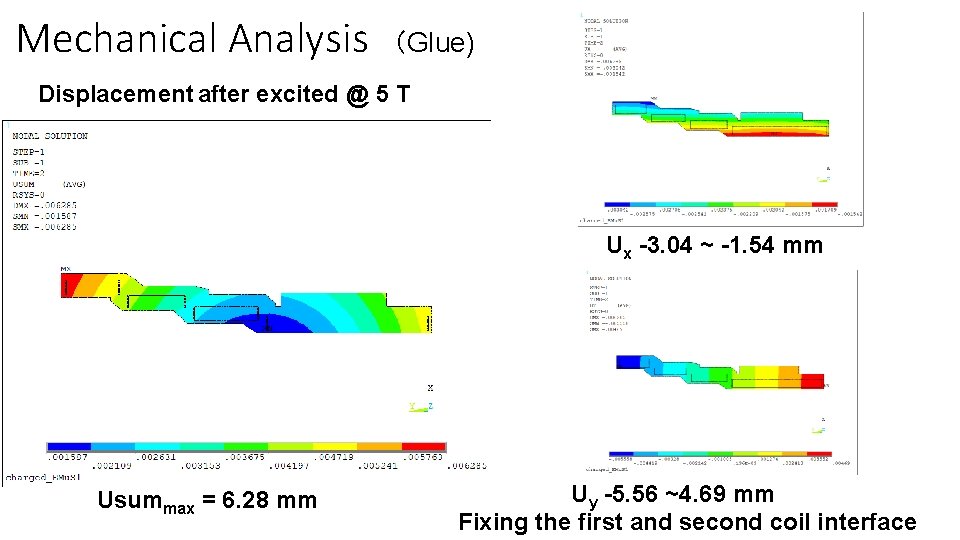
Mechanical Analysis(Glue) Displacement after cooling down Ux -3. 52 ~ -1. 93 mm Usummax = 6. 19 mm Uy -5. 14~4. 32 mm Fixing the first and second coil interface
Mechanical Analysis (Glue) Displacement after excited @ 5 T Ux -3. 04 ~ -1. 54 mm Usummax = 6. 28 mm Uy -5. 56 ~4. 69 mm Fixing the first and second coil interface
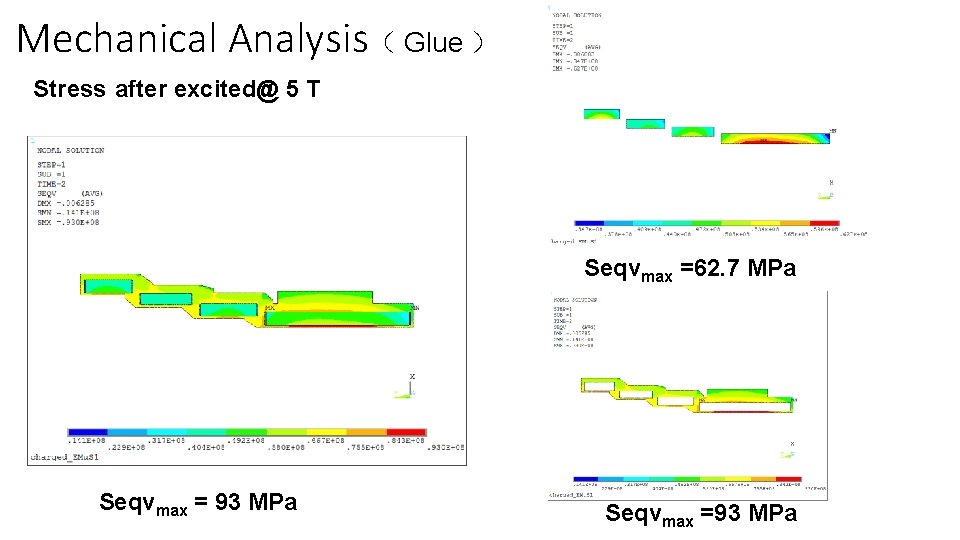
Mechanical Analysis( Glue ) Stress after excited@ 5 T Seqvmax =62. 7 MPa Seqvmax = 93 MPa Seqvmax =93 MPa
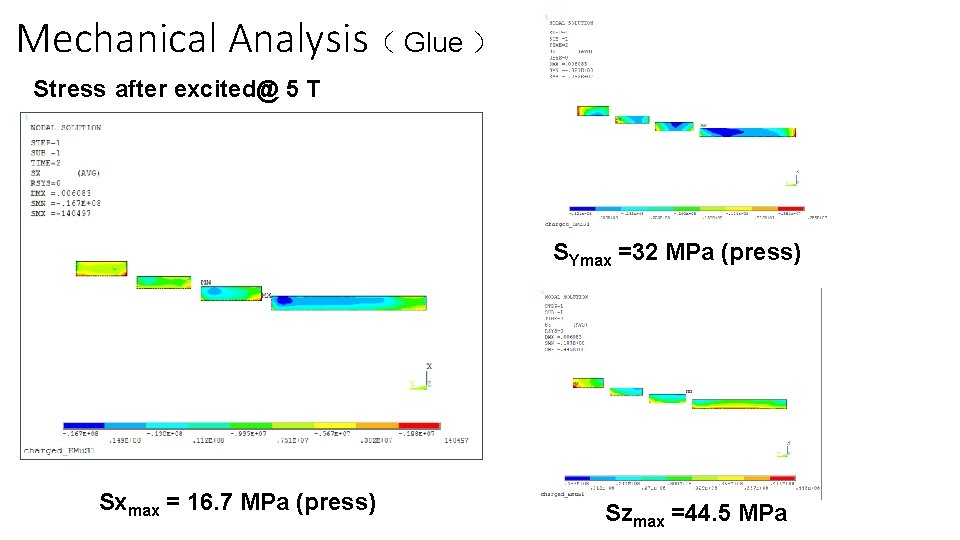
Mechanical Analysis( Glue ) Stress after excited@ 5 T SYmax =32 MPa (press) Sxmax = 16. 7 MPa (press) Szmax =44. 5 MPa
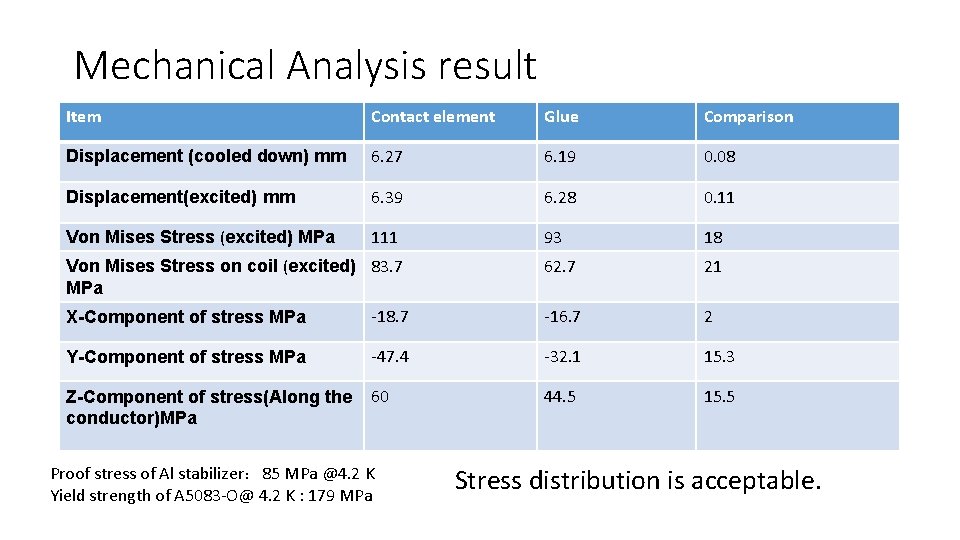
Mechanical Analysis result Item Contact element Glue Comparison Displacement (cooled down) mm 6. 27 6. 19 0. 08 Displacement(excited) mm 6. 39 6. 28 0. 11 Von Mises Stress (excited) MPa 111 93 18 62. 7 21 Von Mises Stress on coil (excited) 83. 7 MPa X-Component of stress MPa -18. 7 -16. 7 2 Y-Component of stress MPa -47. 4 -32. 1 15. 3 Z-Component of stress(Along the conductor)MPa 60 44. 5 15. 5 Proof stress of Al stabilizer: 85 MPa @4. 2 K Yield strength of A 5083 -O@ 4. 2 K : 179 MPa Stress distribution is acceptable.
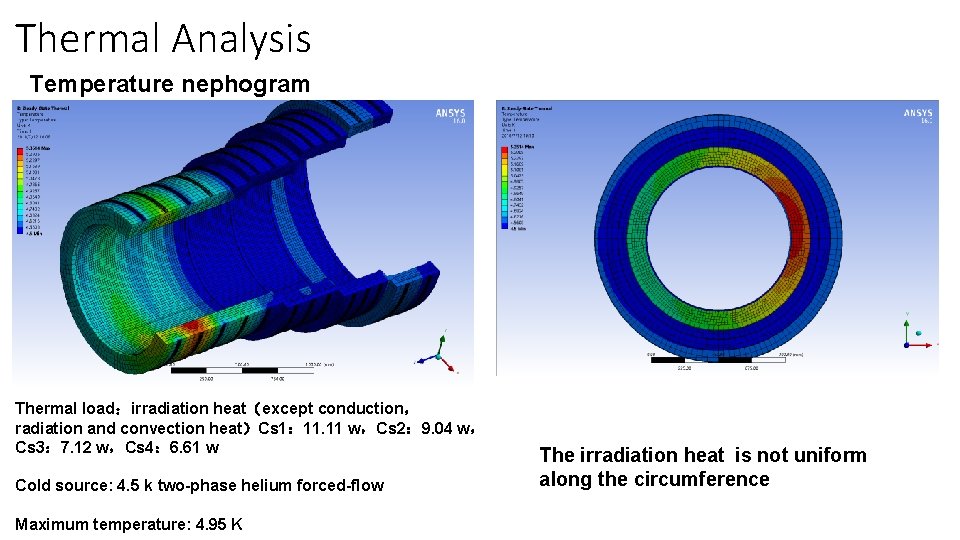
Thermal Analysis Temperature nephogram Thermal load:irradiation heat(except conduction, radiation and convection heat)Cs 1: 11. 11 w,Cs 2: 9. 04 w, Cs 3: 7. 12 w,Cs 4: 6. 61 w Cold source: 4. 5 k two-phase helium forced-flow Maximum temperature: 4. 95 K The irradiation heat is not uniform along the circumference
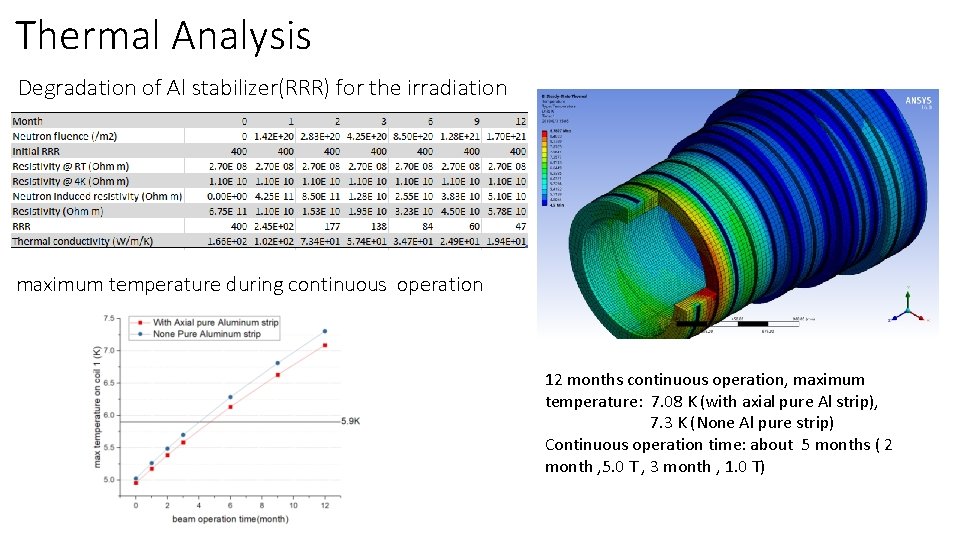
Thermal Analysis Degradation of Al stabilizer(RRR) for the irradiation maximum temperature during continuous operation 12 months continuous operation, maximum temperature: 7. 08 K (with axial pure Al strip), 7. 3 K (None Al pure strip) Continuous operation time: about 5 months ( 2 month , 5. 0 T , 3 month , 1. 0 T)
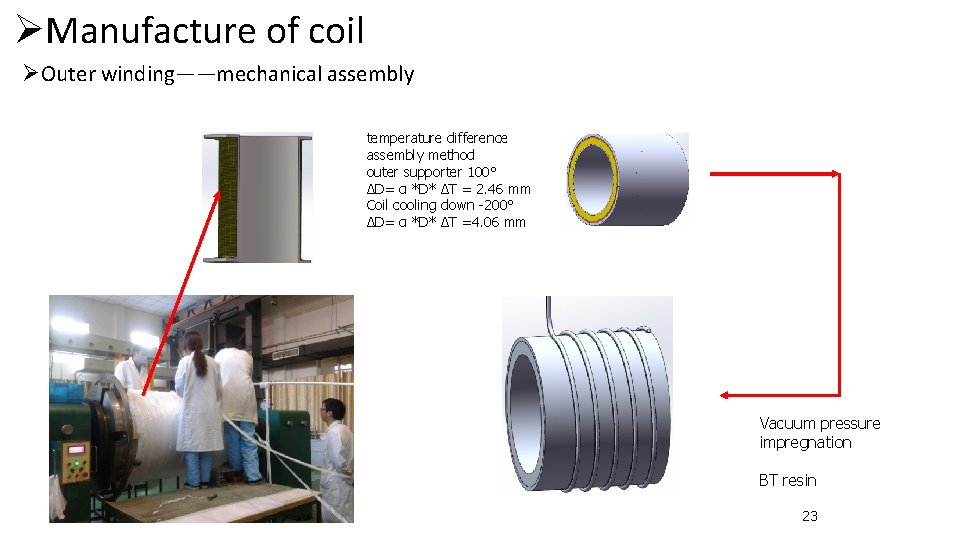
ØManufacture of coil ØOuter winding——mechanical assembly temperature difference assembly method outer supporter 100° ΔD= α *D* ΔT = 2. 46 mm Coil cooling down -200° ΔD= α *D* ΔT =4. 06 mm Vacuum pressure impregnation BT resin 23
Design of insulation • Insulation of conductor— One layer of UG (Upilex —Kapton with B stage fiber glass epoxy,0. 075 mm) with 100% coverage. The insulation strength is required exceeding 500 V DC. or replaced by one layer of Kapton, one layer of fiber glass • Ground insulation • • Inner support— 2 layers of GUG , The side wall — 7 mm thick G-10. Outer support— 2 layers of GUG The insulation strength is required exceeding 2000 V DC.
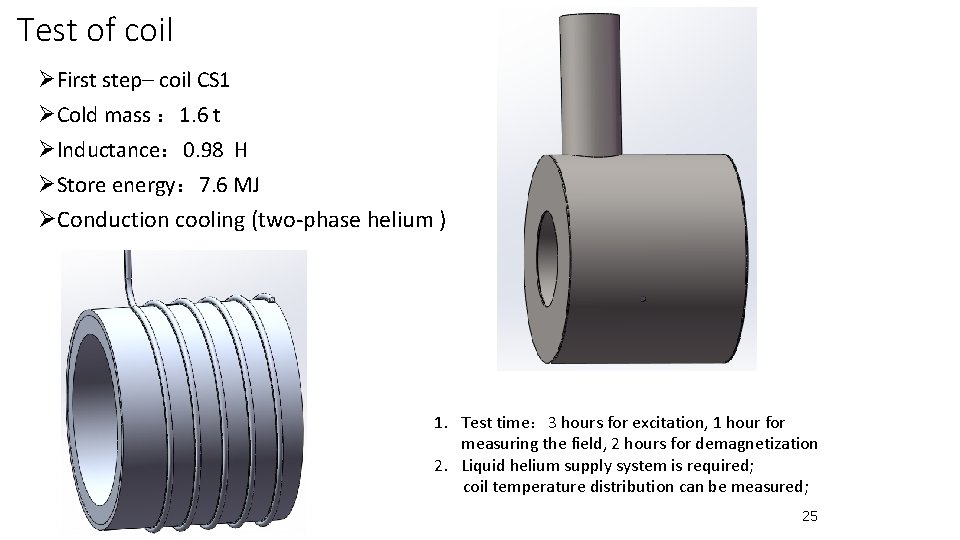
Test of coil ØFirst step– coil CS 1 ØCold mass : 1. 6 t ØInductance: 0. 98 H ØStore energy: 7. 6 MJ ØConduction cooling (two-phase helium ) 1. Test time: 3 hours for excitation, 1 hour for measuring the field, 2 hours for demagnetization 2. Liquid helium supply system is required; coil temperature distribution can be measured; 25
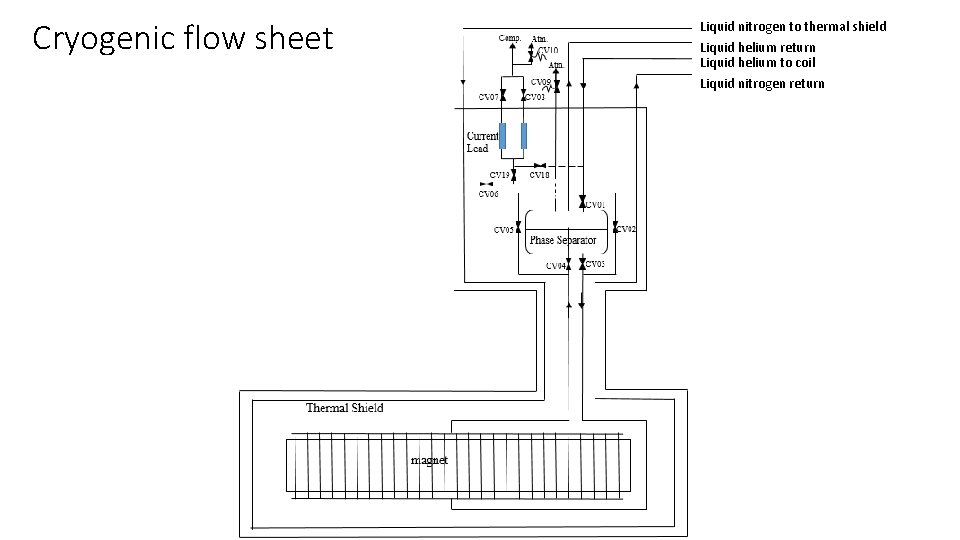
Cryogenic flow sheet Liquid nitrogen to thermal shield Liquid helium return Liquid helium to coil Liquid nitrogen return
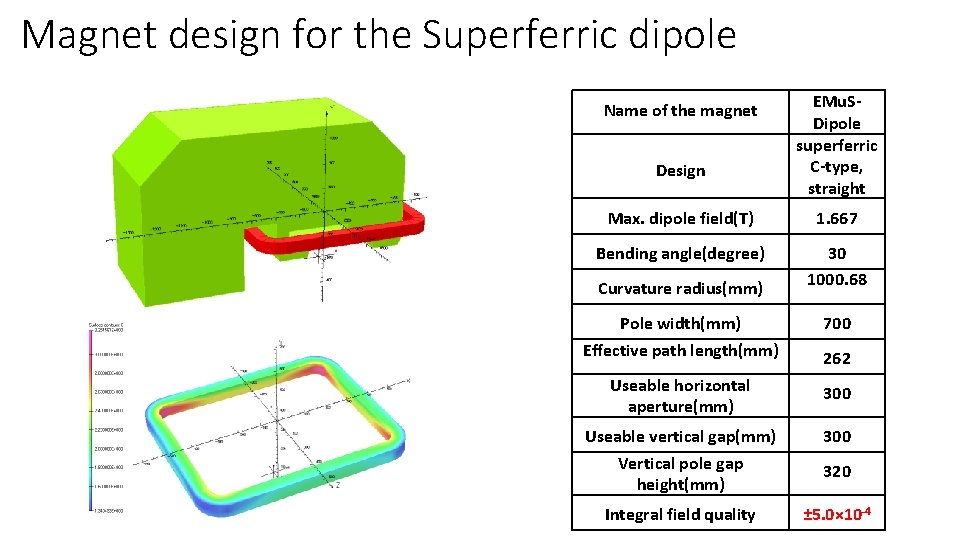
Magnet design for the Superferric dipole Name of the magnet Design EMu. SDipole superferric C-type, straight Max. dipole field(T) 1. 667 Bending angle(degree) 30 1000. 68 Curvature radius(mm) Pole width(mm) Effective path length(mm) 700 Useable horizontal aperture(mm) 300 Useable vertical gap(mm) Vertical pole gap height(mm) 300 Integral field quality ± 5. 0× 10 -4 262 320
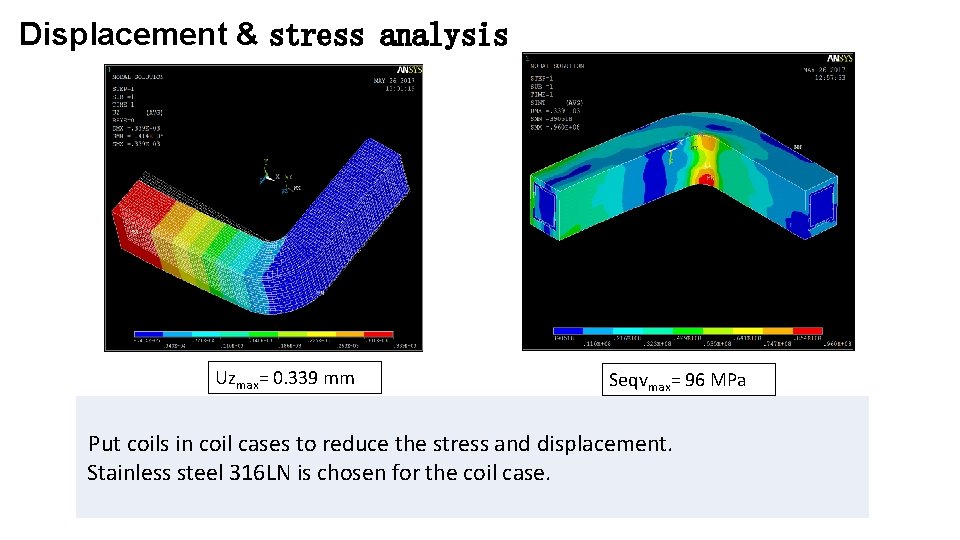
Displacement & stress analysis Uzmax= 0. 339 mm Seqvmax= 96 MPa Put coils in coil cases to reduce the stress and displacement. Stainless steel 316 LN is chosen for the coil case.
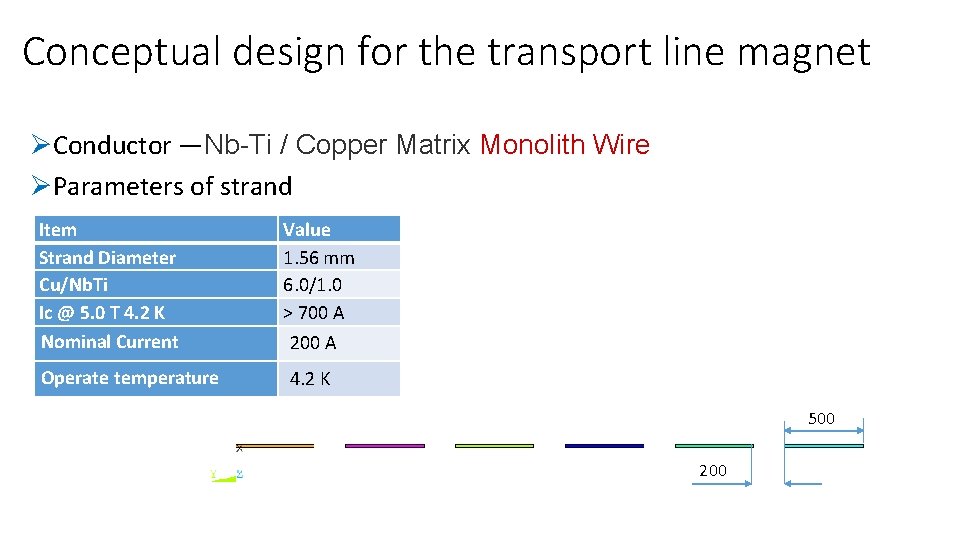
Conceptual design for the transport line magnet ØConductor —Nb-Ti / Copper Matrix Monolith Wire ØParameters of strand Item Strand Diameter Cu/Nb. Ti Ic @ 5. 0 T 4. 2 K Nominal Current Value 1. 56 mm 6. 0/1. 0 > 700 A Operate temperature 4. 2 K 200 A 500 200
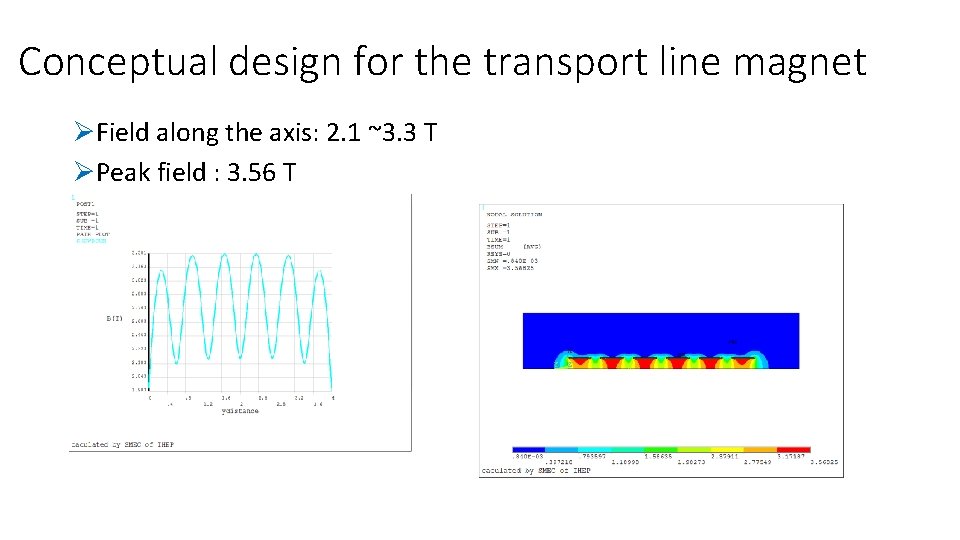
Conceptual design for the transport line magnet ØField along the axis: 2. 1 ~3. 3 T ØPeak field : 3. 56 T
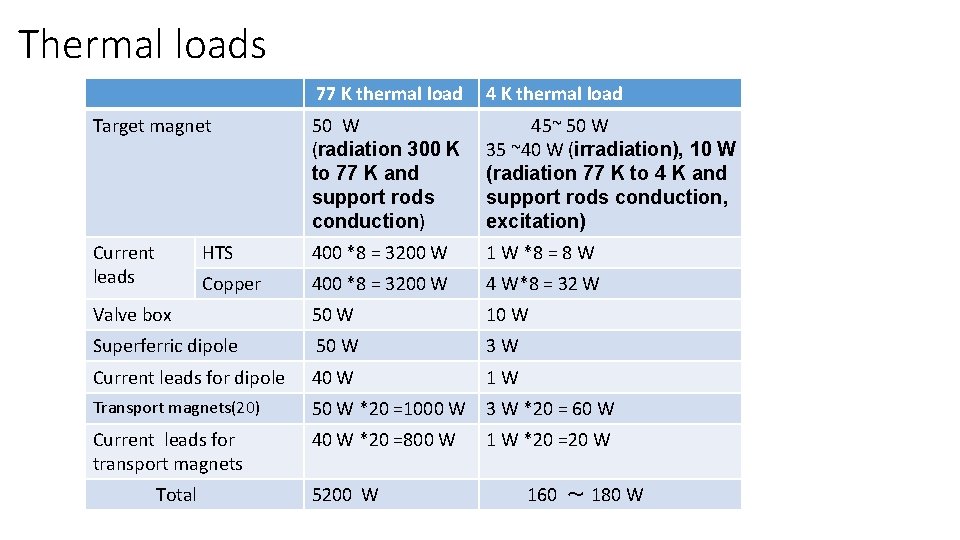
Thermal loads 77 K thermal load 4 K thermal load Target magnet 50 W (radiation 300 K to 77 K and support rods conduction) 45~ 50 W 35 ~40 W (irradiation), 10 W (radiation 77 K to 4 K and support rods conduction, excitation) Current leads HTS 400 *8 = 3200 W 1 W *8 = 8 W Copper 400 *8 = 3200 W 4 W*8 = 32 W Valve box 50 W 10 W Superferric dipole 50 W 3 W Current leads for dipole 40 W 1 W Transport magnets(20) 50 W *20 =1000 W 3 W *20 = 60 W Current leads for transport magnets 40 W *20 =800 W 1 W *20 =20 W Total 5200 W 160 ~ 180 W
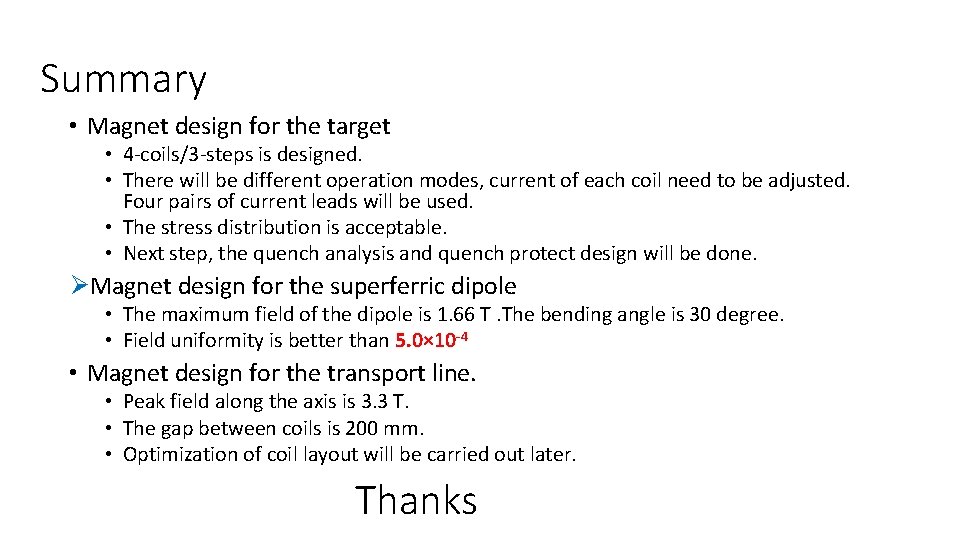
Summary • Magnet design for the target • 4 -coils/3 -steps is designed. • There will be different operation modes, current of each coil need to be adjusted. Four pairs of current leads will be used. • The stress distribution is acceptable. • Next step, the quench analysis and quench protect design will be done. ØMagnet design for the superferric dipole • The maximum field of the dipole is 1. 66 T. The bending angle is 30 degree. • Field uniformity is better than 5. 0× 10 -4 • Magnet design for the transport line. • Peak field along the axis is 3. 3 T. • The gap between coils is 200 mm. • Optimization of coil layout will be carried out later. Thanks