
Magmatic differentiation Differentiation crystallization of a magma Determine
- Slides: 24
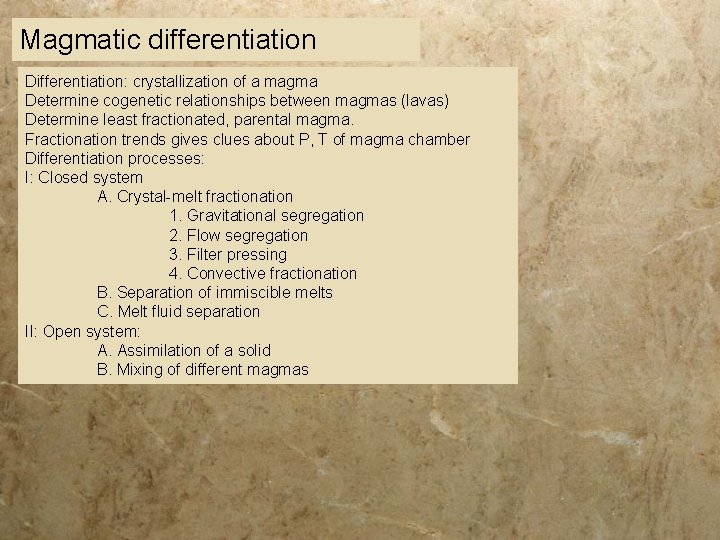
Magmatic differentiation Differentiation: crystallization of a magma Determine cogenetic relationships between magmas (lavas) Determine least fractionated, parental magma. Fractionation trends gives clues about P, T of magma chamber Differentiation processes: I: Closed system A. Crystal-melt fractionation 1. Gravitational segregation 2. Flow segregation 3. Filter pressing 4. Convective fractionation B. Separation of immiscible melts C. Melt fluid separation II: Open system: A. Assimilation of a solid B. Mixing of different magmas
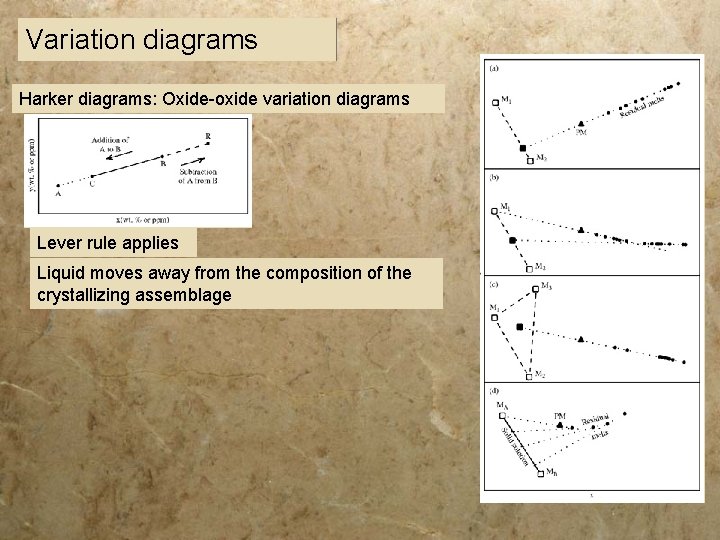
Variation diagrams Harker diagrams: Oxide-oxide variation diagrams Lever rule applies Liquid moves away from the composition of the crystallizing assemblage
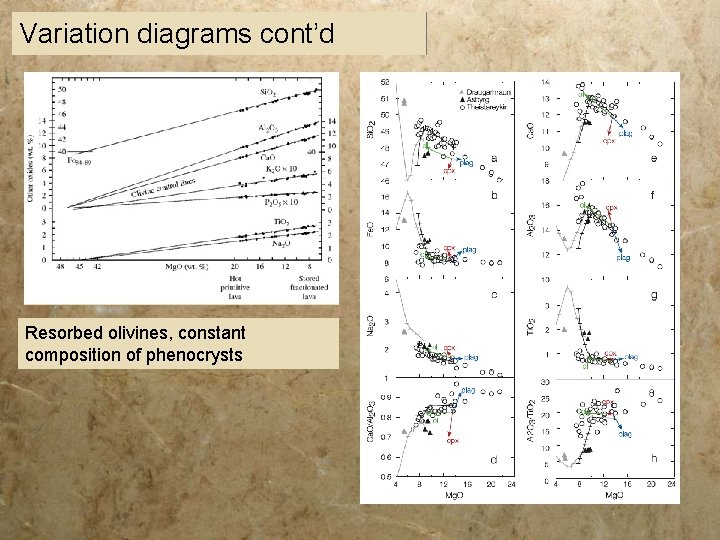
Variation diagrams cont’d Resorbed olivines, constant composition of phenocrysts
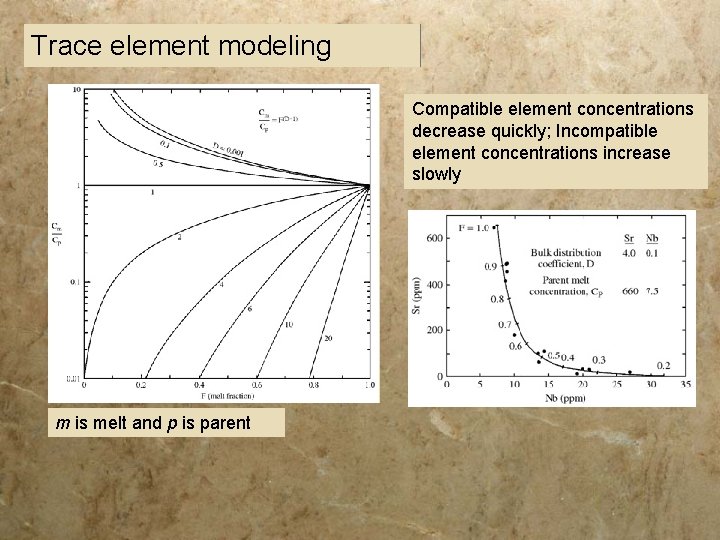
Trace element modeling Compatible element concentrations decrease quickly; Incompatible element concentrations increase slowly m is melt and p is parent
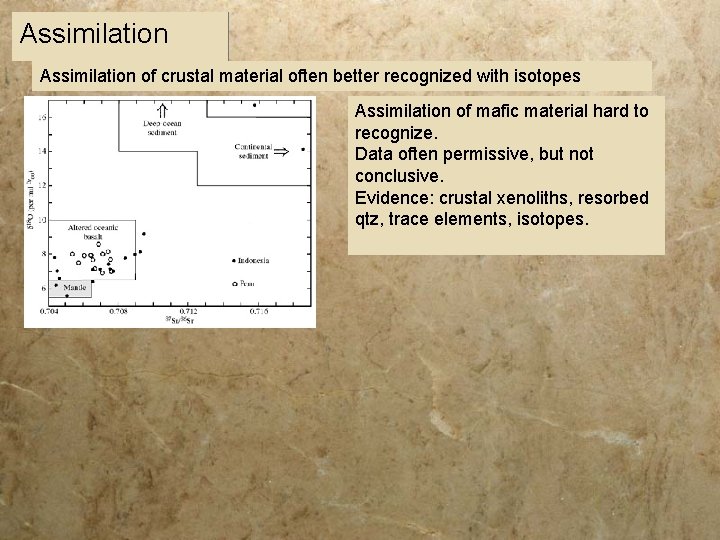
Assimilation of crustal material often better recognized with isotopes Assimilation of mafic material hard to recognize. Data often permissive, but not conclusive. Evidence: crustal xenoliths, resorbed qtz, trace elements, isotopes.
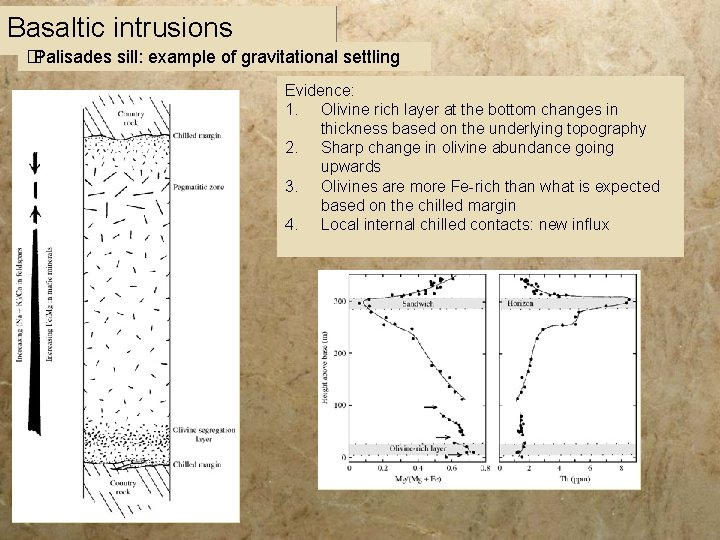
Basaltic intrusions � Palisades sill: example of gravitational settling Evidence: 1. Olivine rich layer at the bottom changes in thickness based on the underlying topography 2. Sharp change in olivine abundance going upwards 3. Olivines are more Fe-rich than what is expected based on the chilled margin 4. Local internal chilled contacts: new influx
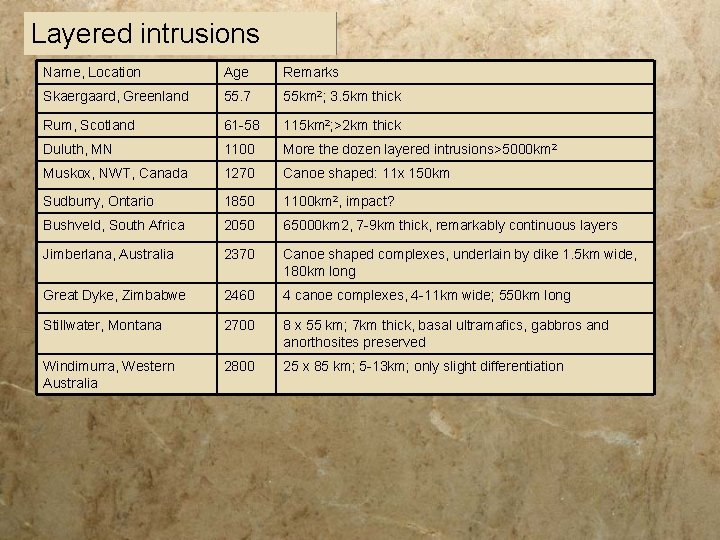
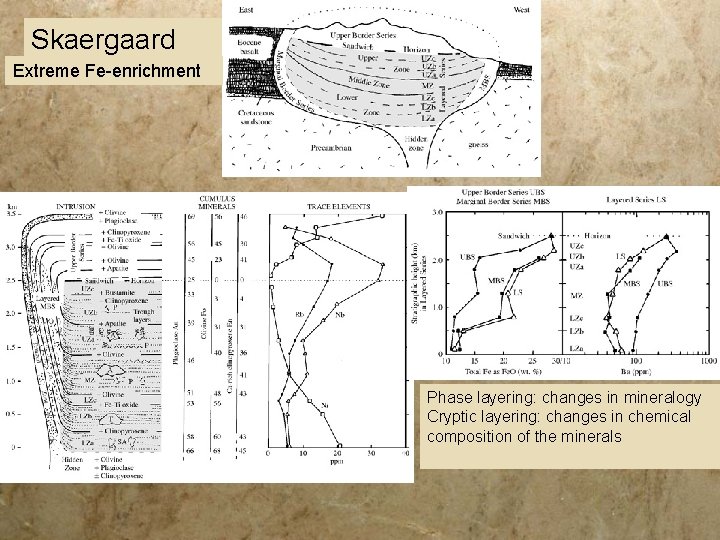
Layered intrusions Name, Location Age Remarks Skaergaard, Greenland 55. 7 55 km 2; 3. 5 km thick Rum, Scotland 61 -58 115 km 2; >2 km thick Duluth, MN 1100 More the dozen layered intrusions>5000 km 2 Muskox, NWT, Canada 1270 Canoe shaped: 11 x 150 km Sudburry, Ontario 1850 1100 km 2, impact? Bushveld, South Africa 2050 65000 km 2, 7 -9 km thick, remarkably continuous layers Jimberlana, Australia 2370 Canoe shaped complexes, underlain by dike 1. 5 km wide, 180 km long Great Dyke, Zimbabwe 2460 4 canoe complexes, 4 -11 km wide; 550 km long Stillwater, Montana 2700 8 x 55 km; 7 km thick, basal ultramafics, gabbros and anorthosites preserved Windimurra, Western Australia 2800 25 x 85 km; 5 -13 km; only slight differentiation
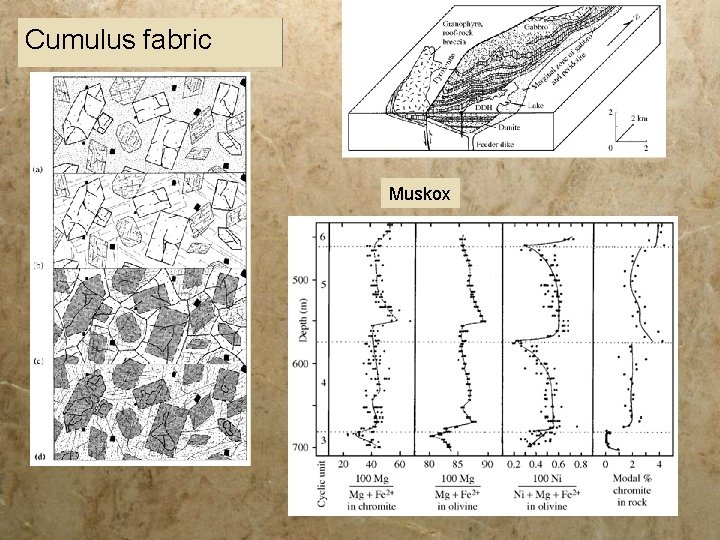
Cumulus fabric Muskox
Skaergaard Extreme Fe-enrichment Phase layering: changes in mineralogy Cryptic layering: changes in chemical composition of the minerals
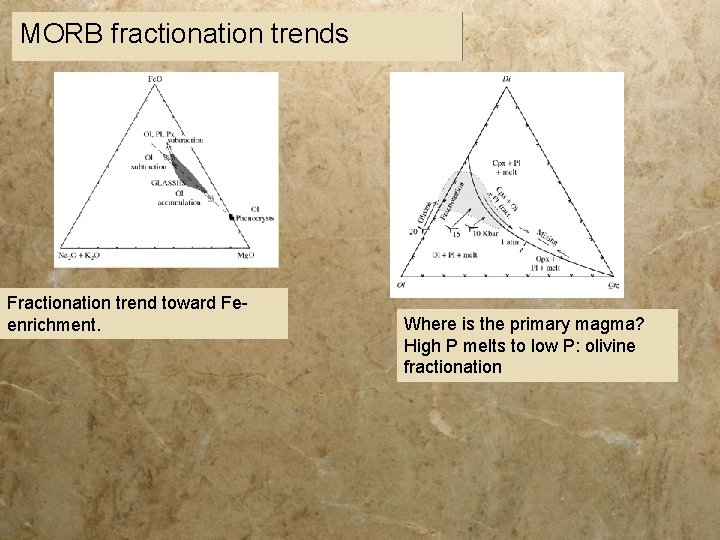
MORB fractionation trends Fractionation trend toward Feenrichment. Where is the primary magma? High P melts to low P: olivine fractionation
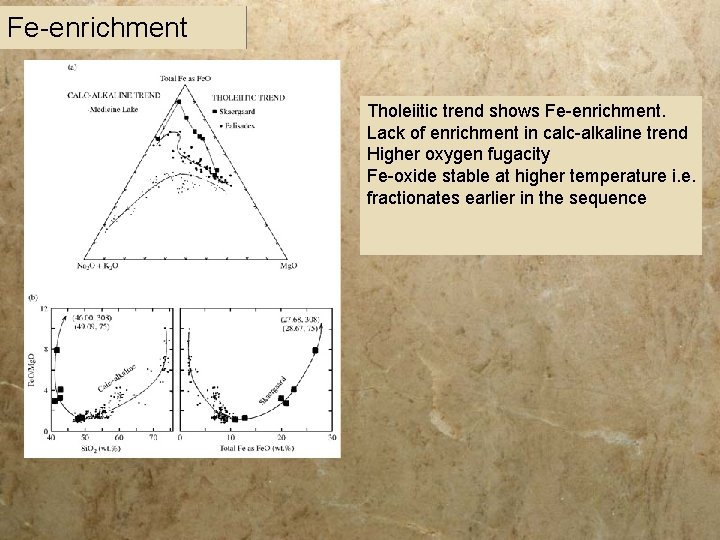
Fe-enrichment Tholeiitic trend shows Fe-enrichment. Lack of enrichment in calc-alkaline trend Higher oxygen fugacity Fe-oxide stable at higher temperature i. e. fractionates earlier in the sequence
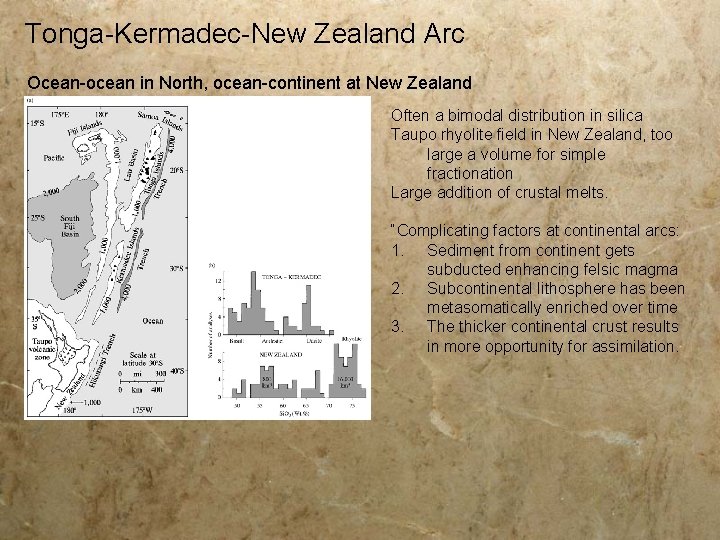
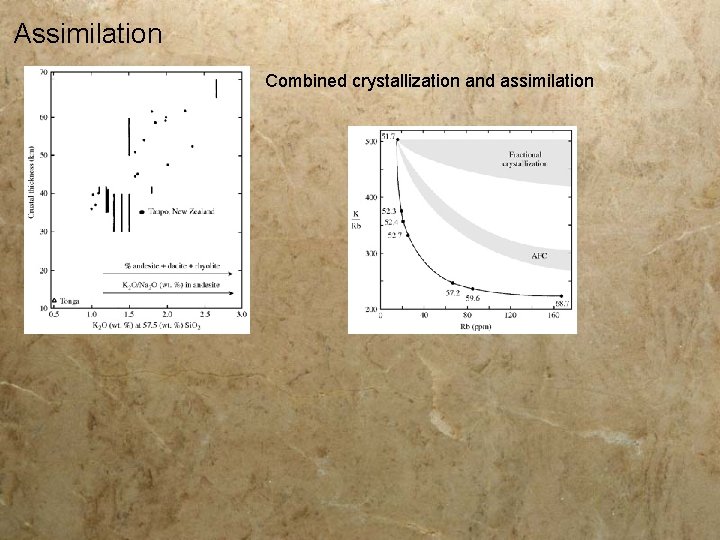
Tonga-Kermadec-New Zealand Arc Ocean-ocean in North, ocean-continent at New Zealand Often a bimodal distribution in silica Taupo rhyolite field in New Zealand, too large a volume for simple fractionation Large addition of crustal melts. “Complicating factors at continental arcs: 1. Sediment from continent gets subducted enhancing felsic magma 2. Subcontinental lithosphere has been metasomatically enriched over time 3. The thicker continental crust results in more opportunity for assimilation.
Assimilation Combined crystallization and assimilation
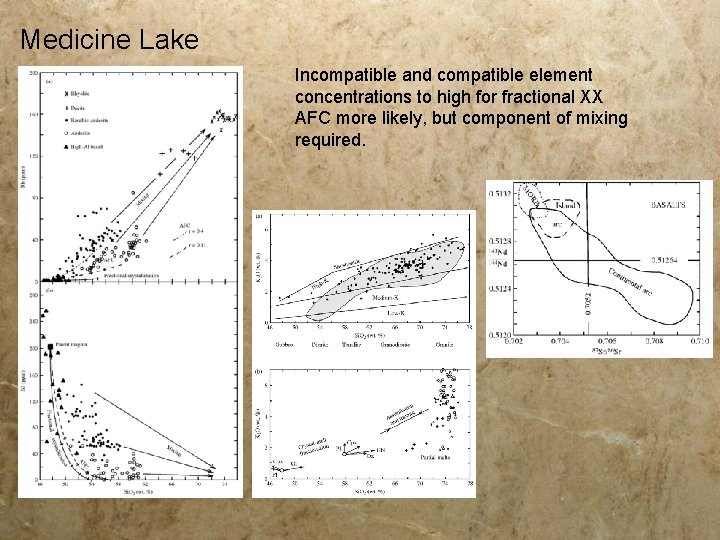
Medicine Lake Incompatible and compatible element concentrations to high for fractional XX AFC more likely, but component of mixing required.
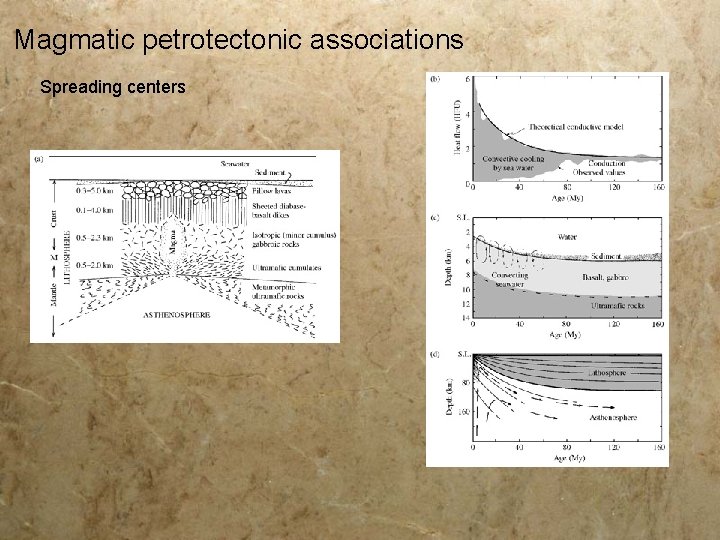
Magmatic petrotectonic associations Spreading centers
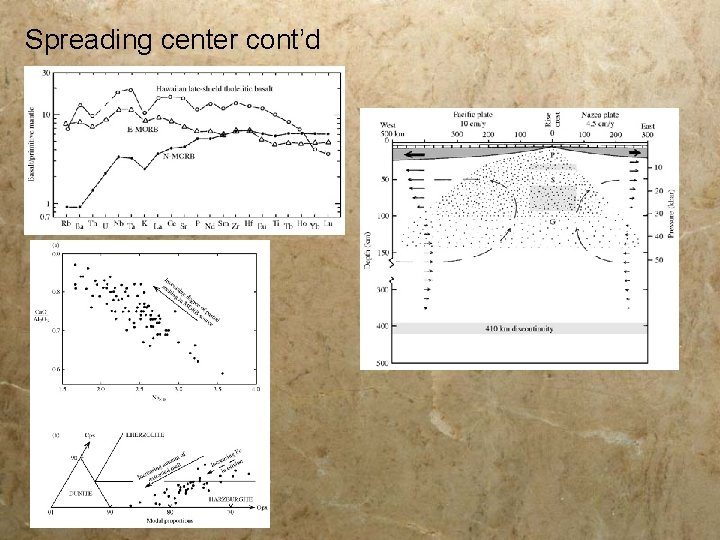
Spreading center cont’d
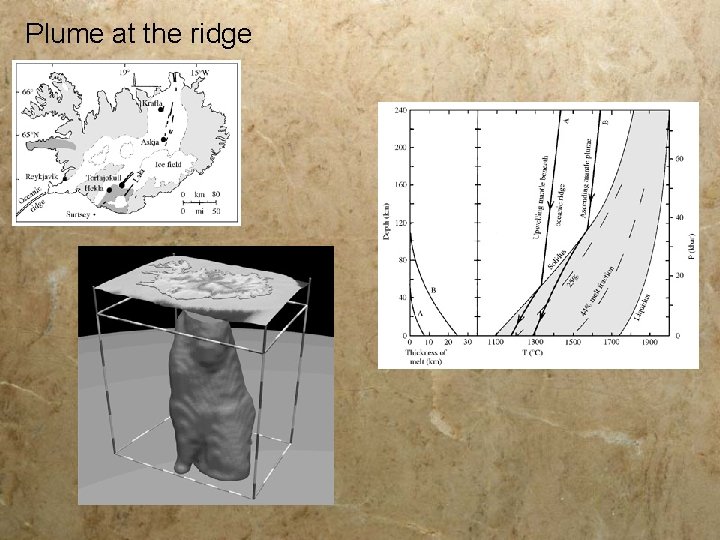
Plume at the ridge
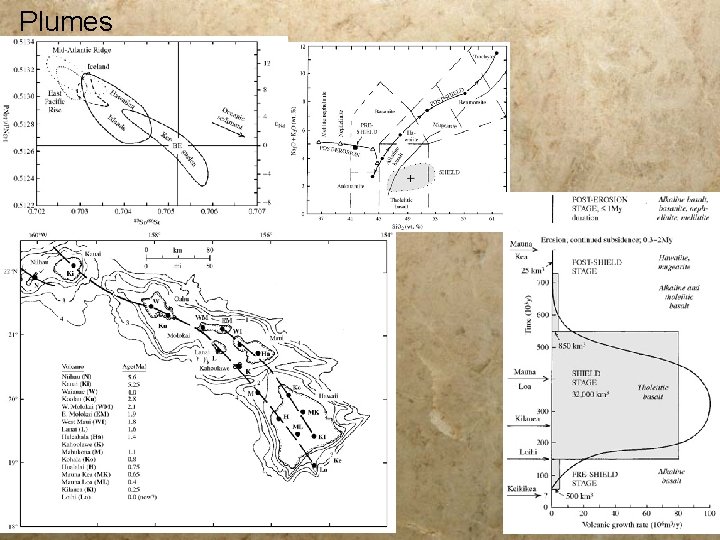
Plumes
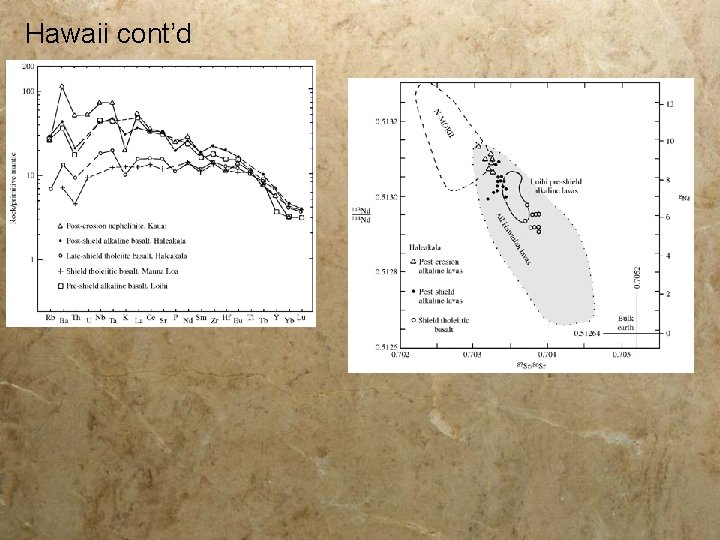
Hawaii cont’d
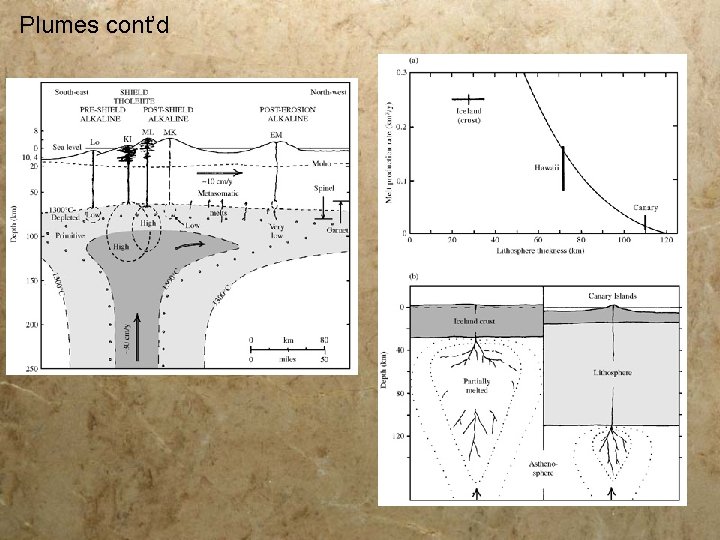
Plumes cont’d
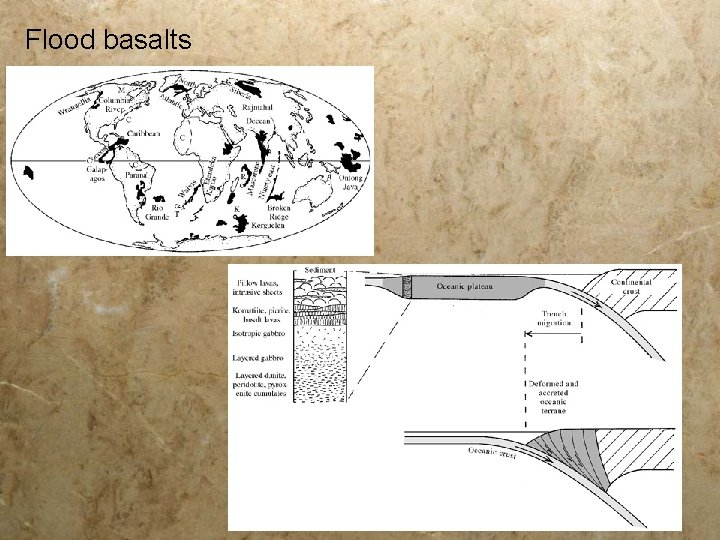
Flood basalts
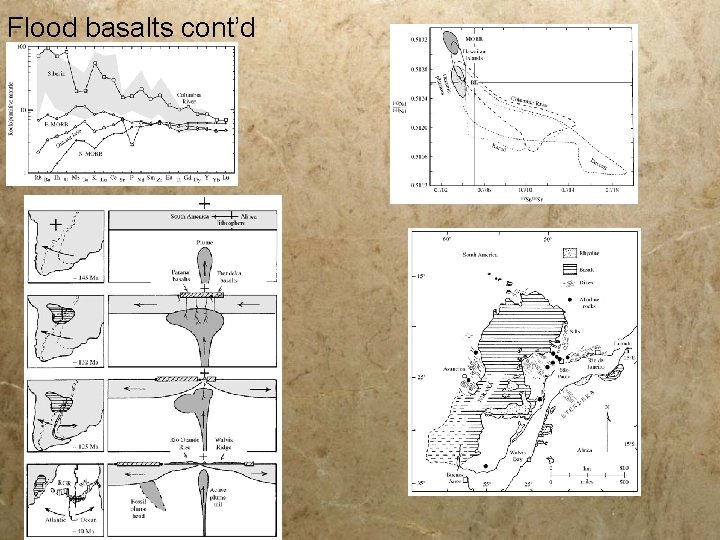
Flood basalts cont’d
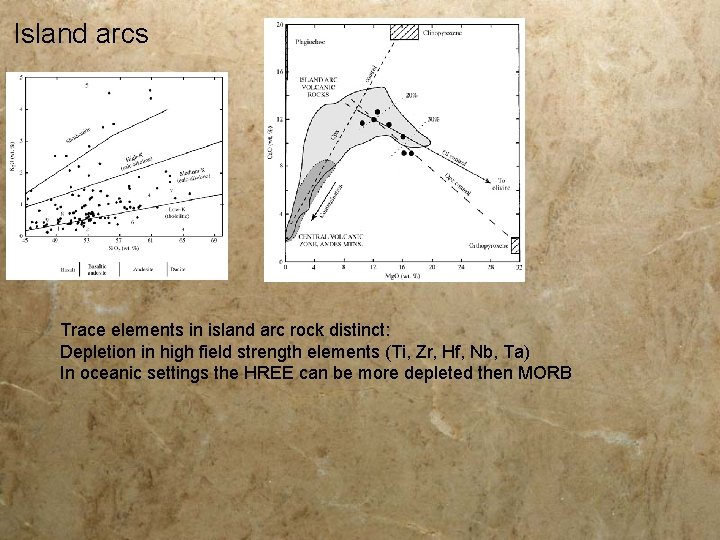
Island arcs Trace elements in island arc rock distinct: Depletion in high field strength elements (Ti, Zr, Hf, Nb, Ta) In oceanic settings the HREE can be more depleted then MORB
Rift volcanics Carbonatite: >50% carbonate minerals; alkali carbonatite <0. 2 wt% Si. O 2+Al 2 O 3. Related to strongly Si-undersaturated rocks: phonolite, nephelinite, melilitite, hawaiite. Strongly enriched in LIL: large ion lithophile elements. Alkalic rarities Lamprophyres, lamproites, orangeites and kimberlites Potassic, volatile rich, mafic to ultramafic