
Magma Ocean Models and Formation of the MgSuite
- Slides: 15
Magma Ocean Models and Formation of the Mg-Suite Jeff Taylor Genesis of Mg-suite 1
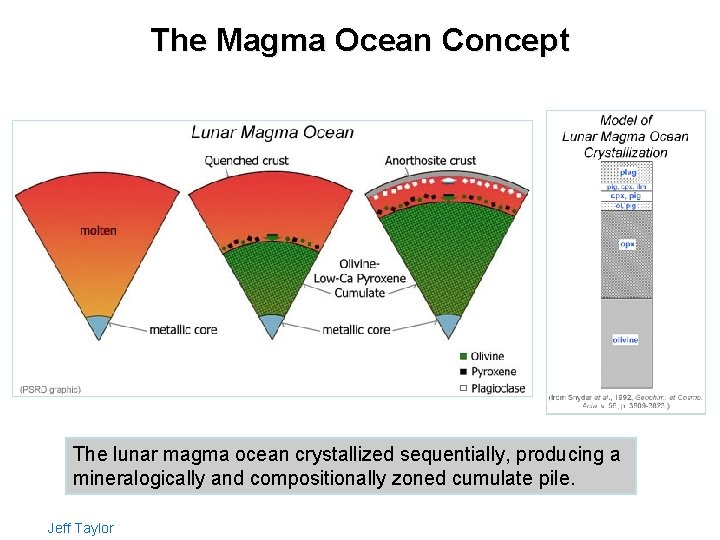
The Magma Ocean Concept The lunar magma ocean crystallized sequentially, producing a mineralogically and compositionally zoned cumulate pile. Jeff Taylor
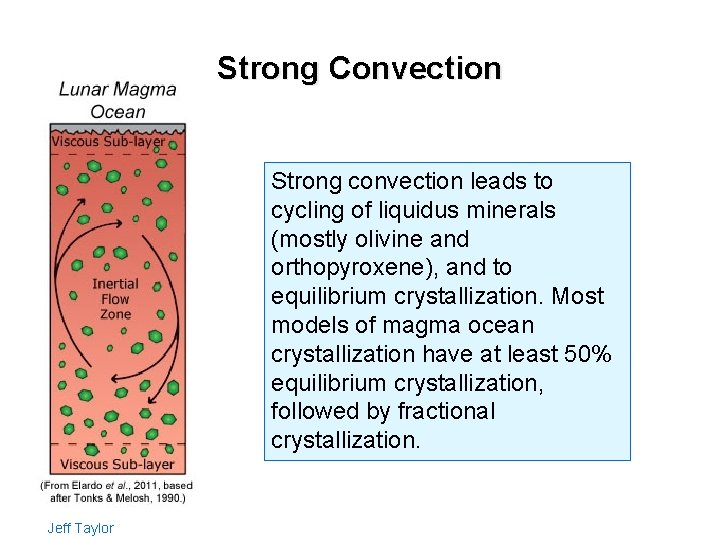
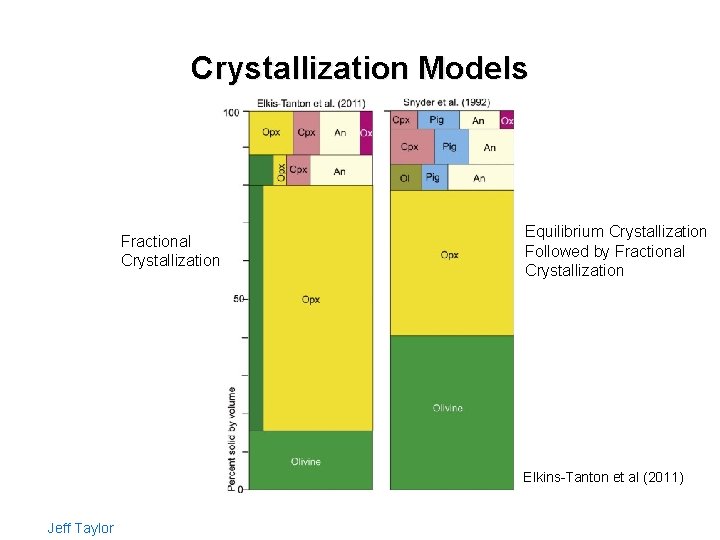
Strong Convection Strong convection leads to cycling of liquidus minerals (mostly olivine and orthopyroxene), and to equilibrium crystallization. Most models of magma ocean crystallization have at least 50% equilibrium crystallization, followed by fractional crystallization. Jeff Taylor Genesis of Mg-suite 3
Rapid Crystallization (until anorthosite forms) • Cooling time from formation to accumulation of the anorthosite cap, which happens after ~80% crystallization: ~1000 years • Cooling time for the remaining 20% crystallization: 10 – 20 My • Big difference caused by formation of the insulating cap of anorthosite • Complications from formation of an atmosphere, hot Earth shine, and tidal heating by Earth Jeff Taylor Genesis of Mg-suite 4
Crystallization Models Equilibrium Crystallization Followed by Fractional Crystallization Elkins-Tanton et al (2011) Jeff Taylor Genesis of Mg-suite 5
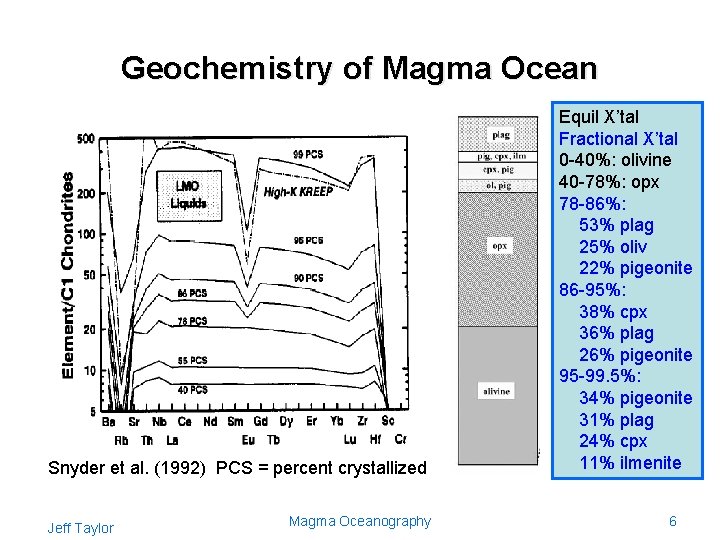
Geochemistry of Magma Ocean Snyder et al. (1992) PCS = percent crystallized Jeff Taylor Magma Oceanography Equil X’tal Fractional X’tal 0 -40%: olivine 40 -78%: opx 78 -86%: 53% plag 25% oliv 22% pigeonite 86 -95%: 38% cpx 36% plag 26% pigeonite 95 -99. 5%: 34% pigeonite 31% plag 24% cpx 11% ilmenite 6
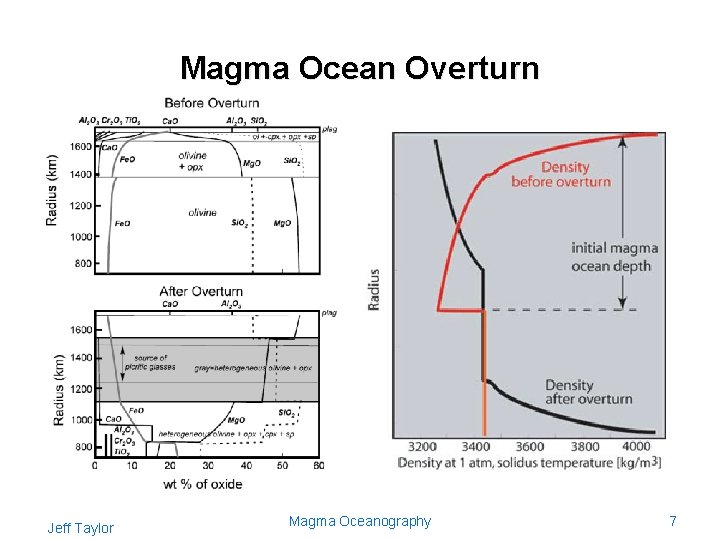
Magma Ocean Overturn Jeff Taylor Magma Oceanography 7
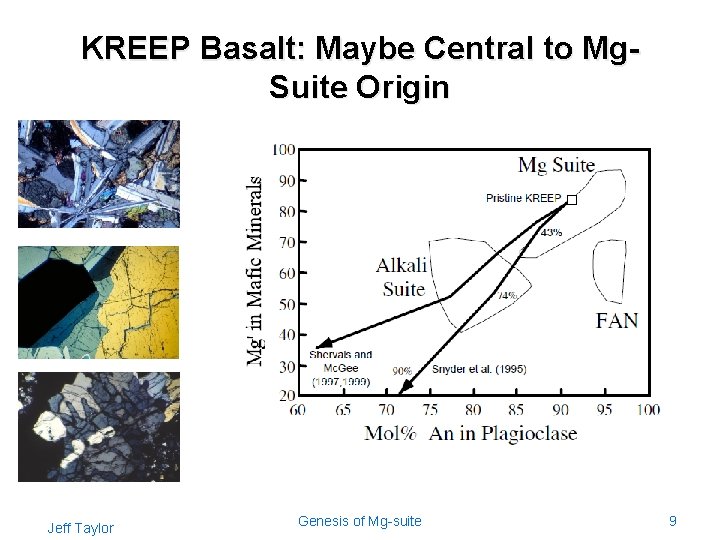
Formation of the Mg-Suite • Most important characteristics to satisfy: – Generally high Mg/(Mg+Fe), especially for norites and troctolites (up to Fo 92) – Magmas had lots of KREEP in them – Variety of rock types – Almost all contain quite a bit of plagioclase – Formed over time interval of 300 -400 My Jeff Taylor Genesis of Mg-suite 8
KREEP Basalt: Maybe Central to Mg. Suite Origin Jeff Taylor Genesis of Mg-suite 9
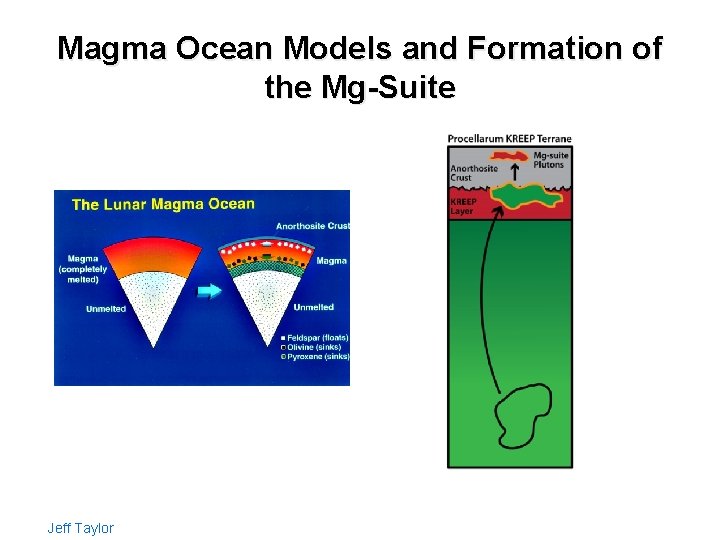
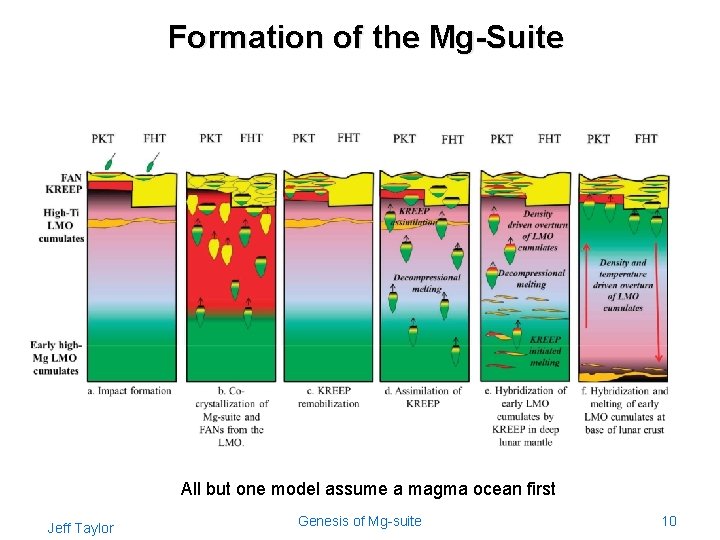
Formation of the Mg-Suite All but one model assume a magma ocean first Jeff Taylor Genesis of Mg-suite 10
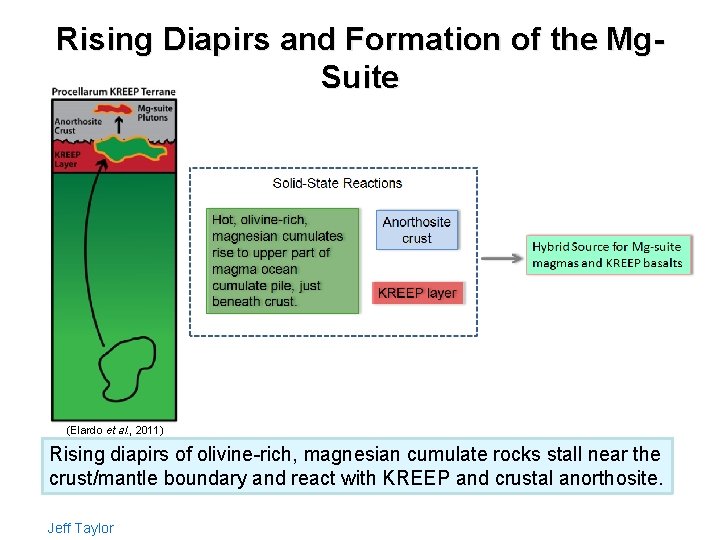
Rising Diapirs and Formation of the Mg. Suite (Elardo et al. , 2011) Rising diapirs of olivine-rich, magnesian cumulate rocks stall near the crust/mantle boundary and react with KREEP and crustal anorthosite. Jeff Taylor
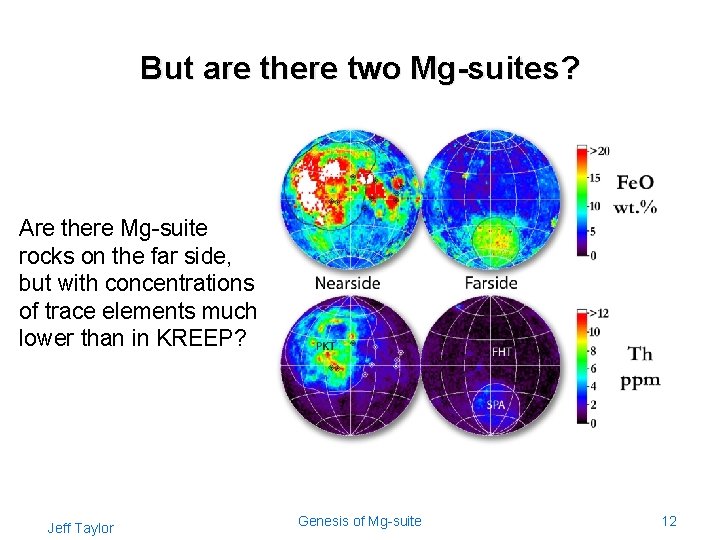
But are there two Mg-suites? Are there Mg-suite rocks on the far side, but with concentrations of trace elements much lower than in KREEP? Jeff Taylor Genesis of Mg-suite 12
Magnesian Granulites imply that the farside could contain low-KREEP Mg-suite rocks Jeff Taylor Genesis of Mg-suite 13
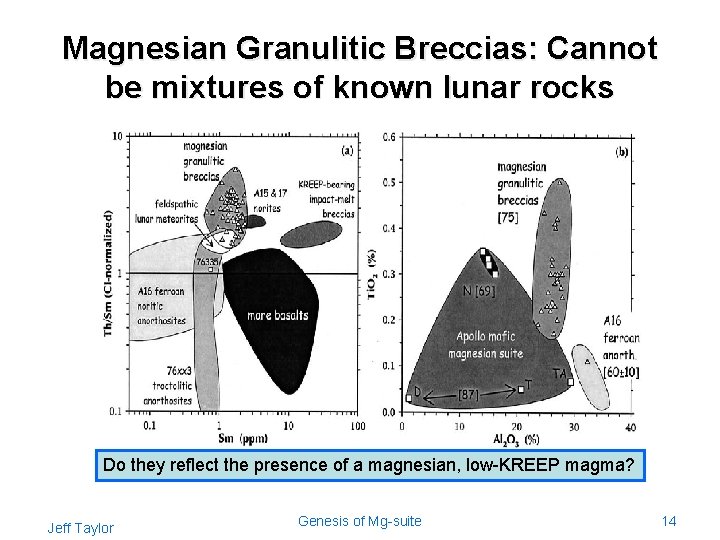
Magnesian Granulitic Breccias: Cannot be mixtures of known lunar rocks Do they reflect the presence of a magnesian, low-KREEP magma? Jeff Taylor Genesis of Mg-suite 14
Non-Conclusions From lucid paper by Taylor (2009): It seems clear that feldspathic rocks with a wide range in Mg# and relatively low concentrations of incompatible trace elements dominate the farside lunar highlands. It is not clear, however, whether these represent magma-ocean cumulates, cumulates from trace-element-poor magnesian mafic magmas, or complicated impact-induced mixtures of assorted magnesian lithologies. Jeff Taylor Genesis of Mg-suite 15