
MAGAZINE CONVENTIONS Year 10 Media Production Folio Note
- Slides: 15
MAGAZINE CONVENTIONS Year 10 Media – Production Folio Note: the examples in this presentation are all food magazines, but the conventions can be applied to any magazine style/genre.
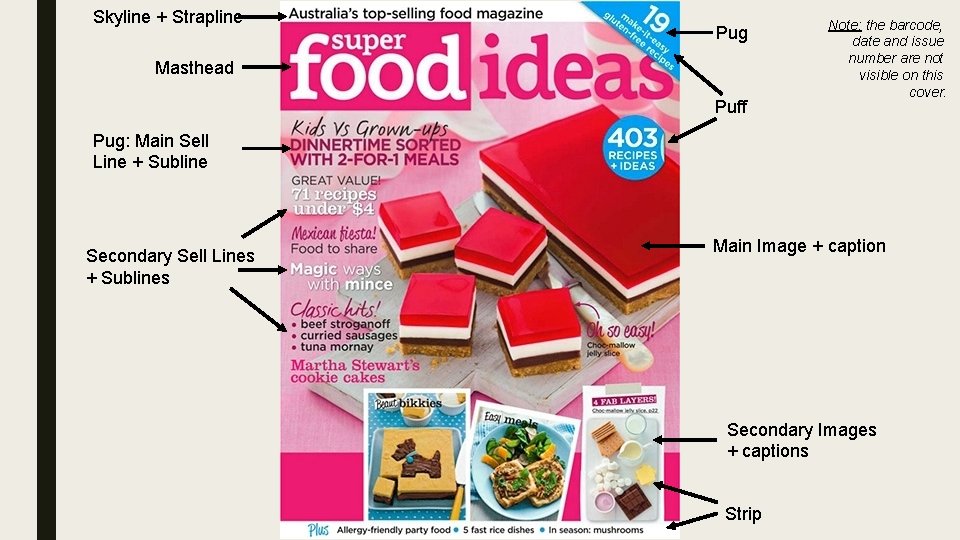
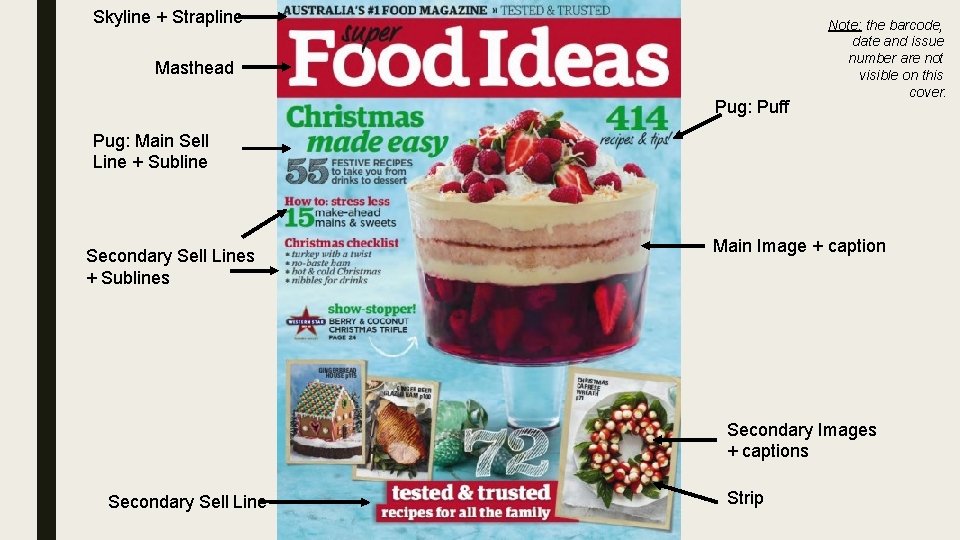
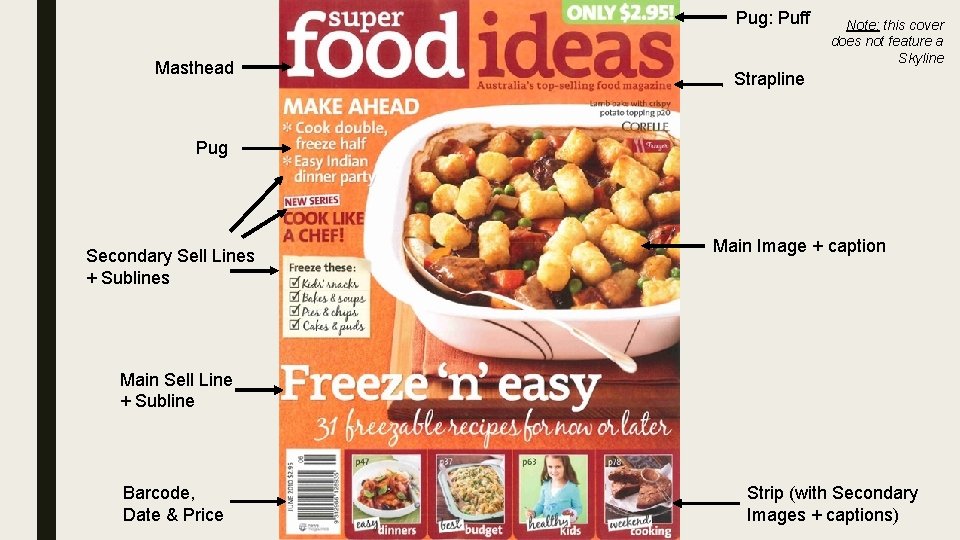
Magazine Cover: Conventions ■ ■ Masthead (title): has a trademark, unique font and fills the width of the cover. Skyline: a ribbon of information across the top of the cover. Strapline: a statement that describes or promotes the magazine. Main Image: self explanatory! Images (main or otherwise) are often accompanied by captions. ■ Main Sell/Cover Line: the leading article headline. – Usually links with the main image, though this is not always the case for food magazines as sometimes their main cover line relates to the overall theme of the issue rather than a specific recipe. ■ Secondary Sell/Cover Lines: additional article headlines, smaller than the main one. ■ Sublines: brief summaries/explanations of articles which appear under the Sell/Cover Lines. ■ Pug: the top left or right corner - as this is where readers look first, it holds key information. ■ Puff: a specific incentive that is offered, usually displayed as a ‘sticker’ (text in a shape). ■ Strip: a ribbon across the top or bottom which lists additional items in the magazine. – May sometimes include smaller secondary images to accompany/represent each item.
Skyline + Strapline Pug Masthead Puff Note: the barcode, date and issue number are not visible on this cover. Pug: Main Sell Line + Subline Secondary Sell Lines + Sublines Main Image + caption Secondary Images + captions Strip
Skyline + Strapline Masthead Pug: Puff Note: the barcode, date and issue number are not visible on this cover. Pug: Main Sell Line + Subline Secondary Sell Lines + Sublines Main Image + caption Secondary Images + captions Secondary Sell Line Strip
Pug: Puff Masthead Note: this cover does not feature a Skyline Strapline Pug Secondary Sell Lines + Sublines Main Image + caption Main Sell Line + Subline Barcode, Date & Price Strip (with Secondary Images + captions)
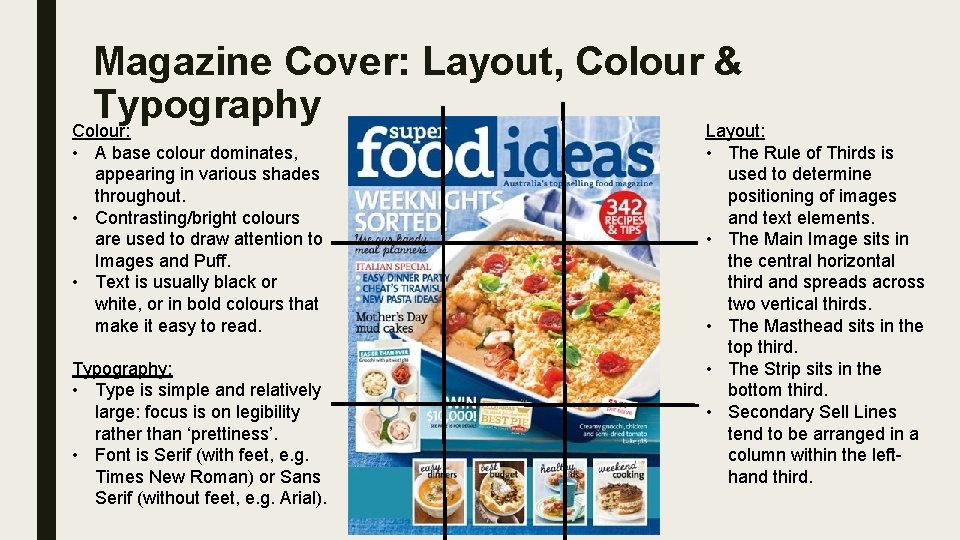
Magazine Cover: Layout, Colour & Typography Layout: Colour: • A base colour dominates, appearing in various shades throughout. • Contrasting/bright colours are used to draw attention to Images and Puff. • Text is usually black or white, or in bold colours that make it easy to read. Typography: • Type is simple and relatively large: focus is on legibility rather than ‘prettiness’. • Font is Serif (with feet, e. g. Times New Roman) or Sans Serif (without feet, e. g. Arial). • The Rule of Thirds is used to determine positioning of images and text elements. • The Main Image sits in the central horizontal third and spreads across two vertical thirds. • The Masthead sits in the top third. • The Strip sits in the bottom third. • Secondary Sell Lines tend to be arranged in a column within the lefthand third.
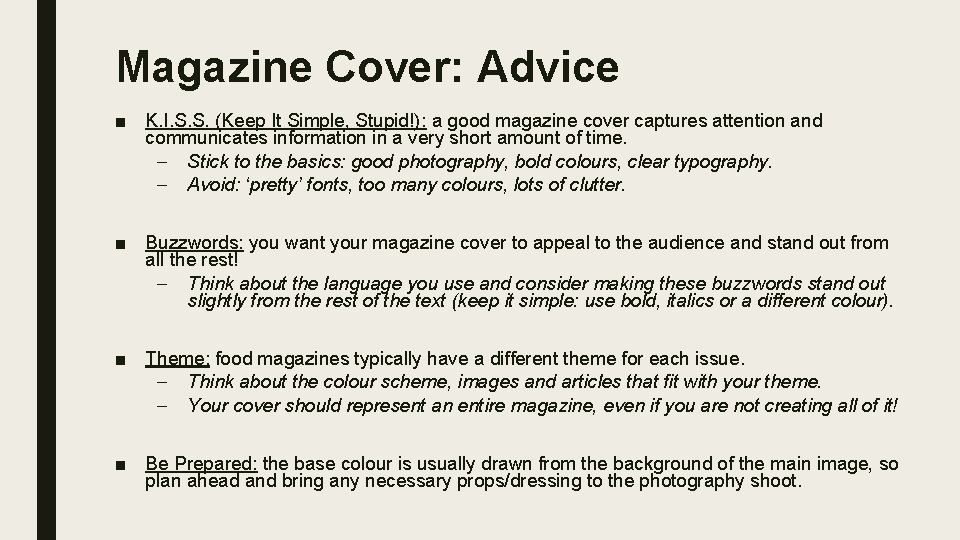
Magazine Cover: Advice ■ K. I. S. S. (Keep It Simple, Stupid!): a good magazine cover captures attention and communicates information in a very short amount of time. – Stick to the basics: good photography, bold colours, clear typography. – Avoid: ‘pretty’ fonts, too many colours, lots of clutter. ■ Buzzwords: you want your magazine cover to appeal to the audience and stand out from all the rest! – Think about the language you use and consider making these buzzwords stand out slightly from the rest of the text (keep it simple: use bold, italics or a different colour). ■ Theme: food magazines typically have a different theme for each issue. – Think about the colour scheme, images and articles that fit with your theme. – Your cover should represent an entire magazine, even if you are not creating all of it! ■ Be Prepared: the base colour is usually drawn from the background of the main image, so plan ahead and bring any necessary props/dressing to the photography shoot.
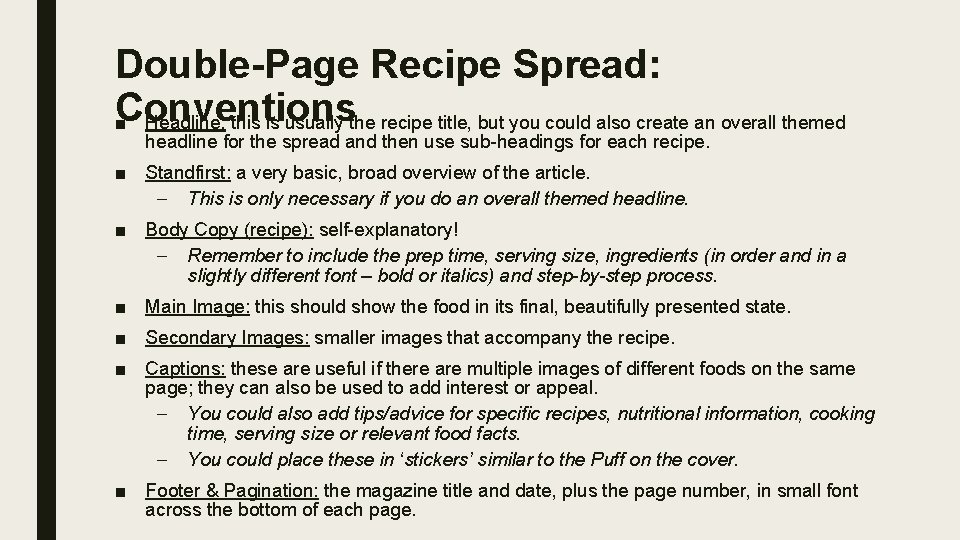
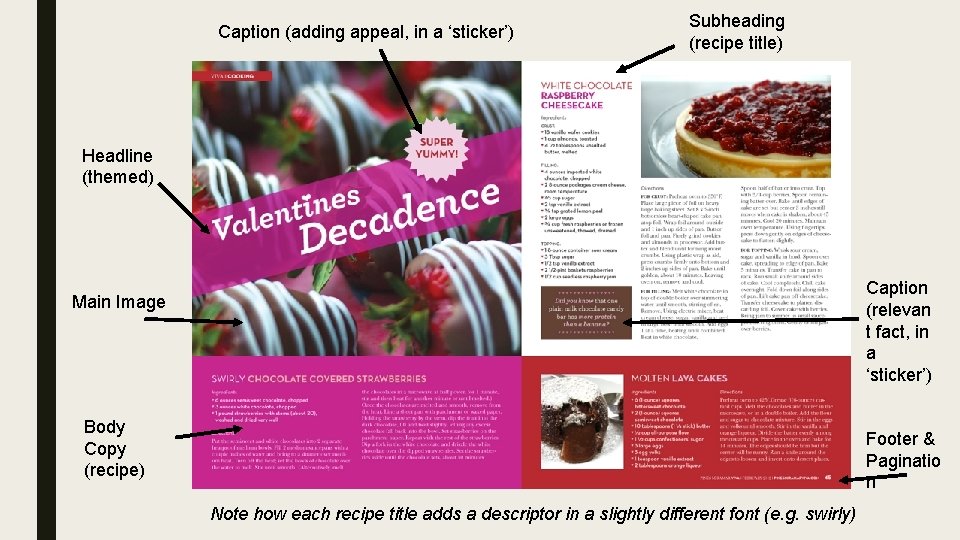
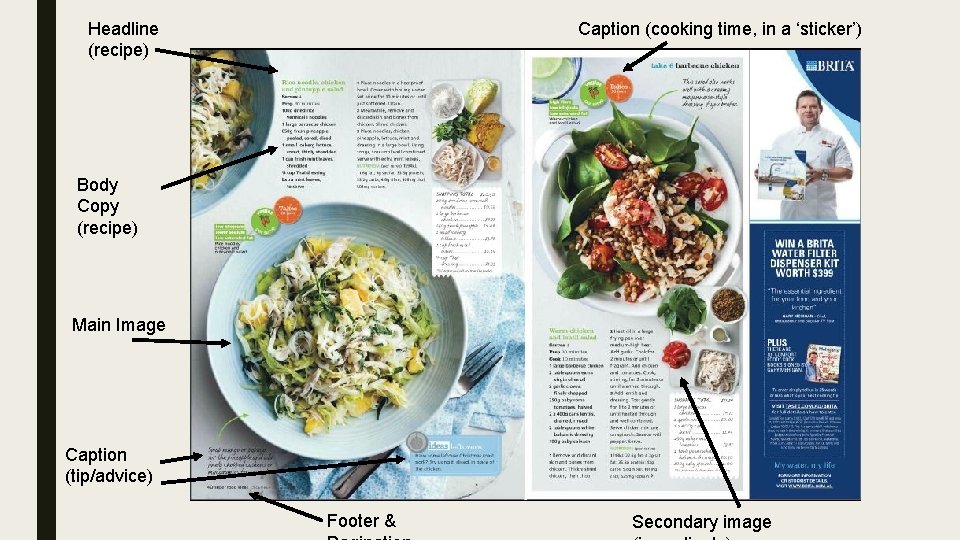
Double-Page Recipe Spread: Conventions ■ Headline: this is usually the recipe title, but you could also create an overall themed headline for the spread and then use sub-headings for each recipe. ■ Standfirst: a very basic, broad overview of the article. – This is only necessary if you do an overall themed headline. ■ Body Copy (recipe): self-explanatory! – Remember to include the prep time, serving size, ingredients (in order and in a slightly different font – bold or italics) and step-by-step process. ■ Main Image: this should show the food in its final, beautifully presented state. ■ Secondary Images: smaller images that accompany the recipe. ■ Captions: these are useful if there are multiple images of different foods on the same page; they can also be used to add interest or appeal. – You could also add tips/advice for specific recipes, nutritional information, cooking time, serving size or relevant food facts. – You could place these in ‘stickers’ similar to the Puff on the cover. ■ Footer & Pagination: the magazine title and date, plus the page number, in small font across the bottom of each page.
Caption (adding appeal, in a ‘sticker’) Subheading (recipe title) Headline (themed) Caption (relevan t fact, in a ‘sticker’) Main Image Body Copy (recipe) Footer & Paginatio n Note how each recipe title adds a descriptor in a slightly different font (e. g. swirly)
Headline (recipe) Caption (cooking time, in a ‘sticker’) Body Copy (recipe) Main Image Caption (tip/advice) Footer & Secondary image
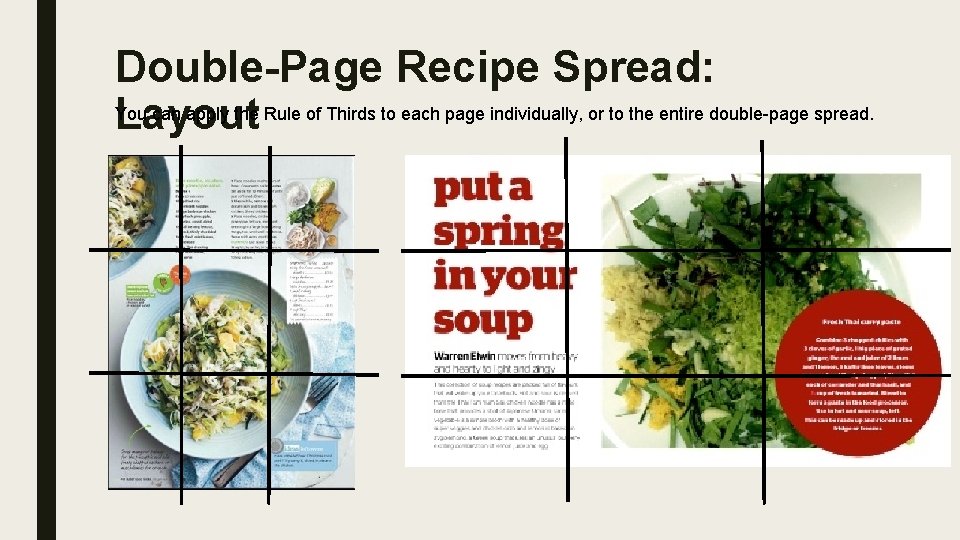
Double-Page Recipe Spread: You can apply the Rule of Thirds to each page individually, or to the entire double-page spread. Layout
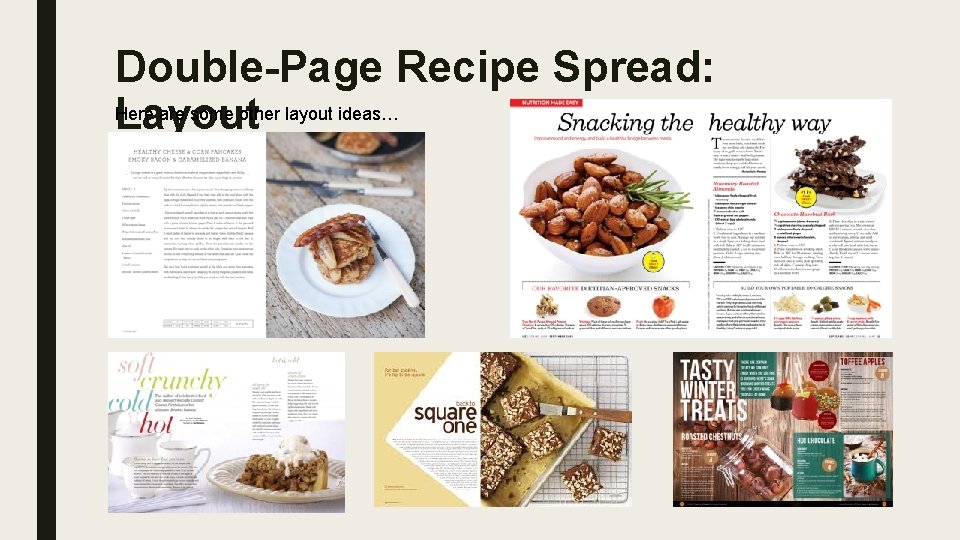
Double-Page Recipe Spread: Here are some other layout ideas… Layout
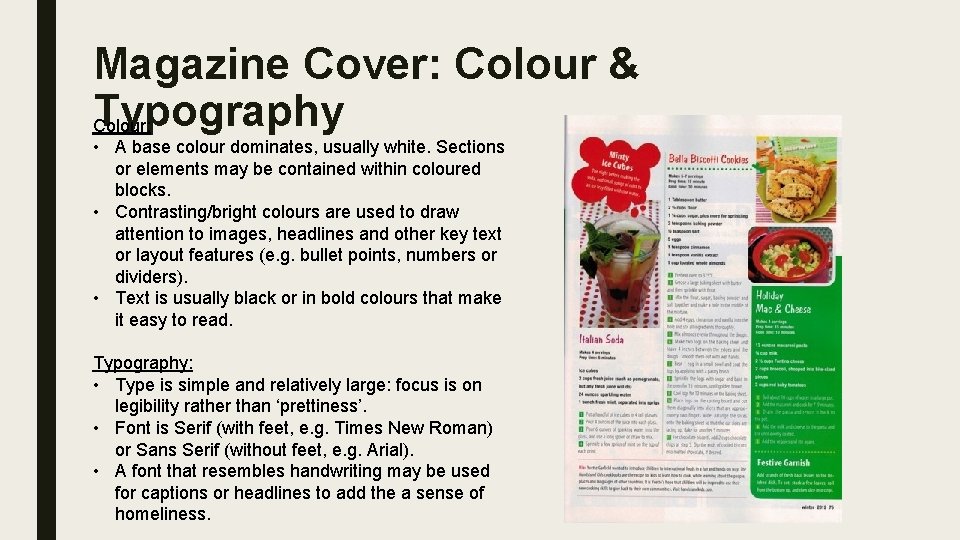
Magazine Cover: Colour & Typography Colour: • A base colour dominates, usually white. Sections or elements may be contained within coloured blocks. • Contrasting/bright colours are used to draw attention to images, headlines and other key text or layout features (e. g. bullet points, numbers or dividers). • Text is usually black or in bold colours that make it easy to read. Typography: • Type is simple and relatively large: focus is on legibility rather than ‘prettiness’. • Font is Serif (with feet, e. g. Times New Roman) or Sans Serif (without feet, e. g. Arial). • A font that resembles handwriting may be used for captions or headlines to add the a sense of homeliness.
Double-Page Recipe Spread: Advice ■ K. I. S. S. (Keep It Simple, Stupid!): your purpose is to communicate the recipe and make the food look delicious. – Stick to the basics: good photography, bold colours, clear typography. – Avoid: ‘pretty’ fonts, too many colours, lots of clutter. ■ Be Prepared: the base colour is usually drawn from the background of the main image, so plan ahead and bring any necessary props/dressing to the photography shoot. ■ Prioritise: again, remember your purpose is to make the food look delicious, NOT to show off all of your photography skills. – It may be tempting to include lots of photos just because you like them, but this will clutter your page and detract from the impact of your images. ■ Big Picture: consider how many recipes you want to include on the double-page spread, as this will change your overall layout and your image choices.
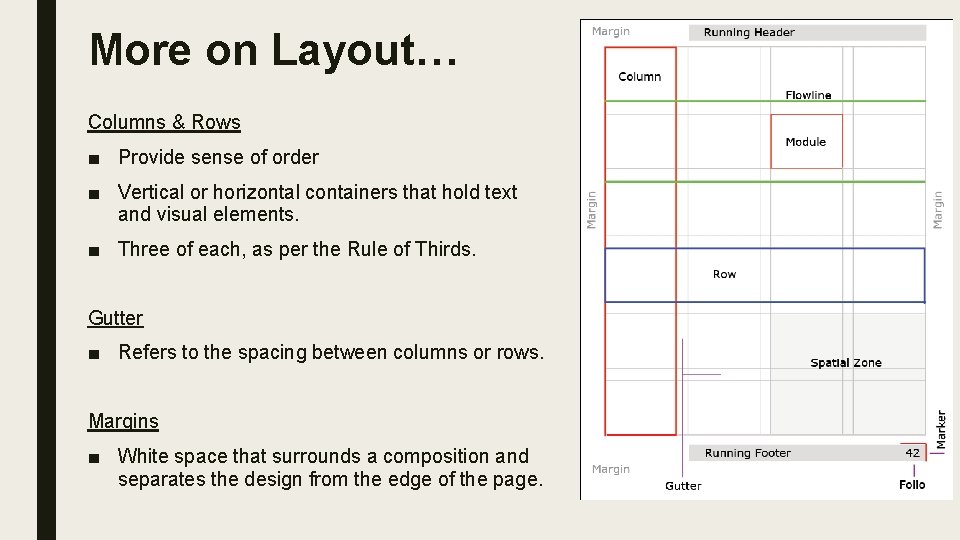
More on Layout… Columns & Rows ■ Provide sense of order ■ Vertical or horizontal containers that hold text and visual elements. ■ Three of each, as per the Rule of Thirds. Gutter ■ Refers to the spacing between columns or rows. Margins ■ White space that surrounds a composition and separates the design from the edge of the page.