
MAFFT Multiple Sequence Alignment using Fast Fourier Transform
![Defining the Signal For Amino Acid Sequences 2 -dimensional signal [volume, polarity] For Nucleotide](https://slidetodoc.com/presentation_image_h2/e98be3b1ee4a901d7b4bf126192dc86b/image-3.jpg "Defining the Signal For Amino Acid Sequences 2 -dimensional signal [volume, polarity] For Nucleotide")

- Slides: 20
MAFFT: Multiple Sequence Alignment using Fast Fourier Transform
Intro 2 -Step Procedure Homology Identification using FFT Alignment Scoring/Selection Faster computation due to… Approx. O(Nlog. N) homology detection Simpler-to-compute scoring function
Defining the Signal For Amino Acid Sequences 2 -dimensional signal [volume, polarity] For Nucleotide Sequences 4 -dimensional signal [A, T, G, C frequencies]
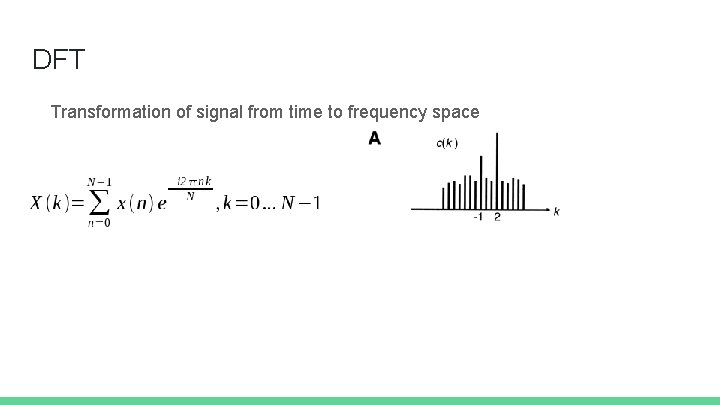
DFT Transformation of signal from time to frequency space
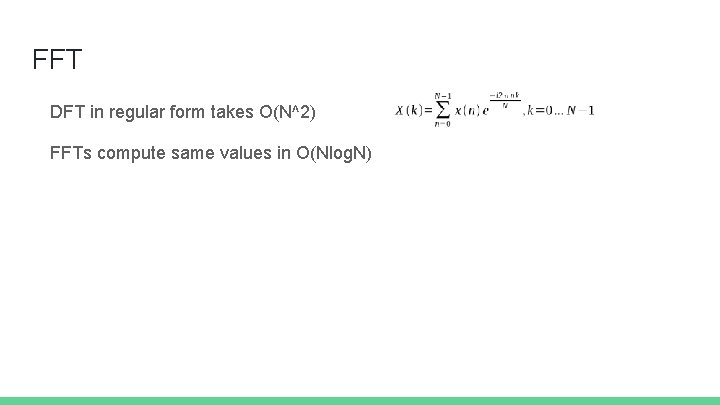
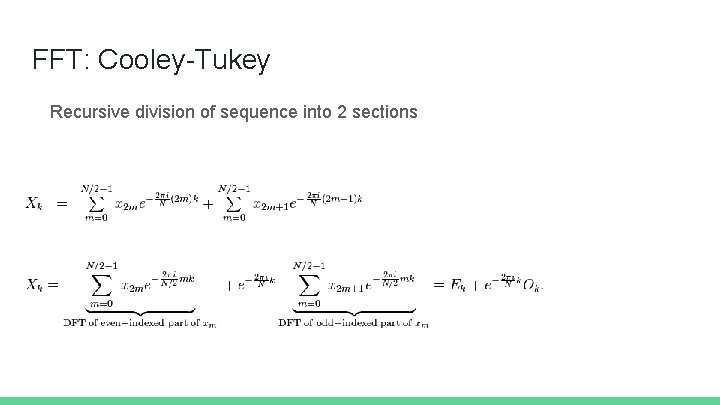
FFT DFT in regular form takes O(N^2) FFTs compute same values in O(Nlog. N)
FFT: Cooley-Tukey Recursive division of sequence into 2 sections
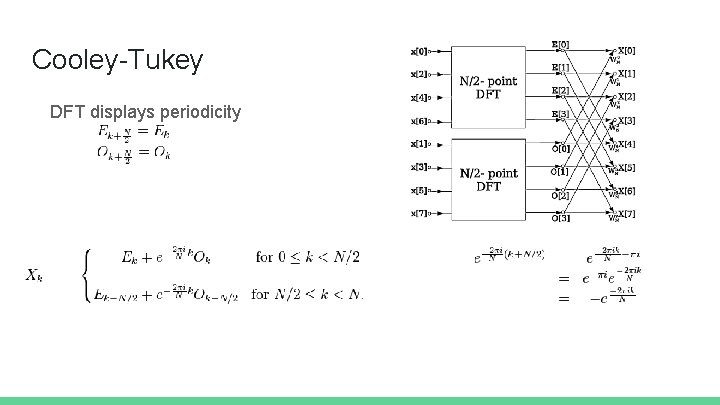
Cooley-Tukey DFT displays periodicity
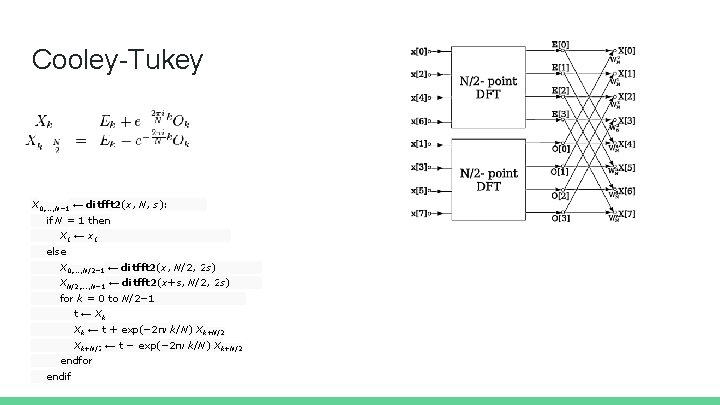
Cooley-Tukey X 0, . . . , N− 1 ← ditfft 2(x, N, s): if N = 1 then X 0 ← x 0 else X 0, . . . , N/2− 1 ← ditfft 2(x, N/2, 2 s) XN/2, . . . , N− 1 ← ditfft 2(x+s, N/2, 2 s) for k = 0 to N/2− 1 t ← Xk Xk ← t + exp(− 2πi k/N) Xk+N/2 ← t − exp(− 2πi k/N) Xk+N/2 endfor endif
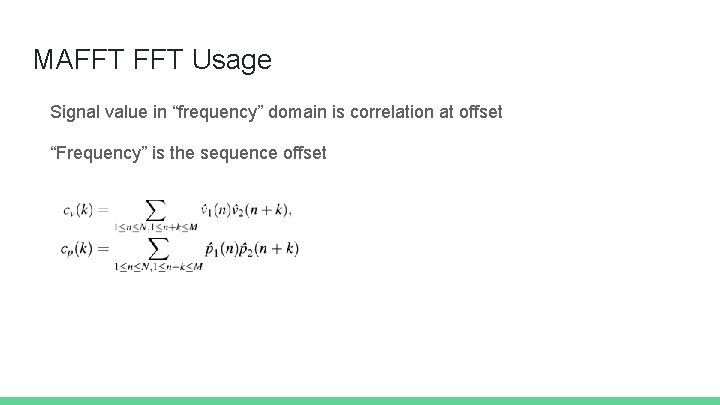
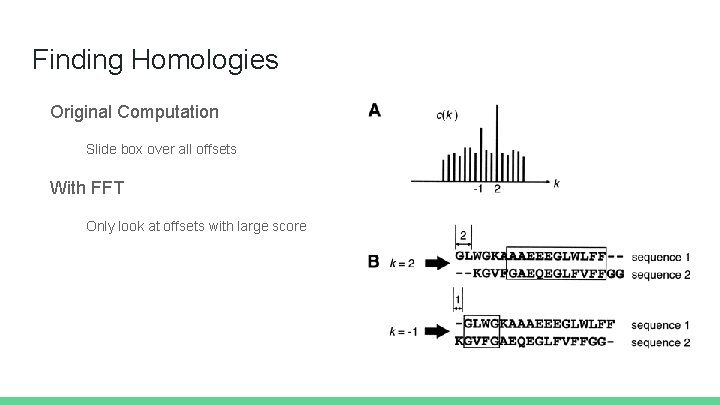
MAFFT Usage Signal value in “frequency” domain is correlation at offset “Frequency” is the sequence offset
Finding Homologies Original Computation Slide box over all offsets With FFT Only look at offsets with large score
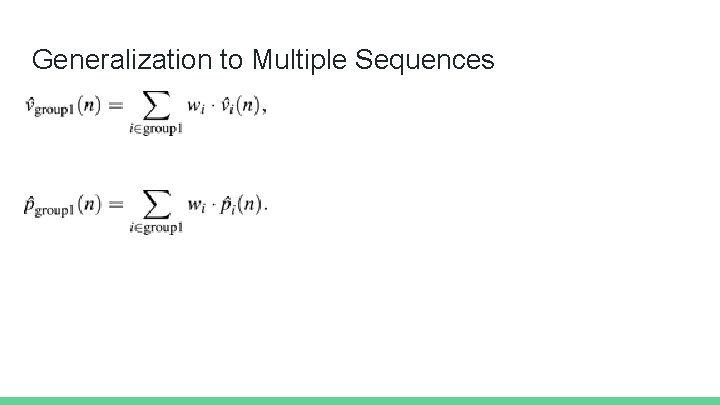
Generalization to Multiple Sequences
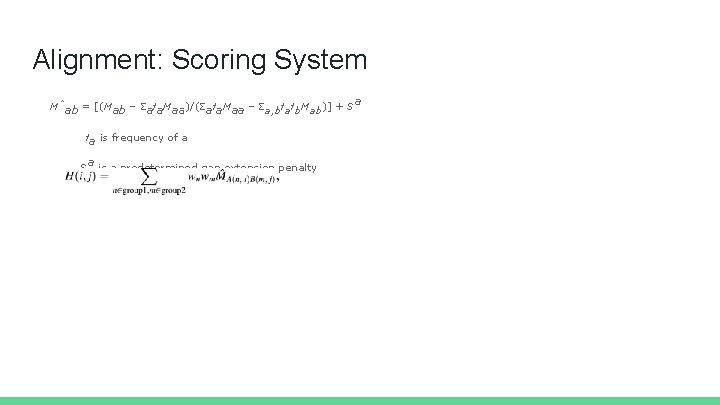
Alignment: Scoring System M ab = [(Mab – Σafa. Maa)/(Σafa. Maa – Σa, bfafb. Mab)] + Sa fa is frequency of a Sa is a predetermined gap extension penalty
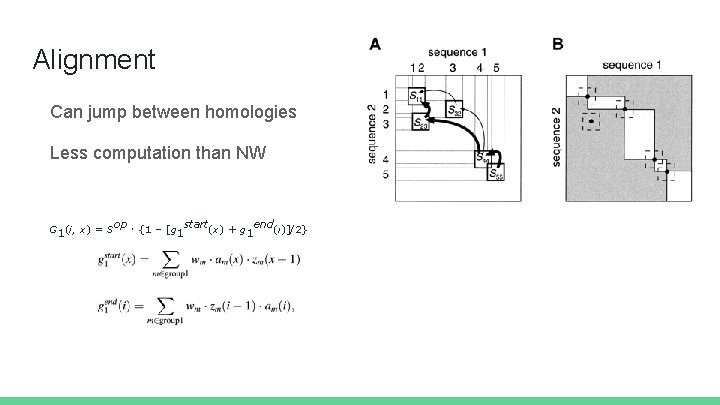
Alignment Can jump between homologies Less computation than NW G 1(i, x) = Sop · {1 – [g 1 start(x) + g 1 end(i)]/2}
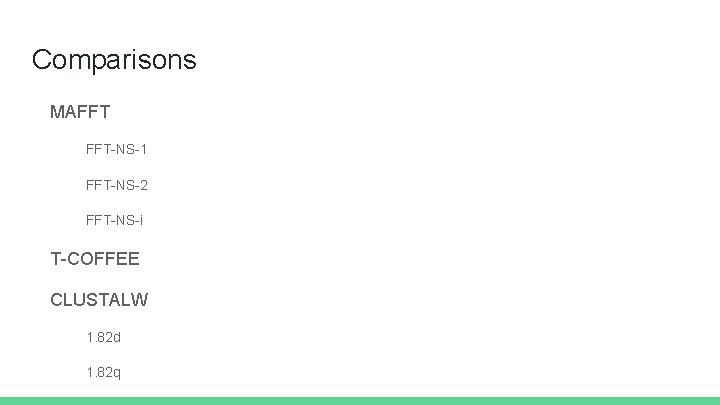
Comparisons MAFFT FFT-NS-1 FFT-NS-2 FFT-NS-i T-COFFEE CLUSTALW 1. 82 d 1. 82 q
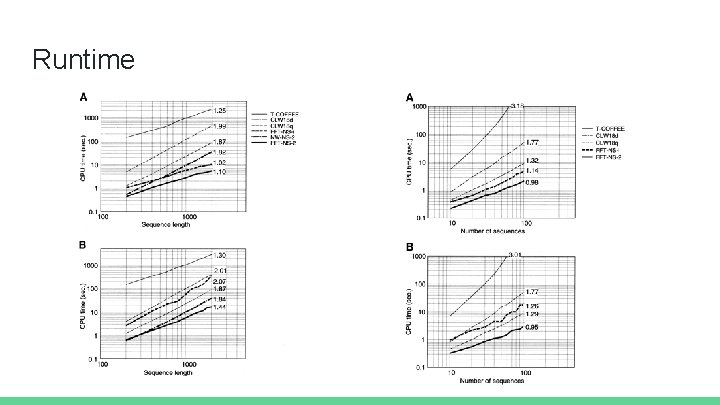
Runtime
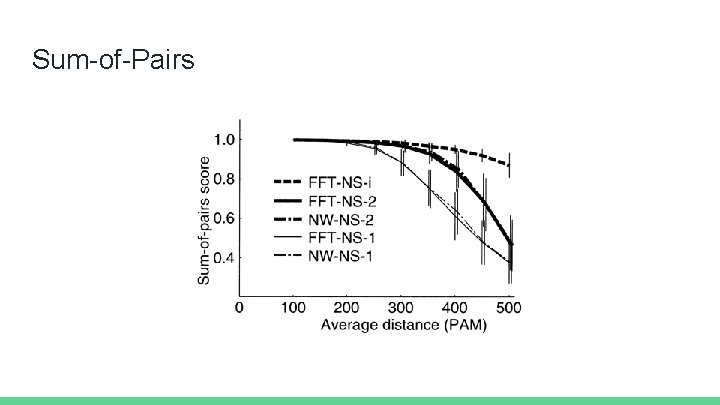
Sum-of-Pairs
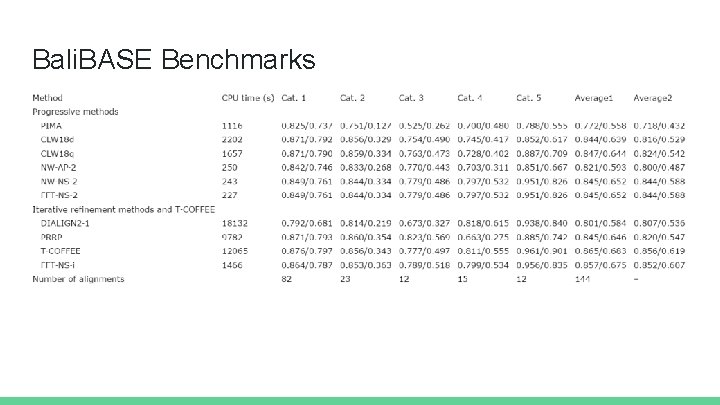
Bali. BASE Benchmarks
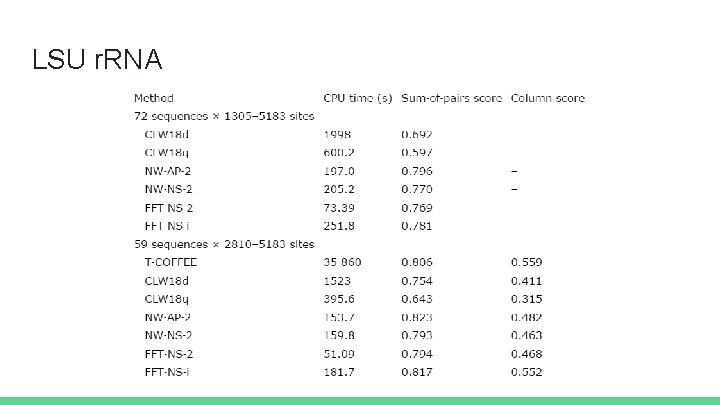
LSU r. RNA
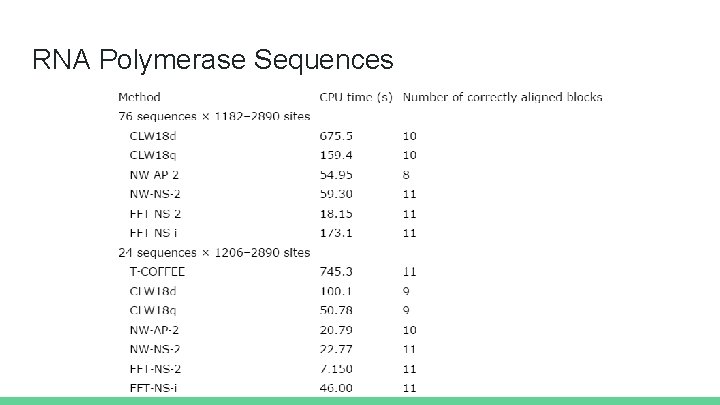
RNA Polymerase Sequences
Questions