
Mae Gallego 9 A BIVALVES AND GASTROPODS Kingdom
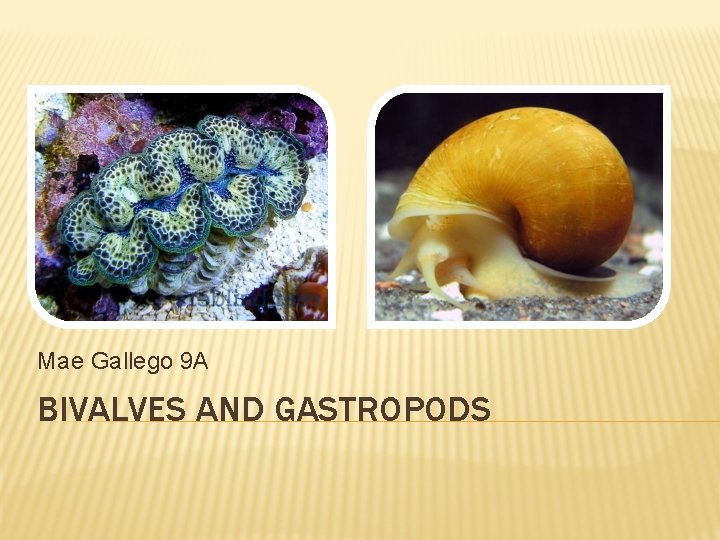
Mae Gallego 9 A BIVALVES AND GASTROPODS
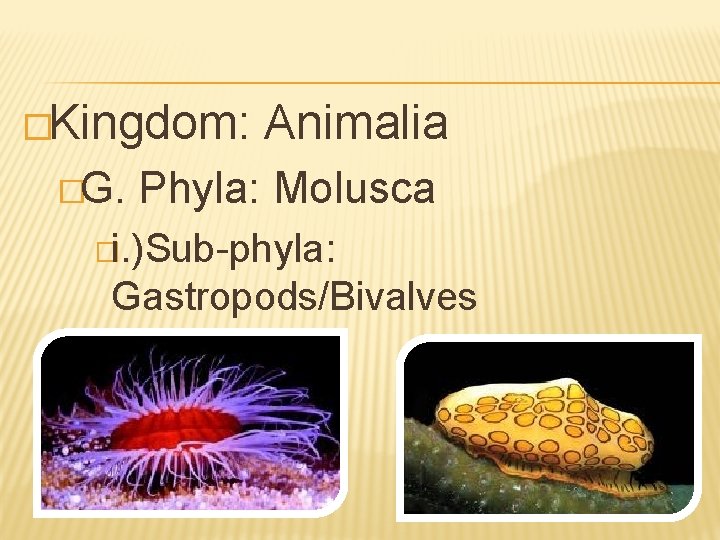
�Kingdom: Animalia �G. Phyla: Molusca �i. )Sub-phyla: Gastropods/Bivalves
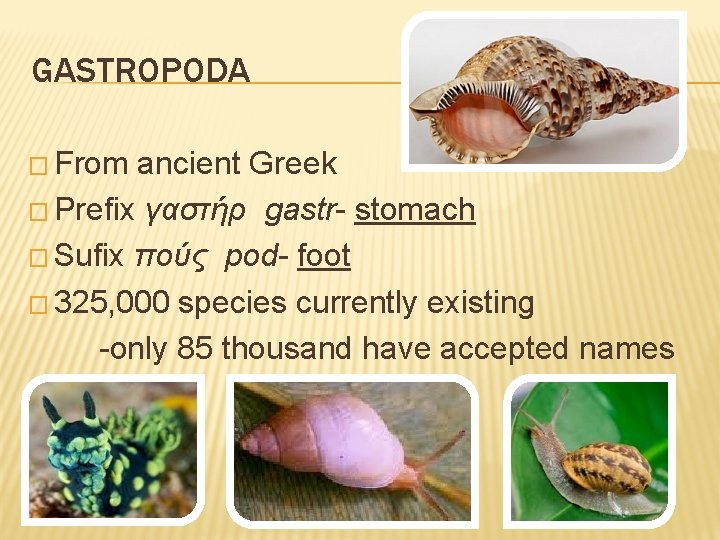
GASTROPODA � From ancient Greek � Prefix γαστήρ gastr- stomach � Sufix πούς pod- foot � 325, 000 species currently existing -only 85 thousand have accepted names
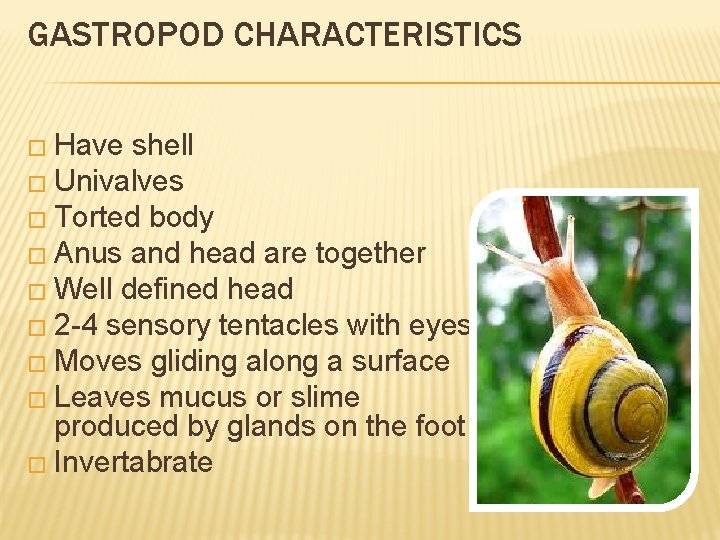
GASTROPOD CHARACTERISTICS � Have shell � Univalves � Torted body � Anus and head are together � Well defined head � 2 -4 sensory tentacles with eyes � Moves gliding along a surface � Leaves mucus or slime produced by glands on the foot. � Invertabrate
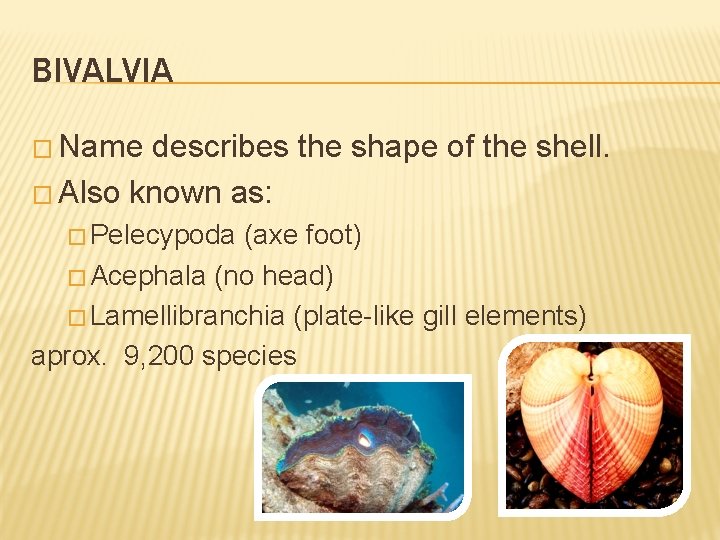
BIVALVIA � Name describes the shape of the shell. � Also known as: � Pelecypoda (axe foot) � Acephala (no head) � Lamellibranchia (plate-like gill elements) aprox. 9, 200 species
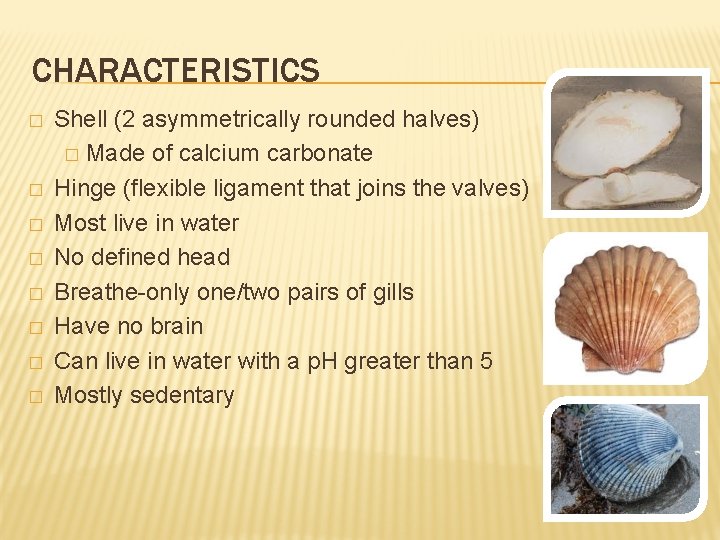
CHARACTERISTICS � � � � Shell (2 asymmetrically rounded halves) � Made of calcium carbonate Hinge (flexible ligament that joins the valves) Most live in water No defined head Breathe-only one/two pairs of gills Have no brain Can live in water with a p. H greater than 5 Mostly sedentary
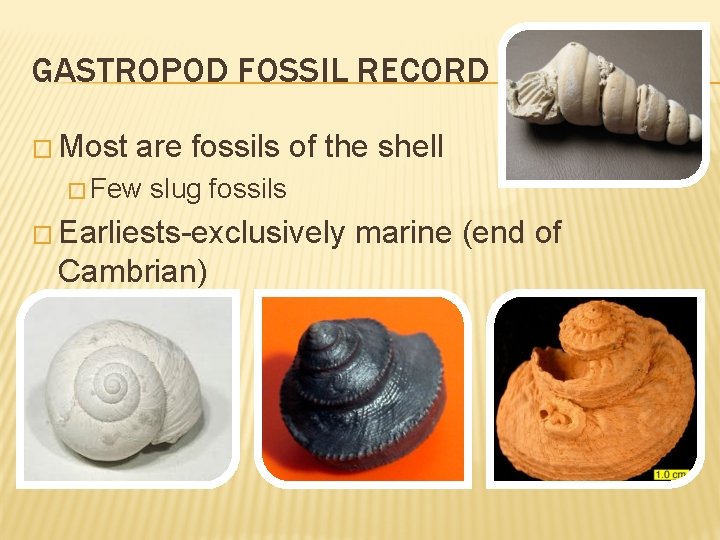
GASTROPOD FOSSIL RECORD � Most are fossils of the shell � Few slug fossils � Earliests-exclusively marine (end of Cambrian)
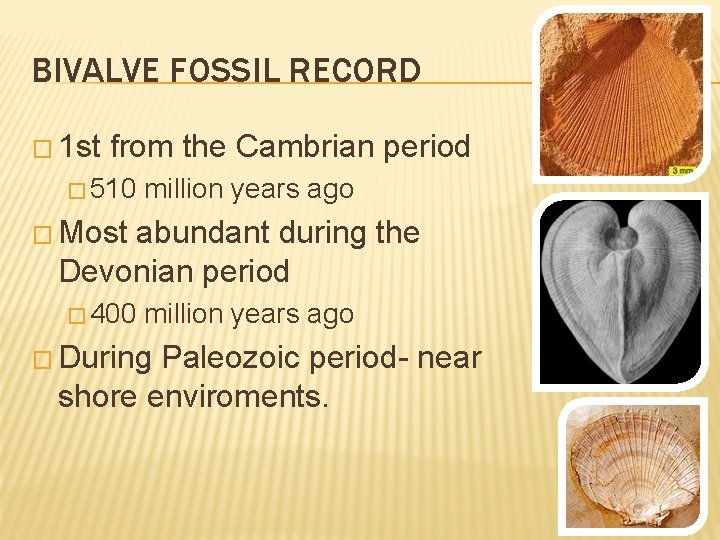
BIVALVE FOSSIL RECORD � 1 st from the Cambrian period � 510 million years ago � Most abundant during the Devonian period � 400 million years ago � During Paleozoic period- near shore enviroments.

GASTROPOD LIFE CICLE

BIVALVE LIFE CYCLE
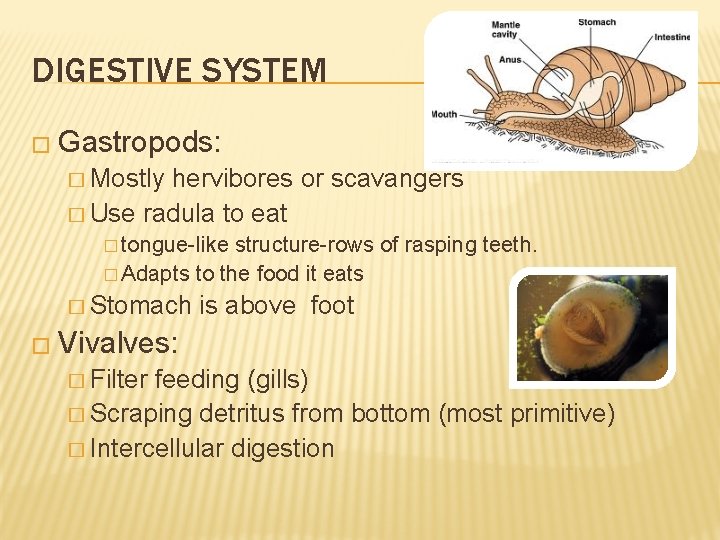
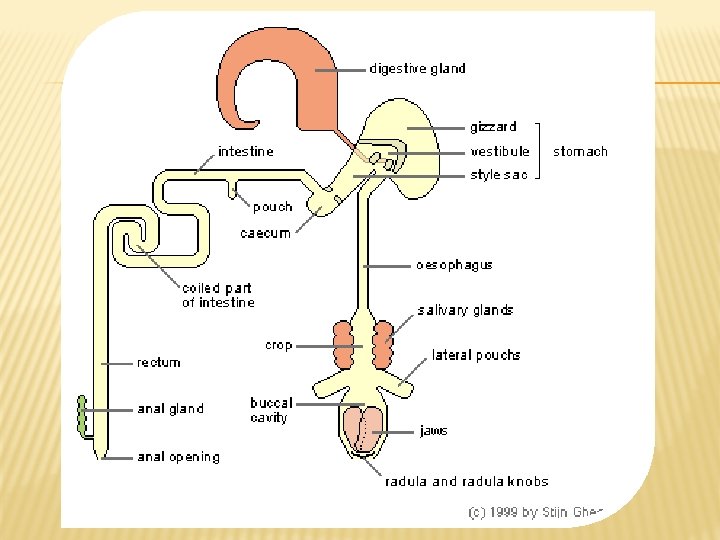
DIGESTIVE SYSTEM � Gastropods: � Mostly hervibores or scavangers � Use radula to eat � tongue-like structure-rows of rasping teeth. � Adapts to the food it eats � Stomach is above foot � Vivalves: � Filter feeding (gills) � Scraping detritus from bottom (most primitive) � Intercellular digestion
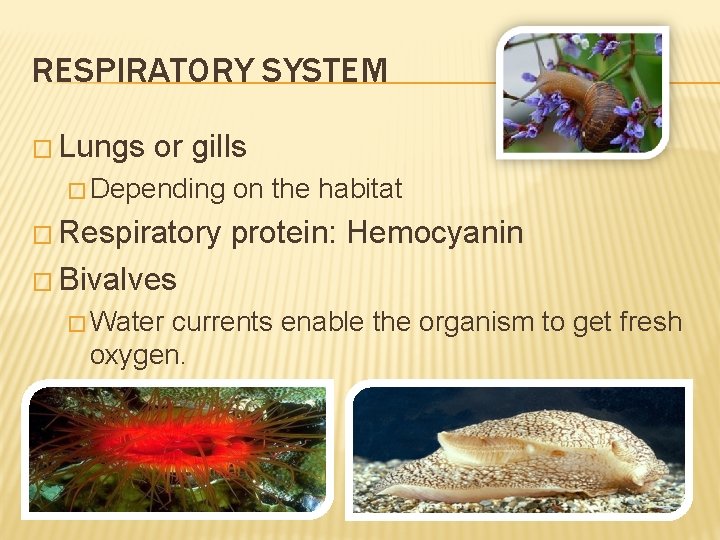
RESPIRATORY SYSTEM � Lungs or gills � Depending on the habitat � Respiratory protein: Hemocyanin � Bivalves � Water currents enable the organism to get fresh oxygen.
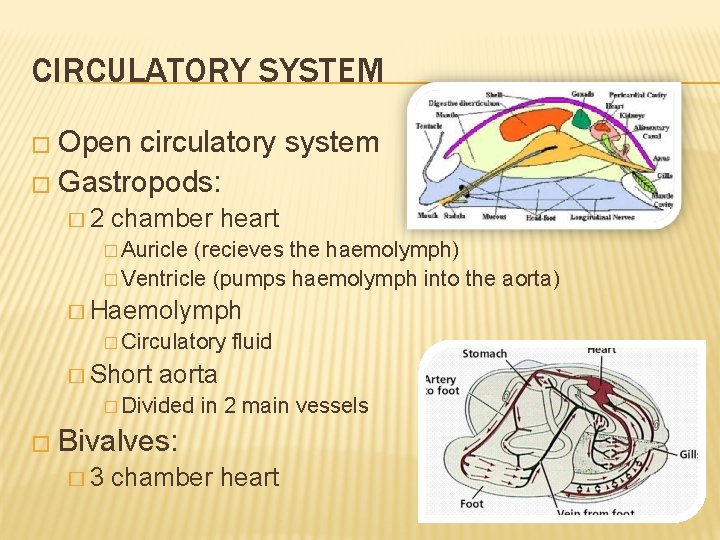
CIRCULATORY SYSTEM � Open circulatory system � Gastropods: � 2 chamber heart � Auricle (recieves the haemolymph) � Ventricle (pumps haemolymph into the aorta) � Haemolymph � Circulatory fluid � Short aorta � Divided in 2 main vessels � Bivalves: � 3 chamber heart
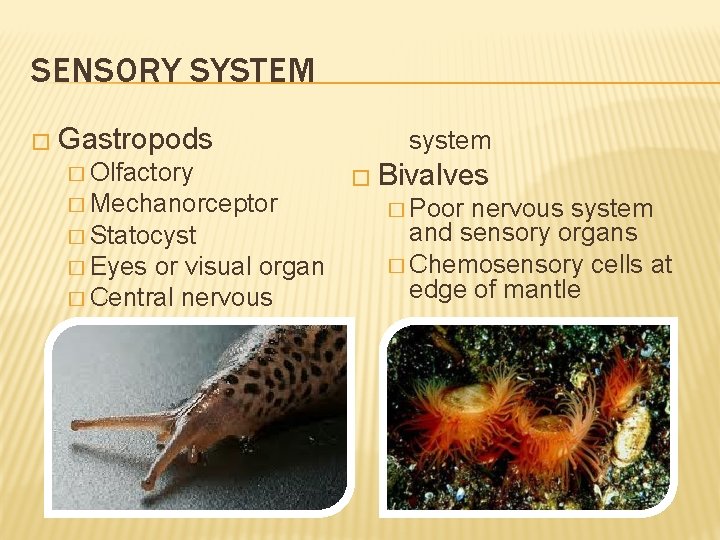
SENSORY SYSTEM � Gastropods � Olfactory � Mechanorceptor � Statocyst � Eyes or visual organ � Central nervous system � Bivalves � Poor nervous system and sensory organs � Chemosensory cells at edge of mantle

ANY QUESTIONS, COMENTS ETC?
BIBLIOGRAPHY � � � � http: //www. google. es/imgres? q=snail+circulatory+system&um=1&hl=es&biw=1360&bih=634&tb m=isch&tbnid=F 36 RH 2 Oyisix. M: &imgrefurl=http: //myclasses. naperville 203. org/staff/NNHSBiology/Kraftson. Eco/Animal% 2520 Kingdom%2520 Period%25202/Mollusca. aspx&docid=Wyxd. XLXKuc. JXM&imgurl=http: //www. biologie. uni-hamburg. de/bonline/library/onlinebio/circsys_2. gif&w=502&h=314&ei=Yh 5 BT 6 e. ZBc. TE 0 QX 6 s. J 2 PDw&zoom=1 &iact=hc&vpx=348&vpy=308&dur=5644&hovh=177&hovw=284&tx=60&ty=71&sig=1019674423 54638864406&page=1&tbnh=110&tbnw=176&start=0&ndsp=18&ved=0 CF 0 Qr. QMw. Bw http: //en. wikipedia. org/wiki/File: Cyprus. Pliocene. Gastropod. JPG http: //en. wikipedia. org/wiki/Fossil_record http: //en. wikipedia. org/wiki/Gastropoda http: //www. natureduca. com/zoo_inverteb_moluscos 3. php http: //encina. pntic. mec. es/nmeb 0000/invertebrados/moluscos/gruposmoluscos/gasteropodos. ht ml http: //www. scholarpedia. org/article/Gastropod_reproductive_behavior http: //en. wikipedia. org/wiki/Gastropoda http: //www. manandmollusc. net/advanced_introduction/moll 101 gastropoda. html http: //micropig. tumblr. com/post/807759651/dragon-slug-how-do-you-exist http: //www. google. es/search? q=slug&um=1&ie=UTF 8&hl=es&tbm=isch&source=og&sa=N&tab=wi&ei=5 k. BBT 4 Lw. GIHCh. Aepw. Z 3 OBQ&biw=1360&bi h=634&sei=n 0 FBT 4 m. NOMa. Eh. Qfuw 7 XEBQ http: //www. manandmollusc. net/advanced_introduction/mollusca_101_intro. html http: //www. kgs. ku. edu/Extension/fossils/bivalve. html http: //infusion. allconet. org/webquest/Phylum. Mollusca. html http: //www. waterencyclopedia. com/Bi-Ca/Bivalves. html#b
- Slides: 17