
MADE BY AKANSHA GARG B ED I st
MADE BY: -AKANSHA GARG B. ED I st YEAR 40617402116 SOCIAL SCIENCE
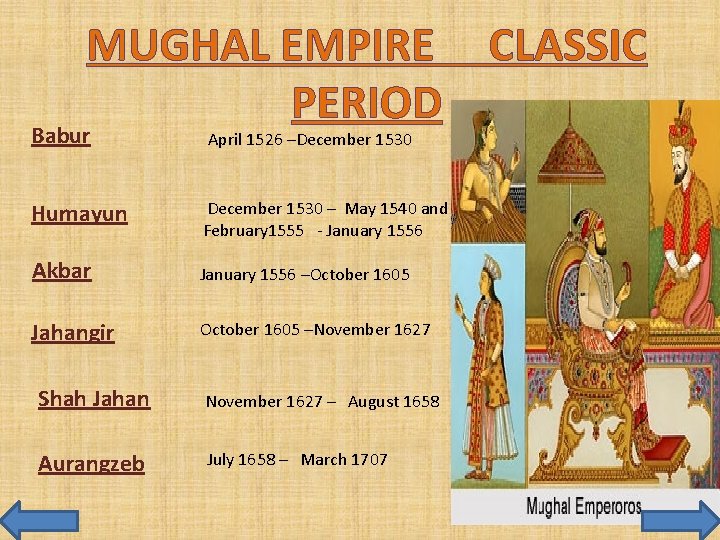
MUGHAL EMPIRE CLASSIC PERIOD Babur April 1526 –December 1530 Humayun December 1530 – May 1540 and February 1555 - January 1556 Akbar January 1556 –October 1605 Jahangir October 1605 –November 1627 Shah Jahan November 1627 – August 1658 Aurangzeb July 1658 – March 1707
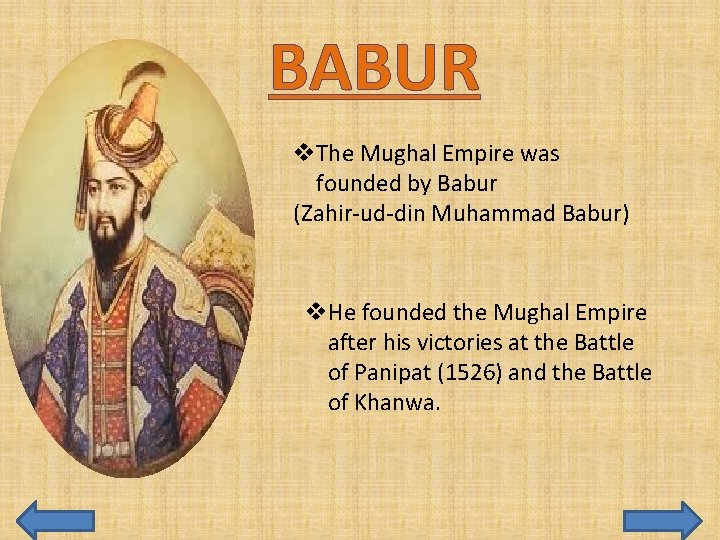
BABUR v. The Mughal Empire was founded by Babur (Zahir-ud-din Muhammad Babur) v. He founded the Mughal Empire after his victories at the Battle of Panipat (1526) and the Battle of Khanwa.
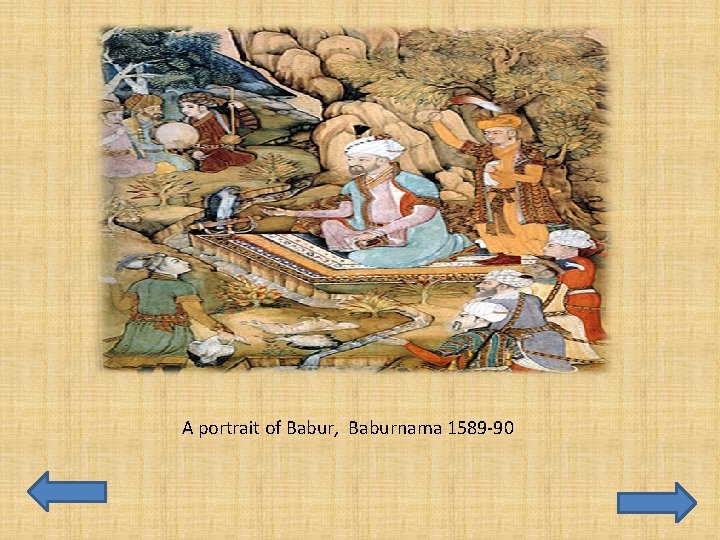
A portrait of Babur, Baburnama 1589 -90
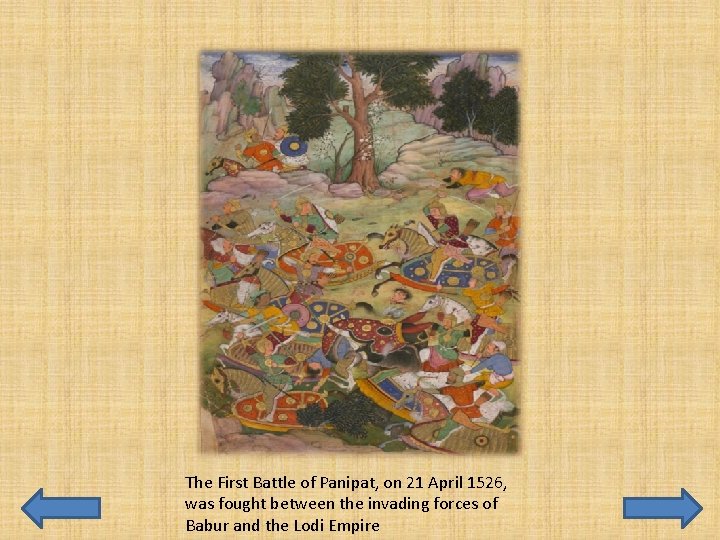
The First Battle of Panipat, on 21 April 1526, was fought between the invading forces of Babur and the Lodi Empire
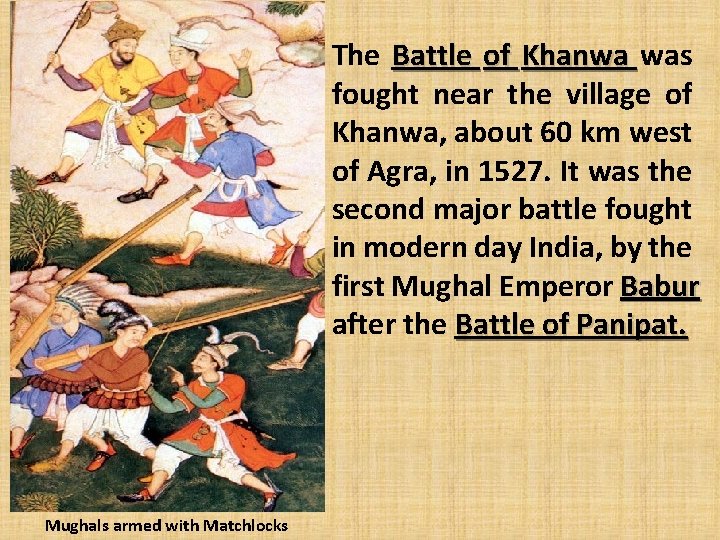
The Battle of Khanwa was fought near the village of Khanwa, about 60 km west of Agra, in 1527. It was the second major battle fought in modern day India, by the first Mughal Emperor Babur after the Battle of Panipat. Mughals armed with Matchlocks
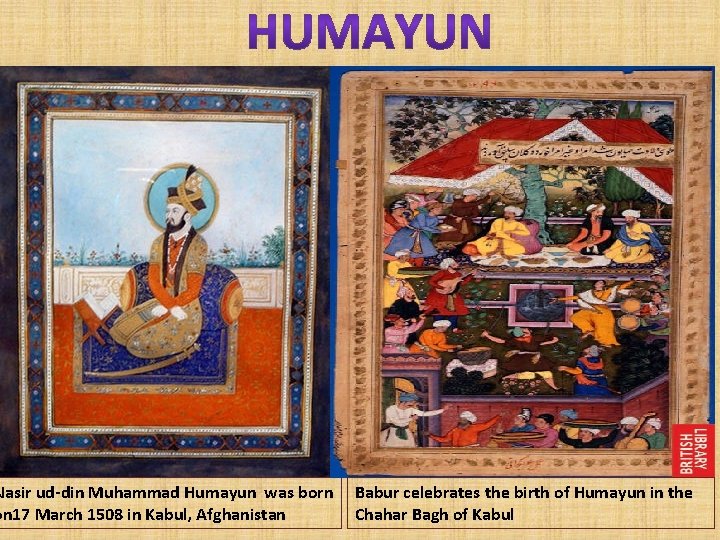
Nasir ud-din Muhammad Humayun was born on 17 March 1508 in Kabul, Afghanistan Babur celebrates the birth of Humayun in the Chahar Bagh of Kabul
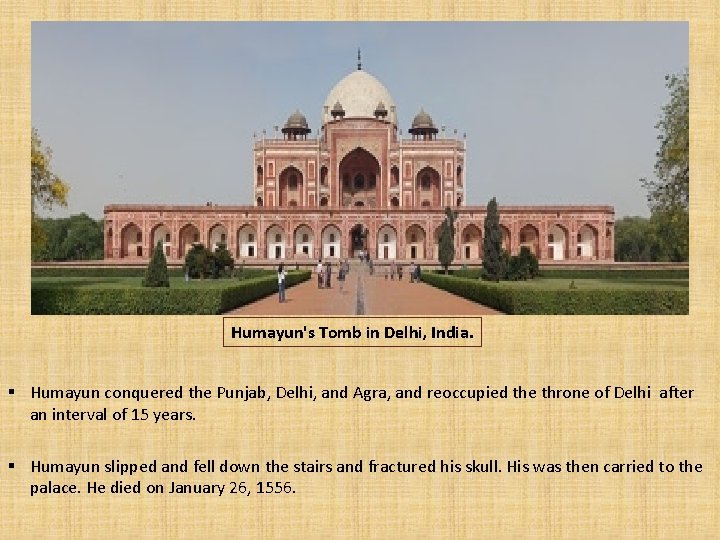
Humayun's Tomb in Delhi, India. § Humayun conquered the Punjab, Delhi, and Agra, and reoccupied the throne of Delhi after an interval of 15 years. § Humayun slipped and fell down the stairs and fractured his skull. His was then carried to the palace. He died on January 26, 1556.
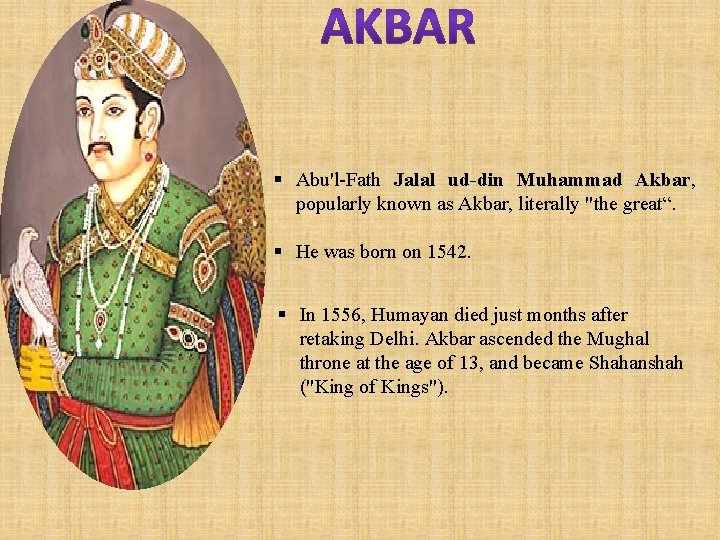
§ Abu'l-Fath Jalal ud-din Muhammad Akbar, popularly known as Akbar, literally "the great“. § He was born on 1542. § In 1556, Humayan died just months after retaking Delhi. Akbar ascended the Mughal throne at the age of 13, and became Shahanshah ("King of Kings").
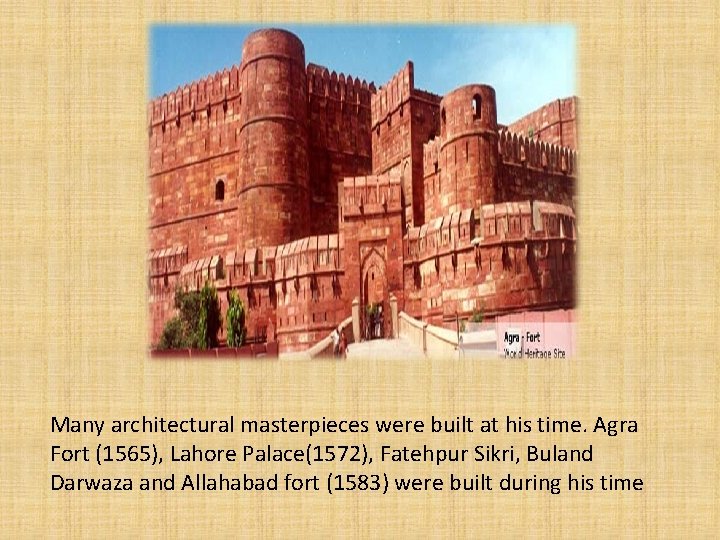
Many architectural masterpieces were built at his time. Agra Fort (1565), Lahore Palace(1572), Fatehpur Sikri, Buland Darwaza and Allahabad fort (1583) were built during his time
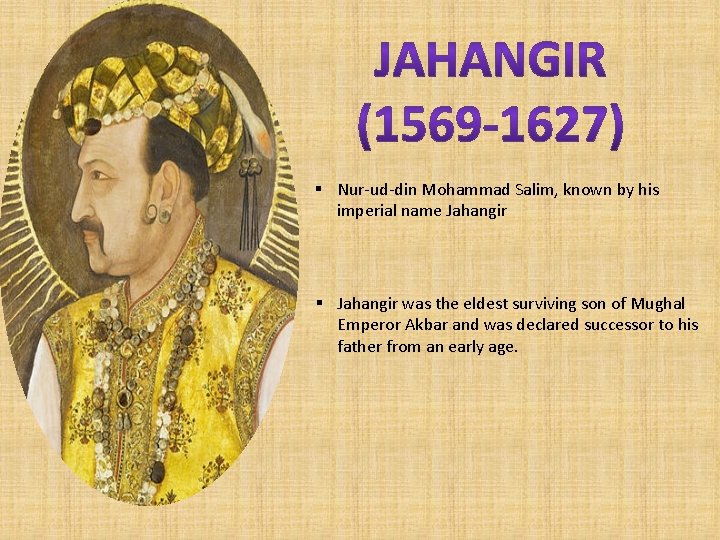
§ Nur-ud-din Mohammad Salim, known by his imperial name Jahangir § Jahangir was the eldest surviving son of Mughal Emperor Akbar and was declared successor to his father from an early age.
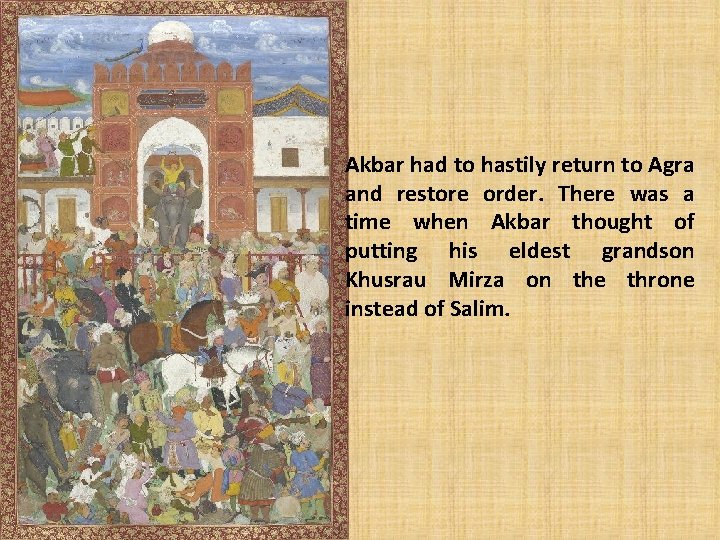
Akbar had to hastily return to Agra and restore order. There was a time when Akbar thought of putting his eldest grandson Khusrau Mirza on the throne instead of Salim.
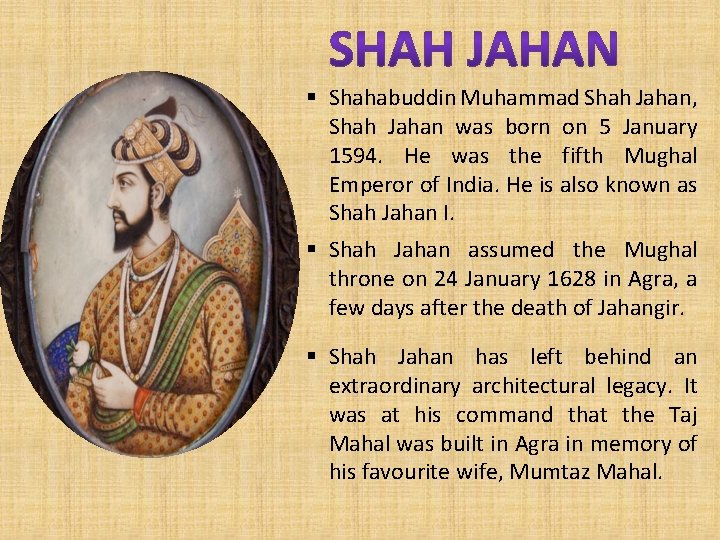
§ Shahabuddin Muhammad Shah Jahan, Shah Jahan was born on 5 January 1594. He was the fifth Mughal Emperor of India. He is also known as Shah Jahan I. § Shah Jahan assumed the Mughal throne on 24 January 1628 in Agra, a few days after the death of Jahangir. § Shah Jahan has left behind an extraordinary architectural legacy. It was at his command that the Taj Mahal was built in Agra in memory of his favourite wife, Mumtaz Mahal.
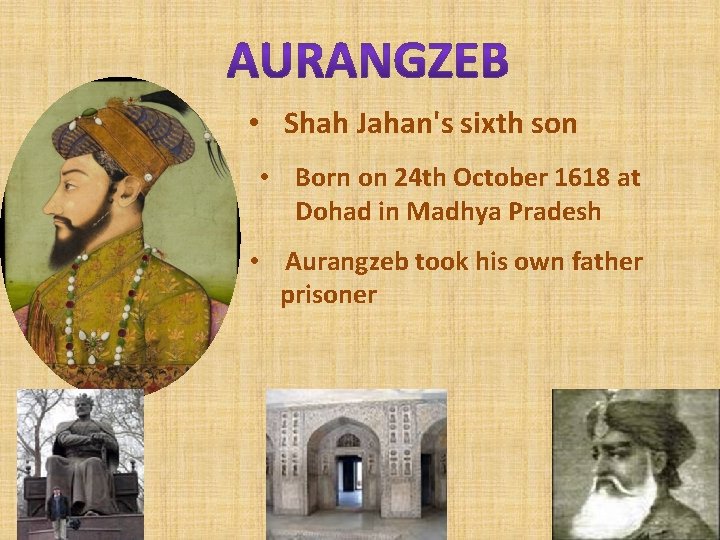
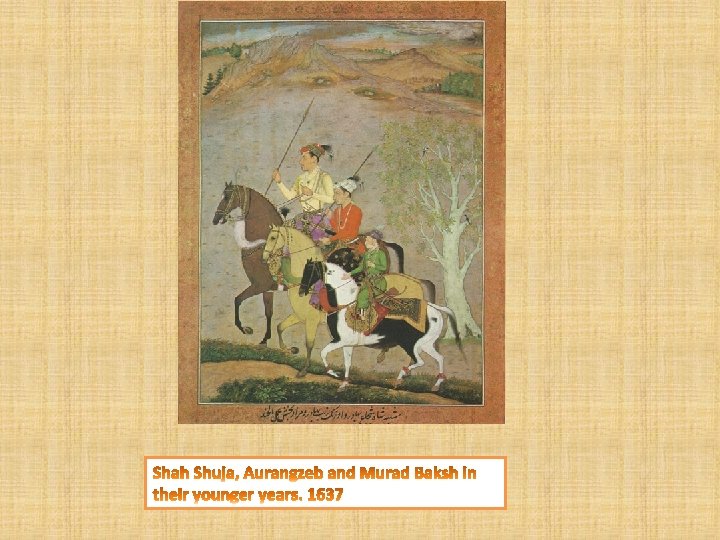
• Shah Jahan's sixth son • Born on 24 th October 1618 at Dohad in Madhya Pradesh • Aurangzeb took his own father prisoner
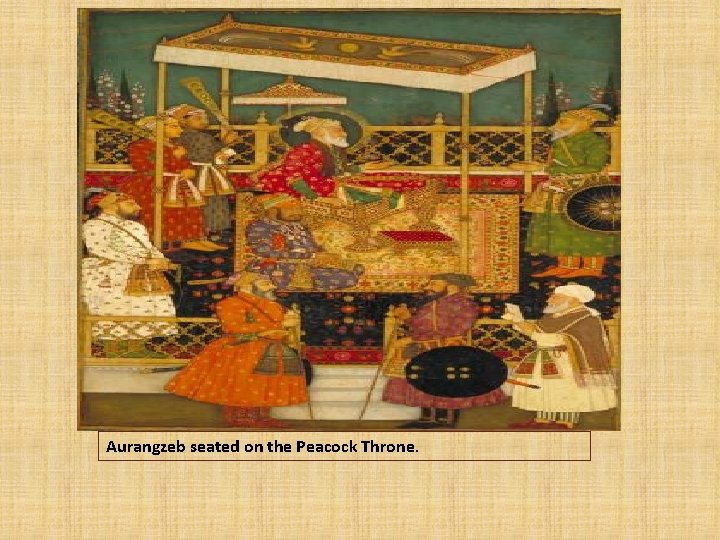
Aurangzeb seated on the Peacock Throne.
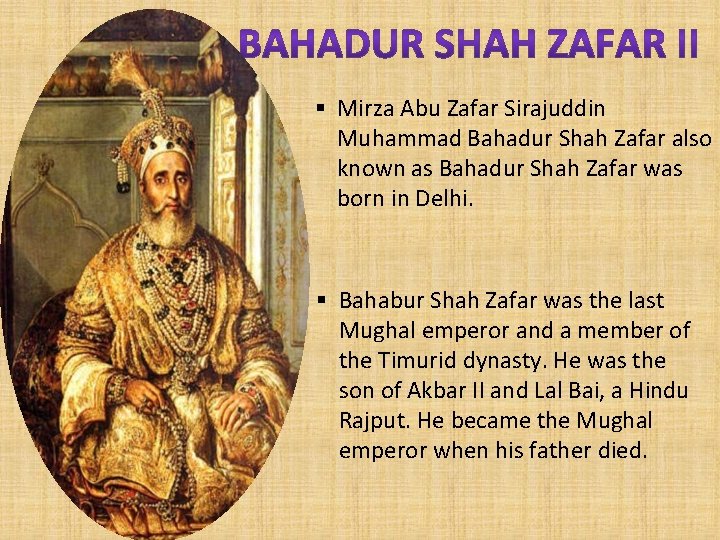
§ Mirza Abu Zafar Sirajuddin Muhammad Bahadur Shah Zafar also known as Bahadur Shah Zafar was born in Delhi. § Bahabur Shah Zafar was the last Mughal emperor and a member of the Timurid dynasty. He was the son of Akbar II and Lal Bai, a Hindu Rajput. He became the Mughal emperor when his father died.
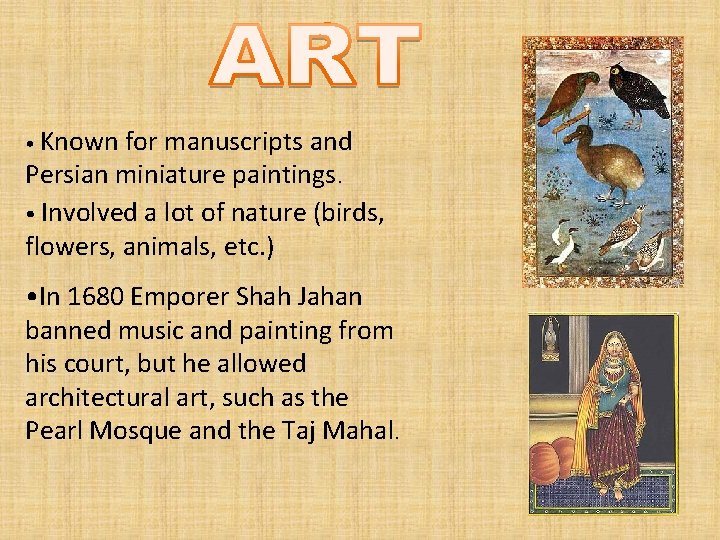
• Known for manuscripts and Persian miniature paintings. • Involved a lot of nature (birds, flowers, animals, etc. ) • In 1680 Emporer Shah Jahan banned music and painting from his court, but he allowed architectural art, such as the Pearl Mosque and the Taj Mahal.
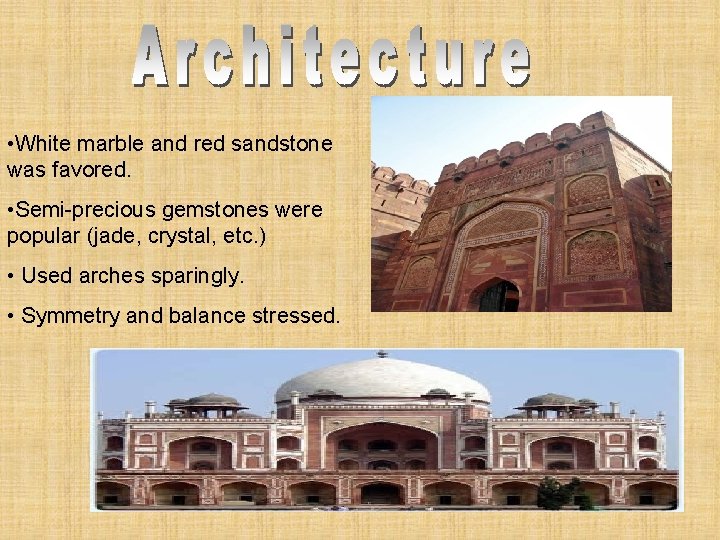
• White marble and red sandstone was favored. • Semi-precious gemstones were popular (jade, crystal, etc. ) • Used arches sparingly. • Symmetry and balance stressed.
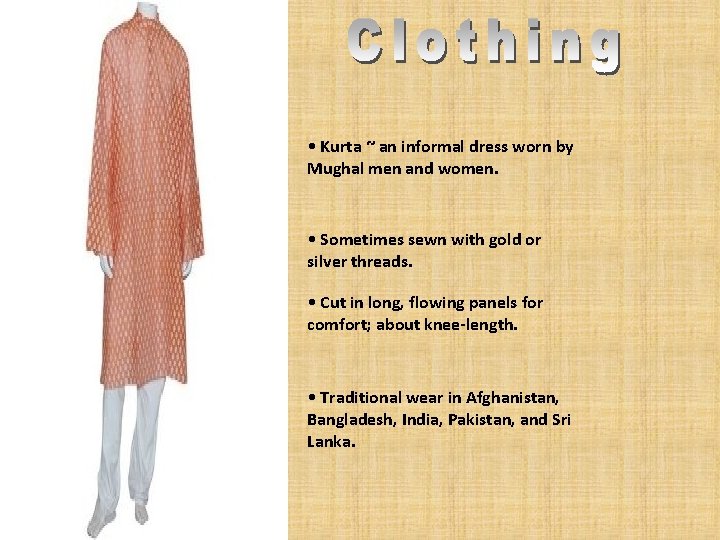
• Kurta ~ an informal dress worn by Mughal men and women. • Sometimes sewn with gold or silver threads. • Cut in long, flowing panels for comfort; about knee-length. • Traditional wear in Afghanistan, Bangladesh, India, Pakistan, and Sri Lanka.
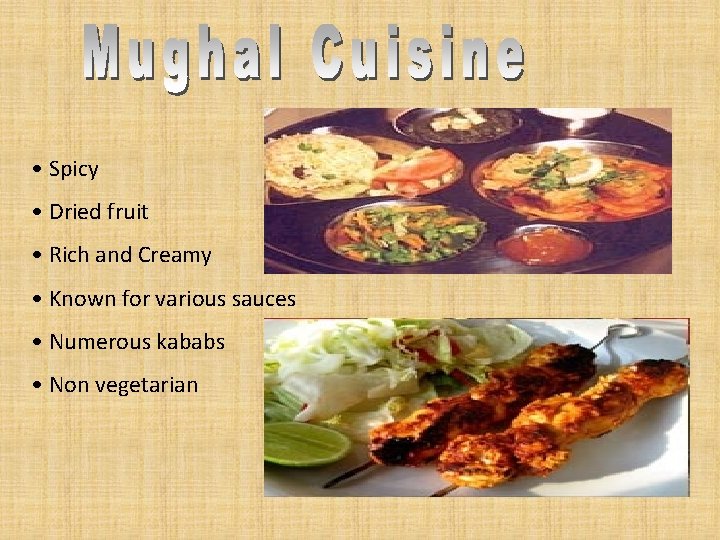
• Spicy • Dried fruit • Rich and Creamy • Known for various sauces • Numerous kababs • Non vegetarian
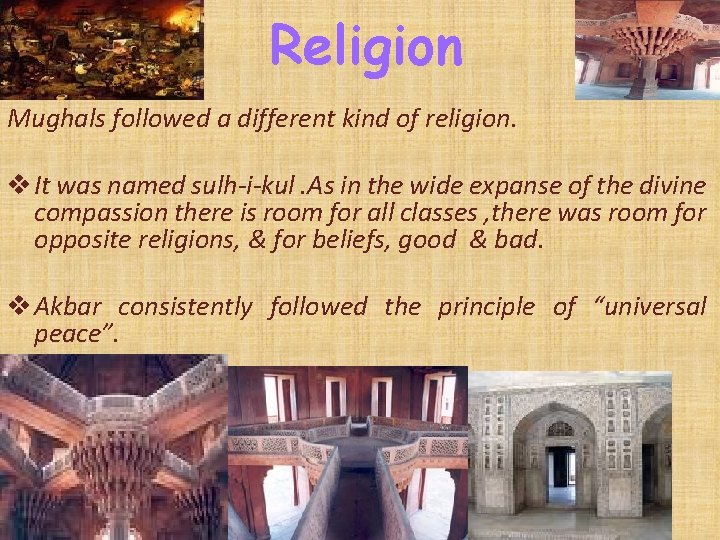
Religion Mughals followed a different kind of religion. v It was named sulh-i-kul. As in the wide expanse of the divine compassion there is room for all classes , there was room for opposite religions, & for beliefs, good & bad. v Akbar consistently followed the principle of “universal peace”.

- Slides: 24