
MAD SKILLS NEW ANALYSIS PRACTICES FOR BIG DATA

MAD SKILLS NEW ANALYSIS PRACTICES FOR BIG DATA BRIAN DOLAN JOE HELLERSTEIN DISCOVIX UC BERKELEY
MADGENDA Warehousing and the New Practitioners Getting MAD A Taste of Some Data-Parallel Statistics Ecosystem Example MAD Community
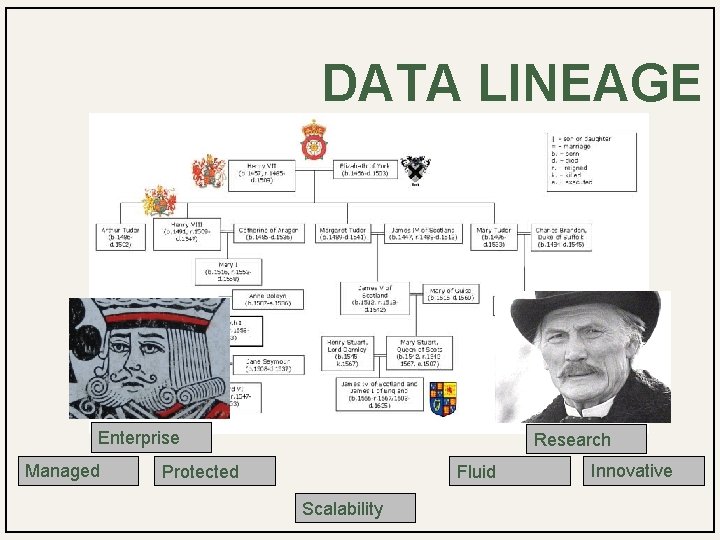
DATA LINEAGE Enterprise Managed Research Protected Fluid Scalability Innovative
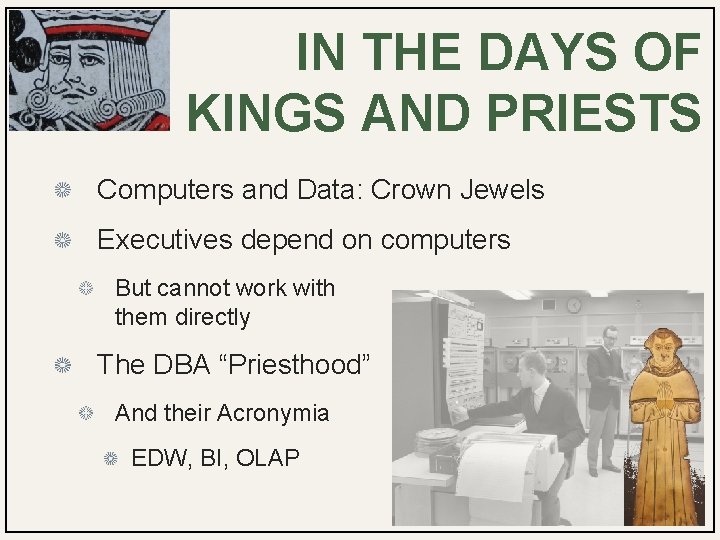
IN THE DAYS OF KINGS AND PRIESTS Computers and Data: Crown Jewels Executives depend on computers But cannot work with them directly The DBA “Priesthood” And their Acronymia EDW, BI, OLAP
THE ARCHITECTED EDW Rational behavior … for a bygone era “There is no point in bringing data … into the data warehouse environment without integrating it. ” — Bill Inmon, Building the Data Warehouse, 2005
WHERE THINGS MOVE FAST Data obtained, tortured then discarded Researchers consider data their property But don’t have the time or inclination to manage it fully The Research “Gunslingers” And their Arsenal Hadoop, Java, Python
LINE-LEVEL DATA Not just detailed, but part of the revenue stream
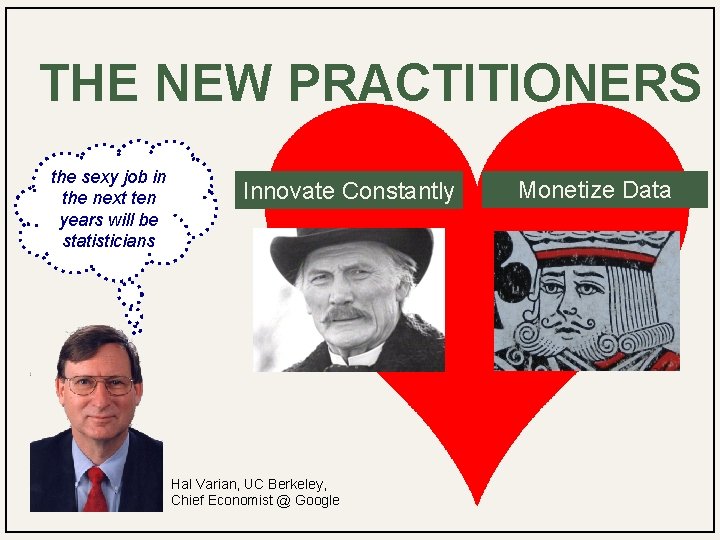
THE NEW PRACTITIONERS the sexy job in the next ten years will be statisticians Innovate Constantly Hal Varian, UC Berkeley, Chief Economist @ Google Monetize Data
MADGENDA Warehousing and the New Practitioners Getting MAD A Taste of Some Data-Parallel Statistics Ecosystem Example MAD Community
MAD SKILLS Magnetic attract data and practitioners Agile rapid iteration: ingest, analyze, productionalize Deep sophisticated analytics in Big Data
MAGNETIC Magnetic warehouses attract users and data. Share ideas at the watering hole There’s always room in the back for your stuff Sustain the local data economy Meta-data management Data supply-chain management
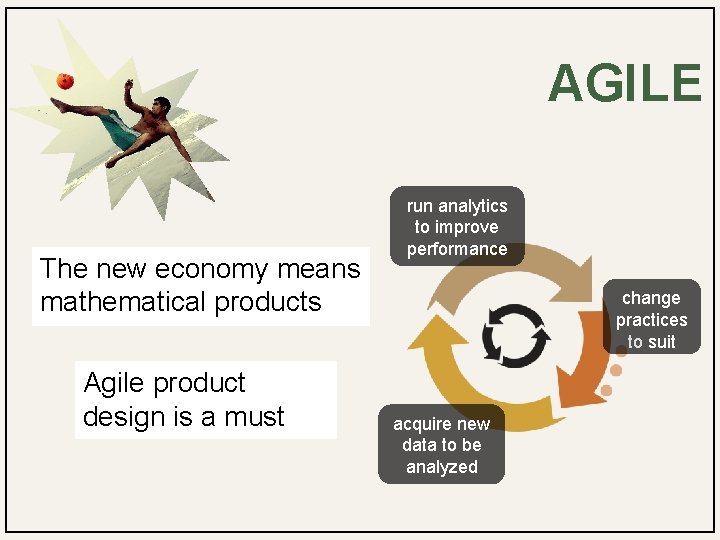
AGILE The new economy means mathematical products Agile product design is a must run analytics to improve performance change practices to suit acquire new data to be analyzed
DEEP The Vocabulary Of Statistics Data Mining focused on individual items Statistical analysis needs more Focus on density methods! Need to be able to utter statistical sentences And run massively parallel, on Big Data! [MAD Skills, VLDB 2009] (Scalar) Arithmetic Vector Arithmetic 1. 2. • I. e. Linear Algebra Functions 3. • E. g. probability densities Functionals 4. • i. e. functions on functions • E. g. , A/B testing: a functional over densities
MADGENDA Warehousing and the New Practitioners Getting MAD A Taste of Some Data-Parallel Statistics Ecosystem Example MAD Community
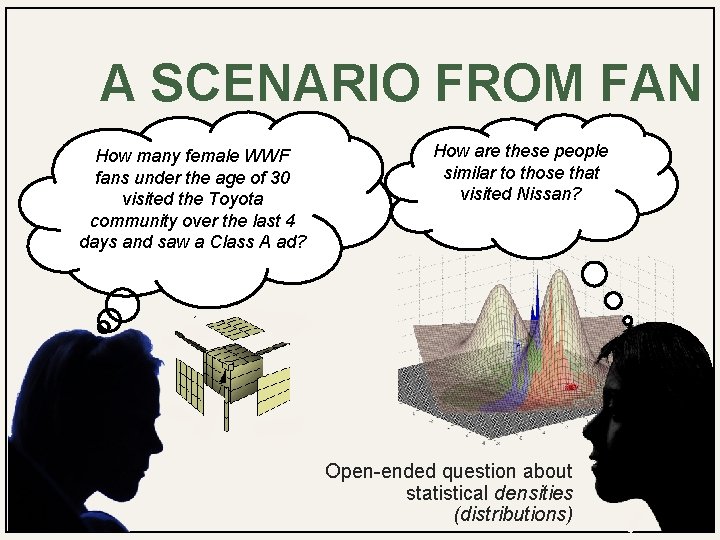
A SCENARIO FROM FAN How many female WWF fans under the age of 30 visited the Toyota community over the last 4 days and saw a Class A ad? How are these people similar to those that visited Nissan? Open-ended question about statistical densities (distributions)
MADGENDA Warehousing and the New Practitioners Getting MAD A Taste of Some Data-Parallel Statistics Ecosystem Example MAD Community
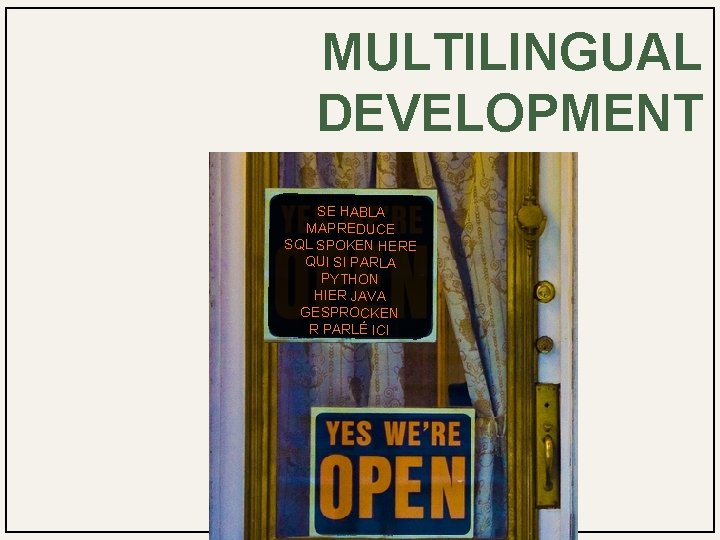
MULTILINGUAL DEVELOPMENT SE HABLA MAPREDUCE SQL SPOKEN HERE QUI SI PARLA PYTHON HIER JAVA GESPROCKEN R PARLÉ ICI
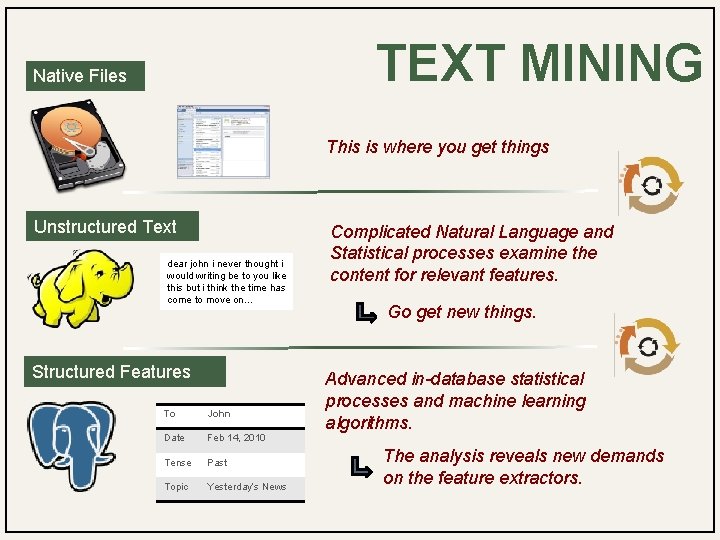
TEXT MINING Native Files This is where you get things Unstructured Text dear john i never thought i would writing be to you like this but i think the time has come to move on… Structured Features To John Date Feb 14, 2010 Tense Past Topic Yesterday’s News Complicated Natural Language and Statistical processes examine the content for relevant features. Go get new things. Advanced in-database statistical processes and machine learning algorithms. The analysis reveals new demands on the feature extractors.
MADGENDA Warehousing and the New Practitioners Getting MAD A Taste of Some Data-Parallel Statistics Ecosystem Example MAD Community
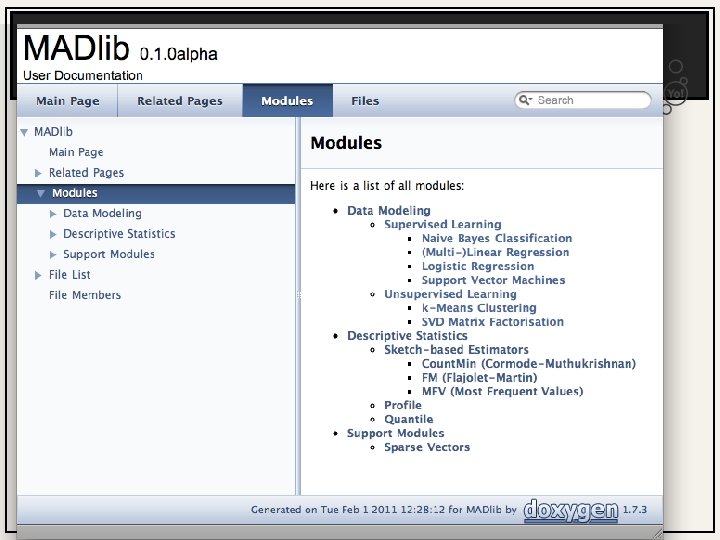
RESEARCH & OPEN SOURCE MADlib the unnamed
“MADlib is an open-source library for scalable in-database analytics. It provides data-parallel implementations of mathematics, statistical and machine-learning methods for structured and unstructured data. ” http: //www. madlib. net
02. 03. 11 “friends and family” alpha release BSD license initial ports: Postgre. SQL, Greenplum initial contributors: Berkeley, EMC/Greenplum spring 2011 beta release new contributor pipeline for ports and methods
the unnamed “facilitating interactions between people and data throughout the analytic lifecycle” with thanks to research sponsors: http: //on. fb. me/helpnameus National Science Foundation Lightspeed Venture Partners Yahoo! Research EMC/Greenplum Survey. Monkey
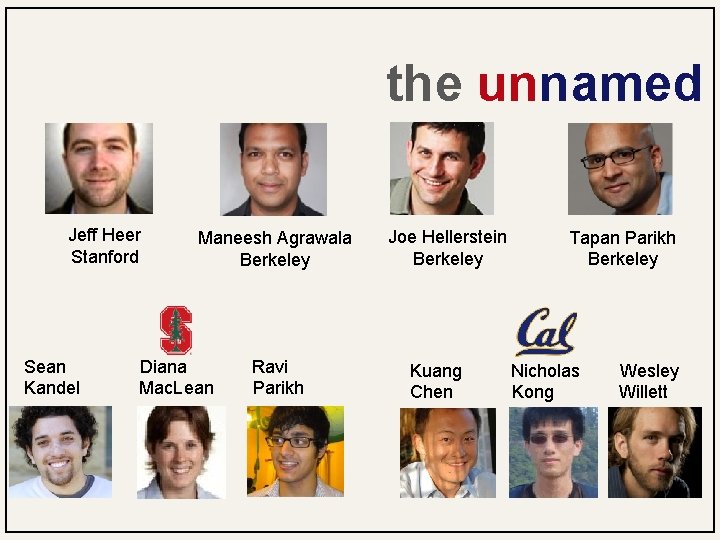
the unnamed Jeff Heer Stanford Sean Kandel Maneesh Agrawala Berkeley Diana Mac. Lean Ravi Parikh Joe Hellerstein Berkeley Kuang Chen Tapan Parikh Berkeley Nicholas Kong Wesley Willett
the unnamed datawrangler intelligent data xformation commentspace social data analysis usher/shreddr first-mile data entry
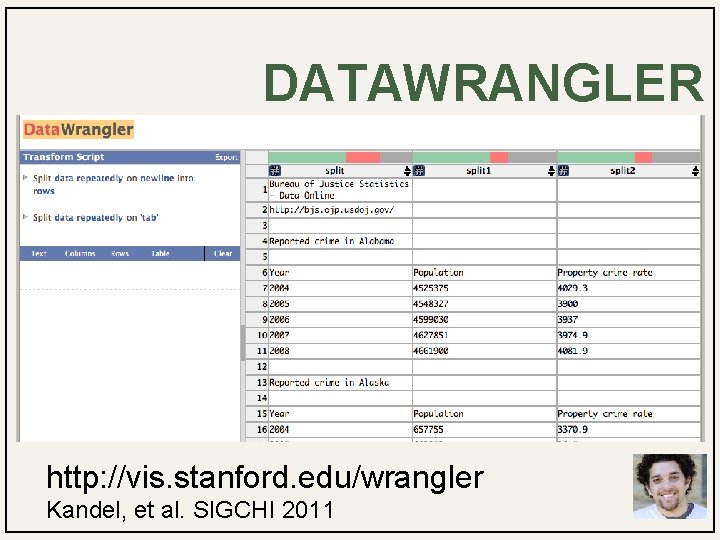
DATAWRANGLER http: //vis. stanford. edu/wrangler Kandel, et al. SIGCHI 2011
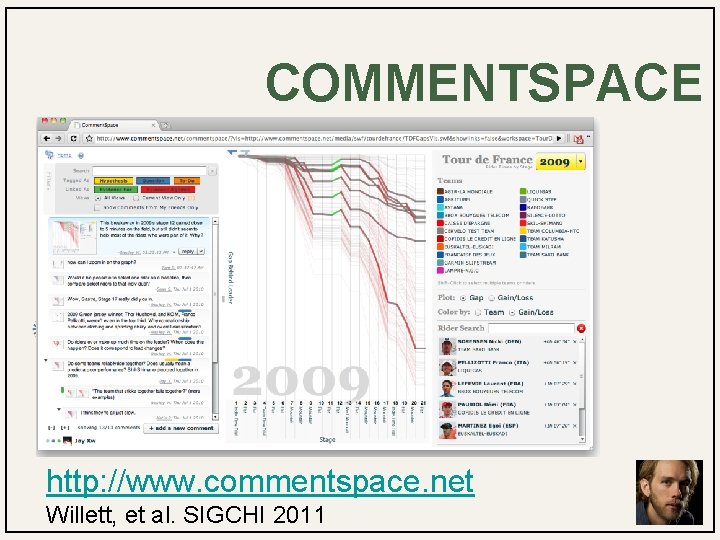
COMMENTSPACE http: //www. commentspace. net Willett, et al. SIGCHI 2011
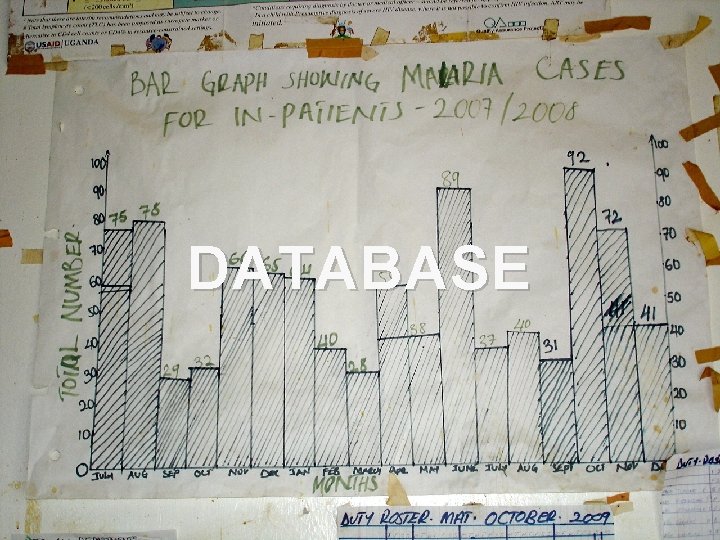
DATABASE
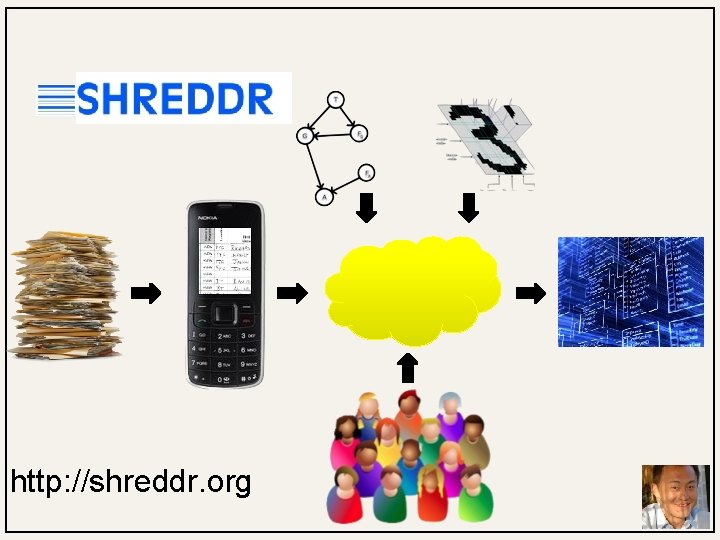
http: //shreddr. org
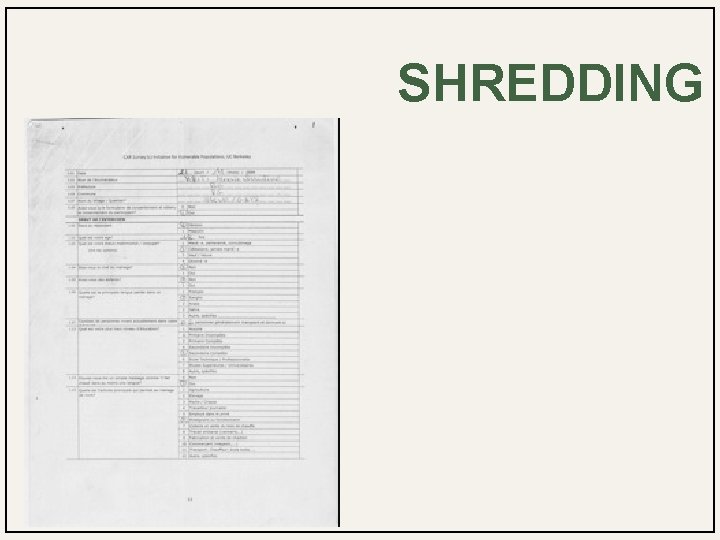
SHREDDING
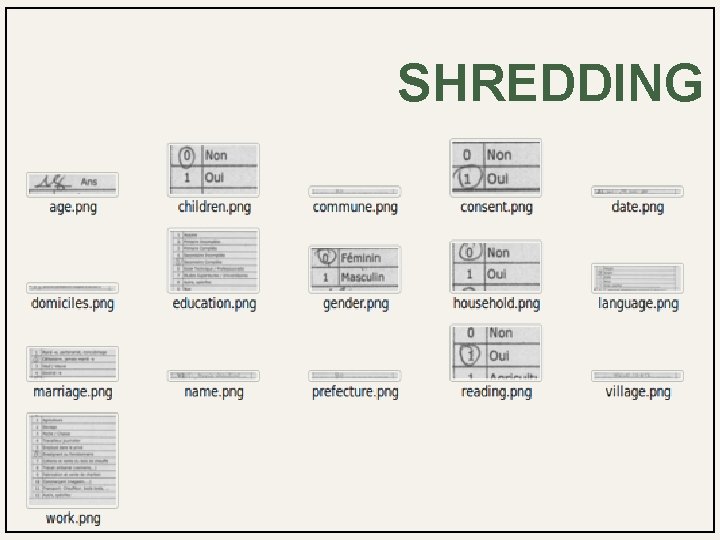
SHREDDING
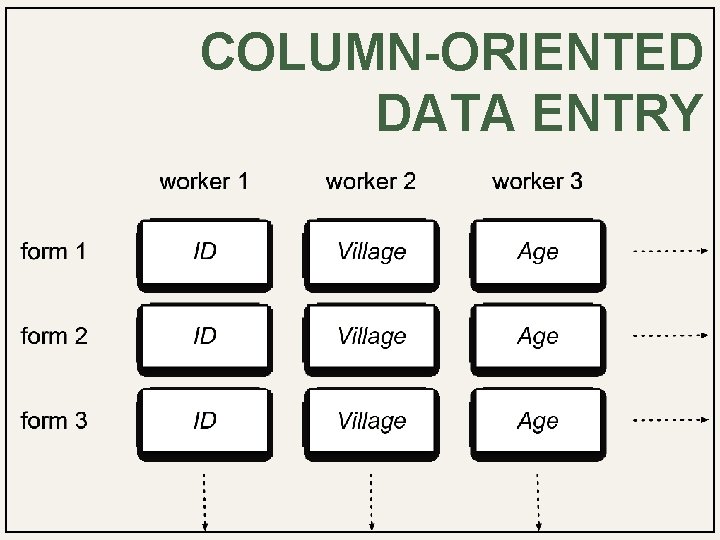
COLUMN-ORIENTED DATA ENTRY
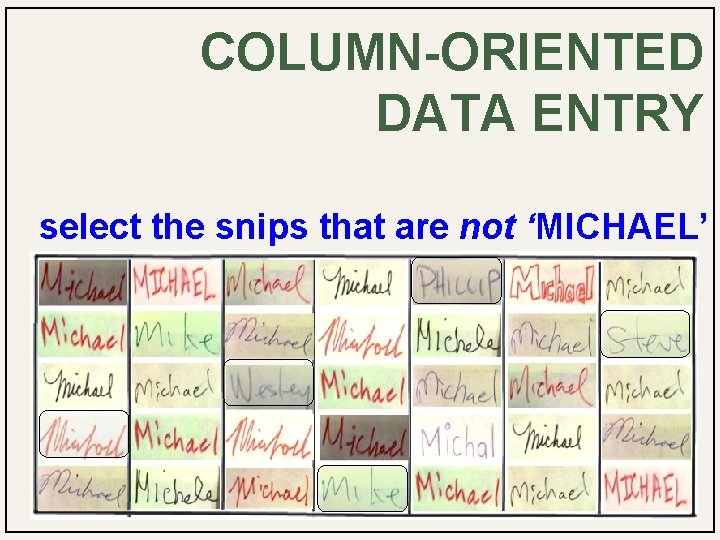
COLUMN-ORIENTED DATA ENTRY select the snips that are not ‘MICHAEL’
IF YOU’RE NOT MAD, IN S… YOU’RE NOT PAYING ATTENTION!! GET MAD! Magnetic core for analytic life-cycle Agile processes for innovation Deep analysis, parallel, close to data http: //madlib. net http: //on. fb. me/helpnameus
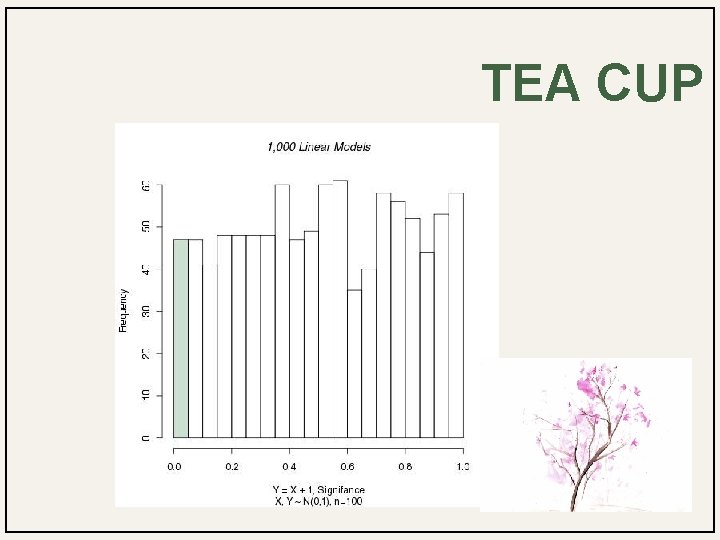
TEA CUP
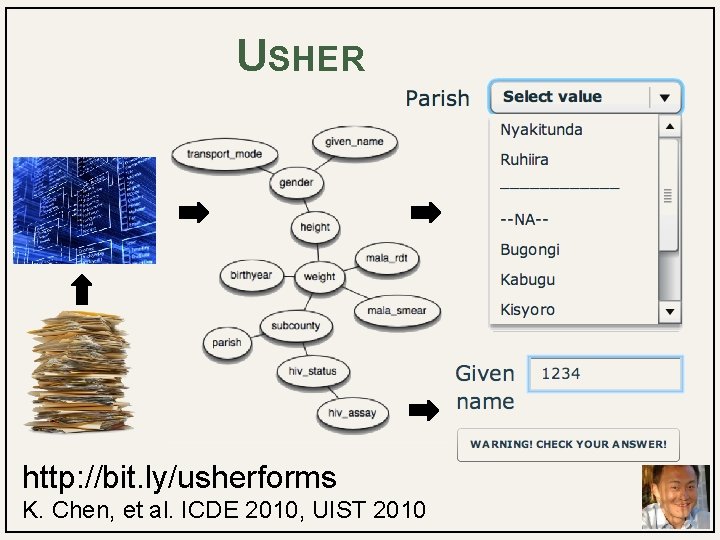
USHER http: //bit. ly/usherforms K. Chen, et al. ICDE 2010, UIST 2010
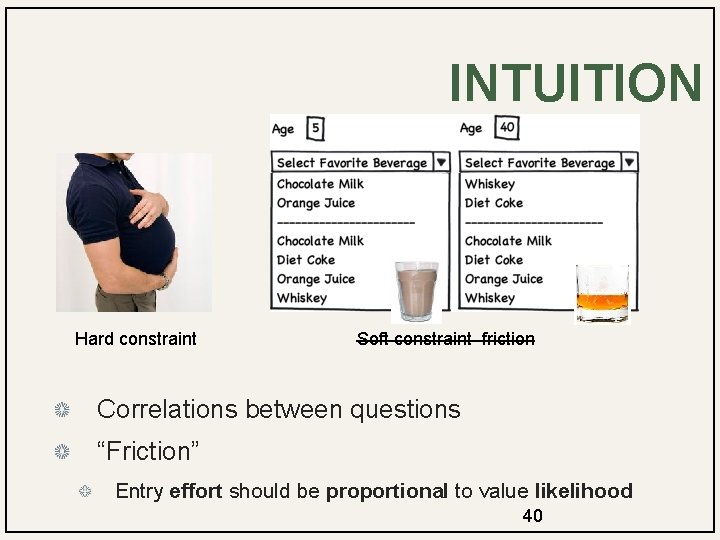
INTUITION Hard constraint Soft constraint friction Correlations between questions “Friction” Entry effort should be proportional to value likelihood 40
CONCLUSION Forget: Your database is a delicate piece of proprietary hardware Storage is expensive Math is too hard for you You're done once the report is in the tool Remember: Your database is a parallel computation engine Your database was purchased to make your business stronger SQL is a flexible and highly extensible language
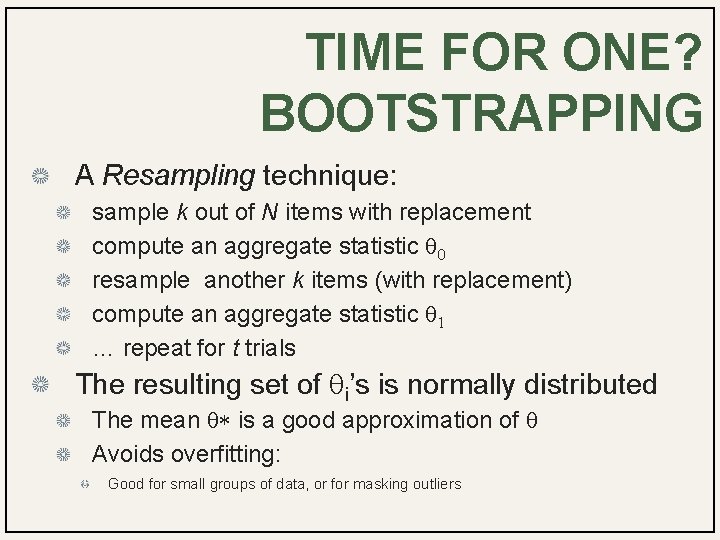
TIME FOR ONE? BOOTSTRAPPING A Resampling technique: sample k out of N items with replacement compute an aggregate statistic q 0 resample another k items (with replacement) compute an aggregate statistic q 1 … repeat for t trials The resulting set of qi’s is normally distributed The mean q* is a good approximation of q Avoids overfitting: Good for small groups of data, or for masking outliers
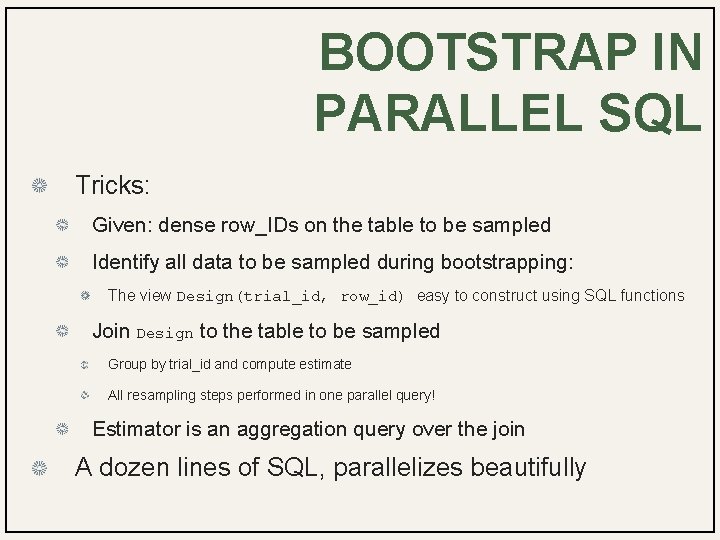
BOOTSTRAP IN PARALLEL SQL Tricks: Given: dense row_IDs on the table to be sampled Identify all data to be sampled during bootstrapping: The view Design(trial_id, row_id) easy to construct using SQL functions Join Design to the table to be sampled Group by trial_id and compute estimate All resampling steps performed in one parallel query! Estimator is an aggregation query over the join A dozen lines of SQL, parallelizes beautifully
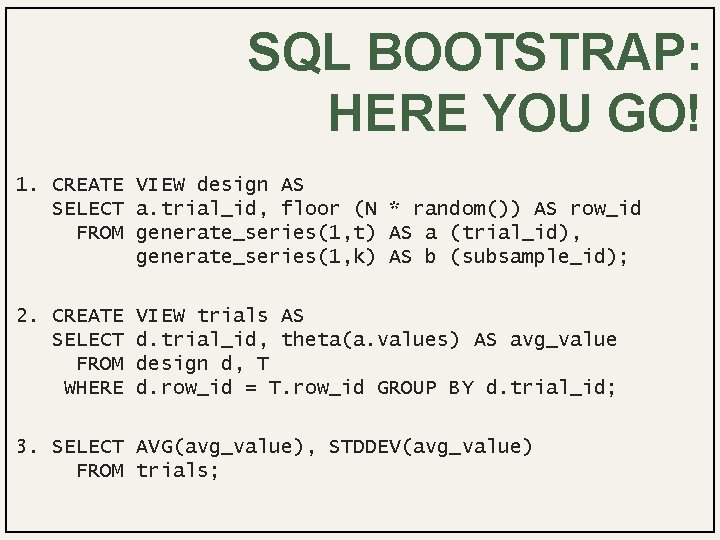
SQL BOOTSTRAP: HERE YOU GO! 1. CREATE VIEW design AS SELECT a. trial_id, floor (N * random()) AS row_id FROM generate_series(1, t) AS a (trial_id), generate_series(1, k) AS b (subsample_id); 2. CREATE SELECT FROM WHERE VIEW trials AS d. trial_id, theta(a. values) AS avg_value design d, T d. row_id = T. row_id GROUP BY d. trial_id; 3. SELECT AVG(avg_value), STDDEV(avg_value) FROM trials;
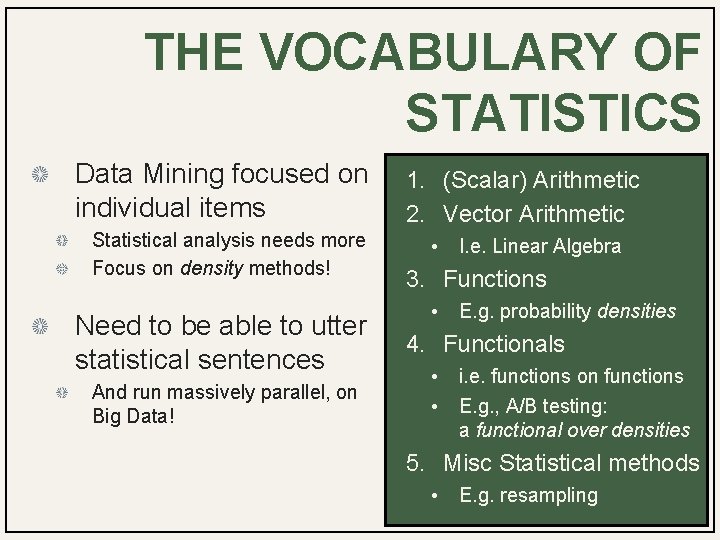
THE VOCABULARY OF STATISTICS Data Mining focused on individual items Statistical analysis needs more Focus on density methods! Need to be able to utter statistical sentences And run massively parallel, on Big Data! 1. (Scalar) Arithmetic 2. Vector Arithmetic • I. e. Linear Algebra 3. Functions • E. g. probability densities 4. Functionals • • i. e. functions on functions E. g. , A/B testing: a functional over densities 5. Misc Statistical methods • E. g. resampling
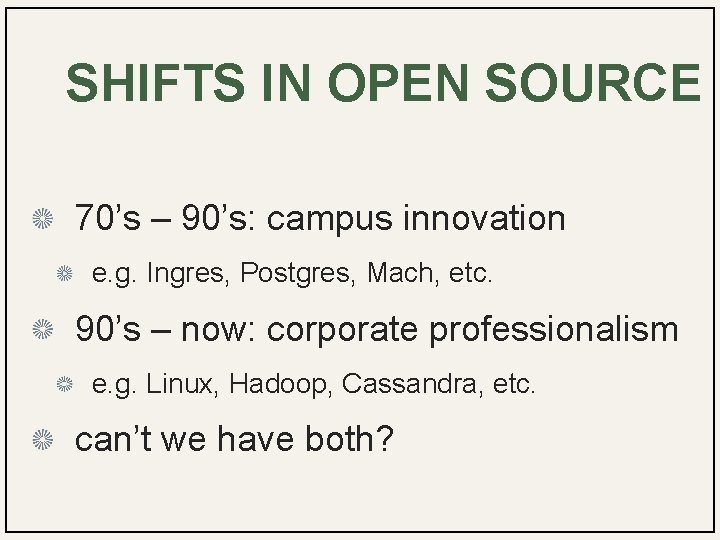
SHIFTS IN OPEN SOURCE 70’s – 90’s: campus innovation e. g. Ingres, Postgres, Mach, etc. 90’s – now: corporate professionalism e. g. Linux, Hadoop, Cassandra, etc. can’t we have both?
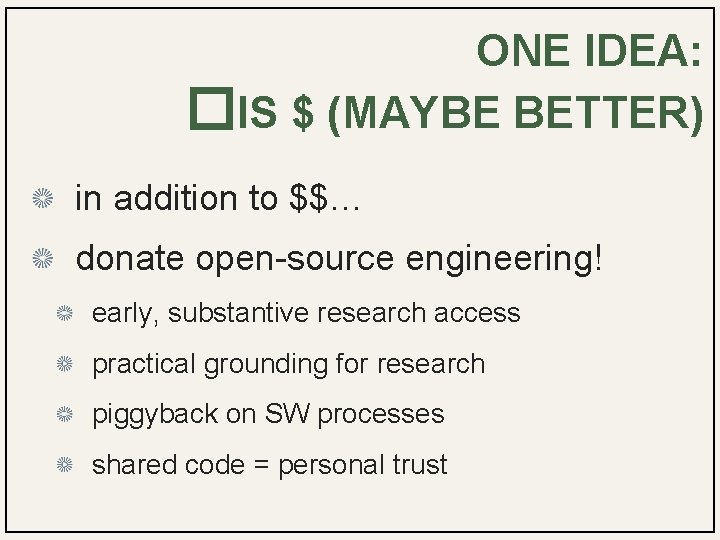
ONE IDEA: �IS $ (MAYBE BETTER) in addition to $$… donate open-source engineering! early, substantive research access practical grounding for research piggyback on SW processes shared code = personal trust
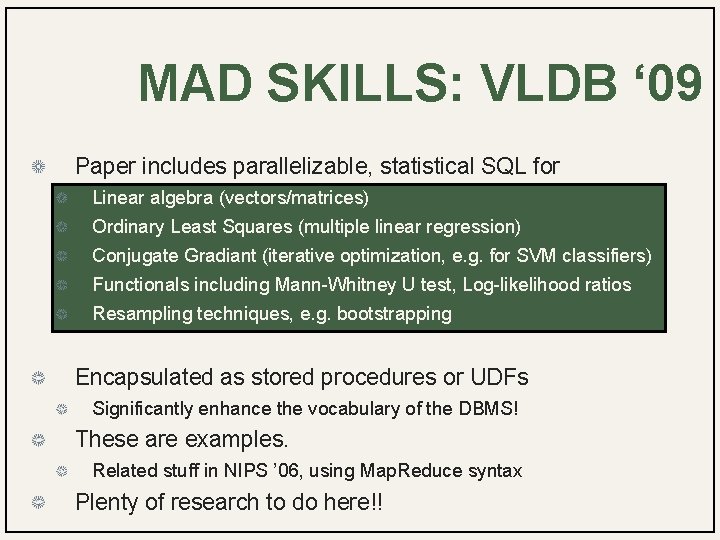
MAD SKILLS: VLDB ‘ 09 Paper includes parallelizable, statistical SQL for Linear algebra (vectors/matrices) Ordinary Least Squares (multiple linear regression) Conjugate Gradiant (iterative optimization, e. g. for SVM classifiers) Functionals including Mann-Whitney U test, Log-likelihood ratios Resampling techniques, e. g. bootstrapping Encapsulated as stored procedures or UDFs Significantly enhance the vocabulary of the DBMS! These are examples. Related stuff in NIPS ’ 06, using Map. Reduce syntax Plenty of research to do here!!
- Slides: 48