
Macronutrient Basics Protein Protein is crucial for growth
Macronutrient Basics

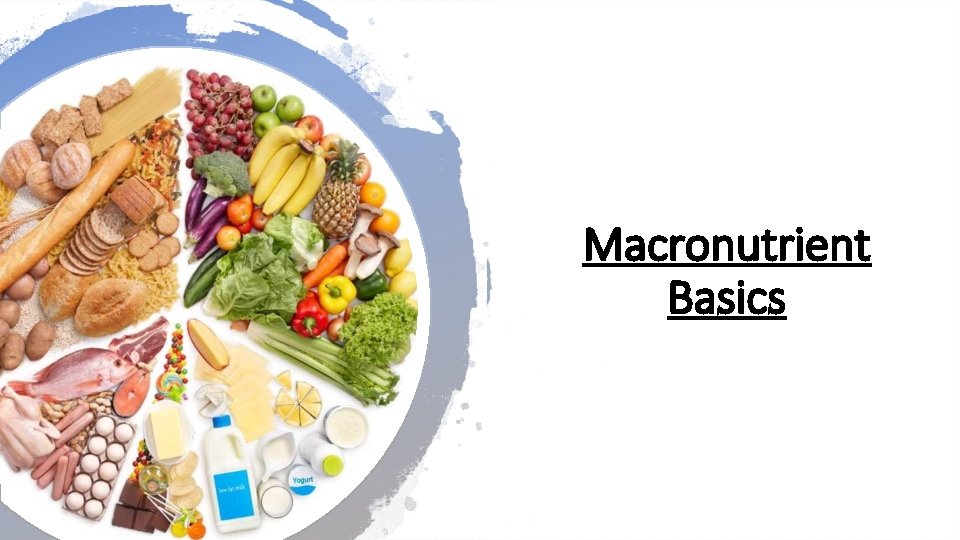
Protein • Protein is crucial for growth and repair of the muscles and for maintenance of good health. • Protein provides 4 kcal per 1 g. • The amount of Protein required depends on the individual. Height, muscle mass and activity levels will affect protein requirements. • Protein from animal sources (E. g. Fish, meat, eggs and dairy) contain all the essential amino acids needed by the body. • Protein from plant sources (E. g. Pulses, cereals) also contain all the essential amino acids needed by the body.

Carbohydrates • Starchy foods are our main source of carbohydrate and play an important role in a healthy diet. • Starchy foods are a good source of energy and the main source of a range of nutrients in our diet. • Carbohydrates provide 4 kcal per 1 g. • Carbohydrates include, potatoes, bread, cereal products, rice and grains. • The amount of Carbohydrates you should eat in a day depends on the individual/their goal.

Fibre • Most of the recommended foods that are high in carbohydrate are also high in dietary fibre. • Starchy foods are a good source of energy and the main source of a range of nutrients in our diet. • Dietary fibre does not actually provide us with any calories • Fibre is found in wholegrain breads and cereals, many fruits and vegetables, and legumes such as peas, beans and lentils. • Fibre passes directly through us without being digested; it keeps our ‘bowel movements’ regular and helps make us feel full without actually providing us with any calories.

Fats • A small amount of fat is an essential part of a healthy, balanced diet. Fat is a source of essential fatty acids, which the body cannot make itself. • Fat helps the body absorb vitamin A, vitamin D and vitamin E. These vitamins are fat-soluble, meaning they can only be absorbed with the help of fats. • Any fat not used by your body's cells or to create energy is converted into body fat. Likewise, unused carbohydrate and protein are also converted into body fat. • Fats provide 9 kcal per 1 g. • Fats include salmon, sardines, nuts and seeds, sunflower and olive oils, avocados.
- Slides: 5