
Macromolecules Unit 1 B Organic Compounds Compounds that
Macromolecules Unit 1 B

Organic Compounds ¢ Compounds that contain CARBON are called organic compounds. ¢ Carbon (C) has 4 valance electrons – it can bond up to 4 TIMES. ¢ Carbon can form covalent bonds with as many as 4 other atoms (elements). l Usually with C, H, O or N. N l Example: CH 4(methane)
Macromolecules=biomolecules=organic molecules ¢ Large organic molecules also called POLYMERS. ¢ Made of smaller “building blocks” called MONOMERS. ¢ Join monomers to form polymers =‘s POLYMERIZATION
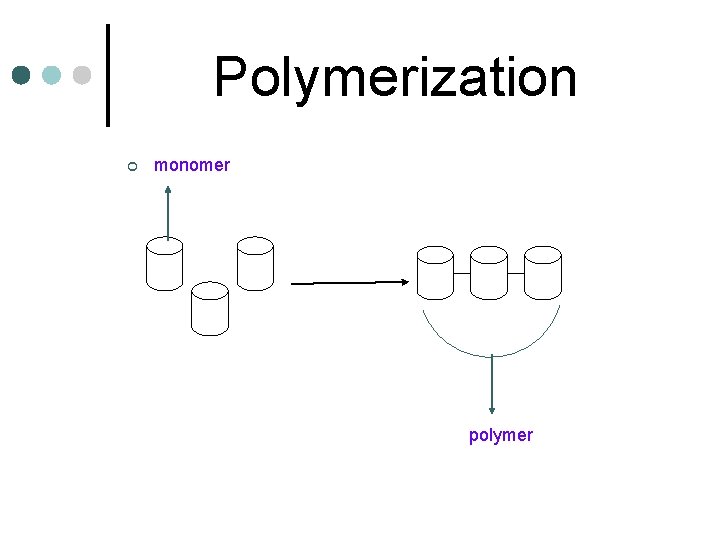
Polymerization ¢ monomer polymer
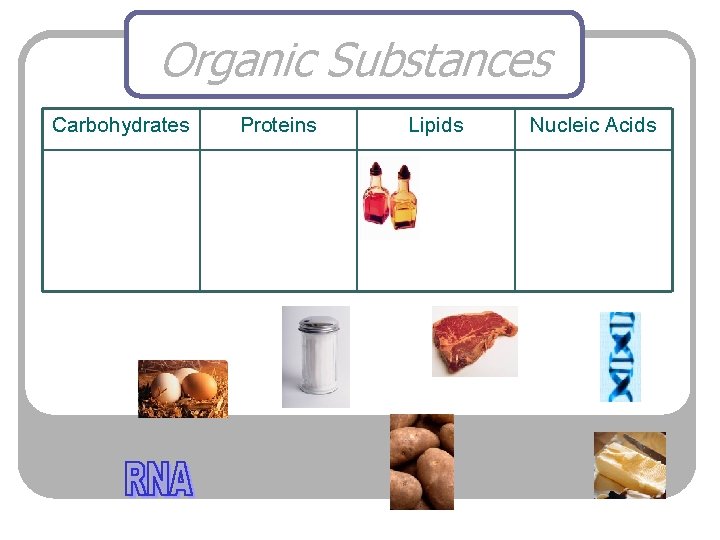
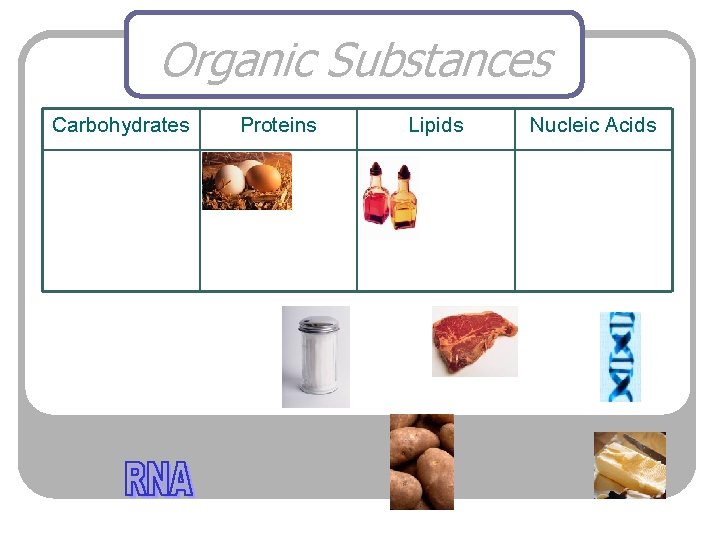
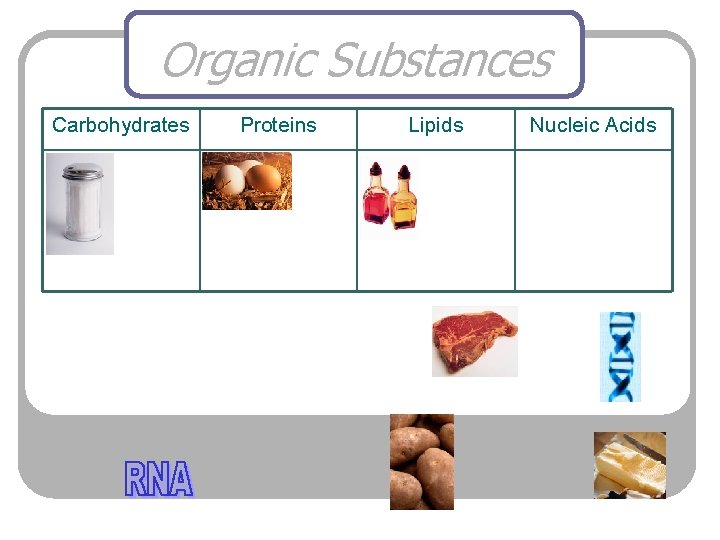
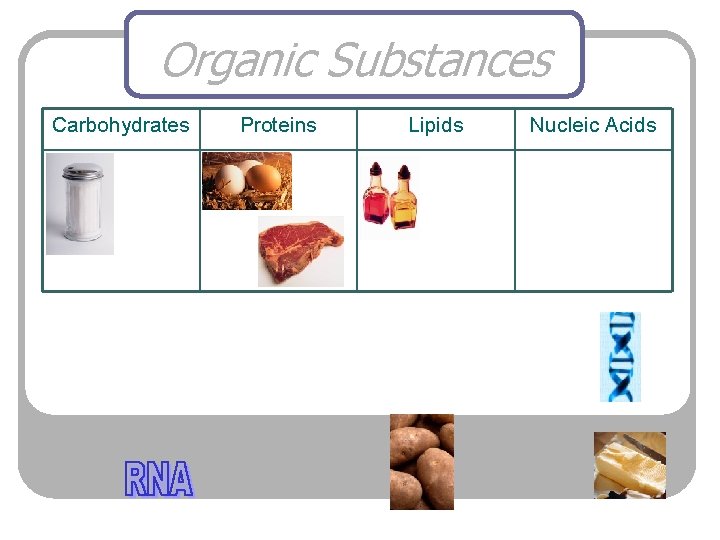
Examples of Macromolecules: ¢ Carbohydrates – Sugars, starch ¢ Lipids – fats, oils, wax ¢ Proteins – muscles, enzymes ¢ Nucleic Acids - DNA and RNA
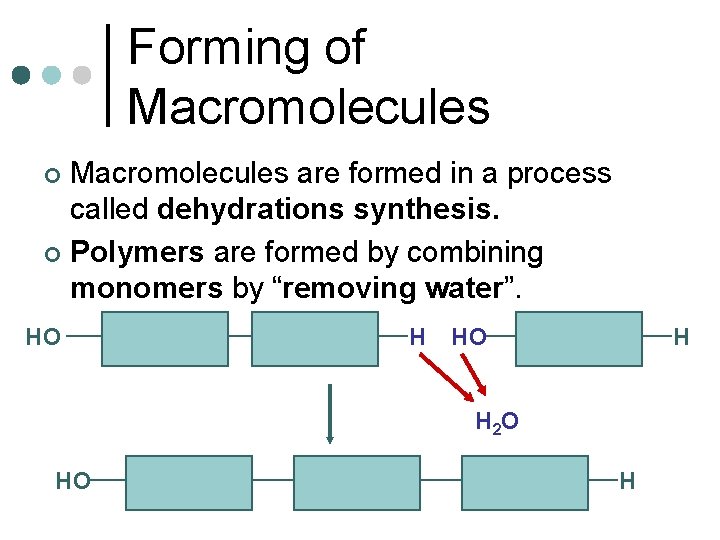
Forming of Macromolecules are formed in a process called dehydrations synthesis. ¢ Polymers are formed by combining monomers by “removing water”. ¢ HO H H 2 O HO H
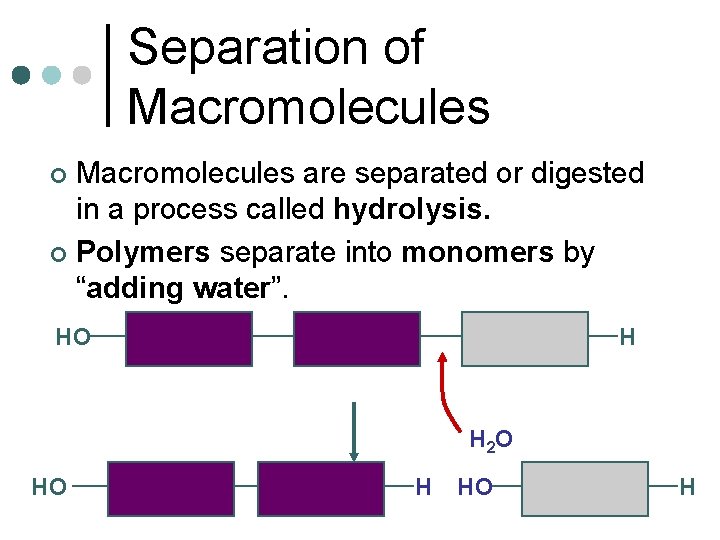
Separation of Macromolecules are separated or digested in a process called hydrolysis. ¢ Polymers separate into monomers by “adding water”. ¢ HO H H 2 O HO H
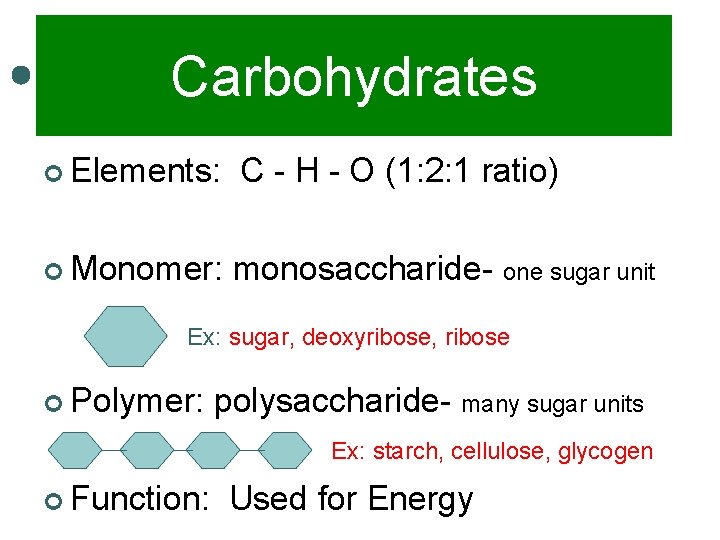
Carbohydrates ¢ Elements: ¢ Monomer: C - H - O (1: 2: 1 ratio) monosaccharide- one sugar unit Ex: sugar, deoxyribose, ribose ¢ Polymer: polysaccharide- many sugar units Ex: starch, cellulose, glycogen ¢ Function: Used for Energy
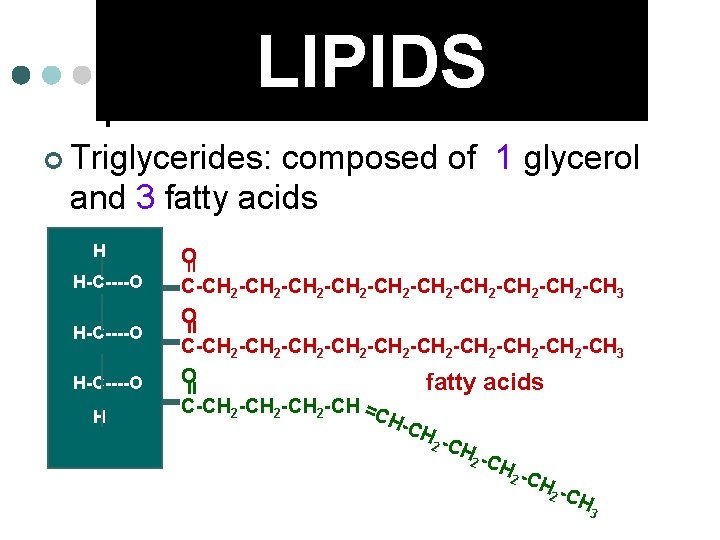
LIPIDS ¢ Triglycerides: composed of 1 glycerol and 3 fatty acids H-C----O O C-CH 2 -CH 2 -CH 2 -CH 2 -CH 2 -CH 3 O fatty acids C-CH 2 -CH =C H-C H 2 CH 2 -CH = H H-C----O = H glycerol 3
LIPIDS ¢ Elements: C–H–O ¢ Monomer: Fatty Acid, glycerol ¢ Polymer: Lipids ¢ Function: Used to store energy long term (2 nd source of energy) ¢ Examples: Phospholipids, fats, oils, waxes, steroids, triglycerides l Foods: meat veggie oil, olive oil, gristle on
Proteins(Polypeptides) ¢ Elements: C – H – O – N – (S) ¢ Monomer: Amino acid(20) ¢ Polymer: Protein- bonded by peptide bonds ¢ Function: Used in reactions, transport, bones and muscles ¢ Examples: Hemoglobin, melanin, enzymes, hormones, muscle l Food: beef, chicken, fish
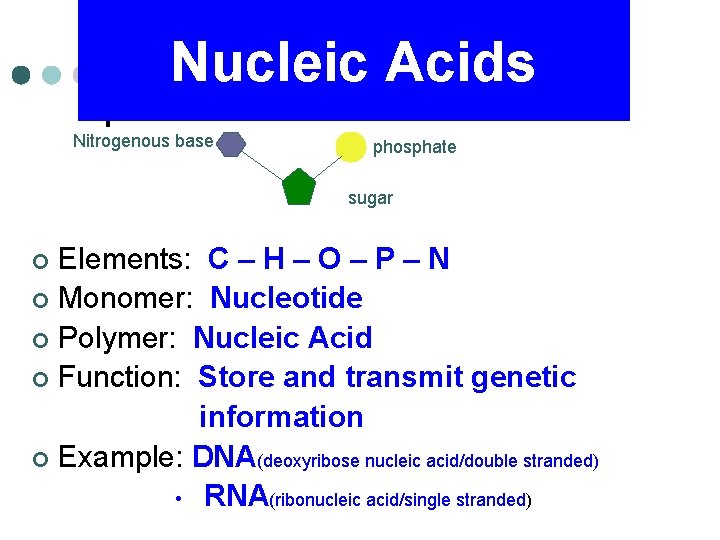
Nucleic Acids Nitrogenous base phosphate sugar Elements: C – H – O – P – N ¢ Monomer: Nucleotide ¢ Polymer: Nucleic Acid ¢ Function: Store and transmit genetic information ¢ Example: DNA(deoxyribose nucleic acid/double stranded) • RNA(ribonucleic acid/single stranded) ¢
Organic Substances Carbohydrates Proteins Lipids Nucleic Acids
Organic Substances Carbohydrates Proteins Lipids Nucleic Acids
Organic Substances Carbohydrates Proteins Lipids Nucleic Acids
Organic Substances Carbohydrates Proteins Lipids Nucleic Acids
Organic Substances Carbohydrates Proteins Lipids Nucleic Acids
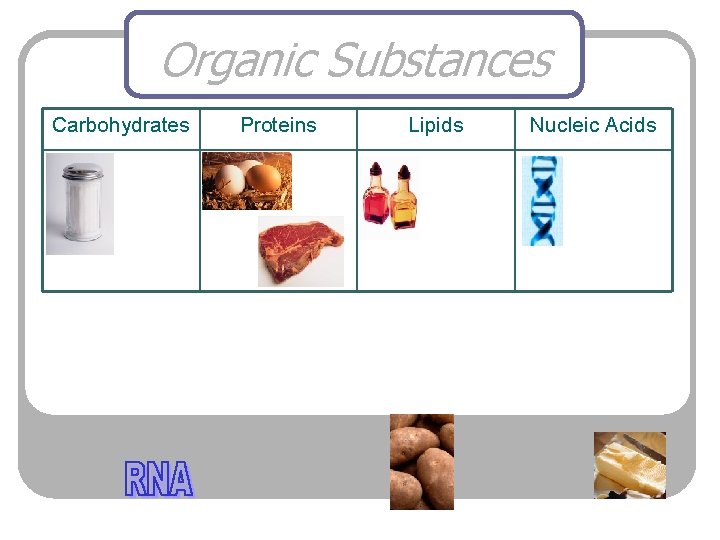
Organic Substances Carbohydrates Proteins Lipids Nucleic Acids
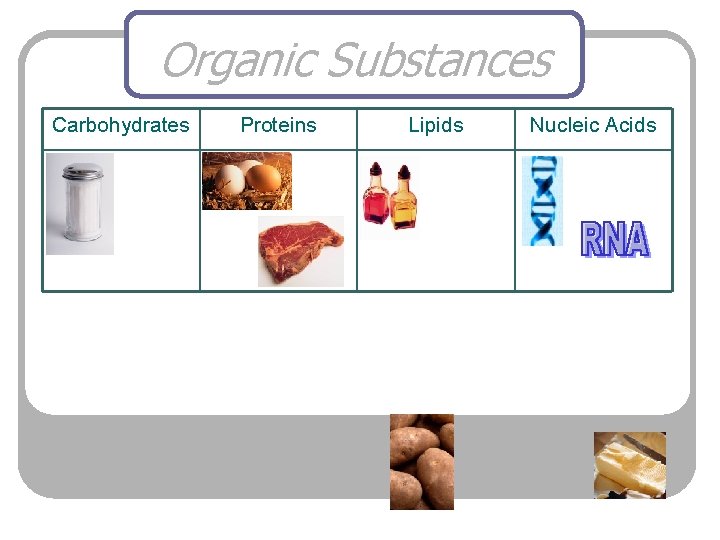
Organic Substances Carbohydrates Proteins Lipids Nucleic Acids
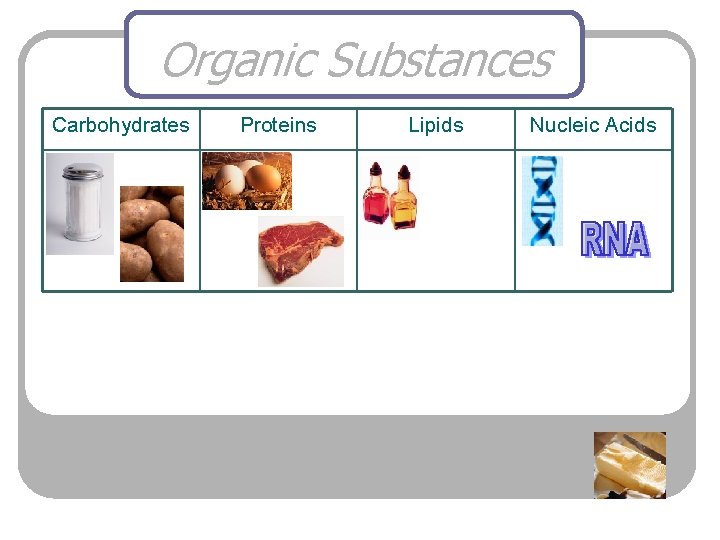
Organic Substances Carbohydrates Proteins Lipids Nucleic Acids
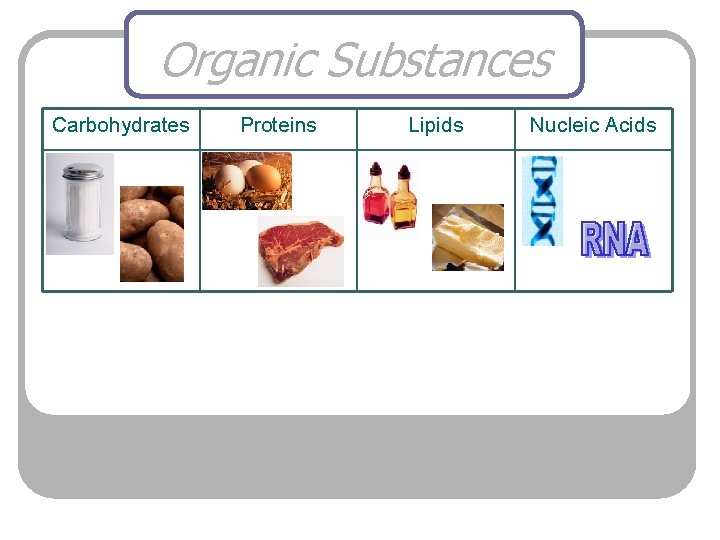
Organic Substances Carbohydrates Proteins Lipids Nucleic Acids
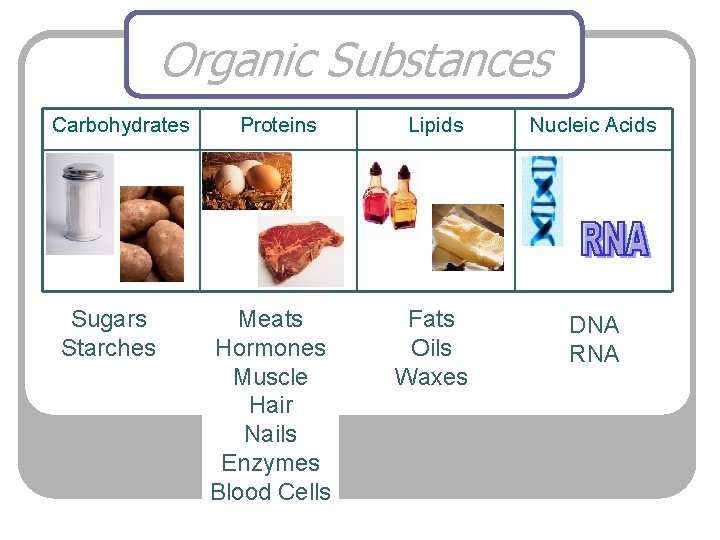
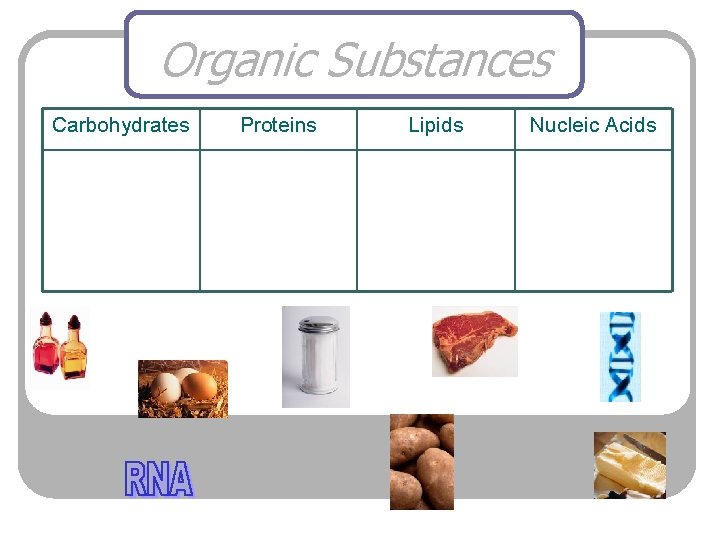
Organic Substances Carbohydrates Sugars Starches Proteins Meats Hormones Muscle Hair Nails Enzymes Blood Cells Lipids Nucleic Acids Fats Oils Waxes DNA RNA
- Slides: 22