
Macromolecules of Digestion Unit 11 Digestive System Chapter
- Slides: 17
Macromolecules of Digestion Unit 11: Digestive System Chapter: 2 -3
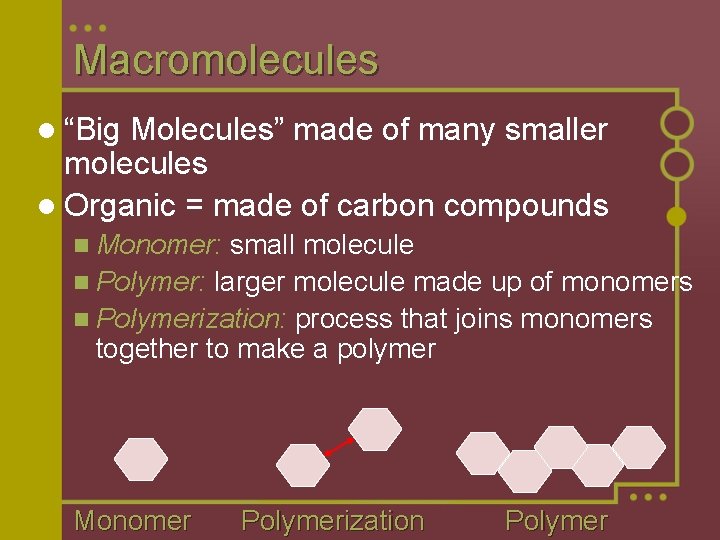
Macromolecules l “Big Molecules” made of many smaller molecules l Organic = made of carbon compounds n Monomer: small molecule n Polymer: larger molecule made up of monomers n Polymerization: process that joins monomers together to make a polymer Monomer Polymerization Polymer
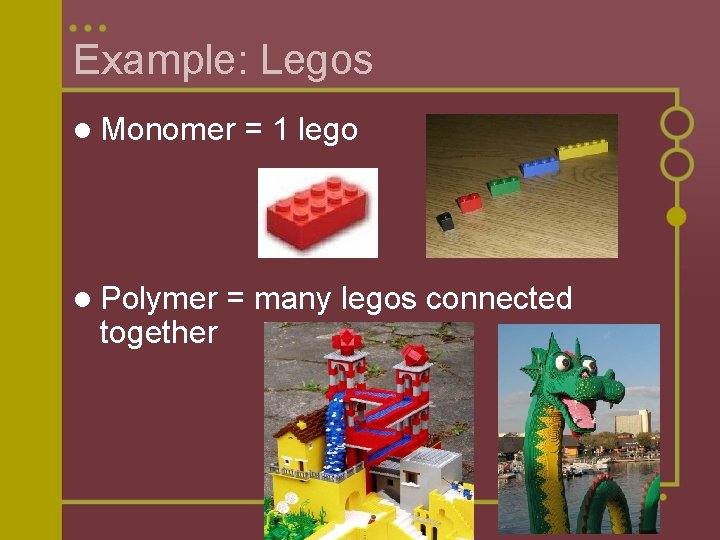
Example: Legos l Monomer l Polymer together = 1 lego = many legos connected
Types of Macromolecules l 1. Carbohydrates l 2. Lipids l 3. Proteins l 4. Nucleic Acids
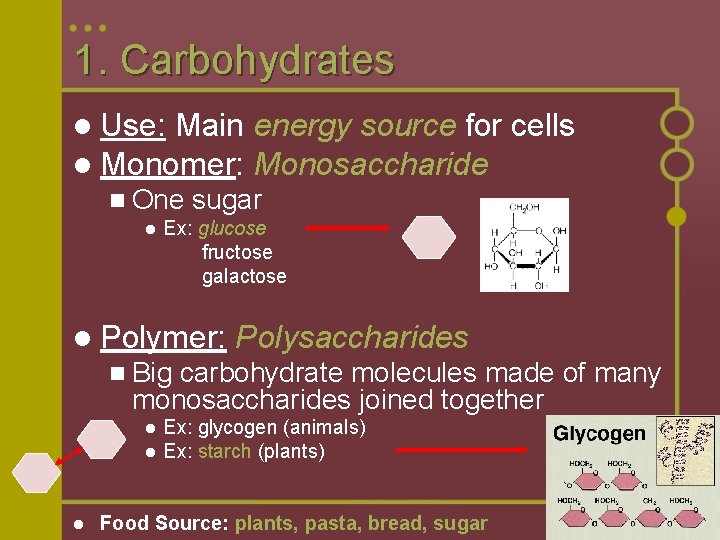
1. Carbohydrates l Use: Main l Monomer: n One l energy source for cells Monosaccharide sugar Ex: glucose fructose galactose l Polymer: Polysaccharides n Big carbohydrate molecules made of many monosaccharides joined together l l l Ex: glycogen (animals) Ex: starch (plants) Food Source: plants, pasta, bread, sugar
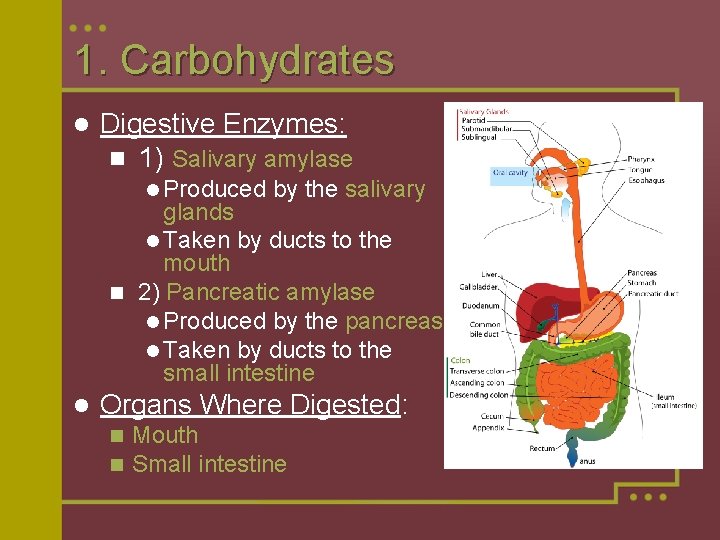
1. Carbohydrates l Digestive Enzymes: n 1) Salivary amylase l Produced by the salivary glands l Taken by ducts to the mouth n 2) Pancreatic amylase l Produced by the pancreas l Taken by ducts to the small intestine l Organs Where Digested: n n Mouth Small intestine
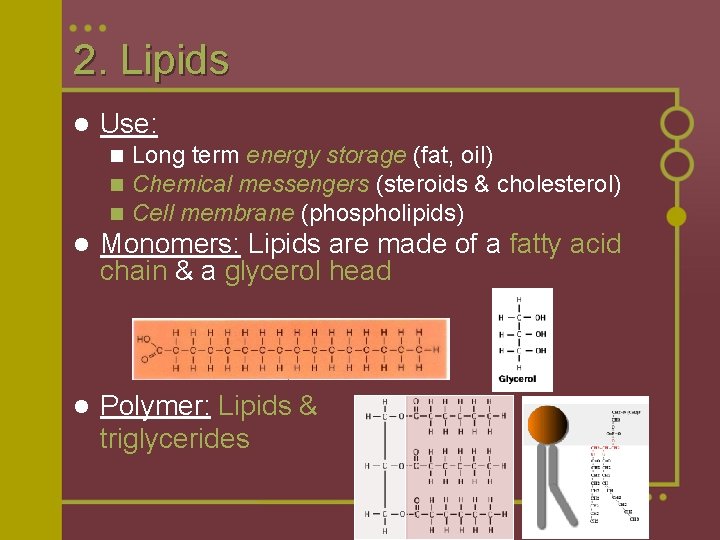
2. Lipids l Use: n n n Long term energy storage (fat, oil) Chemical messengers (steroids & cholesterol) Cell membrane (phospholipids) l Monomers: Lipids are made of a fatty acid chain & a glycerol head l Polymer: Lipids & triglycerides
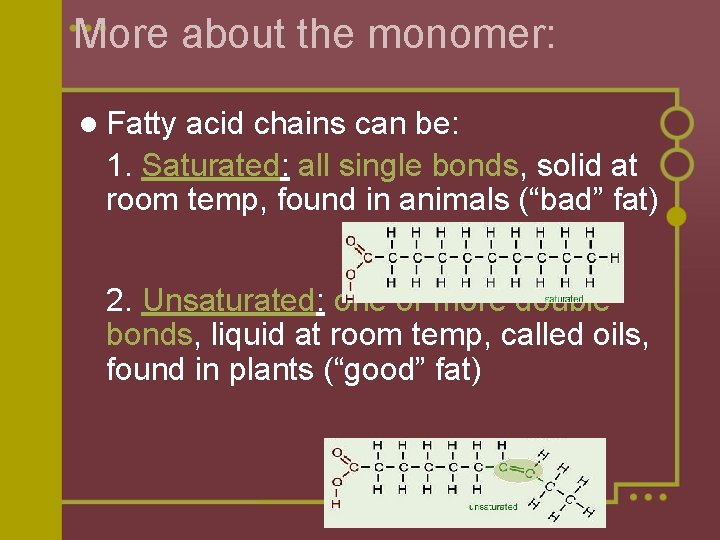
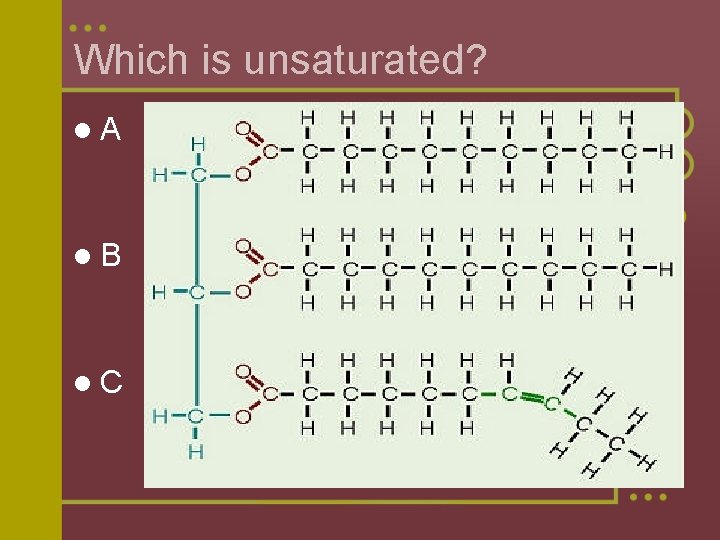
More about the monomer: l Fatty acid chains can be: 1. Saturated: all single bonds, solid at room temp, found in animals (“bad” fat) 2. Unsaturated: one or more double bonds, liquid at room temp, called oils, found in plants (“good” fat)
Which is unsaturated? l. A l. B l. C
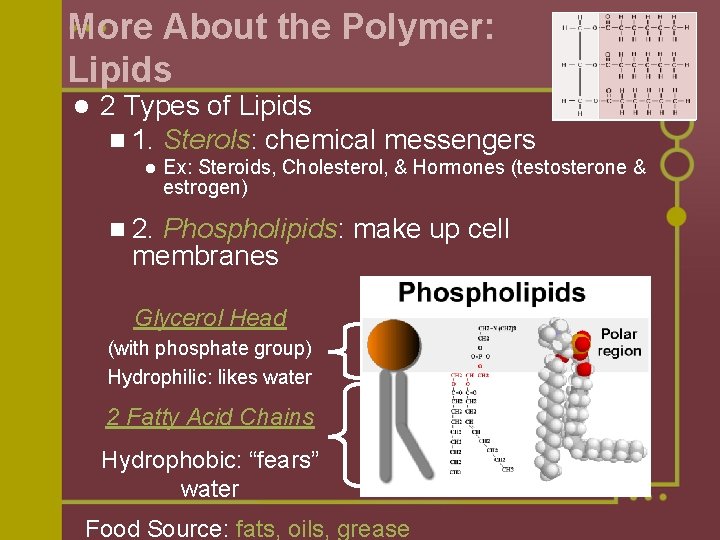
More About the Polymer: Lipids l 2 Types of Lipids n 1. Sterols: chemical messengers l Ex: Steroids, Cholesterol, & Hormones (testosterone & estrogen) n 2. Phospholipids: make up cell membranes Glycerol Head (with phosphate group) Hydrophilic: likes water 2 Fatty Acid Chains Hydrophobic: “fears” water Food Source: fats, oils, grease
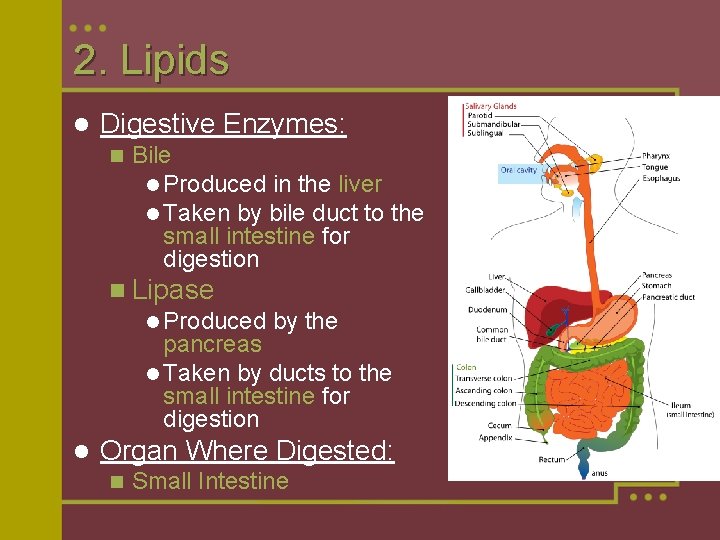
2. Lipids l Digestive Enzymes: n Bile l Produced in the liver l Taken by bile duct to the small intestine for digestion n Lipase l Produced by the pancreas l Taken by ducts to the small intestine for digestion l Organ Where Digested: n Small Intestine
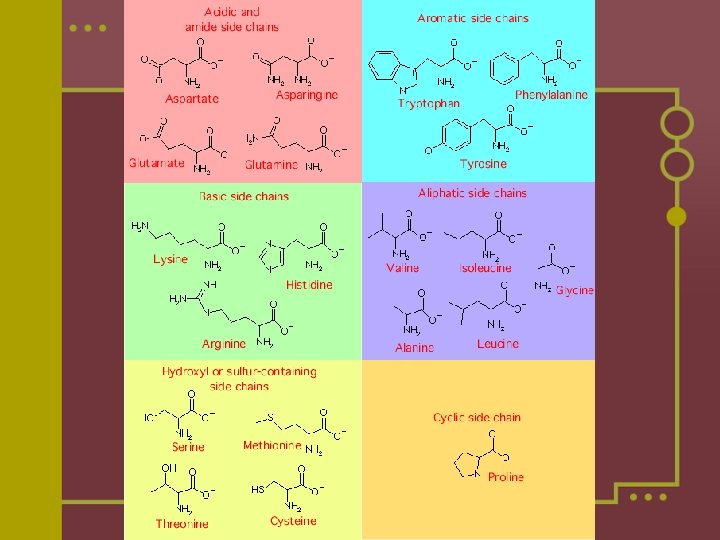
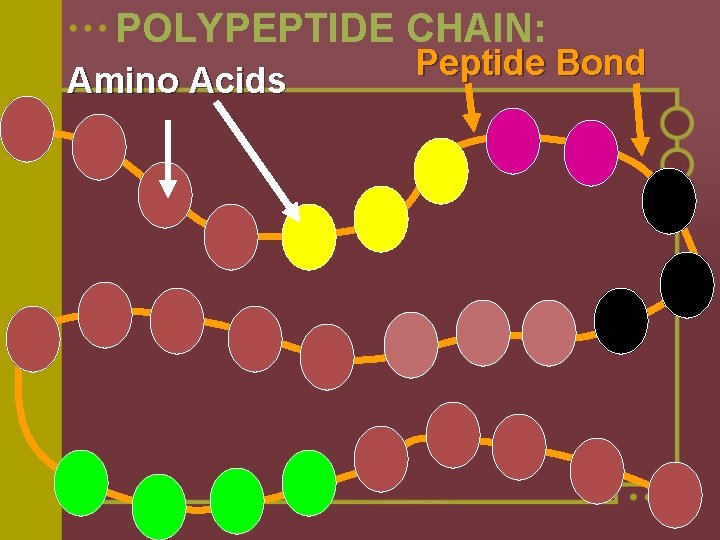
3. Proteins l Use: n n carry out gene expression Structure - found in hair, Transport – moving material Defense - antibodies Enzymes – helping chemical reactions l Monomers: Proteins are made of amino acids n Joined together by peptide bonds n 20 different amino acids n They join together and fold to make protein l Polymer: Polypeptide a
POLYPEPTIDE CHAIN: Amino Acids Peptide Bond
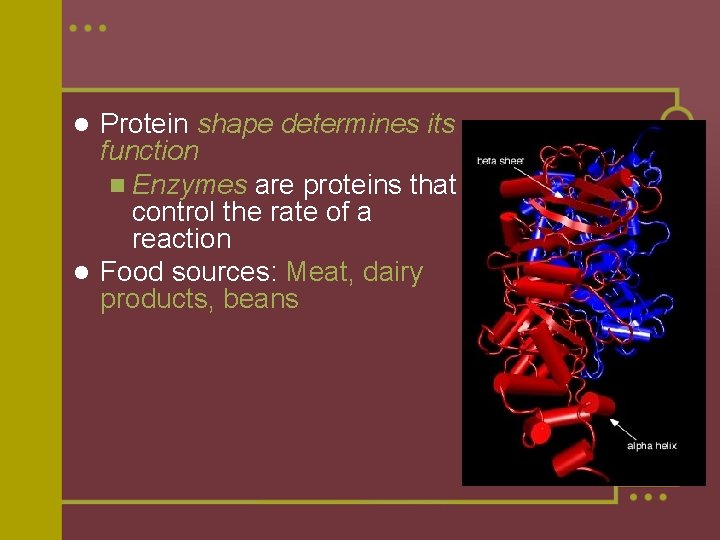
Protein shape determines its function n Enzymes are proteins that control the rate of a reaction l Food sources: Meat, dairy products, beans l
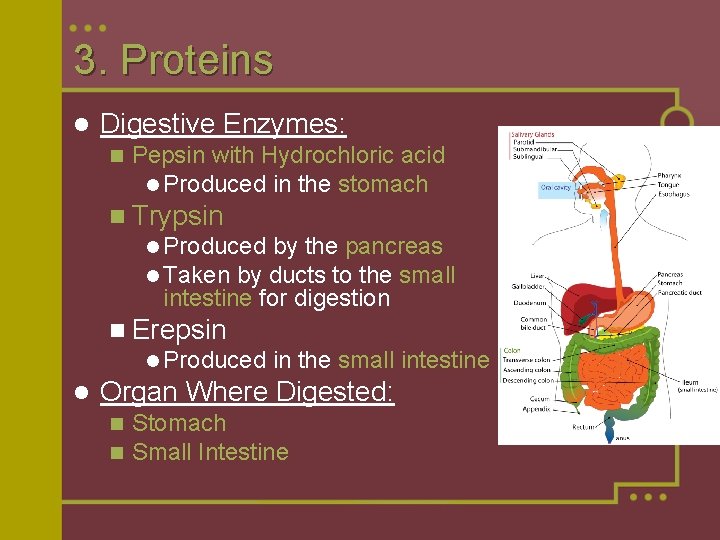
3. Proteins l Digestive Enzymes: n Pepsin with Hydrochloric acid l Produced in the stomach n Trypsin l Produced by the pancreas l Taken by ducts to the small intestine for digestion n Erepsin l Produced in the small intestine l Organ Where Digested: n n Stomach Small Intestine
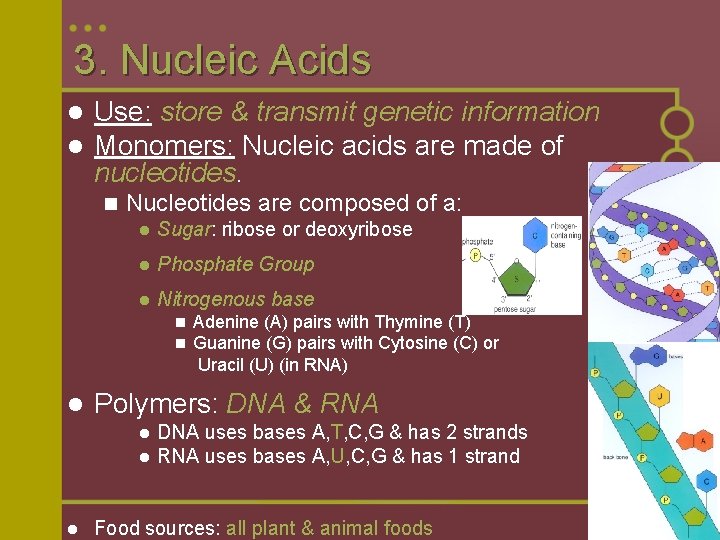
3. Nucleic Acids l l Use: store & transmit genetic information Monomers: Nucleic acids are made of nucleotides. n Nucleotides are composed of a: l Sugar: ribose or deoxyribose l Phosphate Group l Nitrogenous base n n l Polymers: DNA & RNA l l l Adenine (A) pairs with Thymine (T) Guanine (G) pairs with Cytosine (C) or Uracil (U) (in RNA) DNA uses bases A, T, C, G & has 2 strands RNA uses bases A, U, C, G & has 1 strand Food sources: all plant & animal foods