
Macromolecules Building Blocks of Life AP Biology 2007
Macromolecules Building Blocks of Life AP Biology 2007 -208
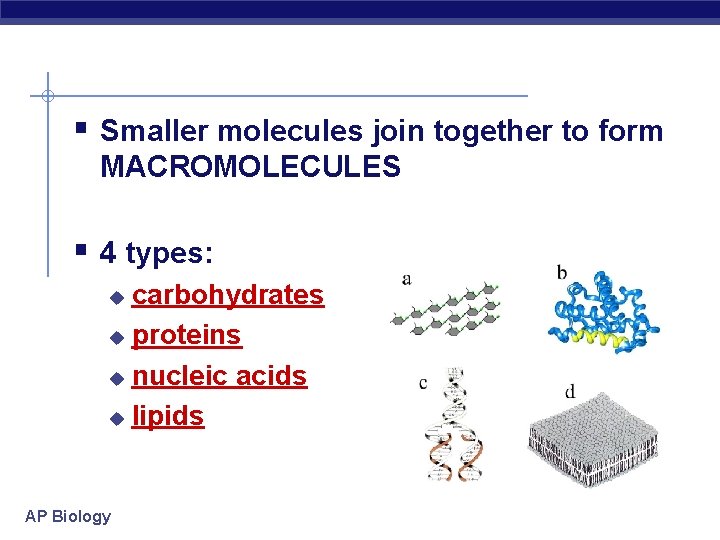
§ Smaller molecules join together to form MACROMOLECULES § 4 types: carbohydrates u proteins u nucleic acids u lipids u AP Biology

Polymers § Long molecules built by linking repeating building blocks called monomers u covalent bonds H 2 O HO H Dehydration synthesis AP Biology HO H
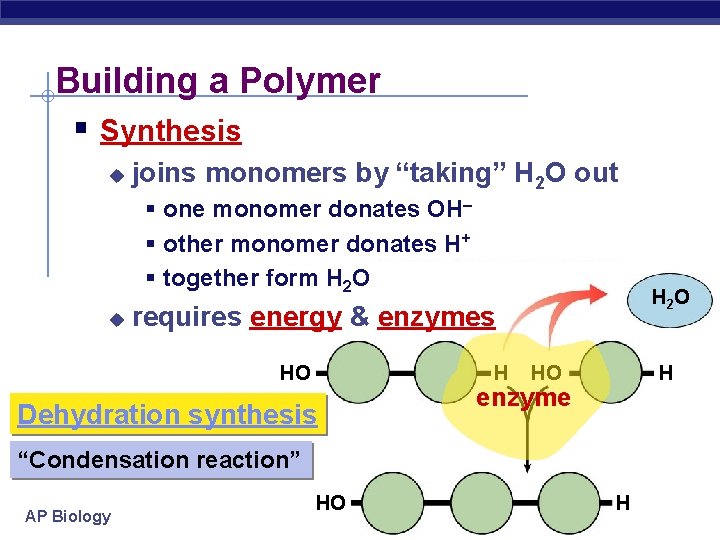
Building a Polymer § Synthesis u joins monomers by “taking” H 2 O out § one monomer donates OH– § other monomer donates H+ § together form H 2 O u H 2 O requires energy & enzymes HO H Dehydration synthesis HO H enzyme “Condensation reaction” AP Biology HO H
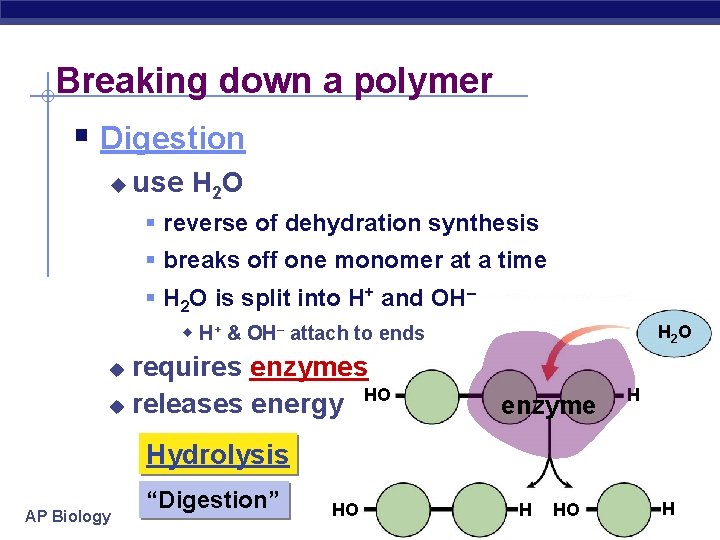
Breaking down a polymer § Digestion u use H 2 O § reverse of dehydration synthesis § breaks off one monomer at a time § H 2 O is split into H+ and OH– w H+ & OH– attach to ends requires enzymes HO u releases energy H 2 O u enzyme H Hydrolysis AP Biology “Digestion” HO H
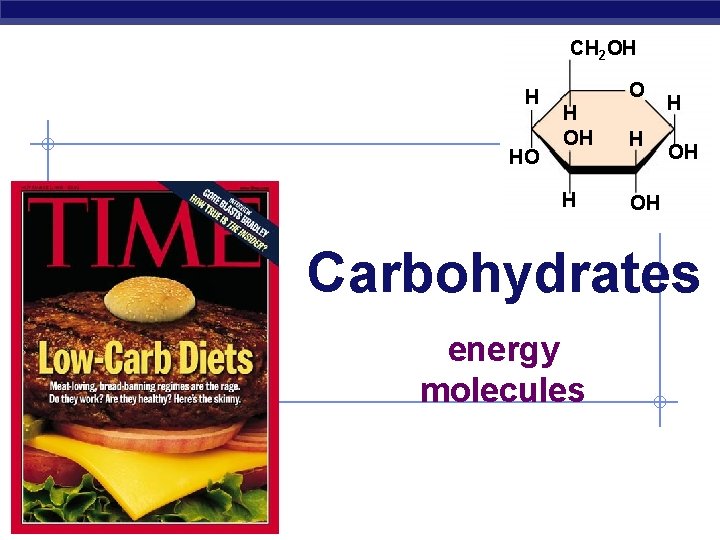
CH 2 OH H HO O H OH Carbohydrates energy molecules AP Biology
Carbohydrates § composed of C, H, O CH 2 O (CH 2 O)x C 6 H 12 O 6 § Function: energy u raw materials u u u energy storage structural materials § Monomer: sugars § ex: sugars, starches, cellulose AP Biology sugar sugar
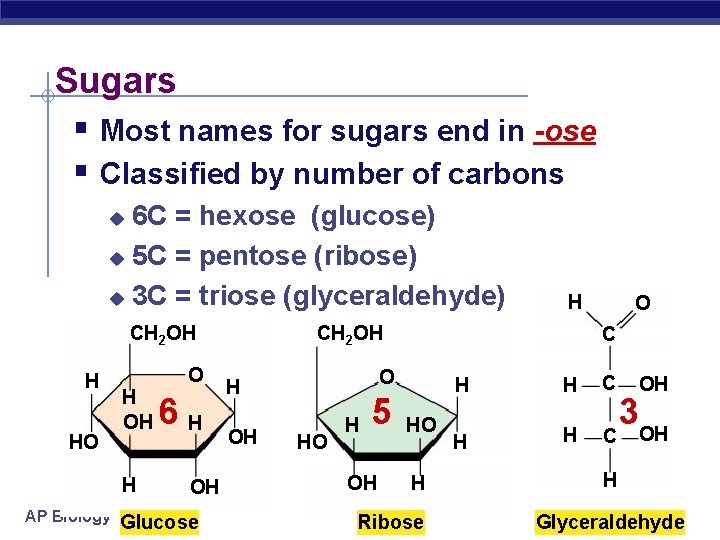
Sugars § Most names for sugars end in -ose § Classified by number of carbons 6 C = hexose (glucose) u 5 C = pentose (ribose) u 3 C = triose (glyceraldehyde) u CH 2 OH H HO O H OH H AP Biology 6 H OH Glucose H CH 2 OH OH C O H HO H 5 OH O HO H Ribose H H C OH 3 OH H Glyceraldehyde
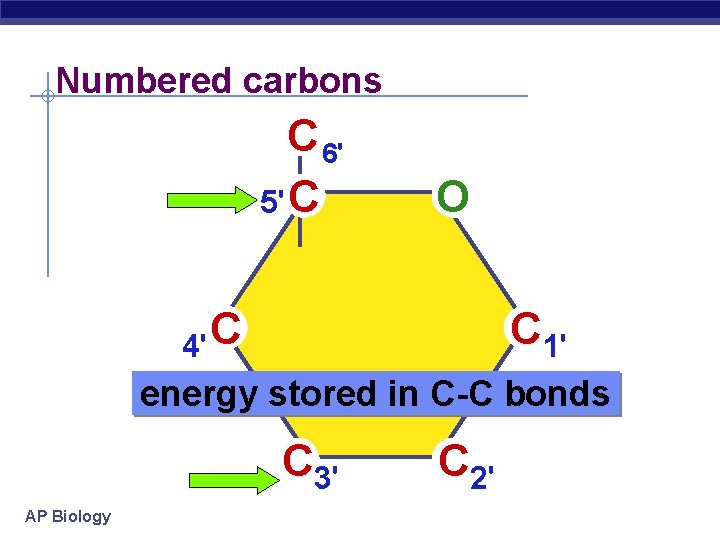
Numbered carbons C 6' 5' C O C 4' C 1' energy stored in C-C bonds C 3' AP Biology C 2'
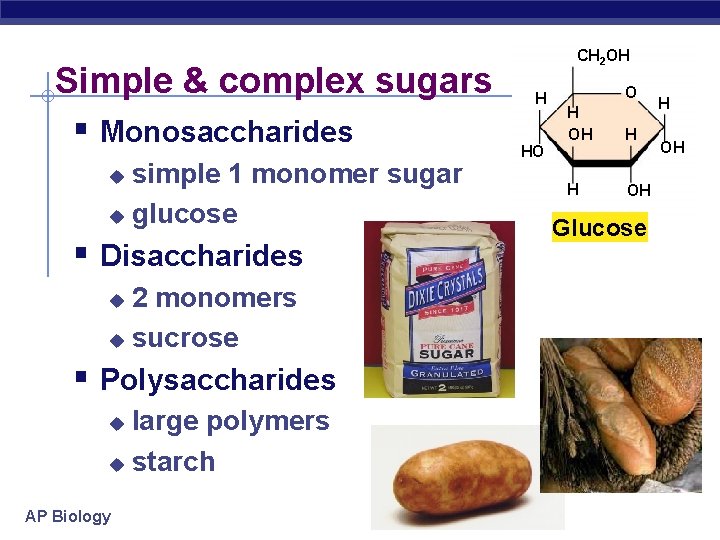
Simple & complex sugars § Monosaccharides simple 1 monomer sugar u glucose u § Disaccharides 2 monomers u sucrose u § Polysaccharides large polymers u starch u AP Biology CH 2 OH H HO O H OH H H OH Glucose H OH
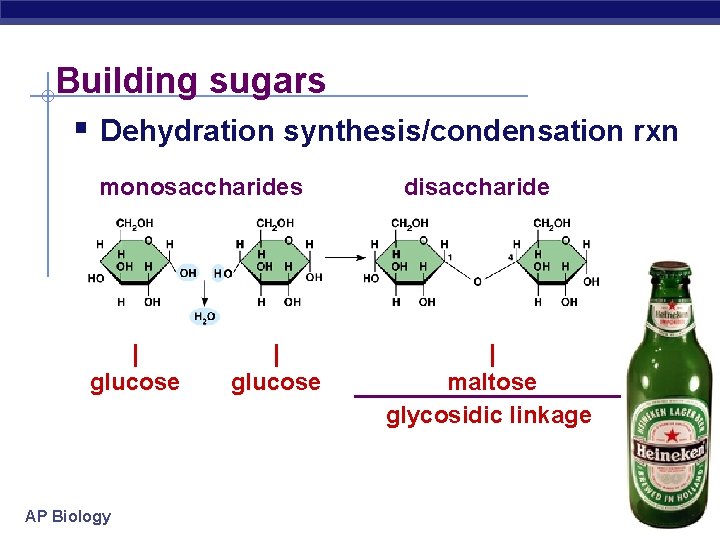
Building sugars § Dehydration synthesis/condensation rxn monosaccharides | glucose AP Biology | glucose disaccharide | maltose glycosidic linkage
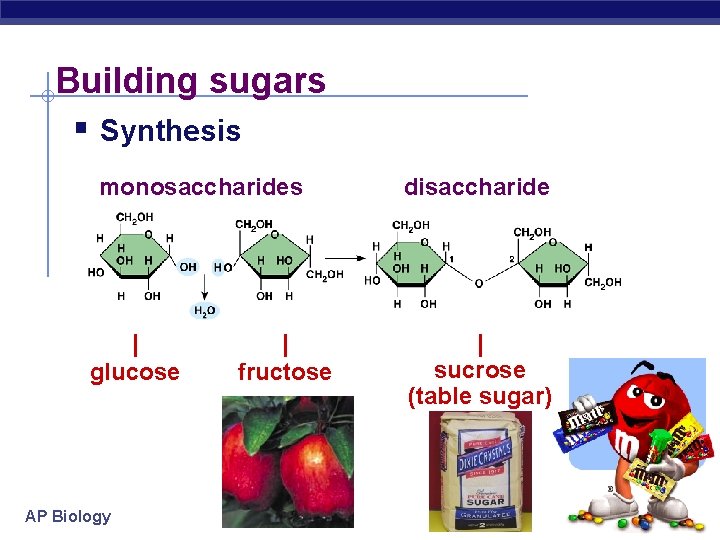
Building sugars § Synthesis monosaccharides | glucose AP Biology | fructose disaccharide | sucrose (table sugar)
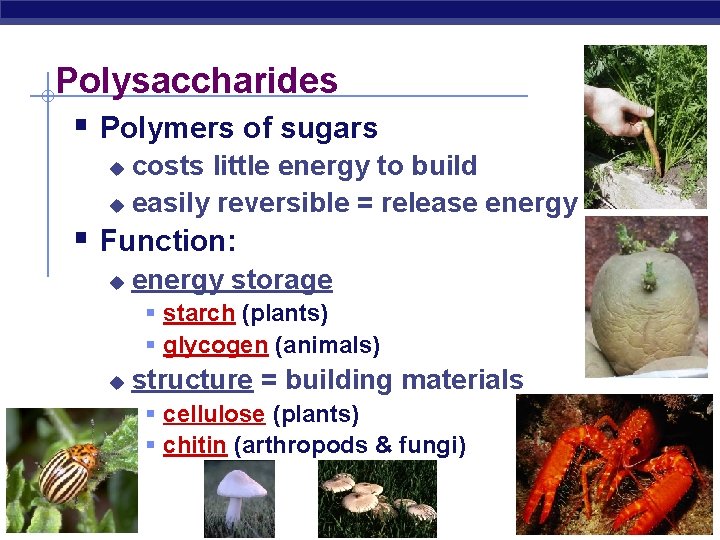
Polysaccharides § Polymers of sugars costs little energy to build u easily reversible = release energy u § Function: u energy storage § starch (plants) § glycogen (animals) u structure = building materials § cellulose (plants) § chitin (arthropods & fungi) AP Biology
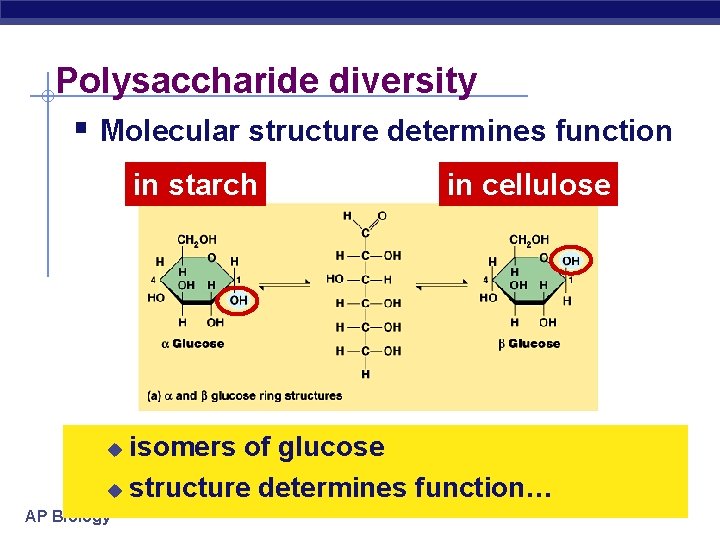
Polysaccharide diversity § Molecular structure determines function in starch in cellulose isomers of glucose u structure determines function… u AP Biology
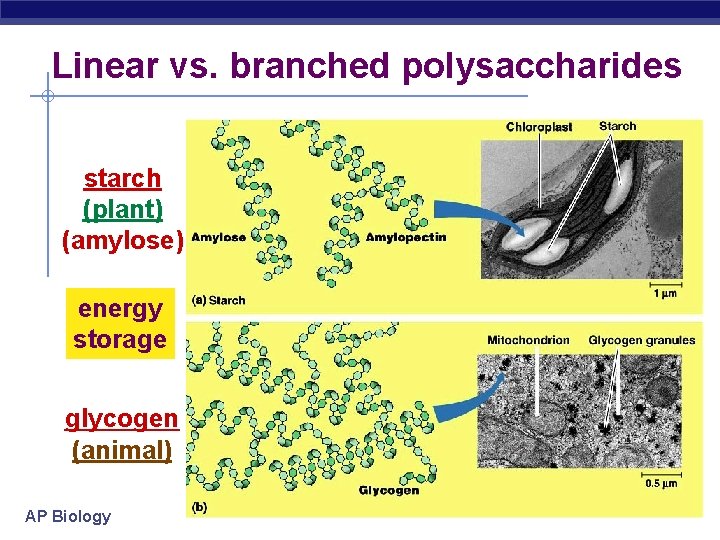
Linear vs. branched polysaccharides starch (plant) (amylose) energy storage glycogen (animal) AP Biology
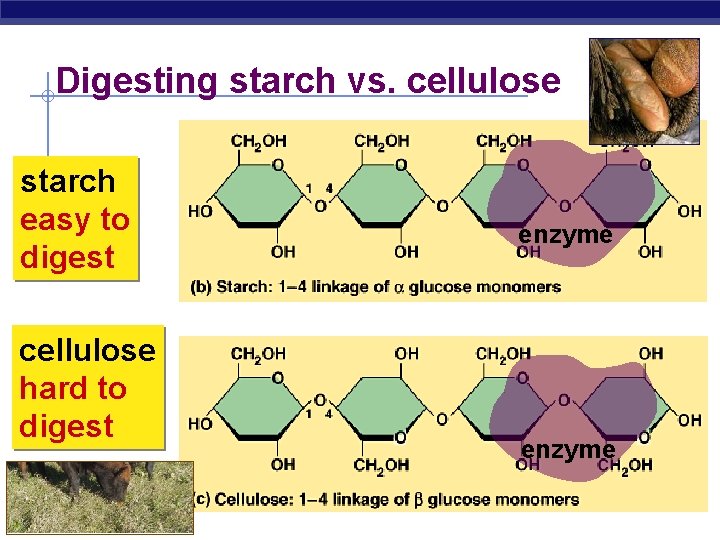
Digesting starch vs. cellulose starch easy to digest cellulose hard to digest AP Biology enzyme
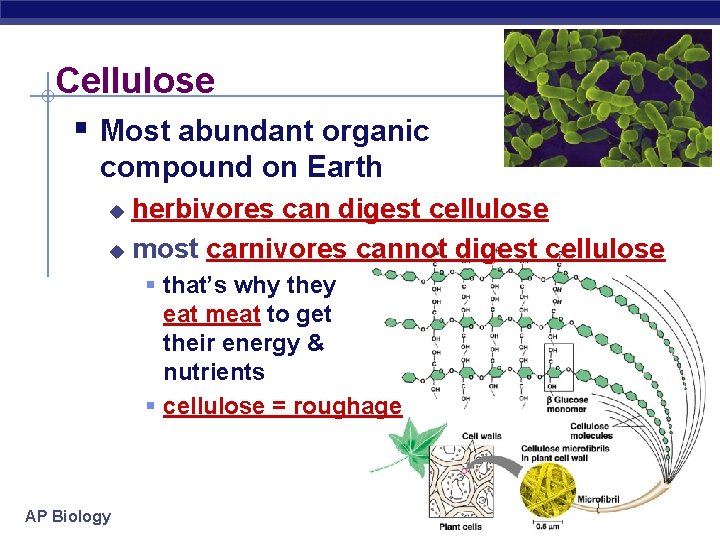
Cellulose § Most abundant organic compound on Earth herbivores can digest cellulose u most carnivores cannot digest cellulose u § that’s why they eat meat to get their energy & nutrients § cellulose = roughage AP Biology
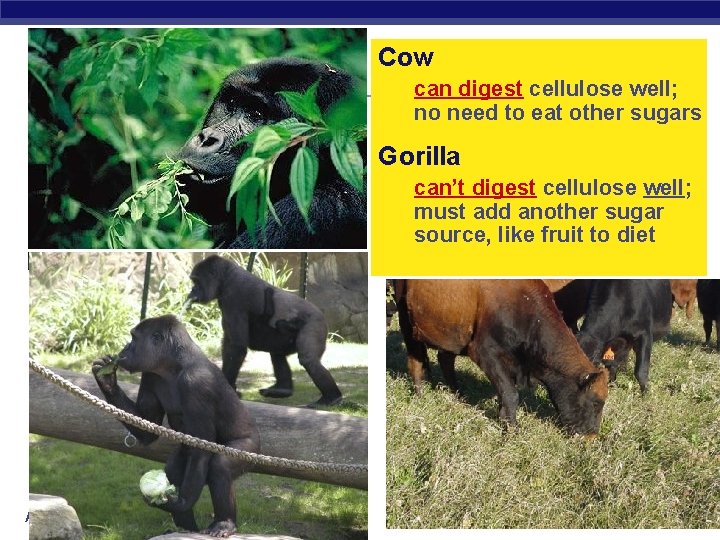
Cow can digest cellulose well; no need to eat other sugars Gorilla can’t digest cellulose well; must add another sugar source, like fruit to diet AP Biology
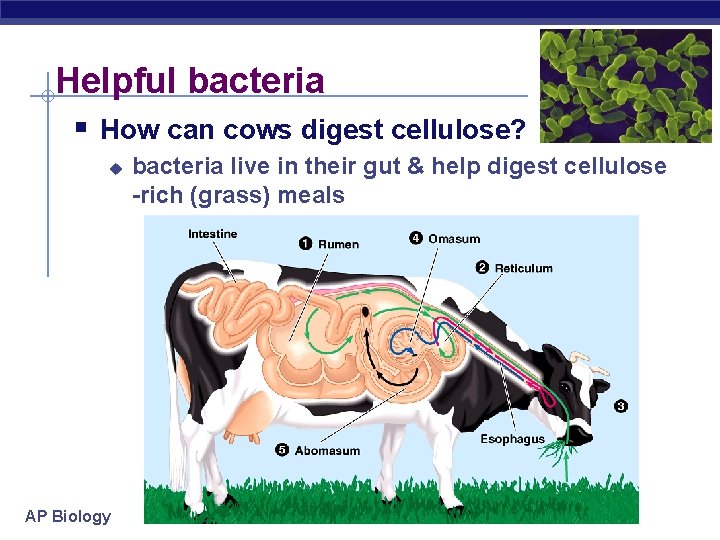
Helpful bacteria § How can cows digest cellulose? u AP Biology bacteria live in their gut & help digest cellulose -rich (grass) meals
- Slides: 19