
Macromolecules 1 The Chemistry of Life KEY CONCEPTS
- Slides: 66
Macromolecules 1
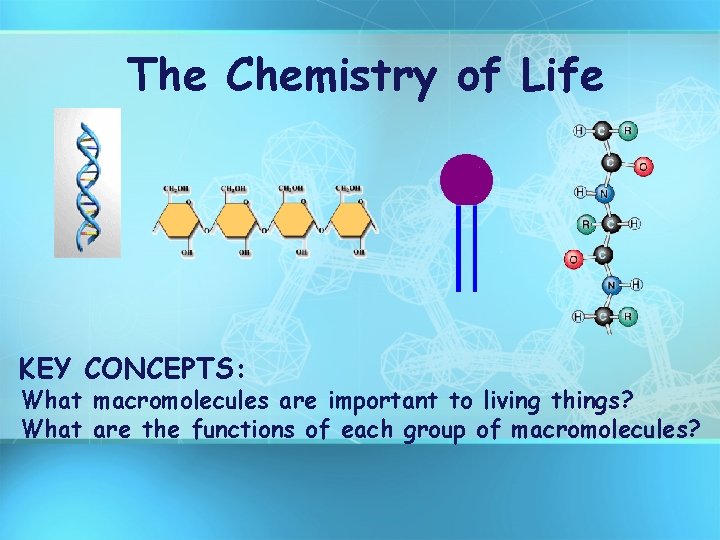
The Chemistry of Life KEY CONCEPTS: What macromolecules are important to living things? What are the functions of each group of macromolecules?
Macromolecules: we are going to study 4
Monomers join to make Polymers. Think Lego Pieces!!
1. Carbohydrates 5
Think Pair Share. . What are some things you can think of that might be carbohydrates?
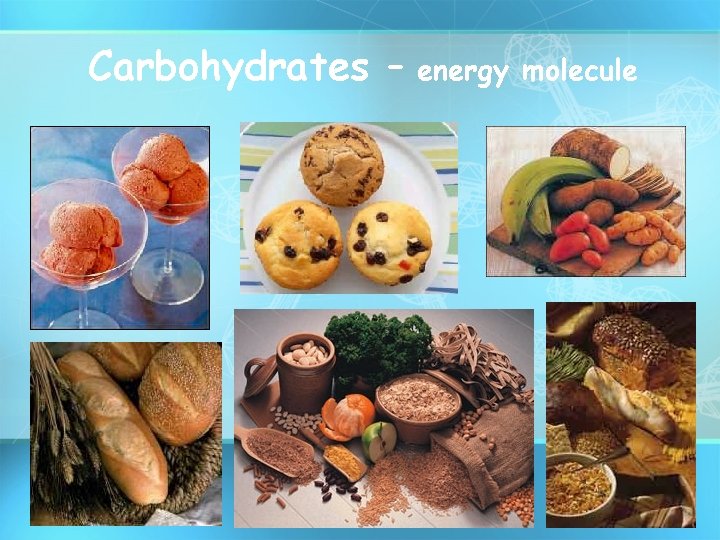
Carbohydrates – energy molecule
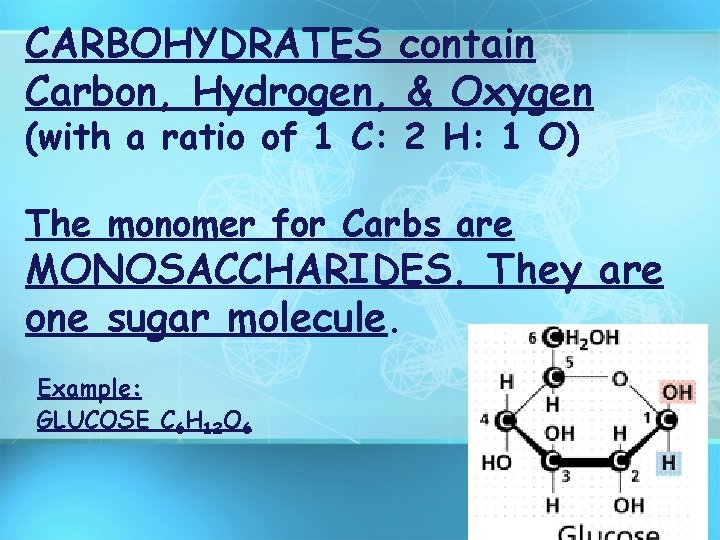
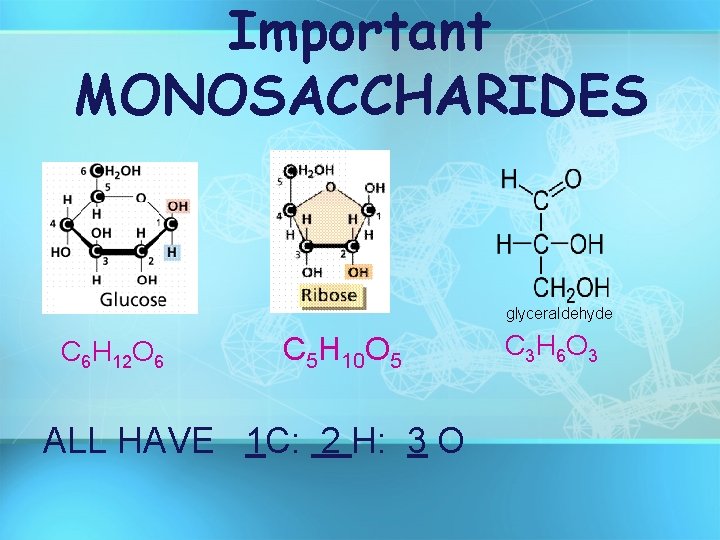
CARBOHYDRATES contain Carbon, Hydrogen, & Oxygen (with a ratio of 1 C: 2 H: 1 O) The monomer for Carbs are MONOSACCHARIDES. They are one sugar molecule. Example: GLUCOSE C 6 H 12 O 6
Important MONOSACCHARIDES glyceraldehyde C 6 H 12 O 6 C 5 H 10 O 5 ALL HAVE 1 C: 2 H: 3 O C 3 H 6 O 3
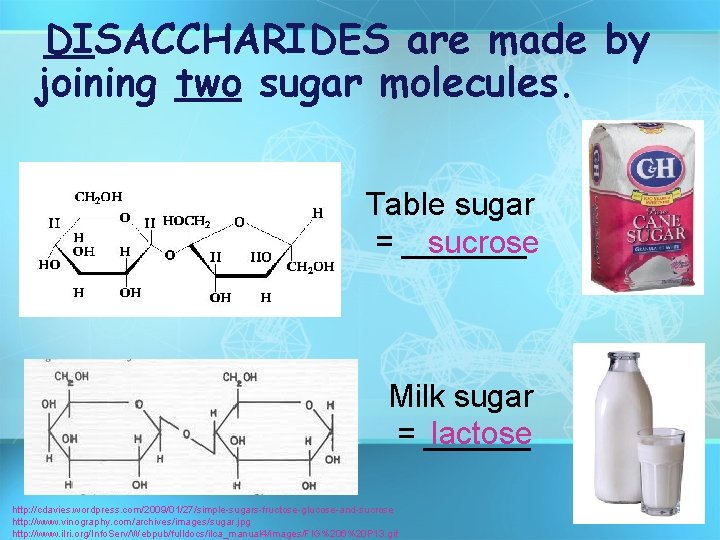
DISACCHARIDES are made by joining two sugar molecules. Table sugar sucrose = _______ Milk sugar lactose = ______ http: //cdavies. wordpress. com/2009/01/27/simple-sugars-fructose-glucose-and-sucrose http: //www. vinography. com/archives/images/sugar. jpg http: //www. ilri. org/Info. Serv/Webpub/fulldocs/ilca_manual 4/images/FIG%206%20 P 13. gif
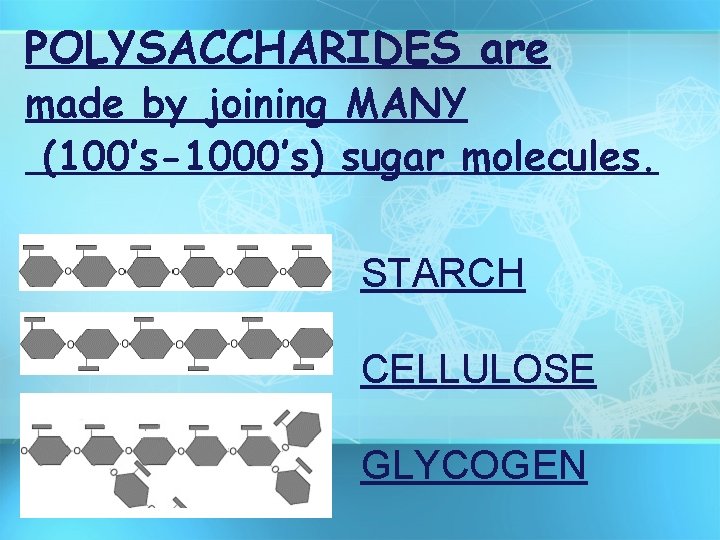
POLYSACCHARIDES are made by joining MANY (100’s-1000’s) sugar molecules. STARCH CELLULOSE GLYCOGEN
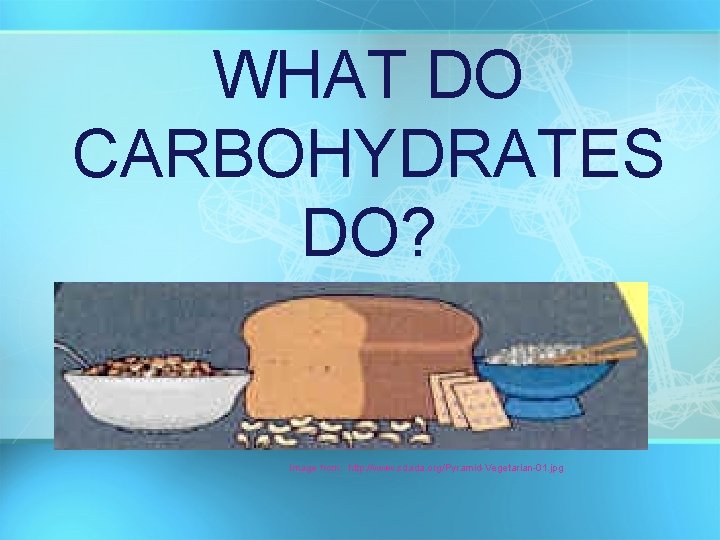
WHAT DO CARBOHYDRATES DO? Image from: http: //www. sdada. org/Pyramid-Vegetarian-01. jpg
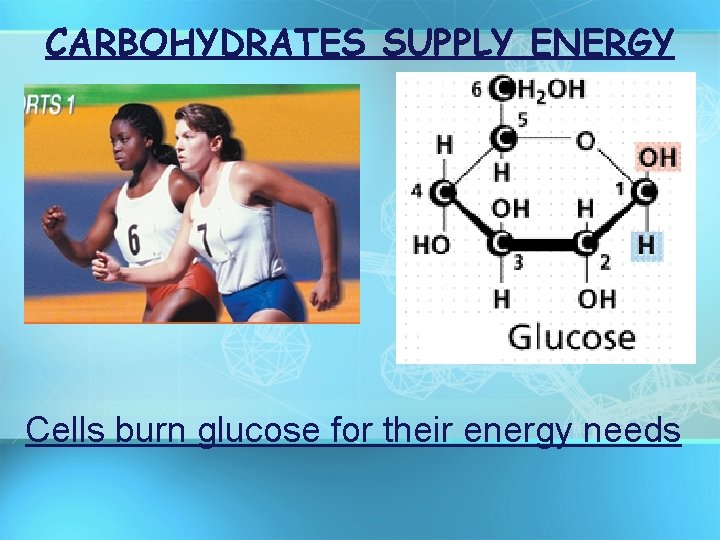
CARBOHYDRATES SUPPLY ENERGY Cells burn glucose for their energy needs
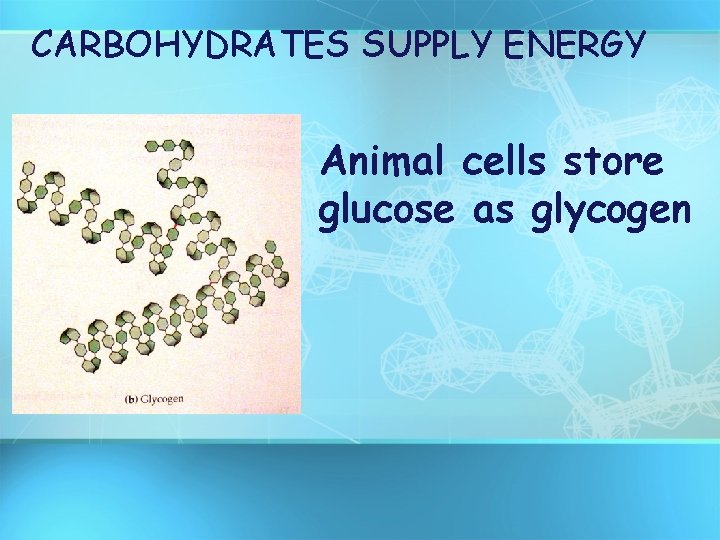
CARBOHYDRATES SUPPLY ENERGY Animal cells store glucose as glycogen
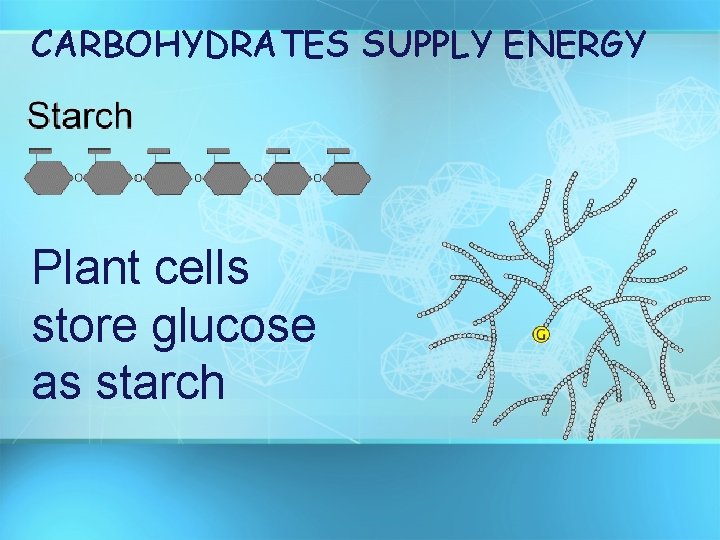
CARBOHYDRATES SUPPLY ENERGY Plant cells store glucose as starch
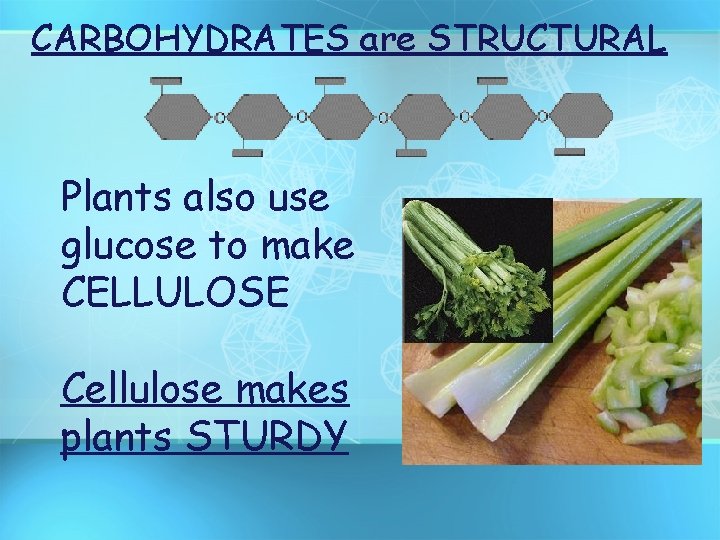
CARBOHYDRATES are STRUCTURAL Plants also use glucose to make CELLULOSE Cellulose makes plants STURDY
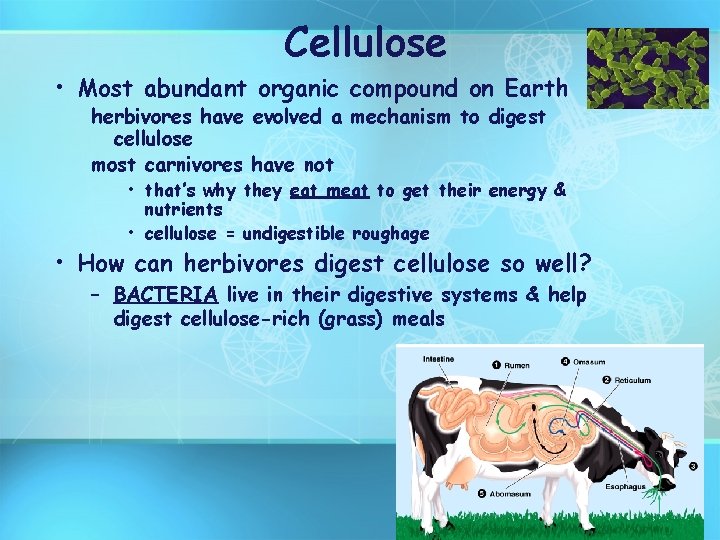
Cellulose • Most abundant organic compound on Earth herbivores have evolved a mechanism to digest cellulose most carnivores have not • that’s why they eat meat to get their energy & nutrients • cellulose = undigestible roughage • How can herbivores digest cellulose so well? – BACTERIA live in their digestive systems & help digest cellulose-rich (grass) meals
• Carbs are also called Sugars and Starches.
2. Lipids 19
Think Pair Share. . . What are some real life examples of lipids or fats?
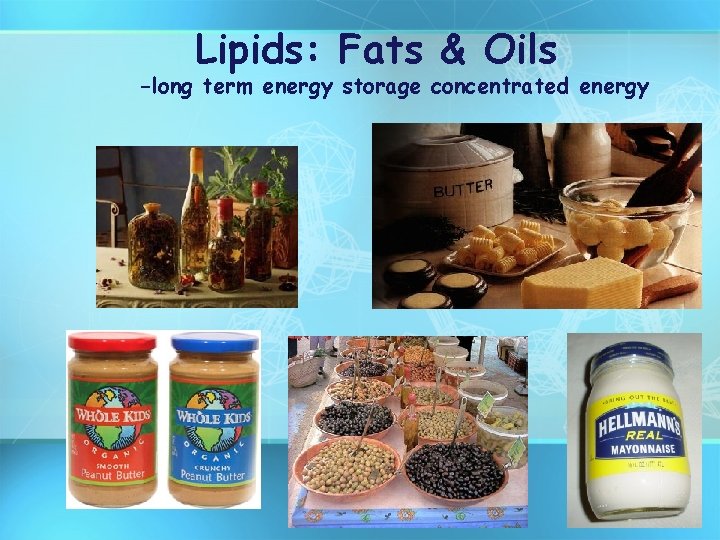
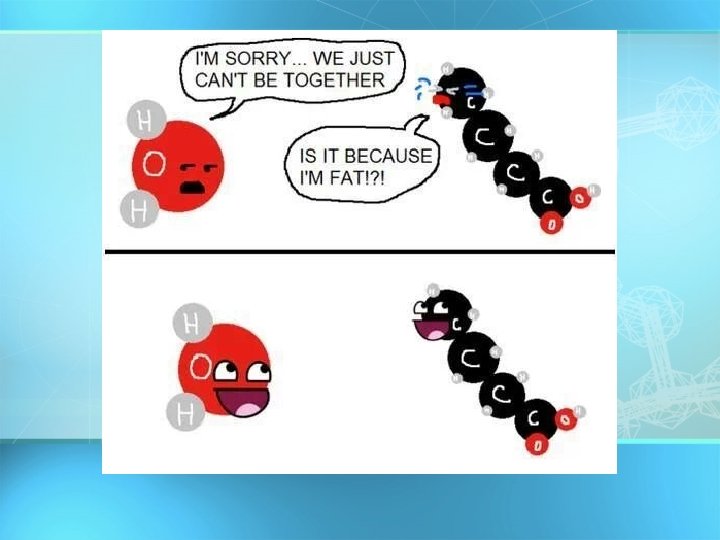
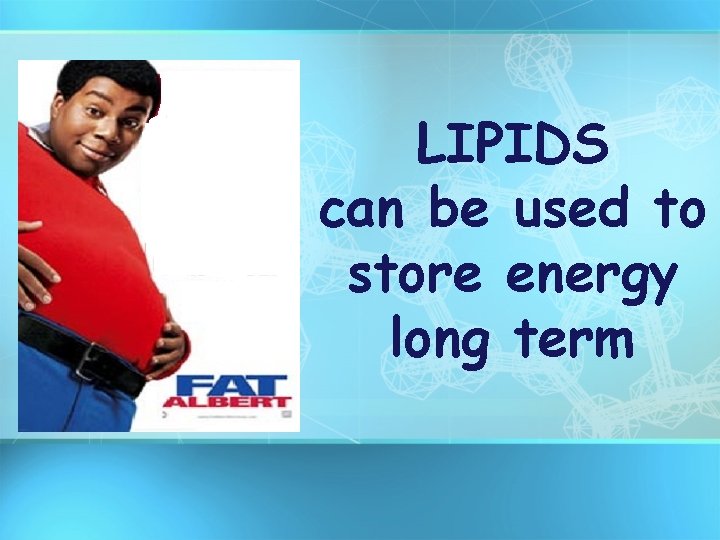
Lipids: Fats & Oils -long term energy storage concentrated energy
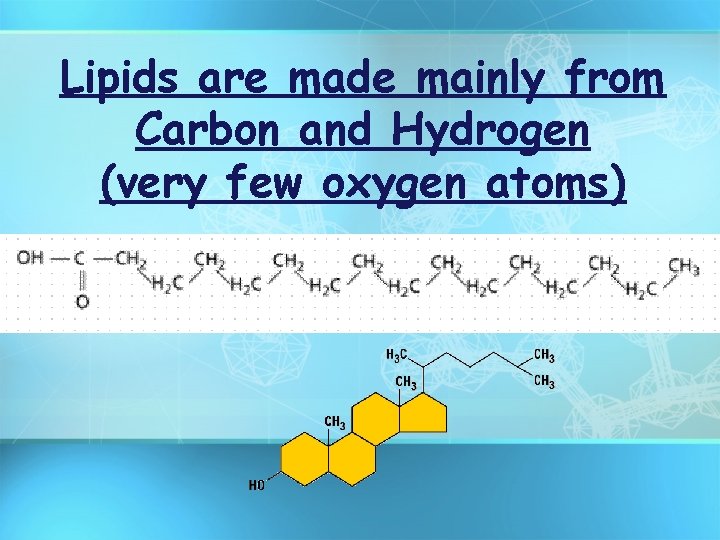
Lipids are made mainly from Carbon and Hydrogen (very few oxygen atoms)
The Monomers of Lipids are Triglycerides.
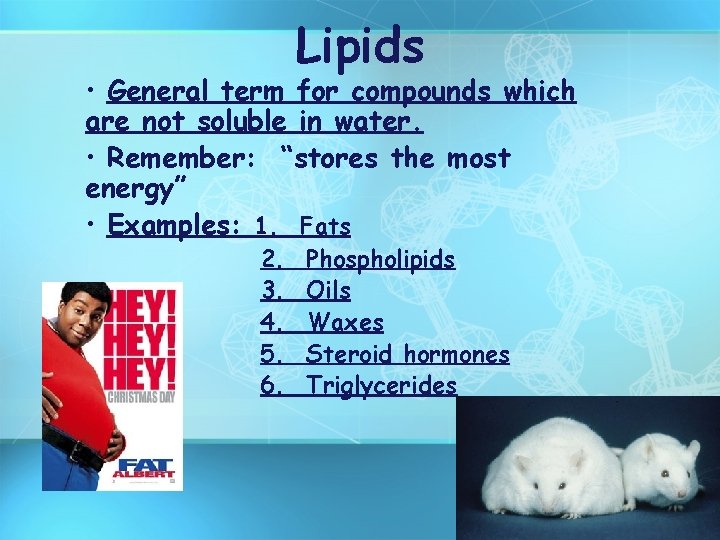
Lipids • General term for compounds which are not soluble in water. • Remember: “stores the most energy” • Examples: 1. Fats 2. 3. 4. 5. 6. Phospholipids Oils Waxes Steroid hormones Triglycerides 24
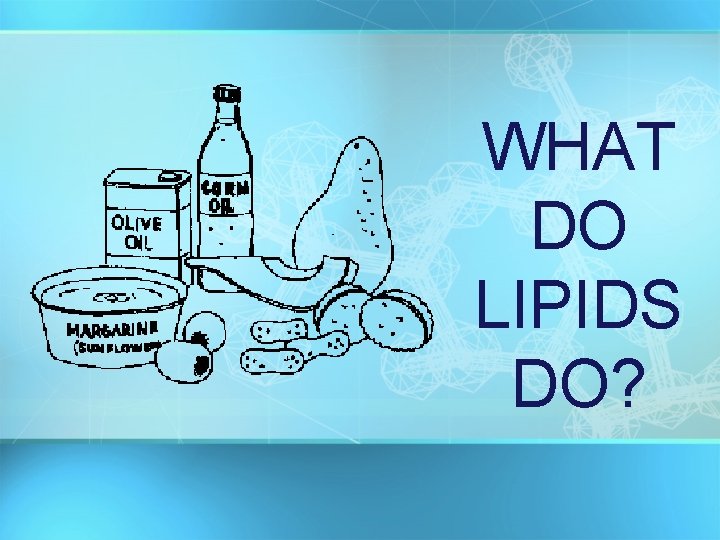
WHAT DO LIPIDS DO?
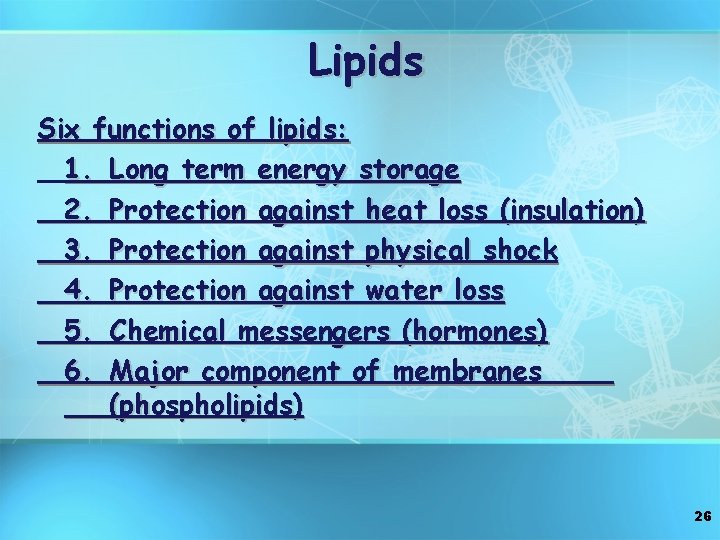
Lipids Six functions of lipids: 1. Long term energy storage 2. Protection against heat loss (insulation) 3. Protection against physical shock 4. Protection against water loss 5. Chemical messengers (hormones) 6. Major component of membranes (phospholipids) 26
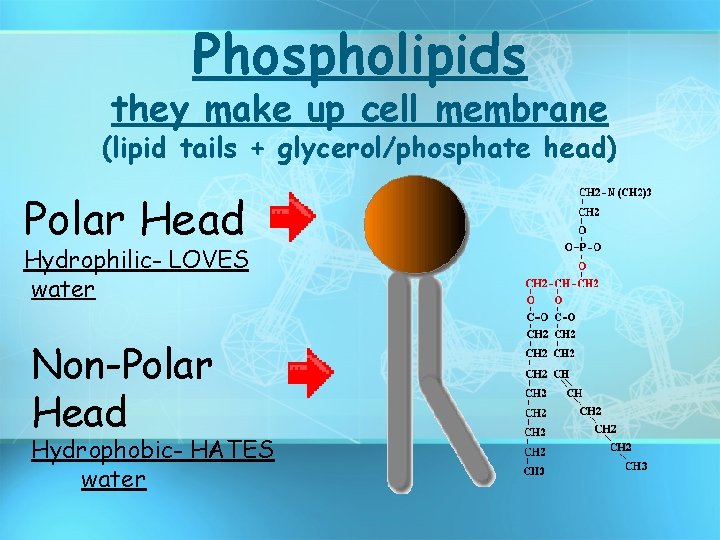
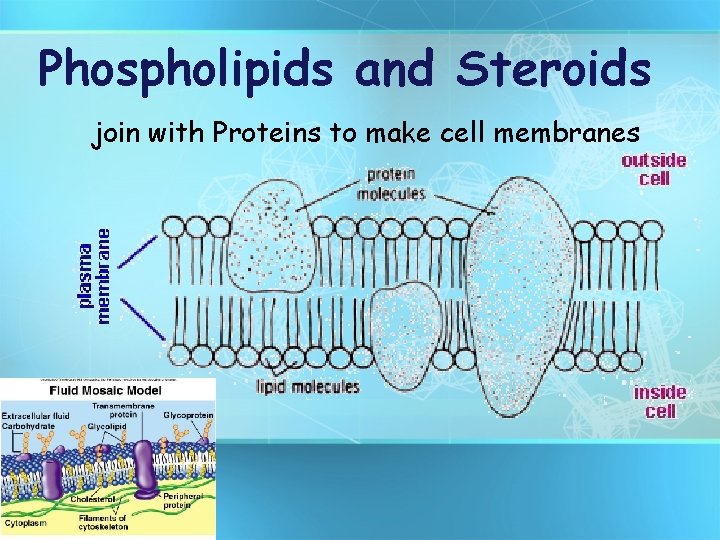
Phospholipids they make up cell membrane (lipid tails + glycerol/phosphate head) Polar Head Hydrophilic- LOVES water Non-Polar Head Hydrophobic- HATES water
Phospholipids and Steroids join with Proteins to make cell membranes
LIPIDS can be used to store energy long term
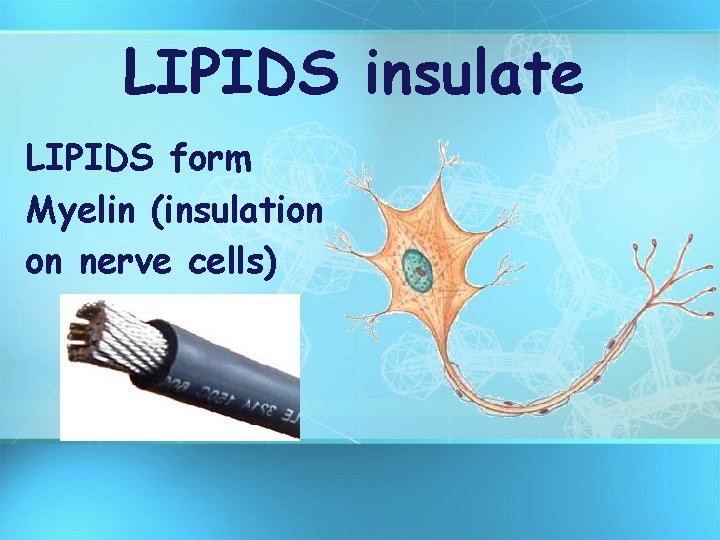
LIPIDS insulate LIPIDS form Myelin (insulation on nerve cells)
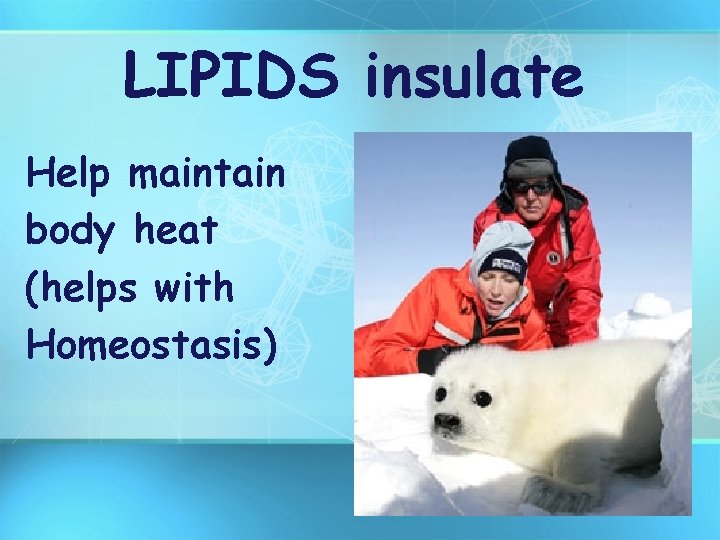
LIPIDS insulate Help maintain body heat (helps with Homeostasis)
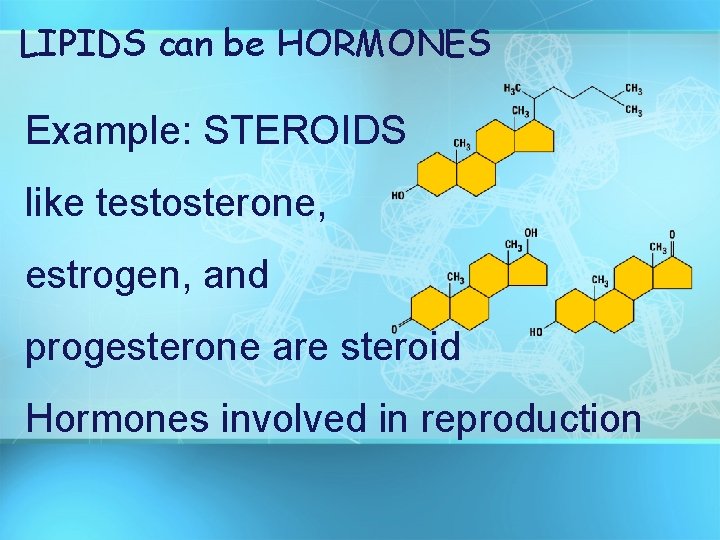
LIPIDS can be HORMONES Example: STEROIDS like testosterone, estrogen, and progesterone are steroid Hormones involved in reproduction
Other Lipids • There are other lipids that don’t fit into the 1 st 3 groups. Examples: Wax Pigments (chlorophyll) Sterols (Steroids) Cholesterols
3. Proteins 35
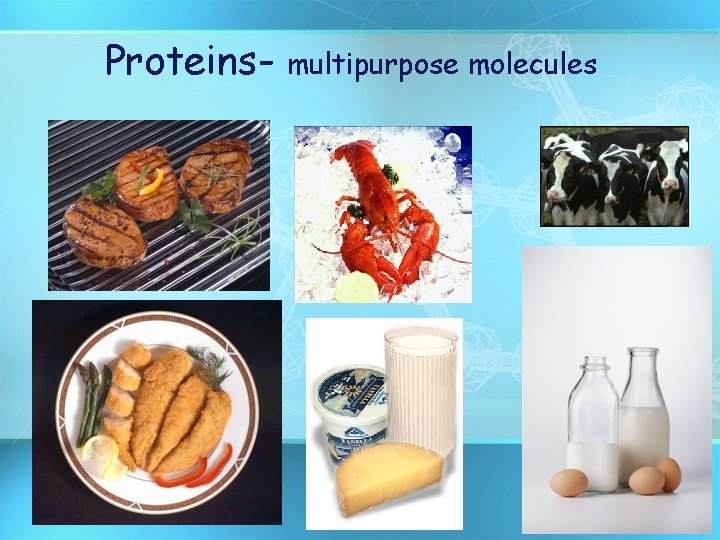
Think Pair Share. . . What are some real life examples of Proteins?
Proteins- multipurpose molecules
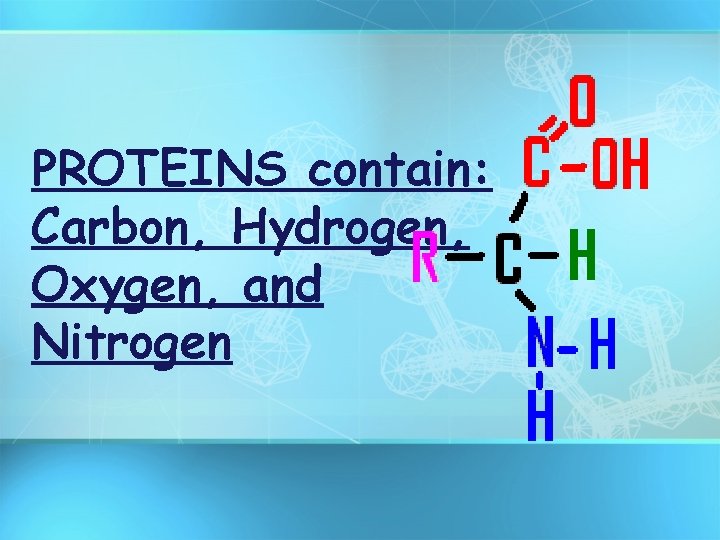
PROTEINS contain: Carbon, Hydrogen, Oxygen, and Nitrogen
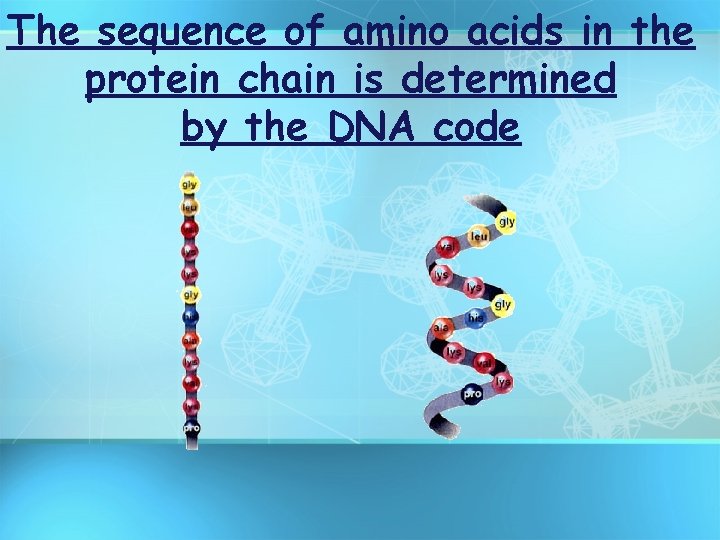
The Monomer of Proteins are Amino Acids (aa)
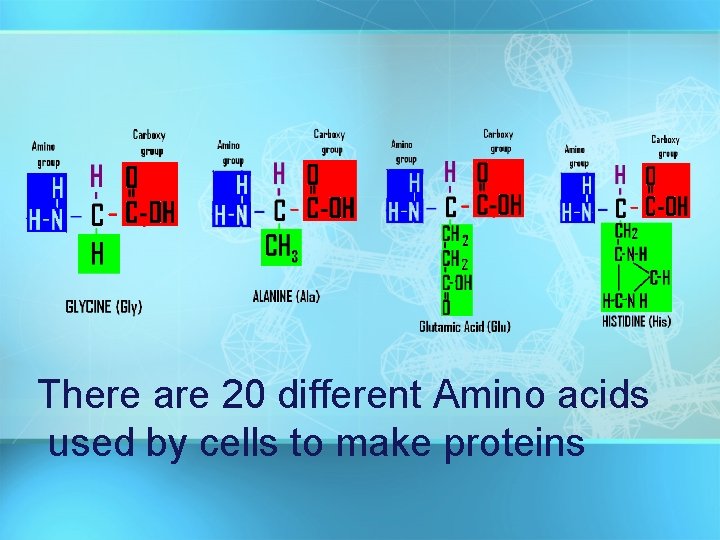
There are 20 different Amino acids used by cells to make proteins
The sequence of amino acids in the protein chain is determined by the DNA code
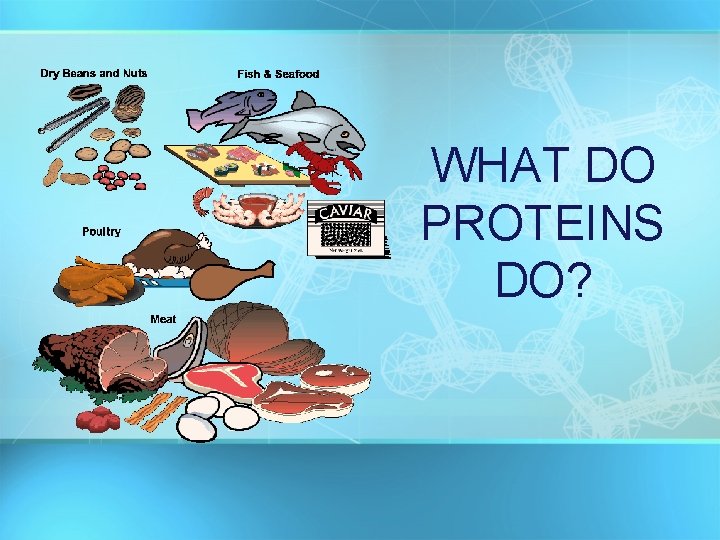
WHAT DO PROTEINS DO?
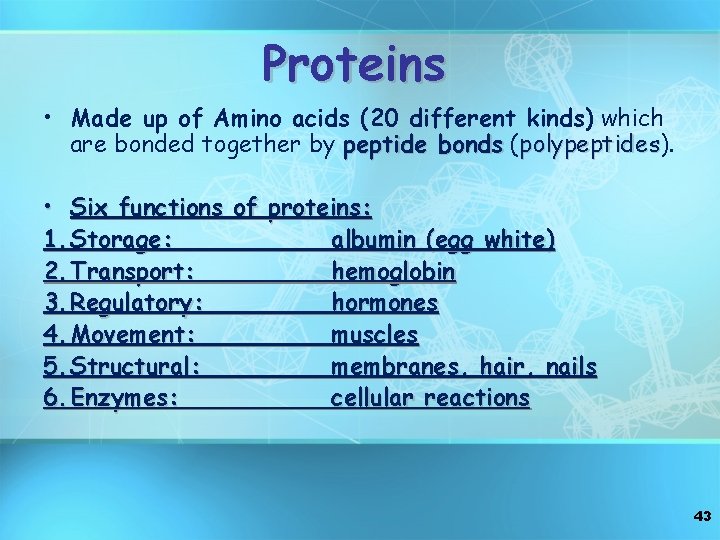
Proteins • Made up of Amino acids (20 different kinds) which are bonded together by peptide bonds (polypeptides). polypeptides • Six functions of proteins: 1. Storage: albumin (egg white) 2. Transport: hemoglobin 3. Regulatory: hormones 4. Movement: muscles 5. Structural: membranes, hair, nails 6. Enzymes: cellular reactions 43
The work of the cell is carried out by proteins, mostly enzymes. Enzymes help chemical reaction happen faster
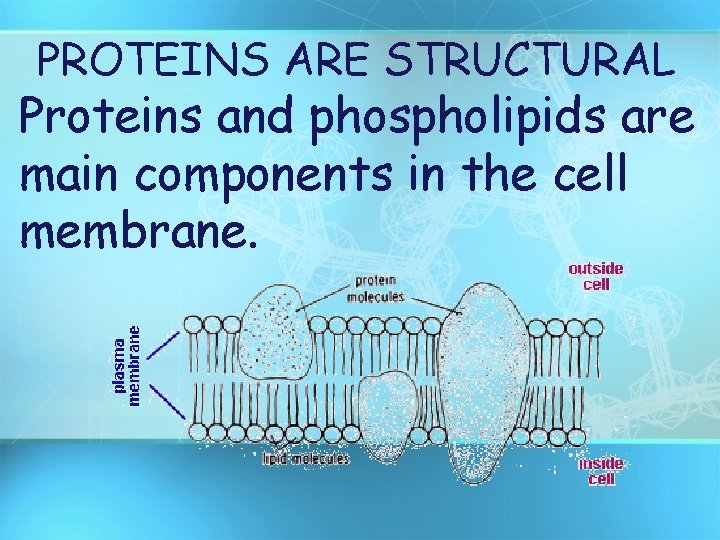
PROTEINS ARE STRUCTURAL Proteins and phospholipids are main components in the cell membrane.
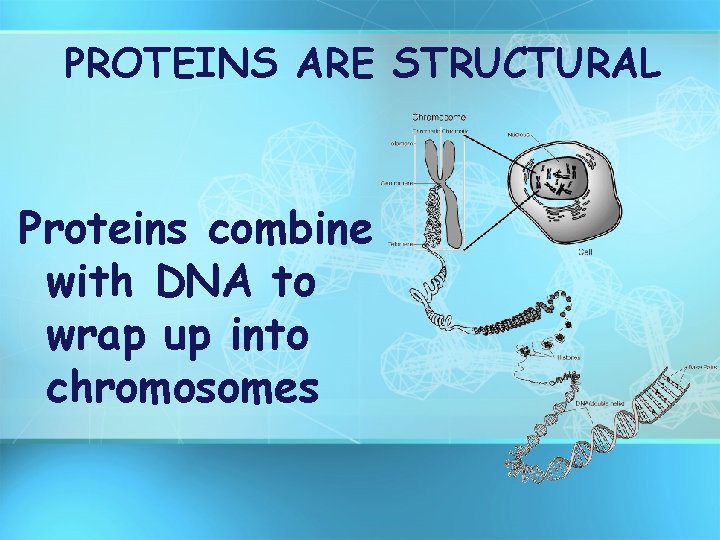
PROTEINS ARE STRUCTURAL Proteins combine with DNA to wrap up into chromosomes
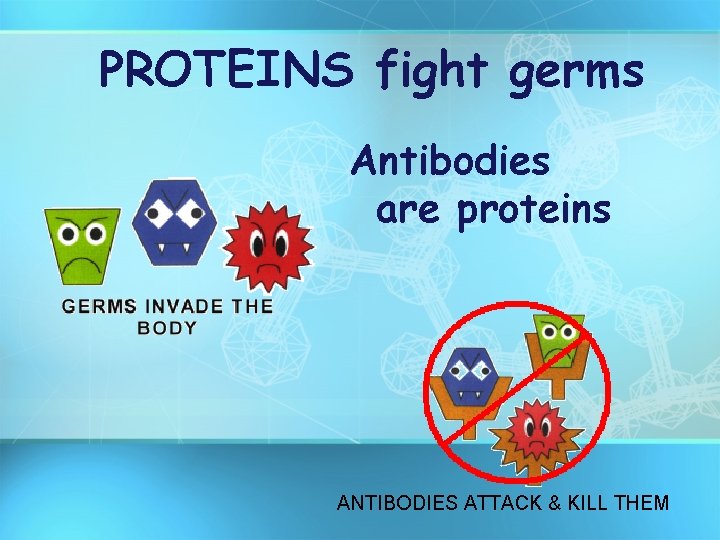
PROTEINS fight germs Antibodies are proteins ANTIBODIES ATTACK & KILL THEM
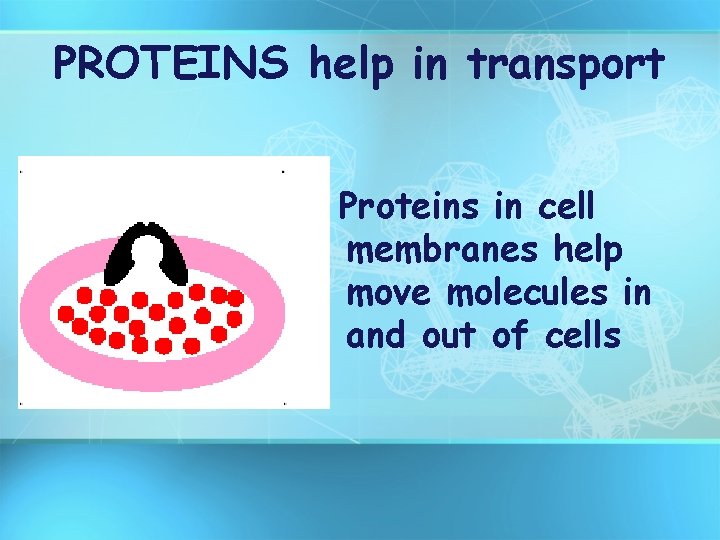
PROTEINS help in transport Proteins in cell membranes help move molecules in and out of cells
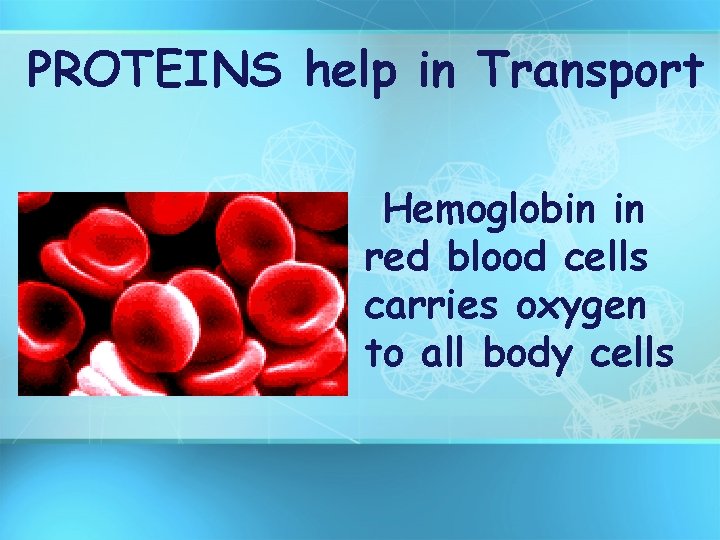
PROTEINS help in Transport Hemoglobin in red blood cells carries oxygen to all body cells
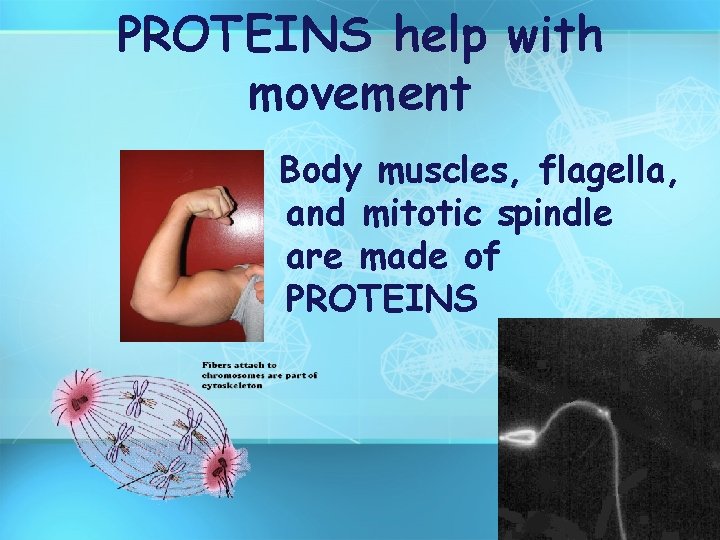
PROTEINS help with movement Body muscles, flagella, and mitotic spindle are made of PROTEINS
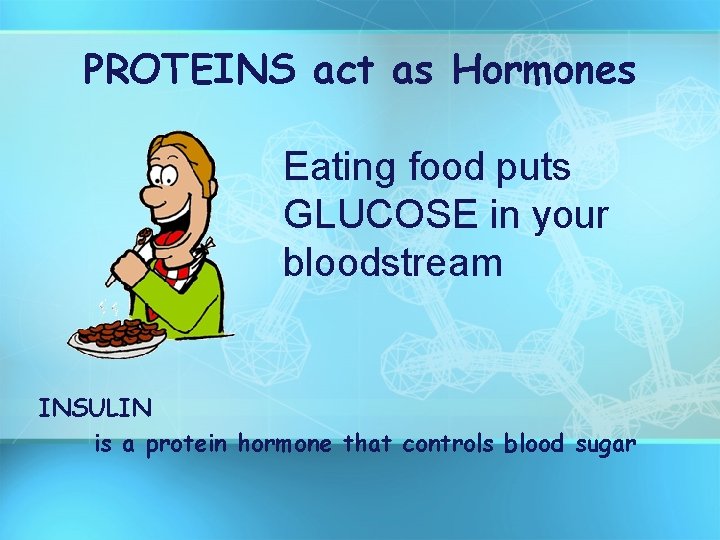
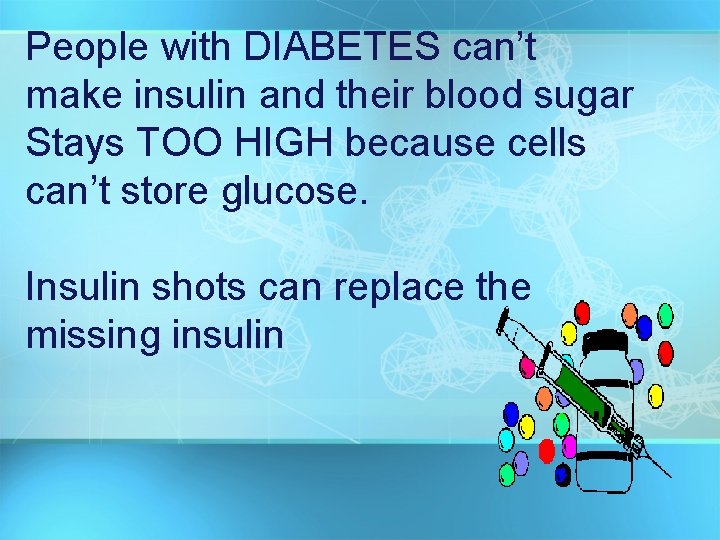
PROTEINS act as Hormones Eating food puts GLUCOSE in your bloodstream INSULIN is a protein hormone that controls blood sugar
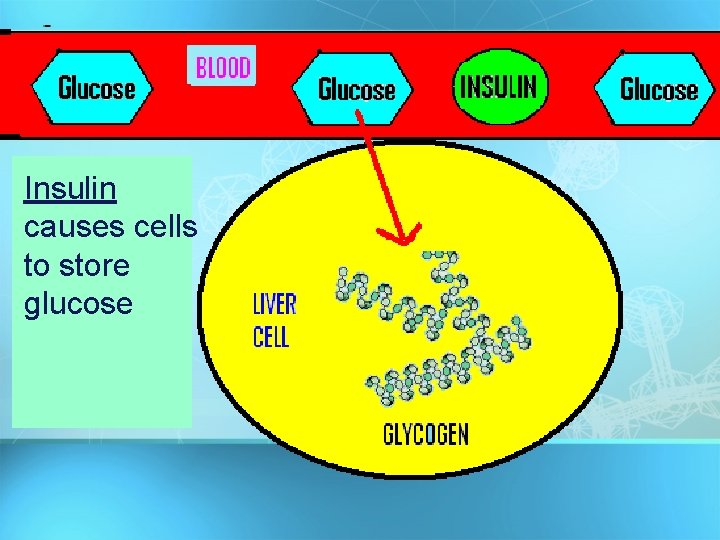
Insulin causes cells to store glucose
People with DIABETES can’t make insulin and their blood sugar Stays TOO HIGH because cells can’t store glucose. Insulin shots can replace the missing insulin
4. Nucleic Acids 54
Nucleic acids-Information storage 2006 -2007
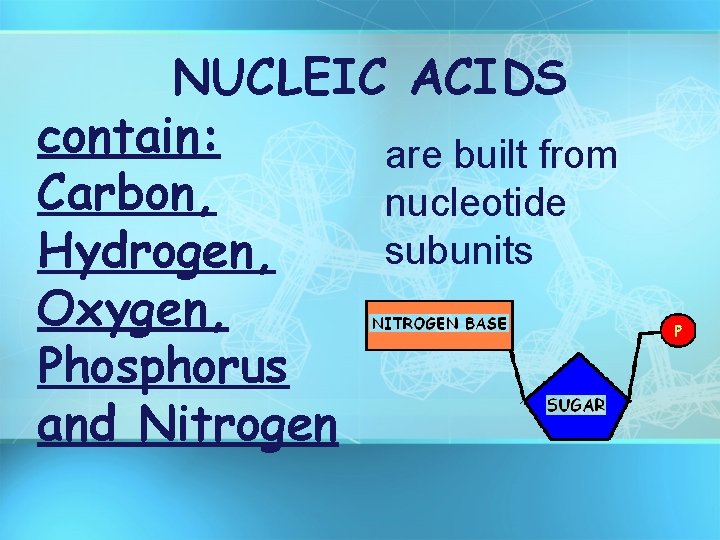
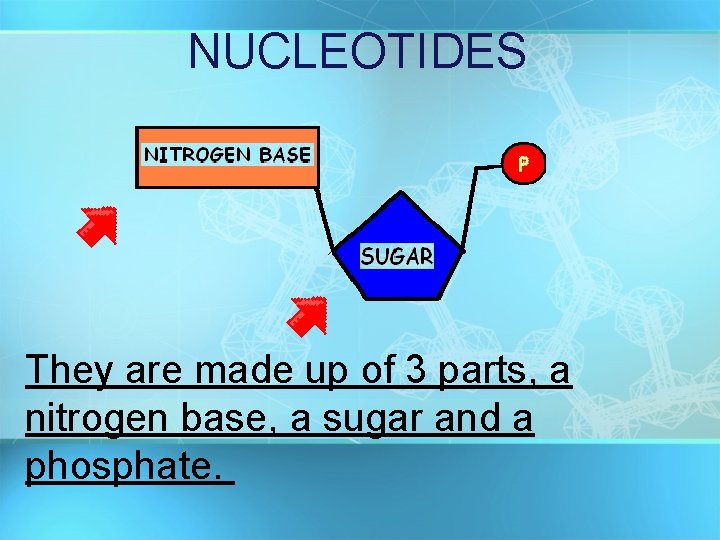
NUCLEIC ACIDS contain: are built from Carbon, nucleotide subunits Hydrogen, Oxygen, Phosphorus and Nitrogen
NUCLEOTIDES They are made up of 3 parts, a nitrogen base, a sugar and a phosphate.
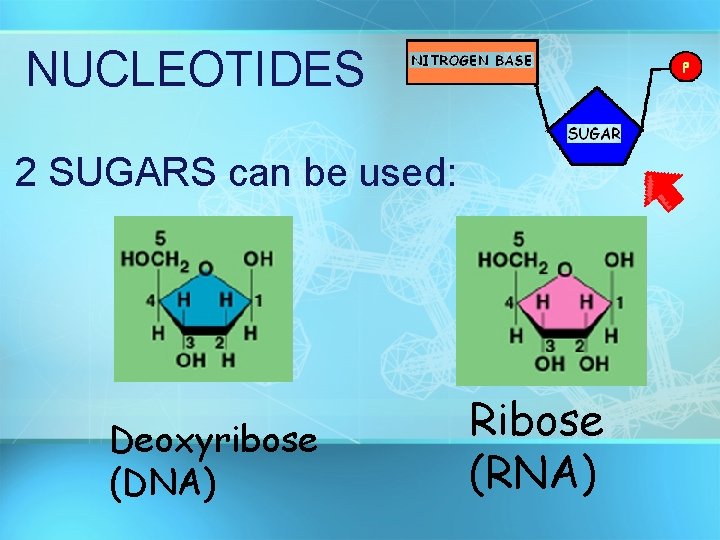
NUCLEOTIDES 2 SUGARS can be used: Deoxyribose (DNA) Ribose (RNA)
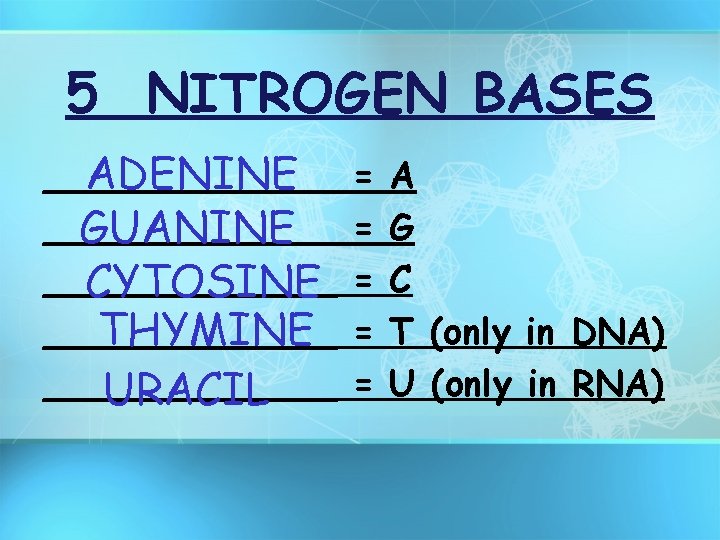
5 NITROGEN BASES _______ ADENINE _______ GUANINE _______ CYTOSINE _______ THYMINE _______ URACIL = = = A G C T (only in DNA) U (only in RNA)
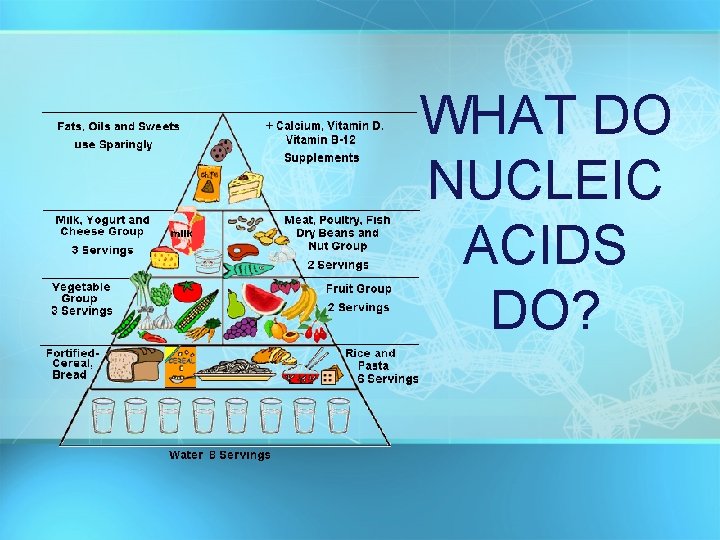
WHAT DO NUCLEIC ACIDS DO?
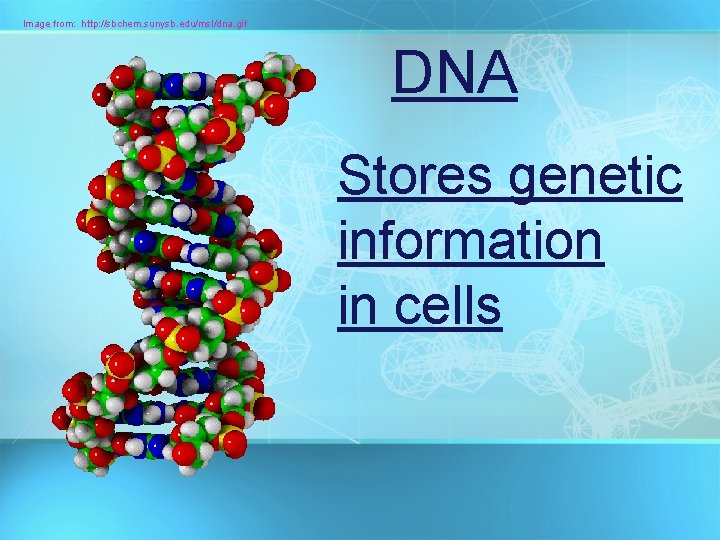
Image from: http: //sbchem. sunysb. edu/msl/dna. gif DNA Stores genetic information in cells
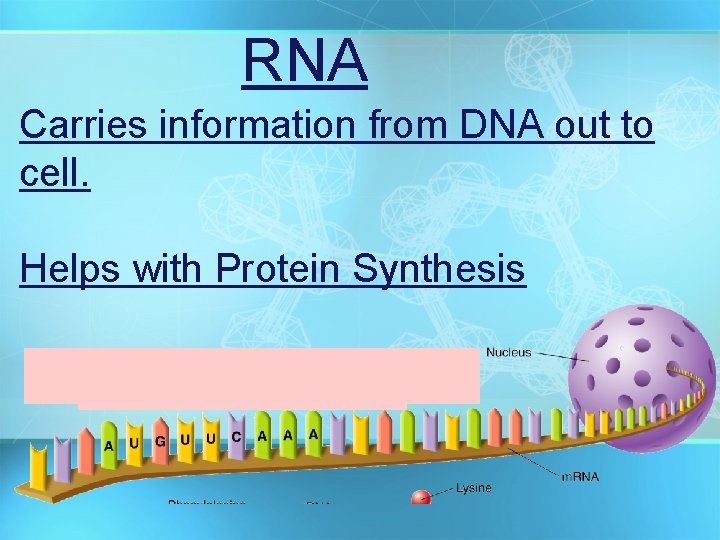
RNA Carries information from DNA out to cell. Helps with Protein Synthesis
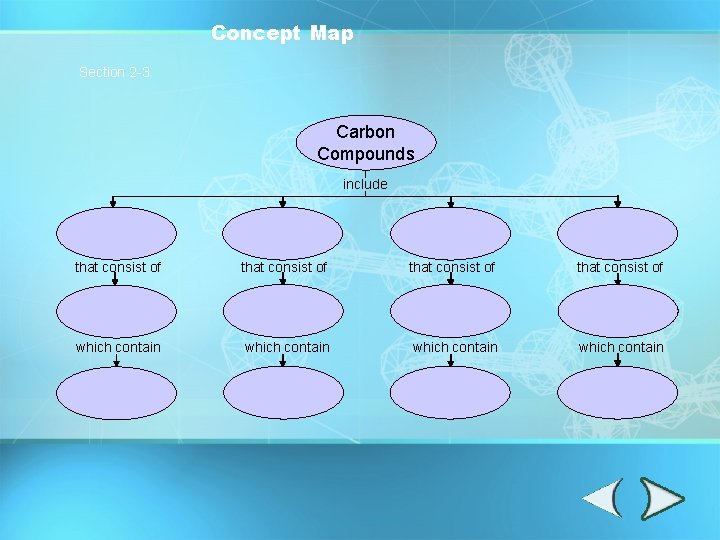
Concept Map Section 2 -3 Carbon Compounds include that consist of which contain
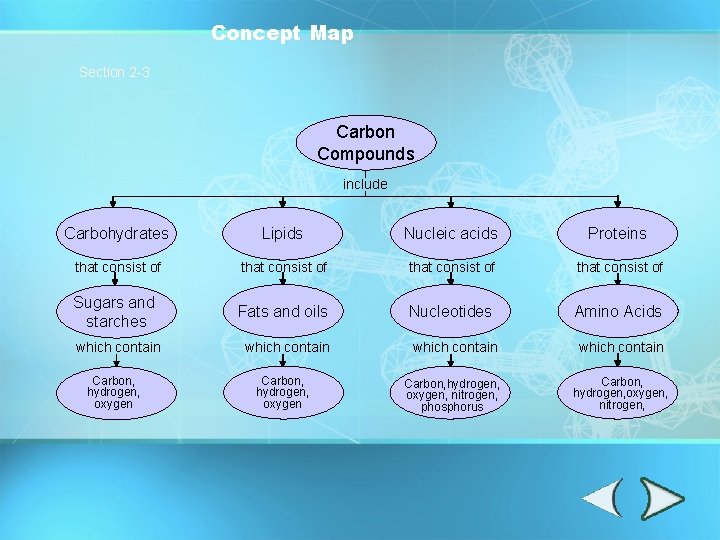
Concept Map Section 2 -3 Carbon Compounds include Carbohydrates Lipids Nucleic acids Proteins that consist of Sugars and starches Fats and oils Nucleotides Amino Acids which contain Carbon, hydrogen, oxygen, nitrogen, phosphorus Carbon, hydrogen, oxygen, nitrogen,
• Take out a ½ sheet of paper and make a line down the middle. On one side write down things you get about macromolecules, on the other side write down things you are still confused about.
66