
Macromechanical behavior of a lamina I Elastic properties
Macromechanical behavior of a lamina I. Elastic properties of a lamina of arbitrary orientation
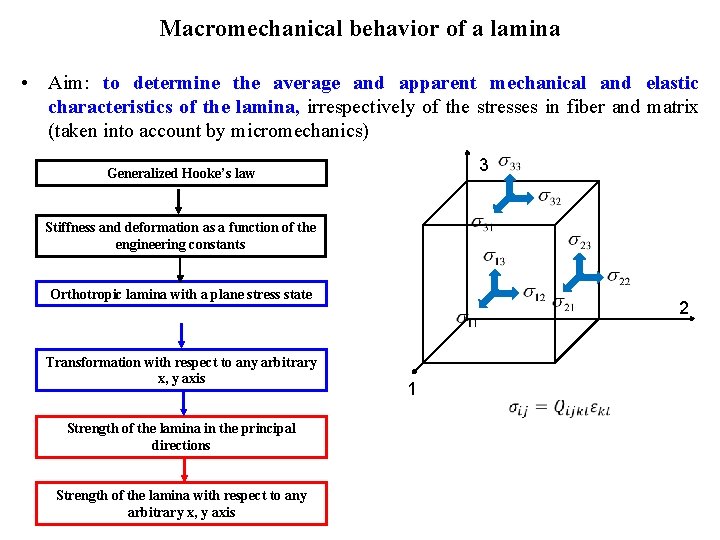
Macromechanical behavior of a lamina • Aim: to determine the average and apparent mechanical and elastic characteristics of the lamina, irrespectively of the stresses in fiber and matrix (taken into account by micromechanics) 3 Generalized Hooke’s law Stiffness and deformation as a function of the engineering constants Orthotropic lamina with a plane stress state Transformation with respect to any arbitrary x, y axis Strength of the lamina in the principal directions Strength of the lamina with respect to any arbitrary x, y axis 2 1
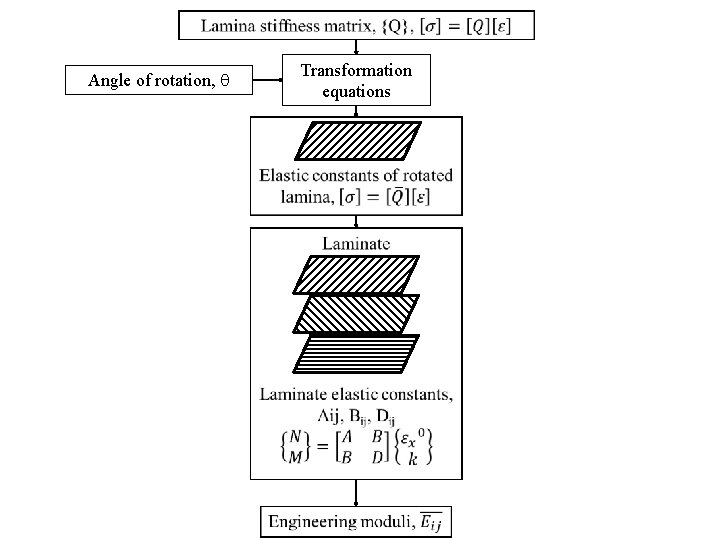
Angle of rotation, Transformation equations
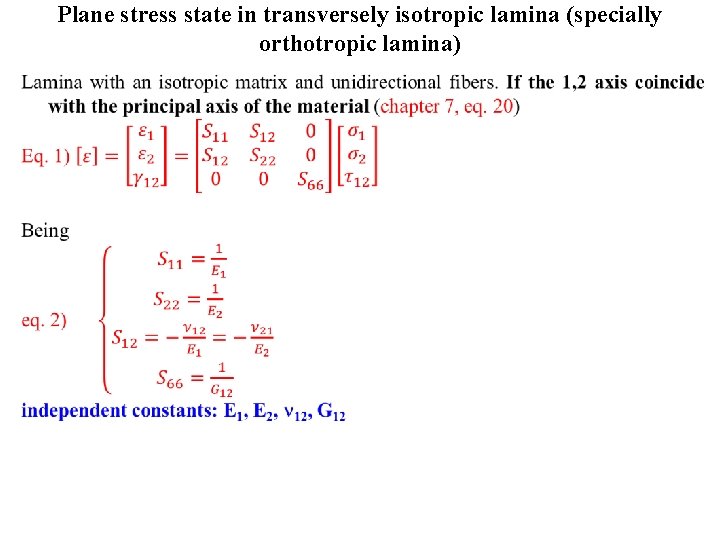
Plane stress state in transversely isotropic lamina (specially orthotropic lamina) •
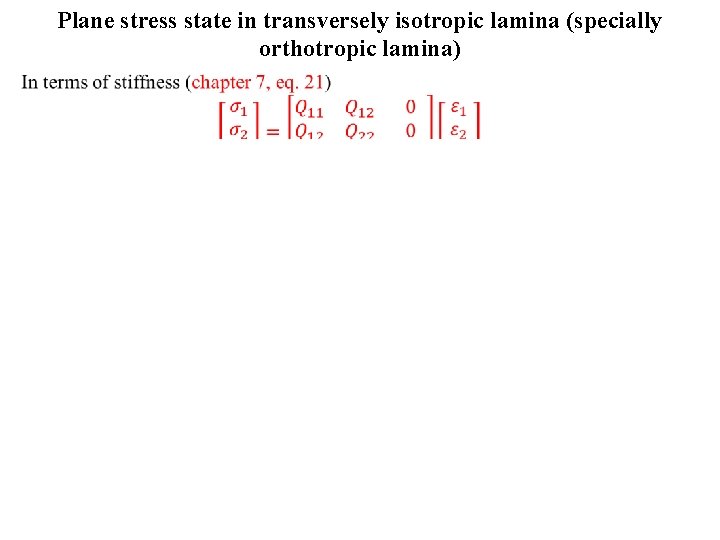
Plane stress state in transversely isotropic lamina (specially orthotropic lamina) •
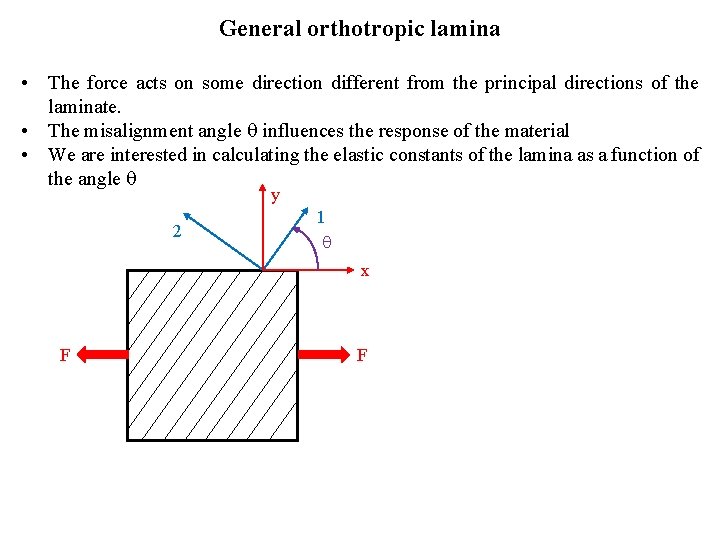
General orthotropic lamina • The force acts on some direction different from the principal directions of the laminate. • The misalignment angle influences the response of the material • We are interested in calculating the elastic constants of the lamina as a function of the angle y 2 1 x F F
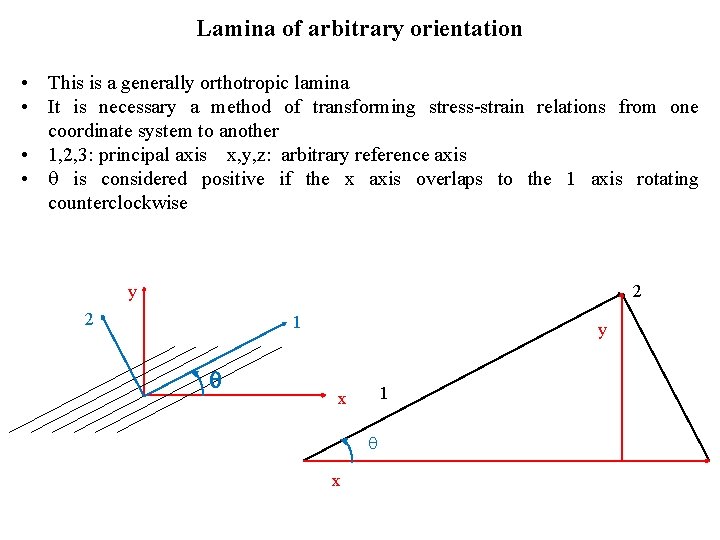
Lamina of arbitrary orientation • This is a generally orthotropic lamina • It is necessary a method of transforming stress-strain relations from one coordinate system to another • 1, 2, 3: principal axis x, y, z: arbitrary reference axis • is considered positive if the x axis overlaps to the 1 axis rotating counterclockwise 2 y 2 1 y 1 x x
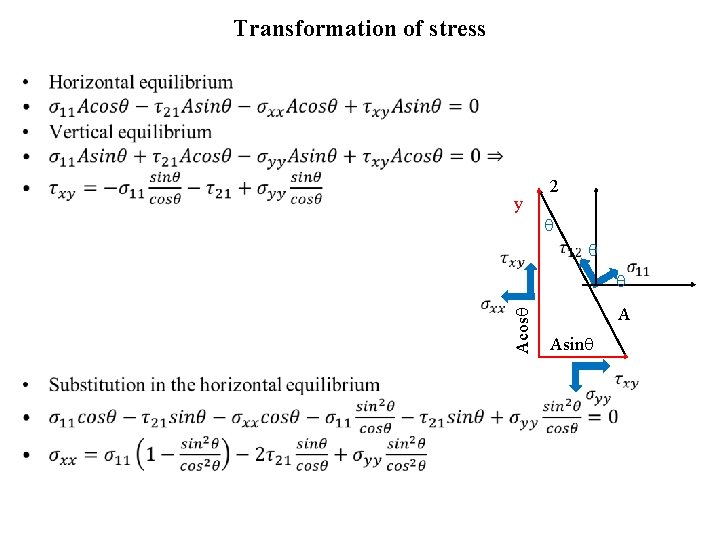
Transformation of stress • y 2 Acos A Asin
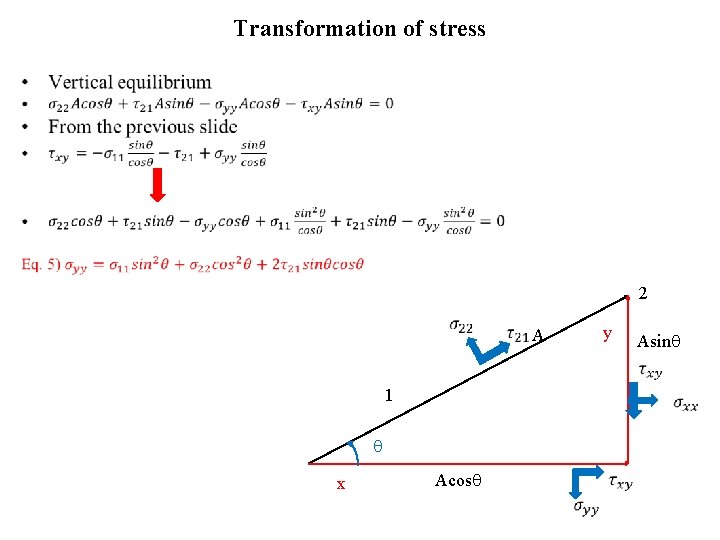
Transformation of stress • 2 A 1 x Acos y Asin
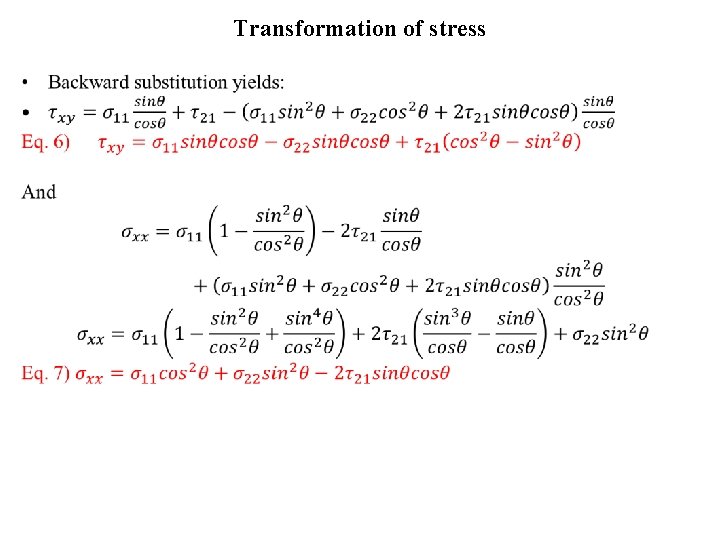
Transformation of stress •
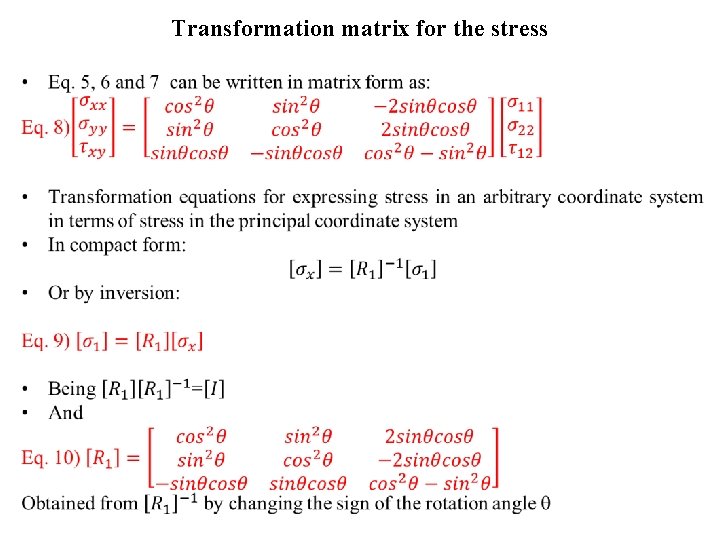
Transformation matrix for the stress •
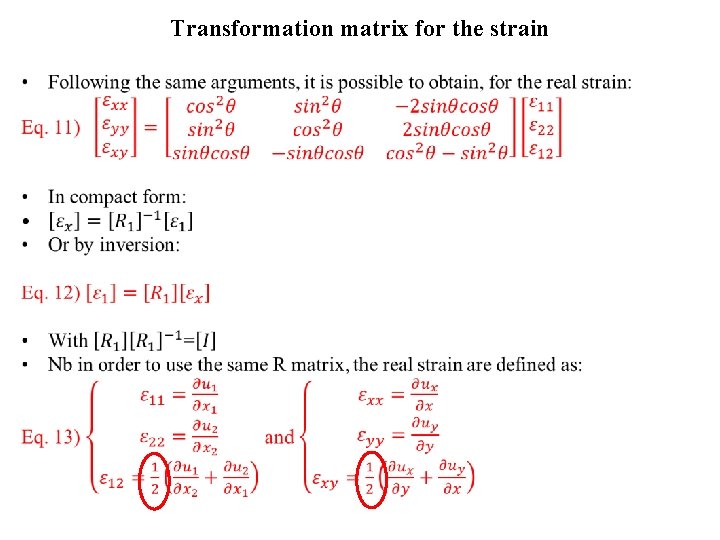
Transformation matrix for the strain •
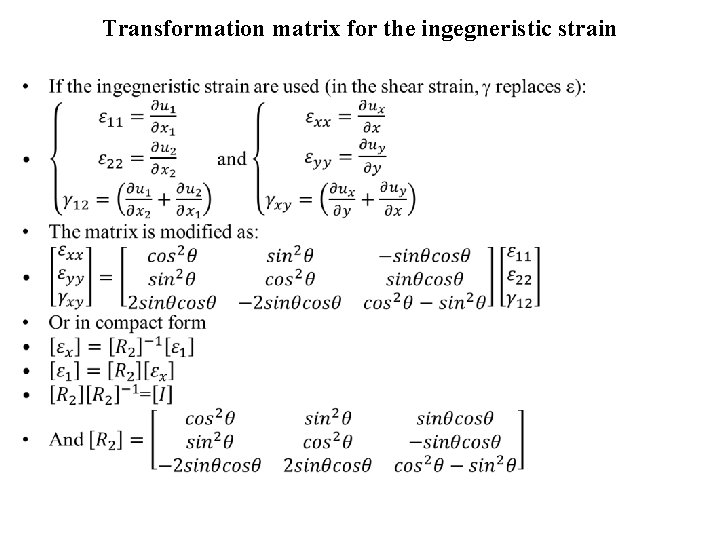
Transformation matrix for the ingegneristic strain •
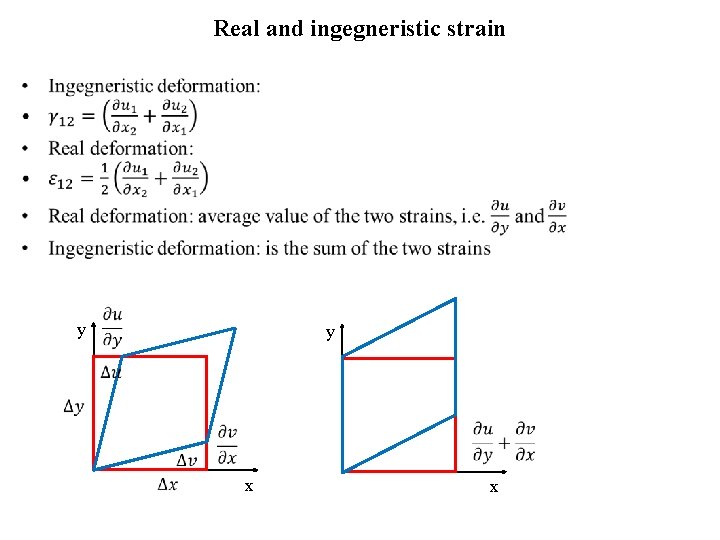
Real and ingegneristic strain • y y x x
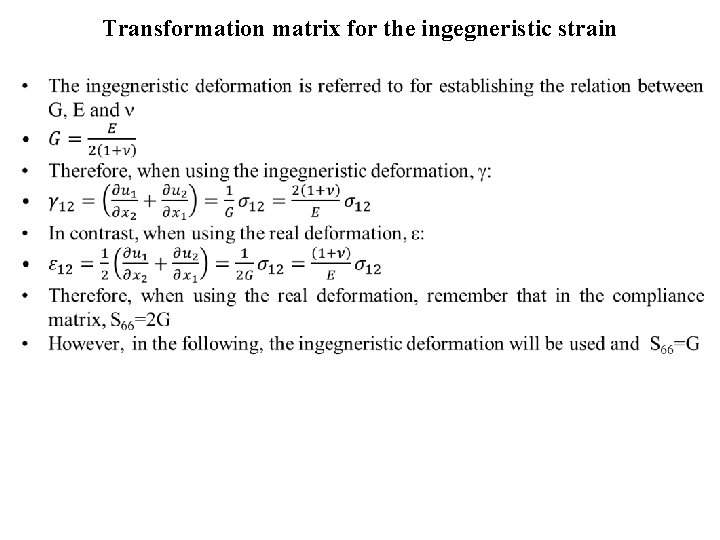
Transformation matrix for the ingegneristic strain •
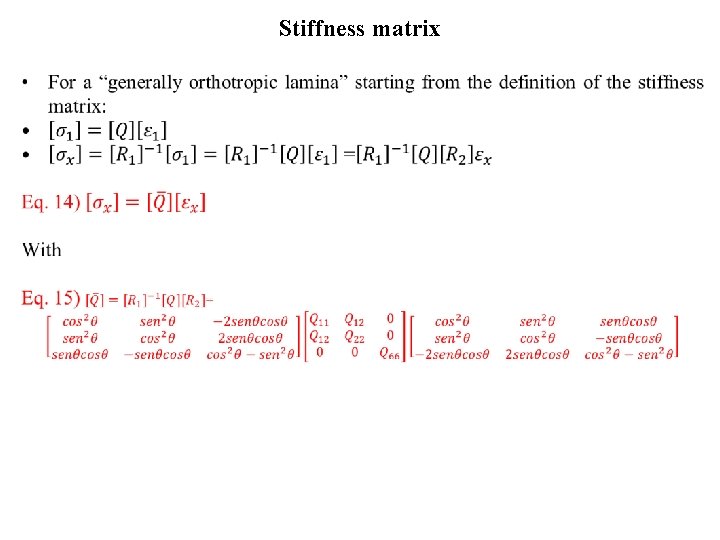
Stiffness matrix •

Stiffness matrix •

Stiffness matrix •
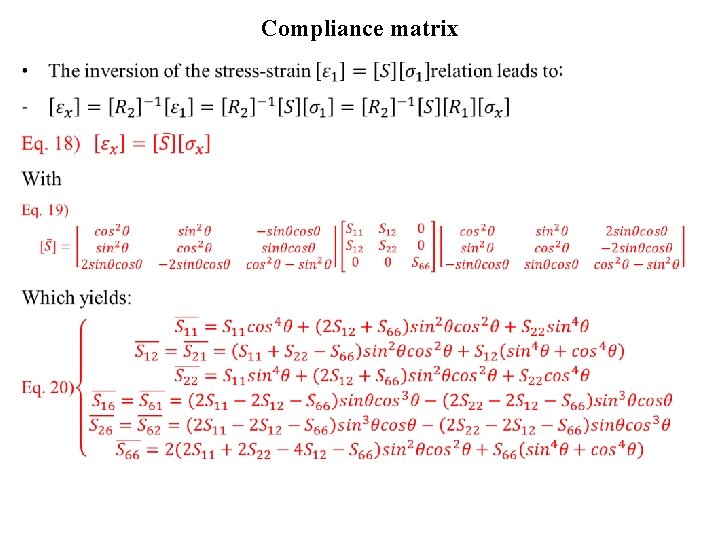
Compliance matrix •
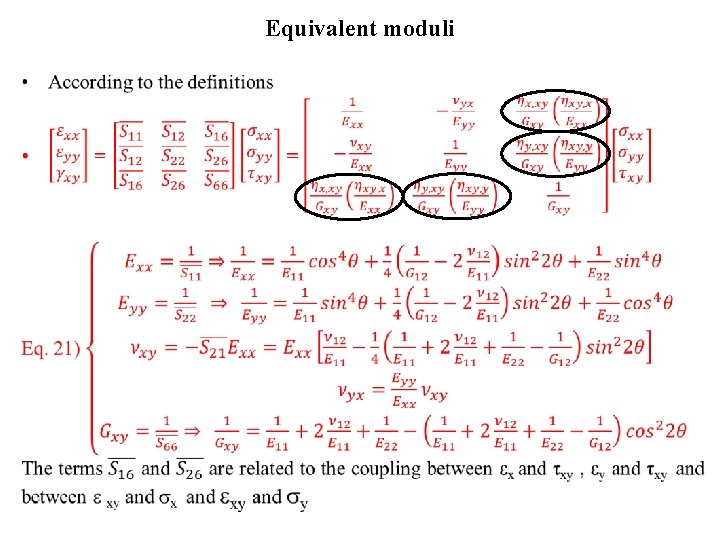
Equivalent moduli •
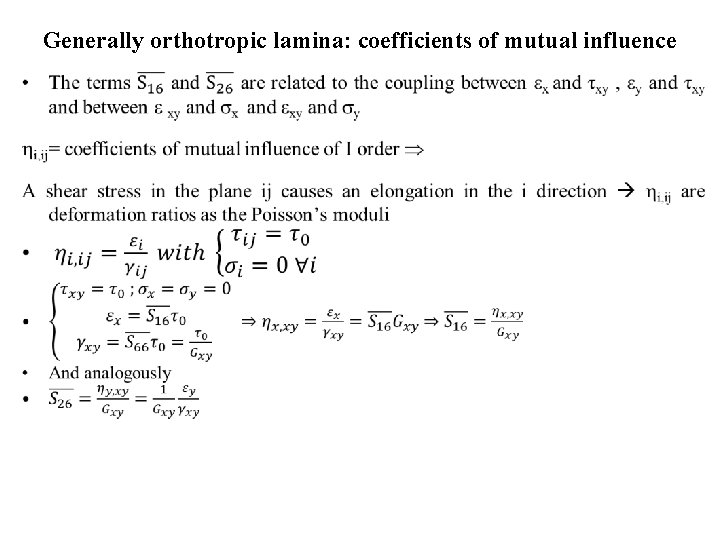
Generally orthotropic lamina: coefficients of mutual influence •
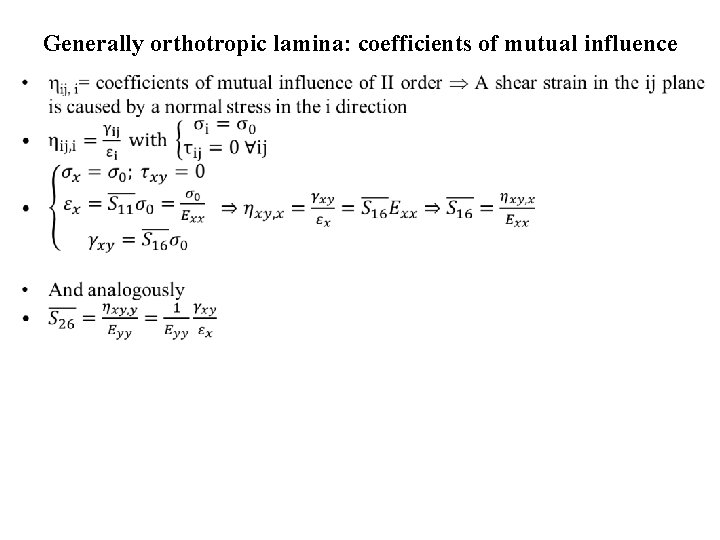
Generally orthotropic lamina: coefficients of mutual influence •
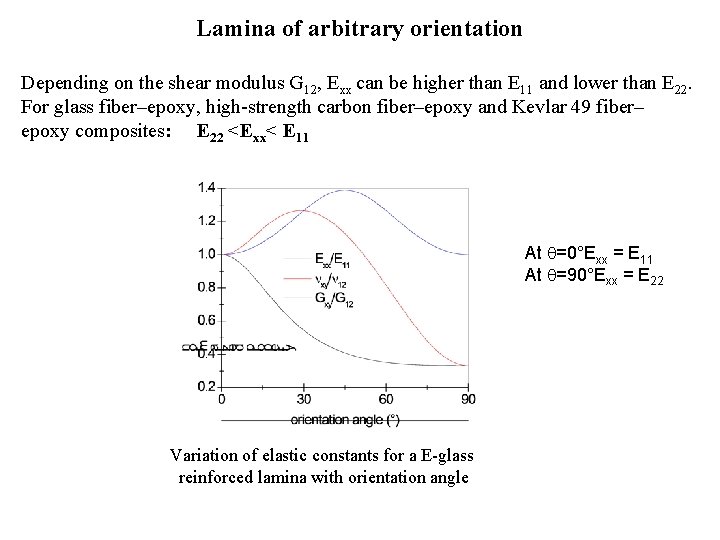
Lamina of arbitrary orientation Depending on the shear modulus G 12, Exx can be higher than E 11 and lower than E 22. For glass fiber–epoxy, high-strength carbon fiber–epoxy and Kevlar 49 fiber– epoxy composites: E 22 <Exx< E 11 At =0°Exx = E 11 At =90°Exx = E 22 Variation of elastic constants for a E-glass reinforced lamina with orientation angle
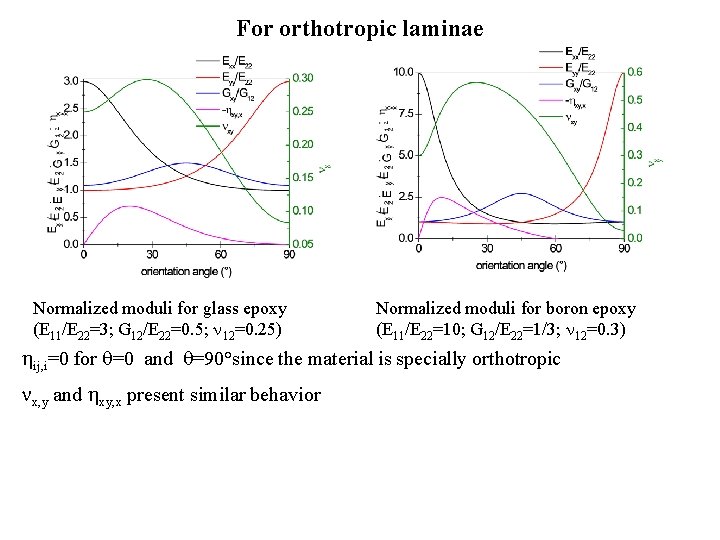
For orthotropic laminae Normalized moduli for glass epoxy (E 11/E 22=3; G 12/E 22=0. 5; 12=0. 25) Normalized moduli for boron epoxy (E 11/E 22=10; G 12/E 22=1/3; 12=0. 3) ij, i=0 for =0 and =90°since the material is specially orthotropic x, y and xy, x present similar behavior
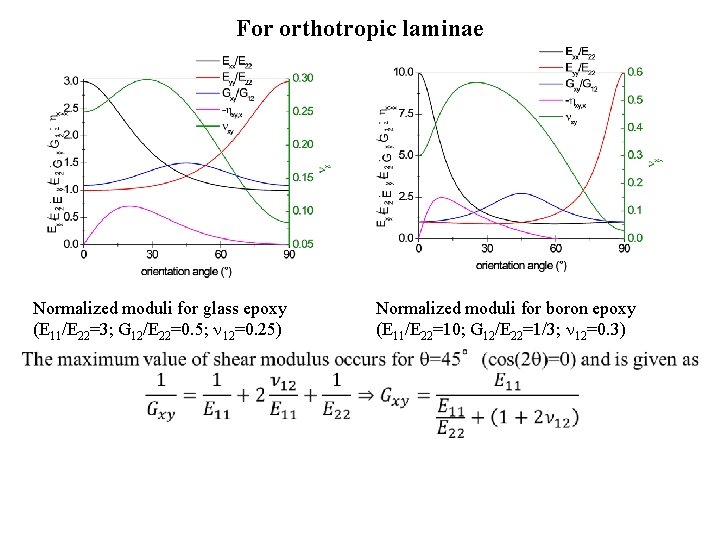
For orthotropic laminae • Normalized moduli for glass epoxy (E 11/E 22=3; G 12/E 22=0. 5; 12=0. 25) Normalized moduli for boron epoxy (E 11/E 22=10; G 12/E 22=1/3; 12=0. 3)
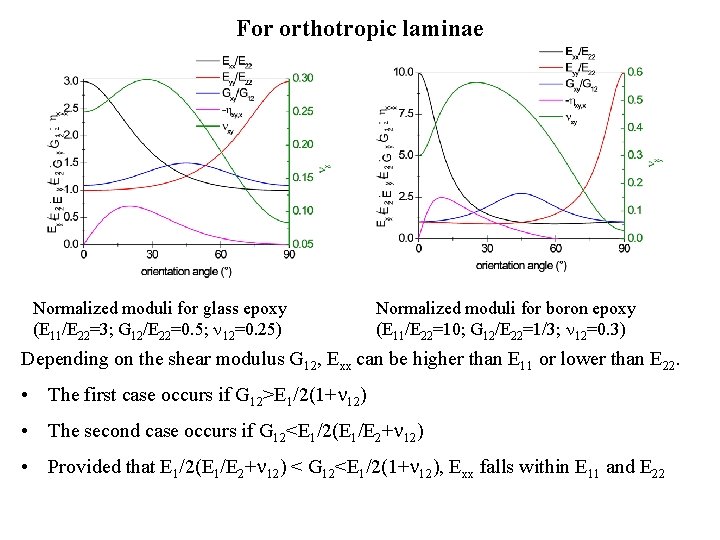
For orthotropic laminae Normalized moduli for glass epoxy (E 11/E 22=3; G 12/E 22=0. 5; 12=0. 25) Normalized moduli for boron epoxy (E 11/E 22=10; G 12/E 22=1/3; 12=0. 3) Depending on the shear modulus G 12, Exx can be higher than E 11 or lower than E 22. • The first case occurs if G 12>E 1/2(1+ 12) • The second case occurs if G 12<E 1/2(E 1/E 2+ 12) • Provided that E 1/2(E 1/E 2+ 12) < G 12<E 1/2(1+ 12), Exx falls within E 11 and E 22
- Slides: 26