
Macroinverte WHAT S Macroinvertebrates What are macroinvertebrates Macroinvertebrates
Macroinverte. WHAT S? Macroinvertebrates!
What are macroinvertebrates? • Macroinvertebrates are small animals that lack backbones and are visible to the naked eye. • They live in streams and other bodies of water where they shred decaying plant matter. • Macroinvertebrates include mayflies, beetles, dragonflies, crayfish, and snails. • Many of these organisms leave their aquatic environments when they
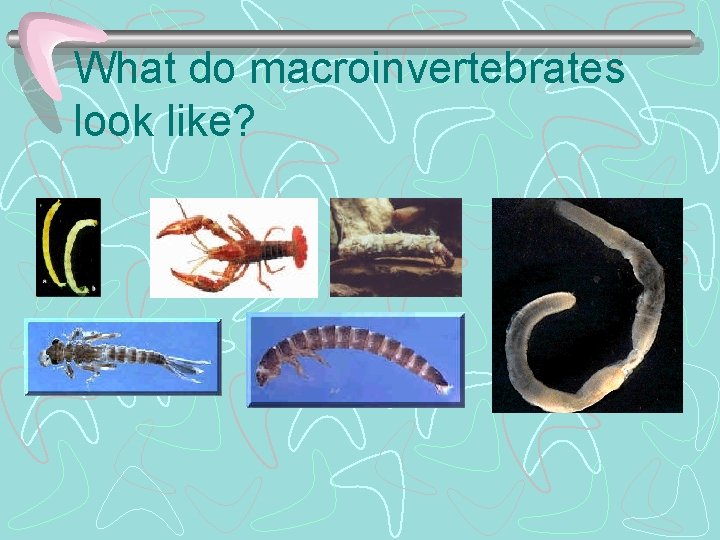
What do macroinvertebrates look like?
Why are macroinvertebrates important to science? Macroinvertebrates are indicators of the water quality of a stream. – They are sensitive to changes in their surroundings. – They migrate only short distances. – They live in water for extended periods of time. Macroinvertebrates are important components of the food chain.
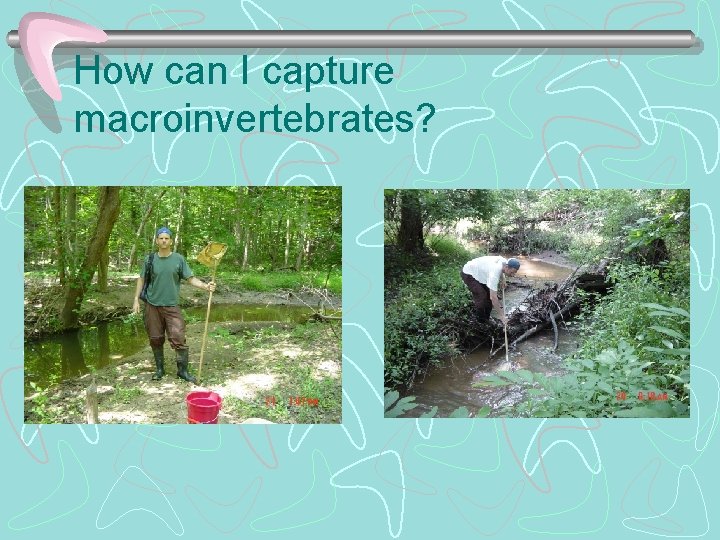
How can I capture macroinvertebrates?
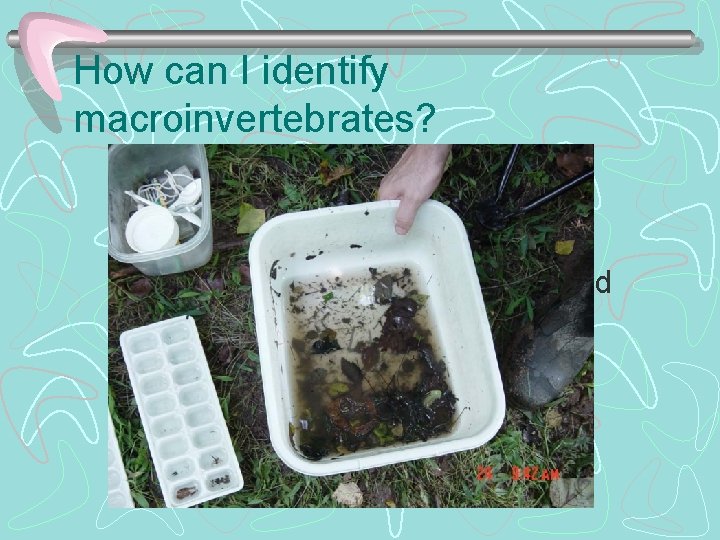
How can I identify macroinvertebrates? • Use a hand lens or microscope. • Observe distinguishing characteristics, both physical and behavioral. • Consult a field guide or a key.
Introducing Three Important Macroinvertebrates That are sensitive to pollution
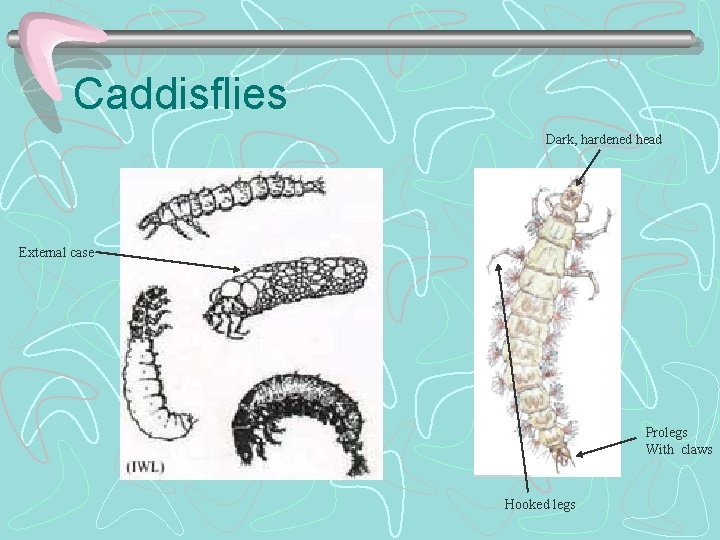
Caddisflies Dark, hardened head External case Prolegs With claws Hooked legs
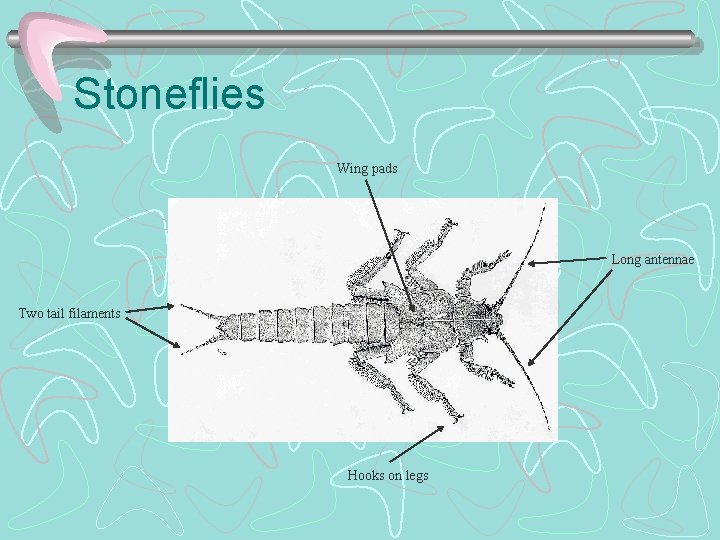
Stoneflies Wing pads Long antennae Two tail filaments Hooks on legs
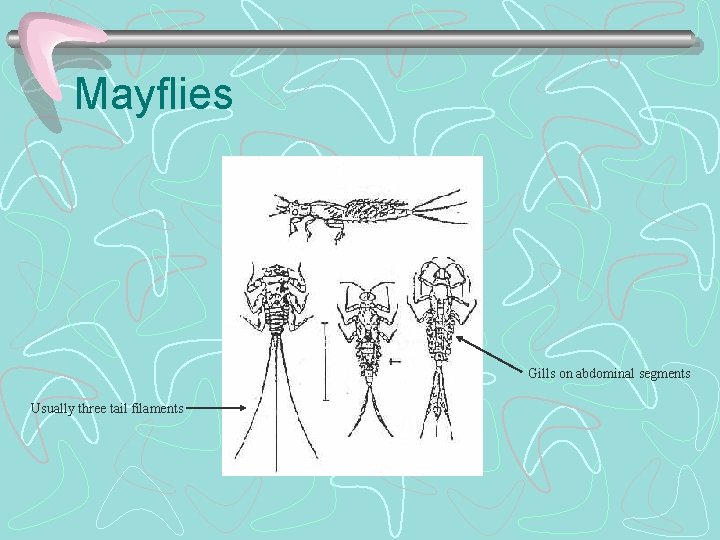
Mayflies Gills on abdominal segments Usually three tail filaments
Macroinvertebrate Classes that are somewhat sensitive to pollution
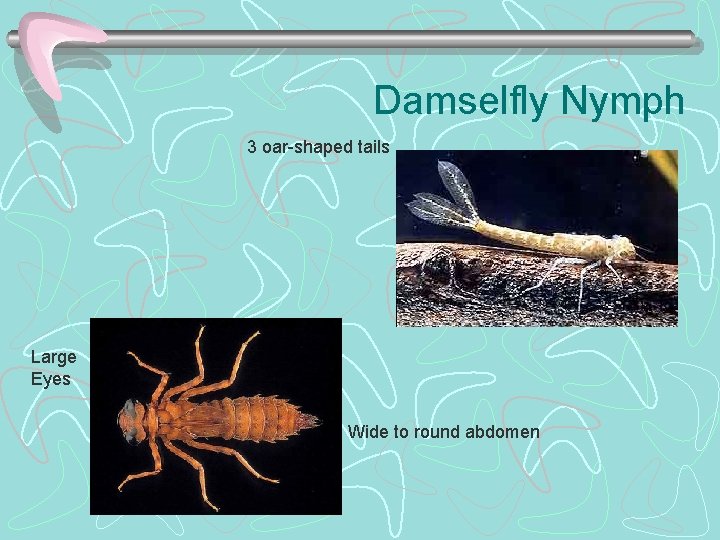
Damselfly Nymph 3 oar-shaped tails Large Eyes Wide to round abdomen
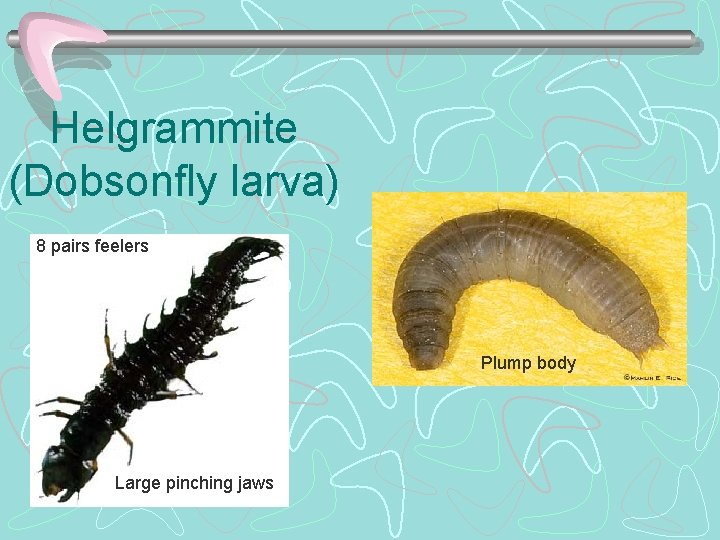
Helgrammite (Dobsonfly larva) 8 pairs feelers Plump body Large pinching jaws
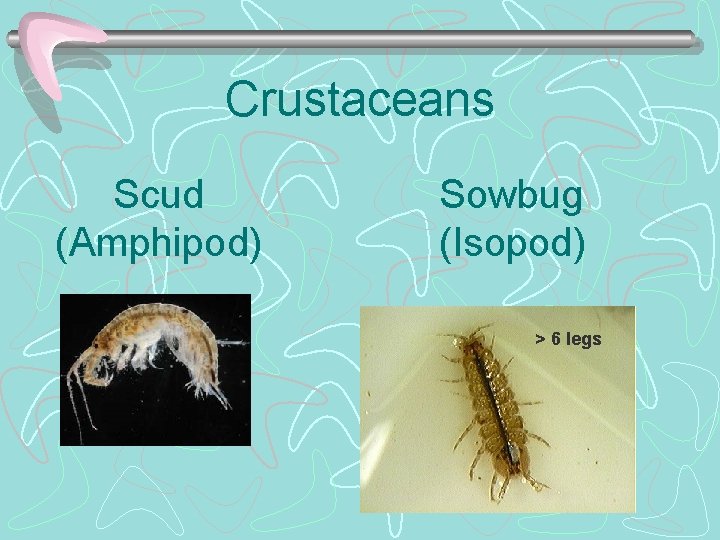
Crustaceans Scud (Amphipod) Sowbug (Isopod) > 6 legs
Data interpretation – Single vs. Multiple samples – Seasonal changes – Yearly changes – EPT index – % Abundance
Macroinvertebrate Metrics Index of Biotic Integrity Number of families EPT families Ephemeroptera families Diptera families % Ephemeroptera (individuals) Intolerant families Beck’s Biotic Index (weighted sum of intolerant taxa)

Two-run Creek

GOOD FAIR POOR
Now let’s go into the field to capture and identify some macroinvertebrates.
- Slides: 20